ขอบเขตแบบเข้าใจง่ายScope in plain words
ISO 16283 ตอบคำถามเดียว: ผนังหรือพื้นที่สร้างเสร็จแล้ว กันเสียงได้จริงเท่าไร การวัดทำในอาคารจริง ไม่ใช่ในห้องปฏิบัติการ ผลจึงรวมทุกเส้นทางที่เสียงเดินทางได้ ทั้งผ่านผนังโดยตรง อ้อมผ่านโครงสร้างข้างเคียง ท่อ ช่องว่าง และรอยรั่วISO 16283 answers one question: how much sound insulation does a finished wall or floor actually give? The measurement is made in the real building, not in a laboratory, so the result includes every path the sound can take: directly through the partition, around it through adjoining structures, ducts, gaps and leaks.
- ส่วนที่ 1 — เสียงผ่านอากาศ ระหว่างสองห้อง เช่น ผนังกั้นห้องชุด หรือพื้นระหว่างชั้นสำหรับเสียงพูดและเพลงPart 1 — Airborne sound between two rooms, e.g. a party wall or a floor, for speech and music.
- ส่วนที่ 2 — เสียงกระแทก บนพื้นหรือบันได โดยใช้ต้นเสียงกระแทกมาตรฐานแทนเสียงเดินPart 2 — Impact sound on floors or stairs, using a standard impact source in place of footsteps.
- ส่วนที่ 3 — ผนังภายนอก การกันเสียงจากภายนอกอาคาร เช่น เสียงจราจร ผ่านผนัง หน้าต่าง และประตูด้านนอกPart 3 — Facade: insulation against outdoor sound such as traffic, through external walls, windows and doors.
ตามแคตตาล็อกของ ISO ส่วนที่ 1 และ 2 ออกแบบมาสำหรับห้องขนาดทั่วไปในอาคาร (ประมาณ 10 ถึง 250 ลูกบาศก์เมตร) และช่วงความถี่ราว 50 Hz ถึง 5 kHz ห้องที่อยู่นอกช่วงนี้อาจต้องใช้แนวทางอื่นหรือคำอธิบายเพิ่มเติมในรายงานAccording to the ISO catalogue, Parts 1 and 2 are intended for typical building rooms (roughly 10 to 250 cubic metres) and a frequency range of about 50 Hz to 5 kHz. Rooms outside this range may need a different approach or extra explanation in the report.
แนวคิดและปริมาณสำคัญKey concepts and quantities
ISO 16283 ให้ผล ต่อย่านความถี่ (ปกติ 1/3 ออกเตฟ) ไม่ได้ให้ตัวเลขเดียว ชื่อปริมาณอ่านเป็นส่วน ๆ ได้: ตัวอักษรหลักบอกว่าวัดอะไร เครื่องหมาย ' (prime) บอกว่าเป็นค่าภาคสนามที่รวมเสียงอ้อมแล้ว และตัวห้อย n หรือ nT บอกว่าปรับค่าตามห้องรับเสียงแบบใดISO 16283 gives results per frequency band (normally 1/3 octaves), not a single number. The names read in parts: the main letter says what is measured, the ' (prime) says it is a field value that includes flanking, and the subscript n or nT says how it was adjusted for the receiving room.
- D — ผลต่างระดับเสียงD — level difference
- ระดับเสียงในห้องต้นเสียงลบระดับเสียงในห้องรับเสียง ยังไม่ปรับตามลักษณะห้องSource-room level minus receiving-room level, not yet adjusted for the rooms.
- DnT — ผลต่างระดับเสียงที่ปรับตามเวลาเสียงก้องDnT — standardized level difference
- ปรับ D ให้เหมือนห้องรับเสียงมีเวลาเสียงก้องอ้างอิง T0 = 0.5 s: DnT = D + 10 lg(T/T0) จึงสะท้อนสิ่งที่ผู้อยู่อาศัยได้รับจริง ยิ่งสูงยิ่งดี ตัวอย่าง: D = 50 dB และ T = 0.8 s ได้ DnT = 50 + 10 lg(1.6) ≈ 52.0 dBD adjusted as if the receiving room had the reference reverberation time T0 = 0.5 s: DnT = D + 10 lg(T/T0), so it reflects what occupants actually get. Higher is better. Example: D = 50 dB and T = 0.8 s give DnT = 50 + 10 lg(1.6) ≈ 52.0 dB.
- Dn — ผลต่างระดับเสียงที่ปรับตามการดูดซับเสียงDn — normalized level difference
- ปรับ D ด้วยพื้นที่ดูดซับเสียงอ้างอิงของห้องรับเสียง A0 = 10 m²: Dn = D − 10 lg(A/A0)D adjusted to a reference absorption area in the receiving room, A0 = 10 m²: Dn = D − 10 lg(A/A0).
- R' — ดัชนีลดเสียงปรากฏ (apparent sound reduction index)R' — apparent sound reduction index
- R' = D + 10 lg(S/A) โดย S คือพื้นที่ผนังหรือพื้นที่กั้นระหว่างห้อง และ A คือพื้นที่ดูดซับเสียงเทียบเท่าของห้องรับเสียง (A = 0.16 V/T) รูปแบบเหมือน R ของห้องปฏิบัติการ แต่รวมเสียงอ้อมในอาคารจริงด้วย จึงมักต่ำกว่า R ของชิ้นส่วนเดียวกันR' = D + 10 lg(S/A), where S is the area of the separating element and A the equivalent absorption area of the receiving room (A = 0.16 V/T). Same form as the laboratory R, but including flanking in the real building, so it is usually lower than the R of the same element.
- L'n และ L'nT — ระดับเสียงกระแทกL'n and L'nT — impact sound levels
- ระดับเสียง Li ในห้องรับเสียงขณะต้นเสียงกระแทกทำงานบนพื้น ปรับตามการดูดซับเสียง (L'n = Li + 10 lg(A/A0), A0 = 10 m²) หรือเวลาเสียงก้อง (L'nT = Li − 10 lg(T/T0), T0 = 0.5 s) เป็นระดับเสียงที่ได้ยิน จึงยิ่งต่ำยิ่งดีThe level Li in the receiving room while the impact source runs on the floor, adjusted for absorption (L'n = Li + 10 lg(A/A0), A0 = 10 m²) or reverberation time (L'nT = Li − 10 lg(T/T0), T0 = 0.5 s). It is a level that is heard, so lower is better.
- ปริมาณของผนังภายนอกFacade quantities
- ส่วนที่ 3 ใช้ผลต่างระดับเสียงระหว่างจุดนอกอาคาร (มักอยู่ห่างจากผนังเป็นระยะที่กำหนด) กับในห้อง และมีทั้งวิธีใช้ลำโพงและวิธีใช้เสียงจราจรจริงเป็นต้นเสียงPart 3 uses the level difference between a point outside (often at a defined distance from the facade) and the room inside, with methods using either a loudspeaker or real traffic as the source.
การรวมค่าต่อย่านความถี่ให้เป็นตัวเลขเดียว เช่น DnT,w หรือ L'nT,w ไม่ได้อยู่ใน ISO 16283 แต่อยู่ใน ISO 717 สองมาตรฐานนี้จึงใช้คู่กันเสมอTurning band values into a single number such as DnT,w or L'nT,w is not part of ISO 16283 but of ISO 717, so the two are always used together.
ใครใช้ และใช้เมื่อไรWho uses it and when
- วิศวกรอะคูสติกและที่ปรึกษา ตรวจรับผนังและพื้นระหว่างห้องชุด ห้องพักโรงแรม หอพัก และโรงพยาบาลAcoustic engineers and consultants, for acceptance testing of walls and floors between apartments, hotel rooms, dormitories and hospitals.
- ผู้พัฒนาโครงการและผู้รับเหมา เพื่อพิสูจน์ว่างานก่อสร้างเป็นไปตามข้อกำหนดของโครงการหรือกฎหมายอาคารของประเทศที่ใช้Developers and contractors, to show that construction meets the project specification or the building regulations of the country concerned.
- ผู้ตรวจสอบเรื่องร้องเรียนเสียงระหว่างห้อง และผู้ตรวจผลก่อนและหลังการปรับปรุงInvestigators of neighbour-noise complaints, and anyone checking performance before and after a retrofit.
- งานวิจัยที่ต้องการเปรียบเทียบระบบผนังหรือพื้นในสภาพติดตั้งจริงResearch comparing wall or floor systems as actually built.
การวัดโดยทั่วไปทำอย่างไรHow measurements are typically done
ภาพรวมด้านล่างเป็นลำดับงานทั่วไปเพื่อให้เข้าใจหลักการ รายละเอียดจำนวนตำแหน่ง ระยะห่าง และเกณฑ์ต่าง ๆ ต้องยึดตามตัวมาตรฐานฉบับที่ใช้The outline below is a general sequence to explain the principle; the number of positions, distances and criteria must follow the edition of the standard being applied.
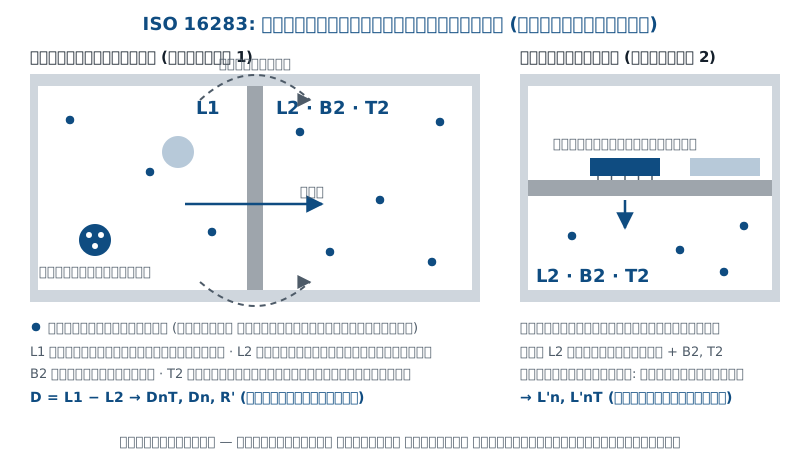
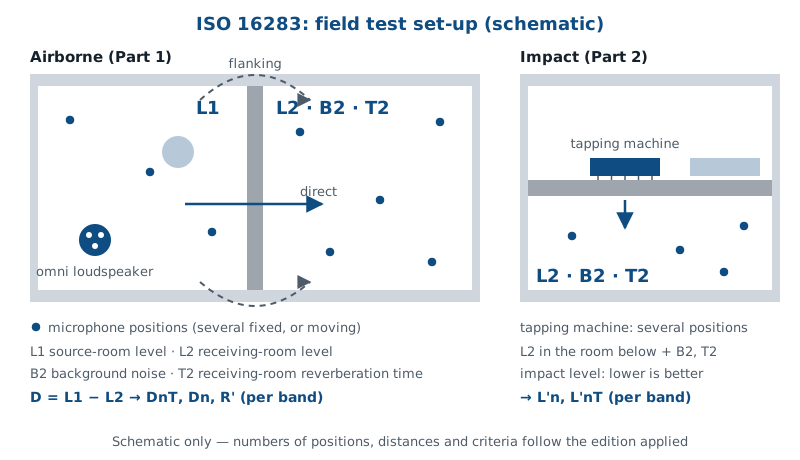
- เสียงผ่านอากาศ: สร้างเสียงดังและสม่ำเสมอด้วยลำโพงรอบทิศทางในห้องต้นเสียง วัดระดับเสียงเฉลี่ยในห้องต้นเสียงและห้องรับเสียงหลายตำแหน่ง แยกทีละย่านความถี่Airborne: create a loud, steady sound with an omnidirectional loudspeaker in the source room, and measure the average level in both rooms at several positions, band by band.
- เสียงกระแทก: วางต้นเสียงกระแทกมาตรฐาน (เช่น เครื่องเคาะ tapping machine) บนพื้นหลายตำแหน่ง แล้ววัดระดับเสียงในห้องด้านล่างหรือห้องข้างเคียงImpact: place a standard impact source (such as a tapping machine) at several positions on the floor, and measure the level in the room below or beside it.
- ผนังภายนอก: ใช้ลำโพงนอกอาคารหรือเสียงจราจรจริง วัดระดับเสียงด้านนอกและในห้องพร้อมกันหรือตามลำดับFacade: use a loudspeaker outside or the real traffic, and measure outside and inside, simultaneously or in sequence.
- เสียงพื้นหลังและเวลาเสียงก้อง: วัดเสียงพื้นหลังในห้องรับเสียงเพื่อแก้ค่า และวัดเวลาเสียงก้องเพื่อปรับผลตามห้องBackground and reverberation: measure the background noise in the receiving room for correction, and the reverberation time to adjust for the room.
- ห้องเล็กและความถี่ต่ำ: มาตรฐานมีขั้นตอนเพิ่มเติมสำหรับความถี่ต่ำในห้องขนาดเล็ก ซึ่งใช้การวัดบริเวณมุมห้องร่วมด้วยSmall rooms and low frequencies: the standard has an additional low-frequency procedure for small rooms that includes measurements near the room corners.
- รายงาน: แสดงค่าต่อย่านความถี่ ทำเครื่องหมายย่านที่ถูกจำกัดด้วยเสียงพื้นหลัง และสรุปตัวเลขเดียวตาม ISO 717Report: show the band values, mark bands limited by background noise, and give the single-number rating to ISO 717.
มาตรฐานอนุญาตให้วางไมโครโฟนได้หลายแบบ เช่น ตำแหน่งคงที่หลายจุด หรือเคลื่อนไมโครโฟน (ด้วยมือหรือด้วยแขนหมุน) เพื่อเฉลี่ยเชิงพื้นที่ แบบที่ใช้ต้องระบุในรายงานThe standard allows several microphone strategies, such as several fixed positions or a moving microphone (manually or on a rotating boom) for spatial averaging; the one used must be stated in the report.
การใช้งานจริง: มาตรฐานนี้มีความหมายอย่างไรต่องานวัดPractical use: what this means for a measurement job
การทดสอบการกันเสียงภาคสนามส่วนใหญ่ผิดพลาดเพราะการเตรียมงาน ไม่ใช่เพราะเครื่องมือ สิ่งที่ควรตกลงและเตรียมก่อนเข้าหน้างานมีดังนี้Most field sound insulation tests go wrong because of preparation, not instruments. Agree and prepare the following before going to site.
- ปริมาณที่ต้องรายงาน: ต้องรู้ก่อนว่าข้อกำหนดเขียนเป็น DnT,w, R'w หรือ L'nT,w เพราะแต่ละแบบต้องใช้ข้อมูลประกอบต่างกัน เช่น พื้นที่ผนังและปริมาตรห้องThe quantity to report: know whether the requirement is DnT,w, R'w or L'nT,w, because each needs different supporting data such as partition area and room volume.
- สภาพห้อง: ประตูหน้าต่างต้องปิดได้สนิท ช่องเปิดชั่วคราวควรปิด และระบุในรายงานว่าห้องว่างหรือมีเฟอร์นิเจอร์Room condition: doors and windows must close properly, temporary openings should be sealed, and the report should say whether rooms were empty or furnished.
- เสียงพื้นหลัง: นัดช่วงที่งานก่อสร้างข้างเคียงหยุด เพราะเสียงพื้นหลังที่สูงจำกัดผลย่านความถี่สูงของผนังที่กันเสียงได้ดีBackground noise: schedule when nearby construction is quiet, because high background noise limits the high-frequency results of well-insulating partitions.
- กำลังของลำโพง: ผนังที่กันเสียงดีมากต้องใช้ลำโพงที่ดังพอให้ระดับในห้องรับเสียงสูงกว่าเสียงพื้นหลังในทุกย่านLoudspeaker power: a very good partition needs a source loud enough to keep the receiving-room level above the background in every band.
- ห้องเล็กและความถี่ต่ำ: ห้องขนาดเล็กอาจต้องใช้ขั้นตอนความถี่ต่ำเพิ่มเติมตามมาตรฐาน วางแผนเวลาให้พอSmall rooms and low frequencies: small rooms may need the standard's additional low-frequency procedure; allow enough time.
คอนโดมิเนียมต้องแสดงผลการกันเสียงของผนังระหว่างห้องชุดก่อนส่งมอบ ข้อกำหนดโครงการเขียนเป็น DnT,w วิศวกรวัดตาม ISO 16283-1 ในห้องคู่ตัวอย่างหลายคู่ วัดเวลาเสียงก้องในห้องรับเสียง และพบว่าคู่หนึ่งได้ผลต่ำกว่าคู่อื่นชัดเจนในย่านความถี่กลางถึงสูง เมื่อตรวจพบรอยรั่วรอบกล่องปลั๊กไฟที่ติดตั้งหลังชนหลังผ่านผนัง หลังซ่อมแล้ววัดซ้ำ ผลกลับมาใกล้คู่อื่นA condominium must show party-wall sound insulation before handover, with the project requirement written as DnT,w. The engineer measures several sample room pairs to ISO 16283-1, measures the receiving-room reverberation time, and finds one pair clearly worse than the others in the mid to high frequencies. Inspection reveals leaks around back-to-back socket boxes cut through the wall; after repair the retest comes close to the other pairs.
มาตรฐานที่เกี่ยวข้องและความเชื่อมโยงRelated standards and how they connect
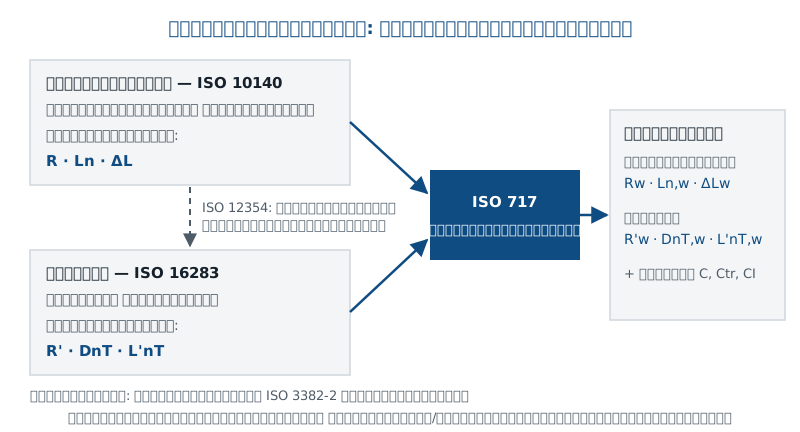
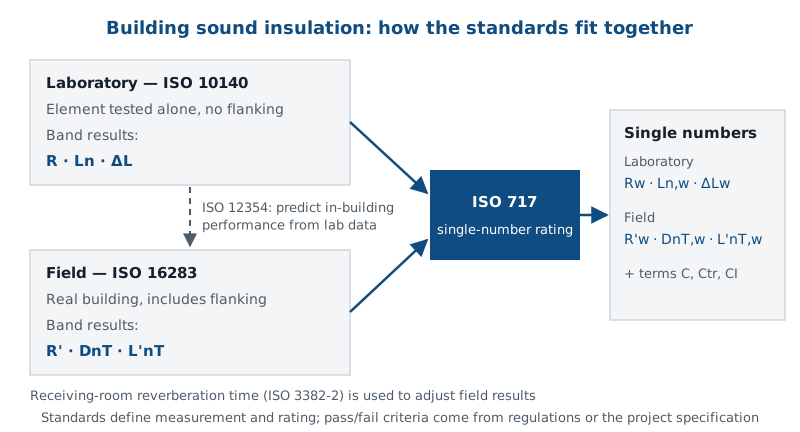
- ISO 717-1 / ISO 717-2 — นำผลต่อย่านความถี่จาก ISO 16283 มาสรุปเป็นตัวเลขเดียว (เช่น DnT,w, R'w, L'nT,w) พร้อมค่าปรับตามสเปกตรัม (C และ Ctr สำหรับเสียงผ่านอากาศ CI สำหรับเสียงกระแทก)ISO 717-1 / ISO 717-2 — turn the ISO 16283 band results into single numbers (e.g. DnT,w, R'w, L'nT,w) with the spectrum adaptation terms (C and Ctr for airborne, CI for impact).
- ISO 10140 — มาตรฐานคู่ขนานสำหรับการวัดในห้องปฏิบัติการ ให้ค่า R ของชิ้นส่วนอาคารโดยไม่มีเสียงอ้อมISO 10140 — the laboratory counterpart, giving the R of a building element without flanking.
- ISO 3382-2 — วิธีวัดเวลาเสียงก้อง ซึ่งเป็นข้อมูลที่ต้องใช้ในการปรับผลตามห้องรับเสียงISO 3382-2 — reverberation time measurement, which provides the data needed to adjust for the receiving room.
- ISO 10052 — วิธีวัดภาคสนามแบบสำรวจ (survey) ที่ง่ายและเร็วกว่า แต่ความแม่นยำต่ำกว่าISO 10052 — a simpler, quicker field survey method with lower precision.
- ISO 140 (รุ่นเก่า) — ส่วน 140-4, 140-5 และ 140-7 เคยใช้วัดภาคสนาม ปัจจุบันถูกยกเลิกและแทนที่ด้วย ISO 16283ISO 140 (legacy) — Parts 140-4, 140-5 and 140-7 were the former field methods; they are withdrawn and replaced by ISO 16283.
- ASTM E336 (สหรัฐอเมริกา) เป็นระบบคู่ขนาน ใช้หลักการคล้ายกันแต่ปริมาณต่างกัน และสรุปผลด้วย ASTM E413 (เช่น ASTC, NNIC) ไม่ใช่ ISO 717 ตัวเลขเช่น ASTC กับ DnT,w หรือ R'w จึงใช้แทนกันไม่ได้ASTM E336 (USA) is a parallel system: similar principles but different quantities, rated with ASTM E413 (e.g. ASTC, NNIC) rather than ISO 717, so numbers such as ASTC and DnT,w or R'w are not interchangeable.
ความเข้าใจผิดที่พบบ่อยCommon misunderstandings
- ใช้ ISO 140 หรือ ISO 16283 ก็เหมือนกัน — ไม่เหมือน ISO 16283 เปลี่ยนรายละเอียดหลายเรื่อง เช่น ขั้นตอนความถี่ต่ำสำหรับห้องเล็ก และวิธีเฉลี่ยตำแหน่ง รายงานใหม่ควรอ้างอิง ISO 16283ISO 140 or ISO 16283, it makes no difference. It does: ISO 16283 changed several details, such as the low-frequency procedure for small rooms and the averaging methods. New reports should refer to ISO 16283.
- R' ในอาคารควรเท่ากับ R จากห้องแล็บ — ค่าภาคสนามรวมเสียงอ้อมและคุณภาพงานติดตั้ง จึงมักต่ำกว่าThe on-site R' should equal the laboratory R. The field value includes flanking and workmanship, so it is usually lower.
- มาตรฐานบอกว่าต้องได้ค่าเท่าไรจึงผ่าน — ISO 16283 เป็นวิธีวัดเท่านั้น เกณฑ์ผ่านหรือไม่ผ่านมาจากข้อกำหนดโครงการหรือกฎหมายของแต่ละประเทศThe standard says what value passes. ISO 16283 is a measurement method only; pass/fail criteria come from the project specification or national regulations.
- วัดตำแหน่งเดียวก็พอ — ระดับเสียงในห้องไม่เท่ากันทุกจุด มาตรฐานจึงกำหนดให้เฉลี่ยหลายตำแหน่งทั้งไมโครโฟนและต้นเสียงOne position is enough. Sound levels vary across a room, so the standard requires averaging over several microphone and source positions.
เกี่ยวข้องกับเครื่องมือวัดอย่างไรHow this relates to instruments
ข้อกำหนดทั่วไป: การวัดต้องใช้เครื่องวัดระดับเสียงหรือเครื่องวิเคราะห์ที่วัดย่าน 1/3 ออกเตฟได้ (ตัวกรองตาม IEC 61260-1 และเครื่องวัดตาม IEC 61672-1 ตามที่มาตรฐานอ้างถึง) สอบเทียบด้วยเครื่องสอบเทียบเสียง ลำโพงรอบทิศทางที่ให้เสียงดังพอเหนือเสียงพื้นหลัง ต้นเสียงกระแทกมาตรฐาน และความสามารถวัดเวลาเสียงก้อง ซอฟต์แวร์คำนวณช่วยลดความผิดพลาดในการแก้ค่าและการสรุปผลGeneral requirements: a sound level meter or analyzer with 1/3-octave bands (filters to IEC 61260-1 and a meter to IEC 61672-1, as referenced by the standard), calibrated with a sound calibrator; an omnidirectional loudspeaker loud enough above the background noise; a standard impact source; and reverberation time capability. Calculation software reduces errors in corrections and ratings.
ข้อมูลจาก NTi Audio (ตามที่ NTi ระบุ): หน้า Building Acoustics ของ NTi Audio ระบุว่าโซลูชันของตนสอดคล้องกับ ISO 16283 (และยังกล่าวถึง ISO 140 กับ ASTM E336) ลำโพง DS3 ระบุว่าผ่านข้อกำหนดของ ISO 16283 เครื่องเคาะ TM EOS2 ระบุ ISO 16283 และ ISO 10140 ลูกบอลกระแทก IB01 ระบุ ISO 16283-2 และ XL3 Sound Insulation Option ระบุ ISO 16283 และ ISO 717 ซอฟต์แวร์ Sound Insulation Reporter ใช้ทำรายงานFrom NTi Audio (as stated by NTi): NTi Audio's Building Acoustics page states that its solution complies with ISO 16283 (and also mentions ISO 140 and ASTM E336). The DS3 loudspeaker is stated to meet the ISO 16283 requirements, the TM EOS2 tapping machine lists ISO 16283 and ISO 10140, the IB01 impact ball lists ISO 16283-2, and the XL3 Sound Insulation Option lists ISO 16283 and ISO 717. The Sound Insulation Reporter software produces the reports.
คำถามที่พบบ่อยFrequently asked questions
วัดก่อนตกแต่งห้องเสร็จได้ไหมCan we test before the rooms are finished?
ได้ ถ้าผนังหรือพื้นที่ทดสอบเสร็จสมบูรณ์และปิดช่องเปิดได้ แต่ผลอาจต่างจากตอนเสร็จจริง เพราะผิววัสดุ วัสดุปูพื้น และงานระบบที่ติดตั้งภายหลังอาจเพิ่มหรือลดเสียงอ้อม ให้ระบุสภาพห้องในรายงานYes, if the tested partition is complete and openings can be closed, but results may differ from the finished state because finishes, floor coverings and services added later can add or remove flanking. State the room condition in the report.
ต้องวัดกี่คู่ห้องHow many room pairs should be tested?
ISO 16283 บอกวิธีวัดแต่ละคู่ ส่วนจำนวนคู่ที่ต้องสุ่มมักกำหนดโดยกฎหมายอาคาร ข้อกำหนดโครงการ หรือแผนการตรวจรับ และควรครอบคลุมผนังหรือพื้นทุกแบบที่ต่างกันISO 16283 describes how to measure each pair; the number of pairs to sample is usually set by building regulations, the project specification or the acceptance plan, and should cover each different wall or floor type.
ใช้ลูกบอลกระแทก (impact ball) แทนเครื่องเคาะได้ไหมCan an impact ball replace the tapping machine?
เป็นแหล่งกำเนิดคนละแบบ เครื่องเคาะเป็นแหล่งมาตรฐานหลักของเสียงกระแทก ส่วนลูกบอลกระแทกจำลองเสียงกระแทกหนักและนุ่ม เช่น เด็กกระโดด ใช้เมื่อข้อกำหนดขอ ผลของสองแบบนำมาเทียบกันโดยตรงไม่ได้They are different sources. The tapping machine is the main standard impact source; the impact ball simulates heavy/soft impacts such as children jumping and is used when a requirement asks for it. Results from the two cannot be compared directly.