โจทย์การวัดThe measurement problem
เสียงกระทบเป็นเรื่องร้องเรียนอันดับต้นๆ ในคอนโด หอพัก และโรงแรม: เสียงส้นรองเท้า เสียงเด็กวิ่ง เสียงของตก หรือเสียงลากเก้าอี้จากห้องชั้นบน โจทย์ที่พบบ่อยคือ ผู้พัฒนาต้องพิสูจน์ว่าพื้นระหว่างชั้นได้ค่าตามสเปก ผู้อยู่อาศัยเปลี่ยนพื้นเป็นกระเบื้องหรือลามิเนตแล้วชั้นล่างร้องเรียน หรือผู้ออกแบบต้องเลือกระบบพื้นลอยหรือวัสดุปูผิว ทุกกรณีต้องการคำตอบว่า พื้นที่สร้างจริงปล่อยเสียงกระทบลงมาเท่าไรImpact noise is one of the most frequent complaints in condominiums, dormitories and hotels: heels, running children, dropped objects or chairs scraping on the floor above. Typical tasks: a developer must prove the separating floors meet the specification; an occupant replaces carpet with tiles or laminate and the neighbour below complains; a designer must choose a floating floor or covering. Each needs to know how much impact sound the floor as built lets through.
ทำไมงานนี้จึงยากWhy it is difficult
- เท้าคนไม่ใช่แหล่งเสียงมาตรฐาน คนเดินไม่เหมือนกัน จึงต้องใช้เครื่องเคาะที่กระทบพื้นแบบเดิมทุกครั้ง แต่เครื่องเคาะให้เสียงแหลมกว่าเสียงเดินจริงFeet are not a standard source. No two people walk alike, so a machine that strikes the same way every time is used, although it sounds sharper than real walking.
- เป็นการวัดค่าสัมบูรณ์ ผลคือความดังในห้องชั้นล่าง ไม่ใช่ผลต่างสองห้อง เสียงพื้นหลังและการสอบเทียบจึงมีผลโดยตรงIt is an absolute measurement. The result is how loud the room below becomes, not a difference between rooms, so background noise and calibration matter directly.
- ผลขึ้นกับสภาพพื้น พื้นเปล่า พื้นที่ปาดแล้ว หรือปูผิวแล้วให้ผลต่างกันมาก และพื้นลอยที่มีจุดยึดแข็งเพียงจุดเดียวก็เสียประสิทธิภาพได้The result depends on the floor condition. A bare slab, a screeded floor and a finished floor give very different results, and a single rigid bridge can ruin a floating floor.
- เสียงลงไปได้หลายห้อง การสั่นเดินทางผ่านผนังและรอยต่อ จึงอาจต้องวัดห้องด้านข้างหรือแนวทแยงด้วยSound reaches several rooms. Vibration travels through walls and junctions, so side or diagonal rooms may also need testing.
ต้องวัดอะไร และค่าที่ได้What to measure, and the resulting quantities
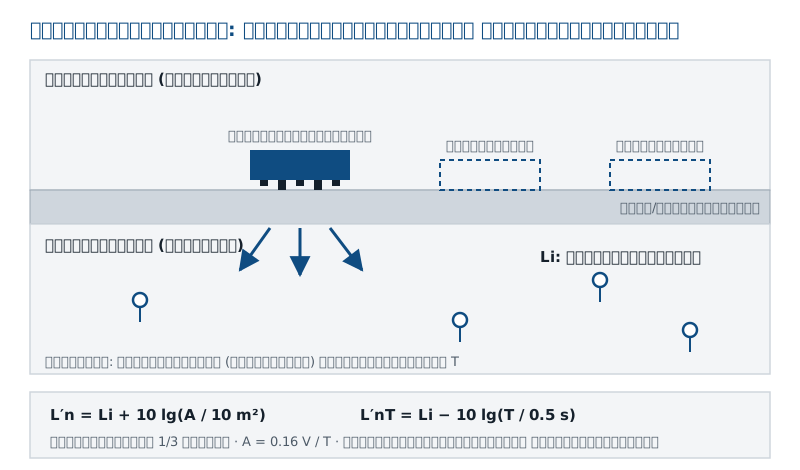
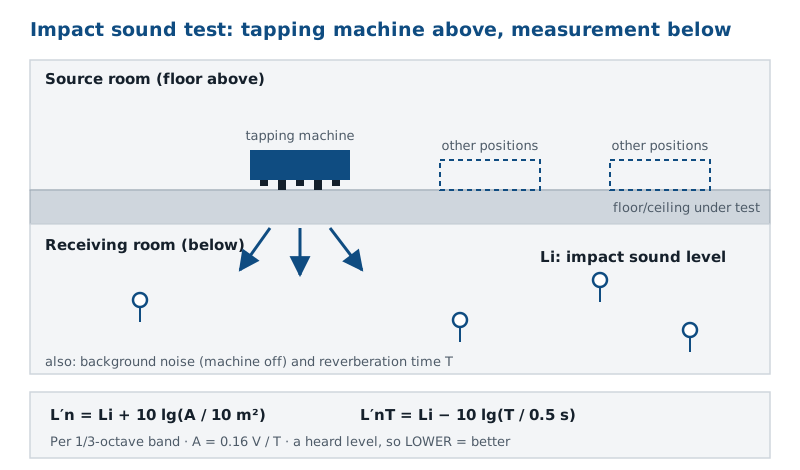
ในแต่ละย่าน 1/3 ออกเตฟ ต้องมีระดับเสียงกระทบเฉลี่ยในห้องรับเสียง (Li) จากหลายตำแหน่งเครื่องเคาะและไมโครโฟน เสียงพื้นหลัง (B) เวลาเสียงก้อง (T) และปริมาตรห้องรับเสียง (V) แล้วปรับตามห้อง: L'nT = Li − 10 lg(T / 0.5 s) หรือ L'n = Li + 10 lg(A / 10 m²) โดย A = 0.16 V / T เครื่องหมาย ' หมายถึงค่าในสนามที่รวมเสียงอ้อมIn every 1/3-octave band you need the average impact sound level in the receiving room (Li) over several machine and microphone positions, the background (B), the reverberation time (T) and the receiving-room volume (V). Then adjust for the room: L'nT = Li − 10 lg(T / 0.5 s) or L'n = Li + 10 lg(A / 10 m²), with A = 0.16 V / T. The prime (') marks a field value that includes flanking.
| ค่าQuantity | ความหมายMeaning | ทิศทางDirection |
|---|---|---|
| L'nT,wL'nT,w | ความหมายMeaningระดับเสียงกระทบในสนาม ปรับเป็นเวลาเสียงก้อง 0.5 sField impact level standardised to 0.5 s reverberation time | ทิศทางDirectionยิ่งต่ำยิ่งดีLower is better |
| L'n,wL'n,w | ความหมายMeaningระดับเสียงกระทบในสนาม ปรับเป็นการดูดซับเสียงอ้างอิง 10 m²Field impact level normalised to 10 m² reference absorption | ทิศทางDirectionยิ่งต่ำยิ่งดีLower is better |
| Ln,wLn,w | ความหมายMeaningค่าจากห้องแล็บ (ISO 10140-3) ไม่มีเสียงอ้อมLaboratory value (ISO 10140-3), no flanking | ทิศทางDirectionยิ่งต่ำยิ่งดีLower is better |
| ΔLwΔLw | ความหมายMeaningการลดเสียงกระทบของวัสดุปูพื้นImpact reduction of a floor covering | ทิศทางDirectionยิ่งสูงยิ่งดีHigher is better |
| L'iFmaxL'iFmax | ความหมายMeaningระดับสูงสุดถ่วงน้ำหนัก A แบบ Fast เมื่อใช้ลูกบอลยางA-weighted Fast maximum level with the rubber ball | ทิศทางDirectionยิ่งต่ำยิ่งดีLower is better |
แหล่งกระทบ: เครื่องเคาะและลูกบอลยางImpact sources: tapping machine and rubber ball
เครื่องเคาะมาตรฐาน (tapping machine) มีค้อน 5 ลูกเรียงเป็นแถว ยกและปล่อยตกทีละลูก รวม 10 ครั้งต่อวินาที ให้แรงกระทบซ้ำได้ทุกที่ ตัวอย่างเช่น TM EOS2 ที่ NTi Audio นำเสนอ ระบุค้อน 500 g จำนวน 5 ลูก ระยะตก 40 mm ช่วงห่าง 100 ms เครื่องเคาะเหมาะกับเสียงกระทบแข็งและเบา เช่น ส้นรองเท้าและของตกThe standard tapping machine has five hammers in a line, lifted and dropped in turn for 10 impacts per second, giving repeatable impacts anywhere. For example, the TM EOS2 offered by NTi Audio is specified with five 500 g hammers, a 40 mm drop and a 100 ms interval. It represents hard, light impacts such as heels and dropped objects.
แหล่งกระทบหนักและนุ่ม (ลูกบอลยาง) ISO 16283-2 ฉบับ 2020 รวมลูกบอลยางสำหรับเสียงกระทบแบบเดินเท้าเปล่าหรือเด็กกระโดด ซึ่งมีพลังงานความถี่ต่ำมาก ผลรายงานเป็นระดับสูงสุดถ่วงน้ำหนัก A แบบ Fast (L'iFmax) และ ISO 717-2:2020 เพิ่มภาคผนวกสำหรับจัดอันดับเสียงประเภทนี้ ลูกบอลยาง IB01 ของ NTi Audio (#600 000 560) หนัก 2.5 kg เส้นผ่านศูนย์กลาง 180 mm ปล่อยจากความสูง 1 m เหมาะกับพื้นโครงสร้างเบา เช่น อาคารไม้ และบันไดThe heavy/soft source (rubber ball). ISO 16283-2:2020 includes a rubber ball for impacts such as bare-foot walking or children jumping, which carry strong low-frequency energy. The result is an A-weighted Fast maximum level (L'iFmax), and ISO 717-2:2020 added an annex for rating it. NTi Audio's IB01 impact ball (#600 000 560) weighs 2.5 kg, is 180 mm in diameter and is dropped from 1 m; it suits lightweight floors such as timber buildings, and stairs.
ขั้นตอนการทำงานในสนามTypical workflow on site
- วางแผน ระบุพื้นที่ทดสอบ ห้องต้นเสียง (ชั้นบน) และห้องรับเสียง ตกลงค่าที่ต้องรายงาน (L'nT,w หรือ L'n,w และต้องใช้ลูกบอลยางหรือไม่) และจดสภาพพื้น: พื้นเปล่า ปาดแล้ว หรือปูผิวแล้วPlan. Identify the floor, the source room (above) and the receiving room, agree the quantity (L'nT,w or L'n,w, and whether the rubber ball is needed) and record the floor condition: bare, screeded or finished.
- สอบเทียบและเตรียมห้อง ตรวจเครื่องวัดด้วยเครื่องสอบเทียบเสียง ปิดประตูหน้าต่าง และปิดประตูบันไดหรือทางเดินที่เสียงจากเครื่องเคาะอาจลอยผ่านอากาศลงไปได้Calibrate and prepare. Check the meter with a sound calibrator, close doors and windows, and close stair or corridor doors through which the machine's own airborne noise could reach the room below.
- วางเครื่องเคาะ หลายตำแหน่งกระจายบนพื้นตามที่มาตรฐานกำหนด ห่างขอบห้อง และวางแนวเครื่องเฉียงกับแนวคานหรือตงถ้าพื้นมีโครงสร้างเป็นทิศทางPlace the tapping machine at several positions spread over the floor as the standard requires, away from the edges, and angled to the beams or joists where the floor structure is directional.
- วัด Li ในห้องชั้นล่างที่ไมโครโฟนหลายตำแหน่งสำหรับแต่ละตำแหน่งเครื่องเคาะ ใช้เวลาเฉลี่ยให้ผลนิ่ง และดูว่าผลต่างตำแหน่งไม่ผิดปกติMeasure Li in the room below at several microphone positions for each machine position, averaging long enough for a stable value, and check that no position is unusual.
- วัดเสียงพื้นหลัง ขณะปิดเครื่องเคาะ และ วัดเวลาเสียงก้อง T เป็นย่าน 1/3 ออกเตฟ ถ้าห้องเล็กกว่าเกณฑ์ ให้ทำขั้นตอนความถี่ต่ำเพิ่มตามมาตรฐานMeasure the background with the machine off, and the reverberation time T in 1/3-octave bands; if the room is below the size limit, add the standard's low-frequency procedure.
- ลูกบอลยาง (ถ้าต้องการ) ปล่อยตามความสูงที่กำหนดหลายตำแหน่ง แล้วบันทึกระดับสูงสุดแบบ FastRubber ball (if required). Drop it from the specified height at several positions and record the Fast maximum levels.
- คำนวณและรายงาน แก้เสียงพื้นหลัง คำนวณ L'nT หรือ L'n ทีละย่าน จัดอันดับตาม ISO 717-2 และตรวจสอบเทียบอีกครั้งหลังวัดเสร็จCalculate and report. Correct for background, calculate L'nT or L'n per band, rate to ISO 717-2 and repeat the calibration check at the end.
ย่าน 500 Hz: Li = 58.0 dB, T = 0.6 s, ห้องรับเสียง V = 40 m³
L'nT = 58.0 − 10 lg(0.6 / 0.5) = 58.0 − 0.8 = 57.2 dB
A = 0.16 × 40 / 0.6 = 10.7 m² และ L'n = 58.0 + 10 lg(10.7 / 10) = 58.3 dB
สังเกตว่าเครื่องหมายของการปรับตรงข้ามกับ DnT: ห้องที่ก้องมากทำให้ Li สูงขึ้น จึงต้อง หัก ออก500 Hz band: Li = 58.0 dB, T = 0.6 s, receiving room V = 40 m³
L'nT = 58.0 − 10 lg(0.6 / 0.5) = 58.0 − 0.8 = 57.2 dB
A = 0.16 × 40 / 0.6 = 10.7 m², and L'n = 58.0 + 10 lg(10.7 / 10) = 58.3 dB
Note that the correction has the opposite sign to DnT: a reverberant room raises Li, so it is subtracted.
จากค่ารายย่านเป็นตัวเลขเดียว (ISO 717-2)From band values to one number (ISO 717-2)
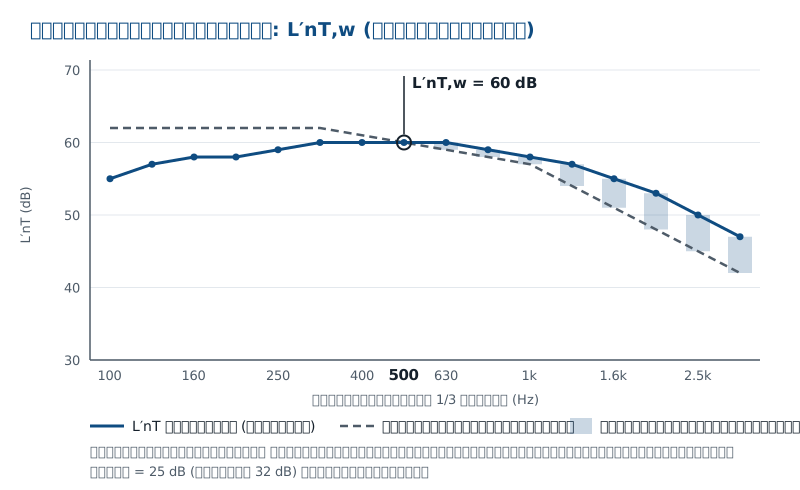
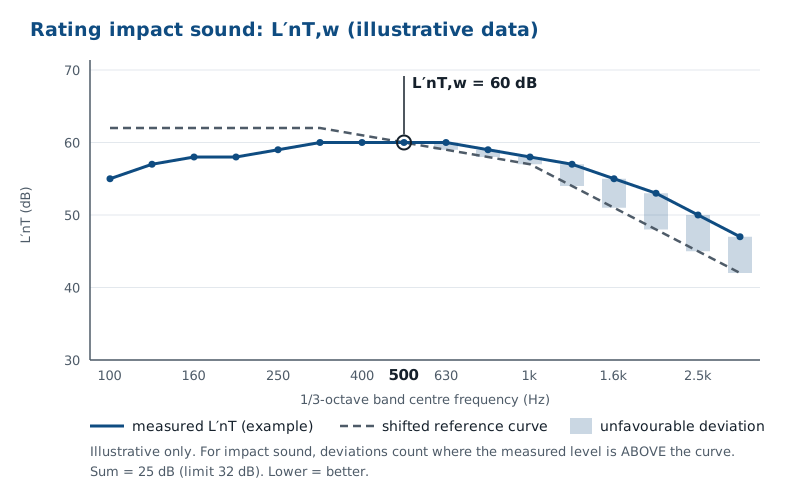
หลักการเหมือนเสียงผ่านอากาศ แต่กลับด้าน: เลื่อนเส้นอ้างอิงทีละ 1 dB ช่วง 100–3150 Hz โดยนับเฉพาะส่วนที่ผลวัด สูงกว่า เส้น จนผลรวมมากที่สุดแต่ไม่เกิน 32 dB แล้วอ่านค่าเส้นที่ 500 Hz เป็น L'nT,w หรือ L'n,w ค่าปรับ CI ใช้สะท้อนเสียงเดินจริงที่มีความถี่ต่ำมากกว่าเสียงเครื่องเคาะ ข้อกำหนดบางแห่งเขียนเป็น L'nT,w + CIThe principle is the airborne method in reverse: shift the reference curve in 1 dB steps over 100–3150 Hz, counting only bands where the measurement is above the curve, until the sum is as large as possible but not over 32 dB; the curve value at 500 Hz is L'nT,w or L'n,w. The adaptation term CI reflects real walking, which has more low-frequency energy than the tapping machine; some requirements are written as L'nT,w + CI.
วัสดุปูพื้น พื้นลอย และค่า ΔLwFloor coverings, floating floors and ΔLw
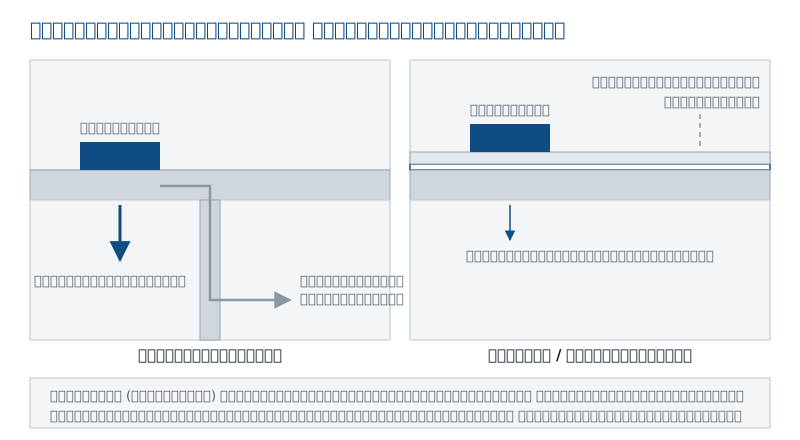
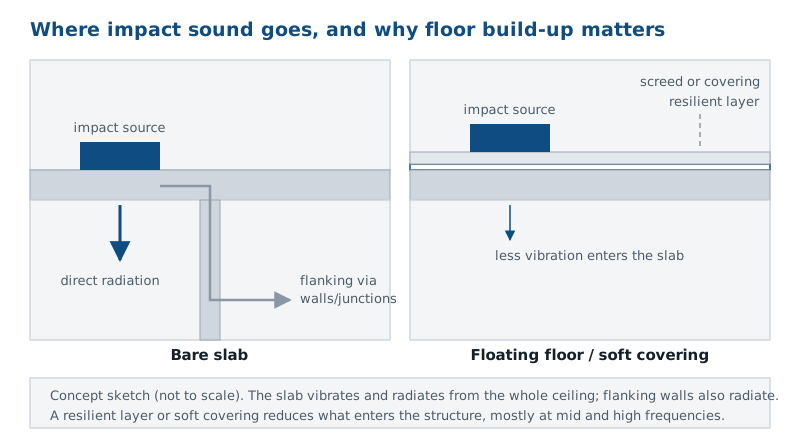
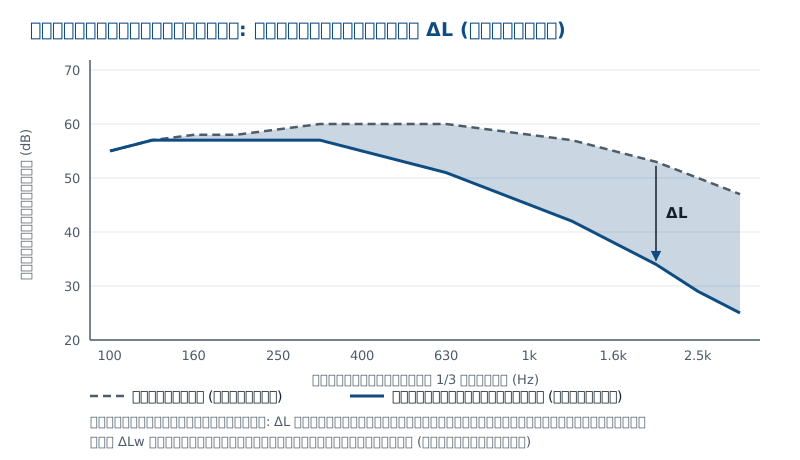
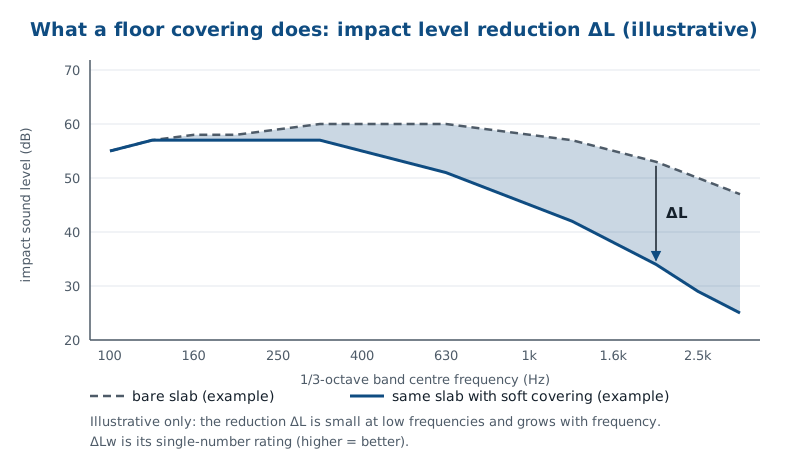
ΔL คือระดับเสียงกระทบที่ลดลงเมื่อปูวัสดุบนพื้นอ้างอิงในห้องแล็บ (ISO 10140-3) และ ΔLw คือค่าตัวเลขเดียวตาม ISO 717-2 ที่คำนวณกับพื้นอ้างอิง วัสดุนุ่มหรือชั้นยืดหยุ่นได้ผลน้อยที่ความถี่ต่ำและได้ผลมากขึ้นที่ความถี่สูง ΔLw จึงใช้เปรียบเทียบวัสดุได้ดี แต่ ไม่ควรนำไปลบจาก L'nT,w ในสนามตรงๆ เพราะผลจริงขึ้นกับพื้นโครงสร้าง เสียงอ้อม และการติดตั้ง ถ้าต้องการรู้ผลจริง ให้วัดในสนามก่อนและหลังปูบนพื้นเดียวกันΔL is the reduction in impact level when a covering is laid on a reference floor in the laboratory (ISO 10140-3), and ΔLw is its single-number rating to ISO 717-2, calculated with a reference floor. Soft coverings and resilient layers do little at low frequencies and more at high frequencies. ΔLw is good for comparing products, but should not simply be subtracted from a field L'nT,w, because the real effect depends on the base floor, flanking and installation. To know the real effect, measure the same floor on site before and after.
ในงานพื้นลอย จุดที่มักทำให้ผลแย่คือ สะพานเสียง เช่น ชั้นปาดสัมผัสผนังโดยตรง ท่อที่ยึดทะลุชั้นยืดหยุ่น หรือบัวที่ยึดทั้งพื้นและผนัง ผลในสนามที่ต่ำกว่าที่ออกแบบไว้มากจึงควรตรวจรายละเอียดเหล่านี้ก่อนWith floating floors, results are most often spoiled by bridges: screed touching the wall, pipes fixed through the resilient layer, or skirting fixed to both floor and wall. When a field result is much worse than designed, check these details first.
อุปกรณ์ที่ต้องใช้Equipment
- เครื่องวัดระดับเสียงหรือเครื่องวิเคราะห์ที่วัดย่าน 1/3 ออกเตฟ (IEC 61672-1, IEC 61260-1) วัดเวลาเสียงก้อง และบันทึกระดับสูงสุดแบบ Fast ได้ถ้าจะใช้ลูกบอลยางA sound level meter or analyser with 1/3-octave bands (IEC 61672-1, IEC 61260-1), reverberation time, and Fast maximum levels if the rubber ball is used.
- ไมโครโฟนวัดเสียง เครื่องสอบเทียบเสียง (IEC 60942) และเครื่องเคาะมาตรฐานที่ตรวจสภาพค้อนและอัตราการเคาะแล้วA measurement microphone, a sound calibrator (IEC 60942) and a standard tapping machine with hammers and impact rate checked.
- ลูกบอลยางถ้างานต้องการ แหล่งเสียงรอบทิศทางสำหรับวัด T และซอฟต์แวร์คำนวณ ISO 16283-2 / ISO 717-2A rubber ball if required, an omnidirectional source for measuring T, and ISO 16283-2 / ISO 717-2 software.
| NTi Audio (ตรวจสอบจากเอกสารทางการ)NTi Audio (checked against official documents) | บทบาทและเงื่อนไขRole and requirements |
|---|---|
| XL3 Acoustic AnalyzerXL3 Acoustic Analyzer | บทบาทและเงื่อนไขRole and requirementsXL3 Sound Insulation Option ครอบคลุมเสียงกระทบ หรือใช้ XL3 XL3 Sound Insulation Bundle #600 000 742The XL3 Sound Insulation Option covers impact sound, or use the XL3 XL3 Sound Insulation Bundle #600 000 742 |
| XL2 Audio and Acoustic AnalyzerXL2 Audio and Acoustic Analyzer | บทบาทและเงื่อนไขRole and requirementsไลเซนส์ Sound Insulation Reporter สำหรับ XL2 เครื่องนั้น ร่วมกับ XL2 Extended Acoustic Pack (และ XL2 Remote Measurement Option ถ้าควบคุมจากซอฟต์แวร์)Sound Insulation Reporter licence for that XL2, with the XL2 Extended Acoustic Pack (and the XL2 Remote Measurement Option for control from the software) |
| TM EOS2 Tapping MachineTM EOS2 Tapping Machine | บทบาทและเงื่อนไขRole and requirementsเครื่องเคาะรีโมตได้ NTi ระบุมาตรฐาน ISO 10140, ISO 16283 และ ISO 717Remote-controlled tapping machine; NTi lists ISO 10140, ISO 16283 and ISO 717 |
| IB01 Impact Ball #600 000 560IB01 Impact Ball #600 000 560 | บทบาทและเงื่อนไขRole and requirementsแหล่งกระทบหนักและนุ่ม NTi ระบุ ISO 16283-2 และ ISO 10140-5Heavy/soft impact source; NTi lists ISO 16283-2 and ISO 10140-5 |
| Sound Insulation ReporterSound Insulation Reporter | บทบาทและเงื่อนไขRole and requirementsรายงานเสียงกระทบตาม ISO 16283-2 / ISO 717-2 จากเครื่องเคาะหรือลูกบอลยางImpact reports to ISO 16283-2 / ISO 717-2 from the tapping machine or rubber ball |
ลำโพง DS3 เป็นแหล่งเสียงผ่านอากาศ ใช้แทนเครื่องเคาะไม่ได้ แต่ใช้วัดเวลาเสียงก้องของห้องรับเสียงได้ ยังไม่มีหน้าสินค้า TM EOS2 และ IB01 บนเว็บไซต์นี้ สอบถามได้จาก GET BEST SOUNDThe DS3 loudspeaker is an airborne source and cannot replace the tapping machine, though it can be used to measure the receiving-room reverberation time. The TM EOS2 and IB01 have no product pages on this site yet; ask GET BEST SOUND.
มาตรฐานที่เกี่ยวข้องRelevant standards
- ISO 16283-2 วิธีวัดเสียงกระทบในสนาม (แทน ISO 140-7) ฉบับ 2020 ครอบคลุมห้อง 10–250 m³ และ 50–5000 HzISO 16283-2, field impact sound (replacing ISO 140-7); the 2020 edition covers rooms of 10–250 m³ and 50–5000 Hz.
- ISO 717-2 ตัวเลขเดียว L'nT,w, L'n,w, ΔLw และ CI; ISO 10140-3 ค่าจากห้องแล็บISO 717-2 for L'nT,w, L'n,w, ΔLw and CI; ISO 10140-3 for laboratory values.
- ระบบ ASTM (E1007, E989 และค่า IIC) ใช้กฎต่างกันและ IIC ยิ่งสูงยิ่งดี ห้ามเทียบกับ L'nT,w ตรงๆ เกณฑ์ผ่านมาจากข้อกำหนดโครงการหรือกฎหมายของประเทศนั้นThe ASTM system (E1007, E989 and IIC) uses different rules, and IIC is higher-is-better; do not compare it directly with L'nT,w. Limits come from the project specification or national regulations.
ข้อผิดพลาดที่พบบ่อยCommon mistakes
- อ่านทิศทางผิด คิดว่า L'nT,w สูงแปลว่าดีReading the direction wrongly: a high L'nT,w is bad, not good.
- ไม่จดสภาพพื้นหรือวัสดุปูผิว ทำให้เทียบผลก่อนและหลังไม่ได้Not recording the floor condition or covering, so before/after results cannot be compared.
- วางเครื่องเคาะใกล้ผนังหรือบนจุดเดียว หรือวางบนวัสดุนุ่มที่ทำให้ค้อนตกไม่เต็มระยะPlacing the machine near walls or at one spot only, or on soft material that stops the hammers falling their full height.
- ปล่อยให้เสียงเครื่องเคาะลอยผ่านบันไดหรือช่องเปิดลงไปห้องล่างLetting the machine's airborne noise reach the room below via stairs or openings.
- ไม่วัด T หรือเสียงพื้นหลังในห้องรับเสียงจริงNot measuring T or background in the actual receiving room.
- นำ ΔLw จากเอกสารวัสดุไปลบจากผลในสนามแล้วสรุปว่าผ่านSubtracting a data-sheet ΔLw from a field result and declaring compliance.
ตัวอย่างสถานการณ์: พื้นระหว่างชั้นคอนโดExample scenario: a condominium floor/ceiling
โครงการคอนโดใช้พื้นคอนกรีตกับฝ้าเพดานแขวน สเปกกำหนดค่า L'nT,w สูงสุด ทีมทดสอบห้องตัวแทนก่อนปูผิวได้ผลคล้ายภาพตัวอย่าง (L'nT,w ประมาณ 60 dB โดยส่วนที่เกินเส้นอ้างอิงอยู่ที่ความถี่สูง) จึงเสนอวัสดุปูรองใต้พื้น
หลังปูผิวในห้องทดลอง วัดซ้ำที่ตำแหน่งเดิม ค่าในความถี่สูงลดลงชัดเจนตามรูปแบบ ΔL แต่ย่านต่ำแทบไม่เปลี่ยน ต่อมามีห้องหนึ่งที่เจ้าของปูกระเบื้องเองโดยไม่มีชั้นรอง ผลแย่กว่าห้องอื่นมาก และเมื่อตรวจพบว่ากาวยึดกระเบื้องต่อเนื่องถึงผนัง ทีมจึงแนะนำให้แก้รายละเอียดขอบพื้น และวัดซ้ำเพื่อยืนยันA condominium uses a concrete slab with a suspended ceiling, and the specification sets a maximum L'nT,w. The team tests representative rooms before the finishes and gets a result like the illustration (L'nT,w about 60 dB, exceeding the reference mainly at high frequencies), so a resilient underlay is proposed.
After finishing a trial room, a repeat test at the same positions shows a clear reduction at high frequencies, following the ΔL pattern, while the low bands barely change. Later one owner lays tiles without an underlay and that room is much worse than the others; the tile bed is found to run continuously up to the wall, so the team recommends fixing the floor edge detail and re-testing to confirm.
รายงานผลควรมีอะไรบ้างWhat the report contains
- อาคาร วันที่ ผู้วัด มาตรฐานพร้อมฉบับที่ใช้ และแหล่งกระทบที่ใช้Building, date, who measured, standards with editions, and the impact source used.
- โครงสร้างพื้นและสภาพผิวพื้น ห้องรับเสียง V และตำแหน่งของห้อง (ใต้ตรง ข้าง หรือทแยง)Floor construction and finish, the receiving room, V, and its location (directly below, beside or diagonal).
- อุปกรณ์ ผลสอบเทียบ จำนวนตำแหน่งเครื่องเคาะและไมโครโฟนEquipment, calibration checks, numbers of machine and microphone positions.
- ตารางและกราฟรายย่าน เครื่องหมายย่านที่ถูกจำกัดด้วยเสียงพื้นหลัง และตัวเลขเดียวพร้อม CI และการเทียบเกณฑ์Band table and chart, background-limited bands marked, and the single number with CI and the comparison with the requirement.
คำถามที่พบบ่อยFAQ
ทำไม L'nT,w ยิ่งต่ำยิ่งดี แต่ DnT,w ยิ่งสูงยิ่งดีWhy is lower better for L'nT,w but higher better for DnT,w?
DnT,w คือปริมาณเสียงที่ผนังลดได้ (ผลต่าง) ส่วน L'nT,w คือความดังที่ได้ยินในห้องล่างขณะเครื่องเคาะทำงาน ยิ่งได้ยินเบาก็ยิ่งดีDnT,w is how much the partition reduces sound (a difference); L'nT,w is how loud the room below becomes while the machine runs, so quieter is better.
ผ่านเกณฑ์เครื่องเคาะแล้ว จะไม่มีคนร้องเรียนใช่ไหมIf the floor passes with the tapping machine, will there be no complaints?
ไม่แน่เสมอ เครื่องเคาะแทนเสียงกระทบแข็ง ส่วนเสียงเดินเท้าเปล่าหรือเด็กกระโดดมีความถี่ต่ำมาก ควรดู CI ด้วย และพื้นโครงสร้างเบาอาจต้องทดสอบด้วยลูกบอลยางNot always. The machine represents hard impacts, while bare-foot walking and children jumping are low-frequency; check CI too, and lightweight floors may need a rubber ball test.
นำ ΔLw ของวัสดุปูพื้นมาลบจากผลวัดได้ไหมCan I subtract a covering's ΔLw from my measured result?
ใช้ประมาณการคร่าวๆ ได้ แต่ ΔLw วัดบนพื้นอ้างอิงในห้องแล็บ ผลจริงบนพื้นอื่นและมีเสียงอ้อมอาจต่างไป ถ้าต้องยืนยัน ให้วัดก่อนและหลังในสนามOnly as a rough estimate. ΔLw is measured on a laboratory reference floor; the effect on another floor with flanking can differ. To confirm, measure before and after on site.
ควรทดสอบก่อนหรือหลังปูผิวพื้นShould I test before or after the floor finishes?
ขึ้นกับคำถาม ทดสอบพื้นเปล่าเพื่อรู้สมรรถนะโครงสร้างและเลือกวัสดุ ทดสอบหลังปูผิวเพื่อตรวจรับงานตามสเปก ทั้งสองแบบต้องจดสภาพพื้นในรายงานIt depends on the question: a bare-slab test shows the structure's performance and helps choose finishes; a finished-floor test is for acceptance against the specification. Either way, record the condition in the report.
วัดห้องที่ไม่ได้อยู่ใต้พื้นตรงๆ ได้ไหมCan I measure a room that is not directly below?
ได้ เสียงกระทบเดินทางผ่านผนังและรอยต่อไปถึงห้องข้างหรือแนวทแยงได้ ให้ระบุตำแหน่งห้องรับเสียงในรายงานYes. Impact sound travels through walls and junctions to side or diagonal rooms; state the receiving-room location in the report.
IIC เท่ากับ L'nT,w หรือไม่Is IIC the same as L'nT,w?
ไม่เท่า IIC เป็นระบบของ ASTM ที่ยิ่งสูงยิ่งดีและใช้กฎต่างกัน ให้รายงานตามระบบที่ข้อกำหนดใช้No. IIC is an ASTM rating where higher is better, with different rules; report in the system the requirement uses.