ทำไมเรื่องนี้สำคัญWhy this matters
เรื่องร้องเรียนที่พบบ่อยที่สุดในคอนโด หอพัก โรงแรม และสำนักงาน ไม่ได้มาจากเสียงที่ดังมาก แต่มาจากเสียงของเพื่อนบ้านที่ ลอดผ่าน ผนังหรือพื้นเข้ามา เช่น ได้ยินคนคุยกันห้องข้าง ๆ ได้ยินเสียงเดินหรือเก้าอี้ลากจากห้องชั้นบน หรือได้ยินเสียงรถบนถนนแม้ปิดหน้าต่างแล้วThe most common complaints in condominiums, dormitories, hotels and offices are not about very loud sounds but about neighbours' sounds that pass through walls and floors: hearing a conversation next door, footsteps or chairs scraping on the floor above, or traffic even with the windows closed.
การกันเสียงที่ไม่ดีทำให้เสียความเป็นส่วนตัว นอนหลับยาก และสมาธิลดลง การวัดการกันเสียงจึงใช้ตอบคำถามที่ชัดเจนว่า ผนังหรือพื้นที่สร้างเสร็จแล้ว ทำงานได้ตามที่ออกแบบไว้หรือไม่ และถ้าไม่ได้ ปัญหาอยู่ที่ความถี่ใดPoor insulation costs privacy, sleep and concentration. Sound insulation measurements answer a clear question: does the finished wall or floor perform as designed, and if not, at which frequencies is the weakness?
แนวคิดพื้นฐาน: เสียงข้ามอาคารได้ 3 ทางThe basic idea: three ways sound crosses a building
ก่อนวัด ต้องแยกให้ออกก่อนว่าเสียงที่เป็นปัญหาเดินทางมาอย่างไร เพราะแต่ละแบบใช้วิธีวัดและตัวเลขต่างกันBefore measuring, identify how the problem sound travels, because each path has its own method and its own numbers.
| ประเภทType | ตัวอย่างในชีวิตจริงEveryday example | วิธีสร้างเสียงทดสอบTest source | ตัวเลขที่ใช้บ่อยCommon rating |
|---|---|---|---|
| เสียงผ่านอากาศ (airborne sound)Airborne sound | ตัวอย่างในชีวิตจริงEveryday exampleเสียงพูด เพลง ทีวี จากห้องข้าง ๆSpeech, music or a TV next door | วิธีสร้างเสียงทดสอบTest sourceลำโพงรอบทิศทางในห้องต้นเสียงOmnidirectional loudspeaker in the source room | ตัวเลขที่ใช้บ่อยCommon ratingR'w, DnT,w (ยิ่งสูงยิ่งดี)R'w, DnT,w (higher is better) |
| เสียงกระแทก (impact sound)Impact sound | ตัวอย่างในชีวิตจริงEveryday exampleเสียงเดิน ของตก เก้าอี้ลากบนพื้นชั้นบนFootsteps, dropped objects, chairs on the floor above | วิธีสร้างเสียงทดสอบTest sourceเครื่องเคาะมาตรฐาน (tapping machine) วางบนพื้นStandard tapping machine placed on the floor | ตัวเลขที่ใช้บ่อยCommon ratingL'nT,w (ยิ่งต่ำยิ่งดี)L'nT,w (lower is better) |
| เสียงผ่านผนังภายนอก (facade)Facade sound | ตัวอย่างในชีวิตจริงEveryday exampleเสียงจราจร เครื่องบิน งานก่อสร้างจากภายนอกTraffic, aircraft or construction outside | วิธีสร้างเสียงทดสอบTest sourceลำโพงวางนอกอาคารLoudspeaker placed outside the building | ตัวเลขที่ใช้บ่อยCommon ratingผลต่างระดับเสียงนอก–ใน เช่น D2m,nT,w (ยิ่งสูงยิ่งดี)Outdoor–indoor level difference, e.g. D2m,nT,w (higher is better) |
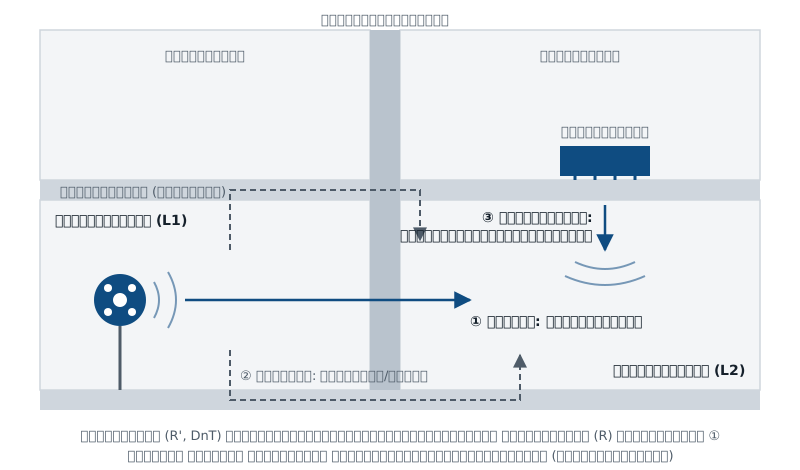
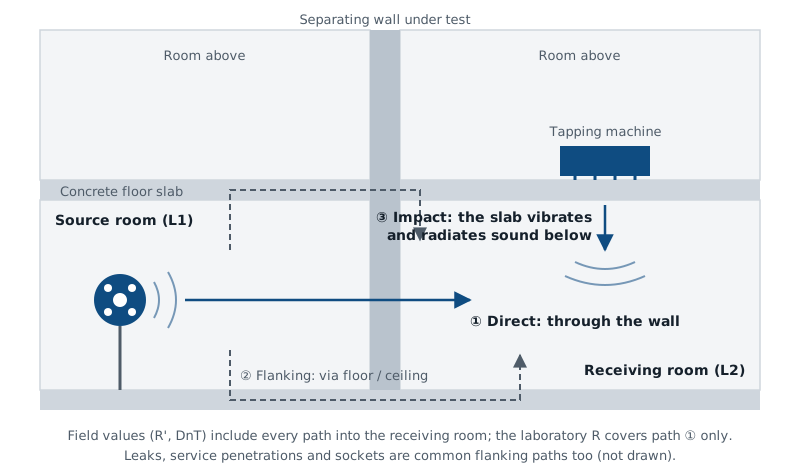
เสียงกระแทกต่างจากเสียงผ่านอากาศตรงที่ ต้นเสียงไปกระทบโครงสร้างโดยตรง ทำให้พื้นหรือผนังสั่น แล้วแรงสั่นนั้นเดินทางในโครงสร้างไปแผ่เป็นเสียงในห้องอื่น จึงเรียกอีกชื่อว่า เสียงผ่านโครงสร้าง (structure-borne sound)Impact sound differs from airborne sound because the source strikes the structure directly. The floor or wall vibrates, the vibration travels through the structure and is radiated as sound in another room. It is therefore also called structure-borne sound.
ลองนึกถึงห้องชุดสองห้องที่ติดกัน ถ้าเพื่อนบ้านเปิดเพลงเสียงดัง เสียงเพลงออกจากลำโพง ผ่านอากาศมาชนผนัง ทำให้ผนังสั่นเล็กน้อย แล้วผนังก็แผ่เสียงออกมาในห้องเรา นี่คือเสียงผ่านอากาศ แต่ถ้าเพื่อนบ้านชั้นบนเดินส้นแข็ง ส้นเท้ากระแทกพื้นคอนกรีตโดยตรง พื้นทั้งแผ่นสั่นและกลายเป็นลำโพงขนาดใหญ่บนเพดานห้องเรา นี่คือเสียงกระแทก ผนังที่กันเสียงเพลงได้ดี ไม่ได้แปลว่าพื้นจะกันเสียงเดินได้ดีด้วยPicture two adjoining apartments. If the neighbour plays loud music, the sound leaves the loudspeaker, travels through the air, hits the wall and makes it vibrate slightly; the wall then radiates sound into our room. That is airborne sound. If the neighbour upstairs walks in hard shoes, the heels strike the concrete slab directly; the whole slab vibrates and becomes a large loudspeaker in our ceiling. That is impact sound. A wall that blocks music well does not mean the floor will block footsteps well.
ห้องต้นเสียง ห้องรับเสียง และผลต่างระดับเสียงSource room, receiving room and level difference
การวัดเสียงผ่านอากาศใช้ห้องสองห้องที่มีผนังหรือพื้นที่ต้องการทดสอบคั่นอยู่ ห้องที่เราเปิดเสียงเรียกว่า ห้องต้นเสียง (source room หรือ sending room) ห้องอีกฝั่งที่เราฟังว่าเสียงลอดมาเท่าไรเรียกว่า ห้องรับเสียง (receiving room)An airborne measurement uses two rooms separated by the wall or floor under test. The room where the sound is played is the source room (or sending room). The room on the other side, where we check how much sound gets through, is the receiving room.
เราเปิดเสียงทดสอบที่ดังและสม่ำเสมอในห้องต้นเสียง แล้ววัดระดับเสียงเฉลี่ยในห้องต้นเสียง (เรียกว่า L1) และในห้องรับเสียง (L2) ผลลบของสองค่านี้คือ ผลต่างระดับเสียง (level difference, D) ถ้าห้องต้นเสียงดัง 95 dB และห้องรับเสียงเหลือ 45 dB ค่า D ก็เท่ากับ 50 dB หมายความว่าผนังและทุกเส้นทางรอบ ๆ ลดเสียงลงไป 50 dBA loud, steady test sound is played in the source room, and the average sound level is measured in the source room (called L1) and in the receiving room (L2). Subtracting one from the other gives the level difference, D. If the source room is at 95 dB and the receiving room at 45 dB, D is 50 dB: the wall and every path around it reduced the sound by 50 dB.
สูตรพื้นฐาน: D = L1 − L2 (หน่วย dB) ค่านี้คำนวณแยกทีละย่านความถี่ ไม่ได้คำนวณจากตัวเลขรวมตัวเดียวBasic formula: D = L1 − L2 (in dB). It is calculated separately for each frequency band, not from one overall number.
ทำไมต้องแยกความถี่? เพราะผนังส่วนใหญ่กันเสียงสูงได้ดีกว่าเสียงต่ำมาก ผนังเดียวกันอาจลดเสียงแหลมได้มาก แต่ปล่อยเสียงเบสผ่านมาเกือบทั้งหมด การวัดจึงทำในย่าน 1/3 ออกเตฟ (ดูบทความเรื่องย่านออกเตฟ) โปรแกรม Sound Insulation Reporter ของ NTi Audio แสดงผลบนกราฟมาตรฐานช่วง 50 Hz ถึง 5 kHzWhy separate frequencies? Most walls block high-pitched sound far better than low-pitched sound; the same wall may cut treble strongly yet let much of the bass through. Measurements are therefore made in 1/3-octave bands (see the article on octave bands). NTi Audio's Sound Insulation Reporter shows the results on a standardised chart from 50 Hz to 5 kHz.
วัดอย่างไร: ขั้นตอนการวัดเสียงผ่านอากาศHow it is measured: the airborne procedure
- สร้างเสียงในห้องต้นเสียง ใช้ลำโพงรอบทิศทาง (omnidirectional) เช่น ลำโพงทรงสิบสองหน้า (dodecahedron) ซึ่งกระจายเสียงออกเท่ากันทุกทิศ ทำให้ห้องเต็มไปด้วยเสียงอย่างสม่ำเสมอ ลำโพง DS3 ของ NTi Audio มีกำลังเสียงทั่วไปประมาณ 120.5 dB (กำลังเสียง คือปริมาณพลังงานเสียงทั้งหมดที่แหล่งกำเนิดปล่อยออกมา ไม่ขึ้นกับห้องหรือระยะ ดูบทกำลังเสียงในระดับ 4)Fill the source room with sound using an omnidirectional loudspeaker such as a dodecahedron, which radiates equally in all directions so the room is filled evenly. NTi Audio's DS3 has a typical sound power of 120.5 dB (sound power is the total acoustic energy a source emits, independent of the room or distance; see the sound power article in Level 4).
- วัดระดับเสียงทั้งสองห้อง วัด L1 ในห้องต้นเสียงและ L2 ในห้องรับเสียง แยกทีละย่าน 1/3 ออกเตฟ ถ้าใช้เครื่องวัดสองเครื่องที่ควบคุมจากระยะไกลก็วัดทั้งสองห้องพร้อมกันได้Measure both rooms: L1 in the source room and L2 in the receiving room, band by band in 1/3 octaves. With two remotely controlled meters both rooms can be measured at the same time.
- ย้ายตำแหน่งแล้ววัดซ้ำ เสียงในห้องไม่เท่ากันทุกจุด จึงวัดหลายตำแหน่งไมโครโฟนและหลายตำแหน่งลำโพง แล้วนำมาเฉลี่ยMove and repeat. Sound is not equal everywhere in a room, so several microphone positions and several loudspeaker positions are measured and averaged.
- วัดเสียงพื้นหลังในห้องรับเสียง ปิดลำโพงแล้ววัดว่าห้องรับเสียงเงียบแค่ไหน เพื่อใช้แก้ค่าในขั้นต่อไปMeasure the background noise in the receiving room with the loudspeaker off, for the correction step that follows.
- วัดเวลาเสียงก้อง (RT60) ในห้องรับเสียง เพื่อนำไปปรับผลให้ไม่ขึ้นกับว่าห้องนั้นมีเฟอร์นิเจอร์มากหรือน้อยMeasure the reverberation time (RT60) in the receiving room, used to adjust the result so it does not depend on how furnished the room is.
- คำนวณและสรุปผล นำข้อมูลเข้าโปรแกรม เช่น Sound Insulation Reporter เพื่อคำนวณค่าต่อย่านความถี่และตัวเลขสรุปตัวเดียว สำหรับห้องขนาดเล็ก โปรแกรมจะเตือนให้วัดตำแหน่งมุมห้องเพิ่มเพื่อแก้ค่าเสียงความถี่ต่ำCalculate and report. Import the data into software such as the Sound Insulation Reporter to calculate the band values and the single-number rating. For small rooms the software prompts for additional corner measurements to correct the low frequencies.
การแก้ค่าสองอย่างที่ต้องเข้าใจTwo corrections you need to understand
1) การแก้ค่าเสียงพื้นหลัง (background noise correction) ไมโครโฟนในห้องรับเสียงไม่ได้ยินแค่เสียงที่ลอดผนังมา แต่ได้ยินเสียงอื่นด้วย เช่น แอร์ รถบนถนน หรือคนเดินในทางเดิน ถ้าเสียงรบกวนเหล่านี้ดังใกล้เคียงกับเสียงที่ลอดมา ค่า L2 จะดูสูงเกินจริง และผนังจะดูแย่กว่าความเป็นจริง1) Background noise correction. The microphone in the receiving room hears not only the sound coming through the wall but also everything else: air-conditioning, traffic, people in the corridor. If that noise is close to the transmitted sound, L2 reads too high and the wall looks worse than it is.
วิธีแก้คือวัดเสียงพื้นหลังแยกไว้ แล้วหักพลังงานส่วนนั้นออกจาก L2 ยิ่งเสียงทดสอบดังกว่าเสียงพื้นหลังมาก การแก้ค่าก็ยิ่งเล็ก (ใน ISO 16283 ตรวจเป็นรายย่านความถี่: ถ้าต่างกันเกิน 10 dB ไม่ต้องแก้ค่า ถ้าต่างกันมากกว่า 6 dB แต่ไม่ถึง 10 dB แก้ค่าด้วยการลบแบบพลังงาน) ถ้าต่างกัน 6 dB หรือน้อยกว่า ให้ใช้ค่าแก้ 1.3 dB (ค่าที่ส่วนต่าง 6 dB) และผลในย่านนั้นเป็นค่าที่ถูกจำกัดด้วยการวัด (limit of measurement) บอกได้เพียงว่าผนังกันเสียงได้ อย่างน้อย เท่านี้ มาตรฐานกำหนดวิธีแก้และวิธีทำเครื่องหมายไว้ โปรแกรมของ NTi Audio แสดงย่านที่ถูกแก้ค่าด้วยสีเพื่อให้เห็นได้ทันทีThe fix is to measure the background noise separately and remove its energy from L2. The further the test sound is above the background, the smaller the correction (ISO 16283 checks this band by band: with more than 10 dB, no correction; with more than 6 dB but less than 10 dB, correct by energy subtraction). With 6 dB or less, the 1.3 dB correction for a 6 dB difference is applied and the result in that band is a limit of measurement: it only shows that the wall insulates at least that much. The standard defines how to correct and how to mark such values; NTi Audio's software colours the corrected bands so they are visible at a glance.
2) การแก้ค่าเสียงก้อง (reverberation correction) ห้องรับเสียงที่ว่างเปล่าผนังแข็งจะก้องมาก เสียงที่ลอดเข้ามาสะท้อนไปมาจนดังขึ้น ส่วนห้องเดียวกันที่มีโซฟา ผ้าม่าน และพรม จะก้องน้อยกว่า ถ้าไม่แก้ค่า ผนังเดียวกันจะได้ผลต่างกันแค่เพราะการตกแต่งห้อง จึงต้องวัดเวลาเสียงก้อง (T) ในห้องรับเสียง แล้วปรับผลให้อยู่บนฐานเดียวกัน2) Reverberation correction. An empty receiving room with hard surfaces is very reverberant: the transmitted sound keeps reflecting and builds up. The same room with a sofa, curtains and carpet reverberates less. Without a correction, the same wall would score differently just because of the furnishing. So the reverberation time (T) of the receiving room is measured and the result is adjusted to a common basis.
ในทางปฏิบัติมีสองแบบ: DnT = D + 10 log(T / 0.5) คือปรับเหมือนห้องรับเสียงมีเวลาเสียงก้องอ้างอิง 0.5 วินาที (ใกล้เคียงห้องพักอาศัยที่มีเฟอร์นิเจอร์) ส่วน R' = D + 10 log(S / A) ปรับด้วยพื้นที่ผนังที่ทดสอบ (S) และปริมาณการดูดซับเสียงของห้องรับเสียง (A ซึ่งคำนวณจากปริมาตรห้องและเวลาเสียงก้อง)In practice there are two versions: DnT = D + 10 log(T / 0.5) adjusts as if the receiving room had a reference reverberation time of 0.5 s (close to a furnished dwelling). R' = D + 10 log(S / A) adjusts using the area of the tested partition (S) and the sound absorption of the receiving room (A, calculated from the room volume and reverberation time).
อ่านตัวเลขให้เป็น: R, R', DnT และค่าตัวเลขเดียวReading the numbers: R, R', DnT and single-number ratings
ชื่อตัวเลขเหล่านี้ดูซับซ้อน แต่อ่านเป็นส่วน ๆ ได้ง่าย ตัวอักษรหลักบอกว่าวัดอะไร ส่วนเครื่องหมายเล็ก ๆ ต่อท้ายบอกวิธีปรับค่าThe names look complicated but read easily in parts: the main letter says what is measured, and the small marks say how it was adjusted.
| สัญลักษณ์Symbol | ความหมายMeaning | อ่านอย่างไรHow to read it |
|---|---|---|
| DD | ความหมายMeaningผลต่างระดับเสียงดิบ L1 − L2Raw level difference L1 − L2 | อ่านอย่างไรHow to read itยังไม่ได้ปรับตามห้องNot yet adjusted for the room |
| DnTDnT | ความหมายMeaningผลต่างระดับเสียงที่ปรับตามเวลาเสียงก้องของห้องรับเสียงLevel difference adjusted for the receiving room's reverberation time | อ่านอย่างไรHow to read itบอกว่าผู้อยู่อาศัยได้รับการกันเสียงเท่าไรจริง ยิ่งสูงยิ่งดีDescribes the insulation occupants actually get; higher is better |
| RR | ความหมายMeaningดัชนีลดเสียง (sound reduction index) ของผนังที่วัดในห้องปฏิบัติการSound reduction index of the partition measured in a laboratory | อ่านอย่างไรHow to read itคุณสมบัติของวัสดุหรือผนังล้วน ๆ ยิ่งสูงยิ่งดีA property of the element itself; higher is better |
| R'R' | ความหมายMeaningดัชนีลดเสียงที่วัดในอาคารจริง (apparent)Apparent sound reduction index measured in a real building | อ่านอย่างไรHow to read itขีด ' หมายถึงรวมเสียงที่อ้อมผ่านโครงสร้างข้างเคียง (flanking) ด้วย จึงมักต่ำกว่า RThe ' mark means sound bypassing through adjoining structures (flanking) is included, so it is usually lower than R |
| L'n, L'nTL'n, L'nT | ความหมายMeaningระดับเสียงกระแทกในห้องล่างเมื่อเครื่องเคาะทำงานบนพื้นชั้นบน L'n ปรับเทียบกับการดูดซับเสียงอ้างอิง 10 m² ส่วน L'nT ปรับเทียบกับเวลาเสียงก้องอ้างอิง 0.5 วินาที (Ln ที่ไม่มีขีด ' คือค่าจากห้องปฏิบัติการ)Impact sound level in the room below while the tapping machine runs on the floor above; L'n is normalised to a reference absorption of 10 m², L'nT is standardised to a reference reverberation time of 0.5 s (Ln without the ' is the laboratory value) | อ่านอย่างไรHow to read itเป็นระดับเสียงที่ได้ยิน ยิ่งต่ำยิ่งดีA level that is heard, so lower is better |
| ตัวห้อย w (เช่น Rw, R'w, DnT,w, L'nT,w)Subscript w (e.g. Rw, R'w, DnT,w, L'nT,w) | ความหมายMeaningค่าตัวเลขเดียว (weighted) ที่สรุปจากกราฟทุกย่านความถี่ตาม ISO 717Single-number (weighted) rating derived from all bands according to ISO 717 | อ่านอย่างไรHow to read itใช้เปรียบเทียบกับข้อกำหนดของโครงการได้ง่ายEasy to compare with a project requirement |
| C และ CtrC and Ctr | ความหมายMeaningค่าปรับตามลักษณะเสียง (spectrum adaptation terms)Spectrum adaptation terms | อ่านอย่างไรHow to read itค่าปรับตามสเปกตรัมของ ISO 717 ที่ใช้สเปกตรัมอ้างอิงต่างกัน ตัวอย่างแหล่งเสียงที่เป็นตัวแทน: C สำหรับกิจกรรมในที่พักอาศัย (เช่น เสียงพูด เพลง วิทยุ/โทรทัศน์) และเสียงที่มีพลังงานส่วนใหญ่ในย่านกลางถึงสูง ส่วน Ctr สำหรับเสียงจราจรบนถนนในเมืองและเสียงที่มีพลังงานความถี่ต่ำมากISO 717 spectrum adaptation terms based on different reference spectra. Representative source examples: C for living activities (e.g. talking, music, radio/TV) and sources with mainly mid- to high-frequency content; Ctr for urban road traffic and sources with more low-frequency content |
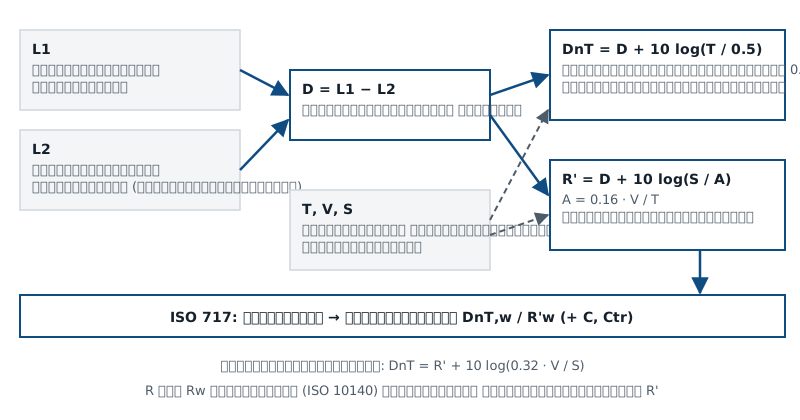
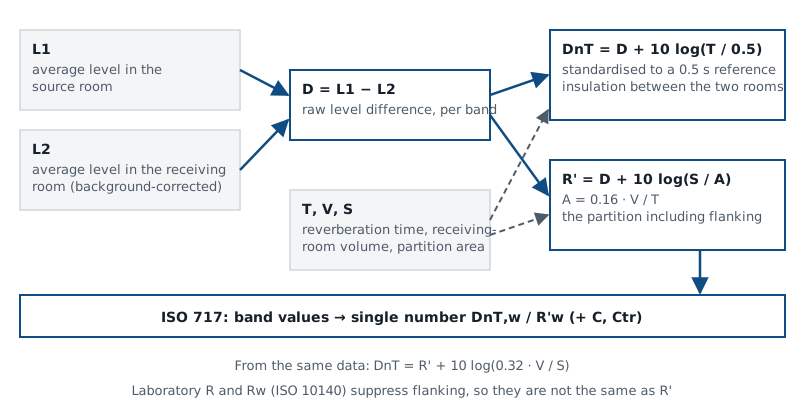
ค่าตัวเลขเดียวได้จากการนำ กราฟอ้างอิงมาตรฐาน มาเลื่อนขึ้นลงเทียบกับกราฟผลวัดทุกย่านความถี่ตามกฎของ ISO 717 แล้วอ่านค่าที่ 500 Hz ของเส้นอ้างอิง วิธีนี้ทำให้ย่านที่อ่อนแอมีผลต่อคะแนน จึงเป็นตัวเลขที่ยุติธรรมกว่าการเฉลี่ยธรรมดาThe single number is found by shifting a standard reference curve up or down against the measured curve according to the ISO 717 rules and reading the reference curve at 500 Hz. Weak bands therefore pull the rating down, which makes it fairer than a simple average.
ตัวเลขเหล่านี้ใช้แทนกันไม่ได้ R และ Rw เป็นคุณสมบัติของชิ้นส่วนที่วัดในห้องปฏิบัติการ (ISO 10140) ซึ่งกดเสียงอ้อมไว้ ส่วน R', R'w, DnT และ DnT,w เป็นผลภาคสนามของห้องคู่นั้น ๆ (ISO 16283) R' บอกสมรรถนะของผนังรวมเสียงอ้อม ขณะที่ DnT บอกการกันเสียงระหว่างสองห้อง และขึ้นกับปริมาตรห้องรับเสียง (V) กับพื้นที่ผนัง (S) ด้วย: สำหรับ R' เท่ากัน DnT = R' + 10 log(0.32 V / S) ห้องรับเสียงใหญ่หลังผนังเล็กจึงได้ DnT สูงกว่า ข้อกำหนดที่เขียนเป็น DnT,w จึงตรวจด้วยค่า Rw จากแคตตาล็อกไม่ได้ และในทางกลับกันThese numbers are not interchangeable. R and Rw are laboratory properties of an element (ISO 10140), measured with flanking suppressed. R', R'w, DnT and DnT,w are field results for one particular pair of rooms (ISO 16283). R' describes the partition including flanking, whereas DnT describes the insulation between two rooms and also depends on the receiving-room volume (V) and the partition area (S): for the same R', DnT = R' + 10 log(0.32 V / S), so a large receiving room behind a small wall scores a higher DnT. A requirement written as DnT,w therefore cannot be checked with a datasheet Rw, and vice versa.
รายละเอียดเชิงวิศวกรรม: วิศวกรอ่านผลการกันเสียงอย่างไรEngineering detail: how engineers read a sound insulation result
ค่าตัวเลขเดียวสะดวกสำหรับเทียบกับข้อกำหนด แต่ข้อมูลที่มีประโยชน์ที่สุดอยู่ใน กราฟรายย่าน 1/3 ออกเตฟ รูปร่างของกราฟช่วยบอกว่าจุดอ่อนมาจากไหน และควรแก้ที่ส่วนใดของโครงสร้างThe single number is convenient for comparing with a requirement, but the most useful information is in the 1/3-octave band curve. Its shape shows where a weakness comes from and which part of the construction to fix.
| ลักษณะที่เห็นในกราฟWhat the curve shows | สาเหตุที่พบบ่อยCommon cause | สิ่งที่ควรตรวจต่อWhat to check next |
|---|---|---|
| กราฟหยุดสูงขึ้นหรือแบนลงในย่านความถี่สูงThe curve stops rising or flattens at high frequencies | สาเหตุที่พบบ่อยCommon causeรอยรั่วและช่องว่าง เช่น ขอบประตู ช่องท่อ กล่องปลั๊กไฟชนกันLeaks and gaps: door edges, service penetrations, back-to-back sockets | สิ่งที่ควรตรวจต่อWhat to check nextตรวจรอยต่อและการอุดยาแนว หาจุดรั่วด้วยการฟังหรือการหาตำแหน่งเสียงJoints and sealing; locate leaks by listening or with source localization |
| หลุมชัดเจนในย่านกลางถึงสูงA clear dip at mid to high frequencies | สาเหตุที่พบบ่อยCommon causeความถี่วิกฤต (coincidence) ของแผ่นบางแข็ง เช่น กระจก แผ่นยิปซัมThe coincidence frequency of thin stiff panels such as glass or gypsum board | สิ่งที่ควรตรวจต่อWhat to check nextชนิดและความหนาของแผ่น การใช้แผ่นสองชั้นที่หนาไม่เท่ากันPanel type and thickness; double layers of unequal thickness |
| ค่าต่ำในย่านความถี่ต่ำLow values at low frequencies | สาเหตุที่พบบ่อยCommon causeการสั่นพ้องของผนังสองชั้น (มวล–อากาศ–มวล) หรือโหมดของห้องขนาดเล็กThe mass–air–mass resonance of double walls, or the modes of small rooms | สิ่งที่ควรตรวจต่อWhat to check nextระยะห่างโพรงและวัสดุในโพรง ดูค่า C และ Ctr ประกอบCavity depth and cavity fill; look at C and Ctr as well |
| ผล R' ต่ำกว่าค่า R ของผนังมากทุกย่านR' far below the element's R in every band | สาเหตุที่พบบ่อยCommon causeทางอ้อมผ่านโครงสร้างข้างเคียงเป็นทางหลักFlanking through adjoining structures dominates | สิ่งที่ควรตรวจต่อWhat to check nextรอยต่อผนังกับพื้น เพดาน และผนังด้านข้างWall–floor, wall–ceiling and side-wall junctions |
ค่าตัวเลขเดียวได้มาอย่างไร สำหรับเสียงผ่านอากาศ ISO 717-1 เลื่อนกราฟอ้างอิงขึ้นทีละ 1 dB จนผลรวมของ ส่วนเบี่ยงเบนที่ไม่เป็นผลดี (ย่านที่ผลวัดต่ำกว่ากราฟอ้างอิง) มากที่สุดแต่ไม่เกิน 32.0 dB เมื่อใช้ 16 ย่าน 1/3 ออกเตฟจาก 100 Hz ถึง 3150 Hz แล้วอ่านค่ากราฟอ้างอิงที่ 500 Hz สำหรับเสียงกระแทก ISO 717-2 ใช้หลักเดียวกันแต่กลับทิศ คือย่านที่ระดับเสียงกระแทกที่วัดได้ สูงกว่า กราฟอ้างอิงถือเป็นส่วนที่ไม่เป็นผลดีHow the single number is found. For airborne sound, ISO 717-1 shifts the reference curve in 1 dB steps until the sum of unfavourable deviations (bands where the measurement is below the reference) is as large as possible but not more than 32.0 dB, using the 16 1/3-octave bands from 100 Hz to 3150 Hz, and then reads the reference curve at 500 Hz. For impact sound, ISO 717-2 uses the same idea in reverse: bands where the measured impact level is above the reference curve count as unfavourable.
ผลที่ตามมาคือ ย่านที่อ่อนมากเพียงไม่กี่ย่านสามารถดึงค่าตัวเลขเดียวลงได้หลาย dB ส่วนย่านที่ดีเกินกราฟอ้างอิงไม่ได้ช่วยเพิ่มคะแนน การปรับปรุงที่ได้ผลจึงมักเป็นการแก้ย่านที่อ่อนที่สุด ไม่ใช่การเพิ่มความหนาโดยรวมAs a consequence, a few very weak bands can pull the single number down by several dB, while bands that exceed the reference curve earn no extra credit. Effective improvements therefore usually target the weakest bands rather than adding thickness everywhere.
- ก่อนเชื่อผล ให้ดูเครื่องหมายเสียงพื้นหลัง ย่านที่ห่างจากเสียงพื้นหลังไม่พอเป็นค่า "อย่างน้อย" ไม่ใช่ค่าจริงBefore trusting a result, look at the background-noise flags. Bands without enough margin are "at least" values, not true values.
- ดูว่าเวลาเสียงก้องที่ใช้แก้ค่าสมเหตุสมผล ห้องเปล่าผนังแข็งมักก้องนานกว่าห้องที่มีเฟอร์นิเจอร์ ถ้าค่าผิดปกติ ผล DnT จะผิดตามไปด้วยCheck that the reverberation time used for the correction is plausible. Empty hard rooms reverberate longer than furnished ones; if T is wrong, DnT is wrong too.
- ห้องขนาดเล็กต้องดูความถี่ต่ำเป็นพิเศษ ISO 16283 มีขั้นตอนเพิ่มเติมสำหรับย่านความถี่ต่ำในห้องขนาดเล็กSmall rooms need extra care at low frequencies; ISO 16283 has an additional low-frequency procedure for small rooms.
- ผลที่ใกล้เกณฑ์มากต้องพิจารณาความไม่แน่นอนของการวัด ผลต่างเพียง 1 dB จากเกณฑ์ไม่ควรตีความเกินกว่าที่ข้อมูลรองรับ วิธีตัดสินผ่านหรือไม่ผ่านควรตกลงกันในข้อกำหนดของโครงการResults very close to a limit must be judged with the measurement uncertainty in mind. A 1 dB difference from the criterion should not be over-interpreted; how pass or fail is decided should be agreed in the project specification.
ตัวอย่างสถานการณ์: ตรวจผนังระหว่างห้องชุดExample scenario: checking a party wall between apartments
ข้อกำหนดของโครงการคอนโดแห่งหนึ่งระบุว่าผนังระหว่างห้องชุดต้องได้ DnT,w ไม่ต่ำกว่า 50 dB (ตัวเลขสมมติเพื่อประกอบการอธิบาย) ห้องรับเสียงเป็นห้องนอนขนาด 40 m³ ผนังกั้นมีพื้นที่ 12 m² ผลวัดที่ย่าน 500 Hz เป็นดังนี้: ห้องต้นเสียง L1 = 96 dB ห้องรับเสียง L2 = 48 dB (ห่างจากเสียงพื้นหลังเกิน 10 dB จึงไม่ต้องแก้ค่า) ได้ D = 48 dB เวลาเสียงก้องของห้องรับเสียง T = 0.8 s
DnT = 48 + 10 log(0.8 / 0.5) = 48 + 2.0 = 50.0 dB
A = 0.16 × 40 / 0.8 = 8 m² ดังนั้น R' = 48 + 10 log(12 / 8) = 48 + 1.8 = 49.8 dB
ตรวจความสอดคล้อง: DnT = R' + 10 log(0.32 × 40 / 12) = 49.8 + 0.3 ≈ 50.1 dB ตรงกันภายในการปัดเศษ
ค่าที่ 500 Hz เพียงย่านเดียวยังไม่ใช่ DnT,w ต้องคำนวณทุกย่านแล้วเทียบกราฟอ้างอิงตาม ISO 717-1 ถ้ากราฟแสดงค่าต่ำที่ย่าน 2–4 kHz ขั้นต่อไปคือหารอยรั่ว เช่น กล่องปลั๊กไฟที่อยู่ตรงกันสองฝั่งผนัง ก่อนคิดเพิ่มความหนาผนังA condominium specification requires a DnT,w of at least 50 dB between apartments (an assumed figure for illustration). The receiving room is a 40 m³ bedroom and the separating wall is 12 m². At 500 Hz the results are: source room L1 = 96 dB, receiving room L2 = 48 dB (more than 10 dB above the background, so no correction), giving D = 48 dB; receiving-room reverberation time T = 0.8 s.
DnT = 48 + 10 log(0.8 / 0.5) = 48 + 2.0 = 50.0 dB
A = 0.16 × 40 / 0.8 = 8 m², so R' = 48 + 10 log(12 / 8) = 48 + 1.8 = 49.8 dB
Consistency check: DnT = R' + 10 log(0.32 × 40 / 12) = 49.8 + 0.3 ≈ 50.1 dB, equal within rounding.
One band at 500 Hz is not yet DnT,w: every band must be calculated and fitted to the ISO 717-1 reference curve. If the curve shows low values at 2–4 kHz, the next step is to look for leaks, such as back-to-back sockets, before thinking about a thicker wall.
ขั้นตอนการวัดจริง จำนวนตำแหน่ง และการเตรียมห้อง อยู่ในวิธีการตรวจวัด "วิธีทดสอบการกันเสียงผ่านอากาศ" และ "วิธีทดสอบเสียงกระทบของพื้น" (ลิงก์ท้ายหน้า) บทความนี้อธิบายความหมายของตัวเลขThe on-site procedure, number of positions and room preparation are covered in the application guides on airborne and impact sound insulation testing (links at the end of the page); this article explains what the numbers mean.
เสียงกระแทกและเครื่องเคาะมาตรฐานImpact sound and the tapping machine
เสียงเดินของคนแต่ละคนไม่เท่ากัน จึงใช้แทนต้นเสียงจริงไม่ได้ การวัดเสียงกระแทกจึงใช้ เครื่องเคาะมาตรฐาน (tapping machine) ซึ่งมีค้อนเหล็กเล็ก ๆ เรียงกันตกกระทบพื้นด้วยจังหวะและแรงที่กำหนดไว้ ทำให้ได้เสียงกระแทกเหมือนกันทุกครั้งไม่ว่าจะวัดที่ใดNo two people walk alike, so real footsteps cannot serve as a test source. Impact measurements use a standard tapping machine: a row of small steel hammers that fall onto the floor at a defined rate and force, producing the same impacts wherever it is used.
- วางเครื่องเคาะบนพื้นห้องชั้นบนหลายตำแหน่งPlace the tapping machine on the upper floor at several positions.
- วัดระดับเสียงในห้องชั้นล่างทีละย่าน 1/3 ออกเตฟ ที่หลายตำแหน่งไมโครโฟนMeasure the level in the room below, band by band in 1/3 octaves, at several microphone positions.
- วัดเสียงพื้นหลังและเวลาเสียงก้องในห้องล่าง แล้วแก้ค่าเหมือนการวัดเสียงผ่านอากาศMeasure the background noise and reverberation time in the room below and apply the corrections, as for airborne sound.
- สรุปเป็น L'nT,w ยิ่งตัวเลขต่ำ แปลว่าเสียงกระแทกลอดลงมาน้อยSummarise as L'nT,w: the lower the number, the less impact sound comes through.
ความต่างสำคัญ: การวัดเสียงผ่านอากาศเป็นการวัดแบบ เปรียบเทียบ (ดูผลต่างระหว่างสองห้อง) ส่วนการวัดเสียงกระแทกเป็นการวัดแบบ สัมบูรณ์ (ดูว่าห้องล่างดังเท่าไรเมื่อใช้ต้นเสียงมาตรฐาน) นอกจากเครื่องเคาะแล้ว NTi Audio ยังมีลูกบอลกระแทก (impact ball) ซึ่งเป็นต้นเสียงกระแทกแบบหนักและนุ่ม เลียนแบบแรงกระแทกอย่างการเดินเท้าเปล่าหรือเด็กกระโดด เหมาะเป็นพิเศษกับพื้นน้ำหนักเบา เช่น อาคารโครงสร้างไม้A key difference: the airborne measurement is relative (the difference between two rooms), while the impact measurement is absolute (how loud the room below becomes with a standard source). Besides the tapping machine, NTi Audio also offers an impact ball, a heavy, soft impact source that imitates impacts such as barefoot walking or children jumping; it is particularly suited to lightweight floors such as in timber buildings.
การกันเสียงของผนังภายนอก (facade)Facade sound insulation
เปลือกอาคาร ได้แก่ ผนังด้านนอก หน้าต่าง และประตู ทำหน้าที่ป้องกันเสียงจากถนน เครื่องบิน หรืองานก่อสร้าง การวัดใช้หลักเดียวกัน คือวางลำโพงไว้นอกอาคารให้เสียงตกกระทบผนังด้านนอก วัดระดับเสียงทั้งด้านนอกใกล้ผนังและในห้อง แล้วคำนวณผลต่าง พร้อมแก้ค่าเสียงพื้นหลังและเวลาเสียงก้องของห้องภายในThe building envelope (external walls, windows and doors) protects against road, aircraft and construction noise. The measurement follows the same idea: a loudspeaker outside sends sound onto the facade, levels are measured outside near the wall and inside the room, and the difference is calculated with background and reverberation corrections for the inside room.
ห้องนอนที่หันหน้าออกถนนใหญ่ ผนังก่ออิฐอาจกันเสียงได้ดี แต่หน้าต่างบานเลื่อนที่ปิดไม่สนิทกลายเป็นจุดอ่อน การวัดทีละย่านความถี่จะช่วยบอกว่าปัญหาอยู่ที่เสียงต่ำของรถบรรทุก (ซึ่งค่า Ctr ช่วยสะท้อน) หรืออยู่ที่รอยรั่วซึ่งมักเห็นชัดในความถี่สูงIn a bedroom facing a main road, the masonry wall may insulate well while a poorly sealed sliding window is the weak point. Band-by-band results show whether the problem is low-frequency truck noise (which the Ctr term helps to reflect) or leaks, which usually show up clearly at high frequencies.
มาตรฐานที่เกี่ยวข้องRelated standards
- ISO 16283: การวัดการกันเสียงในอาคารจริง (ภาคสนาม) ครอบคลุมเสียงผ่านอากาศ เสียงกระแทก และผนังภายนอก (แทนที่ ISO 140 ซึ่งเป็นมาตรฐานรุ่นเก่า)ISO 16283: field measurement of sound insulation in buildings, covering airborne, impact and facade insulation (successor to the older ISO 140).
- ISO 717: วิธีสรุปผลเป็นค่าตัวเลขเดียว เช่น Rw, DnT,w, L'nT,w และค่า C, CtrISO 717: how to derive single-number ratings such as Rw, DnT,w, L'nT,w and the C and Ctr terms.
- ISO 10140: การวัดในห้องปฏิบัติการ (ค่า R ของวัสดุหรือผนัง)ISO 10140: laboratory measurement (the R of an element).
- มาตรฐาน ASTM เช่น ASTM E336 และ E413 และมาตรฐานของแต่ละประเทศ เช่น DIN 4109 และ SIA 181 ซึ่งโปรแกรม Sound Insulation Reporter รองรับด้วยASTM standards such as ASTM E336 and E413, and national standards such as DIN 4109 and SIA 181, which the Sound Insulation Reporter also supports.
ค่าที่ต้องการ (เช่น DnT,w ต้องไม่ต่ำกว่าเท่าไร) มาจากข้อกำหนดของโครงการหรือกฎหมายของแต่ละประเทศ ไม่ได้อยู่ในมาตรฐานวิธีวัด ควรตรวจสอบเกณฑ์ที่ใช้กับโครงการของคุณก่อนเริ่มวัดRequired values (for example a minimum DnT,w) come from the project specification or national regulations, not from the measurement standards. Check which criteria apply to your project before measuring.
คำถามที่พบบ่อยFrequently asked questions
ใช้ค่า Rw จากแคตตาล็อกผนังทำนาย DnT,w ในอาคารจริงได้ไหมCan a datasheet Rw predict the DnT,w in a real building?
ใช้เป็นจุดเริ่มต้นได้ แต่ไม่ควรถือว่าเท่ากัน ในอาคารจริงมีทางอ้อม คุณภาพงานติดตั้ง และขนาดห้องเข้ามาเกี่ยวข้อง ผลภาคสนามจึงมักต่ำกว่า การประเมินสมรรถนะในอาคารจากข้อมูลของชิ้นส่วนมีวิธีคำนวณเฉพาะ (ชุดมาตรฐาน ISO 12354) และควรยืนยันด้วยการวัดจริงเมื่อสร้างเสร็จAs a starting point, yes, but not as an equal value. Real buildings add flanking, workmanship and room geometry, so field results are usually lower. Estimating building performance from element data has its own calculation methods (the ISO 12354 series), and the result should be confirmed by measurement once the building is finished.
พื้นระหว่างชั้นต้องทดสอบทั้งเสียงผ่านอากาศและเสียงกระแทกหรือไม่Does a floor need both an airborne and an impact test?
โดยทั่วไปใช่ เพราะสองอย่างนี้เป็นปัญหาคนละแบบ พื้นคอนกรีตหนาอาจกันเสียงพูดได้ดี แต่ยังส่งเสียงเดินลงมามากถ้าไม่มีวัสดุรองพื้นหรือพื้นลอย ข้อกำหนดของโครงการมักระบุทั้งค่า DnT,w (หรือ R'w) และค่า L'nT,wUsually yes, because they are different problems. A thick concrete slab may block speech well yet still pass a lot of footstep noise without a resilient layer or floating floor. Project specifications often state both a DnT,w (or R'w) and an L'nT,w requirement.
STC กับ Rw เป็นตัวเลขเดียวกันไหมAre STC and Rw the same number?
ไม่ใช่ STC มาจากมาตรฐานอเมริกัน (ASTM E413) ซึ่งใช้ช่วงความถี่ (125–4000 Hz แทน 100–3150 Hz) และกฎการเทียบกราฟอ้างอิงต่างจาก ISO 717 และผลวัดที่ใช้คำนวณก็มาจากวิธีวัดคนละมาตรฐาน ตัวเลขสองระบบมักใกล้กันแต่ไม่ควรแปลงกันแบบหนึ่งต่อหนึ่ง ให้ใช้ระบบที่ข้อกำหนดของโครงการระบุไว้No. STC comes from the American standard ASTM E413, which uses a different frequency range (125–4000 Hz instead of 100–3150 Hz) and different curve-fitting rules from ISO 717, and the input data come from different measurement standards. The two are often similar but should not be converted one-to-one; use the system named in the project specification.
วัดก่อนตกแต่งห้องเสร็จได้ไหมCan I measure before the rooms are finished?
ได้ และมีประโยชน์สำหรับหาจุดอ่อนแต่เนิ่น ๆ แต่ผลสะท้อนสภาพอาคาร ณ วันที่วัด ประตู ฝ้า งานอุดยาแนว และงานระบบที่ติดตั้งภายหลังเปลี่ยนผลได้ การวัดเพื่อตรวจรับควรทำเมื่อองค์ประกอบที่มีผลต่อการกันเสียงเสร็จสมบูรณ์แล้วYes, and it is useful for finding weaknesses early, but the result reflects the building on the test day. Doors, ceilings, sealing and services installed later can change it. Acceptance tests should be made once everything that affects the insulation is complete.
ติดแผ่นซับเสียงในห้องตัวเองช่วยลดเสียงจากห้องข้าง ๆ ได้ไหมWill absorbing panels in my room reduce noise from next door?
ช่วยได้น้อยมาก แผ่นซับเสียงลดเสียงก้องในห้อง จึงลดระดับเสียงที่ลอดเข้ามาได้เพียงเล็กน้อย แต่ไม่ได้ทำให้ผนังกันเสียงดีขึ้น การแก้ปัญหาเสียงข้ามห้องต้องเพิ่มมวล แยกโครงสร้าง อุดรอยรั่ว หรือจัดการทางอ้อมOnly slightly. Absorption shortens reverberation in the room, so the transmitted sound builds up a little less, but the wall itself insulates no better. Fixing sound between rooms needs added mass, structural separation, sealed leaks or treated flanking paths.
คำศัพท์สำคัญKey terms
- ห้องต้นเสียง (source room)Source room
- ห้องที่เปิดเสียงทดสอบ หรือห้องที่วางเครื่องเคาะThe room where the test sound is played, or where the tapping machine stands.
- ห้องรับเสียง (receiving room)Receiving room
- ห้องอีกฝั่งของผนังหรือพื้น ที่วัดว่าเสียงลอดมาเท่าไรThe room on the other side of the wall or floor, where the transmitted sound is measured.
- ผลต่างระดับเสียง (level difference, D)Level difference (D)
- ระดับเสียงห้องต้นเสียงลบระดับเสียงห้องรับเสียงSource-room level minus receiving-room level.
- เสียงอ้อม (flanking transmission)Flanking transmission
- เสียงที่ไม่ได้ผ่านผนังที่ทดสอบโดยตรง แต่อ้อมผ่านพื้น เพดาน ผนังข้างเคียง ท่อ หรือช่องว่างSound that does not pass directly through the tested wall but bypasses it via floors, ceilings, adjoining walls, ducts or gaps.
- เครื่องเคาะมาตรฐาน (tapping machine)Tapping machine
- ต้นเสียงกระแทกที่สร้างแรงกระแทกบนพื้นแบบเดิมทุกครั้งA standard impact source that strikes the floor in exactly the same way every time.
- ค่าตัวเลขเดียว (single-number rating)Single-number rating
- ตัวเลขเดียวที่สรุปผลทุกย่านความถี่ตาม ISO 717 มีตัวห้อย wOne number summarising all bands according to ISO 717, marked with the subscript w.
ความเข้าใจผิดที่พบบ่อยCommon misunderstandings
- ผนังที่ได้ค่า R สูงจากห้องแล็บ จะได้ผลเท่ากันเมื่อสร้างจริง — ไม่จริง ในอาคารจริงมีเสียงอ้อมผ่านโครงสร้างข้างเคียง และคุณภาพงานติดตั้ง เช่น รอยรั่วรอบปลั๊กไฟหรือขอบฝ้า จึงมักได้ R' ต่ำกว่า RA wall with a high laboratory R will perform the same on site. Not so: real buildings have flanking paths and workmanship issues such as leaks around sockets or ceiling edges, so R' is usually lower than R.
- ตัวเลขยิ่งสูงยิ่งดีเสมอ — ใช้ได้กับ R', DnT,w เท่านั้น สำหรับ L'nT,w ของเสียงกระแทก ตัวเลขยิ่ง ต่ำ ยิ่งดีA higher number is always better. True for R' and DnT,w only; for impact sound (L'nT,w) a lower number is better.
- ผนังที่กันเสียงพูดได้ดี จะกันเสียงเบสหรือเสียงรถบรรทุกได้ดีด้วย — ไม่เสมอไป ดูค่า C และ Ctr และผลรายย่านความถี่ประกอบA wall that blocks speech also blocks bass or truck noise. Not necessarily; check the C and Ctr terms and the band results.
- วัดตอนไหนก็ได้ — ถ้ามีเสียงรบกวนจากงานก่อสร้างหรือเครื่องจักรในอาคาร ผลในบางย่านอาจใช้ไม่ได้ ควรวางแผนเวลาที่เงียบ และบันทึกเสียงพื้นหลังทุกครั้งYou can measure at any time. Construction work or building services can make some bands unusable; plan for quiet periods and always record the background noise.
นำไปใช้ที่ไหนWhere it is used
- ตรวจรับผนังและพื้นระหว่างห้องชุดในคอนโด โรงแรม และหอพักAcceptance testing of walls and floors between apartments, hotel rooms and dormitories.
- ห้องประชุม ห้องผู้บริหาร และห้องที่ต้องการความเป็นส่วนตัวในการพูดคุยMeeting rooms, executive offices and other rooms that need speech privacy.
- อาคารริมถนนใหญ่หรือใกล้สนามบิน เพื่อตรวจการกันเสียงของหน้าต่างและผนังภายนอกBuildings near main roads or airports, to check windows and facades.
- หาสาเหตุเมื่อมีเรื่องร้องเรียนเรื่องเสียงระหว่างห้อง และตรวจผลหลังการปรับปรุงInvestigating neighbour noise complaints and verifying improvements afterwards.