ขอบเขตแบบเข้าใจง่ายScope in plain words
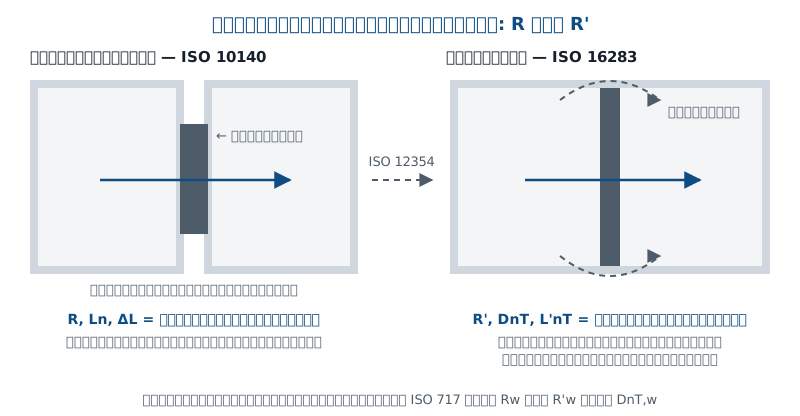
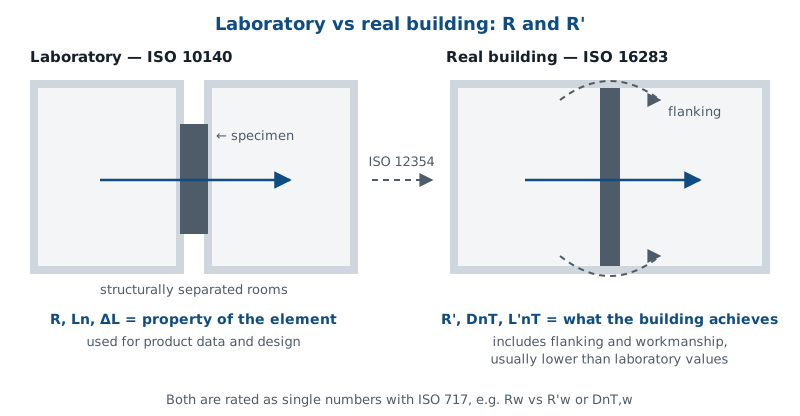
ห้องทดสอบตาม ISO 10140 ประกอบด้วยห้องสองห้อง (หรือห้องบนและห้องล่างสำหรับพื้น) ที่แยกโครงสร้างออกจากกัน มีช่องเปิดสำหรับติดตั้งชิ้นทดสอบ เสียงจึงผ่านจากห้องหนึ่งไปอีกห้องได้ทางเดียวคือผ่านชิ้นทดสอบ ทำให้ผลวัดเป็นคุณสมบัติของชิ้นส่วนนั้นจริง ๆ และทำซ้ำได้ระหว่างห้องปฏิบัติการต่าง ๆAn ISO 10140 test facility has two rooms (or an upper and lower room for floors) that are structurally separated, with an opening where the specimen is mounted. Sound can only pass from one room to the other through the specimen, so the result is truly a property of that element and can be reproduced between laboratories.
- ส่วนที่ 1 กติกาเฉพาะของผลิตภัณฑ์แต่ละประเภท เช่น การติดตั้งประตู หน้าต่าง หรือวัสดุปูพื้นPart 1 — application rules for specific product types, such as how to mount doors, windows or floor coverings.
- ส่วนที่ 2 การวัดการกันเสียงผ่านอากาศ (เช่น ค่า R ของผนัง หรือค่าสำหรับชิ้นส่วนขนาดเล็กอย่างช่องระบายอากาศ)Part 2 — measurement of airborne sound insulation (e.g. the R of a wall, or values for small elements such as air vents).
- ส่วนที่ 3 การวัดการกันเสียงกระแทกของพื้นและการลดเสียงของวัสดุปูพื้นPart 3 — measurement of impact sound insulation of floors and the reduction given by floor coverings.
- ส่วนที่ 4 ขั้นตอนการวัดและข้อกำหนดทั่วไปที่ใช้ร่วมกันPart 4 — common measurement procedures and requirements.
- ส่วนที่ 5 ข้อกำหนดของห้องทดสอบและอุปกรณ์ รวมถึงการตรวจคุณสมบัติห้องทดสอบPart 5 — requirements for test facilities and equipment, including qualification of the facility.
แนวคิดและปริมาณสำคัญKey concepts and quantities
- R — ดัชนีลดเสียง (sound reduction index)R — sound reduction index
- บอกว่าชิ้นส่วนลดพลังงานเสียงที่ผ่านได้เท่าไร ต่อย่านความถี่ คำนวณจากผลต่างระดับเสียง พื้นที่ชิ้นทดสอบ และการดูดซับเสียงของห้องรับเสียง: R = L1 − L2 + 10 lg(S/A) โดย S คือพื้นที่ชิ้นทดสอบ และ A คือพื้นที่ดูดซับเสียงเทียบเท่าของห้องรับเสียง (ประมาณจากเวลาเสียงก้อง A = 0.16 V/T) ไม่มีเครื่องหมาย ' เพราะไม่มีเสียงอ้อมHow much the element reduces the sound energy passing through it, per band; derived from the level difference, the specimen area and the absorption of the receiving room: R = L1 − L2 + 10 lg(S/A), where S is the specimen area and A the equivalent absorption area of the receiving room (estimated from the reverberation time, A = 0.16 V/T). No ' mark, because there is no flanking.
- Dn,e — สำหรับชิ้นส่วนขนาดเล็กDn,e — for small elements
- ชิ้นส่วนเล็ก เช่น ช่องลม รางสายไฟ หรือช่องระบายอากาศ ไม่มีพื้นที่ที่ชัดเจน จึงรายงานเป็นผลต่างระดับเสียงที่ปรับค่าแทน RSmall elements such as air inlets, cable ducts or vents have no clear area, so a normalized level difference is reported instead of R.
- Ln — ระดับเสียงกระแทกที่ปรับค่าLn — normalized impact sound level
- ระดับเสียงในห้องล่างขณะเครื่องเคาะมาตรฐานทำงานบนพื้นทดสอบ ปรับเป็นพื้นที่ดูดซับเสียงอ้างอิง 10 m² (Ln = L2 + 10 lg(A/10 m²)) ยิ่งต่ำยิ่งดีThe level in the room below while the standard tapping machine runs on the test floor, normalized to a reference absorption area of 10 m² (Ln = L2 + 10 lg(A/10 m²)); lower is better.
- ΔL — การลดเสียงกระแทกของวัสดุปูพื้นΔL — impact reduction of floor coverings
- ผลต่างของ Ln ก่อนและหลังปูวัสดุบนพื้นอ้างอิง ใช้เปรียบเทียบพรม ไม้ลามิเนต หรือแผ่นรองพื้นThe difference in Ln with and without the covering on a reference floor; used to compare carpets, laminate or underlays.
- ต้นเสียงกระแทกทางเลือกAlternative impact sources
- ตามบทคัดย่อของ ISO 10140-3:2021 วิธีหลักใช้เครื่องเคาะมาตรฐาน (จำลองการเดินสวมรองเท้า) และมีวิธีทางเลือกที่ใช้เครื่องเคาะแบบดัดแปลง หรือต้นเสียงแบบหนักและนุ่ม (heavy/soft เช่น ลูกบอลยาง) สำหรับจำลองเสียงเดินเท้าเปล่าหรือเด็กกระโดดที่มีพลังงานความถี่ต่ำมากAccording to the ISO 10140-3:2021 abstract, the main method uses the standard tapping machine (simulating footsteps in shoes), with alternative methods using a modified tapping machine or a heavy/soft impact source (such as a rubber ball) to simulate bare-foot walking or children jumping, which have strong low-frequency content.
ใครใช้ และใช้เมื่อไรWho uses it and when
- ผู้ผลิตผนังสำเร็จรูป ประตู หน้าต่าง กระจก และวัสดุปูพื้น เพื่อแสดงค่าในเอกสารผลิตภัณฑ์ (มักสรุปเป็น Rw หรือ ΔLw ด้วย ISO 717)Manufacturers of partition systems, doors, windows, glazing and floor coverings, to publish product data (usually rated as Rw or ΔLw with ISO 717).
- ห้องปฏิบัติการทดสอบที่ได้รับการรับรองAccredited test laboratories.
- ผู้ออกแบบที่ต้องการค่าอ้างอิงของชิ้นส่วนเพื่อทำนายผลในอาคาร (เช่น ด้วยมาตรฐานชุด ISO 12354)Designers who need element data to predict in-situ performance (for example with the ISO 12354 series).
การวัดโดยทั่วไปทำอย่างไรHow measurements are typically done
- ติดตั้งชิ้นทดสอบในช่องเปิดของห้องทดสอบตามกติกาของผลิตภัณฑ์ประเภทนั้น (ส่วนที่ 1) รวมถึงการปิดขอบและรอยต่อMount the specimen in the test opening following the rules for that product type (Part 1), including edge sealing and joints.
- เสียงผ่านอากาศ: สร้างเสียงในห้องต้นเสียงด้วยลำโพง วัดระดับเสียงเฉลี่ยทั้งสองห้องต่อย่านความถี่ แล้ววัดเวลาเสียงก้องของห้องรับเสียงAirborne: create sound in the source room with a loudspeaker, measure the average level in both rooms per band, then the reverberation time of the receiving room.
- เสียงกระแทก: วางเครื่องเคาะบนพื้นทดสอบหลายตำแหน่ง วัดระดับเสียงในห้องล่างImpact: run the tapping machine at several positions on the test floor and measure the level in the room below.
- แก้ค่าเสียงพื้นหลัง ตรวจว่าห้องทดสอบไม่จำกัดผล (เช่น ชิ้นทดสอบที่กันเสียงได้ดีมาก) แล้วคำนวณ R, Ln หรือ ΔLCorrect for background noise, check that the facility itself does not limit the result (e.g. for very high-performing specimens), then calculate R, Ln or ΔL.
- รายงานพร้อมรายละเอียดการติดตั้งชิ้นทดสอบ เพราะรายละเอียดเล็ก ๆ อย่างการยาแนวหรือจำนวนสกรูก็เปลี่ยนผลได้Report with full details of the specimen and mounting, because small details such as sealing or screw spacing can change the result.
การใช้งานจริง: มาตรฐานนี้มีความหมายอย่างไรต่องานวัดPractical use: what this means for a measurement job
วิศวกรภาคสนามแทบไม่ได้วัดตาม ISO 10140 เอง แต่ใช้ผลของมันทุกวันในรูปค่า Rw หรือ ΔLw จากเอกสารผลิตภัณฑ์ การอ่านรายงานทดสอบของห้องปฏิบัติการให้เป็นจึงสำคัญField engineers rarely measure to ISO 10140 themselves, but they use its results every day as Rw or ΔLw in product data, so reading a laboratory test report well matters.
- ตรวจชิ้นทดสอบ: ขนาด ความหนา ชั้นวัสดุ ระยะโครง จำนวนสกรู และวิธียาแนว ตรงกับสิ่งที่จะสร้างจริงหรือไม่Check the specimen: do size, thickness, layers, stud spacing, screw count and sealing match what will actually be built?
- ตรวจห้องปฏิบัติการ: ได้รับการรับรองหรือไม่ และรายงานระบุฉบับของมาตรฐานชัดเจนหรือไม่Check the laboratory: is it accredited, and does the report state the edition of the standard clearly?
- ดูกราฟ ไม่ใช่ดูแค่ตัวเลขเดียว: กราฟต่อย่านบอกจุดอ่อน เช่น ย่านที่ผนังสั่นพ้องหรือย่านความถี่วิกฤต ซึ่งตัวเลขเดียวซ่อนไว้Look at the curve, not only the number: the band curve shows weaknesses such as resonance or coincidence dips that the single number hides.
- ประตูและหน้าต่าง: ค่าจากห้องปฏิบัติการมักทดสอบทั้งชุดพร้อมวงกบและซีล การติดตั้งหน้างานที่ต่างออกไปอาจทำให้ผลลดลงมากDoors and windows: laboratory values usually cover the complete set with frame and seals; different site installation can reduce performance considerably.
- วัสดุปูพื้น: ΔLw ใช้เปรียบเทียบวัสดุ แต่ผลจริงขึ้นกับพื้นโครงสร้างที่ใช้Floor coverings: ΔLw compares products, but the real result depends on the structural floor used.
ผู้ออกแบบโรงแรมเลือกประตูห้องพักจากเอกสารที่แสดงค่า Rw ตาม ISO 10140 และ ISO 717 เมื่ออ่านรายงานพบว่าค่านี้ทดสอบกับประตูที่มีซีลรอบวงกบและซีลใต้บานแบบอัตโนมัติ ผู้ออกแบบจึงระบุอุปกรณ์ชุดเดียวกันไว้ในแบบ เพื่อไม่ให้ผลหน้างานต่ำกว่าที่คาดมากเกินไปA hotel designer picks guest-room doors from product data showing Rw to ISO 10140 and ISO 717. Reading the test report, they find the value was obtained with perimeter seals and an automatic drop seal, so they specify the same hardware in the drawings to avoid an on-site result far below expectations.
มาตรฐานที่เกี่ยวข้องและความเชื่อมโยงRelated standards and how they connect
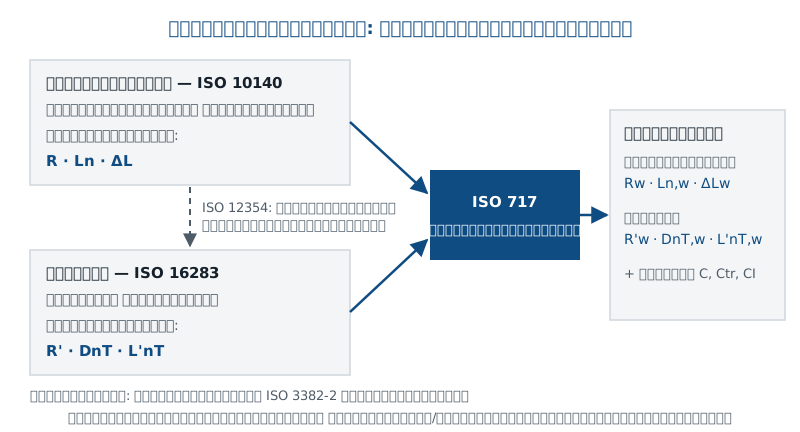
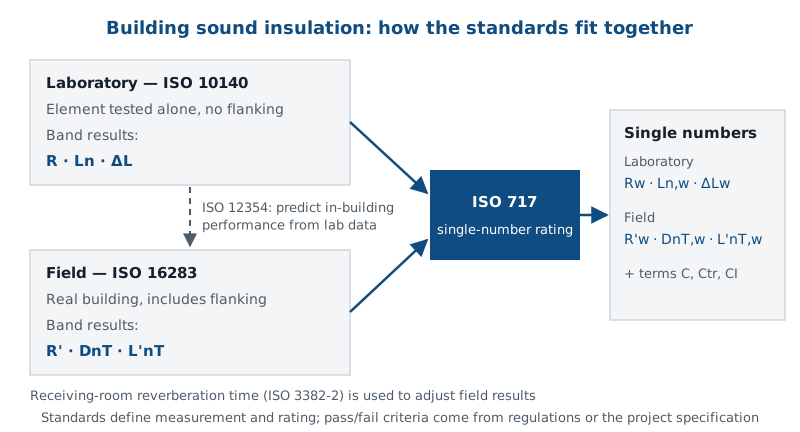
- ISO 717 สรุปผลของ ISO 10140 เป็นตัวเลขเดียว (Rw, Ln,w, ΔLw พร้อม C, Ctr, CI)ISO 717 rates ISO 10140 results as single numbers (Rw, Ln,w, ΔLw with C, Ctr, CI).
- ISO 16283 คือการวัดแบบเดียวกันในอาคารจริง ผลภาคสนามมีเครื่องหมาย ' (เช่น R') เพราะรวมเสียงอ้อมISO 16283 is the equivalent measurement in real buildings; field results carry a ' (e.g. R') because flanking is included.
- ISO 12354 ใช้ค่าจากห้องปฏิบัติการไปทำนายผลในอาคารก่อนสร้างISO 12354 uses laboratory data to predict building performance before construction.
- ISO 354 และ ISO 10534 เกี่ยวกับการดูดซับเสียง ไม่ใช่การกันเสียง อย่าสับสนกับ ISO 10140ISO 354 and ISO 10534 concern sound absorption, not sound insulation; do not confuse them with ISO 10140.
ความเข้าใจผิดที่พบบ่อยCommon misunderstandings
- ค่า Rw ในแคตตาล็อกคือค่าที่ห้องจริงจะได้ — ในอาคารจริงมีเสียงอ้อมและงานติดตั้งที่ต่างจากห้องแล็บ ผลภาคสนามจึงมักต่ำกว่าThe catalogue Rw is what the real room will get. Real buildings have flanking and workmanship that differ from the laboratory, so field results are usually lower.
- วัดตาม ISO 10140 ในอาคารได้ — ไม่ได้ ISO 10140 ต้องใช้ห้องทดสอบที่ผ่านข้อกำหนดของส่วนที่ 5 ในอาคารจริงให้ใช้ ISO 16283ISO 10140 can be used on site. No: it needs a facility that meets Part 5. In real buildings use ISO 16283.
- ผลของผนังแบบหนึ่งใช้กับทุกขนาดและทุกรายละเอียดการติดตั้งได้ — การเปลี่ยนวัสดุ รอยต่อ หรือวิธีติดตั้ง อาจทำให้ผลต่างกันมากOne result applies to every size and mounting detail. Changes in materials, joints or mounting can change the result considerably.
เกี่ยวข้องกับเครื่องมือวัดอย่างไรHow this relates to instruments
ข้อกำหนดทั่วไป: ส่วนที่ 5 กำหนดทั้งห้องทดสอบและอุปกรณ์ เช่น ระบบวัดระดับเสียงแบบย่าน 1/3 ออกเตฟที่สอบเทียบแล้ว ลำโพง เครื่องเคาะมาตรฐาน และการตรวจคุณสมบัติของห้องทดสอบ งานนี้จึงเป็นงานของห้องปฏิบัติการเฉพาะทาง ไม่ใช่การวัดด้วยเครื่องมือพกพาในอาคารทั่วไปGeneral requirements: Part 5 sets requirements for both the facility and the equipment, such as a calibrated 1/3-octave measurement system, loudspeakers, the standard tapping machine and qualification of the facility. This is therefore the work of specialised laboratories, not a portable on-site measurement.
ข้อมูลจาก NTi Audio (ตามที่ NTi ระบุ): หน้า Building Acoustics ของ NTi Audio ระบุว่าเครื่องเคาะ TM EOS2 สอดคล้องกับ ISO 10140 (รวมถึง ISO 16283 และ ISO 717) และข้อมูลลูกบอลกระแทก IB01 อ้างถึง ISO 10140-5 และ ISO 16283-2 ข้อมูลนี้เป็นการระบุของผู้ผลิตเกี่ยวกับต้นเสียง ไม่ได้หมายความว่าอุปกรณ์ใดทำให้ห้องหนึ่งเป็นห้องทดสอบตาม ISO 10140From NTi Audio (as stated by NTi): NTi Audio's Building Acoustics page states that the TM EOS2 tapping machine complies with ISO 10140 (as well as ISO 16283 and ISO 717), and the IB01 impact ball information refers to ISO 10140-5 and ISO 16283-2. These are manufacturer statements about the sources; no single device turns a room into an ISO 10140 test facility.
คำถามที่พบบ่อยFrequently asked questions
ทำไมผลภาคสนามต่ำกว่าผลห้องปฏิบัติการWhy are field results lower than laboratory results?
เพราะในอาคารจริงเสียงเดินทางผ่านโครงสร้างข้างเคียงด้วย (เสียงอ้อม) และมีรอยต่อ ช่องรั่ว และฝีมือการติดตั้งที่ต่างจากชิ้นทดสอบ ห้องปฏิบัติการถูกออกแบบมาเพื่อตัดเส้นทางเหล่านี้ออกBecause in a real building sound also travels through adjoining structures (flanking), and there are joints, leaks and workmanship that differ from the specimen. The laboratory is designed to remove those paths.
ผล ISO 10140 ใช้ทำนายผลในอาคารได้ไหมCan ISO 10140 results predict building performance?
ได้ในฐานะข้อมูลขาเข้า ชุดมาตรฐาน ISO 12354 ใช้ข้อมูลห้องปฏิบัติการร่วมกับรายละเอียดรอยต่อและโครงสร้างข้างเคียงเพื่อประมาณผลในอาคาร แต่ยังเป็นการประมาณ ควรยืนยันด้วยการวัดภาคสนามYes, as input. The ISO 12354 series combines laboratory data with junction and flanking-structure details to estimate building performance, but it remains an estimate that should be confirmed by field measurement.
ใช้ห้องในอาคารของเราเป็นห้องทดสอบตาม ISO 10140 ได้ไหมCould rooms in our own building serve as an ISO 10140 facility?
ไม่ได้ ห้องทดสอบต้องแยกโครงสร้างเพื่อตัดเสียงอ้อมและผ่านการตรวจสอบคุณสมบัติตามส่วนที่ 5 ในอาคารทั่วไปให้ใช้ ISO 16283No. A test facility must be structurally separated to suppress flanking and be qualified to Part 5. In ordinary buildings use ISO 16283.