ทำไมเรื่องนี้สำคัญWhy this matters
ห้องเรียน ห้องประชุม และสำนักงาน ถูกสร้างมาเพื่อสื่อสารด้วยเสียงพูด ถ้าฟังไม่ชัด ผลกระทบเกิดขึ้นทันที นักเรียนเข้าใจบทเรียนน้อยลง ผู้เข้าประชุมต้องถามซ้ำ คนในห้องประชุมออนไลน์ฟังผู้พูดในห้องไม่รู้เรื่อง และพนักงานในสำนักงานเหนื่อยล้าจากเสียงรบกวนตลอดวัน NTi Audio ชี้ว่าคุณภาพเสียงในห้องเรียนมีผลโดยตรงต่อความชัดเจนของเสียงพูด ซึ่งส่งผลต่อความสำเร็จในการเรียนของนักเรียนClassrooms, meeting rooms and offices exist to communicate by speech. When speech is unclear the effects are immediate: pupils understand less, meeting participants ask for repeats, remote participants cannot follow people in the room, and office staff are worn out by noise all day. NTi Audio notes that a classroom's acoustic performance directly affects speech intelligibility, and with it the pupils' learning success.
ปัญหาเหล่านี้มักแก้ได้ แต่ต้องรู้ก่อนว่าต้นเหตุคืออะไร การติดแผ่นซับเสียงเพิ่มไม่ช่วยถ้าปัญหาจริงคือเสียงเครื่องปรับอากาศ และการเพิ่มความดังลำโพงไม่ช่วยถ้าห้องก้องมาก การวัดจึงเป็นขั้นแรกที่คุ้มค่าที่สุดThese problems can usually be fixed, but only once the cause is known. Adding absorbing panels will not help if the real problem is the air conditioning, and turning up the loudspeakers will not help in a very reverberant room. Measuring is therefore the most worthwhile first step.
แนวคิดพื้นฐาน: สามสิ่งที่ทำให้ฟังชัดหรือไม่ชัดThe basic idea: three things that make speech clear or unclear
เสียงพูดประกอบด้วยพยางค์ที่ดังขึ้นลงอย่างรวดเร็ว หูแยกคำได้เพราะได้ยินช่วง ‘ดัง’ และ ‘เงียบ’ สลับกันชัดเจน อะไรก็ตามที่ถมช่องว่างระหว่างพยางค์ให้เต็มจะทำให้คำพูดเบลอ ในห้องมีสามสาเหตุหลักSpeech is made of syllables that rise and fall quickly in level. The ear separates words because it hears clear alternations of ‘loud’ and ‘quiet’. Anything that fills the gaps between syllables blurs speech. In a room there are three main causes.
| สาเหตุCause | เกิดอะไรขึ้นWhat happens | ตัวอย่างExample |
|---|---|---|
| เสียงก้องมากเกินไปToo much reverberation | เกิดอะไรขึ้นWhat happensเสียงสะท้อนของพยางค์ก่อนหน้ายังค้างอยู่ จึงทับพยางค์ถัดไป เสียงสะท้อนมีมากเมื่อเทียบกับเสียงตรงReflections of the previous syllable are still present and cover the next one; the reflected sound is too strong compared with the direct sound | ตัวอย่างExampleห้องประชุมผนังกระจก พื้นหินขัด เพดานแข็งA meeting room with glass walls, a polished stone floor and a hard ceiling |
| เสียงพื้นหลังดังHigh background noise | เกิดอะไรขึ้นWhat happensเสียงรบกวนคงที่ถมช่วงเงียบระหว่างพยางค์ ผู้พูดต้องพูดดังขึ้นจนเหนื่อยSteady noise fills the quiet gaps between syllables; talkers must raise their voices and tire | ตัวอย่างExampleเครื่องปรับอากาศ พัดลมระบายอากาศ เสียงจราจรจากถนน เสียงคนในห้องข้าง ๆAir conditioning, ventilation fans, road traffic, people in the next room |
| เสียงตรงอ่อนเกินไปDirect sound too weak | เกิดอะไรขึ้นWhat happensผู้ฟังอยู่ไกล หรือระบบเสียงวางลำโพงไม่เหมาะ เสียงที่ถึงผู้ฟังส่วนใหญ่จึงเป็นเสียงสะท้อนListeners are far away or loudspeakers are poorly placed, so most of what reaches them is reflected sound | ตัวอย่างExampleแถวหลังของห้องบรรยาย หรือลำโพงเพดานที่ตั้งค่าไม่ดีThe back rows of a lecture room, or badly set-up ceiling loudspeakers |
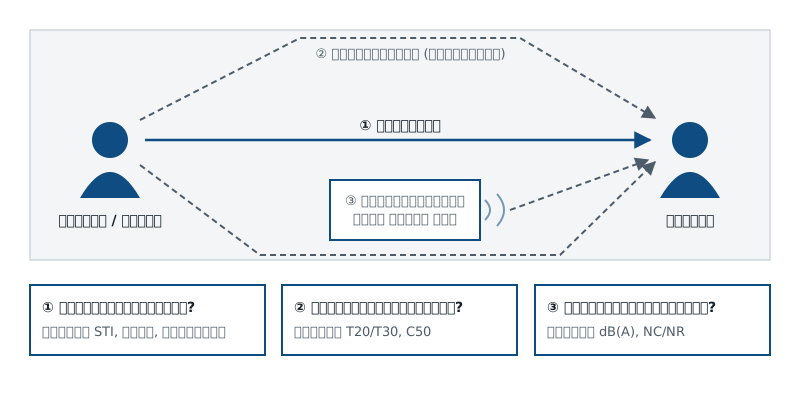
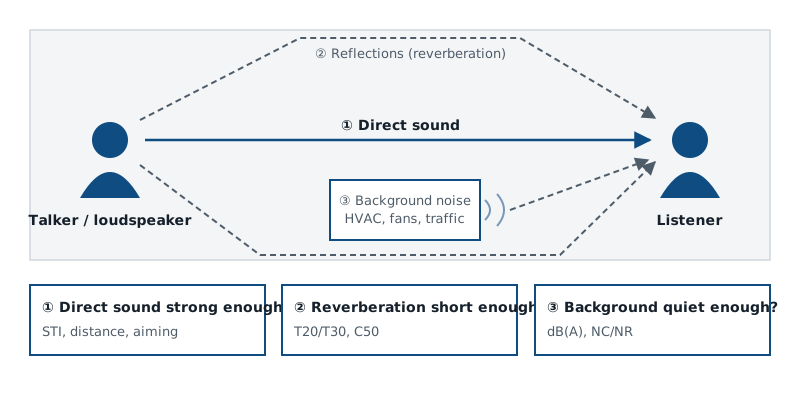
ลองนึกถึงการคุยกับเพื่อนในร้านกาแฟที่มีผนังปูน พื้นกระเบื้อง และเครื่องชงกาแฟส่งเสียงดัง เสียงก้องทำให้เสียงคนทั้งร้านสะสมกัน เสียงพื้นหลังจึงดังขึ้น ทุกคนต้องพูดดังขึ้น ซึ่งยิ่งทำให้ร้านดังขึ้นอีก ห้องเดียวกันถ้าติดวัสดุดูดซับเสียงที่เพดาน จะคุยกันได้สบายขึ้นมากโดยไม่ต้องเปลี่ยนอย่างอื่นเลยThink of chatting with a friend in a café with plaster walls, a tiled floor and a noisy coffee machine. Reverberation makes everyone's voices accumulate, so the background gets louder, everyone talks louder, and the café gets louder still. With absorbing material on the ceiling, the same room becomes much more comfortable to talk in without changing anything else.
ค่าที่ 1: เวลาเสียงก้องMeasure 1: reverberation time
เวลาเสียงก้อง (reverberation time, RT60) คือเวลาที่เสียงในห้องลดลง 60 dB หลังแหล่งเสียงหยุด สำหรับห้องที่เน้นเสียงพูด ค่านี้ควรค่อนข้างสั้น ค่าแนะนำโดยประมาณจาก NTi Audio มีดังนี้Reverberation time (RT60) is the time the sound in a room takes to fall by 60 dB after the source stops. For rooms meant for speech it should be fairly short. NTi Audio's approximate recommendations are:
| ห้องRoom | ปริมาตรโดยประมาณApproximate volume | เวลาเสียงก้องที่แนะนำRecommended reverberation time |
|---|---|---|
| ห้องเรียนClassroom | ปริมาตรโดยประมาณApproximate volumeไม่เกิน 200 m³under 200 m³ | เวลาเสียงก้องที่แนะนำRecommended reverberation time0.4–0.6 วินาที0.4–0.6 s |
| สำนักงานOffice | ปริมาตรโดยประมาณApproximate volumeไม่เกิน 1,000 m³under 1,000 m³ | เวลาเสียงก้องที่แนะนำRecommended reverberation time0.5–1.1 วินาที0.5–1.1 s |
| ห้องบรรยายLecture hall | ปริมาตรโดยประมาณApproximate volumeไม่เกิน 5,000 m³under 5,000 m³ | เวลาเสียงก้องที่แนะนำRecommended reverberation time1.0–1.5 วินาที1.0–1.5 s |
หน้าอื่นของ NTi Audio ใช้ตัวเลขที่กว้างกว่า เช่น ห้องเรียนควรก้องประมาณ 1 วินาทีหรือน้อยกว่า และสำนักงาน 0.5–1 วินาที ตัวเลขเหล่านี้ใช้เป็นแนวทางเบื้องต้นได้ แต่เป้าหมายจริงของโครงการควรมาจากมาตรฐานหรือข้อกำหนดที่ใช้กับอาคารนั้น ซึ่งมักกำหนดตามการใช้งานและปริมาตรห้อง ซอฟต์แวร์อย่าง Room Acoustics Reporter สามารถเทียบผลวัดกับช่วงค่าที่ยอมรับของมาตรฐาน เช่น DIN 18041 ได้Other NTi Audio pages use broader figures, such as about 1 second or less for classrooms and 0.5–1 second for offices. These numbers are useful as a first guide, but a project's real target should come from the standard or specification that applies to the building, which usually depends on use and room volume. Software such as Room Acoustics Reporter can compare results with the tolerance ranges of standards such as DIN 18041.
รายละเอียดวิธีวัด T20/T30 การวางลำโพงและไมโครโฟน อยู่ในบทความเวลาเสียงก้อง (RT60)Details of T20/T30 and loudspeaker and microphone placement are in the reverberation time (RT60) article.
ค่าที่ 2: เสียงพื้นหลังและเส้นเกณฑ์เสียงรบกวนMeasure 2: background noise and noise curves
เสียงพื้นหลังในอาคารส่วนใหญ่มาจากระบบปรับอากาศ ระบายอากาศ และทำความร้อน (HVAC) เสียงเหล่านี้ทำให้เหนื่อยล้าและลดความชัดเจนของเสียงพูด ตัวเลข dB(A) ตัวเดียวบอกไม่ได้ว่าเสียงนั้นหนักไปทางความถี่ต่ำ (เสียงอื้อ) หรือความถี่สูง (เสียงฟู่) จึงนิยมประเมินด้วย เส้นเกณฑ์เสียงรบกวน (noise curves)Background noise in buildings comes mostly from heating, ventilation and air conditioning (HVAC). It causes fatigue and reduces speech intelligibility. A single dB(A) number cannot tell whether the noise is mainly low-frequency (rumble) or high-frequency (hiss), so it is usually rated with noise curves.
- วัดสเปกตรัมเสียงพื้นหลังเป็นย่านออกเตฟในห้องที่ไม่มีคน โดยเปิดระบบปรับอากาศและระบบต่าง ๆ ตามการใช้งานปกติMeasure the background noise spectrum in octave bands in the unoccupied room, with air conditioning and other services running as in normal use.
- นำสเปกตรัมไปวางเทียบกับชุดเส้นเกณฑ์ ช่วงความถี่ตั้งแต่ประมาณ 16 Hz ถึง 8 kHzPlot the spectrum against a family of curves, covering roughly 16 Hz to 8 kHz.
- ค่าเกณฑ์ของห้องคือเส้นที่ต่ำที่สุดที่สเปกตรัมไม่แตะหรือเกิน โดยไล่ทีละ 1 dB (วิธีแตะเส้น, tangency method ใช้กับ NC และ NR ส่วนเกณฑ์อื่น เช่น RC ใช้กฎการคำนวณของตัวเอง)The room's rating is the lowest curve that the spectrum does not touch or exceed, stepping in 1 dB increments (the tangency method, used for NC and NR; other ratings such as RC use their own calculation rules).
เส้นเกณฑ์ที่ใช้กันมี NC และ RNC (ANSI/ASA S12.2-2019 ซึ่งเก็บ RC Mark II ไว้ในภาคผนวกเชิงข้อมูล) NR (มาจาก ISO/R 1996:1971 ซึ่งเป็นข้อแนะนำที่ถูกยกเลิกแล้ว แต่ยังใช้กันแพร่หลาย) และ GK (DIN 15996:2020) นอกจากนี้ยังมีค่าระดับรบกวนการพูด (speech interference level, SIL) ซึ่งเป็นค่าเฉลี่ยของระดับเสียงในย่านออกเตฟ 500 Hz, 1 kHz, 2 kHz และ 4 kHz ซึ่งเป็นย่านที่สำคัญต่อการฟังเสียงพูด ห้องที่ต้องการสมาธิสูง เช่น ห้องประชุม มักต้องการค่าเกณฑ์ที่ต่ำกว่าพื้นที่ทำงานรวมCommon curve families are NC and RNC (ANSI/ASA S12.2-2019, which keeps RC Mark II in an informative annex), NR (from ISO/R 1996:1971, a withdrawn recommendation that is still widely used) and GK (DIN 15996:2020). There is also the speech interference level (SIL), the average of the octave-band levels at 500 Hz, 1 kHz, 2 kHz and 4 kHz, the bands most important for understanding speech. Rooms that need concentration, such as meeting rooms, usually call for a lower rating than open work areas.
ค่าที่ 3: ความชัดเจนของเสียงพูด (STI)Measure 3: speech intelligibility (STI)
เวลาเสียงก้องและเสียงพื้นหลังเป็นสาเหตุ แต่สิ่งที่ผู้ใช้ห้องสนใจคือผลลัพธ์ว่า ‘ฟังรู้เรื่องไหม’ ดัชนีการส่งผ่านเสียงพูด (speech transmission index, STI) ตอบคำถามนี้เป็นตัวเลขตั้งแต่ 0 (ฟังไม่รู้เรื่องเลย) ถึง 1 (ชัดเจนดีเยี่ยม) โดยวัดว่าจังหวะดังเบาของเสียงพูดยังคงอยู่แค่ไหนเมื่อเดินทางจากผู้พูดหรือลำโพงมาถึงผู้ฟัง ผลรวมผลของเสียงก้อง เสียงพื้นหลัง และคุณภาพระบบเสียงไว้ในตัวเลขเดียวReverberation and background noise are causes; what room users care about is the result: can they understand? The speech transmission index (STI) answers this with a number from 0 (not understandable at all) to 1 (excellent), by measuring how well the loud-quiet rhythm of speech survives the path from the talker or loudspeaker to the listener. It combines the effects of reverberation, background noise and sound-system quality in one number.
- วิธีที่ใช้ในทางปฏิบัติคือ STIPA ซึ่งเป็นวิธี STI แบบย่อ วัดครั้งละประมาณ 15 วินาทีตาม IEC 60268-16In practice the STIPA method, a simplified STI, is used; each measurement takes about 15 seconds, following IEC 60268-16.
- ตามแนวทางของ NTi Audio ผลระหว่าง 0.5 ถึง 1 ถือว่าความชัดเจนเพียงพอจนถึงดีมาก ถ้าต่ำกว่านั้นต้องหาสาเหตุและแก้ไข ค่าที่ต้องผ่านจริงขึ้นกับข้อกำหนดของโครงการFollowing NTi Audio's guidance, results between 0.5 and 1 indicate sufficient to very good intelligibility; below that, the causes need to be found and fixed. The actual pass value depends on the project requirements.
- ห้องที่ไม่มีระบบเสียง (ครูพูดเอง) ใช้ลำโพงจำลองปากคน เช่น TalkBox เปล่งสัญญาณทดสอบจากตำแหน่งผู้พูด ห้องที่มีระบบเสียงป้อนสัญญาณทดสอบเข้าระบบเสียงโดยตรงIn rooms without a sound system (the teacher speaks unaided), an artificial talker such as the TalkBox plays the test signal from the talker's position; in rooms with a sound system, the test signal is fed into the system.
- วัดหลายตำแหน่งที่คนนั่งฟังจริง ในพื้นที่ใหญ่ให้วัดเป็นตารางทุก 6–12 เมตรตามขนาดห้องMeasure at several positions where people actually listen; in large spaces use a grid every 6–12 m depending on room size.
รายละเอียดเชิงวิศวกรรม: เสียงช่วงต้น เสียงช่วงหลัง และค่า C50Engineering detail: early and late sound, and C50
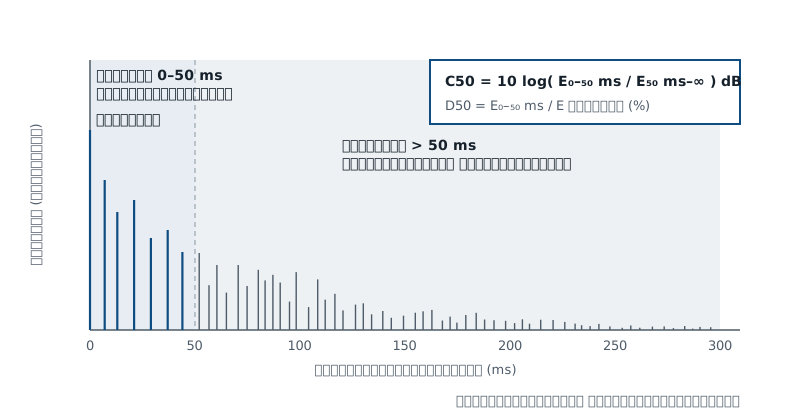
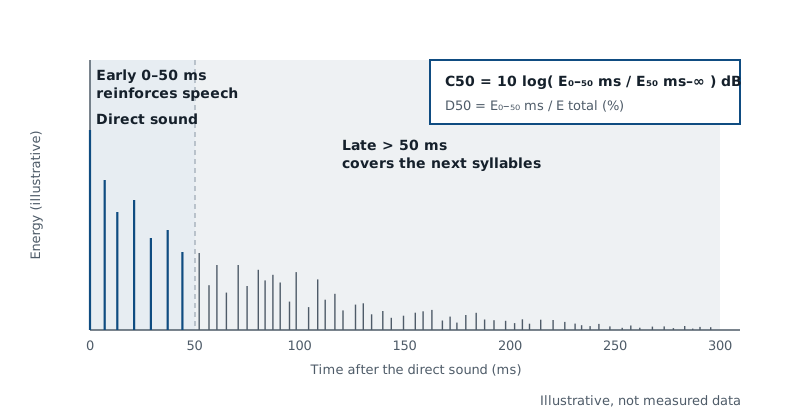
เสียงสะท้อนไม่ได้เป็นศัตรูของเสียงพูดทั้งหมด เสียงสะท้อนที่มาถึงภายในราว 50 มิลลิวินาทีหลังเสียงตรง หูรวมเข้ากับเสียงตรงเป็นเสียงเดียว จึงช่วยให้เสียงพูดดังและชัดขึ้น ส่วนเสียงสะท้อนที่มาช้ากว่านั้นไปทับพยางค์ถัดไป ทำให้เสียงพูดเบลอ ความสมดุลระหว่างพลังงาน ช่วงต้น (early) กับ ช่วงหลัง (late) จึงบอกได้มากกว่าเวลาเสียงก้องเพียงอย่างเดียวNot every reflection harms speech. Reflections that arrive within roughly 50 milliseconds of the direct sound are merged with it by the ear and make speech louder and clearer; later reflections fall on the following syllables and blur them. The balance between early and late energy therefore says more than the reverberation time alone.
| ค่าQuantity | นิยาม (ISO 3382-1)Definition (ISO 3382-1) | อ่านอย่างไรHow to read it |
|---|---|---|
| C50 (clarity)C50 (clarity) | นิยาม (ISO 3382-1)Definition (ISO 3382-1)10 log ของพลังงาน 0–50 ms หารด้วยพลังงานหลัง 50 ms หน่วย dB10 log of the energy in 0–50 ms divided by the energy after 50 ms, in dB | อ่านอย่างไรHow to read itค่าบวกแปลว่าพลังงานช่วงต้นมากกว่าช่วงหลัง ยิ่งสูงเสียงพูดยิ่งชัดPositive means more early than late energy; higher means clearer speech |
| D50 (definition)D50 (definition) | นิยาม (ISO 3382-1)Definition (ISO 3382-1)พลังงาน 0–50 ms หารด้วยพลังงานทั้งหมด (แสดงเป็น % หรือ 0–1)Energy in 0–50 ms divided by the total energy (as % or 0–1) | อ่านอย่างไรHow to read itบอกเรื่องเดียวกับ C50 แต่เป็นสัดส่วนThe same information as C50, as a fraction |
| C80C80 | นิยาม (ISO 3382-1)Definition (ISO 3382-1)แบบเดียวกับ C50 แต่แบ่งที่ 80 msLike C50 but split at 80 ms | อ่านอย่างไรHow to read itใช้กับดนตรีมากกว่าเสียงพูดUsed for music rather than speech |
| Ts (centre time)Ts (centre time) | นิยาม (ISO 3382-1)Definition (ISO 3382-1)เวลาจุดศูนย์ถ่วงของพลังงานThe time of the energy's centre of gravity | อ่านอย่างไรHow to read itยิ่งสั้น เสียงยิ่งกระชับShorter means a crisper sound |
ค่าเหล่านี้คำนวณจาก ผลตอบสนองอิมพัลส์ ชุดเดียวกับที่ใช้หาเวลาเสียงก้อง และขึ้นกับตำแหน่งผู้ฟังมาก ที่นั่งใกล้ผู้พูดได้พลังงานช่วงต้นมาก ที่นั่งไกลได้พลังงานช่วงหลังมาก ISO 3382-1 กำหนดวิธีวัด แต่ไม่ได้กำหนดค่าผ่าน เกณฑ์มาจากแนวทางการออกแบบหรือข้อกำหนดของโครงการThese quantities are calculated from the same impulse response used for the reverberation time, and they depend strongly on the listener's position: seats near the talker receive more early energy, distant seats more late energy. ISO 3382-1 defines how to measure them but sets no pass values; criteria come from design guidance or the project specification.
ระยะวิกฤต (critical distance) เป็นอีกแนวคิดที่ช่วยอธิบาย คือระยะจากแหล่งเสียงที่ระดับเสียงตรงเท่ากับระดับเสียงก้อง สำหรับแหล่งเสียงรอบทิศทางประมาณได้เป็น rc ≈ 0.057 × √(V / T) (V เป็น m³, T เป็นวินาที) ผู้ฟังที่อยู่ไกลกว่า rc ได้ยินเสียงก้องมากกว่าเสียงตรง การเร่งเสียงจึงช่วยน้อย ทางแก้คือลดเสียงก้อง ใช้ลำโพงที่มีทิศทางเล็งไปที่ผู้ฟัง หรือวางลำโพงให้ใกล้ผู้ฟังขึ้นThe critical distance is another useful idea: the distance from the source at which the direct sound equals the reverberant sound. For an omnidirectional source it is approximately rc ≈ 0.057 × √(V / T) (V in m³, T in seconds). Listeners beyond rc hear more reverberant than direct sound, so turning up the level helps little; the remedies are to reduce reverberation, use directional loudspeakers aimed at the listeners, or bring loudspeakers closer to them.
สำนักงานแบบเปิดโล่งใช้ค่าชุดของตัวเอง (ISO 3382-3) เช่น อัตราที่ระดับเสียงพูดลดลงตามระยะ และระยะที่เสียงพูดจากโต๊ะอื่นเริ่มไม่รบกวนสมาธิ เพราะเป้าหมายคือความเป็นส่วนตัว ไม่ใช่ความชัดOpen-plan offices use their own set of quantities (ISO 3382-3), such as how fast speech level falls with distance and the distance at which speech from other desks stops being distracting, because the goal there is privacy rather than clarity.
ตัวอย่างสถานการณ์: ห้องเรียนที่นักเรียนแถวหลังฟังไม่ชัดExample scenario: a classroom where the back rows struggle
ห้องเรียนขนาด 9 × 7 × 3 m (ปริมาตร 189 m³) เพดานและผนังฉาบแข็ง มีพัดลมเพดานสี่ตัว ผลวัดในห้องว่าง: เวลาเสียงก้อง (เฉลี่ย 500 Hz–1 kHz) 1.1 วินาที เสียงพื้นหลังขณะเปิดพัดลม 45 dB(A) และ STI ที่แถวหลังเมื่อใช้ TalkBox แทนครูได้ 0.48
ระยะวิกฤตโดยประมาณ: rc ≈ 0.057 × √(189 / 1.1) ≈ 0.75 m นักเรียนเกือบทั้งห้องจึงอยู่ในบริเวณที่เสียงก้องมากกว่าเสียงตรง ถ้าลดเวลาเสียงก้องลงเหลือราว 0.6 วินาที ระยะวิกฤตจะเพิ่มเป็นราว 1.0 m และเสียงช่วงหลังที่ทับพยางค์จะลดลง
เพื่อแยกสาเหตุ ให้ดู STI แยกกรณีที่คำนวณรวมและไม่รวมเสียงพื้นหลัง ถ้าต่างกันมาก พัดลมเป็นตัวการสำคัญ ถ้าไม่ต่างกันมาก เสียงก้องเป็นตัวการหลัก ทางแก้ที่เหมาะจึงอาจเป็นทั้งติดวัสดุดูดซับที่เพดานและเปลี่ยนพัดลมให้เงียบลง แล้ววัดซ้ำเพื่อยืนยันA classroom of 9 × 7 × 3 m (189 m³) has hard plastered ceiling and walls and four ceiling fans. Unoccupied results: reverberation time (500 Hz–1 kHz average) 1.1 s, background noise with the fans on 45 dB(A), and STI in the back row 0.48 with a TalkBox standing in for the teacher.
Approximate critical distance: rc ≈ 0.057 × √(189 / 1.1) ≈ 0.75 m, so almost every pupil sits where reverberant sound outweighs direct sound. Reducing the reverberation time to about 0.6 s would raise the critical distance to about 1.0 m and reduce the late sound that covers syllables.
To separate the causes, compare the STI calculated with and without the background noise. A large difference means the fans are a major factor; a small one means reverberation dominates. The right remedy may be both ceiling absorption and quieter fans, followed by a new measurement to confirm.
วิธีวัดในสนามแต่ละค่า อยู่ในวิธีการตรวจวัด "วิธีวัดเวลาเสียงก้อง (RT60) และอะคูสติกของห้อง" และ "วิธีตรวจความชัดเจนของเสียงประกาศด้วย STIPA" (ลิงก์ท้ายหน้า)The on-site method for each quantity is in the application guides on measuring reverberation time (RT60) and room acoustics and on verifying intelligibility with STIPA (links at the end of the page).
ห้องแต่ละแบบต้องระวังอะไรWhat to watch in each type of room
| ห้องRoom | ปัญหาที่พบบ่อยTypical problems | สิ่งที่ควรวัดWhat to measure |
|---|---|---|
| ห้องเรียนClassroom | ปัญหาที่พบบ่อยTypical problemsครูพูดโดยไม่มีไมโครโฟน นักเรียนแถวหลังอยู่ไกล ผนังและพื้นแข็ง เสียงพัดลมหรือเครื่องปรับอากาศThe teacher speaks unaided, back rows are far away, hard walls and floor, fans or air conditioning | สิ่งที่ควรวัดWhat to measureเวลาเสียงก้อง เสียงพื้นหลัง และ STI ด้วย TalkBox ที่ตำแหน่งครูReverberation time, background noise and STI with a TalkBox at the teacher's position |
| ห้องประชุมMeeting room | ปัญหาที่พบบ่อยTypical problemsผนังกระจก โต๊ะใหญ่ผิวแข็ง ระบบประชุมทางไกลรับเสียงก้องเข้าไปด้วยGlass walls, large hard tables, conferencing systems picking up the reverberation | สิ่งที่ควรวัดWhat to measureเวลาเสียงก้อง เสียงพื้นหลัง (เส้นเกณฑ์) และ STI ผ่านระบบเสียงถ้ามีReverberation time, background noise (noise curves) and STI through the sound system if there is one |
| สำนักงานOffice | ปัญหาที่พบบ่อยTypical problemsเสียงสนทนาจากโต๊ะอื่นรบกวนสมาธิ เสียงระบบปรับอากาศ ห้องที่มีพื้นที่เปิดโล่งกว้างConversations from other desks break concentration, HVAC noise, large open-plan areas | สิ่งที่ควรวัดWhat to measureเวลาเสียงก้อง เสียงพื้นหลัง และการกันเสียงระหว่างห้องที่ต้องการความเป็นส่วนตัวReverberation time, background noise and sound insulation between rooms that need privacy |
ในสำนักงานแบบเปิด เป้าหมายกลับด้านเล็กน้อย เราอยากให้เสียงพูดจากโต๊ะไกล ๆ ฟังไม่ชัด เพื่อไม่ให้รบกวนสมาธิ บางอาคารจึงใช้ระบบเสียงกลบ (sound masking) ซึ่งเปิดเสียงพื้นหลังเบา ๆ ที่ควบคุมได้ มาตรฐานอาคารเพื่อสุขภาวะ WELL ก็ตรวจสอบทั้งเสียงพื้นหลัง การกันเสียง เวลาเสียงก้อง และระบบเสียงกลบIn open-plan offices the goal is partly reversed: we want speech from distant desks to be less intelligible so it does not break concentration. Some buildings therefore use sound masking, a quiet, controlled background sound. The WELL building standard verifies background noise, sound insulation, reverberation time and sound masking.
วัดและปรับปรุงอย่างไรHow to measure and improve
- ตรวจเช็กเครื่องวัดด้วยเครื่องสอบเทียบเสียง (มักใช้ 94 dB ที่ 1 kHz) ก่อนและหลังการวัดCheck the meter with a sound calibrator (typically 94 dB at 1 kHz) before and after the session.
- วัดเสียงพื้นหลังในห้องที่ไม่มีคน โดยเปิดระบบต่าง ๆ ตามปกติ แล้วประเมินด้วยเส้นเกณฑ์เสียงรบกวนMeasure background noise in the unoccupied room with services running normally and rate it with noise curves.
- วัดเวลาเสียงก้องด้วยลำโพงรอบทิศทาง เช่น DS3 หลายตำแหน่งMeasure reverberation time with an omnidirectional loudspeaker such as the DS3, at several positions.
- วัด STI ที่ตำแหน่งผู้ฟัง ด้วย TalkBox หรือผ่านระบบเสียงMeasure STI at listener positions, using a TalkBox or the sound system.
- เลือกวิธีแก้ให้ตรงกับสาเหตุ (ดูด้านล่าง) แล้ววัดซ้ำเพื่อยืนยันว่าดีขึ้นจริงChoose remedies that match the cause (below), then measure again to confirm the improvement.
- ก้องมากไป: เพิ่มวัสดุดูดซับเสียง เช่น ผ้าม่าน พรม เฟอร์นิเจอร์บุนวม หรือแผ่นดูดซับเสียงพิเศษToo reverberant: add absorption such as curtains, carpets, upholstered furniture or dedicated absorbing panels.
- เสียงพื้นหลังดัง: ลดเสียงที่ต้นทาง เช่น ระบบปรับอากาศ หรือปรับปรุงการกันเสียงจากภายนอกและห้องข้างเคียงNoisy background: reduce noise at the source, such as the HVAC, or improve insulation against outside and neighbouring noise.
- เสียงตรงอ่อน: เสริมเสียงตรงด้วยการวางตำแหน่งและเลือกทิศทางการกระจายเสียงของลำโพงให้เหมาะสมWeak direct sound: strengthen the direct sound through suitable loudspeaker placement and directivity.
คำถามที่พบบ่อยFrequently asked questions
ต้องวัดครบทั้งสามค่าหรือไม่Do I need all three measurements?
ถ้าต้องการรู้ว่าห้อง "ฟังชัดหรือไม่" STI ตอบได้ตรงที่สุด แต่ถ้าต้องการรู้ว่า "ทำไม" และจะแก้อย่างไร ต้องมีเวลาเสียงก้องและเสียงพื้นหลังประกอบ สามค่านี้จึงมักวัดด้วยกัน โดยใช้เวลาเพิ่มไม่มากเมื่ออุปกรณ์ตั้งอยู่แล้วIf the question is only "is it intelligible?", STI answers it most directly. To know "why" and how to fix it, reverberation time and background noise are needed as well, so the three are usually measured together; once the equipment is set up, the extra time is small.
ค่า C50 เท่าไรจึงถือว่าดีWhat C50 value counts as good?
ค่าที่สูงกว่า 0 dB แปลว่าพลังงานช่วงต้นมากกว่าช่วงหลัง ซึ่งเป็นทิศทางที่ดีสำหรับเสียงพูด แต่ ISO 3382-1 ไม่ได้กำหนดค่าผ่าน เป้าหมายขึ้นกับประเภทห้องและข้อกำหนดของโครงการ และควรอ่านค่า C50 ประกอบกับ STI และเวลาเสียงก้องValues above 0 dB mean more early than late energy, which is the right direction for speech. ISO 3382-1 sets no pass value, though; targets depend on the room type and the project specification, and C50 should be read together with STI and reverberation time.
ระบบเสียงที่ดีแก้ห้องที่ก้องได้ไหมCan a good sound system fix a reverberant room?
ช่วยได้บางส่วน ลำโพงที่มีทิศทางชัด เล็งเสียงไปที่ผู้ฟังและไม่ยิงใส่ผนังแข็ง เพิ่มสัดส่วนเสียงตรงได้ และการวางลำโพงหลายจุดให้ใกล้ผู้ฟังก็ช่วยได้ แต่ในห้องที่ก้องมาก การแก้ที่ตัวห้องมักคุ้มค่ากว่าและช่วยทั้งเสียงพูดจากระบบและเสียงพูดสดPartly. Directional loudspeakers aimed at the audience and away from hard walls raise the share of direct sound, and distributed loudspeakers closer to listeners also help. In a very reverberant room, however, treating the room itself is usually more effective and helps both amplified and unamplified speech.
ห้องเล็กจำเป็นต้องวัดไหมIs it worth measuring a small room?
จำเป็นถ้าเป็นห้องที่ใช้สื่อสารสำคัญ เช่น ห้องประชุมออนไลน์ ห้องสอบสวน หรือห้องเรียนเล็ก ห้องเล็กที่ผนังแข็งทั้งหมดก็ก้องจนไมโครโฟนของระบบประชุมรับเสียงก้องเข้าไปได้ การวัดสั้น ๆ ช่วยตัดสินใจเรื่องวัสดุและอุปกรณ์ได้ตรงจุดYes, when communication in it matters: video-conference rooms, interview rooms or small classrooms. A small room with all hard surfaces can still be reverberant enough for conferencing microphones to pick up the reverberation. A short measurement makes decisions on materials and equipment more targeted.
คำศัพท์สำคัญKey terms
- เสียงตรง (direct sound)Direct sound
- เสียงที่เดินทางจากผู้พูดหรือลำโพงถึงผู้ฟังโดยไม่สะท้อนSound that travels from the talker or loudspeaker to the listener without reflecting.
- เส้นเกณฑ์เสียงรบกวน (noise curves: NC, RC, NR ฯลฯ)Noise curves (NC, RC, NR, etc.)
- ชุดเส้นสเปกตรัมมาตรฐานใช้ให้คะแนนเสียงพื้นหลังภายในอาคารStandard families of spectrum curves used to rate indoor background noise.
- ระดับรบกวนการพูด (SIL)Speech interference level (SIL)
- ค่าเฉลี่ยของระดับเสียงในย่านออกเตฟ 500 Hz ถึง 4 kHz บอกว่าเสียงพื้นหลังรบกวนการพูดมากแค่ไหนThe average of the octave-band levels from 500 Hz to 4 kHz, indicating how much the background interferes with speech.
- STI / STIPA
- ดัชนีความชัดเจนของเสียงพูดตั้งแต่ 0 ถึง 1 และวิธีวัดแบบย่อที่ใช้ในทางปฏิบัติThe speech transmission index from 0 to 1, and the simplified method used in practice.
- ระบบเสียงกลบ (sound masking)Sound masking
- ระบบที่เปิดเสียงพื้นหลังเบา ๆ ที่ควบคุมได้ เพื่อลดการรบกวนจากเสียงสนทนาในสำนักงานA system that plays a quiet, controlled background sound to reduce distraction from conversations in offices.
ความเข้าใจผิดที่พบบ่อยCommon misunderstandings
- ‘ฟังไม่ชัดก็เปิดลำโพงให้ดังขึ้น’ ในห้องที่ก้องมาก เสียงที่ดังขึ้นก็ทำให้เสียงสะท้อนดังขึ้นตาม ความชัดเจนแทบไม่ดีขึ้น‘If speech is unclear, turn the loudspeakers up.’ In a reverberant room the reflections get louder too, and intelligibility barely improves.
- ‘ติดแผ่นซับเสียงแล้วแก้ได้ทุกอย่าง’ แผ่นซับเสียงลดเสียงก้อง แต่ไม่ลดเสียงเครื่องปรับอากาศหรือเสียงที่ทะลุผนังจากห้องข้าง ๆ‘Absorbing panels fix everything.’ They reduce reverberation, but not air-conditioning noise or sound coming through the wall from next door.
- ‘วัดตอนมีคนเต็มห้องดีกว่า’ เสียงพื้นหลังและ STI มักวัดในห้องว่าง เพราะเสียงคนทำให้ผลแปรปรวนมาก และถ้าต้องการผลในสภาพใช้งานจริง ก็นำเสียงพื้นหลังตอนมีคนที่วัดแยกไว้มาคำนวณรวมภายหลัง‘It is better to measure with the room full.’ Background noise and STI are normally measured in the empty room, because people's noise makes results vary strongly; where occupied conditions matter, separately measured occupied noise is added by calculation afterwards.
- ‘วัดตำแหน่งเดียวก็รู้ทั้งห้อง’ แถวหน้าและแถวหลังอาจต่างกันมาก ต้องวัดหลายตำแหน่งที่คนนั่งจริง‘One position tells you about the whole room.’ Front and back rows can differ a lot; measure at several positions where people actually sit.