ทำไมเรื่องนี้สำคัญWhy this matters
เคยไหมที่คุยกันในโรงอาหารหรือห้องโถงกระจกแล้วต้องตะโกน ทั้งที่อยู่ใกล้กัน หรือฟังอาจารย์ในห้องบรรยายแล้วคำพูดฟังดูเบลอ ๆ ต้นเหตุหนึ่งคือ เสียงก้อง เสียงที่สะท้อนไปมาในห้องค้างอยู่นานจนทับเสียงใหม่ที่ตามมา เสียงพูดจึงฟังไม่ชัด และระดับเสียงรวมในห้องก็สูงขึ้นเพราะเสียงของทุกคนสะสมกันHave you ever had to shout in a canteen or glass lobby although you were standing close together, or found a lecturer's words blurred in a lecture hall? One cause is reverberation: sound reflecting around the room lingers long enough to overlap the next sounds, so speech becomes unclear, and the overall level rises because everyone's sound accumulates.
แต่ห้องที่ไม่มีเสียงก้องเลยก็ไม่ดีเช่นกัน เสียงจะฟังแห้ง ทื่อ และผู้พูดต้องออกแรงมากขึ้น ทั้งห้องที่ก้องสั้นมากและก้องนานมากล้วนทำให้รู้สึกไม่สบาย เป้าหมายจึงไม่ใช่ ‘ลดให้มากที่สุด’ แต่ ‘ให้พอดีกับการใช้งาน’ และต้องวัดออกมาเป็นตัวเลขจึงจะออกแบบและตรวจรับงานได้But a room with no reverberation at all is not good either: sound feels dry and dead, and talkers have to work harder. Both very short and very long reverberation make a room uncomfortable. The goal is therefore not ‘as low as possible’ but ‘right for the use’, and it has to be measured as a number before it can be designed for or checked.
แนวคิดพื้นฐานThe basic idea
เมื่อมีเสียงเกิดขึ้นในห้อง เสียงส่วนหนึ่งเดินทางตรงถึงหูผู้ฟัง เรียกว่า เสียงตรง (direct sound) ส่วนที่เหลือกระทบผนัง พื้น เพดาน และเฟอร์นิเจอร์ แล้วสะท้อนต่อไปเรื่อย ๆ ทุกครั้งที่กระทบพื้นผิว พลังงานบางส่วนจะถูกดูดซับ เมื่อแหล่งเสียงหยุด เสียงสะท้อนเหล่านี้จึงค่อย ๆ จางลง ไม่ได้หายไปทันทีWhen a sound is made in a room, part of it travels straight to the listener: the direct sound. The rest hits walls, floor, ceiling and furniture and keeps reflecting. At every surface some energy is absorbed. When the source stops, these reflections therefore fade gradually rather than disappearing at once.
เวลาเสียงก้อง คือเวลาที่ระดับความดันเสียงลดลง 60 dB หลังจากแหล่งเสียงถูกตัดทันที 60 dB เป็นการลดลงที่มาก คือพลังงานเสียงเหลือเพียงหนึ่งในล้านของตอนเริ่ม พื้นผิวแข็ง เช่น ผนังคอนกรีต กระจก พื้นกระเบื้อง สะท้อนเสียงดีจึงทำให้ก้องนาน วัสดุนุ่มหรือมีรูพรุน เช่น ผ้าม่าน พรม เฟอร์นิเจอร์บุนวม และแผ่นดูดซับเสียง ทำให้ก้องสั้นลง ห้องที่ใหญ่ขึ้นก็มีแนวโน้มก้องนานขึ้น เพราะเสียงเดินทางไกลกว่าก่อนจะกระทบพื้นผิวแต่ละครั้งReverberation time is the time it takes for the sound pressure level to drop by 60 dB after the source is abruptly switched off. 60 dB is a large drop: the sound energy falls to one millionth of its starting value. Hard surfaces such as concrete walls, glass and tiled floors reflect sound well and lengthen reverberation; soft or porous materials such as curtains, carpets, upholstered furniture and absorbing panels shorten it. Larger rooms also tend to reverberate longer, because sound travels further between surface hits.
ลองตบมือหนึ่งครั้งแล้วฟังว่าเสียงค้างอยู่นานแค่ไหน ในห้องไร้เสียงสะท้อน (anechoic chamber) แทบไม่มีเสียงค้างเลย ในห้องประชุมทั่วไปอาจได้ยินหางเสียงประมาณ 1 วินาที ในทางเดินยาวประมาณ 2 วินาที และในลานจอดรถใต้ดินประมาณ 3 วินาที วิธีนี้ใช้ฝึกหูให้รู้สึกถึงความต่างได้ดี แต่เป็นเพียงการประมาณคร่าว ๆ ไม่ใช่การวัดClap your hands once and listen to how long the sound lingers. In an anechoic chamber (a special test room with no reflections) there is almost nothing; in a typical meeting room you may hear a tail of about 1 second, in a long corridor about 2 seconds and in an underground car park about 3 seconds. This is a good way to train your ear to the differences, but it is only a rough estimate, not a measurement.
T, RT60, T20 และ T30 ต่างกันอย่างไรT, RT60, T20 and T30: what is the difference?
มาตรฐาน ISO 3382-1 ใช้สัญลักษณ์เพียงตัว T สำหรับเวลาเสียงก้อง แต่ในวงการนิยมเขียน RT หรือ RT60 เพราะตัว T อย่างเดียวสับสนกับปริมาณอื่นได้ง่าย เช่น อุณหภูมิหรือคาบเวลา ทั้งหมดนี้หมายถึงสิ่งเดียวกันISO 3382-1 uses just the symbol T for reverberation time, but the industry often writes RT or RT60, because T alone is easily confused with other quantities such as temperature or period. They all mean the same thing.
ในความเป็นจริง การวัดการลดลงครบ 60 dB ทำได้ยาก เพราะต้องใช้แหล่งเสียงที่ดังมาก และเสียงที่ลดลงจะจมหายไปในเสียงพื้นหลังของห้องก่อน จึงวัดเฉพาะช่วงที่ลดลงชัดเจนแล้วคำนวณต่อไปให้ครบ 60 dB เวลาเสียงก้องจึงเป็นการบอก อัตราการลดลง ของเสียงในรูปของเวลาที่จะลดลง 60 dB ไม่จำเป็นต้องเห็นเสียงลดลงครบ 60 dB จริงIn reality a full 60 dB decay is hard to capture: it would need a very loud source, and the decaying sound disappears into the room's background noise first. So only a clearly measurable part of the decay is evaluated and extended to 60 dB. Reverberation time is therefore really a rate of decay, expressed as the time a 60 dB fall would take; the full 60 dB never has to be seen.
| ชื่อName | วัดจากช่วงลดลงEvaluated decay range | คำนวณเป็น 60 dBExtended to 60 dB |
|---|---|---|
| T20T20 | วัดจากช่วงลดลงEvaluated decay rangeจาก −5 ถึง −25 dB (ช่วง 20 dB)−5 to −25 dB (a 20 dB range) | คำนวณเป็น 60 dBExtended to 60 dBเวลาที่ลดลงในช่วง 20 dB นี้ × 3time for this 20 dB range × 3 |
| T30T30 | วัดจากช่วงลดลงEvaluated decay rangeจาก −5 ถึง −35 dB (ช่วง 30 dB)−5 to −35 dB (a 30 dB range) | คำนวณเป็น 60 dBExtended to 60 dBเวลาที่ลดลงในช่วง 30 dB นี้ × 2time for this 30 dB range × 2 |
| EDT (early decay time)EDT (early decay time) | วัดจากช่วงลดลงEvaluated decay rangeจาก 0 ถึง −10 dB0 to −10 dB | คำนวณเป็น 60 dBExtended to 60 dBเวลาที่ลดลง 10 dB แรก × 6time for the first 10 dB × 6 |
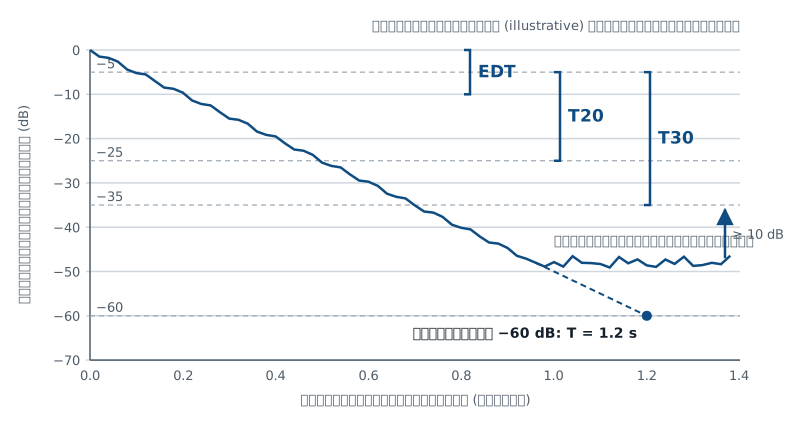
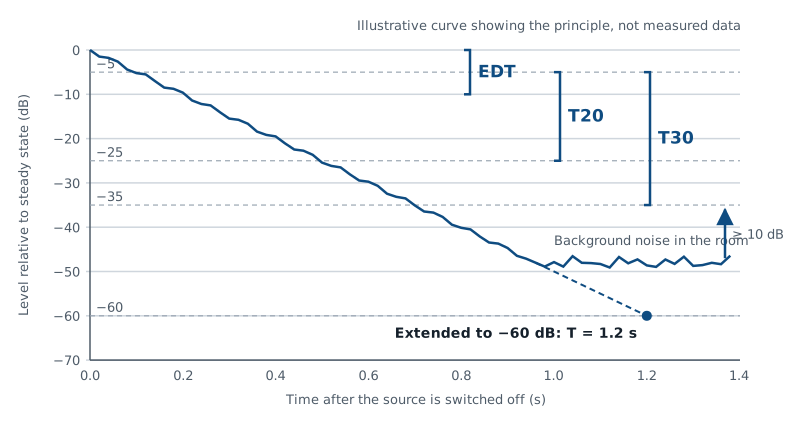
T30 ใช้ข้อมูลช่วงยาวกว่าจึงมักมีความไม่แน่นอนต่ำกว่า แต่ต้องการระยะห่างระหว่างเสียงทดสอบกับเสียงพื้นหลังมากกว่า ถ้าห้องมีเสียงพื้นหลังดังหรือแหล่งเสียงไม่แรงพอ T20 จะเป็นทางเลือกที่วัดได้จริงกว่า ตามหลักของ ISO 3382 ปลายล่างของช่วงที่ประเมินควรสูงกว่าเสียงพื้นหลังอย่างน้อย 10 dB ดังนั้น T20 ต้องการเสียงที่ลดลงได้อย่างน้อยราว 35 dB เหนือเสียงพื้นหลัง และ T30 ราว 45 dBT30 uses a longer stretch of data and so usually has lower uncertainty, but it needs a larger margin between the test signal and the background noise. If the room is noisy or the source is not loud enough, T20 is the more practical choice. Under ISO 3382 the bottom of the evaluation range should be at least 10 dB above the background noise, so T20 needs at least about 35 dB of decay above the background and T30 about 45 dB.
EDT (early decay time) ใช้เฉพาะช่วงต้นของการลดลง (10 dB แรก) และสัมพันธ์กับความรู้สึกว่าห้อง “ก้อง” มากน้อยแค่ไหนได้ใกล้เคียงกว่า ISO 3382-1 จึงรายงาน EDT สำหรับห้องแสดง ในห้องที่เสียงลดลงไม่สม่ำเสมอ ค่า EDT, T20 และ T30 อาจต่างกันได้ ซึ่งความต่างนี้ก็เป็นข้อมูลที่มีประโยชน์ในตัวเองThe EDT (early decay time) uses only the start of the decay (the first 10 dB) and relates more closely to how reverberant a room sounds, which is why ISO 3382-1 reports it for performance spaces. In rooms where the decay is not uniform, EDT, T20 and T30 can differ, and that difference is useful information in itself.
วัดอย่างไรHow it is measured
หลักการคือทำให้ห้องเต็มไปด้วยเสียง หยุดเสียงทันที แล้วบันทึกว่าระดับเสียงลดลงอย่างไร แหล่งเสียงทดสอบมีสองแบบหลักThe principle is to fill the room with sound, stop it abruptly and record how the level decays. There are two main kinds of test source.
| วิธีMethod | แหล่งเสียงSource | ข้อควรรู้Worth knowing |
|---|---|---|
| เสียงรบกวนแบบตัดทันที (interrupted noise)Interrupted (gated) noise | แหล่งเสียงSourceลำโพงรอบทิศทาง เช่น ลำโพงทรงสิบสองหน้า (dodecahedron) DS3 เปิดเสียงพิงก์นอยส์ (pink noise: เสียงซ่าที่มีทุกความถี่ โดยมีพลังงานเท่ากันในทุกออกเตฟ) แล้วตัดทันทีAn omnidirectional loudspeaker, such as the DS3 dodecahedron, plays pink noise (a hiss containing all frequencies, with equal energy in every octave) that is then switched off abruptly | ข้อควรรู้Worth knowingเสียงกระจายทุกทิศเท่ากันและทำซ้ำได้ดี เป็นที่ยอมรับตามมาตรฐาน ISORadiates evenly in all directions and is highly repeatable; accepted by the ISO standards |
| เสียงกระแทก (impulse)Impulse | แหล่งเสียงSourceลูกโป่งแตก ปืนสตาร์ท หรืออุปกรณ์ตบเสียงแบบ clapperA bursting balloon, a starter pistol or a clapper | ข้อควรรู้Worth knowingพกพาง่ายและเร็ว ISO 3382 ยอมรับวิธีผลตอบสนองอิมพัลส์ (จากเสียงกระแทกที่ดังพอ หรือจากสัญญาณกวาดความถี่ที่คำนวณเป็นผลตอบสนองอิมพัลส์ แล้วอินทิเกรตย้อนหลังด้วยวิธี Schroeder) แต่ไม่เป็นไปตามมาตรฐาน ASTM E2235 เพราะเป็นแหล่งเสียงแบบกระแทกPortable and quick. ISO 3382 accepts the impulse-response method (a loud enough impulse, or a swept-sine signal processed into an impulse response, integrated backwards by the Schroeder method), but it does not meet ASTM E2235 because it is an impulsive source |
เครื่องวัดจะบันทึกการลดลงของเสียงแยกตามย่านความถี่ เพราะเวลาเสียงก้องที่ความถี่ต่ำและสูงมักไม่เท่ากัน ตัวอย่างเช่น XL2 วัดด้วยวิธี Schroeder ในย่านออกเตฟตั้งแต่ 63 Hz ถึง 8 kHz และขยายเป็นความละเอียด 1/3 ออกเตฟได้ด้วยชุดเสริม จากนั้นลากเส้นตรงผ่านเส้นการลดลงของเสียงด้วยวิธีถดถอยเชิงเส้น (linear regression) เพื่อหาอัตราการลดลง พร้อมรายงานค่าความสัมพันธ์และความไม่แน่นอน ซึ่งบอกว่าเส้นการลดลงตรงและเชื่อถือได้แค่ไหนThe meter records the decay separately in each frequency band, because reverberation at low and high frequencies usually differs. The XL2, for example, uses the Schroeder method in octave bands from 63 Hz to 8 kHz, with 1/3-octave resolution available as an option. A straight line is then fitted to the decay by linear regression to find the rate of decay, and the correlation and uncertainty are reported, showing how straight and reliable the decay is.
- วางไมโครโฟนห่างจากพื้นผิวที่สะท้อนเสียงอย่างน้อย 1 เมตรPlace the microphone at least 1 m from reflecting surfaces.
- วางแหล่งเสียงสูงประมาณ 1.5 เมตร และให้ห่างจากไมโครโฟนอย่างน้อย 1.5 เมตร (แนวทางการใช้งานของ NTi Audio / ตัวอย่างขั้นตอนการวัด ไม่ใช่ข้อกำหนดของ ISO)Put the source at a height of about 1.5 m and at least 1.5 m from the microphone (NTi Audio application guidance / example workflow, not an ISO requirement).
- ใช้แหล่งเสียงที่ดังพอ NTi Audio แนะนำให้สร้างระดับเสียงได้ประมาณ 120 dB SPL เพื่อให้เสียงทดสอบสูงกว่าเสียงพื้นหลังมากUse a source loud enough: NTi Audio recommends one able to produce about 120 dB SPL, so the test signal is well above the background noise.
- วัดหลายตำแหน่งทั้งแหล่งเสียงและไมโครโฟน แล้วเฉลี่ย เพื่อชดเชยความไม่สม่ำเสมอของเสียงในห้อง (room modes)Measure at several source and microphone positions and average them, to compensate for the unevenness of sound in the room (room modes).
- ตรวจเช็กเครื่องด้วยเครื่องสอบเทียบเสียงก่อนและหลังการวัดCheck the instrument with a sound calibrator before and after the session.
ในห้องใหญ่ที่ก้องน้อย ไมโครโฟนที่ใกล้ลำโพงเกินไปจะรับเสียงตรงมากกว่าเสียงสะท้อน ISO 3382-2 (ซึ่ง NTi Audio อ้างถึงด้วย) ให้สูตรระยะห่างขั้นต่ำ d = 2 × √(V / (c × T)) โดย V คือปริมาตรห้อง (m³) c คือความเร็วเสียง และ T คือเวลาเสียงก้องที่คาดไว้ ตัวอย่าง ห้องขนาด 10 × 9 × 5 เมตรที่ก้องประมาณ 2 วินาที ไมโครโฟนควรอยู่ห่างแหล่งเสียงอย่างน้อยประมาณ 1.6 เมตรIf the microphone is too close to the loudspeaker it picks up more direct sound than reverberant sound. ISO 3382-2 (also quoted by NTi Audio) gives a minimum distance formula d = 2 × √(V / (c × T)), where V is the room volume (m³), c the speed of sound and T the expected reverberation time. For example, in a 10 × 9 × 5 m room with about 2 seconds of reverberation, the microphone should be at least about 1.6 m from the source.
มาตรฐานหลัก ได้แก่ ISO 3382-1 สำหรับห้องแสดง (performance spaces) ISO 3382-2 สำหรับห้องทั่วไป และ ASTM E2235 ในงานกันเสียงระหว่างห้องตาม ISO 16283-1 ก็ต้องวัดเวลาเสียงก้องของห้องรับเสียงด้วย เพื่อนำไปปรับผลการวัดThe main standards are ISO 3382-1 for performance spaces, ISO 3382-2 for ordinary rooms and ASTM E2235. Sound insulation testing between rooms to ISO 16283-1 also requires the receiving room's reverberation time, which is used to correct the result.
รายละเอียดเชิงวิศวกรรม: เส้นการลดลงบอกอะไรได้บ้างEngineering detail: what the decay curve tells you
เครื่องวัดไม่ได้ให้แค่ตัวเลข T แต่ให้ เส้นการลดลง (decay curve) ของแต่ละย่านความถี่ ในวิธีผลตอบสนองอิมพัลส์ เส้นนี้ได้จากการอินทิเกรตย้อนหลังแบบ Schroeder ซึ่งทำให้เส้นเรียบกว่าการบันทึกการลดลงของเสียงรบกวนเพียงครั้งเดียว จากนั้นจึงลากเส้นตรงผ่านช่วงประเมินเพื่อหาอัตราการลดลงThe meter gives not just a T value but a decay curve for each frequency band. With the impulse-response method the curve comes from Schroeder backward integration, which is much smoother than a single recorded noise decay. A straight line is then fitted over the evaluation range to find the decay rate.
- เส้นตรงสวย ค่า T20 และ T30 ใกล้กัน แปลว่าเสียงลดลงสม่ำเสมอ ห้องมีสนามเสียงค่อนข้างกระจาย ผลเชื่อถือได้A straight decay with T20 and T30 close together means an even decay and a fairly diffuse sound field: the result is dependable.
- T30 ยาวกว่า T20 อย่างชัดเจน (เส้นโค้ง) มักพบในห้องที่มีพื้นที่เชื่อมต่อกัน เช่น ห้องโถงต่อกับช่องบันได หรือห้องที่วางวัสดุดูดซับไว้ที่เพดานเพียงด้านเดียว ส่วนท้ายของเสียงค้างอยู่นานกว่าส่วนต้นT30 clearly longer than T20 (a curved decay) often appears in coupled spaces, such as a hall opening onto a stairwell, or where all the absorption is on the ceiling: the tail lingers longer than the start.
- EDT ต่างจาก T20 มาก แปลว่าเสียงสะท้อนช่วงแรกไม่สม่ำเสมอ ความรู้สึกก้องที่ตำแหน่งนั้นอาจต่างจากค่าเฉลี่ยของห้องEDT very different from T20 means the early reflections are uneven: how reverberant it sounds at that position may differ from the room average.
- ค่าสหสัมพันธ์ต่ำหรือเครื่องแจ้งเตือน มักเกิดจากแหล่งเสียงไม่ดังพอ เสียงพื้นหลังไม่คงที่ หรือมีเสียงแทรกระหว่างวัด ควรวัดซ้ำLow correlation or a warning from the meter usually means the source was not loud enough, the background noise varied, or a noise intruded during the measurement: measure again.
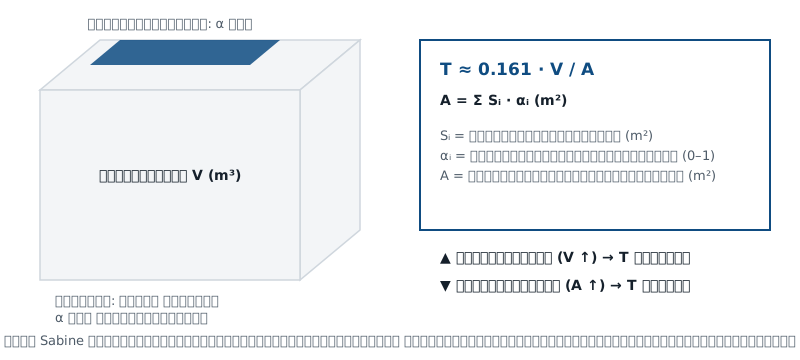
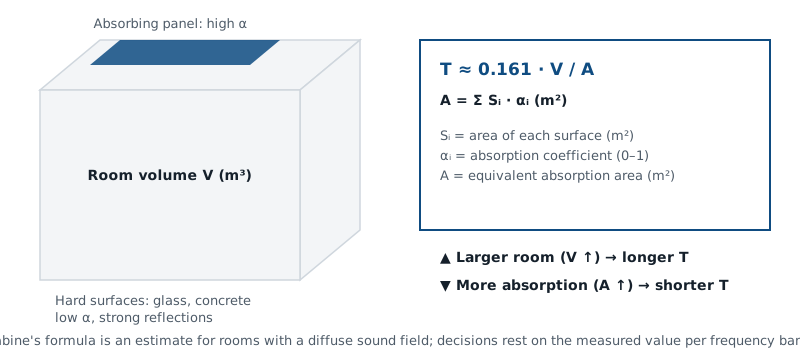
สูตร Sabine T ≈ 0.161 · V / A (V เป็น m³, A เป็น m²) ให้ความเข้าใจว่าควรเพิ่มวัสดุดูดซับเท่าไร พื้นที่ดูดซับเสียงเทียบเท่า A คือผลรวมของพื้นที่ผิวแต่ละส่วนคูณสัมประสิทธิ์การดูดซับเสียง (α ระหว่าง 0 ถึง 1) ซึ่งเปลี่ยนตามความถี่ สูตรนี้แม่นพอในห้องที่เสียงกระจายทั่วถึงและการดูดซับไม่สูงมาก ถ้าห้องดูดซับมาก หรือวัสดุกระจุกอยู่ด้านเดียว ผลจริงจะคลาดจากสูตร จึงต้องวัดยืนยันเสมอSabine's formula, T ≈ 0.161 · V / A (V in m³, A in m²), shows how much absorption is needed. The equivalent absorption area A is the sum of each surface area multiplied by its absorption coefficient (α, between 0 and 1), which varies with frequency. The formula is adequate in rooms with a diffuse field and moderate absorption; with high absorption, or with all the material on one surface, reality departs from it, so measurement is always needed to confirm.
ทำไมต้องดูทีละย่านความถี่ วัสดุดูดซับชนิดพรุน เช่น ใยแก้วหรือโฟม ดูดซับความถี่กลางและสูงได้ดี แต่ความถี่ต่ำได้น้อยถ้าบางหรือติดชิดผนัง ห้องที่ติดแผ่นบางจำนวนมากจึงอาจได้ค่าที่ 1 kHz ดีแล้ว แต่ที่ 125 Hz ยังก้องนาน ทำให้เสียงทุ้มและอื้อ ผลรายย่านช่วยบอกว่าต้องใช้วัสดุชนิดใดเพิ่มWhy look band by band? Porous absorbers such as glass wool or foam work well at mid and high frequencies but little at low frequencies when they are thin or mounted directly on a wall. A room with many thin panels may therefore be fine at 1 kHz yet still reverberant at 125 Hz, sounding boomy. Band results show which type of material is still needed.
ISO 3382-2 กำหนดระดับความละเอียดของการวัดไว้สามระดับ คือ ระดับสำรวจ (survey) ระดับวิศวกรรม (engineering) และระดับความแม่นยำ (precision) ซึ่งต่างกันที่จำนวนตำแหน่งแหล่งเสียงและไมโครโฟน รายงานจึงควรระบุระดับที่ใช้ จำนวนตำแหน่ง และวิธีวัดISO 3382-2 defines three grades of measurement, survey, engineering and precision, which differ in the number of source and microphone positions. A report should therefore state the grade, the number of positions and the method used.
ตัวอย่างสถานการณ์: ห้องประชุมที่ก้องเกินไปExample scenario: a meeting room that is too reverberant
ห้องประชุมขนาด 8 × 6 × 3 m (ปริมาตร 144 m³) ผนังกระจก พื้นกระเบื้อง ผู้ใช้บ่นว่าฟังคนพูดปลายโต๊ะไม่ชัด ผลวัด T30 เฉลี่ยย่าน 500 Hz และ 1 kHz ได้ 1.2 วินาที สมมติข้อกำหนดของโครงการต้องการราว 0.6 วินาที
พื้นที่ดูดซับเสียงเทียบเท่าตอนนี้: A = 0.161 × 144 / 1.2 ≈ 19 m²
พื้นที่ที่ต้องการ: A = 0.161 × 144 / 0.6 ≈ 39 m²
ต้องเพิ่มการดูดซับราว 20 m² ถ้าใช้แผ่นดูดซับที่มี α ประมาณ 0.8 ในย่านนี้ ต้องใช้แผ่นราว 25 m²
ตัวเลขนี้เป็นการประมาณเพื่อวางแผน ขั้นต่อไปคือตรวจย่าน 125–250 Hz แยก เพราะแผ่นบางอาจไม่พอที่ความถี่ต่ำ แล้ววัดซ้ำหลังติดตั้งเพื่อยืนยันผลA meeting room of 8 × 6 × 3 m (144 m³) has glass walls and a tiled floor; users complain that people at the far end of the table are hard to understand. The measured T30, averaged over the 500 Hz and 1 kHz bands, is 1.2 s; assume the project specification asks for about 0.6 s.
Present equivalent absorption: A = 0.161 × 144 / 1.2 ≈ 19 m²
Required: A = 0.161 × 144 / 0.6 ≈ 39 m²
About 20 m² of absorption must be added; with panels of α about 0.8 in these bands, that is roughly 25 m² of panel.
This is a planning estimate. The next step is to check the 125–250 Hz bands separately, because thin panels may not be enough at low frequencies, and to measure again after installation to confirm the result.
ขั้นตอนการวัดในสนาม การเลือกตำแหน่ง และการทำรายงาน อยู่ในวิธีการตรวจวัด "วิธีวัดเวลาเสียงก้อง (RT60) และอะคูสติกของห้อง" (ลิงก์ท้ายหน้า)The on-site procedure, choice of positions and reporting are covered in the application guide "How to measure reverberation time (RT60) and room acoustics" (link at the end of the page).
ค่าที่เหมาะกับห้องแต่ละประเภทTypical values for different rooms
ตารางนี้เป็นค่าแนะนำโดยประมาณจาก NTi Audio สังเกตว่าห้องใหญ่ขึ้นและใช้ฟังเพลงมากขึ้น ค่าที่เหมาะสมก็ยาวขึ้น ส่วนห้องที่เน้นเสียงพูดหรือการบันทึกเสียงต้องการเสียงก้องสั้นThis table gives approximate recommended values from NTi Audio. Notice that larger rooms and rooms meant for music call for longer values, while rooms focused on speech or recording need short reverberation.
| ประเภทห้องRoom type | ปริมาตรโดยประมาณApproximate volume | เวลาเสียงก้องที่แนะนำRecommended reverberation time |
|---|---|---|
| ห้องบันทึกเสียงRecording studio | ปริมาตรโดยประมาณApproximate volumeไม่เกิน 50 m³under 50 m³ | เวลาเสียงก้องที่แนะนำRecommended reverberation timeประมาณ 0.3 วินาทีabout 0.3 s |
| ห้องเรียนClassroom | ปริมาตรโดยประมาณApproximate volumeไม่เกิน 200 m³under 200 m³ | เวลาเสียงก้องที่แนะนำRecommended reverberation time0.4–0.6 วินาที0.4–0.6 s |
| สำนักงานOffice | ปริมาตรโดยประมาณApproximate volumeไม่เกิน 1,000 m³under 1,000 m³ | เวลาเสียงก้องที่แนะนำRecommended reverberation time0.5–1.1 วินาที0.5–1.1 s |
| ห้องบรรยายLecture hall | ปริมาตรโดยประมาณApproximate volumeไม่เกิน 5,000 m³under 5,000 m³ | เวลาเสียงก้องที่แนะนำRecommended reverberation time1.0–1.5 วินาที1.0–1.5 s |
สองปลายของช่วงนี้ใช้เป็นหลักจำได้ง่าย: ถ้าเสียงหายไปเร็วกว่าราว 0.3 วินาที คนในห้องจะรู้สึกว่าเสียงแห้งและ ‘ตาย’ (acoustically dead) ส่วนห้องขนาดไม่ใหญ่ที่เสียงค้างนานเกินราว 2 วินาที จะรู้สึกว่าเสียงสะท้อนก้องไปทั้งห้อง ตัวเลขสองค่านี้เป็นตัวอย่างการรับรู้เพื่อประกอบความเข้าใจ ไม่ใช่ค่ามาตรฐานหรือเกณฑ์ยอมรับ ค่าที่เหมาะสมขึ้นกับการใช้งานห้อง ปริมาตร ความถี่ จำนวนผู้ใช้ และเป้าหมายการออกแบบThe two ends of this range are easy rules of thumb: if the sound dies away in less than about 0.3 s, people in the room find it dry and acoustically ‘dead’, while a room that is not large and holds the sound for more than about 2 s feels as if everything echoes. These two values are illustrative perception examples, not standard values or acceptance limits; the suitable value depends on room use, volume, frequency, occupancy and the design target.
สำหรับหอแสดงดนตรี แหล่งข้อมูลของ NTi Audio เองให้ช่วงค่าไม่ตรงกันในแต่ละหน้า ค่าที่เหมาะสมขึ้นกับประเภทดนตรี ขนาด และการออกแบบของหอนั้น ๆ มาก ห้องประเภทนี้จึงควรกำหนดเป้าหมายโดยผู้ออกแบบด้านอะคูสติกเป็นรายโครงการ ไม่ควรใช้ตัวเลขจากตารางทั่วไปFor concert halls, NTi Audio's own pages give ranges that do not agree with each other. The right value depends strongly on the type of music, the size and the design of the particular hall, so targets for such rooms should be set by the acoustic designer project by project rather than taken from a general table.
คำถามที่พบบ่อยFrequently asked questions
ควรรายงาน T20 หรือ T30Should I report T20 or T30?
ถ้าระยะห่างจากเสียงพื้นหลังพอ T30 ใช้ข้อมูลช่วงยาวกว่าและมักมีความไม่แน่นอนต่ำกว่า ถ้าห้องมีเสียงรบกวนหรือแหล่งเสียงไม่ดังพอ T20 ใช้ได้จริงกว่า สิ่งสำคัญคือระบุในรายงานว่าใช้ค่าใด และถ้าสองค่าต่างกันมาก ให้ถือเป็นข้อมูลว่าเส้นการลดลงไม่ตรงIf the margin above the background noise allows, T30 uses a longer stretch of data and usually has lower uncertainty; in noisy rooms or with a weaker source, T20 is more practical. What matters is to state which one is reported, and to treat a large difference between them as a sign that the decay is not straight.
ใช้แอปมือถือหรือตบมือวัดได้ไหมCan I measure with a phone app or a hand clap?
ใช้ประเมินคร่าว ๆ ได้ แต่ไม่พอสำหรับงานออกแบบหรือตรวจรับ เสียงตบมือเบาเกินไปสำหรับความถี่ต่ำ และไมโครโฟนโทรศัพท์ไม่ได้สอบเทียบ งานที่ต้องอ้างอิงมาตรฐานควรใช้เครื่องวัดที่รองรับ ISO 3382 พร้อมแหล่งเสียงที่ดังพอFor a rough impression, yes; for design or acceptance, no. A clap is too weak at low frequencies and phone microphones are not calibrated. Work that must refer to a standard needs a meter that supports ISO 3382 and a sufficiently loud source.
ทำไมแต่ละตำแหน่งในห้องได้ค่าไม่เท่ากันWhy do different positions give different values?
เสียงในห้องไม่สม่ำเสมอ โดยเฉพาะความถี่ต่ำที่มีโหมดของห้อง และตำแหน่งใกล้ผนังหรือใกล้วัสดุดูดซับ จึงต้องวัดหลายตำแหน่งแหล่งเสียงและไมโครโฟนแล้วเฉลี่ย ความต่างเล็กน้อยเป็นเรื่องปกติ แต่ความต่างมากอาจบอกว่าห้องมีบริเวณที่ก้องต่างกันSound in a room is not uniform, especially at low frequencies where room modes occur, and near walls or absorbers. That is why several source and microphone positions are measured and averaged. Small differences are normal; large ones may reveal zones of the room that behave differently.
คนในห้องทำให้เวลาเสียงก้องเปลี่ยนไหมDo people in the room change the reverberation time?
เปลี่ยน คนและเสื้อผ้าดูดซับเสียง ห้องที่มีผู้ฟังเต็มจึงก้องสั้นกว่าห้องว่าง โดยเฉพาะในห้องที่มีวัสดุดูดซับน้อย การวัดมักทำในห้องว่างและระบุสภาพห้องไว้ ถ้าเกณฑ์ของโครงการกำหนดสภาพมีผู้ใช้ ต้องประเมินผลของผู้ใช้แยกต่างหากYes. People and clothing absorb sound, so a full room reverberates less than an empty one, especially if the room has little other absorption. Measurements are usually made unoccupied with the room condition stated; if the criterion refers to the occupied state, the effect of the occupants has to be assessed separately.
เสียงก้องกับเสียงสะท้อนกลับ (echo) ต่างกันอย่างไรWhat is the difference between reverberation and an echo?
เสียงก้องคือเสียงสะท้อนจำนวนมากที่ซ้อนกันจนค่อย ๆ จางไป ส่วน echo คือเสียงสะท้อนที่แยกออกมาชัดเจนและมาช้าพอจะได้ยินเป็นเสียงซ้ำ เช่น ผนังโค้งหรือผนังขนานสองด้านที่ทำให้เกิดเสียงสะท้อนรัว (flutter echo) ห้องที่ค่า T ดีแล้วก็ยังมี echo ได้ ต้องแก้ด้วยการจัดผิวสะท้อนจุดนั้นโดยเฉพาะReverberation is the dense build-up of many reflections that fade gradually; an echo is a distinct reflection arriving late enough to be heard as a repeat, such as the rapid repetitions between two parallel hard walls (flutter echo). A room with a good T can still have an echo, which is treated at the specific reflecting surface.
คำศัพท์สำคัญKey terms
- เวลาเสียงก้อง (reverberation time, T, RT60)Reverberation time (T, RT60)
- เวลาที่ระดับเสียงจะลดลง 60 dB หลังแหล่งเสียงหยุดทันที หน่วยเป็นวินาที ในทางปฏิบัติหาจากช่วงการลดลงที่สั้นกว่า (T20, T30) แล้วคำนวณต่อThe time the sound level would take to fall by 60 dB after the source stops abruptly, in seconds; in practice found from a shorter part of the decay (T20, T30) and extrapolated.
- T20 / T30
- เวลาเสียงก้องที่คำนวณจากช่วงการลดลง 20 dB หรือ 30 dB แล้วขยายเป็น 60 dBReverberation time calculated from a 20 dB or 30 dB decay range and extended to 60 dB.
- EDT (early decay time)
- เวลาเสียงก้องที่คำนวณจาก 10 dB แรกของการลดลง สัมพันธ์กับความรู้สึกว่าห้องก้องReverberation time calculated from the first 10 dB of the decay; related to how reverberant a room sounds.
- เส้นการลดลงของเสียง (decay curve)Decay curve
- กราฟระดับเสียงเทียบกับเวลาหลังแหล่งเสียงหยุด ใช้หาเวลาเสียงก้องA graph of sound level against time after the source stops, used to find the reverberation time.
- ลำโพงรอบทิศทาง (omnidirectional / dodecahedron loudspeaker)Omnidirectional (dodecahedron) loudspeaker
- ลำโพงที่กระจายเสียงออกทุกทิศใกล้เคียงกัน ใช้เป็นแหล่งเสียงทดสอบในห้องA loudspeaker that radiates almost equally in all directions, used as the test source in rooms.
- การดูดซับเสียง (sound absorption)Sound absorption
- การที่วัสดุเปลี่ยนพลังงานเสียงบางส่วนเป็นความร้อนแทนที่จะสะท้อนกลับ ทำให้เสียงก้องสั้นลงA material converting part of the sound energy into heat instead of reflecting it, which shortens reverberation.
ความเข้าใจผิดที่พบบ่อยCommon misunderstandings
- ‘ก้องน้อยยิ่งดี’ ห้องที่ก้องสั้นเกินไปฟังดูตายและไม่สบาย เป้าหมายคือค่าที่พอดีกับการใช้งาน‘The less reverberation the better.’ Rooms that are too dead feel uncomfortable; the target is a value that suits the use.
- ‘ต้องเห็นเสียงลดลงครบ 60 dB จึงวัด RT60 ได้’ ไม่จำเป็น T20 และ T30 ใช้ช่วงที่สั้นกว่าแล้วคำนวณต่อ ซึ่งเป็นวิธีปกติตาม ISO 3382‘You must see a full 60 dB drop to measure RT60.’ Not needed: T20 and T30 use a shorter range and extrapolate, which is the normal ISO 3382 approach.
- ‘ตบมือแล้วฟังก็พอ’ การตบมือช่วยให้รู้สึกได้คร่าว ๆ แต่ไม่แยกตามความถี่และไม่มีความแม่นยำพอสำหรับการออกแบบหรือตรวจรับ‘A hand clap is enough.’ It gives a rough feel, but it does not separate frequencies and is not accurate enough for design or acceptance.
- ‘ห้องมีค่าเดียว’ เวลาเสียงก้องต่างกันในแต่ละย่านความถี่ จึงรายงานเป็นรายย่าน และถ้าต้องการค่าเดียว ISO 3382-1 ใช้ค่าเฉลี่ยของย่านออกเตฟ 500 Hz และ 1 kHz‘A room has one value.’ Reverberation differs between frequency bands, so it is reported per band; where a single value is needed, ISO 3382-1 uses the average of the 500 Hz and 1 kHz octave bands.
- ‘ติดแผ่นดูดซับแล้วเสียงข้างห้องจะเงียบลง’ วัสดุดูดซับลดเสียงก้องภายในห้อง แต่การกันเสียงที่ผ่านผนังจากห้องข้าง ๆ เป็นอีกเรื่องหนึ่ง ต้องใช้โครงสร้างที่มีมวลและการแยกส่วน‘Absorbing panels will stop the noise from next door.’ Absorption reduces reverberation inside the room; blocking sound through the wall from a neighbouring room is a different matter that needs mass and separation in the construction.
นำไปใช้ที่ไหนWhere it is used
- ห้องเรียน ห้องประชุม และสำนักงาน เพื่อให้เสียงพูดชัดเจนClassrooms, meeting rooms and offices, for clear speech.
- ห้องบรรยาย หอประชุม ศาสนสถาน และหอแสดงดนตรีLecture halls, auditoriums, places of worship and concert halls.
- ห้องบันทึกเสียงและห้องฟังRecording studios and listening rooms.
- งานวัดการกันเสียงในอาคาร ซึ่งต้องใช้เวลาเสียงก้องของห้องรับเสียงปรับผลBuilding sound insulation tests, which use the receiving room's reverberation time to correct the result.
- ตรวจสอบก่อนและหลังการปรับปรุงห้อง เพื่อยืนยันว่าวัสดุที่ติดตั้งได้ผลจริงBefore-and-after checks of room treatment, to confirm that the installed materials really work.