โจทย์The problem
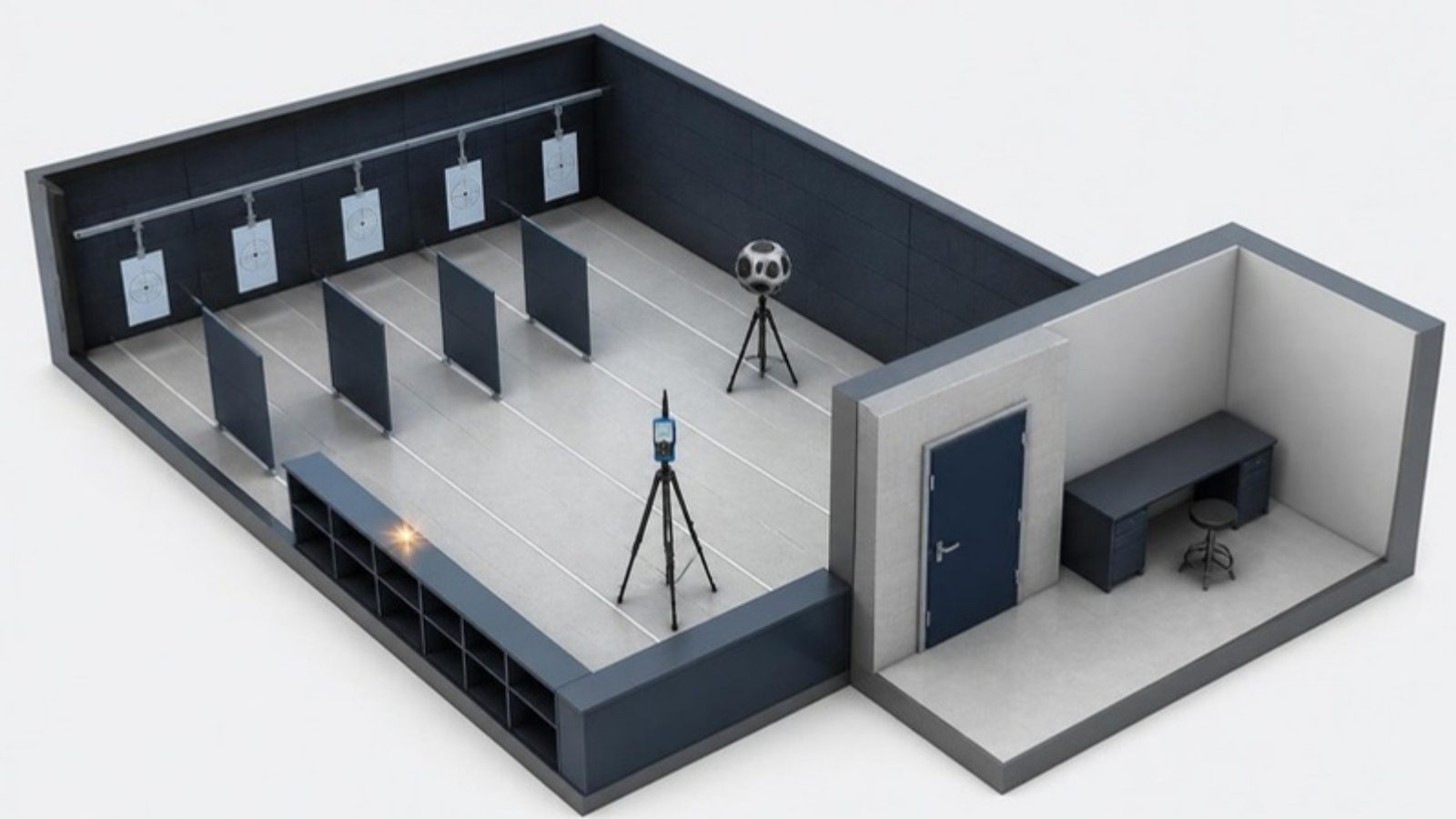
สนามยิงปืนในร่มแห่งนี้เป็นสถานที่ฝึกยิงที่ทันสมัย มีระบบเป้าเคลื่อนที่และระบบระบายอากาศกำลังสูง ผู้ใช้มีทั้งนักยิงปืนทั่วไป นักกีฬา และเจ้าหน้าที่รักษาความปลอดภัย ที่สำคัญคือในอาคารเดียวกันมีร้านอาหารสาธารณะอยู่ติดกันThis indoor range is a modern training facility with moving targets and a powerful ventilation system. It is used by recreational and competition shooters as well as security staff. Importantly, the same building also houses a public restaurant right next door.
การวัดจึงมีเป้าหมายสามข้อ:The measurements therefore had three goals:
- รู้ว่าเสียงปืนในห้องยิงดังจริงเท่าไร โดยเฉพาะที่หูของผู้ยิงFind out how loud gunfire really is inside the range, especially at the shooter's ear.
- ดูสภาพอะคูสติกของห้องยิง ผ่านค่าเวลาเสียงก้อง (reverberation time)Describe the acoustics of the range through its reverberation time.
- ตรวจว่าอาคารลดเสียงปืนก่อนถึงโถงทางเข้าและร้านอาหารได้มากเพียงใดCheck how much the building reduces the gunfire before it reaches the vestibule and the restaurant.
ทำไมจึงวัดยากWhy it was difficult
เสียงปืนเป็นเสียงกระแทก (impulse) ที่ดังมากและสั้นมาก ต่างจากเสียงเครื่องจักรที่ดังต่อเนื่อง ความยากจึงอยู่ที่ตัวเครื่องมือและตำแหน่งวัดมากกว่าตัวห้องGunfire is an extremely loud and extremely short impulse, unlike the steady noise of a machine. The difficulty lies in the instrument and the microphone position rather than in the room itself.
- เกินช่วงวัด (over-range): เมื่อวางไมโครโฟนข้างผู้ยิง แม้ใช้ไมโครโฟนความไวต่ำ เครื่องก็ยังรับไม่ไหว ค่าที่ได้จึงใช้ไม่ได้ ต้องถอยไมโครโฟนออกไปOver-range: with the microphone next to the shooter, even a low-sensitivity microphone overloaded the meter, so the reading was unusable and the microphone had to be moved back.
- อัตราสุ่มตัวอย่าง (sampling rate): มาตรฐาน US MIL-STD 1474E กำหนด 192 kHz สำหรับการวัดเสียงกระแทกที่สั้นมากตามมาตรฐาน ขณะที่เครื่องที่ใช้วัดที่ 48 kHzSampling rate: US MIL-STD 1474E asks for 192 kHz for standard-compliant measurement of very short impulses, while the meter used here samples at 48 kHz.
- เสียงพื้นหลังจากระบบระบายอากาศ: ลมที่ไหลในห้องเพิ่มเสียงความถี่ต่ำ ซึ่งอาจรบกวนการวัดเวลาเสียงก้องBackground noise from ventilation: the airflow adds low-frequency noise that can disturb the reverberation-time measurement.
- ช่วงระดับกว้างมาก: ต้องวัดตั้งแต่เสียงปืนระดับกว่า 150 dB จนถึงเสียงที่เล็ดลอดไปถึงร้านอาหาร ซึ่งแทบไม่ได้ยินA huge range of levels: from gunfire above 150 dB down to the faint remainder that reaches the restaurant.
วิธีวัดMeasurement approach
- เวลาเสียงก้อง: วางลำโพง DS3 (ให้พลังงานเสียง 121 dB เทียบกับ 1 pW) ที่กลางห้อง ระหว่างตำแหน่งผู้ยิงกับเป้า แล้ววัดสองรอบ คือขณะเปิดและปิดระบบระบายอากาศReverberation time: the DS3 loudspeaker (121 dB re 1 pW of sound power) was placed in the middle of the room, between the shooting position and the target, and the room was measured twice: with the ventilation running and with it off.
- เสียงพื้นหลัง: วัดขณะปิดระบบระบายอากาศ ด้วย XL2 ที่ระยะ 4 เมตรจากลำโพง DS3Background noise: measured with the ventilation off, using an XL2 at 4 m from the DS3.
- เสียงปืน: ตำแหน่งหลักอยู่ที่มุม 30° ระยะ 2.5 เมตรจากผู้ยิง ซึ่งเป็นตำแหน่งใกล้ที่สุดที่ไม่เกินช่วงวัด และมี XL2 เครื่องที่สองวัดพร้อมกันที่ระยะ 8.5 เมตร บันทึกการยิงชุดละหกนัดGunfire: the main position was at 30° and 2.5 m from the shooter, the closest point that did not overload the meter; a second XL2 measured simultaneously at 8.5 m. A series of six shots was recorded.
- การกันเสียง: เทียบระดับเสียงปืนในห้องยิงกับระดับที่โถงทางเข้า (ผ่านประตู) และในพื้นที่ร้านอาหารInsulation: the gunfire level in the range was compared with the level in the vestibule (through the door) and in the restaurant area.
เรื่องอัตราสุ่มตัวอย่าง ผู้วัดสรุปว่า 48 kHz เพียงพอสำหรับกรณีนี้ เพราะพลังงานของเสียงปืนกระจายอยู่ในย่านความถี่ที่เครื่องจับได้ครบ และได้ผลซ้ำได้ (repeatable) บทความไม่ได้อ้างว่าการวัดนี้เป็นไปตาม MIL-STD 1474EOn the sampling rate, the authors concluded that 48 kHz was sufficient here because of how the gunfire's energy is distributed across frequency, and that the results were repeatable. The article does not claim that the measurement complies with MIL-STD 1474E.
อุปกรณ์และซอฟต์แวร์ที่ใช้Equipment / software used
- XL2 Sound Level Meter สองเครื่อง: เครื่องหนึ่งที่ 2.5 เมตร อีกเครื่องที่ 8.5 เมตร วัดพร้อมกัน และใช้วัดเสียงพื้นหลังกับเวลาเสียงก้องTwo XL2 Sound Level Meters: one at 2.5 m and one at 8.5 m measuring simultaneously; also used for background noise and reverberation time.
- ลำโพงทรงสิบสองหน้า DS3 เป็นแหล่งกำเนิดเสียงรอบทิศทางสำหรับวัดเวลาเสียงก้องDS3 dodecahedron loudspeaker as the omnidirectional source for the reverberation-time measurement.
สิ่งที่วิเคราะห์What was analysed
- ค่าพีคสูงสุดถ่วงน้ำหนัก C (LCpkMax) ของเสียงปืนที่สองระยะ แล้วคำนวณย้อนไปที่ระยะ 0.7 เมตร ซึ่งเป็นระยะโดยประมาณระหว่างปืนพกกับหูผู้ยิงThe maximum C-weighted peak level (LCpkMax) of the shots at both distances, projected to 0.7 m, roughly the distance between a pistol and the shooter's ear.
- เวลาเสียงก้องแยกตามความถี่ เทียบกรณีเปิดและปิดระบบระบายอากาศReverberation time per frequency band, with and without the ventilation running.
- ระดับที่ลดลงจากห้องยิงไปยังโถงทางเข้าและร้านอาหาร และเสียงที่เหลือยังได้ยินหรือไม่The level reduction from the range to the vestibule and the restaurant, and whether what remains is still audible.
- ผลของอุปกรณ์ป้องกันการได้ยินต่อระดับเสียงที่หูผู้ยิงThe effect of hearing protection on the level at the shooter's ear.
ผลที่พบKey findings
| รายการItem | ค่าที่รายงานReported value |
|---|---|
| ค่าพีค LCpkMax ที่ 2.5 เมตรจากผู้ยิงLCpkMax at 2.5 m from the shooter | ค่าที่รายงานReported value154.1 dB154.1 dB |
| ค่าพีคที่หูผู้ยิง (คำนวณที่ 0.7 เมตร)Peak at the shooter's ear (projected to 0.7 m) | ค่าที่รายงานReported valueประมาณ 165.2 dBabout 165.2 dB |
| ค่าพีค LCpkMax ที่ 8.5 เมตรLCpkMax at 8.5 m | ค่าที่รายงานReported value143.8 dB143.8 dB |
| เสียงพื้นหลัง (ปิดระบบระบายอากาศ)Background noise (ventilation off) | ค่าที่รายงานReported value54.1 dB54.1 dB |
| การลดเสียงผ่านประตูสู่โถงทางเข้าReduction through the door to the vestibule | ค่าที่รายงานReported value44 dB44 dB |
| การลดเสียงถึงพื้นที่ร้านอาหารReduction to the restaurant area | ค่าที่รายงานReported value80 dB80 dB |
- ค่าการลดเสียง 44 dB และ 80 dB คิดจากค่า Leq ช่วงสั้น (short-term Leq) บทความระบุด้วยว่าที่การลดทอน 65 dB เสียงปืนก็แทบไม่ได้ยินแล้ว หากปิดเครื่องปรับอากาศและเพลงพื้นหลัง ส่วนที่ร้านอาหาร การลดทอนที่รายงานคือ 80 dBThe 44 dB and 80 dB reductions are based on the short-term Leq. The article adds that at 65 dB of attenuation the shots are already hard to hear, provided the air-conditioning and background music are switched off; the reduction reported for the restaurant is 80 dB.
- เมื่อเปิดระบบระบายอากาศ ค่าเวลาเสียงก้องที่ความถี่ต่ำดูเหมือนลดลง แต่ผู้วัดอธิบายว่าเป็นเพราะกระแสลมเพิ่มเสียงพื้นหลังความถี่ต่ำ จึงเป็นความไม่แน่นอนของการวัด ไม่ใช่ห้องเปลี่ยนไปจริงWith the ventilation running, the low-frequency reverberation time appeared shorter; the authors explain this by the airflow raising the low-frequency background noise, i.e. a measurement uncertainty, not a real change in the room.
- แม้สวมอุปกรณ์ป้องกันเสียงก็ยังมีความเสี่ยง ตัวเลขในบทความระบุว่าอุปกรณ์ที่ดีลดเสียงช่วงความถี่กลางและสูงได้ราว 35–40 dB แต่ที่ความถี่ต่ำกว่า 500 Hz ลดได้เหลือเพียง 15–20 dB เมื่อหักค่าที่ลดได้จริงราว 35 dB ออกจากพีคประมาณ 165 dB ก็ยังเหลือราว 130 dB ที่หูEven with protection the risk remains. The article's figures give 35–40 dB of reduction for good protectors at mid and high frequencies, falling to only 15–20 dB below 500 Hz. Taking a realistic 35 dB off the peak of roughly 165 dB still leaves about 130 dB at the ear.
- สำหรับผู้ยิงที่ไม่สวมอุปกรณ์ป้องกัน บทความประเมินว่าพีคราว 165 dB มีโอกาสสูงที่จะทำให้หูบาดเจ็บถาวรจากแรงอัดของเสียง (blast trauma)For an unprotected shooter, the article judges that a peak near 165 dB is very likely to injure the ear permanently (blast trauma).
- บทความสรุปว่าสภาพอะคูสติกของสนามยิงปืนแห่งนี้ใช้งานได้ดีและน่าอยู่ และการกันเสียงช่วยปกป้องแขกในร้านอาหารThe article concludes that the range's acoustics are pleasant and functional, and that its insulation protects the restaurant guests.
บทความไม่ได้เผยแพร่ตัวเลขเวลาเสียงก้องของห้อง จึงไม่ได้ใส่ไว้ที่นี่The article does not publish the room's reverberation-time values, so none are given here.
บทเรียนที่นำไปใช้ได้What we can learn
หัวข้อนี้เป็นความเห็นและข้อสังเกตทั่วไปของ GET BEST SOUND ไม่ใช่ข้อความหรือผลสรุปของ NTi AudioThis section is general commentary by GET BEST SOUND, not a statement or conclusion from NTi Audio.
- เสียงกระแทกต้องดูค่าพีค ไม่ใช่แค่ค่าเฉลี่ย เสียงปืนนัดเดียวแทบไม่เปลี่ยนค่า Leq แต่ค่าพีคบอกความเสี่ยงต่อการได้ยินได้ตรงกว่าImpulses call for peak values, not just averages. A single shot barely moves Leq, while the peak level describes the hearing risk far better.
- ตรวจช่วงวัดของเครื่องก่อนเชื่อตัวเลข ถ้าเครื่องขึ้นเกินช่วงวัด ค่าที่ได้ไม่มีความหมาย วิธีแก้คือถอยไมโครโฟนออกมา แล้วคำนวณกลับไปยังตำแหน่งที่ต้องการCheck the meter's range before trusting a number. An over-range reading is meaningless; the fix is to move the microphone back and calculate back to the position of interest.
- การคำนวณย้อนระยะต้องใช้อย่างระมัดระวัง ตัวเลข 154.1 dB ที่ 2.5 เมตร กับ 165.2 dB ที่ 0.7 เมตร สอดคล้องกับหลักที่ว่าระดับเสียงจากแหล่งกำเนิดขนาดเล็กเปลี่ยนประมาณ 6 dB ทุกครั้งที่ระยะเปลี่ยนเท่าตัว ควรระบุเสมอว่าค่าใดวัดจริงและค่าใดคำนวณDistance projection needs care. The 154.1 dB at 2.5 m and 165.2 dB at 0.7 m are consistent with the rule that the level from a small source changes by about 6 dB per doubling of distance. Always state which values were measured and which were calculated.
- เสียงพื้นหลังทำให้ค่าเวลาเสียงก้องเพี้ยนได้ ก่อนวัดควรปิดพัดลมหรือระบบระบายอากาศถ้าทำได้ หรืออย่างน้อยวัดเสียงพื้นหลังไว้ด้วยBackground noise can bias reverberation time. Switch off fans or ventilation if possible before measuring, or at least measure and record the background noise.
- บอกผลการกันเสียงในภาษาที่คนใช้อาคารเข้าใจ ตัวเลข 80 dB มีความหมายขึ้นมาทันทีเมื่อเทียบกับคำถามว่า "แขกในร้านอาหารได้ยินไหม" แนวคิดนี้ใช้ได้กับอาคารใช้งานผสมทุกแบบ เช่น ห้องซ้อมดนตรีหรือสถานบันเทิงที่อยู่ติดที่พักอาศัยExpress insulation in terms building users understand. An 80 dB reduction becomes meaningful when set against the question "can the restaurant guests hear it?" The same idea applies to any mixed-use building, such as rehearsal rooms or entertainment venues next to homes.
- อุปกรณ์ป้องกันการได้ยินไม่ได้ทำให้ปลอดภัยทั้งหมด โดยเฉพาะที่ความถี่ต่ำ ซึ่งลดเสียงได้น้อยกว่ามากHearing protection does not remove all of the risk, especially at low frequencies where it attenuates much less.