โจทย์The problem
ทีมวิจัยของ ZHAW ทำงานด้านการพัฒนาและการใช้งานคอนกรีตคาร์บอน (carbon concrete) ในงานก่อสร้าง และให้ความสำคัญกับสมบัติด้านอะคูสติกของอาคาร โจทย์คือพัฒนาแผ่นพื้นและระบบเพดานแบบใหม่ที่ยังกันเสียงได้ดีThe ZHAW research team develops and applies carbon-concrete construction, with a particular focus on building acoustics. The task is to develop new slabs and ceiling systems that still provide good sound insulation.
เป้าหมายที่ข่าวระบุคือลดเสียงได้ 5 dB หรือมากกว่า ข่าวไม่ได้บอกว่าเทียบกับโครงสร้างอ้างอิงแบบใดThe stated goal is a sound reduction of 5 dB or more. The news item does not say which reference construction this is compared with.
ทำไมจึงยากWhy it was difficult
(หลักการทั่วไป ข่าวต้นฉบับไม่ได้อธิบายส่วนนี้) พื้นระหว่างชั้นต้องรับมือเสียงสองแบบที่ต่างกันมาก:(General principle; the original news item does not discuss this.) A floor between storeys has to deal with two very different kinds of sound:
- เสียงผ่านอากาศ (airborne sound) เช่น เสียงพูด เสียงทีวี ที่ทำให้อากาศสั่น แล้วผ่านโครงสร้างไปยังห้องข้างล่างหรือข้างบนAirborne sound, such as speech or a TV, which sets the air vibrating and passes through the structure to the room above or below.
- เสียงกระแทก (impact sound) เช่น เสียงเดิน เสียงของตก ที่กระแทกลงบนพื้นโดยตรงและวิ่งไปในโครงสร้างImpact sound, such as footsteps or dropped objects, which strikes the floor directly and travels through the structure.
วัสดุหรือชั้นปูพื้นที่ช่วยเรื่องหนึ่งอาจช่วยอีกเรื่องได้น้อย จึงต้องวัดทั้งสองแบบ และต้องทดลองหลายชุดประกอบ (ระบบเพดานเดียวกันกับชั้นปูพื้นต่างกัน) เพื่อเทียบกันอย่างเป็นธรรม ซึ่งต้องใช้ห้องทดสอบที่ควบคุมได้และวิธีวัดที่ทำซ้ำได้A material or floor finish that helps with one may help much less with the other, so both must be measured, and several build-ups (the same ceiling system with different floor layers) must be tested for a fair comparison. That requires a controlled test room and a repeatable method.
วิธีวัดMeasurement approach
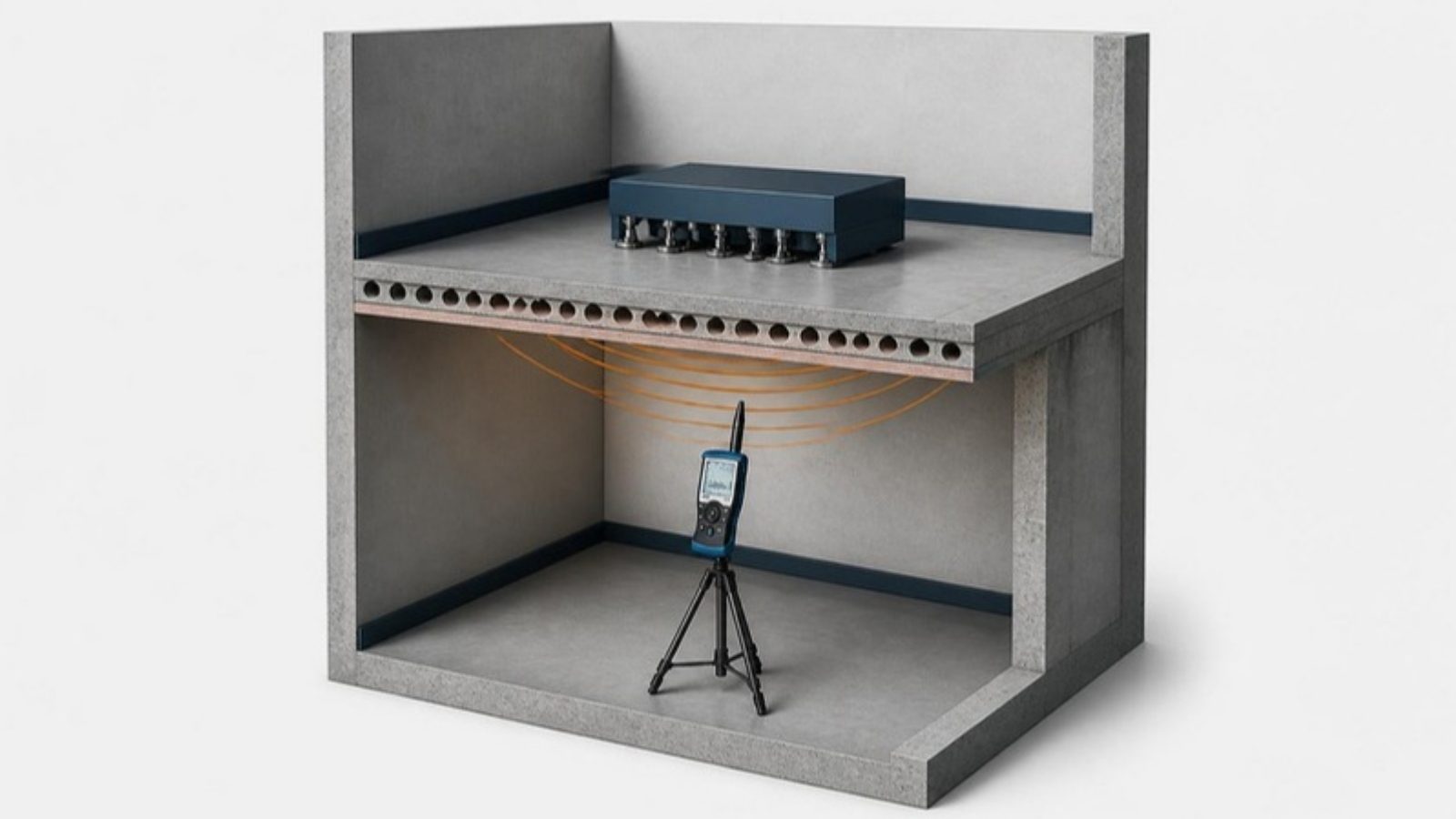
- ZHAW สร้างห้องทดสอบอะคูสติก (test stand) โดยเฉพาะ ประกอบด้วยห้องสองห้องที่หุ้มฉนวน โดยมีระบบเพดานที่พัฒนาใหม่คั่นกลางระหว่างสองห้องZHAW built a dedicated acoustic test stand: two insulated rooms with the newly developed ceiling system between them.
- วางชั้นปูพื้นหลายแบบบนระบบเพดาน แล้วทดสอบแต่ละชุดประกอบVarious floor build-ups are placed on top of the ceiling system and each combination is tested.
- ประเมินการกันเสียงผ่านอากาศและการกันเสียงกระแทกตามมาตรฐานที่เกี่ยวข้องAirborne and impact sound insulation are evaluated according to the applicable standards.
- เครื่อง XL3 คำนวณและแสดงผลได้ทันทีบนตัวเครื่อง และใช้ซอฟต์แวร์ Sound Insulation Reporter ในการประมวลผลThe XL3 calculates and displays the results immediately on the instrument, and the Sound Insulation Reporter software is used for processing.
ข้างล่างนี้เป็นหลักการทั่วไปของการวัดการกันเสียงระหว่างสองห้อง เพื่อช่วยให้เข้าใจบทบาทของเครื่องมือแต่ละชิ้น ข่าวของ ZHAW ไม่ได้ลงรายละเอียดตำแหน่งวัดหรือขั้นตอนของทีมBelow are the general principles of measuring insulation between two rooms, to help explain the role of each instrument. The ZHAW news item does not describe the team's positions or procedure in detail.
- เสียงผ่านอากาศ: ลำโพงรอบทิศทาง (DS3 ขับด้วยแอมป์ PA3) สร้างเสียงดังในห้องต้นทาง แล้ววัดระดับเสียงในห้องต้นทางและห้องรับเสียงเป็นย่าน 1/3 ออกเตฟ ผลต่างของสองห้องบอกว่าโครงสร้างกั้นเสียงได้เท่าไร โดยปกติวัดเวลาเสียงก้องและเสียงพื้นหลังในห้องรับเสียงด้วย และวัดหลายตำแหน่งแล้วเฉลี่ยAirborne: an omnidirectional loudspeaker (the DS3, driven by the PA3 amplifier) fills the source room with sound; the levels in the source and receiving rooms are measured in 1/3-octave bands, and the difference shows how much the construction blocks. Reverberation time and background noise in the receiving room are normally measured too, at several positions that are then averaged.
- เสียงกระแทก: วางเครื่องเคาะมาตรฐาน (tapping machine เช่น TM3) บนพื้นด้านบน ซึ่งเคาะพื้นด้วยจังหวะสม่ำเสมอ แล้ววัดระดับเสียงที่เกิดขึ้นในห้องด้านล่าง ยิ่งระดับในห้องล่างต่ำ พื้นยิ่งกันเสียงกระแทกได้ดีImpact: a standardised tapping machine (such as the TM3) is placed on the upper floor and strikes it at a steady rhythm; the resulting level in the room below is measured. The lower that level, the better the floor insulates against impact sound.
อุปกรณ์และซอฟต์แวร์ที่ใช้Equipment / software used
- XL3 Acoustic Analyser พร้อม Sound Insulation option: วัด คำนวณ และแสดงผลบนตัวเครื่องXL3 Acoustic Analyser with the Sound Insulation option: measures, calculates and displays results on the instrument.
- ลำโพงทรงสิบสองหน้า DS3 และเพาเวอร์แอมป์ PA3: แหล่งกำเนิดเสียงสำหรับวัดการกันเสียงผ่านอากาศDS3 dodecahedron loudspeaker and PA3 power amplifier: the sound source for airborne insulation.
- เครื่องเคาะมาตรฐาน TM3: แหล่งกำเนิดเสียงกระแทกสำหรับวัดการกันเสียงกระแทกTM3 standardised tapping machine: the impact source for impact insulation.
- Sound Insulation Reporter: ซอฟต์แวร์ประมวลผลและจัดทำรายงานSound Insulation Reporter: software for processing and reporting.
สิ่งที่วิเคราะห์What was analysed
การเปรียบเทียบชั้นปูพื้นหลายแบบบนระบบเพดานคอนกรีตคาร์บอนเดียวกัน ทั้งด้านการกันเสียงผ่านอากาศและการกันเสียงกระแทก เพื่อดูว่าชุดประกอบใดเข้าใกล้เป้าหมายการลดเสียง 5 dB หรือมากกว่าA comparison of several floor build-ups on the same carbon-concrete ceiling system, for both airborne and impact insulation, to see which combinations approach the target of a 5 dB or greater reduction.
ผลที่พบKey findings
ข่าวต้นฉบับไม่ได้เผยแพร่ค่าที่วัดได้หรือผลการกันเสียงเป็นตัวเลข หน้านี้จึงไม่รายงานผลการวัดThe original news item publishes no measured values or insulation results, so this page reports none.
- ณ เวลาที่ข่าวเผยแพร่ (กุมภาพันธ์ 2025) ZHAW ใช้อุปกรณ์ชุดนี้มาประมาณหกเดือนAt the time of publication (February 2025), ZHAW had been using the equipment for about six months.
- ผู้ช่วยวิจัยของ ZHAW ให้ความเห็นว่าเครื่อง XL3 ใช้งานง่าย เชื่อถือได้ และไม่พบปัญหาทางเทคนิค การที่เครื่องคำนวณและแสดงผลได้ทันทีช่วยให้ทำงานได้เร็วA ZHAW research assistant described the XL3 as very easy to use and reliable, with no technical problems, and valued the immediate calculation and display of results.
- เมื่อโครงการก่อสร้างที่ใช้ระบบเพดานของ ZHAW เริ่มขึ้น มีแผนจะใช้ XL3 วัดในอาคารจริงด้วยOnce building projects using the ZHAW ceiling systems go ahead, the XL3 is planned for on-site measurements as well.
บทเรียนที่นำไปใช้ได้What we can learn
หัวข้อนี้เป็นความเห็นและข้อสังเกตทั่วไปของ GET BEST SOUND ไม่ใช่ข้อความหรือผลสรุปของ NTi AudioThis section is general commentary by GET BEST SOUND, not a statement or conclusion from NTi Audio.
- พื้นต้องวัดสองเรื่องเสมอ ผลการกันเสียงผ่านอากาศที่ดีไม่ได้รับประกันว่าเสียงเดินจะไม่รบกวนห้องข้างล่าง สำหรับคอนโด โรงแรม หรือโรงพยาบาล ควรกำหนดเกณฑ์ทั้งสองแบบตั้งแต่ขั้นออกแบบFloors always need two tests. Good airborne insulation does not guarantee that footsteps won't disturb the room below. For condominiums, hotels or hospitals, set criteria for both from the design stage.
- เทียบทีละตัวแปร การใช้ระบบเพดานเดียวกันแล้วเปลี่ยนเฉพาะชั้นปูพื้น ทำให้เห็นผลของชั้นปูพื้นแต่ละแบบได้ชัด วิธีคิดนี้ใช้ได้กับการเลือกวัสดุปูพื้นหรือฝ้าในโครงการจริงChange one variable at a time. Keeping the ceiling system fixed and changing only the floor build-up isolates the effect of each finish. The same approach helps when choosing flooring or ceiling products for a real project.
- ผลในห้องทดสอบกับผลในอาคารจริงอาจไม่เท่ากัน เสียงเดินทางผ่านผนังและรอยต่อข้างเคียงได้ด้วย การที่ ZHAW วางแผนวัดในอาคารจริงต่อ แสดงให้เห็นว่าผลในห้องทดสอบยังต้องยืนยันในสนามTest-stand results and on-site results can differ. Sound also travels through adjoining walls and junctions. ZHAW's plan to measure in finished buildings shows that laboratory results still need confirming in the field.
- เป้าหมายต้องมีจุดอ้างอิง ตัวเลข "ลดได้ 5 dB" มีความหมายเมื่อรู้ว่าเทียบกับอะไร เวลาตั้งเกณฑ์ในโครงการ ควรระบุทั้งค่า ตัวชี้วัด และมาตรฐานที่ใช้A target needs a reference. "5 dB better" only means something once you know compared with what. When setting criteria for a project, state the value, the rating quantity and the standard.