ทำไมเรื่องนี้สำคัญWhy this matters
ตัวเลขเดียว เช่น 65 dB บอกได้ว่าเสียงโดยรวมดังแค่ไหน แต่ไม่ได้บอกว่าเสียงนั้น “เป็นเสียงแบบไหน” เสียงหึ่งทุ้มของเครื่องปั๊มน้ำ กับเสียงแหลมของเครื่องเจียร อาจอ่านได้ตัวเลขรวมใกล้กันมาก แต่การแก้ปัญหาต่างกันโดยสิ้นเชิงA single number such as 65 dB tells you how loud a sound is overall, but not what kind of sound it is. The low hum of a water pump and the high whine of an angle grinder can give almost the same overall reading, yet fixing them calls for completely different solutions.
เมื่อแบ่งเสียงออกเป็นย่านความถี่ เราจะรู้ว่าพลังงานส่วนใหญ่อยู่ตรงไหน จึงเลือกวัสดุกันเสียง วัสดุดูดซับเสียง หรือวิธีแก้ที่ต้นเหตุได้ตรงจุด งานวัดหลายประเภท เช่น การกันเสียงในอาคาร การประเมินเสียงรบกวนจากระบบปรับอากาศ และการหาเสียงหึ่งที่ทำให้เพื่อนบ้านร้องเรียน จึงต้องใช้ข้อมูลเป็นย่าน ไม่ใช่ตัวเลขรวมตัวเดียวOnce sound is split into frequency bands, you can see where most of the energy is, and choose insulation, absorption or a fix at the source that actually targets the problem. Many kinds of measurement, such as sound insulation in buildings, rating the background noise of air conditioning, and tracking down a hum that neighbours complain about, therefore work with band data rather than one overall number.
แนวคิดพื้นฐาน: ย่านความถี่คืออะไรThe basic idea: what is a frequency band?
ความถี่ (frequency) คือจำนวนครั้งที่อากาศสั่นกลับไปกลับมาในหนึ่งวินาที มีหน่วยเป็นเฮิรตซ์ (Hz) หูคนเราได้ยินประมาณ 20 Hz ถึง 20,000 Hz (20 kHz) ถ้าจะดูทีละความถี่ทุกค่าก็จะมีข้อมูลมากเกินไป จึงแบ่งช่วงนี้ออกเป็นกล่องหลาย ๆ กล่อง แต่ละกล่องเรียกว่า ย่านความถี่ (frequency band)Frequency is how many times per second the air vibrates back and forth, measured in hertz (Hz). People hear from about 20 Hz to 20,000 Hz (20 kHz). Looking at every single frequency would give far too much data, so this range is divided into a row of boxes; each box is called a frequency band.
แต่ละย่านมีสามค่าที่ควรรู้จัก คือ ขอบล่าง (lower edge) ขอบบน (upper edge) และ ความถี่กลาง (centre frequency) ซึ่งใช้เป็นชื่อเรียกย่าน เช่น “ย่าน 1 kHz” เครื่องวัดจะรวมพลังงานเสียงทุกความถี่ที่อยู่ระหว่างขอบล่างกับขอบบน แล้วแสดงออกมาเป็นระดับเสียงหนึ่งค่าสำหรับย่านนั้นEvery band has three values worth knowing: its lower edge, its upper edge, and its centre frequency, which gives the band its name, e.g. “the 1 kHz band”. The instrument adds up the sound energy of every frequency between the two edges and shows it as one level for that band.
ลองนึกถึงชั้นวางหนังสือที่แบ่งเป็นช่อง ช่องซ้ายสุดเก็บหนังสือเล่มบาง ช่องขวาสุดเก็บเล่มหนา เราไม่ได้นับหนังสือทีละเล่ม แต่ดูว่าช่องไหนแน่นที่สุด การแบ่งเสียงเป็นย่านก็เช่นกัน เราดูว่า “ช่องความถี่” ไหนมีพลังงานเสียงมากที่สุดThink of a bookshelf divided into compartments: thin books on the left, thick ones on the right. You don't count every book; you look at which compartment is fullest. Splitting sound into bands works the same way: you look at which “frequency compartment” holds the most sound energy.
ออกเตฟคืออะไรWhat is an octave?
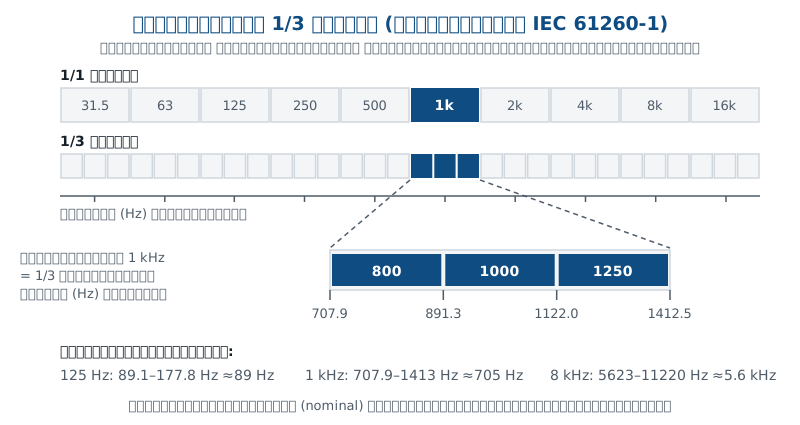
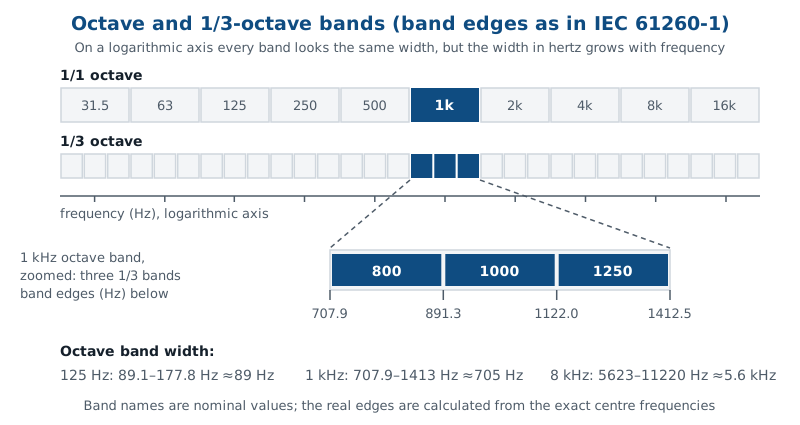
คำว่า ออกเตฟ (octave) มาจากดนตรี โน้ตโดตัวล่างกับโดตัวบนที่สูงขึ้นไปหนึ่งออกเตฟมีความถี่ต่างกันสองเท่า ย่านออกเตฟในงานวัดเสียงก็ใช้หลักเดียวกัน ขอบบนของแต่ละย่านมีค่าประมาณสองเท่าของขอบล่างThe word octave comes from music: a note and the same note one octave higher differ in frequency by a factor of two. Octave bands in acoustics follow the same idea: the upper edge of each band is roughly twice its lower edge.
ผลที่ตามมาคือ ย่านที่ความถี่สูงจะกว้างกว่าย่านที่ความถี่ต่ำเมื่อวัดเป็นเฮิรตซ์ เพราะความกว้างของย่านเป็น สัดส่วนคงที่ของความถี่กลาง (constant percentage bandwidth) ไม่ใช่จำนวนเฮิรตซ์คงที่ ตัวอย่างเช่น ย่านออกเตฟที่ 1 kHz ตามนิยามในมาตรฐาน IEC 61260-1:2014 มีขอบล่างประมาณ 707.9 Hz และขอบบนประมาณ 1,412.5 Hz กว้างประมาณ 705 Hz ขณะที่ย่านออกเตฟที่ 125 Hz กว้างเพียงราวหนึ่งในแปดของค่านั้นAs a result, bands at high frequencies are wider in hertz than bands at low frequencies, because the width of a band is a constant percentage of its centre frequency, not a fixed number of hertz. For example, the 1 kHz octave band as defined in IEC 61260-1:2014 runs from about 707.9 Hz to about 1,412.5 Hz, a width of about 705 Hz, while the 125 Hz octave band is only around one eighth as wide.
การแบ่งแบบนี้เข้ากับการได้ยินของคน เพราะหูรับรู้ระดับเสียงสูงต่ำตาม “อัตราส่วน” ของความถี่ ไม่ใช่ตาม “ผลต่าง” จาก 100 เป็น 200 Hz จึงฟังเป็นระยะห่างเท่ากับจาก 1,000 เป็น 2,000 HzThis way of dividing matches human hearing, because the ear judges pitch by the ratio between frequencies, not by their difference: going from 100 to 200 Hz sounds like the same step as going from 1,000 to 2,000 Hz.
1/3 ออกเตฟ และความละเอียดที่ละเอียดกว่า1/3 octave and finer resolutions
ถ้าอยากเห็นรายละเอียดมากขึ้น ก็แบ่งแต่ละออกเตฟให้เล็กลง ย่าน 1/3 ออกเตฟ (one-third octave) แบ่งหนึ่งออกเตฟเป็นสามย่าน ย่าน 1/3 ออกเตฟที่ 1 kHz จึงแคบกว่ามาก คือประมาณ 891.3 Hz ถึง 1,122.0 Hz (กว้างราว 231 Hz) นอกจากนี้ยังมีความละเอียด 1/6 และ 1/12 ออกเตฟ สำหรับงานวิเคราะห์ที่ต้องการรายละเอียดสูงขึ้นไปอีกTo see more detail, each octave is divided further. One-third octave bands split every octave into three, so the 1/3 octave band at 1 kHz is much narrower: about 891.3 Hz to 1,122.0 Hz (roughly 231 Hz wide). There are also 1/6 and 1/12 octave resolutions for analysis that needs even more detail.
เปรียบกับคีย์เปียโนจะเข้าใจง่ายที่สุด หนึ่งออกเตฟบนเปียโนมี 12 ครึ่งเสียง (semitone)A piano keyboard makes this easy to picture. One octave on a piano has 12 semitones:
| ความละเอียดResolution | เทียบกับเปียโนPiano comparison | เหมาะกับงานSuited to |
|---|---|---|
| 1/1 ออกเตฟ1/1 octave | เทียบกับเปียโนPiano comparisonหนึ่งค่าต่อ 12 ครึ่งเสียงone value per 12 semitones | เหมาะกับงานSuited toสำรวจภาพรวม การประเมินเสียงพื้นหลังด้วยเส้นโค้งเสียงรบกวน (noise curves)Overviews, rating background noise with noise curves |
| 1/3 ออกเตฟ1/3 octave | เทียบกับเปียโนPiano comparisonหนึ่งค่าต่อ 4 ครึ่งเสียงone value per 4 semitones | เหมาะกับงานSuited toการกันเสียงในอาคาร การหาเสียงหึ่งหรือเสียงวี้ดในเสียงรบกวนสิ่งแวดล้อมSound insulation in buildings, finding hums or whines in environmental noise |
| 1/6 ออกเตฟ1/6 octave | เทียบกับเปียโนPiano comparisonหนึ่งค่าต่อ 2 ครึ่งเสียงone value per 2 semitones | เหมาะกับงานSuited toการวิเคราะห์ที่ต้องการรายละเอียดมากขึ้นMore detailed analysis |
| 1/12 ออกเตฟ1/12 octave | เทียบกับเปียโนPiano comparisonหนึ่งค่าต่อคีย์เปียโนหนึ่งคีย์one value per piano key | เหมาะกับงานSuited toการวิเคราะห์หาสาเหตุอย่างละเอียดDetailed diagnostics |
ยิ่งแบ่งละเอียด ยิ่งมีย่านมากและเห็นรายละเอียดมาก แต่ข้อมูลก็อ่านยากขึ้น การเลือกความละเอียดจึงขึ้นกับคำถามที่ต้องการตอบ และขึ้นกับว่ามาตรฐานของงานนั้นกำหนดไว้อย่างไรThe finer the resolution, the more bands and the more detail, but the harder the data is to read. The right resolution depends on the question you want to answer and on what the standard for that job specifies.
ความถี่กลางมาตรฐานStandard centre frequencies
ความถี่กลางของย่านถูกกำหนดเป็นชุดตัวเลขมาตรฐาน เพื่อให้ผลจากเครื่องมือทุกยี่ห้อเทียบกันได้ ตัวเลขที่เห็นบนหน้าจอเป็น ค่าเรียกตามชื่อ (nominal) ซึ่งปัดให้จำง่าย ส่วนค่าที่ใช้คำนวณจริง (exact) อาจต่างไปเล็กน้อย เช่น ย่านที่เรียกว่า 63 Hz มีความถี่กลางจริงไม่ใช่ 63 Hz พอดี ตารางนี้แสดงย่านออกเตฟที่พบบ่อย และย่าน 1/3 ออกเตฟสามย่านที่อยู่ภายในแต่ละออกเตฟBand centre frequencies follow a standard series so that results from any make of instrument can be compared. The numbers on the display are nominal values, rounded to be easy to remember; the exact values used in the calculation can differ slightly (the band called 63 Hz, for instance, is not centred at exactly 63 Hz). The table shows the common octave bands and the three 1/3 octave bands inside each one.
| ย่านออกเตฟ (ความถี่กลาง)Octave band (centre) | ย่าน 1/3 ออกเตฟภายใน1/3 octave bands inside it | ตัวอย่างเสียงที่มักมีพลังงานในย่านนี้Typical sounds with energy here |
|---|---|---|
| 63 Hz63 Hz | ย่าน 1/3 ออกเตฟภายใน1/3 octave bands inside it50 · 63 · 80 Hz50 · 63 · 80 Hz | ตัวอย่างเสียงที่มักมีพลังงานในย่านนี้Typical sounds with energy hereเสียงเบสจากลำโพง เสียงเครื่องยนต์รอบต่ำLoudspeaker bass, slow-running engines |
| 125 Hz125 Hz | ย่าน 1/3 ออกเตฟภายใน1/3 octave bands inside it100 · 125 · 160 Hz100 · 125 · 160 Hz | ตัวอย่างเสียงที่มักมีพลังงานในย่านนี้Typical sounds with energy hereเสียงหึ่งจากหม้อแปลงและมอเตอร์Hum from transformers and motors |
| 250 Hz250 Hz | ย่าน 1/3 ออกเตฟภายใน1/3 octave bands inside it200 · 250 · 315 Hz200 · 250 · 315 Hz | ตัวอย่างเสียงที่มักมีพลังงานในย่านนี้Typical sounds with energy hereเสียงพัดลมและระบบปรับอากาศFans and air conditioning |
| 500 Hz500 Hz | ย่าน 1/3 ออกเตฟภายใน1/3 octave bands inside it400 · 500 · 630 Hz400 · 500 · 630 Hz | ตัวอย่างเสียงที่มักมีพลังงานในย่านนี้Typical sounds with energy hereส่วนสำคัญของเสียงพูดAn important part of speech |
| 1 kHz1 kHz | ย่าน 1/3 ออกเตฟภายใน1/3 octave bands inside it800 · 1000 · 1250 Hz800 · 1000 · 1250 Hz | ตัวอย่างเสียงที่มักมีพลังงานในย่านนี้Typical sounds with energy hereเสียงพูด เสียงเครื่องจักรทั่วไปSpeech, general machinery |
| 2 kHz2 kHz | ย่าน 1/3 ออกเตฟภายใน1/3 octave bands inside it1600 · 2000 · 2500 Hz1600 · 2000 · 2500 Hz | ตัวอย่างเสียงที่มักมีพลังงานในย่านนี้Typical sounds with energy hereความชัดของพยัญชนะในเสียงพูดThe clarity of consonants in speech |
| 4 kHz4 kHz | ย่าน 1/3 ออกเตฟภายใน1/3 octave bands inside it3150 · 4000 · 5000 Hz3150 · 4000 · 5000 Hz | ตัวอย่างเสียงที่มักมีพลังงานในย่านนี้Typical sounds with energy hereเสียงแหลมของเครื่องมือตัดและเจียรThe whine of cutting and grinding tools |
| 8 kHz8 kHz | ย่าน 1/3 ออกเตฟภายใน1/3 octave bands inside it6300 · 8000 · 10000 Hz6300 · 8000 · 10000 Hz | ตัวอย่างเสียงที่มักมีพลังงานในย่านนี้Typical sounds with energy hereเสียงลมรั่ว เสียงซ่าHissing air leaks, hiss |
คอลัมน์ขวาสุดเป็นตัวอย่างคร่าว ๆ เพื่อช่วยให้นึกภาพออกเท่านั้น เสียงจริงมักกระจายอยู่หลายย่านพร้อมกันThe right-hand column is only a rough guide to help you picture the bands; real sounds usually spread across several bands at once.
RTA: ดูทุกย่านพร้อมกันแบบเรียลไทม์RTA: seeing every band live
RTA (Real-Time Analyzer) คือฟังก์ชันที่แสดงระดับเสียงของทุกย่านพร้อมกันเป็นกราฟแท่ง และอัปเดตต่อเนื่องขณะที่เสียงเปลี่ยน แกนนอนคือย่านความถี่เรียงจากต่ำไปสูง แกนตั้งคือระดับเสียงเป็นเดซิเบล (dB) แท่งที่สูงที่สุดคือย่านที่มีพลังงานมากที่สุด เครื่องวัดระดับเสียงรุ่นที่มีฟังก์ชันวิเคราะห์ เช่น NTi Audio XL2 และ XL3 แสดง RTA แบบ 1/1 หรือ 1/3 ออกเตฟได้An RTA (real-time analyzer) shows the level in every band at the same time as a bar graph, updating continuously as the sound changes. The horizontal axis is the frequency bands from low to high; the vertical axis is the level in decibels (dB). The tallest bar is the band with the most energy. Sound level meters with analysis functions, such as the NTi Audio XL2 and XL3, can show an RTA in 1/1 or 1/3 octave bands.
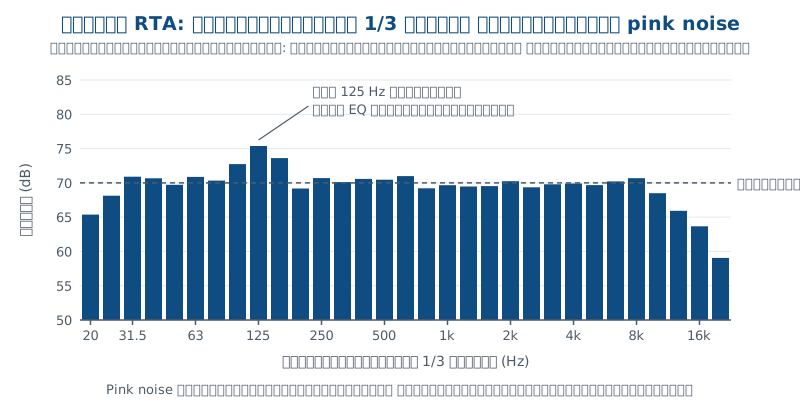
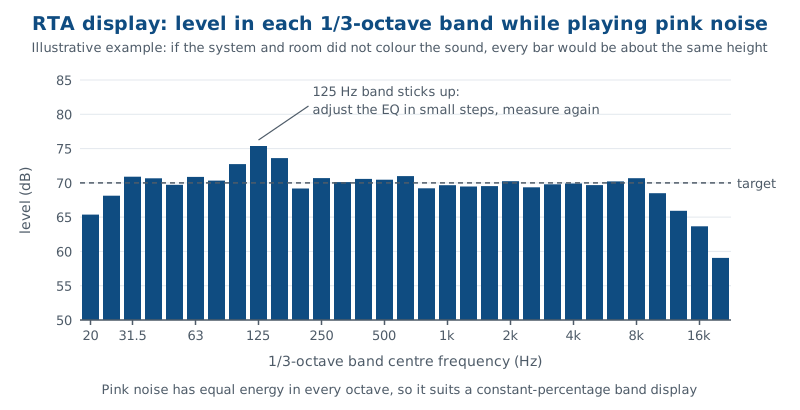
เพื่อนบ้านร้องเรียนว่าได้ยินเสียงหึ่งจากเครื่องปรับอากาศบนหลังคาในเวลากลางคืน ตัวเลขรวมที่วัดได้ไม่สูงมาก แต่เมื่อเปิด RTA แบบ 1/3 ออกเตฟ พบว่าย่าน 100 Hz สูงกว่าย่านข้างเคียงอย่างชัดเจน นี่คือร่องรอยของ เสียงโทน (tonal component) ที่หูจับได้ง่ายและมักเป็นต้นเหตุของเรื่องร้องเรียน ข้อมูลนี้บอกว่าควรตรวจที่มอเตอร์หรือการสั่นของเครื่อง มากกว่าการเพิ่มผนังกันเสียงแบบทั่วไปA neighbour complains about a hum from a rooftop air-conditioning unit at night. The overall level is not very high, but a 1/3 octave RTA shows the 100 Hz band standing clearly above the bands next to it. That is the sign of a tonal component, which the ear picks out easily and which often drives complaints. The data points towards checking the motor or the unit's vibration rather than simply adding a generic barrier.
นำไปใช้ที่ไหนWhere it is used
- การกันเสียงในอาคาร: วัดระดับเสียงในห้องต้นทางและห้องรับเสียงเป็นย่าน 1/3 ออกเตฟ เพราะผนังกันเสียงความถี่ต่ำกับความถี่สูงได้ไม่เท่ากันSound insulation in buildings: levels in the source and receiving rooms are measured in 1/3 octave bands, because a wall blocks low and high frequencies very differently.
- เสียงรบกวนในสิ่งแวดล้อม: สเปกตรัม 1/3 ออกเตฟช่วยหาว่าแหล่งเสียงใดเด่น และมีเสียงโทน เช่น เสียงหึ่งหรือเสียงวี้ดหรือไม่Environmental noise: 1/3 octave spectra help identify the dominant source and any tonal components such as hums or whines.
- เสียงพื้นหลังในห้อง: การประเมินด้วยเส้นโค้งเสียงรบกวน (noise curves: ชุดเส้นโค้งมาตรฐานที่ใช้เทียบสเปกตรัมเพื่อให้คะแนนความเงียบของห้องเป็นตัวเลขเดียว) ใช้สเปกตรัมแบบออกเตฟในช่วงประมาณ 16 Hz ถึง 8 kHzBackground noise in rooms: rating with noise curves (standard families of curves that the spectrum is compared against to give the room's quietness a single rating) uses an octave-band spectrum across roughly 16 Hz to 8 kHz.
- ระบบเสียงและลำโพง: RTA ช่วยดูว่าระบบเสียงในห้องประชุมหรือหอประชุมเน้นย่านใดมากหรือน้อยเกินไปSound systems: an RTA shows which bands a meeting-room or auditorium system over- or under-emphasises.
ความเข้าใจผิดที่พบบ่อยCommon misunderstandings
- “นำระดับของทุกย่านมาบวกกันตรง ๆ ก็ได้ระดับรวม” ไม่ใช่ เดซิเบลเป็นสเกลลอการิทึม ต้องรวมกันแบบพลังงาน ระดับรวมจึงไม่ใช่ผลบวกของตัวเลข เมื่อมีหนึ่งหรือสองสามย่านที่ดังเด่น ระดับรวมมักสูงกว่าย่านที่ดังที่สุดเพียงไม่กี่ dB (ถ้าหลายย่านดังใกล้เคียงกัน ระดับรวมจะสูงกว่าย่านที่ดังที่สุดมากขึ้น)“Just add the band levels to get the total.” No. Decibels are logarithmic and must be combined as energy, so the total is not the sum of the numbers. When one or a few bands dominate, the total is usually only a few dB above the loudest band (if many bands have similar levels, it rises further above the loudest band).
- “ย่าน 1/3 ออกเตฟแสดงค่าต่ำกว่า แปลว่าเสียงเบาลง” ไม่ใช่ ย่านที่แคบกว่าเก็บพลังงานได้น้อยกว่า ระดับต่อย่านจึงต่ำกว่าเมื่อเทียบกับย่านออกเตฟ แม้เป็นเสียงเดียวกัน“The 1/3 octave bands read lower, so the sound is quieter.” No. A narrower band collects less energy, so each band reads lower than an octave band would for the very same sound.
- “ย่านทุกย่านกว้างเท่ากัน” ไม่ใช่ ย่านความถี่สูงกว้างกว่าในหน่วยเฮิรตซ์ นี่คือจุดต่างสำคัญจากการวิเคราะห์แบบ FFT ซึ่งแบ่งเป็นช่วงกว้างเท่ากันทุกช่วง“All bands are the same width.” No. Higher bands are wider in hertz. This is the key difference from FFT analysis, which uses slices of equal width.
- “ละเอียดกว่าดีกว่าเสมอ” ไม่จำเป็น ถ้ามาตรฐานกำหนดให้รายงานเป็นย่านใด ก็ต้องใช้ความละเอียดนั้น“Finer is always better.” Not necessarily. If the standard asks for results in a given band resolution, that is the one to use.
คำศัพท์สำคัญKey terms
- ย่านความถี่ (Frequency band)Frequency band
- ช่วงความถี่ระหว่างขอบล่างกับขอบบน ซึ่งเครื่องวัดรวมพลังงานเสียงไว้เป็นระดับเดียวA range of frequencies between a lower and an upper edge, whose sound energy the instrument combines into one level.
- ออกเตฟ (Octave)Octave
- ช่วงความถี่ที่ขอบบนสูงกว่าขอบล่างประมาณสองเท่าA frequency range whose upper edge is about twice its lower edge.
- 1/3 ออกเตฟ (One-third octave)1/3 octave (one-third octave)
- ย่านที่ได้จากการแบ่งหนึ่งออกเตฟออกเป็นสามส่วนA band obtained by dividing one octave into three.
- ความถี่กลาง (Centre frequency)Centre frequency
- ความถี่ที่ใช้เป็นชื่อของย่าน มีทั้งค่าเรียกตามชื่อ (nominal) และค่าที่ใช้คำนวณจริง (exact)The frequency that names a band; there is a rounded nominal value and an exact calculation value.
- แบนด์วิดท์ (Bandwidth)Bandwidth
- ความกว้างของย่าน คือขอบบนลบขอบล่างThe width of a band: upper edge minus lower edge.
- RTA (Real-Time Analyzer)RTA (real-time analyzer)
- การแสดงระดับเสียงของทุกย่านพร้อมกันเป็นกราฟแท่งแบบเรียลไทม์A live bar-graph display of the level in every band at once.
- เสียงโทน (Tonal component)Tonal component
- เสียงที่มีพลังงานรวมอยู่ที่ความถี่หนึ่งชัดเจน เช่น เสียงหึ่งหรือเสียงวี้ดSound energy concentrated at one clear frequency, such as a hum or a whine.