ทำไมเรื่องนี้สำคัญWhy this matters
ค่าระดับเสียงตัวเดียว เช่น 55 dBA บอกได้ว่าเสียงดังแค่ไหน แต่ไม่บอกว่าเสียงนั้น ประกอบด้วยความถี่อะไร เสียงสองเสียงที่ได้ตัวเลขเท่ากันอาจฟังต่างกันมาก เสียงหนึ่งอาจเป็นเสียงอื้อต่ำ ๆ จากหม้อแปลง อีกเสียงอาจเป็นเสียงซ่าของลมจากหัวจ่ายแอร์A single level such as 55 dBA tells you how loud a sound is, but not which frequencies it is made of. Two sounds with the same number can sound completely different: one may be the low hum of a transformer, the other the hiss of air from a supply diffuser.
การรู้ส่วนประกอบความถี่ช่วยให้เราเลือกวิธีแก้ได้ถูกจุด เพราะวัสดุกันเสียง ตัวดูดซับเสียง และการลดการสั่นสะเทือน ได้ผลไม่เท่ากันในแต่ละความถี่ อีกทั้งกฎเกณฑ์หลายฉบับให้ เพิ่มบทลงโทษ (penalty) เมื่อพบเสียงโทนที่ได้ยินชัด จึงต้องมีวิธีตรวจหาเสียงโทนอย่างเป็นระบบKnowing the frequency content lets you choose the right fix, because insulation, absorbers and vibration isolation each work differently at different frequencies. Many assessment rules also add a penalty when a clearly audible tone is present, so you need a systematic way to detect tones.
แนวคิดพื้นฐาน: สเปกตรัมคืออะไรThe basic idea: what is a spectrum?
สเปกตรัม (spectrum) คือกราฟที่แสดงว่าในเสียงหนึ่งมีพลังงานอยู่ที่ความถี่ไหนมากน้อยเท่าไร แกนนอนเป็นความถี่ แกนตั้งเป็นระดับเสียงในหน่วย dB ลองนึกถึงปริซึมที่แยกแสงขาวออกเป็นสีรุ้ง เครื่องวิเคราะห์ความถี่ก็ทำแบบเดียวกันกับเสียงA spectrum is a graph that shows how much energy a sound has at each frequency: frequency on the horizontal axis, level in dB on the vertical axis. Think of a prism splitting white light into colours; a frequency analyser does the same for sound.
คำถามสำคัญคือ จะแบ่งแกนความถี่เป็นช่องอย่างไร มีสองแนวทางหลัก แนวทางแรกแบ่งเป็นย่านที่กว้างขึ้นเรื่อย ๆ ตามความถี่ (ออกเตฟ) แนวทางที่สองแบ่งเป็นช่องแคบที่กว้างเท่ากันทั้งหมด (FFT) ทั้งสองไม่มีแบบไหนดีกว่ากันเสมอไป แต่ละแบบเหมาะกับงานต่างกันThe key question is how to divide the frequency axis into slots. There are two main approaches: bands that get wider as frequency rises (octaves), or narrow slots that all have the same width (FFT). Neither is always better; each suits different jobs.
การวิเคราะห์แบบออกเตฟ: ย่านที่กว้างเป็นสัดส่วนOctave analysis: bands of proportional width
ในหนึ่ง ออกเตฟ (octave) ความถี่ขอบบนเป็นสองเท่าของขอบล่าง ย่านจึงแคบในหน่วย Hz ที่ความถี่ต่ำ และกว้างขึ้นมากที่ความถี่สูง แต่เมื่อเทียบเป็นสัดส่วนของความถี่กลางแล้วกว้างเท่ากันทุกย่าน เรียกว่า ความกว้างแบบสัดส่วนคงที่ (constant percentage bandwidth) ซึ่งสอดคล้องกับหูคนที่รับรู้ระยะห่างของเสียงดนตรีเป็นอัตราส่วน ไม่ใช่เป็นจำนวน HzWithin one octave the upper edge is twice the lower edge. Bands are therefore narrow in Hz at low frequencies and much wider at high frequencies, yet every band has the same width as a proportion of its centre frequency. This is called constant percentage bandwidth, and it matches the ear, which hears musical intervals as ratios rather than as numbers of Hz.
เพื่อให้เห็นรายละเอียดมากขึ้น แต่ละออกเตฟสามารถแบ่งย่อยได้เป็น 1/3, 1/6 หรือ 1/12 ออกเตฟ ถ้าเทียบกับคีย์เปียโน หนึ่งออกเตฟเท่ากับ 12 ครึ่งเสียง ย่าน 1/3 ออกเตฟจึงกว้างราว 4 ครึ่งเสียง 1/6 ออกเตฟราว 2 ครึ่งเสียง และ 1/12 ออกเตฟราว 1 ครึ่งเสียง ขอบเขตของย่านเหล่านี้กำหนดไว้ในมาตรฐาน IEC 61260-1:2014 เครื่องมือต่างยี่ห้อจึงให้ผลที่เทียบกันได้For more detail each octave can be split into 1/3, 1/6 or 1/12 octave bands. On a piano one octave is 12 semitones, so a 1/3 octave band spans about 4 semitones, a 1/6 octave about 2 and a 1/12 octave about 1. The band edges are defined in IEC 61260-1:2014, so instruments from different makers give comparable results.
| ตัวอย่างย่านExample band | ขอบล่างLower edge | ขอบบนUpper edge | ความกว้างWidth |
|---|---|---|---|
| ออกเตฟ 16 Hz16 Hz octave | ขอบล่างLower edge11.2 Hz11.2 Hz | ขอบบนUpper edge22.4 Hz22.4 Hz | ความกว้างWidth11.2 Hz11.2 Hz |
| 1/3 ออกเตฟ 1000 Hz1000 Hz 1/3 octave | ขอบล่างLower edge891.3 Hz891.3 Hz | ขอบบนUpper edge1122.0 Hz1122.0 Hz | ความกว้างWidth230.8 Hz230.8 Hz |
สังเกตว่าย่าน 1/3 ออกเตฟที่ 1000 Hz กว้างราว 23% ของความถี่กลาง สัดส่วนนี้เท่ากันทุกย่าน ดังนั้นย่าน 1/3 ออกเตฟที่ 100 Hz จะกว้างเพียงราว 23 Hz ส่วนที่ 10,000 Hz จะกว้างราว 2,300 Hz
รายละเอียดเรื่องย่านความถี่อ่านเพิ่มได้ในบทความย่านออกเตฟและ 1/3 ออกเตฟNotice that the 1000 Hz 1/3 octave band is about 23% of its centre frequency wide. That proportion is the same for every band, so the 1/3 octave band at 100 Hz is only about 23 Hz wide, while the one at 10,000 Hz is about 2,300 Hz wide.
The article on octave and 1/3 octave bands covers the bands themselves in more depth.
FFT: ช่องความถี่ที่กว้างเท่ากันทุกช่องFFT: slots of equal width
FFT (Fast Fourier Transform) เป็นวิธีคำนวณที่รวดเร็วสำหรับการแปลงฟูริเยร์แบบไม่ต่อเนื่อง หลักการคือ เครื่องบันทึกสัญญาณเสียงเป็นตัวเลขจำนวนหนึ่ง แล้วคำนวณว่าสัญญาณช่วงนั้นประกอบด้วยคลื่นไซน์ความถี่ใดบ้าง แต่ละความถี่แรงเท่าไร ผลลัพธ์ออกมาเป็น เส้นความถี่ (frequency line หรือ bin) ที่ห่างกันเท่า ๆ กันFFT (Fast Fourier Transform) is a fast algorithm for the discrete Fourier transform. The instrument captures a chunk of the sound as a series of numbers, then calculates which sine waves the chunk contains and how strong each one is. The result is a set of equally spaced frequency lines (bins).
ความละเอียดของ FFT ขึ้นอยู่กับสองค่า ค่าแรกคือ อัตราการสุ่มตัวอย่าง (sampling rate, fs) คือจำนวนครั้งต่อวินาทีที่เครื่องอ่านค่าสัญญาณ ค่าที่สองคือ ความยาวบล็อก (block length) คือจำนวนตัวอย่างที่นำมาคำนวณในแต่ละครั้ง ซึ่งมักเป็นกำลังของ 2 เช่น 1024 จากสองค่านี้จะได้FFT resolution depends on two values. The first is the sampling rate (fs), how many times per second the instrument reads the signal. The second is the block length, the number of samples used in each calculation, usually a power of 2 such as 1024. From these two values:
- ระยะห่างระหว่างเส้นความถี่ = fs ÷ ความยาวบล็อกLine spacing (resolution) = fs ÷ block length
- ระยะเวลาของหนึ่งบล็อก = ความยาวบล็อก ÷ fsDuration of one block = block length ÷ fs
- ความถี่สูงสุดที่วิเคราะห์ได้ (Nyquist frequency) = fs ÷ 2Highest frequency that can be analysed (Nyquist frequency) = fs ÷ 2
ถ้าเครื่องสุ่มสัญญาณที่ 48 kHz และใช้บล็อกยาว 1024 ตัวอย่าง หนึ่งบล็อกจะยาวราว 21.3 มิลลิวินาที เส้นความถี่ห่างกันราว 46.9 Hz และวิเคราะห์ได้ถึง 24 kHz
ถ้าต้องการเส้นที่ละเอียดขึ้น ต้องใช้บล็อกยาวขึ้น ซึ่งหมายถึงต้องเก็บสัญญาณนานขึ้นก่อนได้ผลแต่ละครั้งWith a 48 kHz sampling rate and a 1024-sample block, one block lasts about 21.3 ms, the lines are about 46.9 Hz apart, and analysis reaches 24 kHz.
For finer lines you need a longer block, which means capturing the signal for longer before each result appears.
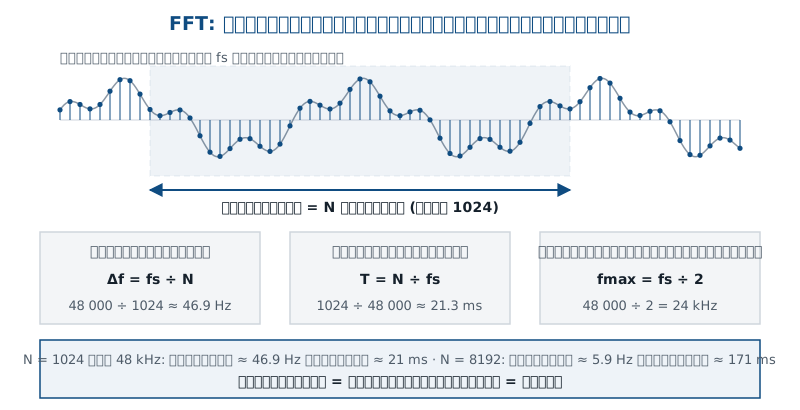
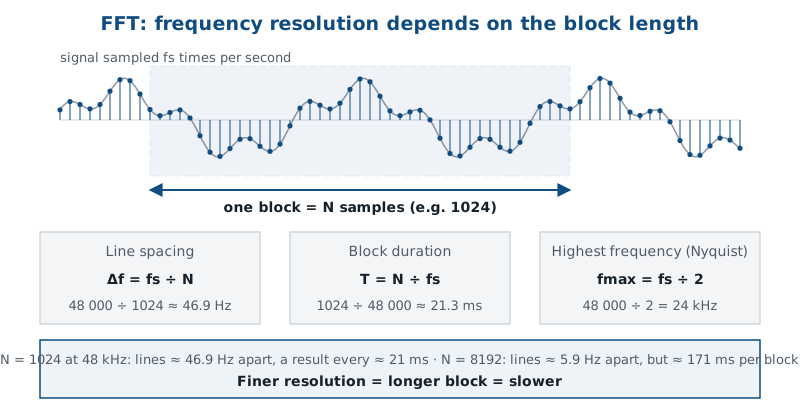
นี่คือ การแลกกันระหว่างความละเอียดความถี่กับความเร็ว บล็อกสั้นอัปเดตเร็วแต่ความถี่หยาบ บล็อกยาวละเอียดแต่ตอบสนองช้า และไม่เห็นการเปลี่ยนแปลงที่เกิดเร็วภายในบล็อก เครื่องวิเคราะห์บางรุ่นมี Zoom FFT ที่ขยายดูเฉพาะช่วงความถี่หนึ่งด้วยความละเอียดสูง เช่น ตัวเลือก XL2 Extended Acoustic Pack ให้ระยะห่างละเอียดถึง 0.4 Hz ในช่วง 5 Hz ถึง 20 kHzThis is the trade-off between frequency resolution and speed. Short blocks update quickly but give coarse frequency detail; long blocks are fine but slow, and they cannot show changes that happen within a block. Some analysers offer Zoom FFT, which examines one frequency range at high resolution; for example the XL2 Extended Acoustic Pack option provides steps down to 0.4 Hz over 5 Hz to 20 kHz.
สิ่งที่ต้องรู้เมื่อใช้ FFT: การรั่ว หน้าต่าง และการเฉลี่ยWhat to know when using FFT: leakage, windows and averaging
- การรั่ว (leakage): FFT ถือว่าสัญญาณในบล็อกวนซ้ำไปเรื่อย ๆ ถ้าความถี่ของเสียงไม่ตรงกับเส้นความถี่พอดี พลังงานจะกระจายไปยังเส้นข้างเคียง ยอดแหลมจึงดูกว้างและเตี้ยลงLeakage: FFT treats the block as if it repeats forever. If a tone does not fall exactly on a line, its energy spreads to neighbouring lines, so the peak looks wider and lower.
- ฟังก์ชันหน้าต่าง (window): คือการค่อย ๆ ลดสัญญาณที่หัวและท้ายของบล็อกลงให้เป็นศูนย์ เพื่อลดการรั่ว หน้าต่างแต่ละแบบเป็นการประนีประนอมระหว่างการแยกความถี่ที่อยู่ใกล้กันกับความแม่นยำของขนาดสัญญาณWindow function: the signal is tapered to zero at the start and end of each block to reduce leakage. Every window is a compromise between separating close frequencies and reading their amplitude accurately.
- การเฉลี่ย (averaging): เสียงจริงเปลี่ยนตลอด จึงนิยมเฉลี่ยผลหลายบล็อก การเฉลี่ยแบบธรรมดาให้น้ำหนักทุกบล็อกเท่ากัน การเฉลี่ยแบบเอกซ์โพเนนเชียลให้น้ำหนักกับบล็อกล่าสุดมากกว่า นอกจากนี้ยังเลือกได้ว่าจะเก็บค่าสูงสุดของแต่ละเส้น (max-peak) ซึ่งดีสำหรับดูด้วยตา หรือรวมแบบพลังงาน (power) ซึ่งเหมาะกับการคำนวณAveraging: real sound keeps changing, so results from many blocks are averaged. Plain (linear) averaging weights every block equally; exponential averaging weights recent blocks more. You can also keep the maximum per line (max-peak), good for visual inspection, or sum energetically (power), which suits calculations.
- การเกิดความถี่แฝง (aliasing): ถ้ามีเสียงที่สูงกว่าความถี่ Nyquist เข้ามา จะปรากฏเป็นความถี่ปลอมในช่วงที่วิเคราะห์ เครื่องวัดจึงมีตัวกรองกันความถี่แฝง (anti-aliasing filter) ก่อนการสุ่มสัญญาณAliasing: sound above the Nyquist frequency would appear as false frequencies inside the analysed range, so instruments use an anti-aliasing filter before sampling.
เปรียบเทียบสองวิธีThe two methods side by side
| หัวข้อTopic | ออกเตฟ / 1/3 ออกเตฟOctave / 1/3 octave | FFT |
|---|---|---|
| วิธีแบ่งความถี่How frequency is divided | ออกเตฟ / 1/3 ออกเตฟOctave / 1/3 octaveย่านกว้างเป็นสัดส่วนคงที่ของความถี่กลางBands of constant percentage width | FFTเส้นที่ห่างกันเป็น Hz เท่ากันทุกเส้นLines spaced by the same number of Hz |
| ที่ความถี่ต่ำAt low frequencies | ออกเตฟ / 1/3 ออกเตฟOctave / 1/3 octaveย่านแคบในหน่วย Hz จึงเห็นรายละเอียดดีBands are narrow in Hz, so detail is good | FFTต้องใช้บล็อกยาวจึงจะละเอียดพอNeeds a long block to be fine enough |
| ที่ความถี่สูงAt high frequencies | ออกเตฟ / 1/3 ออกเตฟOctave / 1/3 octaveย่านกว้างมาก เสียงโทนแคบอาจกลืนหายในย่านBands are very wide; a narrow tone can be hidden in the band | FFTละเอียดเท่าเดิม ชี้ความถี่ได้แม่นSame fine spacing; pinpoints frequency |
| ความสัมพันธ์กับการได้ยินLink to hearing | ออกเตฟ / 1/3 ออกเตฟOctave / 1/3 octaveใกล้เคียงการรับรู้ของหูClose to how the ear perceives | FFTเป็นมุมมองทางเทคนิคล้วนA purely technical view |
| มาตรฐานและการรายงานStandards and reporting | ออกเตฟ / 1/3 ออกเตฟOctave / 1/3 octaveใช้ในมาตรฐานการวัดส่วนใหญ่ เช่น การกันเสียงในอาคาร และเส้นเกณฑ์เสียงพื้นหลังUsed by most measurement standards, e.g. building sound insulation and noise-rating curves | FFTใช้ในงานวินิจฉัย และในวิธีอ้างอิงสำหรับประเมินเสียงโทนUsed for diagnostics and in reference methods for tonal assessment |
| ผลลัพธ์Output | ออกเตฟ / 1/3 ออกเตฟOctave / 1/3 octaveตัวเลขไม่กี่สิบย่าน อ่านง่ายA few dozen band values, easy to read | FFTเส้นความถี่นับพันเส้น ต้องตีความThousands of lines that need interpretation |
การหาเสียงโทน (tonal component)Finding tonal components
เสียงโทน (tonal component) คือเสียงที่พลังงานกระจุกอยู่ที่ความถี่เดียวหรือไม่กี่ความถี่ ฟังเป็นเสียงหวีด เสียงหึ่ง หรือเสียงวี้ ต่างจากเสียงกว้าง ๆ อย่างเสียงลมหรือเสียงน้ำไหล คนมักรู้สึกว่าเสียงโทนน่ารำคาญกว่าเสียงกว้างที่ระดับเท่ากันA tonal component is sound whose energy is concentrated at one or a few frequencies: a whistle, hum or whine, unlike broad sounds such as wind or running water. People usually find a tone more annoying than broadband sound at the same level.
พัดลมระบายอากาศบนหลังคาอาคารข้างบ้านมีเสียงหึ่งที่ได้ยินชัดตอนกลางคืน ค่า dBA รวมไม่ได้สูงมาก แต่เพื่อนบ้านบ่นว่ารำคาญ
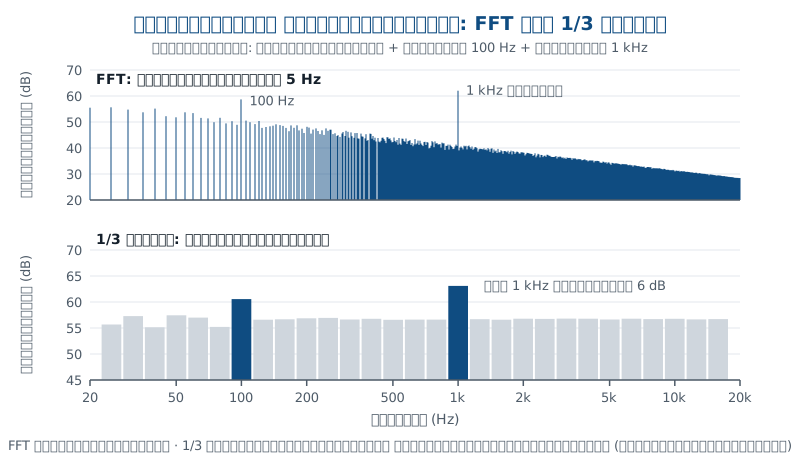
ขั้นแรก ดูสเปกตรัม 1/3 ออกเตฟ จะเห็นย่านหนึ่งโดดสูงกว่าย่านข้างเคียงชัดเจน นี่เป็นสัญญาณว่ามีเสียงโทน
ขั้นต่อมา ใช้ FFT ความละเอียดสูงดูช่วงนั้น จะเห็นยอดแหลมที่ความถี่หนึ่งพอดี ซึ่งนำไปเทียบกับความเร็วรอบของพัดลมหรือจำนวนใบพัด เพื่อยืนยันว่าเสียงมาจากเครื่องไหนA roof-top extract fan on the building next door produces a hum that is clearly audible at night. The overall dBA is not very high, but the neighbours complain.
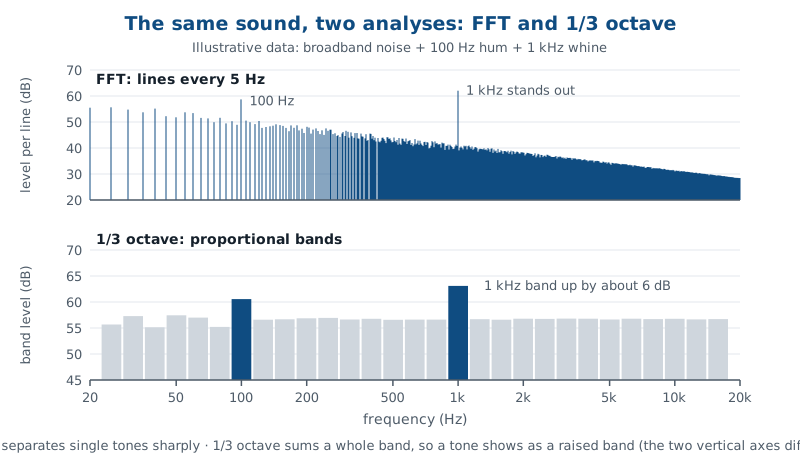
First, look at the 1/3 octave spectrum: one band stands clearly above its neighbours, a sign of a tone.
Next, look at that range with a high-resolution FFT: a sharp peak appears at one exact frequency, which can be compared with the fan's rotation speed or blade count to confirm which machine is responsible.
ในการประเมินเสียงรบกวน วิธีที่ใช้ตัดสินว่ามีเสียงโทนหรือไม่ และต้องเพิ่มบทลงโทษเท่าไร ขึ้นกับมาตรฐานหรือกฎหมายที่ใช้ บางวิธีใช้ข้อมูล 1/3 ออกเตฟ บางวิธีใช้ FFT ตามวิธีอ้างอิง เช่น แนวทางใน ISO 1996-2 จึงต้องตรวจสอบก่อนวัดว่ากฎเกณฑ์ที่ใช้กำหนดวิธีใด แล้วตั้งเครื่องให้บันทึกข้อมูลแบบนั้นIn noise assessment, the way a tone is judged and the penalty it earns depend on the standard or regulation that applies. Some methods use 1/3 octave data; others use FFT under a reference method, such as the approach in ISO 1996-2. Check before measuring which method your rules require, and set the instrument to record that data.
เลือกใช้แบบไหนเมื่อไรWhich one to use, and when
- ออกเตฟ (1/1): สำรวจภาพรวม ประเมินเสียงพื้นหลังในห้องด้วยเส้นเกณฑ์ (noise curves) และงานที่มาตรฐานกำหนดเป็นย่านออกเตฟOctave (1/1): quick surveys, rating room background noise with noise curves, and any task a standard defines in octave bands.
- 1/3 ออกเตฟ: การกันเสียงในอาคาร เวลาเสียงก้อง การเฝ้าระวังเสียงสิ่งแวดล้อม และการคัดกรองเสียงโทนเบื้องต้น1/3 octave: building sound insulation, reverberation time, environmental monitoring, and first screening for tones.
- 1/6 หรือ 1/12 ออกเตฟ: เมื่อต้องการรายละเอียดมากขึ้นแต่ยังอยากได้มุมมองแบบสัดส่วน เช่น การปรับจูนระบบเสียง1/6 or 1/12 octave: more detail while keeping a proportional view, for example when tuning a sound system.
- FFT: หาความถี่ที่แน่นอนของเสียงโทน วิเคราะห์เสียงจากเครื่องจักรหมุน และงานวินิจฉัยหาต้นเหตุFFT: finding the exact frequency of a tone, analysing rotating machinery, and diagnosing causes.
ในงานจริงมักใช้ทั้งสองแบบร่วมกัน ใช้ย่านออกเตฟเพื่อรายงานตามมาตรฐาน และใช้ FFT เพื่อทำความเข้าใจต้นเหตุ เครื่องวิเคราะห์อย่าง XL2 และ XL3 ทำได้ทั้งสองแบบในเครื่องเดียวIn practice the two are often used together: octave bands to report against a standard, FFT to understand the cause. Analysers such as the XL2 and XL3 do both in one instrument.
คำถามที่พบบ่อยFrequently asked questions
แปลงสเปกตรัม FFT เป็นแถบ 1/3 ออกเตฟได้ไหมCan an FFT spectrum be converted into 1/3-octave bands?
ได้ โดยรวมพลังงานของเส้น FFT ที่อยู่ภายในขอบของแต่ละแถบ (แบบเดียวกับกราฟด้านบน) แต่ต้องมีเส้นหลายเส้นในแต่ละแถบ ที่ความถี่ต่ำแถบ 1/3 ออกเตฟแคบมาก เช่น แถบ 25 Hz กว้างราว 6 Hz จึงต้องใช้ FFT ที่ละเอียดพอYes, by summing the energy of the FFT lines inside each band's edges (as in the graph above). But each band needs several lines, and at low frequencies 1/3-octave bands are very narrow: the 25 Hz band is only about 6 Hz wide, so the FFT must be fine enough.
ควรเริ่มจากวิธีไหนWhich method should I start with?
ถ้างานมีมาตรฐานกำหนด ให้ใช้ตามนั้น ถ้าเป็นการสำรวจทั่วไป มักเริ่มจาก 1/3 ออกเตฟเพื่อดูภาพรวมและหาช่วงที่เด่น แล้วใช้ FFT ความละเอียดสูงเฉพาะช่วงนั้นเพื่อหาความถี่ของโทนให้แม่นยำIf a standard applies, follow it. For a general survey, a common approach is to start with 1/3 octaves for the overview and to find the prominent range, then use a high-resolution FFT on that range to pin down the exact tone frequency.
คำศัพท์สำคัญKey terms
- สเปกตรัม (spectrum)Spectrum
- กราฟแสดงระดับเสียงแยกตามความถี่A graph of sound level against frequency.
- ความกว้างแบบสัดส่วนคงที่ (CPB)Constant percentage bandwidth (CPB)
- ย่านที่กว้างเป็นสัดส่วนเดียวกันของความถี่กลาง เช่น ย่านออกเตฟและ 1/3 ออกเตฟBands whose width is the same proportion of the centre frequency, such as octave and 1/3 octave bands.
- เส้นความถี่ (line / bin)Frequency line (bin)
- ช่องผลลัพธ์หนึ่งช่องของ FFT ระยะห่างระหว่างเส้นคือความละเอียดความถี่One output slot of an FFT; the spacing between lines is the frequency resolution.
- อัตราการสุ่มตัวอย่าง (sampling rate)Sampling rate
- จำนวนครั้งต่อวินาทีที่เครื่องอ่านค่าสัญญาณHow many times per second the signal is read.
- ความถี่ NyquistNyquist frequency
- ครึ่งหนึ่งของอัตราการสุ่มตัวอย่าง เป็นความถี่สูงสุดที่วิเคราะห์ได้Half the sampling rate: the highest frequency that can be analysed.
- ฟังก์ชันหน้าต่าง (window)Window function
- การลดสัญญาณที่ขอบของบล็อกเพื่อลดการรั่วของพลังงานไปยังเส้นข้างเคียงTapering at the block edges to reduce energy leaking into neighbouring lines.
- เสียงโทน (tonal component)Tonal component
- เสียงที่พลังงานกระจุกที่ความถี่เดียวหรือไม่กี่ความถี่Sound whose energy is concentrated at one or a few frequencies.
ความเข้าใจผิดที่พบบ่อยCommon misunderstandings
- “FFT ละเอียดกว่าจึงดีกว่าเสมอ” ไม่จริง ที่ความถี่ต่ำ FFT บล็อกสั้นอาจหยาบกว่าย่าน 1/3 ออกเตฟเสียอีก และผล FFT จำนวนมากก็ไม่ได้อยู่ในรูปที่มาตรฐานการประเมินส่วนใหญ่ต้องการ“FFT is finer, so it is always better.” Not true. At low frequencies a short-block FFT can be coarser than 1/3 octave bands, and raw FFT lines are not the format most assessment standards ask for.
- “ระดับของเส้น FFT เทียบกับระดับย่านออกเตฟได้โดยตรง” ไม่ได้ ย่านหนึ่งรวมพลังงานของหลายเส้นเข้าด้วยกัน เสียงกว้าง ๆ จึงให้ระดับต่อเส้นต่ำกว่าระดับของย่านที่ครอบคลุมเส้นเหล่านั้น“An FFT line level can be compared directly with an octave-band level.” It cannot. A band adds up the energy of many lines, so for broadband sound each line reads lower than the band that contains it.
- “ย่านที่ละเอียดกว่าให้ค่ารวมต่างกัน” พลังงานรวมเท่าเดิม การแบ่งละเอียดขึ้นแค่กระจายพลังงานเดิมไปในย่านที่มากขึ้น“Finer bands change the overall level.” The total energy stays the same; finer bands just spread it over more slots.
- “ยอดแหลมในสเปกตรัมคือเสียงโทนที่รบกวนเสมอ” ยอดแหลมอาจมาจากการรั่ว การตั้งค่าหน้าต่าง หรือสัญญาณรบกวนทางไฟฟ้า ควรฟังเสียงจริงหรือไฟล์เสียงประกอบเสมอ“Every peak in a spectrum is an annoying tone.” A peak can come from leakage, window settings or electrical interference; always listen to the sound or an audio recording as well.
นำไปใช้ที่ไหนWhere it is used
- การประเมินเสียงรบกวนสิ่งแวดล้อม เพื่อตรวจหาเสียงโทนและหาแหล่งกำเนิดEnvironmental noise assessment, to detect tones and identify sources.
- การตรวจสอบเสียงจากระบบปรับอากาศและเครื่องจักรในอาคารChecking noise from HVAC plant and machinery in buildings.
- การวัดการกันเสียงและเวลาเสียงก้อง ซึ่งรายงานเป็นย่าน 1/3 ออกเตฟSound insulation and reverberation measurements, reported in 1/3 octave bands.
- การปรับจูนระบบเสียงและการควบคุมคุณภาพผลิตภัณฑ์Sound system tuning and product quality control.