ทำไมเรื่องนี้สำคัญWhy this matters
ลองนึกถึงห้องนอนริมถนนตอนกลางคืน ส่วนใหญ่ได้ยินเพียงเสียงหึ่งเบา ๆ จากเครื่องปรับอากาศและเสียงเมืองไกล ๆ แต่ทุก ๆ สองสามนาทีมีรถวิ่งผ่านหนึ่งคัน ค่าเฉลี่ยพลังงาน (Leq) จะถูกดึงขึ้นด้วยเสียงรถที่ผ่านไป และค่าสูงสุด (Lmax) บอกได้แค่ว่ารถคันที่ดังที่สุดดังเท่าไร ไม่มีค่าไหนตอบได้ว่า ช่วงเวลาปกติที่ไม่มีรถผ่าน ห้องนี้เงียบแค่ไหนPicture a bedroom next to a road at night. Most of the time you hear only a soft hum from the air conditioner and the distant city, but every few minutes a car passes. The energy average (Leq) is pulled up by the passing cars, and the maximum (Lmax) only tells you how loud the loudest car was. Neither answers the question how quiet is this room normally, when no car is passing?
คำถามนี้สำคัญมาก เพราะ เสียงพื้นหลัง (background noise) เป็นฐานในการตัดสินหลายเรื่อง เช่น เสียงจากเครื่องจักรใหม่จะได้ยินชัดเหนือเสียงเดิมแค่ไหน ห้องประชุมเงียบพอหรือไม่ หรือผลการวัดเสียงของแหล่งกำเนิดหนึ่งถูกเสียงอื่นรบกวนหรือเปล่า ค่าเปอร์เซ็นไทล์คือเครื่องมือที่ใช้ตอบคำถามแบบนี้This question matters because background noise is the baseline for many judgements: how clearly a new machine will stand out above the existing sound, whether a meeting room is quiet enough, or whether a measurement of one source has been disturbed by other sounds. Percentile levels are the tool for questions like these.
แนวคิดพื้นฐาน: ระดับที่ถูกเกินกี่เปอร์เซ็นต์ของเวลาThe basic idea: the level exceeded for a share of the time
ค่าเปอร์เซ็นไทล์เขียนเป็น LN โดย N คือเปอร์เซ็นต์ของเวลา ความหมายคือ “ระดับเสียงที่ถูกเกินเป็นเวลา N% ของช่วงการวัด” ถ้า L90 = 42 dB แปลว่าตลอด 90% ของเวลา เสียงดังกว่า 42 dB และมีเพียง 10% ของเวลาที่เงียบกว่านั้นA percentile level is written LN, where N is a percentage of time. It means “the level that was exceeded for N% of the measurement period”. If L90 = 42 dB, the sound was louder than 42 dB for 90% of the time, and quieter than that for only 10% of the time.
วิธีคิดง่าย ๆ คือ ถ้านำระดับเสียงทุกช่วงเวลาสั้น ๆ มาเรียงจากดังที่สุดไปเงียบที่สุด L10 คือจุดที่ผ่านไป 10% จากด้านบน L50 คืออยู่ตรงกลางพอดี และ L90 คือจุดที่ผ่านไป 90% ใกล้ด้านล่าง ดังนั้นตัวเลข N ยิ่งมาก ระดับเสียงยิ่งต่ำ ค่าจึงเรียงกันเสมอเป็น L1 ≥ L10 ≥ L50 ≥ L90 ≥ L95A simple way to think of it: line up the level of every short moment from loudest to quietest. L10 is the point 10% of the way down from the top, L50 is exactly in the middle, and L90 is 90% of the way down, near the bottom. So the larger N is, the lower the level, and the values always stay in the order L1 ≥ L10 ≥ L50 ≥ L90 ≥ L95.
| ค่าValue | ความหมายMeaning | มักใช้เป็นตัวแทนของCommonly used to represent |
|---|---|---|
| L1 (หรือ L01)L1 (or L01) | ความหมายMeaningถูกเกินเพียง 1% ของเวลาExceeded only 1% of the time | มักใช้เป็นตัวแทนของCommonly used to representระดับใกล้ค่าสูงสุดNear-maximum levels |
| L10L10 | ความหมายMeaningถูกเกิน 10% ของเวลาExceeded 10% of the time | มักใช้เป็นตัวแทนของCommonly used to representช่วงที่ดังซึ่งเกิดขึ้นบ่อยThe frequent louder moments |
| L50L50 | ความหมายMeaningถูกเกินครึ่งหนึ่งของเวลา (ค่ากลาง)Exceeded half of the time (the median) | มักใช้เป็นตัวแทนของCommonly used to representระดับเสียงทั่วไปตรงกลางThe typical middle level |
| L90L90 | ความหมายMeaningถูกเกิน 90% ของเวลาExceeded 90% of the time | มักใช้เป็นตัวแทนของCommonly used to representเสียงพื้นหลัง (ในหลายวิธีการประเมิน)Background noise (in many assessment methods) |
| L95L95 | ความหมายMeaningถูกเกิน 95% ของเวลาExceeded 95% of the time | มักใช้เป็นตัวแทนของCommonly used to representเสียงพื้นหลังในบางแนวทางการประเมินBackground noise in some assessment methods |
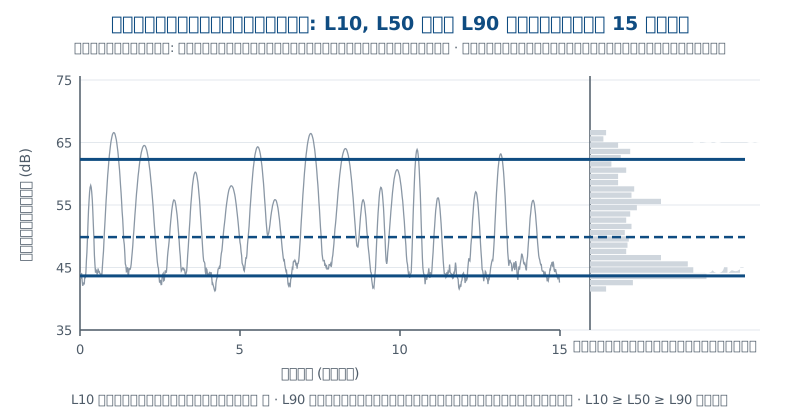
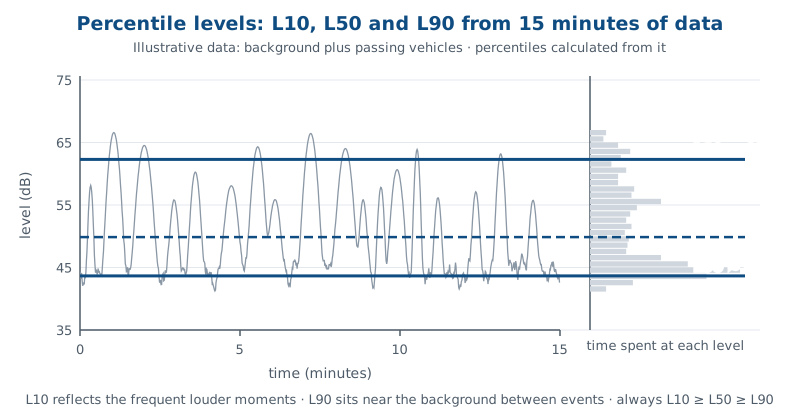
ในชื่อค่าจริงมักมีตัวอักษรการถ่วงน้ำหนักอยู่ด้วย เช่น LA90 หรือ LAF90 หมายถึงค่า L90 ที่คำนวณจากระดับเสียงถ่วงน้ำหนัก A (และถ่วงน้ำหนักเวลา Fast)Real parameter names usually include the weighting letters too, for example LA90 or LAF90: the L90 calculated from the A-weighted (and Fast time-weighted) level.
ตัวอย่างในชีวิตจริงEveryday examples
วัดเสียงหน้าหอพักริมถนนหนึ่งชั่วโมง เวลาส่วนใหญ่ระดับเสียงอยู่ราว 45–50 dB(A) แต่รถที่วิ่งผ่านเป็นระยะทำให้เสียงขึ้นไป 65–70 dB(A) ผลอาจออกมาประมาณนี้: L90 ≈ 46 dB(A) ใช้เป็นตัวบ่งชี้เสียงพื้นหลังของบริเวณนั้น L50 ≈ 48 dB(A) คือระดับทั่วไป L10 ≈ 64 dB(A) สะท้อนช่วงที่มีรถผ่าน และ Leq จะสูงกว่า L50 เพราะเสียงรถที่ดังมีพลังงานมาก (ตัวเลขสมมติเพื่ออธิบายหลักการ)An hour's measurement outside a roadside dormitory: most of the time the level is around 45–50 dB(A), but passing vehicles push it to 65–70 dB(A). The results might look like this: L90 ≈ 46 dB(A) serves as the indicator of the area's background noise, L50 ≈ 48 dB(A) is the typical level, L10 ≈ 64 dB(A) reflects the moments with traffic, and Leq is higher than L50 because the loud vehicles carry a lot of energy. (Illustrative numbers.)
โรงงานวางแผนติดตั้งพัดลมระบายอากาศใหม่ใกล้บ้านพักอาศัย ก่อนติดตั้ง วิศวกรวัดเสียงพื้นหลังเดิมของบริเวณนั้นในช่วงเวลาที่เงียบที่สุด เช่น ตอนกลางคืน โดยดูจาก L90 หลังติดตั้งแล้วจึงเปรียบเทียบว่าเสียงพัดลมดังเหนือเสียงพื้นหลังเดิมมากน้อยเพียงใดA factory plans to install a new ventilation fan near homes. Before installation, the engineer measures the existing background noise at the quietest time, for example at night, using L90. After installation, the fan's sound can be compared with how far it rises above that original background.
วัดอย่างไรHow it is measured
หลักการทางสถิติเหมือนกันทุกเครื่อง แต่วิธีคำนวณในเครื่องแต่ละรุ่นต่างกันได้ เครื่องวัดหลายรุ่นไม่ได้เก็บตัวเลขทุกค่าไว้เรียงลำดับทีหลัง แต่สร้าง ฮิสโตแกรม (histogram) คือนับว่าระดับเสียงตกอยู่ในแต่ละ “ช่องระดับ” บ่อยแค่ไหน แล้วคำนวณค่าเปอร์เซ็นไทล์จากการนับนั้น ตัวอย่างเช่น เครื่อง NTi Audio XL2 สุ่มอ่านระดับเสียงทุก 1 มิลลิวินาที และใช้ช่องระดับกว้าง 0.1 dB สำหรับระดับเสียงรวม (broadband) และ 1 dB สำหรับค่าในแต่ละย่านความถี่ออกเตฟหรือ 1/3 ออกเตฟThe statistical idea is the same on every instrument, but how each model calculates it can differ. Many meters do not store every value to sort later. Instead they build a histogram: they count how often the level falls into each “level class”, and calculate the percentiles from those counts. For example, the NTi Audio XL2 samples the level every 1 millisecond and uses classes 0.1 dB wide for the broadband level and 1 dB wide for levels in each octave or 1/3-octave band.
- เลือกค่าฐานก่อนเริ่มวัด — ค่าเปอร์เซ็นไทล์คำนวณจากระดับเสียงแบบใดแบบหนึ่ง เช่น LAF (ถ่วงน้ำหนัก A, Fast) หรือ LAeq ช่วงสั้น ๆ ค่าฐานต่างกันให้ผลต่างกัน และบนเครื่อง XL2 ต้องเลือกไว้ก่อนเริ่มวัด เปลี่ยนภายหลังไม่ได้Choose the base value before starting — percentiles are calculated from one particular level, such as LAF (A-weighted, Fast) or a short-interval LAeq. Different base values give different results, and on the XL2 it must be chosen before the measurement and cannot be changed afterwards.
- เลือกเปอร์เซ็นไทล์ที่ต้องการ — บน XL2 เลือกหรือเปลี่ยนตัวเลข N ได้แม้วัดเสร็จแล้ว เพราะฮิสโตแกรมถูกเก็บไว้ครบChoose the percentiles you need — on the XL2 the N values can be chosen or changed even after the measurement has finished, because the full histogram is kept.
- ตัดสินใจว่าต้องการค่าสะสมหรือค่าแยกช่วง — ค่าเปอร์เซ็นไทล์ที่บันทึกระหว่างวัดบน XL2 เป็นค่าสะสมตั้งแต่เริ่มวัด ถ้าต้องการผลแยกทีละช่วง เช่น ทุก 15 นาที ให้ใช้โหมดจับเวลาแบบวนซ้ำ (repeated timer mode)Decide between cumulative and per-period values — the percentiles logged on the XL2 during a measurement are cumulative from the start. If you need separate results for each period, such as every 15 minutes, use the repeated timer mode.
- วัดให้นานพอ — ช่วงการวัดต้องครอบคลุมรูปแบบเสียงที่ต้องการประเมิน เช่น ถ้าต้องการเสียงพื้นหลังตอนกลางคืน ก็ต้องวัดในช่วงกลางคืนMeasure long enough — the period must cover the sound pattern you want to assess; if you need the night-time background, measure at night.
ถ้าคำนวณค่าเปอร์เซ็นไทล์ใหม่ในซอฟต์แวร์ เช่น NTi Audio Data Explorer จากข้อมูลที่บันทึกไว้ทุก 100 มิลลิวินาที ผลอาจต่างจากค่าที่เครื่องคำนวณเองเล็กน้อย เพราะเครื่องใช้ข้อมูลละเอียดกว่า (ทุก 1 มิลลิวินาที) ทั้งสองค่าไม่ผิด แต่ควรระบุในรายงานว่าใช้วิธีใดIf percentiles are recalculated in software, such as NTi Audio Data Explorer, from data logged every 100 milliseconds, the result can differ slightly from the value the instrument calculated itself, because the instrument used finer data (every 1 millisecond). Neither is wrong, but the report should state which method was used.
เสียงพื้นหลังกับการวัดแหล่งกำเนิดเสียงBackground noise and measuring a source
เมื่อเราต้องการวัดเสียงจากแหล่งกำเนิดหนึ่ง เช่น ปั๊มน้ำหรือลำโพง เครื่องวัดจะรับเสียงทุกอย่างรวมกัน ทั้งเสียงของแหล่งกำเนิดและเสียงพื้นหลัง จึงต้องรู้ว่าเสียงพื้นหลังดังแค่ไหนเทียบกับเสียงที่วัด หลักทั่วไปทางอะคูสติกคือ:When we want to measure one source, such as a water pump or a loudspeaker, the meter picks up everything together: the source and the background. So we need to know how loud the background is compared with what we measure. The general acoustic rules of thumb are:
- ถ้าเสียงที่วัดได้ดังกว่าเสียงพื้นหลัง มากกว่า 10 dB เสียงพื้นหลังแทบไม่มีผล (น้อยกว่าประมาณ 0.5 dB)If the measured sound is more than 10 dB above the background, the background has almost no effect (less than about 0.5 dB).
- ถ้าต่างกันน้อยกว่านั้น เสียงพื้นหลังจะทำให้ผลสูงเกินจริง มาตรฐานการวัดหลายฉบับจึงกำหนดวิธีแก้ค่า (correction) หรือกำหนดส่วนต่างขั้นต่ำไว้If the difference is smaller, the background makes the result too high, so many measurement standards specify a correction or a minimum difference.
- ถ้าต่างกันน้อยกว่าประมาณ 3 dB แทบแยกเสียงของแหล่งกำเนิดออกจากเสียงพื้นหลังไม่ได้อย่างเชื่อถือได้If the difference is less than about 3 dB, the source cannot be reliably separated from the background.
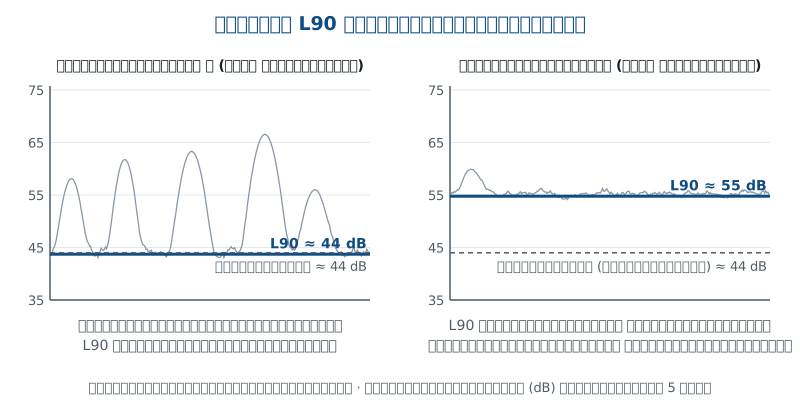
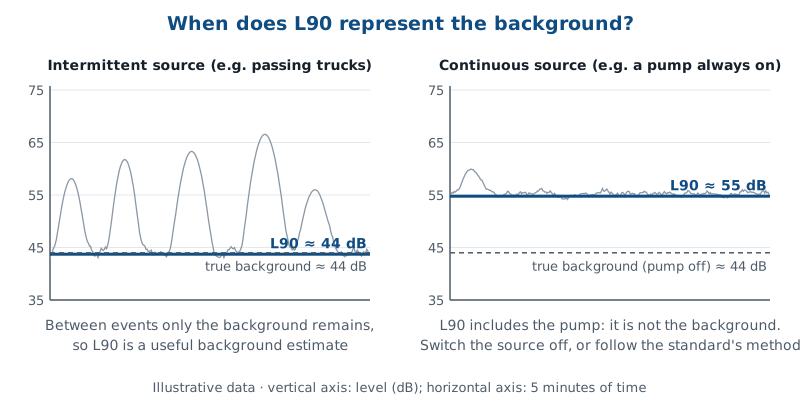
วิธีวัดเสียงพื้นหลังที่ตรงที่สุดคือ ปิดแหล่งกำเนิดเสียงแล้ววัด แต่หลายครั้งทำไม่ได้ เช่น ถนนหรือโรงงานที่ทำงานตลอดเวลา ในกรณีที่แหล่งกำเนิดเกิดเป็นช่วง ๆ ค่า L90 ของช่วงที่วัดช่วยประมาณเสียงพื้นหลังได้ แต่ถ้าแหล่งกำเนิดดังต่อเนื่องตลอดเวลา L90 จะรวมเสียงของแหล่งกำเนิดนั้นไว้ด้วย จึงไม่ใช่เสียงพื้นหลังที่แท้จริงThe most direct way to measure background noise is to switch the source off and measure, but often that is impossible, for example a road or a factory that runs all the time. Where the source is intermittent, the L90 of the period helps estimate the background. But if the source runs continuously, L90 includes that source, so it is not the true background.
ความเข้าใจผิดที่พบบ่อยCommon misunderstandings
- “L90 คือค่าที่ดังที่สุด 90%” — กลับกัน L90 คือระดับที่เสียงดังกว่านี้ 90% ของเวลา จึงเป็นค่าที่ค่อนข้างต่ำ ส่วน L10 ต่างหากที่สะท้อนช่วงที่ดัง“L90 is the loudest 90%” — the opposite. L90 is the level the sound is above 90% of the time, so it is a fairly low value; it is L10 that reflects the loud moments.
- “L50 เท่ากับ Leq” — ไม่ใช่ L50 คือค่ากลางของเวลา ส่วน Leq คือค่าเฉลี่ยพลังงาน เมื่อมีเสียงดังเป็นครั้งคราว Leq มักสูงกว่า L50 อย่างชัดเจน“L50 equals Leq” — no. L50 is the middle of the time distribution, while Leq is the energy average. When there are occasional loud events, Leq is usually clearly higher than L50.
- นำค่าเปอร์เซ็นไทล์หลายช่วงมาเฉลี่ยกัน — ค่าเปอร์เซ็นไทล์เป็นค่าทางสถิติ นำ L90 ของแต่ละชั่วโมงมาเฉลี่ยแล้วไม่ได้ L90 ของทั้งวัน ต้องคำนวณจากข้อมูลทั้งช่วงAveraging percentiles from several periods — percentiles are statistics; averaging hourly L90 values does not give the L90 of the whole day, which must be calculated from the full data.
- ไม่ระบุค่าฐาน — L90 จาก LAF กับ L90 จาก LAS ของเสียงเดียวกันอาจไม่เท่ากัน ต้องบอกในรายงานเสมอNot stating the base value — L90 from LAF and L90 from LAS of the same sound may differ; the report must always say which was used.
คำศัพท์สำคัญKey terms
- ค่าเปอร์เซ็นไทล์ (LN)Percentile level (LN)
- ระดับเสียงที่ถูกเกินเป็นเวลา N% ของช่วงการวัดThe level exceeded for N% of the measurement period.
- เสียงพื้นหลัง (background noise)Background noise
- เสียงที่มีอยู่ตลอดในบริเวณนั้นเมื่อไม่มีเสียงที่เราสนใจ ในหลายวิธีการประเมินมักประมาณด้วย L90 (หรือ L95)The sound present all the time at a location when the sound of interest is absent; in many assessment methods it is estimated with L90 (or L95).
- ฮิสโตแกรม (histogram)Histogram
- การนับว่าระดับเสียงตกอยู่ในแต่ละช่องระดับบ่อยแค่ไหน ใช้คำนวณค่าเปอร์เซ็นไทล์A count of how often the level falls into each level class; used to calculate percentiles.
- ค่าฐาน (base parameter)Base parameter
- ระดับเสียงที่นำมาคำนวณค่าเปอร์เซ็นไทล์ เช่น LAF หรือ LAeq ช่วงสั้นThe level the percentiles are calculated from, such as LAF or a short-interval LAeq.
นำไปใช้ที่ไหนWhere it is used
ค่าเปอร์เซ็นไทล์ใช้มากในการประเมินเสียงรบกวนในสิ่งแวดล้อม เช่น การเทียบเสียงจากโรงงานหรือเครื่องจักรใหม่กับเสียงพื้นหลังเดิม การเฝ้าระวังเสียงระยะยาวที่ต้องแยกเสียงพื้นหลังออกจากเหตุการณ์ที่ดังเป็นครั้งคราว และการตรวจสอบว่าเสียงพื้นหลังในห้องหรือบริเวณที่วัดต่ำพอสำหรับการวัดอื่น ๆ เช่น การวัดเสียงก้องหรือการกันเสียง บทถัดไปจะพาไปดูการแบ่งเสียงออกเป็น ย่านความถี่ออกเตฟและ 1/3 ออกเตฟ ซึ่งช่วยบอกว่าเสียงพื้นหลังหรือเสียงรบกวนนั้นมาจากความถี่ใดPercentile levels are widely used in environmental noise assessment, for example comparing sound from a factory or new equipment with the existing background, in long-term monitoring where the background must be separated from occasional loud events, and to check that the background in a room or area is low enough for other measurements such as reverberation or sound insulation. The next article looks at dividing sound into octave and 1/3-octave bands, which shows which frequencies the background or the noise comes from.