ทำไมเรื่องนี้สำคัญWhy this matters
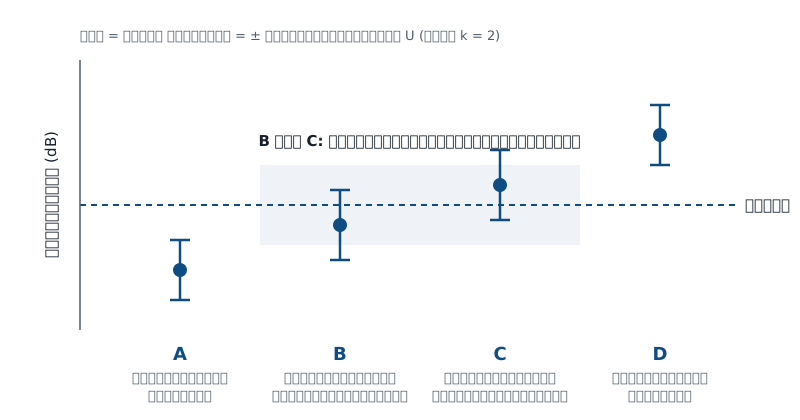
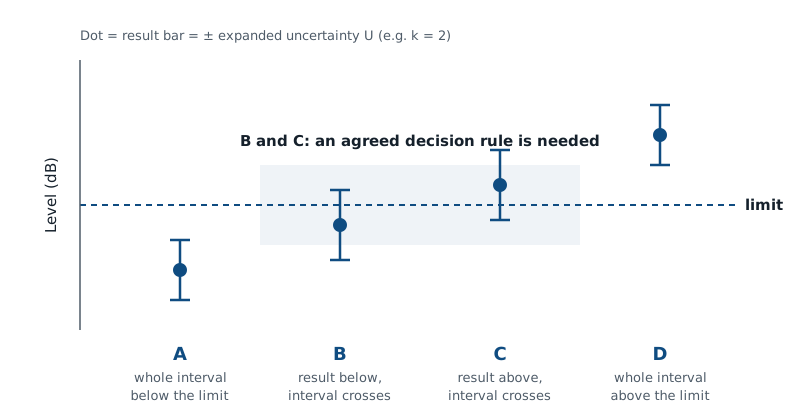
สมมติเกณฑ์ของโครงการกำหนดไว้ที่ 55 dB และผลวัดได้ 54.6 dB ผ่านหรือไม่ผ่าน ถ้าไม่รู้ความไม่แน่นอน คำตอบนี้ตอบอย่างมั่นใจไม่ได้ ผลที่ต่ำกว่าเกณฑ์เพียงเล็กน้อยอาจอยู่เหนือเกณฑ์ก็ได้เมื่อพิจารณาช่วงความไม่แน่นอน ความไม่แน่นอนจึงสำคัญทั้งกับการตัดสินผ่าน/ไม่ผ่าน การเปรียบเทียบผลก่อนและหลังการปรับปรุง และการเทียบผลของสองหน่วยงานที่วัดจุดเดียวกันแล้วได้ตัวเลขไม่เท่ากันSuppose a project limit is 55 dB and the result is 54.6 dB. Pass or fail? Without knowing the uncertainty, you cannot answer with confidence: a result just below a limit may lie above it once the uncertainty is considered. Uncertainty therefore matters for pass/fail decisions, for comparing results before and after an improvement, and for explaining why two organisations measuring the same point obtain different numbers.
แนวคิดทั่วไป: ความคลาดเคลื่อน กับ ความไม่แน่นอนThe general concept: error vs uncertainty
ความคลาดเคลื่อน (error) คือผลต่างระหว่างค่าที่วัดได้กับค่าจริง ซึ่งเราไม่มีทางรู้ได้แน่นอน เพราะไม่รู้ค่าจริง ส่วน ความไม่แน่นอน (uncertainty) คือการประเมินอย่างมีหลักการว่าความคลาดเคลื่อนนั้นน่าจะกว้างเพียงใด ความไม่แน่นอนจึงไม่ได้บอกว่าวัดผิด แต่บอกว่า มั่นใจในผลได้แค่ไหนError is the difference between the measured value and the true value, which we can never know exactly because the true value is unknown. Uncertainty is a reasoned estimate of how large that error is likely to be. Uncertainty does not say that the measurement is wrong; it says how confident we can be in the result.
แนวทางสากลคือเอกสาร GUM (Guide to the Expression of Uncertainty in Measurement) ซึ่งเผยแพร่ในชื่อ JCGM 100:2008 โดยคณะกรรมการร่วมด้านแนวทางมาตรวิทยา (JCGM) ที่มี BIPM, IEC, ISO, OIML และองค์กรอื่นเป็นสมาชิก หลักคิดของ GUM อธิบายอย่างง่ายได้เป็นขั้น ๆThe international approach is the GUM (Guide to the Expression of Uncertainty in Measurement), published as JCGM 100:2008 by the Joint Committee for Guides in Metrology (JCGM), whose members include BIPM, IEC, ISO, OIML and others. In simple terms, the GUM approach works in steps:
- กำหนดสิ่งที่จะวัดให้ชัด (measurand): เช่น “LAeq ช่วง 1 ชั่วโมง ที่จุดรับเสียง ห่างอาคาร 1 เมตร” ไม่ใช่แค่ “เสียงดังแค่ไหน”Define exactly what is measured (the measurand): for example "the 1-hour LAeq at the receiver position, 1 m from the facade", not just "how loud it is".
- ระบุแหล่งที่มาของความไม่แน่นอนทั้งหมด: ทุกสิ่งที่อาจทำให้ผลเปลี่ยนได้List every source of uncertainty: everything that could change the result.
- ประเมินขนาดของแต่ละแหล่ง: แบบ Type A ประเมินจากสถิติของการวัดซ้ำ ส่วนแบบ Type B ประเมินจากข้อมูลอื่น เช่น ใบรับรองการสอบเทียบ ข้อกำหนดของเครื่อง หรือความรู้จากประสบการณ์ ทั้งสองแบบแปลงเป็น ความไม่แน่นอนมาตรฐาน (standard uncertainty) ซึ่งอยู่ในรูปส่วนเบี่ยงเบนมาตรฐานEstimate the size of each source: Type A evaluation uses statistics of repeated measurements; Type B uses other information, such as calibration certificates, instrument specifications or experience. Both are expressed as a standard uncertainty, in the form of a standard deviation.
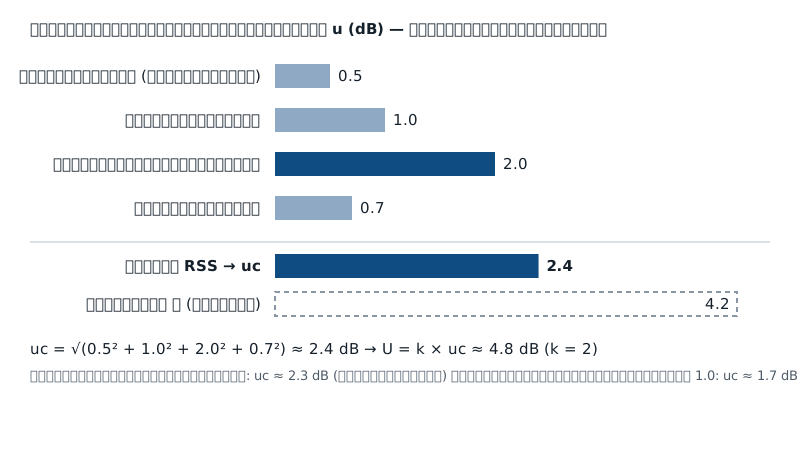
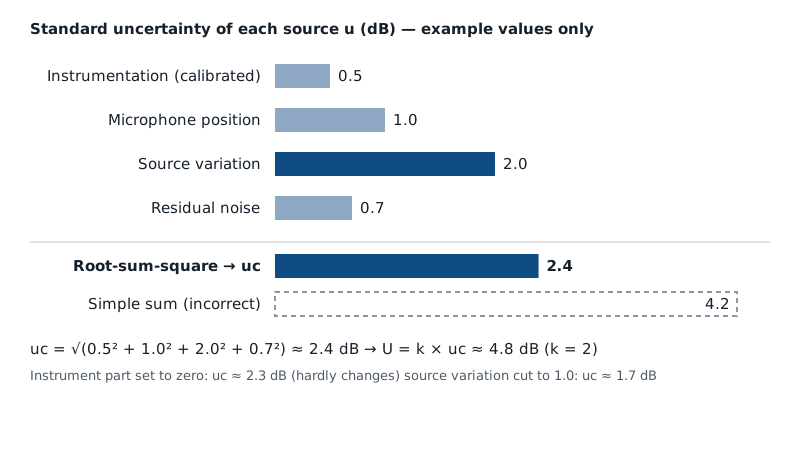
- รวมกัน: แหล่งที่เป็นอิสระต่อกันรวมกันแบบรากที่สองของผลรวมกำลังสอง ไม่ใช่บวกกันตรง ๆ ได้เป็น ความไม่แน่นอนมาตรฐานรวม (combined standard uncertainty) การรวมแบบนี้ใช้ได้เมื่อทุกองค์ประกอบแสดงเป็นความไม่แน่นอนมาตรฐานของปริมาณที่วัดตัวเดียวกัน (หรือแปลงด้วยสัมประสิทธิ์ความไว (sensitivity coefficient) ที่เหมาะสมแล้ว) และองค์ประกอบไม่มีสหสัมพันธ์กัน ถ้ามีสหสัมพันธ์ต้องรวมพจน์สหสัมพันธ์ด้วยCombine them: independent sources are combined as the square root of the sum of squares, not added directly, giving the combined standard uncertainty. This applies when all components are standard uncertainties of the same measurand (or have been converted with the appropriate sensitivity coefficients) and are uncorrelated; correlated components need correlation terms.
- ขยายเป็นช่วงที่ใช้รายงาน: คูณด้วย ตัวประกอบครอบคลุม (coverage factor, k) ได้ ความไม่แน่นอนขยาย (expanded uncertainty) โดยทั่วไปใช้ k = 2 ซึ่งเมื่อการกระจายใกล้เคียงการแจกแจงปกติ จะให้ระดับความเชื่อมั่นประมาณ 95 %Expand it for reporting: multiply by a coverage factor, k, to get the expanded uncertainty. k = 2 is common; when the distribution is close to normal, it corresponds to roughly 95 % confidence.
การรวมแบบรากที่สองของผลรวมกำลังสองทำให้ แหล่งที่ใหญ่ที่สุดมีอิทธิพลมากที่สุด การลดแหล่งเล็ก ๆ ให้เล็กลงอีกแทบไม่ช่วย ต้องหาและลดแหล่งที่ใหญ่ที่สุดก่อนBecause the sources combine as the square root of the sum of squares, the largest source dominates. Making a small source even smaller barely helps; find and reduce the largest one first.
ชั้นวิศวกรรม: งบความไม่แน่นอนอย่างง่ายEngineering layer: a simple uncertainty budget
งบความไม่แน่นอน (uncertainty budget) คือตารางที่ใส่แหล่งความไม่แน่นอนทีละแถว พร้อมขนาดในรูปความไม่แน่นอนมาตรฐาน แล้วรวมเป็นค่าเดียว การทำตารางนี้แม้เป็นการประมาณคร่าว ๆ ก็ช่วยให้เห็นว่าควรลงแรงแก้ที่ไหน ตัวเลขในรูปด้านล่างเป็นตัวอย่างสมมติเพื่ออธิบายวิธีคิดเท่านั้น ไม่ใช่ค่าของงานจริงหรือค่าจากมาตรฐานใดAn uncertainty budget is a table that lists the sources of uncertainty one row at a time, each sized as a standard uncertainty, and combines them into one value. Even as a rough estimate, the table shows where effort is worth spending. The numbers in the figure below are hypothetical, used only to explain the reasoning; they are not values from a real job or from any standard.
- ข้อมูลแบบ Type B ที่ให้เป็นช่วง ±a: ถ้ารู้เพียงว่าค่าอยู่ในช่วง ±a โดยไม่มีเหตุผลให้ค่าใดน่าจะเป็นมากกว่า GUM ให้ใช้การแจกแจงแบบสี่เหลี่ยม ความไม่แน่นอนมาตรฐานคือ a/√3Type B information given as a ±a range: if you only know the value lies within ±a with no reason to favour any value, the GUM uses a rectangular distribution and the standard uncertainty is a/√3.
- ข้อมูลจากใบรับรองการสอบเทียบ: ใบรับรองมักให้ความไม่แน่นอนขยายพร้อมค่า k ให้หารด้วย k เพื่อกลับเป็นความไม่แน่นอนมาตรฐานก่อนนำมารวมData from a calibration certificate: certificates usually state an expanded uncertainty with its k; divide by k to get back to a standard uncertainty before combining.
- Type A จากการวัดซ้ำ: ใช้ส่วนเบี่ยงเบนมาตรฐานของผลที่วัดซ้ำ ถ้ารายงานค่าเฉลี่ยของ n ครั้งที่เป็นอิสระต่อกัน ความไม่แน่นอนของค่าเฉลี่ยคือส่วนเบี่ยงเบนมาตรฐานหารด้วย √nType A from repeats: use the standard deviation of the repeated results. If you report the mean of n independent repeats, the uncertainty of the mean is the standard deviation divided by √n.
- ปริมาณในหน่วย dB: มาตรฐานวิธีวัดในงานเสียงมักกำหนดวิธีรวมไว้แล้ว เช่น ค่าความไม่แน่นอนต่อแหล่งและค่าสัมประสิทธิ์ความไว ให้ใช้วิธีของมาตรฐานนั้นแทนการคิดสูตรเองQuantities in dB: acoustic measurement standards often define how to combine them already, including per-source values and sensitivity coefficients; use the standard's method rather than inventing one.
เมื่อผลใกล้เกณฑ์ การตัดสินผ่าน/ไม่ผ่านต้องมี กฎการตัดสิน (decision rule) ที่ตกลงไว้ก่อน เช่น ยอมรับเมื่อผลบวกความไม่แน่นอนขยายยังไม่เกินเกณฑ์ หรือใช้ผลวัดตรง ๆ ตามที่กฎหมายหรือสัญญากำหนด แนวทางของ JCGM เรื่องบทบาทของความไม่แน่นอนในการตรวจสอบความสอดคล้อง (JCGM 106) อธิบายหลักการนี้ไว้ กฎที่ใช้จริงมาจากหน่วยงานหรือสัญญา ไม่ใช่ผู้วัดเลือกเองหลังเห็นผลWhen a result is close to a limit, a pass/fail decision needs a decision rule agreed in advance, for example accepting only if the result plus the expanded uncertainty is still within the limit, or using the measured value directly as the law or contract says. The JCGM guidance on the role of measurement uncertainty in conformity assessment (JCGM 106) explains the principle. The rule actually applied comes from the authority or the contract, not from the person measuring after seeing the result.
ความไม่แน่นอนในงานวัดเสียงมาจากไหนWhere uncertainty comes from in acoustic measurements
ผู้เริ่มต้นมักคิดว่าความไม่แน่นอนคือความแม่นยำของเครื่องวัดเท่านั้น ในความเป็นจริง ในงานภาคสนามหลายงาน เครื่องวัดที่สอบเทียบแล้วมักไม่ใช่แหล่งที่ใหญ่ที่สุด แหล่งที่พบบ่อยได้แก่Beginners often think uncertainty is only about the meter's accuracy. In practice, in many field measurements a calibrated meter is not the largest source. Common contributors are:
- เครื่องมือวัด: สมรรถนะของเครื่องวัดทั้งระบบรวมไมโครโฟน (Class ตาม IEC 61672) ความไม่แน่นอนของการสอบเทียบ และการเปลี่ยนแปลงระหว่างการใช้งานInstrumentation: the performance of the whole meter including the microphone (its IEC 61672 class), the calibration uncertainty, and drift during use.
- ตำแหน่งไมโครโฟน: ความสูง ระยะห่างจากผนังที่สะท้อนเสียง และการเลื่อนจุดวัดเพียงเล็กน้อย โดยเฉพาะในห้องที่ระดับเสียงต่างกันตามตำแหน่งMicrophone position: height, distance from reflecting surfaces and small shifts of the point, especially in rooms where the level varies with position.
- ความผันแปรของแหล่งเสียง: เครื่องจักรที่ทำงานไม่คงที่ ปริมาณจราจรที่เปลี่ยนตามเวลา หรือกิจกรรมของคนงานที่แตกต่างกันในแต่ละวันVariation of the source: machines that do not run steadily, traffic that changes through the day, or work activities that differ from day to day.
- การสุ่มตัวอย่างเวลา: วัดสั้นเกินไปจนไม่ครอบคลุมช่วงที่เป็นตัวแทนTime sampling: a measurement too short to cover a representative period.
- การเดินทางของเสียงและสภาพอากาศ: ลม อุณหภูมิ และลักษณะพื้นผิว มีผลต่อเสียงที่เดินทางระยะไกลกลางแจ้งPropagation and weather: wind, temperature and ground conditions affect sound travelling long distances outdoors.
- เสียงรบกวนอื่น (residual noise): เสียงที่ไม่ได้มาจากแหล่งที่สนใจแต่ปนเข้ามาในผลResidual noise: sound not from the source of interest that gets into the result.
- ผู้วัดและวิธีการ: การตั้งค่า การเลือกช่วงเวลา การตัดเหตุการณ์ผิดปกติ และการคำนวณOperator and method: settings, choice of period, exclusion of unusual events and calculation.
มาตรฐานวิธีวัดหลายฉบับจึงกำหนดวิธีประเมินความไม่แน่นอนของงานประเภทนั้นไว้เอง ตัวอย่างเช่น ISO 9612 สำหรับการสัมผัสเสียงของผู้ปฏิบัติงาน ซึ่งพิจารณาทั้งเครื่องมือ ตำแหน่งไมโครโฟน และการสุ่มตัวอย่าง ISO 1996 สำหรับเสียงในสิ่งแวดล้อม และ ISO 12999-1 สำหรับการกันเสียงในอาคาร ซึ่งใช้แนวคิดความสามารถในการวัดซ้ำ (repeatability) และความสามารถในการวัดซ้ำระหว่างหน่วยงาน (reproducibility) จากการทดสอบระหว่างห้องปฏิบัติการ เมื่องานอ้างอิงมาตรฐานใด ให้ใช้วิธีของมาตรฐานนั้นMany measurement standards therefore define how to evaluate uncertainty for their own type of work. Examples are ISO 9612 for workers' noise exposure, which considers instrumentation, microphone position and sampling; ISO 1996 for environmental noise; and ISO 12999-1 for sound insulation in buildings, which uses repeatability and reproducibility from inter-laboratory tests. When a job follows a standard, use that standard's method.
เกณฑ์ความคลาดเคลื่อน (tolerance) ของ Class 1 ตาม IEC 61672 ไม่ใช่ ความไม่แน่นอนของผลวัดภาคสนาม เกณฑ์นี้บอกว่าเครื่องต้องทำงานได้ดีแค่ไหนในการทดสอบ ส่วนความไม่แน่นอนของผลภาคสนามรวมทุกแหล่งข้างต้นThe IEC 61672 Class 1 tolerance limits are not the uncertainty of a field result. They state how well the instrument must perform in testing; the uncertainty of a field result includes all the sources above.
ในเครื่องมือ NTi AudioHow NTi Audio equipment fits
เครื่องมือไม่ได้คำนวณความไม่แน่นอนของงานแทนผู้วัด แต่ช่วยลดหรือบันทึกบางแหล่งได้ ตัวอย่างเช่น ไมโครโฟนวัดเสียงของ NTi Audio มีแผ่นข้อมูลอิเล็กทรอนิกส์ที่เครื่อง XL2 / XL3 อ่านรุ่น ความไว และข้อมูลการสอบเทียบได้อัตโนมัติ ลดโอกาสใส่ค่าความไวผิด ไมโครโฟน M2340 มีระบบทดสอบตัวเอง (CIC) สำหรับงานเฝ้าระวังระยะยาว และ NTi Audio มีใบรับรองการสอบเทียบจากผู้ผลิตซึ่งระบุข้อมูลเฉพาะตัวพร้อมหมายเลขเครื่อง ส่วนการบันทึกเสียงระหว่างวัดช่วยให้ตรวจย้อนหลังได้ว่าเหตุการณ์ใดเป็นเสียงรบกวนอื่น ค่าความไม่แน่นอนของงานยังต้องประเมินโดยผู้วัดตามมาตรฐานที่ใช้Instruments do not calculate the uncertainty of a job for you, but they can reduce or document some sources. For example, NTi Audio measurement microphones carry an electronic data sheet from which the XL2 / XL3 read the model, sensitivity and calibration data automatically, reducing the chance of a wrong sensitivity. The M2340 has a system self-test (CIC) for long-term monitoring, and NTi Audio offers a manufacturer calibration certificate listing individual data with the serial number. Audio recording during a measurement makes it possible to check afterwards which events were residual noise. The uncertainty of the job itself still has to be evaluated by the person measuring, following the applicable standard.
ตัวอย่างงานวิศวกรรมPractical engineering example
ทีมงานวัดเสียงจากเครื่องทำความเย็นของโรงงานที่บ้านใกล้เคียง ผลที่ได้อยู่ใกล้เกณฑ์ของสัญญามาก ก่อนสรุป วิศวกรไล่ดูแหล่งความไม่แน่นอน เครื่องวัด Class 1 ที่สอบเทียบแล้วและตรวจด้วยเครื่องสอบเทียบก่อนและหลังวัดมีผลค่อนข้างน้อย แต่เครื่องทำความเย็นเปิดปิดเป็นรอบ ช่วงวัดสั้นเกินไป และมีเสียงรถผ่านเป็นระยะ แหล่งใหญ่จึงเป็นความผันแปรของแหล่งเสียงและเสียงรบกวนอื่น ไม่ใช่เครื่องวัด ทีมจึงวัดให้ยาวขึ้นให้ครอบคลุมหลายรอบการทำงาน บันทึกเสียงเพื่อตัดเหตุการณ์รถผ่านอย่างมีหลักฐาน วัดเสียงพื้นหลังขณะเครื่องหยุด แล้วรายงานผลพร้อมความไม่แน่นอนตามวิธีของมาตรฐานที่สัญญาอ้างถึง การตัดสินผ่านหรือไม่ผ่านใช้กฎที่สัญญาหรือหน่วยงานกำหนดA team measures noise from a factory's chillers at a neighbouring house, and the result is very close to the contract limit. Before concluding, the engineer reviews the uncertainty sources. The calibrated Class 1 meter, checked with a calibrator before and after, contributes relatively little. But the chillers cycle on and off, the measurement was too short, and cars pass from time to time, so the big contributors are source variation and residual noise, not the meter. The team measures for longer to cover several operating cycles, records audio to exclude car pass-bys with evidence, measures background noise with the plant stopped, and reports the result with an uncertainty using the method of the standard named in the contract. The pass/fail decision follows the rule set by the contract or the authority.
ความเข้าใจผิดที่พบบ่อยCommon misunderstandings
- “เครื่อง Class 1 จึงไม่มีความไม่แน่นอน” ทุกการวัดมีความไม่แน่นอน Class 1 ช่วยลดส่วนของเครื่องมือ แต่ไม่ลดส่วนที่มาจากตำแหน่ง แหล่งเสียง หรือสภาพอากาศ“It's a Class 1 meter, so there is no uncertainty.” Every measurement has uncertainty. Class 1 reduces the instrument part, not the parts from position, source or weather.
- “ความไม่แน่นอนแปลว่าวัดผิด” ไม่ใช่ มันคือการบอกความมั่นใจอย่างซื่อตรง รายงานที่ไม่มีความไม่แน่นอนไม่ได้แม่นยำกว่า เพียงแต่ให้ข้อมูลน้อยกว่า“Uncertainty means the measurement is wrong.” No. It is an honest statement of confidence. A report without it is not more accurate, only less informative.
- “บวกทุกแหล่งเข้าด้วยกันตรง ๆ” แหล่งที่เป็นอิสระต่อกันรวมกันแบบรากที่สองของผลรวมกำลังสอง การบวกตรง ๆ ให้ค่าที่ใหญ่เกินจริง“Just add all the sources.” Independent sources combine as the root sum of squares; simple addition overstates the result.
- “วัดหลายครั้งแล้วเฉลี่ยก็หมดปัญหา” การวัดซ้ำลดส่วนที่สุ่มได้ แต่ไม่ลดความคลาดเคลื่อนที่เป็นระบบ เช่น ค่าความไวที่ตั้งผิด หรือจุดวัดที่ไม่เป็นตัวแทน“Measure several times and average, and the problem is gone.” Repetition reduces random effects, but not systematic ones such as a wrong sensitivity setting or an unrepresentative position.
คำถามที่พบบ่อยFrequently asked questions
ต้องรายงานความไม่แน่นอนทุกครั้งไหมMust uncertainty always be reported?
ขึ้นกับมาตรฐานวิธีวัด ข้อกำหนดของหน่วยงาน และระบบคุณภาพของผู้วัด มาตรฐานวิธีวัดหลายฉบับกำหนดให้รายงาน และห้องปฏิบัติการที่ได้รับการรับรองต้องประเมินความไม่แน่นอนของงานที่ทำ แม้ไม่ถูกบังคับ การประเมินไว้ก็ช่วยตอบคำถามเมื่อผลอยู่ใกล้เกณฑ์It depends on the measurement standard, the authority's requirements and the measuring organisation's quality system. Many measurement standards require it, and accredited laboratories must evaluate the uncertainty of their work. Even when not required, having an estimate helps when a result lies close to a limit.
ความไม่แน่นอนของงานวัดเสียงภาคสนามโดยทั่วไปมีขนาดเท่าไรHow large is the uncertainty of a typical field noise measurement?
ไม่มีตัวเลขเดียวที่ใช้ได้กับทุกงาน ขึ้นกับชนิดงาน ระยะทาง สภาพอากาศ ความคงที่ของแหล่งเสียง และระยะเวลาการวัด มาตรฐานวิธีวัดบางฉบับให้ค่าหรือวิธีประเมินสำหรับงานของตัวเอง ให้ใช้ค่าจากมาตรฐานที่งานอ้างอิง ไม่ควรใช้ตัวเลขจากงานอื่นThere is no single number for every job. It depends on the type of work, distance, weather, how steady the source is and the measurement duration. Some measurement standards give values or evaluation methods for their own type of work; use those from the standard the job follows rather than numbers from other jobs.
การสอบเทียบด้วยเครื่องสอบเทียบก่อนวัดลดความไม่แน่นอนได้แค่ไหนHow much does a field calibration check reduce uncertainty?
การตรวจด้วยเครื่องสอบเทียบก่อนและหลังวัดช่วยยืนยันว่าความไวของชุดเครื่องมือไม่เปลี่ยนไประหว่างงาน และตรวจพบความผิดปกติ เช่น ไมโครโฟนเสียหาย แต่ไม่ลดส่วนที่มาจากตำแหน่ง แหล่งเสียง หรือสภาพอากาศ และยังต้องมีการทดสอบเป็นระยะในห้องปฏิบัติการตามรอบA calibrator check before and after measuring confirms that the sensitivity of the set did not change during the job and reveals faults such as a damaged microphone. It does not reduce the parts that come from position, source or weather, and periodic laboratory testing is still needed.
ถ้าสองหน่วยงานวัดได้ต่างกัน 2 dB ใครผิดIf two organisations differ by 2 dB, who is wrong?
อาจไม่มีใครผิด ให้เทียบว่าวัดสิ่งเดียวกันจริงหรือไม่ (ตำแหน่ง ช่วงเวลา สภาพการทำงานของแหล่งเสียง การตั้งค่า) แล้วดูว่าผลทั้งสองต่างกันเกินกว่าที่ความไม่แน่นอนรวมของทั้งสองฝ่ายอธิบายได้หรือไม่ ถ้าไม่เกิน ความต่างนั้นอยู่ในช่วงที่คาดได้Possibly neither. First check that both measured the same thing (position, period, source operating condition, settings), then see whether the difference is larger than the two combined uncertainties can explain. If not, the difference is within what can be expected.
คำศัพท์สำคัญKey terms
- สิ่งที่ถูกวัด (Measurand)Measurand
- ปริมาณที่ตั้งใจจะวัด ระบุให้ชัดทั้งพารามิเตอร์ ตำแหน่ง และช่วงเวลาThe quantity intended to be measured, defined precisely including parameter, position and period.
- ความไม่แน่นอนมาตรฐาน (Standard uncertainty)Standard uncertainty
- ความไม่แน่นอนที่แสดงในรูปส่วนเบี่ยงเบนมาตรฐานUncertainty expressed as a standard deviation.
- Type A / Type B
- การประเมินจากสถิติของการวัดซ้ำ (A) หรือจากข้อมูลอื่น เช่น ใบรับรองและข้อกำหนด (B)Evaluation from statistics of repeated measurements (A) or from other information such as certificates and specifications (B).
- ความไม่แน่นอนขยาย (Expanded uncertainty)Expanded uncertainty
- ความไม่แน่นอนมาตรฐานรวมคูณด้วยตัวประกอบครอบคลุม k ใช้รายงานเป็นช่วง ±The combined standard uncertainty multiplied by a coverage factor k, reported as a ± range.
- Repeatability / Reproducibility
- ความใกล้เคียงของผลเมื่อวัดซ้ำในสภาพเดิม / เมื่อต่างผู้วัด ต่างเครื่อง หรือต่างหน่วยงานCloseness of results when repeated under the same conditions / with different operators, instruments or organisations.
- GUM
- แนวทางสากลการแสดงความไม่แน่นอนของการวัด เผยแพร่เป็น JCGM 100:2008The international guide to expressing measurement uncertainty, published as JCGM 100:2008.