โจทย์The problem
ผู้พูดพยายามพูดให้ชัดขึ้นแล้ว แต่ผู้ฟังยังขอให้พูดชัดกว่าเดิม สถานการณ์นี้พบได้ในห้องประชุม ห้องเรียน โบสถ์ และหอประชุม การแก้โดยไม่รู้สาเหตุมักเสียเงินเปล่า เช่น ซื้อลำโพงใหม่ทั้งที่ปัญหาคือเสียงก้องThe speaker is already trying to speak more clearly, yet the audience still asks for more. It happens in meeting rooms, classrooms, churches and halls. Fixing it without knowing the cause usually wastes money, for example new loudspeakers when the problem is reverberation.

สาเหตุที่เป็นไปได้The possible causes
- ระบบเสียง (PA) ที่ออกแบบหรือปรับไม่ดี ในกรณีที่ใช้ระบบเสียงThe PA system, poorly designed or adjusted, where one is used.
- เสียงพื้นหลังดัง เช่น เสียงจากผู้ฟังเอง เครื่องปรับอากาศที่ชำรุด หรือเสียงจากภายนอกHigh background noise, for example from the audience itself, a faulty air conditioner or noise from outside.
- อะคูสติกของห้องไม่เอื้อ เสียงตรงจากผู้พูดอ่อนเมื่อเทียบกับเสียงสะท้อนUnfavourable room acoustics: the direct sound is weak compared with the reflected sound.
วิธีวัดMeasurement approach
- วัดเสียงพื้นหลัง: บันทึกสเปกตรัมเสียงพื้นหลังตามปกติในช่วงใช้งานจริง ขณะมีผู้ฟัง เป็นเวลาหลายวินาทีถึงหลายนาที ซึ่งสะท้อนสภาพปกติของห้องMeasure the background noise: record the typical background spectrum during normal operating hours, with an audience present, over seconds to minutes; this reflects the room's normal state.
- วัด STI ในสภาพที่ควบคุมได้: ใช้เครื่องวัดกับเครื่องกำเนิดสัญญาณทดสอบมาตรฐาน เปิดสัญญาณจากตัวเครื่องกำเนิดเองหรือผ่านระบบเสียงของสถานที่ วัดขณะห้องว่างและเสียงพื้นหลังต่ำที่สุด เพื่อไม่ให้เสียงภายนอกทำให้ผลเพี้ยนMeasure STI under controlled conditions: use a meter and a generator playing the standardised test signal, through the generator itself or through the venue's PA; measure with the room empty and the background as low as possible, so external noise does not distort the result.
- วัดหลายตำแหน่ง: ที่จุดซึ่งคนนั่งหรือยืนตามปกติ แล้วเฉลี่ยเป็นค่า STI ของทั้งห้องMeasure at several positions, where people normally sit or stand, and average them into a whole-room STI.
- แก้ค่าตามสภาพจริง: รวมค่า STI ของห้องเข้ากับระดับเสียงพื้นหลังที่วัดไว้ เพื่อประมาณความชัดเจนขณะมีผู้ฟังจริงCorrect for real conditions: combine the room STI with the background noise level measured earlier, to estimate intelligibility with people present.
การอ่านผลReading the result
STI มีค่าตั้งแต่ 0 ถึง 1 บทความของ NTi ให้เกณฑ์ไว้ง่าย ๆ: ตั้งแต่ 0.5 ถึง 1 ความชัดเจนพอใช้ถึงดีมาก ถ้าต่ำกว่า 0.5 ต้องหาสาเหตุและเริ่มแก้ไขSTI runs from 0 to 1. NTi's article gives a simple threshold: from 0.5 to 1 intelligibility is sufficient to very good; below 0.5 the causes must be identified and countermeasures started.
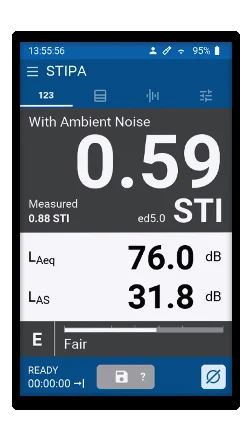
แยกสาเหตุ และแนวทางแก้Separating the causes, and the remedies
| สาเหตุCause | ลักษณะSignature | แนวทางแก้Remedy |
|---|---|---|
| เสียงพื้นหลังดังHigh background noise | ลักษณะSignatureเสียงของผู้พูดสู้เสียงรอบข้างไม่ได้The speaker's voice cannot overcome the ambient noise | แนวทางแก้Remedyถ้ามาจากผู้ฟัง ขอความร่วมมือให้เงียบ ถ้ามาจากภายนอก ปรับปรุงการกันเสียงของผนัง หน้าต่าง และประตูIf from the audience, ask for quiet; if from outside, improve the sound insulation of walls, windows and doors |
| เสียงก้องReverberation | ลักษณะSignatureเสียงสะท้อนเด่นกว่าเสียงตรง จากผิวแข็งสะท้อนเสียง เช่น ผนัง หน้าต่าง โต๊ะReverberant sound dominates the direct sound, from hard reflective surfaces such as walls, windows and tables | แนวทางแก้Remedyเสริมเสียงตรง: จัดวางและหันลำโพงให้เหมาะ เลือกทิศทางการกระจายเสียงให้ถูก หรือลดเวลาก้องด้วยวัสดุดูดซับเสียง เช่น ม่าน เฟอร์นิเจอร์บุนวม พรม หรือแผ่นดูดซับReinforce the direct sound: place and aim loudspeakers appropriately with suitable directivity; or reduce reverberation time with absorbers such as curtains, upholstered furniture, carpets or panels |
บทความแนะนำให้ปรึกษาผู้เชี่ยวชาญด้านอะคูสติกเพื่อชั่งน้ำหนักทุกทางเลือกก่อนตัดสินใจ และวัดความชัดเจนของเสียงพูดซ้ำหลังปรับปรุง เพื่อยืนยันว่าดีขึ้นจริงThe article advises consulting an acoustic expert to weigh all options before choosing, and measuring speech intelligibility again after the changes to confirm the improvement really occurred.
บทเรียนที่นำไปใช้ได้What we can learn
หัวข้อนี้เป็นความเห็นและข้อสังเกตทั่วไปของ GET BEST SOUND ไม่ใช่ข้อความหรือผลสรุปของ NTi AudioThis section is general commentary by GET BEST SOUND, not a statement or conclusion from NTi Audio.
- วัดสองสภาพ: เสียงพื้นหลังต้องวัดขณะใช้งานจริง แต่ STI ต้องวัดในห้องว่าง การวัดเพียงสภาพเดียวทำให้แยกสาเหตุไม่ได้Measure two conditions: the background in real use, the STI in the empty room; one condition alone cannot separate the causes.
- อย่าเริ่มที่การซื้ออุปกรณ์: ลำโพงที่ดังขึ้นไม่ช่วยในห้องที่ก้อง เพราะเพิ่มทั้งเสียงตรงและเสียงสะท้อนDo not start by buying equipment: louder loudspeakers do not help in a reverberant room, since they raise both direct and reflected sound.
- ค่าเฉลี่ยทั้งห้องซ่อนจุดอ่อนได้: ดูผลแยกตำแหน่งด้วย บางที่นั่งอาจต่ำกว่าค่าเฉลี่ยมากA room average can hide weak spots: look at individual positions too; some seats may be far below the average.
- วัดก่อนและหลัง: เป็นหลักฐานเดียวที่บอกว่าเงินที่ลงทุนปรับปรุงได้ผลMeasure before and after: it is the only evidence that the money spent on treatment worked.