โจทย์The problem
ผู้ผลิตและผู้นำเข้าเครื่องดูดฝุ่นที่ขายในสหภาพยุโรปต้องแสดงว่าสินค้าไม่ดังเกินเกณฑ์ ระเบียบ EU 666/2013 ว่าด้วยการออกแบบเชิงนิเวศ (eco-design) ของเครื่องดูดฝุ่นแบบเสียบไฟบ้าน กำหนดให้ระดับกำลังเสียงไม่เกิน 80 dB(A) มีผลตั้งแต่ 1 กันยายน 2017Manufacturers and importers selling vacuum cleaners in the EU must show that their products are not too loud. EU Regulation 666/2013 on the eco-design of mains-operated vacuum cleaners sets a sound power level of no more than 80 dB(A), in force since 1 September 2017.
คำถามคือจะวัดอย่างไรให้ได้ค่าที่เทียบกับเกณฑ์ได้จริง และทำซ้ำได้ในห้องปฏิบัติการของผู้ผลิตเองThe question is how to measure a value that can genuinely be compared with the limit, and repeated in the manufacturer's own test room.
ระเบียบฉบับนี้มีข้อกำหนดอื่นด้วย เช่น การใช้พลังงานต่อปี กำลังไฟฟ้า และประสิทธิภาพการดูดฝุ่น หน้านี้กล่าวถึงเฉพาะเรื่องเสียง ก่อนนำไปใช้จริงควรตรวจสอบสถานะล่าสุดของระเบียบกับแหล่งทางการThe regulation also covers other requirements, such as annual energy use, rated power and dust pick-up. This page deals with sound only. Check the current status of the regulation with official sources before relying on it.
ทำไมจึงยากWhy it was difficult
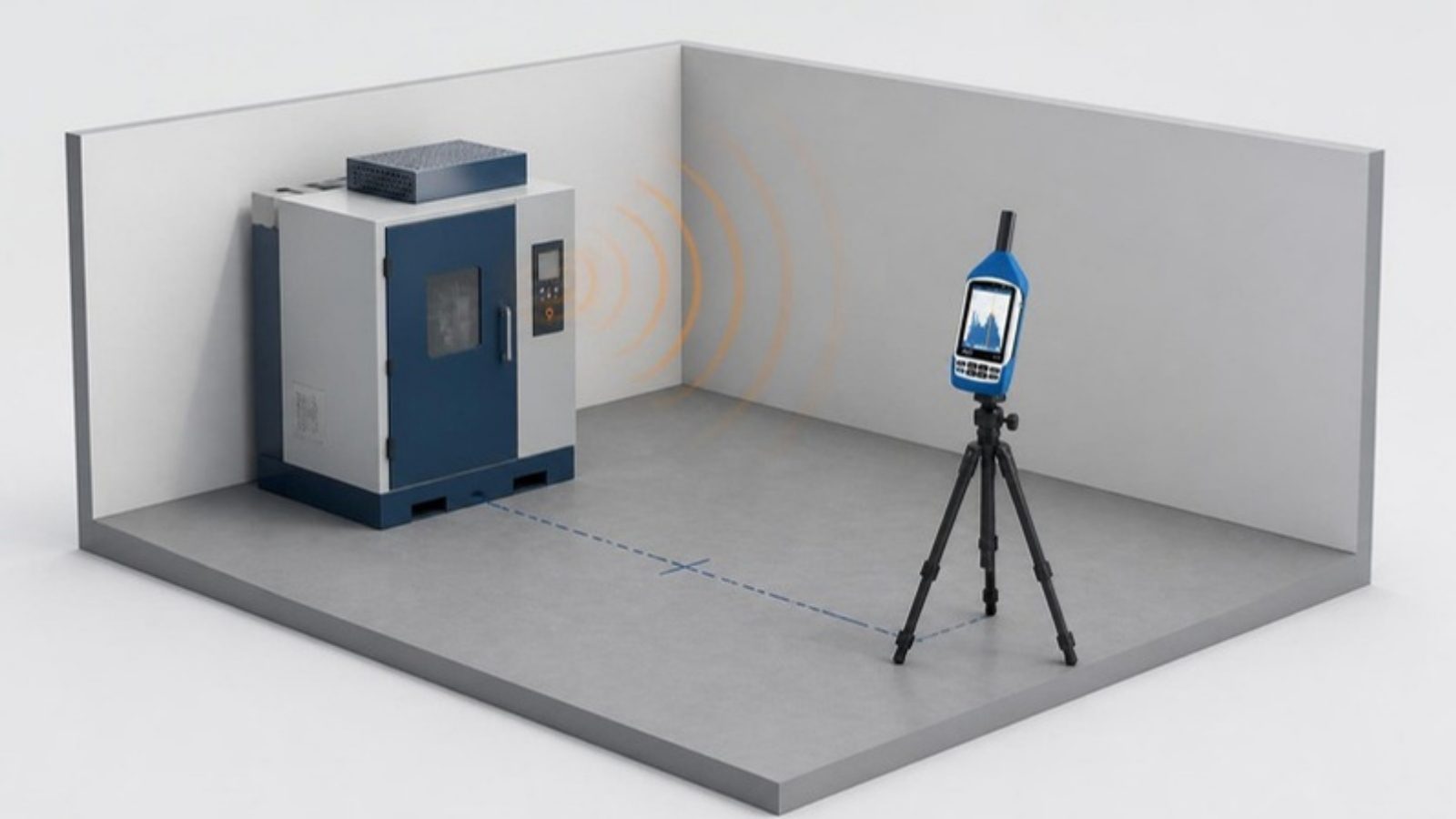
กำลังเสียง (sound power) คือปริมาณพลังงานเสียงที่ตัวเครื่องปล่อยออกมา เป็นคุณสมบัติของตัวเครื่อง ไม่ขึ้นกับห้องหรือระยะ แต่ไมโครโฟนวัดได้เฉพาะความดันเสียง (sound pressure) ณ จุดที่วางไว้ ซึ่งเปลี่ยนตามระยะ ทิศทาง และเสียงสะท้อนในห้อง จึงต้องวัดหลายจุดรอบตัวเครื่องแล้วคำนวณกลับเป็นกำลังเสียงSound power is the acoustic energy the appliance emits: a property of the machine that does not depend on the room or the distance. A microphone, however, only measures sound pressure at its own position, which changes with distance, direction and room reflections. So the level has to be measured at many points around the appliance and converted back into sound power.
- ตัวเครื่องต้องอยู่ในสภาพการใช้งานที่กำหนด มิฉะนั้นค่าจะเปลี่ยนตามการตั้งค่า ถุงเก็บฝุ่น หรือตัวกรองThe appliance must be in a defined operating condition, otherwise the result changes with its settings, dust container or filters.
- เสียงพื้นหลังในห้องและเสียงสะท้อนจากผนังทำให้ค่าที่วัดได้สูงกว่าความจริง ต้องแก้ด้วยค่าแก้ (correction)Background noise and wall reflections push the measured levels up and must be corrected for.
- เกณฑ์อยู่ที่ตัวเลขเดียว ค่าใกล้เกณฑ์จึงต้องรู้กฎการปัดเศษให้ชัดThe limit is a single number, so the rounding rule matters for results close to it.
วิธีวัดMeasurement approach
เตรียมห้องทดสอบPreparing the test room
- ห้องควรมีรูปทรงใกล้เคียงลูกบาศก์ โดยความยาวและความกว้างแต่ละด้านควรน้อยกว่า 3 เท่าของความสูงเพดานThe room should be close to a cube in shape, with its length and its width each less than 3 times the ceiling height.
- อุณหภูมิ 15–30 °C และเสียงพื้นหลังต่ำและคงที่Temperature 15–30 °C and a low, steady background noise.
- พื้นแข็งมาตรฐาน: สัมประสิทธิ์การดูดซับเสียงน้อยกว่า 0.1 และมวลต่อพื้นที่อย่างน้อย 50 kg/m²A standard hard floor: sound absorption coefficient below 0.1 and areal density of at least 50 kg/m².
- ปูพรมชนิด Wilton ขนาด 1 m × 1 m บนพื้นแข็ง วางตัวเครื่องไว้กลางพรม ห่างผนังทุกด้านอย่างน้อย 1 เมตรA 1 m × 1 m Wilton-type carpet on the hard floor, with the appliance at its centre and at least 1 m from every wall.
เตรียมตัวเครื่องPreparing the appliance
- เครื่องใหม่ต้องเดินเครื่องก่อน (run-in) อย่างน้อย 2 ชั่วโมง โดยให้ลมไหลผ่านได้อย่างอิสระ เพื่อให้เครื่องเข้าที่ก่อนเริ่มวัดเสียงA new machine is first run for 2 hours or more with nothing restricting its airflow, so that it is broken in before any sound is measured.
- เริ่มทุกการทดสอบด้วยที่เก็บฝุ่นที่ว่างและตัวกรองที่สะอาด เพื่อไม่ให้ฝุ่นที่ค้างอยู่ทำให้เสียงเปลี่ยนEach test starts with an empty dust container and clean filters, so that leftover dust does not change the sound.
- ใช้การตั้งค่าชุดเดียวกับการทดสอบดูดฝุ่นบนพรม คือปุ่มควบคุมอยู่ที่ระดับสูงสุดของการใช้งานปกติ ไม่เปิดโหมดบูสต์ และปิดช่องลมบายพาสทุกช่องThe settings match those of the carpet dust pick-up test: controls at their highest normal-use position, no boost, and every bypass air opening closed.
วัดMeasuring
- วางไมโครโฟน 10 ตำแหน่งบนผิวครึ่งทรงกลมรอบตัวเครื่อง ระยะที่แนะนำคือ 2 เมตรจากกึ่งกลางตัวเครื่อง และไม่น้อยกว่า 1.5 เมตรPlace 10 microphone positions on a hemisphere around the appliance, preferably 2 m from its centre and never less than 1.5 m.
- วัดระดับเสียงขณะเครื่องทำงาน ตำแหน่งละ 30 วินาทีMeasure the level with the appliance running for 30 seconds at each position.
- ปิดเครื่อง แล้ววัดเสียงพื้นหลังที่ทั้ง 10 ตำแหน่ง ตำแหน่งละ 30 วินาที เพื่อใช้คำนวณค่าแก้ K1Switch the appliance off and measure the background noise at all 10 positions for 30 seconds each, for the K1 correction.
- วัดเวลาเสียงก้องของห้อง เพื่อหาพื้นที่ดูดซับเสียงเทียบเท่า (สมการของ Sabine: A = 0.161 V / T) แล้วใช้คำนวณค่าแก้สภาพแวดล้อม K2 จากพื้นที่ผิวครึ่งทรงกลมที่วัดและพื้นที่ดูดซับเสียงของห้องMeasure the room's reverberation time to obtain its equivalent absorption area (Sabine: A = 0.161 V / T), which is used together with the measurement hemisphere's surface area to calculate the environmental correction K2.
- คำนวณระดับกำลังเสียงถ่วงน้ำหนัก A แล้วปัดเป็นจำนวนเต็มเพื่อเทียบกับเกณฑ์Calculate the A-weighted sound power level and round it to a whole number for comparison with the limit.
อุปกรณ์และซอฟต์แวร์ที่ใช้Equipment / software used
- เครื่องวัดระดับเสียง สำหรับวัดระดับเสียงที่แต่ละตำแหน่ง (บทความไม่ได้ระบุรุ่น)Sound level meter for the level at each position (the article does not name a model).
- ไมโครโฟนวัดเสียง 10 ตำแหน่งบนผิวครึ่งทรงกลม (บทความไม่ได้ระบุ class ของไมโครโฟน)Measurement microphones at 10 positions on the hemisphere (the article does not state the microphone class).
- Sound Power Reporter สำหรับคำนวณ ใส่ค่าแก้ และจัดทำเอกสารSound Power Reporter for calculation, corrections and documentation.
สิ่งที่วิเคราะห์What was analysed
- ค่าแก้ K1 (เสียงพื้นหลัง)K1 (background noise correction)
- หักผลของเสียงพื้นหลังออกจากระดับที่วัดได้ขณะเครื่องทำงาน ถ้าเสียงพื้นหลังใกล้เคียงเสียงของเครื่อง ค่าที่วัดจะสูงเกินจริงRemoves the contribution of background noise from the levels measured with the appliance running. If the background is close to the appliance's level, the reading is too high.
- ค่าแก้ K2 (สภาพแวดล้อม)K2 (environmental correction)
- หักผลของเสียงสะท้อนในห้อง ห้องที่ก้องมากจะทำให้ระดับที่ไมโครโฟนสูงขึ้น ค่านี้คำนวณจากพื้นที่ผิวครึ่งทรงกลมที่วัดกับพื้นที่ดูดซับเสียงเทียบเท่าของห้องRemoves the effect of room reflections, which raise the level at the microphones in a reverberant room. It is calculated from the measurement hemisphere's surface area and the room's equivalent absorption area.
- ระดับกำลังเสียง (dB(A))Sound power level (dB(A))
- ค่าที่ได้หลังเฉลี่ยทั้ง 10 ตำแหน่ง ใส่ค่าแก้ และแปลงจากความดันเสียงเป็นกำลังเสียง ระเบียบกำหนดให้แสดงเป็น dB(A) และปัดเป็นจำนวนเต็มThe result after averaging the 10 positions, applying the corrections and converting from sound pressure to sound power. The regulation requires it in dB(A), rounded to the nearest whole number.
ซอฟต์แวร์ Sound Power Reporter ทำการคำนวณ ใส่ค่าแก้ และจัดทำเอกสารผลการวัด จากข้อมูลที่บันทึกด้วยเครื่องวัดระดับเสียงThe Sound Power Reporter software performs the calculation, applies the corrections and produces the documentation from the data recorded with the sound level meter.
ผลที่พบKey findings
บทความเป็นตัวอย่างวิธีวัด จึงไม่มีผลการวัดของเครื่องดูดฝุ่นรุ่นใด ข้อสรุปที่บทความให้ไว้ชัดเจนคือเรื่องการปัดเศษ:The article is a method example, so it contains no test result for any particular appliance. The clear conclusion it gives concerns rounding:
เกณฑ์คือ 80 dB(A) และค่าที่ได้ต้องปัดเป็นจำนวนเต็ม ดังนั้นค่าที่คำนวณได้ 80.4 dB(A) จะปัดเป็น 80 dB(A) และยังถือว่าอยู่ในเกณฑ์The limit is 80 dB(A) and the result is rounded to the nearest whole number, so a calculated 80.4 dB(A) rounds to 80 dB(A) and still complies.
บทเรียนที่นำไปใช้ได้What we can learn
หัวข้อนี้เป็นความเห็นและข้อสังเกตทั่วไปของ GET BEST SOUND ไม่ใช่ข้อความหรือผลสรุปของ NTi AudioThis section is general commentary by GET BEST SOUND, not a statement or conclusion from NTi Audio.
- กำลังเสียงคือ "สเปก" ของตัวเครื่อง ต่างจากระดับเสียงที่วัดที่ระยะหนึ่ง ถ้าต้องเทียบสินค้าหรือส่งข้อมูลให้ลูกค้าต่างประเทศ ควรใช้กำลังเสียงที่วัดตามมาตรฐานSound power is the appliance's own specification, unlike a sound level measured at some distance. When comparing products or supplying data to export customers, use sound power measured to a standard.
- การเตรียมตัวเครื่องสำคัญพอ ๆ กับเครื่องมือวัด run-in ตัวกรอง การตั้งค่า และโหมดบูสต์ ล้วนเปลี่ยนผลได้ ควรบันทึกไว้ในรายงานทุกครั้งPreparing the appliance matters as much as the instrument. Run-in, filters, settings and boost mode all change the result and should be recorded in every report.
- ไม่จำเป็นต้องมีห้องไร้เสียงสะท้อนเสมอไป วิธีตาม ISO 3744 ใช้ห้องทั่วไปที่ควบคุมได้ แล้วแก้ด้วย K1 และ K2 ซึ่งช่วยให้ผู้ผลิตวัดเองในโรงงานได้An anechoic room is not always required. The ISO 3744 approach uses an ordinary, controlled room and corrects with K1 and K2, which lets manufacturers measure in their own facility.
- ค่าที่อยู่ใกล้เกณฑ์ต้องดูกฎการปัดเศษและความไม่แน่นอน ก่อนสรุปว่าผ่านหรือไม่ผ่าน ควรเผื่อระยะไว้สำหรับความคลาดเคลื่อนของการวัดด้วยNear the limit, check the rounding rule and the uncertainty. Before declaring pass or fail, allow a margin for measurement uncertainty.
- แนวคิดเดียวกันใช้ได้กับผลิตภัณฑ์อื่น เช่น เครื่องใช้ไฟฟ้า พัดลม หรือเครื่องจักร โดยต้องใช้มาตรฐานเฉพาะของผลิตภัณฑ์นั้นกำหนดสภาพการทำงานThe same idea applies to other products such as appliances, fans or machinery, with the product-specific standard defining the operating conditions.