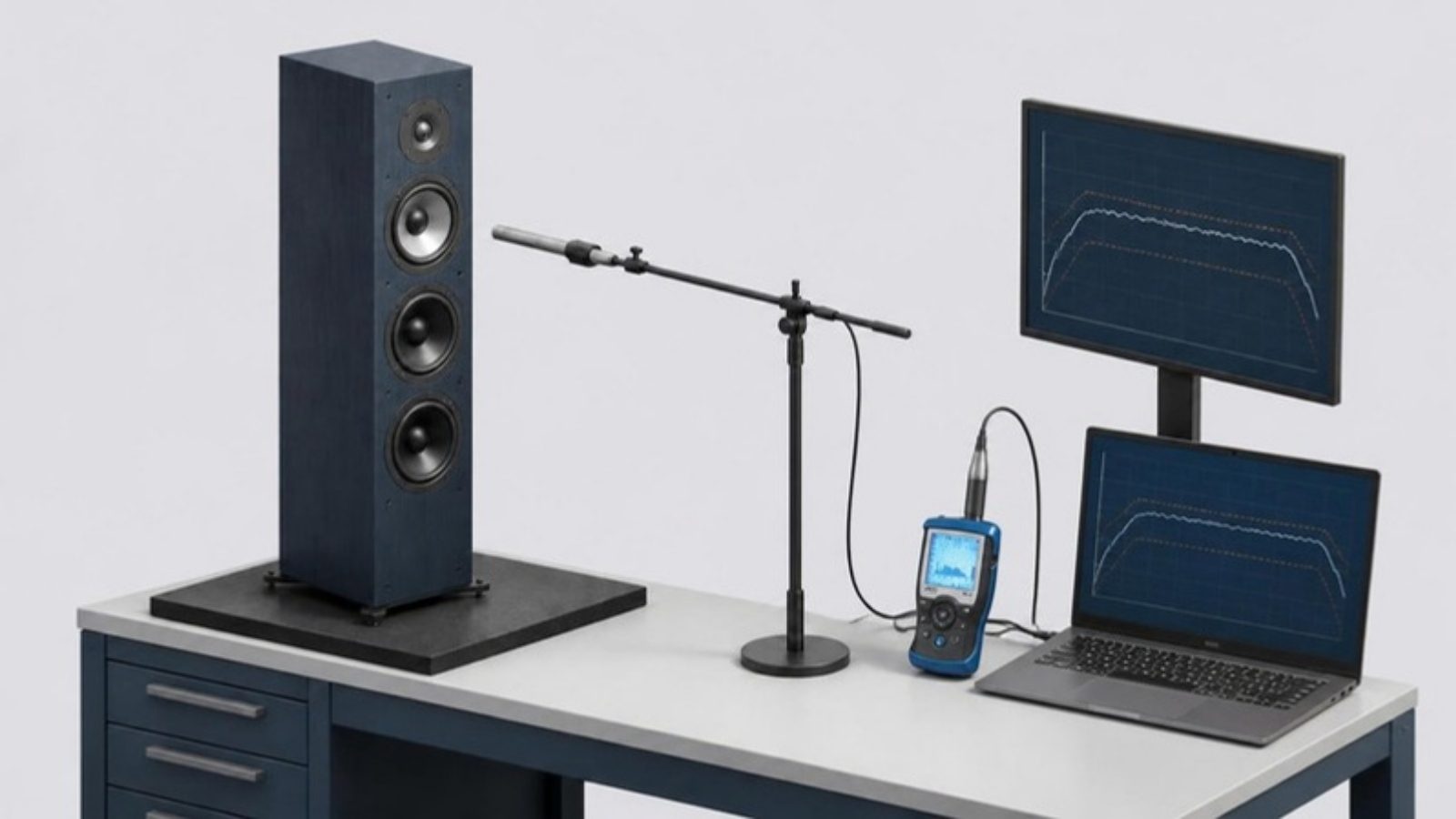
โจทย์The problem
ในวงการเครื่องเสียงไฮเอนด์ การฟังยังสำคัญเสมอ แต่ผู้ผลิตก็ต้องการผลทดสอบที่เชื่อถือได้ เปรียบเทียบได้ และตรวจย้อนกลับได้ (traceable) เพื่อให้ทุกเครื่องที่ออกจากโรงงานมีคุณภาพเท่ากับต้นแบบ และเพื่อให้รู้ว่าเครื่องที่ส่งกลับมาซ่อมเสียตรงไหนIn high-end audio, listening always matters, but manufacturers also need results that are reliable, comparable and traceable: so that every unit leaving the factory matches the prototype, and so that a unit returned for repair can be diagnosed.
แนวคิดหลักของบทความคือ ให้ความสำคัญกับความเป็นวัตถุวิสัยมากกว่าความรู้สึก และทดสอบให้ครอบคลุมทั้งเส้นทางสัญญาณ รวมถึงห้องที่ใช้ฟังจริงThe article's central idea is objectivity over subjectivity, and testing the entire signal path, including the room the system is actually heard in.
ทำไมจึงยากWhy it was difficult
- ผลิตภัณฑ์ต้องผ่านหลายขั้นและหลายมือ ตั้งแต่ R&D จนถึงช่างซ่อม ถ้าแต่ละขั้นวัดคนละแบบ จะเทียบผลกันไม่ได้A product passes through many stages and hands, from R&D to the service technician. If each stage measures differently, results cannot be compared.
- ลำโพงใหม่ยังไม่นิ่ง คุณสมบัติของดอกลำโพงเปลี่ยนไปในช่วงแรกของการใช้งานNew loudspeaker drivers are not yet stable: their properties shift during the first hours of use.
- การวัดเสียงจากลำโพงต้องมีสภาพแวดล้อมที่คงที่ เสียงรบกวนและเสียงสะท้อนในห้องทำให้ผลเพี้ยนAcoustic measurements need a stable environment; ambient noise and room reflections distort the results.
- ระบบที่ดีในโรงงานอาจฟังไม่ดีในบ้าน เพราะห้องฟังเป็นส่วนหนึ่งของเส้นทางสัญญาณA system that measures well in the factory can still sound poor at home, because the listening room is part of the signal path.
วิธีวัด: ทดสอบตลอดวงจรชีวิตผลิตภัณฑ์Measurement approach: testing across the product life
| ขั้นตอนStage | สิ่งที่ทดสอบWhat is tested |
|---|---|
| R&DR&D | สิ่งที่ทดสอบWhat is testedความเพี้ยน (THD และฮาร์มอนิก), เสียงฮัมและสัญญาณรบกวน (SNR), CMRR ของสายแบบบาลานซ์, แบนด์วิดท์จากการตอบสนองความถี่, ความเป็นเชิงเส้นด้วยสัญญาณกวาดแอมพลิจูด, ความสมดุลระหว่างแชนเนลและ crosstalk, การปรับสภาพดอกลำโพงDistortion (THD and harmonics), hum and noise (SNR), CMRR of balanced lines, bandwidth from the frequency response, linearity with amplitude sweeps, channel balance and crosstalk, driver conditioning |
| ตรวจรับชิ้นส่วน (incoming QC)Incoming QC | สิ่งที่ทดสอบWhat is testedทดสอบชิ้นส่วนไฟฟ้า เช่น ค่าความเหนี่ยวนำ ค่าความจุ และความเพี้ยน, burn-in ดอกลำโพง, จับคู่ดอกลำโพงที่มีพฤติกรรมใกล้กัน (pairing)Electrical component tests such as inductance, capacitance and distortion; loudspeaker burn-in; pairing drivers with similar behaviour |
| ทดสอบเครื่องขยายเสียงในการผลิตAmplifier production test | สิ่งที่ทดสอบWhat is testedการตอบสนองความถี่, กำลังขับ, ความเพี้ยน, อัตราการลดเสียงฮัมและสัญญาณรบกวน, การแยกแชนเนล, การวิเคราะห์สเปกตรัมสัญญาณรบกวน, ความสมดุลระหว่างแชนเนล, เฟสระหว่างแชนเนล, slew rate, CMRRFrequency response, output power, distortion, hum and noise rejection, channel separation, noise spectrum analysis, channel balance, inter-channel phase, slew rate, CMRR |
| ทดสอบลำโพงในการผลิตLoudspeaker production test | สิ่งที่ทดสอบWhat is testedอิมพีแดนซ์, การตอบสนองความถี่, ความเพี้ยน, ความไว (sensitivity), การตรวจเสียงขูดและเสียงสั่น (Rub & Buzz)Impedance, frequency response, distortion, sensitivity, Rub & Buzz detection |
| ทดสอบทั้งระบบSystem test | สิ่งที่ทดสอบWhat is testedประกอบอุปกรณ์เข้าด้วยกัน แล้ววัดความไวและการตอบสนองความถี่ทางอะคูสติกแบบย่อAssembled devices checked with a reduced set of acoustic sensitivity and frequency response measurements |
| ติดตั้งในห้องฟังInstallation | สิ่งที่ทดสอบWhat is testedเวลาเสียงก้อง, โหมดของห้อง (room modes), comb filtering, เสียงรบกวนในห้องReverberation time, room modes, comb filtering, ambient noise |
| ซ่อมบำรุงService and repair | สิ่งที่ทดสอบWhat is testedเทียบผลกับค่าอ้างอิงจากการผลิต, ไล่หาจุดเสียระดับวงจร, ทดสอบซ้ำหลังซ่อมComparison with the production baseline, circuit-level fault finding, retest after repair |
Burn-in ดอกลำโพง ประสบการณ์ของ Art Déco Acoustics พบว่าสัญญาณไซน์ความถี่ต่ำให้ผลดีมาก โดยเลือกความถี่ให้ห่างจากความถี่เรโซแนนซ์ในอากาศอิสระ (f₀) วิธีที่ใช้ได้จริงคือวัด f₀ และอิมพีแดนซ์ที่เรโซแนนซ์ (R₀) ตอนเริ่ม แล้ววัดซ้ำทุกสองชั่วโมงจนค่านิ่งDriver burn-in. Experience at Art Déco Acoustics showed that a low-frequency sine signal works very well, with its frequency chosen well away from the free-air resonance (f₀). A practical routine is to measure f₀ and the resonance impedance (R₀) at the start and then every two hours until they settle.
ในห้องฟัง บทความเสนอการวัดสี่เรื่อง:In the listening room the article proposes four checks:
- เวลาเสียงก้อง: เปิดสัญญาณพิงก์นอยส์แบบตัดเป็นช่วง (gated pink noise) ผ่านระบบเสียง หรือใช้เสียงกระแทกเช่นลูกโป่งแตกReverberation time: gated pink noise played through the system, or an impulsive source such as a bursting balloon.
- โหมดของห้อง: คำนวณความถี่เรโซแนนซ์จากขนาดห้อง เปิดความถี่นั้นผ่านระบบ แล้ววัดระดับเสียงหลายตำแหน่ง ถ้าระดับต่างกันมาก แสดงว่ามีปัญหาเสียงสะท้อนความถี่ต่ำRoom modes: calculate the resonance frequencies from the room dimensions, play them through the system and measure the level at several positions; large differences reveal low-frequency reflection problems.
- Comb filtering: เปิดไวท์นอยส์ แล้วดูสเปกตรัม FFT ความละเอียดสูงบนแกนความถี่แบบเชิงเส้น รอยบากที่เว้นระยะเท่ากันเป็นสัญญาณของเสียงสะท้อนจากผิวห้องComb filtering: play white noise and view a high-resolution FFT on a linear frequency axis; evenly spaced notches indicate reflections from room surfaces.
- เสียงรบกวนในห้อง: วิธีง่ายคืออ่านระดับเสียงถ่วงน้ำหนัก A วิธีละเอียดคือเทียบกับเส้นโค้ง NC (Noise Criteria) ตามย่านออกเตฟAmbient noise: simply as an A-weighted level, or in more detail against NC (Noise Criteria) curves by octave band.
อุปกรณ์และซอฟต์แวร์ที่ใช้Equipment / software used
เนื้อหาบทความไม่ได้ระบุรุ่นเครื่องมือ แต่กล่าวถึงเครื่องมือประเภทต่อไปนี้:The article text does not name specific models; it refers to these types of equipment:
- เครื่องวิเคราะห์เสียง (audio analyzer) สำหรับการวัดทางไฟฟ้า เช่น ระดับ ความเพี้ยน และ FFTAudio analyzers for electrical measurements such as level, distortion and FFT.
- ไมโครโฟนวัดเสียงที่สอบเทียบแล้วและเครื่องสอบเทียบไมโครโฟนCalibrated measurement microphones and a microphone calibrator.
- อุปกรณ์จับยึดสำหรับทดสอบ (test fixtures) เพื่อให้สภาพการวัดทางอะคูสติกทำซ้ำได้Test fixtures for reproducible acoustic measurement conditions.
สิ่งที่วิเคราะห์What was analysed
- เกณฑ์ผ่าน/ไม่ผ่าน: ถ้าทำได้ ใช้ค่าจากเอกสารข้อมูล (datasheet) ของชิ้นส่วนเป็นเกณฑ์สัมบูรณ์ สำหรับการวัดทางอะคูสติกที่ไม่มีสเปก ใช้การวัดอ้างอิงแล้วเผื่อช่วงไว้ (headroom)Pass/fail limits: absolute limits from component datasheets where possible; for acoustic measurements without a specification, a reference measurement with added headroom.
- การตอบสนองความถี่ของลำโพง ใช้ตัวกรองปรับเรียบแบบ 1/3 ออกเตฟ เพื่อให้เทียบกันได้ง่ายLoudspeaker frequency responses smoothed with 1/3-octave filters to make comparison easier.
- การเปลี่ยนแปลงของ f₀ และ R₀ ระหว่าง burn-in เพื่อตัดสินว่าดอกลำโพงนิ่งแล้วหรือยังThe change in f₀ and R₀ during burn-in, to decide when a driver has settled.
- ผลซ่อม: การวัดที่ไม่ผ่านช่วยชี้ว่าชิ้นส่วนใดเสีย จากนั้นใช้เครื่องวิเคราะห์เสียงวัดระดับ ความเพี้ยน และ FFT ในวงจรRepairs: the failed measurement points to the type of fault; an audio analyzer then measures level, distortion and FFT within the circuit.
ค่าที่บทความให้ไว้Key findings
| หัวข้อTopic | ค่าที่บทความระบุValue stated |
|---|---|
| เวลา burn-in ดอกลำโพงเสียงเบสBurn-in time, bass drivers | ค่าที่บทความระบุValue stated6 ถึง 36 ชั่วโมง6 to 36 hours |
| เวลา burn-in ดอกลำโพงเสียงกลางBurn-in time, midrange drivers | ค่าที่บทความระบุValue stated6 ถึง 24 ชั่วโมง6 to 24 hours |
| รอบการวัด f₀ และ R₀ ระหว่าง burn-inf₀ and R₀ check interval during burn-in | ค่าที่บทความระบุValue statedทุกสองชั่วโมงevery two hours |
| เวลาเสียงก้องที่แนะนำสำหรับห้องนั่งเล่นทั่วไปRecommended reverberation time, typical living room | ค่าที่บทความระบุValue stated0.3–0.5 วินาที ทุกย่านความถี่0.3–0.5 s in all frequency bands |
| ช่วงความถี่ของโหมดห้องในห้องนั่งเล่นขนาดทั่วไปRoom-mode range, typical living room | ค่าที่บทความระบุValue stated20–100 Hz20–100 Hz |
| ระดับเสียงรบกวนที่แนะนำสำหรับห้องบันทึกเสียง หอแสดงดนตรี และงานฟังลักษณะเดียวกันRecommended ambient noise for recording studios, concert halls and similar listening uses | ค่าที่บทความระบุValue statedNC 15–20NC 15–20 |
บทความปิดท้ายด้วยหลักห้าข้อ: ความเป็นวัตถุวิสัยมาก่อนความรู้สึก, คิดถึงเส้นทางสัญญาณทั้งหมดรวมถึงห้องฟัง, ใช้กลยุทธ์การวัดเดียวกันตลอดวงจรชีวิตผลิตภัณฑ์, ใช้ระบบทดสอบเสียงที่ครอบคลุม และเก็บเอกสารให้ครบในฐานะทรัพย์สินของบริษัทThe article closes with five principles: objectivity over subjectivity; consider the whole signal path including the listening room; keep one measurement strategy across the product life; use comprehensive audio test systems; and keep complete documentation as a company asset.
บทเรียนที่นำไปใช้ได้What we can learn
หัวข้อนี้เป็นความเห็นและข้อสังเกตทั่วไปของ GET BEST SOUND ไม่ใช่ข้อความหรือผลสรุปของ NTi AudioThis section is general commentary by GET BEST SOUND, not a statement or conclusion from NTi Audio.
- ใช้การวัดชุดเดียวกันตั้งแต่ต้นจนจบ ค่าจากสายการผลิตกลายเป็น "ลายนิ้วมือ" ของแต่ละเครื่อง ใช้เทียบได้ทันทีเมื่อเครื่องกลับมาซ่อมUse the same measurements from start to finish. Production data becomes each unit's "fingerprint", ready for comparison when it comes back for repair.
- บันทึกหมายเลขเครื่องกับผลวัดทุกครั้ง ทำให้ตามย้อนคุณภาพได้เป็นล็อตหรือเป็นช่วงเวลาLog the serial number with every measurement, so quality can be traced by batch or over time.
- ดูแลเครื่องมือวัดให้พร้อม สอบเทียบเครื่องวิเคราะห์และไมโครโฟนตามรอบที่ผู้ผลิตแนะนำ และตรวจไมโครโฟนด้วยเครื่องสอบเทียบบ่อย ๆ เพราะไมโครโฟนไวต่ออุณหภูมิและความชื้นKeep the instruments in shape. Calibrate analyzers and microphones at the maker's recommended intervals, and check microphones often with a calibrator, since they are sensitive to temperature and humidity.
- ควบคุมพื้นที่ทดสอบ ตำแหน่งลำโพงและไมโครโฟนต้องแม่นยำ เสียงรบกวนต้องต่ำ และจัดการเสียงสะท้อนด้วยการปรับอะคูสติกหรือฟังก์ชันหน้าต่างเวลา (time window)Control the test area. Place loudspeaker and microphone precisely, keep ambient noise low, and deal with reflections using acoustic treatment or a time window.
- ห้องฟังเป็นส่วนหนึ่งของระบบ สำหรับโฮมเธียเตอร์หรือห้องฟังเพลง การวัดเวลาเสียงก้อง โหมดของห้อง และเสียงรบกวน ช่วยแยกได้ว่าปัญหาอยู่ที่อุปกรณ์หรืออยู่ที่ห้องThe room is part of the system. For home cinemas and listening rooms, measuring reverberation time, room modes and ambient noise separates equipment problems from room problems.