ขอบเขตแบบเข้าใจง่ายScope in plain words
ผลวัดการกันเสียงจริงเป็นกราฟหลายสิบค่า (หนึ่งค่าต่อหนึ่งย่านความถี่) ซึ่งเปรียบเทียบกันยากและเขียนเป็นข้อกำหนดไม่สะดวก ISO 717 กำหนดกติกากลางในการย่อกราฟนั้นเหลือตัวเลขเดียว เพื่อให้ผู้ออกแบบ ผู้ผลิต ผู้รับเหมา และหน่วยงานกำกับพูดภาษาเดียวกันMeasured sound insulation is a curve of many values (one per frequency band), which is hard to compare and awkward to write into a requirement. ISO 717 sets common rules for reducing that curve to one number, so designers, manufacturers, contractors and regulators speak the same language.
- ส่วนที่ 1 ใช้กับผลเสียงผ่านอากาศ ทั้งจากห้องปฏิบัติการ (ISO 10140-2) และภาคสนาม (ISO 16283-1 และการวัดผนังภายนอก)Part 1 applies to airborne results, both from the laboratory (ISO 10140-2) and from the field (ISO 16283-1 and facade measurements).
- ส่วนที่ 2 ใช้กับผลเสียงกระแทกของพื้น ทั้งจากห้องปฏิบัติการ (ISO 10140-3) และภาคสนาม (ISO 16283-2) รวมถึงการประเมินผลของวัสดุปูพื้นที่ช่วยลดเสียงกระแทกPart 2 applies to impact results for floors, from the laboratory (ISO 10140-3) and the field (ISO 16283-2), including the effect of floor coverings that reduce impact sound.
ตามแคตตาล็อกของ ISO ฉบับ 2020 ของส่วนที่ 2 เพิ่มภาคผนวก D สำหรับประเมินเสียงกระแทกแบบหนักและนุ่ม (heavy/soft impact เช่น ลูกบอลยาง ที่จำลองเสียงเดินเท้าเปล่าหรือเด็กกระโดด) โดยใช้ระดับเสียงสูงสุดถ่วงน้ำหนัก A ซึ่งเป็นตัวเลขคนละชนิดกับ L'nT,w จากเครื่องเคาะAccording to the ISO catalogue, the 2020 edition of Part 2 added Annex D for rating heavy/soft impact sound (e.g. a rubber ball simulating bare-foot walking or children jumping) using an A-weighted maximum level, a different kind of number from the tapping-machine L'nT,w.
แนวคิดและปริมาณสำคัญKey concepts and quantities
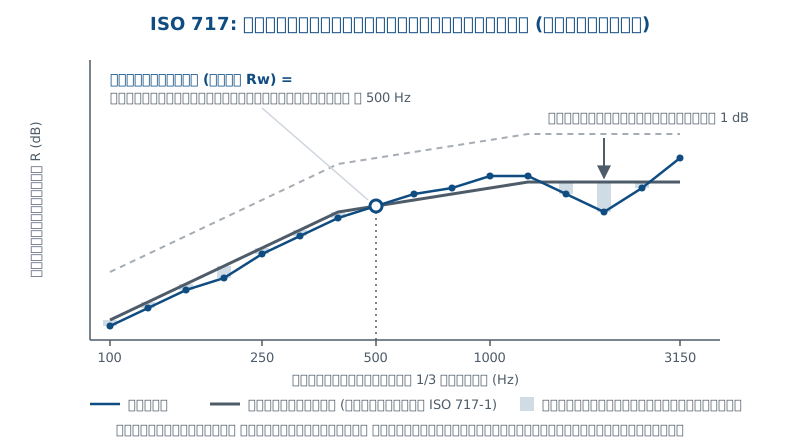
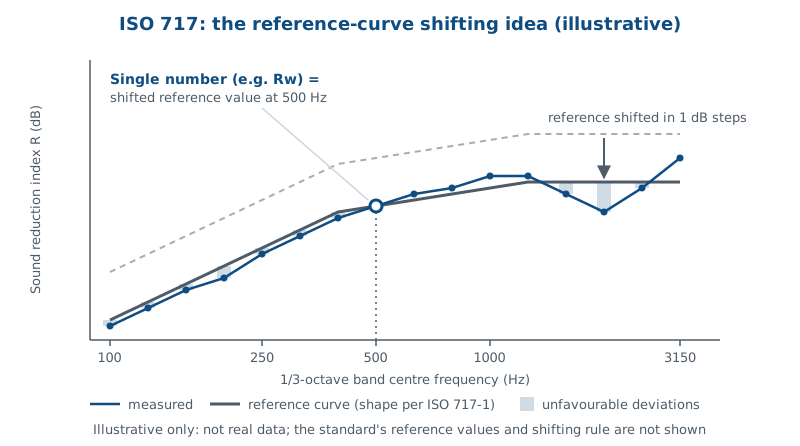
หลักการคือเทียบกราฟผลวัดกับ เส้นอ้างอิงมาตรฐาน ที่มีรูปร่างคงที่ แล้วเลื่อนเส้นอ้างอิงขึ้นลงตามกติกาที่ให้ย่านที่ผลวัดแย่กว่าเส้นอ้างอิงมีผลต่อคะแนน จากนั้นอ่านค่าของเส้นอ้างอิงที่ตำแหน่งกำหนดเป็นตัวเลขเดียว วิธีนี้ทำให้ย่านที่อ่อนแอดึงคะแนนลง จึงยุติธรรมกว่าการเฉลี่ยธรรมดา (รายละเอียดเส้นอ้างอิงและกติกาอยู่ในตัวมาตรฐาน)The principle is to compare the measured curve with a standard reference curve of fixed shape, shift the reference curve according to rules in which bands that fall short of it count against the result, and then read the reference curve at a defined point as the single number. Weak bands therefore pull the rating down, which is fairer than a simple average. (The reference curves and rules are in the standard itself.)
| ตัวเลขเดียวSingle number | มาจากDerived from | อ่านอย่างไรHow to read it |
|---|---|---|
| RwRw | มาจากDerived fromR จากห้องปฏิบัติการLaboratory R | อ่านอย่างไรHow to read itคุณสมบัติของชิ้นส่วน ยิ่งสูงยิ่งดีProperty of the element; higher is better |
| R'wR'w | มาจากDerived fromR' ภาคสนามField R' | อ่านอย่างไรHow to read itรวมเสียงอ้อม ยิ่งสูงยิ่งดีIncludes flanking; higher is better |
| DnT,w / Dn,wDnT,w / Dn,w | มาจากDerived fromผลต่างระดับเสียงภาคสนามField level difference | อ่านอย่างไรHow to read itสิ่งที่ผู้อยู่อาศัยได้รับ ยิ่งสูงยิ่งดีWhat occupants get; higher is better |
| Ln,w / L'n,w / L'nT,wLn,w / L'n,w / L'nT,w | มาจากDerived fromระดับเสียงกระแทกImpact sound level | อ่านอย่างไรHow to read itยิ่งต่ำยิ่งดีLower is better |
| ΔLwΔLw | มาจากDerived fromการลดเสียงกระแทกของวัสดุปูพื้นImpact reduction of a floor covering | อ่านอย่างไรHow to read itยิ่งสูงยิ่งดีHigher is better |
- C — ค่าปรับตามสเปกตรัมสำหรับเสียงทั่วไปC — spectrum adaptation term for everyday sound
- ค่าปรับตามสเปกตรัม (spectrum adaptation term) ของ ISO 717 ที่ใช้สเปกตรัมอ้างอิงซึ่งเป็นตัวแทนของแหล่งเสียง เช่น กิจกรรมในที่พักอาศัย (เสียงพูด เพลง วิทยุ/โทรทัศน์) และเสียงที่มีพลังงานส่วนใหญ่ในย่านกลางถึงสูง มักเขียนต่อท้าย เช่น Rw (C; Ctr)An ISO 717 spectrum adaptation term using a reference spectrum representative of sources such as living activities (talking, music, radio/TV) and sources with mainly mid- to high-frequency content; usually written alongside, e.g. Rw (C; Ctr).
- Ctr — ค่าปรับสำหรับเสียงจราจรในเมืองCtr — term for urban traffic noise
- ค่าปรับตามสเปกตรัมของ ISO 717 ที่ใช้สเปกตรัมอ้างอิงของเสียงจราจรบนถนนในเมือง เป็นตัวแทนของเสียงที่มีพลังงานความถี่ต่ำมาก เช่น เสียงรถบรรทุกหรือเพลงที่มีเบสหนัก มักทำให้ค่ารวมลดลงมากกว่า CAn ISO 717 spectrum adaptation term using an urban road traffic reference spectrum, representative of sources with strong low-frequency content, such as trucks or bass-heavy music; it usually lowers the combined value more than C.
- CI — ค่าปรับสำหรับเสียงกระแทกCI — impact spectrum adaptation term
- ใช้กับเสียงกระแทก เพื่อให้ผลสะท้อนเสียงเดินจริงได้ดีขึ้น โดยเฉพาะพื้นที่มีปัญหาความถี่ต่ำ (เช่น พื้นโครงสร้างเบา) ซึ่งตัวเลขหลักจากเครื่องเคาะอาจไม่แสดงให้เห็นUsed for impact sound so that the result better reflects real walking noise, especially for floors with low-frequency weaknesses (such as lightweight floors) that the tapping-machine number alone may not reveal.
- ช่วงความถี่ขยายExtended frequency ranges
- มาตรฐานอนุญาตให้คำนวณค่าปรับในช่วงความถี่ที่กว้างขึ้นได้ ซึ่งจะเขียนช่วงความถี่ไว้ที่ตัวห้อยของ C หรือ CtrThe standard allows the adaptation terms to be calculated over wider frequency ranges, shown as a subscript on C or Ctr.
ใครใช้ และใช้เมื่อไรWho uses it and when
- ผู้เขียนกฎหมายอาคารและข้อกำหนดโครงการ ที่ต้องกำหนดเกณฑ์เป็นตัวเลขเดียว เช่น DnT,w หรือ L'nT,wAuthors of building regulations and project specifications who need criteria expressed as a single number, e.g. DnT,w or L'nT,w.
- ผู้ผลิตผนัง ประตู หน้าต่าง และวัสดุปูพื้น ที่แสดงค่า Rw หรือ ΔLw ในเอกสารผลิตภัณฑ์Manufacturers of walls, doors, windows and floor coverings who publish Rw or ΔLw in product data.
- วิศวกรที่ตรวจวัดในอาคารและต้องสรุปผลเทียบกับข้อกำหนดEngineers who measure on site and must compare the result with a requirement.
การใช้งานโดยทั่วไปHow it is typically applied
- วัดผลต่อย่านความถี่ตามมาตรฐานวิธีวัด (ISO 16283 ภาคสนาม หรือ ISO 10140 ในห้องปฏิบัติการ)Measure the band values with a measurement standard (ISO 16283 in the field or ISO 10140 in the laboratory).
- เลือกปริมาณให้ตรงกับข้อกำหนด เช่น ข้อกำหนดเขียนเป็น DnT,w ก็ต้องสรุปเป็น DnT,w ไม่ใช่ R'wChoose the quantity that matches the requirement: if it is written as DnT,w, rate DnT,w, not R'w.
- คำนวณตัวเลขเดียวและค่าปรับตามสเปกตรัมตามกติกาของ ISO 717 (ส่วนใหญ่ทำด้วยซอฟต์แวร์)Calculate the single number and the spectrum adaptation terms with the ISO 717 rules (normally in software).
- รายงานตัวเลขพร้อมกราฟต่อย่านความถี่ ระบุมาตรฐานวิธีวัดและช่วงความถี่ที่ใช้Report the number together with the band curve, stating the measurement standard and frequency range used.
การใช้งานจริง: มาตรฐานนี้มีความหมายอย่างไรต่องานวัดPractical use: what this means for a measurement job
ในงานจริง ISO 717 คือจุดที่ตัวเลขถูกนำไปเทียบกับข้อกำหนด ความผิดพลาดที่พบบ่อยจึงไม่ได้อยู่ที่การคำนวณ แต่อยู่ที่การเทียบตัวเลขคนละชนิดกันOn a real job ISO 717 is the point where a number meets a requirement, so the usual mistakes are not in the calculation but in comparing different kinds of number.
- อ่านข้อกำหนดให้ครบ: ต้องรู้ทั้งชื่อปริมาณ (เช่น DnT,w) และว่ารวมค่าปรับหรือไม่ (เช่น DnT,w + Ctr) เพราะสองแบบอาจต่างกันหลายเดซิเบลRead the whole requirement: know both the quantity (e.g. DnT,w) and whether an adaptation term is included (e.g. DnT,w + Ctr), since the two can differ by several decibels.
- เลือกผนังจากแคตตาล็อก: ค่า Rw ในแคตตาล็อกมาจากห้องปฏิบัติการ ควรเผื่อค่าสำหรับเสียงอ้อมและฝีมือการก่อสร้างเมื่อต้องได้ค่าภาคสนามตามที่กำหนดChoosing from a catalogue: catalogue Rw values come from the laboratory; allow a margin for flanking and workmanship when a field value is required.
- ปัญหาเสียงเบสหรือเสียงจราจร: ดู Ctr หรือค่าปรับที่ขยายช่วงความถี่ต่ำ ไม่ใช่ดู Rw อย่างเดียวBass or traffic problems: look at Ctr or the extended low-frequency terms, not Rw alone.
- ซอฟต์แวร์: ตรวจว่าซอฟต์แวร์ใช้ฉบับ 2020 และแสดงเส้นอ้างอิงที่เลื่อนแล้วคู่กับผลวัด เพื่อให้ผู้อ่านเห็นว่าย่านใดดึงผลลงSoftware: check it applies the 2020 edition and shows the shifted reference curve with the measured curve, so readers can see which bands pulled the rating down.
ผนังสองแบบมี Rw เท่ากันในแคตตาล็อก แต่แบบแรกมี Ctr ติดลบมากกว่า ห้องที่อยู่ติดถนนใหญ่ หรือห้องที่อยู่ติดห้องคาราโอเกะที่เบสหนัก จะรู้สึกถึงความต่างนี้ วิศวกรจึงเลือกจากค่า Rw + Ctr แทน Rw อย่างเดียวTwo wall types have the same catalogue Rw, but the first has a more negative Ctr. A room facing a busy road, or next to a karaoke room with heavy bass, would notice the difference, so the engineer chooses on Rw + Ctr rather than Rw alone.
มาตรฐานที่เกี่ยวข้องและความเชื่อมโยงRelated standards and how they connect
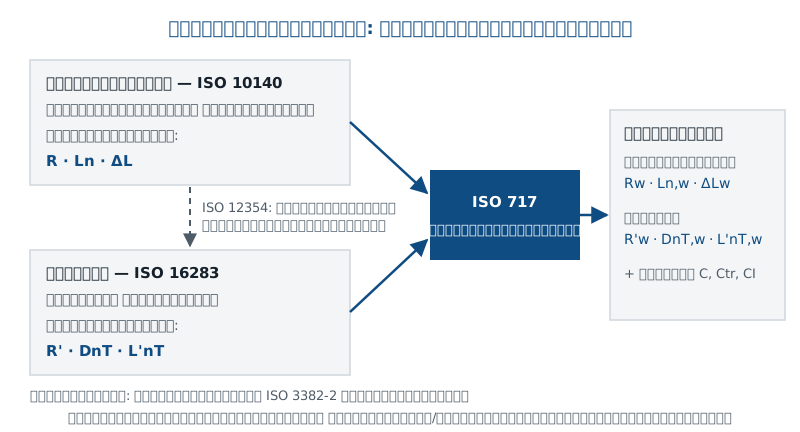
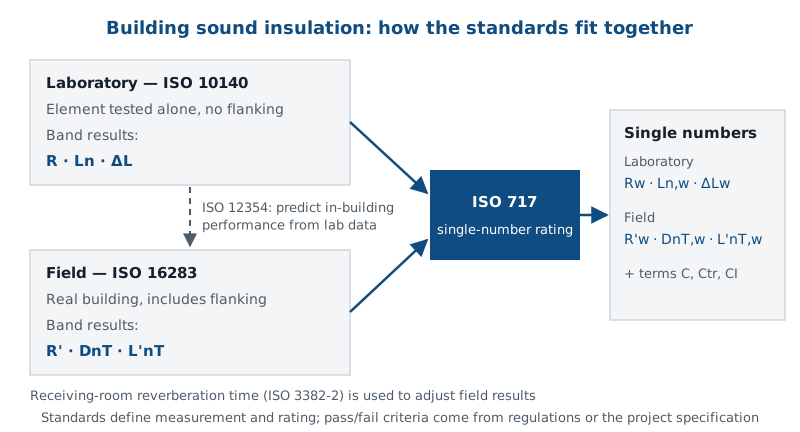
- ISO 16283 ให้ข้อมูลภาคสนามต่อย่านความถี่ที่ ISO 717 นำมาสรุปISO 16283 provides the field band data that ISO 717 rates.
- ISO 10140 ให้ข้อมูลห้องปฏิบัติการ (R, Ln, ΔL) ที่ ISO 717 นำมาสรุปเป็น Rw, Ln,w, ΔLwISO 10140 provides the laboratory data (R, Ln, ΔL) that ISO 717 rates as Rw, Ln,w, ΔLw.
- ASTM E413 และ E989 เป็นระบบคู่ขนานของสหรัฐอเมริกา (STC และ IIC สำหรับข้อมูลห้องปฏิบัติการ ASTC และค่าภาคสนามอื่นสำหรับข้อมูลที่วัดตาม ASTM E336) ใช้ช่วงความถี่ เส้นอ้างอิง และกติกาต่างกัน จึงใช้แทน Rw, R'w หรือ DnT,w ไม่ได้ASTM E413 and E989 are the parallel US rating systems (STC and IIC for laboratory data; ASTC and other field ratings for data measured to ASTM E336), with different frequency ranges, reference curves and rules, so they are not interchangeable with Rw, R'w or DnT,w.
- ISO 717-3 (ผนังภายนอก) ฉบับเก่าปี 1982 ไม่ได้ใช้แล้ว ปัจจุบันการสรุปผลผนังภายนอกอยู่ในส่วนที่ 1The old ISO 717-3 (facades, 1982) is no longer used; facade ratings are now covered by Part 1.
ความเข้าใจผิดที่พบบ่อยCommon misunderstandings
- Rw กับ DnT,w เป็นตัวเลขเดียวกัน — ไม่ใช่ Rw คือคุณสมบัติของชิ้นส่วนในห้องแล็บ DnT,w คือผลที่ได้ในห้องจริง ซึ่งขึ้นกับขนาดผนัง ห้อง และเสียงอ้อมRw and DnT,w are the same number. No: Rw is a laboratory property of the element, DnT,w is what a real room gets, which depends on partition size, room and flanking.
- ไม่ต้องสนใจ C และ Ctr — สองผนังที่ Rw เท่ากันอาจมี Ctr ต่างกันมาก ถ้าปัญหาคือเสียงจราจรหรือเบส ค่า Rw + Ctr อาจบอกได้ตรงกว่าC and Ctr can be ignored. Two walls with the same Rw can have very different Ctr; if the problem is traffic or bass, Rw + Ctr may tell you more.
- ตัวเลขยิ่งสูงยิ่งดีเสมอ — จริงสำหรับการกันเสียงผ่านอากาศ แต่สำหรับเสียงกระแทก (Ln,w, L'nT,w) ยิ่งต่ำยิ่งดีHigher is always better. True for airborne insulation, but for impact sound (Ln,w, L'nT,w) lower is better.
- ตัวเลขเดียวบอกทุกอย่าง — ตัวเลขเดียวซ่อนรายละเอียดความถี่ ควรดูกราฟต่อย่านประกอบเสมอเมื่อต้องหาสาเหตุของปัญหาOne number tells the whole story. It hides the frequency detail; always check the band curve when looking for the cause of a problem.
เกี่ยวข้องกับเครื่องมือวัดอย่างไรHow this relates to instruments
ข้อกำหนดทั่วไป: ISO 717 เป็นการคำนวณ จึงไม่มีข้อกำหนดเครื่องมือของตัวเอง ความถูกต้องขึ้นกับข้อมูลต่อย่านความถี่ที่ได้จากการวัดตาม ISO 16283 หรือ ISO 10140 และซอฟต์แวร์ที่ใช้กติกาการคำนวณและการปัดเศษถูกต้องตามฉบับของมาตรฐานGeneral requirements: ISO 717 is a calculation, so it has no instrument requirements of its own. Accuracy depends on the band data measured to ISO 16283 or ISO 10140, and on software that applies the calculation and rounding rules of the relevant edition correctly.
ข้อมูลจาก NTi Audio (ตามที่ NTi ระบุ): XL3 Sound Insulation Option ระบุ ISO 16283 และ ISO 717 และแสดงผลในเครื่อง ส่วนซอฟต์แวร์ Sound Insulation Reporter ใช้คำนวณตัวเลขเดียวและทำรายงาน โดยรองรับทั้งมาตรฐาน ISO และมาตรฐานระดับประเทศหลายฉบับFrom NTi Audio (as stated by NTi): the XL3 Sound Insulation Option lists ISO 16283 and ISO 717 and shows results on the instrument, while the Sound Insulation Reporter software calculates the single-number ratings and reports, supporting ISO and several national standards.
คำถามที่พบบ่อยFrequently asked questions
STC กับ Rw แปลงค่ากันได้ไหมCan STC be converted to Rw?
ไม่มีสูตรแปลงที่แม่นยำ เพราะช่วงความถี่ เส้นอ้างอิง และกติกาต่างกัน สองค่ามักใกล้กันแต่ไม่เสมอไป ถ้าข้อกำหนดเป็น Rw ควรใช้ผลที่คำนวณตาม ISO 717 จากข้อมูลต่อย่านความถี่There is no exact conversion, because the frequency ranges, reference curves and rules differ. The two are often close but not always; if the requirement is in Rw, use a result calculated to ISO 717 from the band data.
ทำไมตัวเลขเดียวเป็นจำนวนเต็มWhy is the single number a whole number?
เส้นอ้างอิงถูกเลื่อนทีละ 1 dB ตัวเลขเดียวจึงเป็นจำนวนเต็ม รายละเอียดจริงของการวัดอยู่ในกราฟต่อย่านความถี่ ไม่ใช่ในตัวเลขเดียวThe reference curve is shifted in 1 dB steps, so the single number is a whole number. The real detail of the measurement is in the band curve, not in the single number.
ค่า C และ Ctr ที่ติดลบหมายความว่าอะไรWhat does a negative C or Ctr mean?
ค่าปรับเหล่านี้มักติดลบ เมื่อนำไปบวกกับตัวเลขหลักจะได้ค่าที่ต่ำลง ซึ่งสะท้อนประสิทธิภาพกับเสียงลักษณะนั้น ค่าที่ติดลบมากแปลว่าผนังหรือพื้นอ่อนแอในย่านที่เสียงลักษณะนั้นมีพลังงานมากThese terms are usually negative; adding them to the main number gives a lower value that reflects performance against that kind of sound. A strongly negative value means the element is weak in the bands where that sound carries most energy.