Time Weighting คืออะไรWhat time weighting is
ลองนึกถึงเสียงคนพูดหรือเสียงรถวิ่งผ่าน ระดับเสียงไม่ได้คงที่ แต่ขึ้นลงหลายครั้งในหนึ่งวินาที ถ้าเครื่องวัดแสดงทุกการเปลี่ยนแปลงทันที ตัวเลขบนจอจะกระโดดไปมาจนอ่านไม่ทันThink of someone talking or a car passing. The level is not steady; it rises and falls several times a second. If the meter showed every change instantly, the number on the display would jump around too fast to read.
เครื่องวัดจึงไม่ให้ตัวเลขเปลี่ยนทันที แต่ให้ค่อย ๆ ไล่ตามเสียง คล้ายเข็มวัดที่ค่อย ๆ เลื่อนไปหาตำแหน่งใหม่ Time Weighting (การถ่วงน้ำหนักเวลา) คือการกำหนดว่าจะให้ไล่ตามเร็วหรือช้าแค่ไหน ความเร็วนี้บอกด้วยตัวเลขชื่อ ค่าคงที่เวลา (τ อ่านว่า “เทา”) ค่ายิ่งน้อย ตัวเลขยิ่งไล่ตามเสียงได้ไวSo the meter does not let the number change instantly; it lets it follow the sound gradually, like a needle moving towards its new position. Time weighting sets how quickly it follows. That speed is given by the time constant (τ, “tau”): the smaller it is, the faster the reading follows the sound.
ข้อควรเข้าใจคือ ค่า τ ไม่ใช่ “ช่วงเวลาที่เอาค่ามาเฉลี่ย” เช่น τ = 1 วินาที ไม่ได้แปลว่าเครื่องเอาเสียงหนึ่งวินาทีมาหาค่าเฉลี่ย แต่เป็นตัวเลขที่บอกความไวในการตอบสนองเท่านั้น การถ่วงน้ำหนักเวลาแบบ Fast และ Slow กำหนดไว้ในมาตรฐานเครื่องวัดระดับเสียงฉบับปัจจุบัน IEC 61672-1Note that τ is not “a period over which values are averaged”. τ = 1 s does not mean the meter averages one second of sound; it only describes how quickly the reading responds. Fast and Slow are defined in the current sound level meter standard, IEC 61672-1.
อย่าสับสนกับ A, C, Z ตัวอักษร A, C, Z คือ การถ่วงน้ำหนักความถี่ บอกว่าเสียงความถี่ต่ำ กลาง สูง ถูกนับมากน้อยแค่ไหน ส่วน F, S, I คือ การถ่วงน้ำหนักเวลา บอกว่าตัวเลขไล่ตามเสียงเร็วแค่ไหน สองเรื่องนี้เลือกแยกกัน และมักอยู่ในชื่อค่าเดียวกัน เช่น LAFmax อ่านได้ว่า L = ระดับเสียง, A = ถ่วงน้ำหนักความถี่ A, F = Fast, max = ค่าสูงสุดในช่วงที่วัดDo not confuse this with A, C, Z. A, C and Z are frequency weightings: how much low, mid and high frequencies count. F, S and I are time weightings: how quickly the number follows the sound. They are chosen separately and often appear in one name, e.g. LAFmax: L = level, A = A frequency weighting, F = Fast, max = the highest value in the measurement period.
Fast (F)
Fast มีค่าคงที่เวลา τ = 125 มิลลิวินาที ตัวเลขจึงไล่ตามเสียงได้ไวกว่า Slow เมื่อเสียงดังขึ้นหรือเบาลง ตัวเลขบนจอจะขยับตามเร็วFast has a time constant τ = 125 milliseconds, so the reading follows the sound faster than Slow. When the sound gets louder or quieter, the number on the display moves quickly.
ในทางปฏิบัติ NTi Audio ยกตัวอย่างว่า ถ้าเสียงเปลี่ยนจากระดับหนึ่งไปเป็นอีกระดับหนึ่งทันทีแล้วคงที่ ค่าแบบ Fast จะใช้เวลาประมาณ 0.6 วินาที จึงขึ้นไปใกล้ระดับใหม่ และเมื่อเสียงหยุด ตัวเลขจะลดลงเร็วประมาณ 34.7 dB ต่อวินาทีIn practice, NTi Audio gives this example: if the sound jumps to a new constant level, the Fast reading takes about 0.6 seconds to get close to the new level, and when the sound stops, the reading falls at about 34.7 dB per second.
ค่าที่ใช้ Fast จะมีตัว F ในชื่อ เช่น LAF คือระดับเสียงแบบ A + Fast ที่อ่านได้ในแต่ละขณะ และ LAFmax คือค่า LAF ที่สูงที่สุดในช่วงที่วัดQuantities that use Fast have an F in the name: LAF is the A-weighted Fast level at each moment, and LAFmax is the highest LAF in the measurement period.
Slow (S)
Slow มีค่าคงที่เวลา τ = 1 วินาที ตัวเลขจึงไล่ตามเสียงช้ากว่า Fast ข้อดีคือค่าบนจอนิ่งกว่า อ่านด้วยตาได้ง่ายเมื่อเสียงแกว่งขึ้นลง ข้อที่ต้องรู้คือ ถ้าเสียงเกิดขึ้นสั้นมาก Slow อาจไล่ขึ้นไม่ทันระดับจริงก่อนที่เสียงจะหยุดSlow has a time constant τ = 1 second, so the reading follows the sound more slowly than Fast. The benefit is a steadier display that is easier to read when the sound fluctuates. The thing to know is that for a very short sound, Slow may not climb to the true level before the sound ends.
จากตัวอย่างเดียวกันของ NTi Audio ถ้าเสียงเปลี่ยนเป็นระดับใหม่ทันที ค่าแบบ Slow จะใช้เวลาประมาณ 5 วินาที จึงขึ้นไปใกล้ระดับใหม่ และเมื่อเสียงหยุด ตัวเลขจะลดลงช้า ประมาณ 4.3 dB ต่อวินาที ค่าที่ใช้ Slow มีตัว S ในชื่อ เช่น LAS และ LASmaxIn the same NTi Audio example, after a sudden change to a new level the Slow reading takes about 5 seconds to get close to it, and when the sound stops it falls slowly, at about 4.3 dB per second. Quantities that use Slow have an S in the name, such as LAS and LASmax.
ระวังอย่าจำสลับกัน: 0.6 วินาที (Fast) และ 5 วินาที (Slow) คือเวลาที่ตัวเลขใช้ไล่ไปใกล้ระดับใหม่ ส่วนค่าคงที่เวลาจริงคือ 125 มิลลิวินาที และ 1 วินาที ตามลำดับDo not mix them up: 0.6 s (Fast) and 5 s (Slow) are the times the reading takes to get close to a new level; the actual time constants are 125 ms and 1 s.
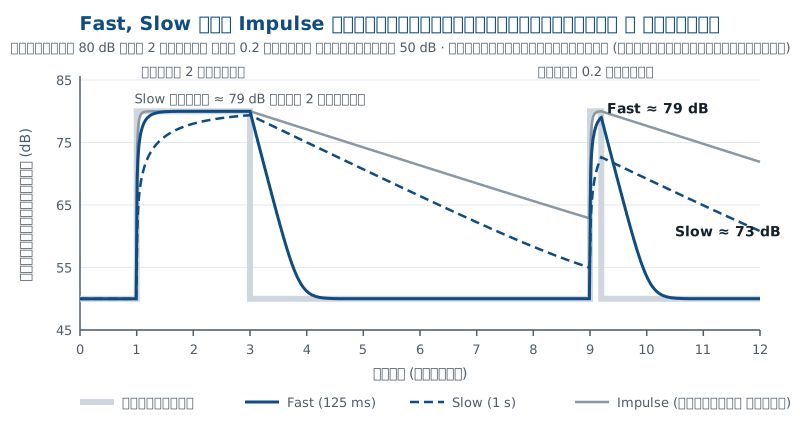
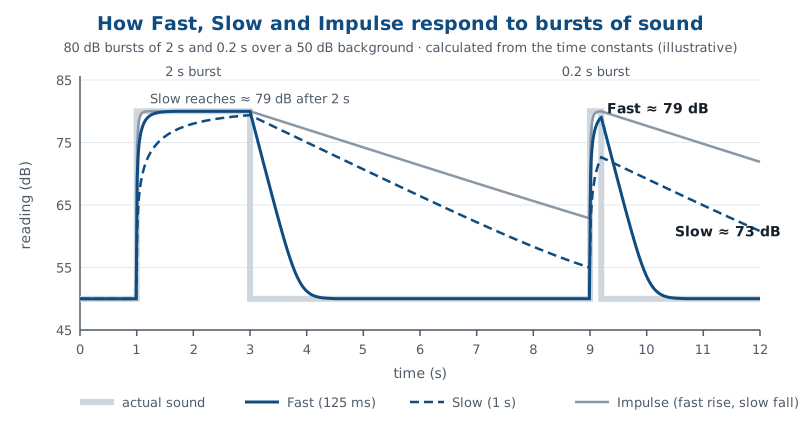
อ่านกราฟนี้อย่างไรHow to read this graph
แกนนอนคือเวลาเป็นวินาที แกนตั้งคือระดับเสียงที่เครื่องแสดงบนจอ (dB) แถบสีเทาอ่อน คือเสียงจริง: ปกติห้องเงียบอยู่ที่ 50 dB แล้วมีเสียงดัง 80 dB เกิดขึ้นสองครั้ง เส้นอีกสามเส้นคือตัวเลขที่เครื่องจะแสดงถ้าตั้งเป็น Fast (เส้นทึบสีน้ำเงิน), Slow (เส้นประ) และ Impulse (เส้นสีเทา) เส้นยิ่งทับแถบสีเทาได้สนิท แปลว่าตัวเลขบนจอตรงกับเสียงจริงมากThe horizontal axis is time in seconds; the vertical axis is the level shown on the display (dB). The light grey bars are the actual sound: the room is at 50 dB, and an 80 dB sound happens twice. The other three lines are what the meter would show when set to Fast (solid blue), Slow (dashed) and Impulse (grey line). The closer a line sits on the grey bars, the closer the display is to the real sound.
- วินาทีที่ 1 ถึง 3: เสียงดังนาน 2 วินาที Fast และ Impulse พุ่งขึ้นไปเกือบ 80 dB ในแทบทันที ส่วน Slow ค่อย ๆ ไต่ขึ้น และเพิ่งขึ้นไปถึงราว 79 dB ตอนที่เสียงกำลังจะหยุด แปลว่าถ้าเสียงดังนานพอ ทั้งสามแบบให้ค่าสูงสุดใกล้กันSeconds 1 to 3: a sound lasting 2 s. Fast and Impulse jump to almost 80 dB almost at once; Slow climbs gradually and only reaches about 79 dB as the sound is about to stop. So when a sound lasts long enough, all three give a similar maximum.
- วินาทีที่ 3 ถึง 9: เสียงหยุดแล้ว ห้องกลับมาเงียบ Fast ลดลงกลับไปที่ 50 dB ภายในราวหนึ่งวินาที (ลดประมาณ 34.7 dB ต่อวินาที) Slow ค่อย ๆ ลดลงช้ากว่ามาก (ประมาณ 4.3 dB ต่อวินาที) ถึงวินาทีที่ 9 ยังอยู่ราว 55 dB ส่วน Impulse ลดลงช้าที่สุด (ประมาณ 2.9 dB ต่อวินาที) ถึงวินาทีที่ 9 ยังค้างอยู่ราว 63 dB ทั้งที่ห้องเงียบไปนานแล้วSeconds 3 to 9: the sound has stopped and the room is quiet again. Fast falls back to 50 dB within about one second (about 34.7 dB per second). Slow falls much more slowly (about 4.3 dB per second) and is still around 55 dB at second 9. Impulse falls slowest (about 2.9 dB per second) and is still around 63 dB at second 9, although the room has long been quiet.
- วินาทีที่ 9: เสียงดังสั้น ๆ แค่ 0.2 วินาที (เหมือนเสียงของตก หรือเสียงปิดประตู) Fast ขึ้นไปได้ราว 79 dB ใกล้ระดับจริง Impulse ขึ้นไปถึงราว 80 dB แล้วค้างลดลงช้า ๆ ส่วน Slow ยังไต่ขึ้นไม่ทัน เสียงก็หยุดเสียก่อน จึงขึ้นได้แค่ราว 73 dB ต่ำกว่าเสียงจริงประมาณ 7 dBSecond 9: a short sound of only 0.2 s (like something dropped or a door closing). Fast rises to about 79 dB, close to the real level. Impulse reaches about 80 dB and then holds, falling slowly. Slow has not caught up when the sound stops, so it only reaches about 73 dB, around 7 dB below the real sound.
กราฟนี้บอกอะไร: สำหรับเสียงที่ดังนาน ค่าสูงสุดแบบ Fast และ Slow ใกล้กัน แต่สำหรับเสียงที่เกิดสั้น ๆ LASmax อาจต่ำกว่า LAFmax ได้หลาย dB เพราะ Slow ไล่ตามไม่ทัน ทั้งสองค่าไม่ได้ผิด แค่วัดด้วยความเร็วต่างกัน นี่คือเหตุผลที่ต้องวัดด้วยแบบเดียวกับที่ข้อกำหนดระบุ และต้องเขียนในรายงานเสมอว่าใช้แบบไหน ส่วน Impulse ที่ค้างค่าไว้นาน ทำให้คนอ่านเห็นเสียงสั้น ๆ ได้ทัน แต่ตัวเลขที่ค้างอยู่ไม่ได้แปลว่าเสียงยังดังอยู่What this graph shows: for a long sound, the Fast and Slow maxima are close, but for a short sound LASmax can be several dB lower than LAFmax because Slow cannot catch up. Neither value is wrong; they simply follow the sound at different speeds. That is why you must measure the way the requirement specifies and always state in the report which one you used. Impulse holds its value for a long time so a short sound can be read, but a held number does not mean the sound is still there.
Impulse (I): ไม่อยู่ใน IEC 61672-1 ฉบับปัจจุบันImpulse (I): Not Included in the Current IEC 61672-1
มาตรฐานเครื่องวัดระดับเสียง IEC 61672-1:2013 กำหนดการถ่วงน้ำหนักเวลาไว้เฉพาะ Fast (F) และ Slow (S) ข้อกำหนดของ Impulse (I) ซึ่งเคยอยู่ในภาคผนวกแบบให้ข้อมูล (informative annex) ของ IEC 61672-1:2002 ถูกนำออกไปในฉบับปี 2013 Impulse มีที่มาจากมาตรฐานเดิม IEC 651 อย่างไรก็ตาม Impulse อาจยังปรากฏในเครื่องวัดรุ่นเก่า เอกสารเก่า หรือข้อกำหนดบางฉบับ ถ้าข้อกำหนดที่ใช้อ้างอิงระบุให้ใช้ I ไว้ชัดเจน ให้ทำตามข้อกำหนดนั้นThe sound level meter standard IEC 61672-1:2013 specifies only the Fast (F) and Slow (S) time weightings. The specifications for Impulse (I), which appeared in an informative annex of IEC 61672-1:2002, were removed from the 2013 edition. Impulse originates from the earlier IEC 651. It may still appear in older instruments, older documents or some requirements: if an applicable requirement explicitly specifies I, follow that requirement.
ที่ยังอธิบายไว้เพราะอาจเห็นปุ่ม I บนเครื่อง หรือเจอค่า LAI ในเอกสารเก่า Impulse ทำงาน ขาขึ้นกับขาลงไม่เท่ากัน: เมื่อมีเสียงดังขึ้น ตัวเลขพุ่งขึ้นเร็วมาก (ค่าคงที่เวลาขาขึ้น τ = 35 มิลลิวินาที) แต่เมื่อเสียงหยุด ตัวเลขค่อย ๆ ลดลงช้า ประมาณ 2.9 dB ต่อวินาที เดิมตั้งใจให้คนอ่านทันเสียงอิมพัลส์ที่เกิดสั้น ๆ ก่อนที่ตัวเลขจะหายไปIt is explained here because you may still see an I setting on a meter or an LAI value in an old document. Impulse rises and falls at different speeds: when the sound gets loud, the number shoots up very quickly (rise time constant τ = 35 ms), but when the sound stops, it drops slowly, at about 2.9 dB per second. The idea was to let the operator read a short impulsive sound before the number disappears.
สองเรื่องที่มักเข้าใจผิด: Impulse ไม่ใช่ค่า Peak (ดูหัวข้อ “Impulse กับ Peak ต่างกันอย่างไร”) และไม่ได้แปลว่าเสียงกระแทกทุกชนิดต้องวัดด้วย Impulse ให้ใช้เฉพาะเมื่อข้อกำหนดที่ใช้อ้างอิงระบุไว้Two common misunderstandings: Impulse is not the peak level (see “Impulse versus peak”), and it does not mean every impact sound must be measured with Impulse. Use it only when the requirement you work to specifies it.
วิธีเลือก Time Weighting ในงานจริงChoosing a time weighting in practice
เสียงเดียวกัน ถ้าวัดด้วย Fast กับ Slow อาจได้ค่าสูงสุดต่างกันหลาย dB โดยเฉพาะเสียงที่เกิดสั้น ๆ ดังนั้นผลที่วัดได้จะนำไปเทียบกับเกณฑ์ได้ถูกต้องก็ต่อเมื่อวัดด้วยวิธีเดียวกับที่เกณฑ์นั้นกำหนด นี่คือเหตุผลของกฎข้อแรกThe same sound measured with Fast and with Slow can give maximum values several dB apart, especially for short sounds. A result can only be compared correctly with a criterion if it was measured the way that criterion specifies. That is the reason for the first rule.
เลือกค่าที่ต้องวัดและ Time Weighting ตามมาตรฐาน กฎหมาย หรือวิธีการตรวจวัดที่ใช้อ้างอิงก่อน ไม่ควรเลือก Fast หรือ Slow จากลักษณะเสียงเพียงอย่างเดียวChoose the quantity to measure and its time weighting from the standard, regulation or measurement procedure you work to first. Do not choose Fast or Slow from the character of the sound alone.
- ถ้าข้อกำหนดให้รายงาน LAFmax ให้ตั้งเครื่องเป็นถ่วงน้ำหนัก A + Fast และอ่านค่าสูงสุดIf the requirement asks for LAFmax, set A weighting + Fast and read the maximum.
- ถ้าให้รายงาน LASmax ให้ตั้งเป็นถ่วงน้ำหนัก A + Slow และอ่านค่าสูงสุดIf it asks for LASmax, set A weighting + Slow and read the maximum.
- ถ้ากฎหมายระบุให้ใช้ Slow ก็ใช้ Slow ตัวอย่างเช่น ข้อกำหนดเสียงในที่ทำงานของ OSHA สหรัฐอเมริกา (29 CFR 1910.95(a)) ระบุการวัดแบบ “slow response” ซึ่งเป็นกฎของสหรัฐฯ ไม่ใช่กฎที่ใช้กับทุกงานIf a regulation says Slow, use Slow. For example, the US OSHA occupational noise rule (29 CFR 1910.95(a)) specifies “slow response”; that is a US rule, not one that applies to all work.
- ถ้าไม่มีข้อกำหนดใด และแค่ต้องการดูระดับเสียงบนจอขณะวัด Fast จะเห็นการเปลี่ยนแปลงได้ไวกว่า ส่วน Slow ตัวเลขนิ่งกว่าและอ่านง่ายกว่า ควรจดไว้เสมอว่าใช้แบบไหนIf nothing is specified and you only want to watch the level on the display, Fast shows changes more quickly, while Slow gives a steadier number that is easier to read. Always note which one you used.
เครื่องวัดสมัยใหม่อย่าง NTi Audio XL2 และ XL3 วัดค่าแบบ Fast และ Slow ไปพร้อมกันได้ แต่ค่าที่ใส่ในรายงานต้องเป็นค่าที่ข้อกำหนดระบุModern instruments such as the NTi Audio XL2 and XL3 can measure Fast and Slow at the same time, but the value in the report must be the one the requirement names.
LAeq ไม่ใช่ Fast หรือ SlowLAeq is neither Fast nor Slow
LAeq,T (ระดับเสียงเทียบเท่าต่อเนื่องแบบถ่วงน้ำหนัก A) ตอบคำถามต่างจากค่าข้างบน มันไม่ได้บอกว่า “ตอนนี้ดังเท่าไร” แต่บอกว่า “ตลอดช่วงเวลา T ที่วัด ได้รับพลังงานเสียงรวมเท่าไร” โดยเอาพลังงานเสียงทั้งหมดในช่วงนั้นมารวมกัน แล้วแสดงเป็นระดับเสียงคงที่ระดับเดียวที่มีพลังงานเท่ากันLAeq,T (the A-weighted equivalent continuous level) answers a different question from the values above. It does not tell you “how loud is it now” but “how much sound energy arrived over the whole period T”: all the sound energy in that period is added up and expressed as the single constant level with the same energy.
เพราะเป็นการรวมพลังงานทั้งหมด ไม่ใช่การอ่านตัวเลขที่ไล่ตามเสียง LAeq จึงไม่ได้ใช้การถ่วงน้ำหนักเวลาแบบ Fast หรือ Slow (NTi Audio ระบุว่าไม่มีการใช้การถ่วงน้ำหนักเวลาในการวัดค่าเฉลี่ย LAeq) ดังนั้นจึงไม่ควรเขียนเป็น “LAFeq” หรือ “LASeq” เหมือนว่า Fast หรือ Slow เป็นตัวกำหนด LAeqBecause it adds up all the energy rather than reading a number that follows the sound, LAeq uses no Fast or Slow time weighting (NTi Audio states that no time weighting is applied when measuring the mean value LAeq). So it should not be written as “LAFeq” or “LASeq”, as if Fast or Slow determined LAeq.
สรุปคือ LAeq,T ≠ LAFmax ≠ LASmax ≠ LCpeak ค่าแรกคือพลังงานเสียงรวมตลอดช่วงเวลา สองค่ากลางคือค่าสูงสุดของตัวเลขที่ไล่ตามเสียงแบบ Fast และแบบ Slow ส่วนค่าสุดท้ายคือความดันเสียงสูงสุดจริงในชั่วขณะหนึ่ง (อธิบายในหัวข้อถัดไป)In short, LAeq,T ≠ LAFmax ≠ LASmax ≠ LCpeak. The first is the total sound energy over the period, the middle two are the highest values of the Fast and the Slow reading, and the last is the true highest pressure at a single instant (explained in the next section).
Impulse กับ Peak ต่างกันอย่างไรImpulse versus peak
สองค่านี้มักถูกเข้าใจว่าเป็นเรื่องเดียวกันเพราะใช้กับเสียงกระแทกเหมือนกัน แต่จริง ๆ วัดคนละอย่างThese two are often thought to be the same because both are used for impact sounds, but they measure different things.
- LAI / LAImax เป็นตัวเลขที่ไล่ตามเสียงแบบ Impulse (ขึ้นเร็ว ลงช้า) คือยังเป็นค่าที่ผ่านการถ่วงน้ำหนักเวลาLAI / LAImax is the Impulse reading (fast rise, slow fall): it is still a time-weighted value.
- LCpeak คือความดันเสียงที่สูงที่สุดในชั่วขณะหนึ่ง แบบถ่วงน้ำหนักความถี่ C โดย ไม่มีการถ่วงน้ำหนักเวลาเลย จึงจับยอดของเสียงกระแทกได้ตรง ๆLCpeak is the highest sound pressure at a single instant, C-weighted, with no time weighting at all, so it captures the top of an impact directly.
สองค่านี้จึงใช้แทนกันไม่ได้ ถ้ามาตรฐานหรือกฎหมายระบุ LCpeak เช่น ข้อกำหนดเรื่องเสียงในที่ทำงานตาม EU Directive 2003/10/EC ให้วัด LCpeak โดยตรง ไม่ใช้ค่า Impulse แทนSo one cannot replace the other. If a standard or regulation specifies LCpeak, for example the EU Directive 2003/10/EC on noise at work, measure LCpeak directly; do not use an Impulse value instead.
ตารางสรุปSummary table
| ค่าQuantity | Frequency weighting | Time weighting | หมายถึงอะไรWhat it represents | ใช้เมื่อไรTypical reason for use |
|---|---|---|---|---|
| LAFLAF | Frequency weightingA | Time weightingFast | หมายถึงอะไรWhat it representsระดับเสียงที่อ่านได้ในแต่ละขณะ ไล่ตามเสียงไวThe level at each moment, following quickly | ใช้เมื่อไรTypical reason for useดูระดับเสียงขณะวัด หรือเมื่อวิธีตรวจวัดใช้ FastWatching the level, or when the procedure uses Fast |
| LASLAS | Frequency weightingA | Time weightingSlow | หมายถึงอะไรWhat it representsระดับเสียงที่อ่านได้ในแต่ละขณะ นิ่งกว่าThe level at each moment, steadier | ใช้เมื่อไรTypical reason for useอ่านเสียงที่แกว่งให้ง่ายขึ้น หรือเมื่อข้อกำหนดระบุ SlowEasier reading of a fluctuating level, or when Slow is specified |
| LAFmaxLAFmax | Frequency weightingA | Time weightingFast | หมายถึงอะไรWhat it representsค่า LAF สูงสุดในช่วงที่วัดThe highest LAF in the period | ใช้เมื่อไรTypical reason for useเมื่อข้อกำหนดให้รายงาน LAFmaxWhen LAFmax is required |
| LASmaxLASmax | Frequency weightingA | Time weightingSlow | หมายถึงอะไรWhat it representsค่า LAS สูงสุดในช่วงที่วัดThe highest LAS in the period | ใช้เมื่อไรTypical reason for useเมื่อข้อกำหนดให้รายงาน LASmaxWhen LASmax is required |
| LAeq,TLAeq,T | Frequency weightingA | Time weightingไม่มี(รวมพลังงาน)None(energy total) | หมายถึงอะไรWhat it representsพลังงานเสียงรวมตลอดช่วงเวลา T แสดงเป็นระดับเดียวTotal sound energy over T as one level | ใช้เมื่อไรTypical reason for useเมื่อต้องประเมินเสียงตลอดช่วงเวลาตามมาตรฐานหรือกฎหมายWhen sound over a period is assessed under a standard or regulation |
| LCpeakLCpeak | Frequency weightingC | Time weightingไม่มี(ค่ายอดจริง)None(true peak) | หมายถึงอะไรWhat it representsความดันเสียงสูงสุดในชั่วขณะหนึ่งThe highest pressure at a single instant | ใช้เมื่อไรTypical reason for useเมื่อข้อกำหนดระบุค่า Peak เช่น เสียงในที่ทำงานWhen a peak is specified, e.g. noise at work |