เสียงเข้ามาทางไหน?Where is the sound getting in?
ห้องนอนริมถนนที่ได้ยินเสียงรถชัดแม้ปิดหน้าต่าง ห้องประชุมที่ได้ยินเสียงพูดจากทางเดิน หรือห้องในโรงแรมที่ได้ยินเสียงห้องข้าง ๆ ทั้งหมดนี้อาจไม่ได้แปลว่าผนังหรือกระจกบางเกินไป บ่อยครั้งเสียงลอดผ่าน จุดอ่อนเล็ก ๆ เช่น ช่องใต้ประตู ยางขอบที่ไม่แนบ รอยต่อระหว่างวงกบกับผนัง ช่องระบายอากาศ หรือท่อที่ทะลุผนังA bedroom on a busy road that hears traffic clearly with the window shut, a meeting room that hears speech from the corridor, a hotel room that hears the room next door: none of these necessarily means the wall or glass is too thin. Often sound passes through small weak points, such as a gap under a door, a seal that does not close, the joint between a frame and the wall, a ventilation opening or a pipe through the wall.
ถ้าไม่รู้ตำแหน่ง ทางเลือกที่เหลือคือเปลี่ยนทั้งบานหรือทำผนังใหม่ ซึ่งแพงและอาจไม่ได้แก้ที่ต้นเหตุ การหาจุดรั่วก่อนช่วยให้แก้ได้ตรงจุดWithout knowing the location, the remaining options are to replace the whole window or rebuild the wall, which is expensive and may miss the cause. Finding the leak first lets the fix go to the right place.
กล้องเสียงช่วยอย่างไรHow an acoustic camera helps
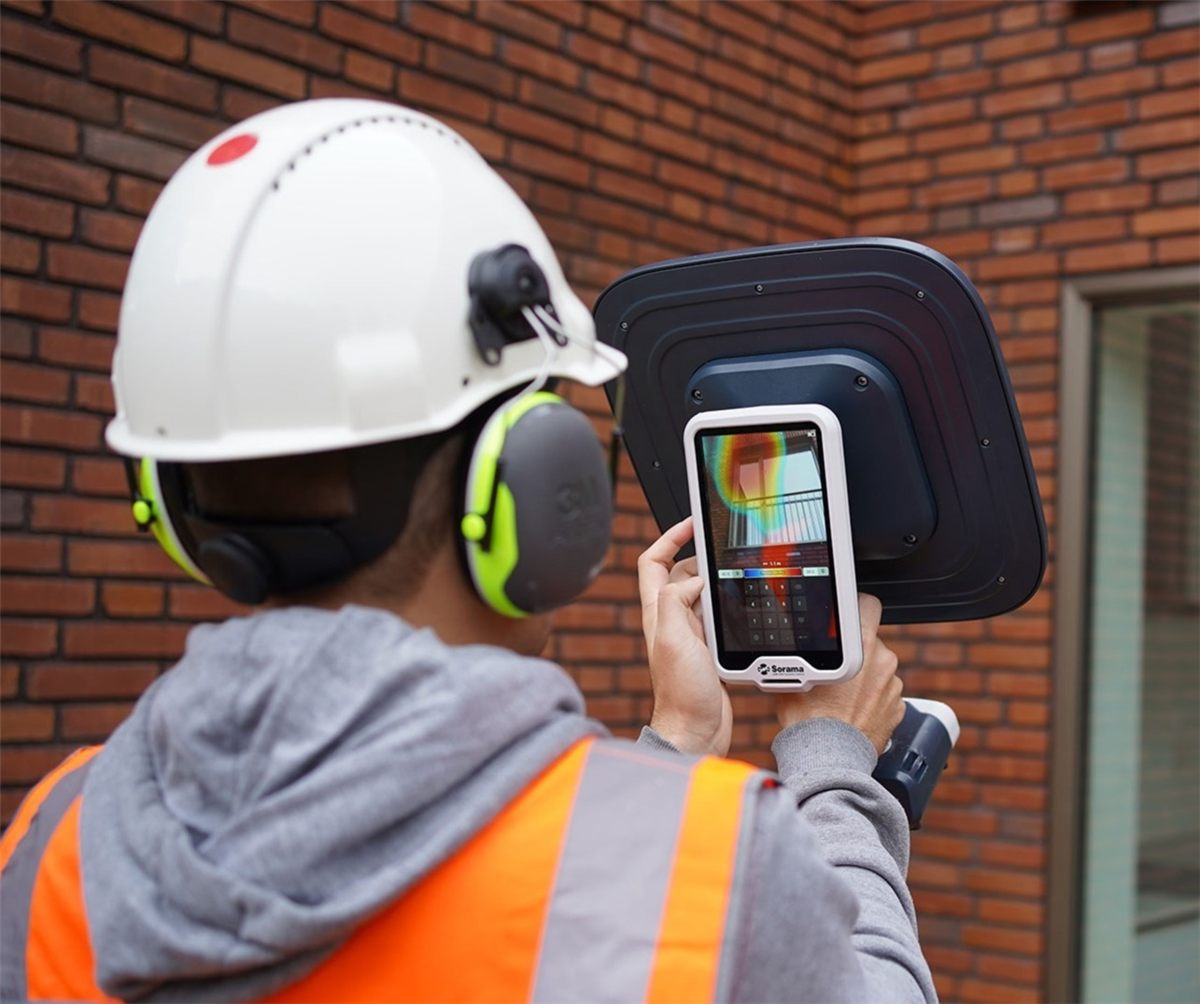
กล้องเสียงมีไมโครโฟนหลายตัวบนแผงเดียวกับกล้องภาพ ซอฟต์แวร์คำนวณว่าเสียงมาจากทิศใดแล้วระบายสีบนภาพ Sorama อธิบายวิธีตรวจผนังภายนอกไว้ว่า วางแหล่งเสียงที่ควบคุมได้ไว้ในอาคาร แล้วใช้กล้องเสียงดูผนังจากด้านนอก เพื่อดูว่าเสียงและอากาศเล็ดลอดออกที่ใด โดยไม่ต้องย้ายผู้อยู่อาศัยหรือเคลื่อนย้ายเฟอร์นิเจอร์ และใช้เสียงระดับไม่สูง หลักการเดียวกันใช้กับประตูและผนังระหว่างห้องได้ โดยเปิดเสียงในห้องหนึ่งแล้วดูจากอีกห้องAn acoustic camera carries many microphones on the same panel as a visual camera; software works out where the sound comes from and colours the image. Sorama describes façade inspection as placing a controlled sound source inside the building and viewing the façade from outside with the acoustic camera, to see where sound and air escape, without moving occupants or furniture and at low sound levels. The same idea works for doors and walls between rooms: play the sound in one room and look from the other.
- เห็นทันที: แผนที่ปรากฏบนจอขณะเล็งกล้องไปตามผนัง จึงสำรวจหลายบานหลายห้องได้เร็วImmediate: the map appears on screen while you sweep the wall, so many windows and rooms can be surveyed quickly.
- เห็นเป็นภาพ: เจ้าของอาคาร ผู้รับเหมา และผู้ออกแบบเห็นจุดเดียวกัน คุยกันง่ายขึ้นVisual: owners, contractors and designers see the same spots, which makes discussions easier.
- ไม่ต้องสัมผัสผิว: วัดจากระยะห่าง เหมาะกับหน้าต่างชั้นสูงหรือบริเวณที่เข้าถึงยากNo contact: it measures from a distance, useful for high windows or hard-to-reach areas.
กล้องเสียงเห็น เสียง ที่ลอดออกมา ถ้าช่องนั้นให้อากาศผ่านด้วย ก็มักให้เสียงผ่านได้ แต่การวัดปริมาณอากาศรั่วเป็นงานอีกประเภทหนึ่งที่ใช้วิธีของตัวเองAn acoustic camera sees the sound that escapes. A gap that lets air through usually lets sound through too, but quantifying air leakage is a different kind of test with its own methods.
สิ่งที่ภาพบอก และสิ่งที่ภาพไม่ได้บอกWhat the image tells you, and what it does not
| คำถามQuestion | ภาพจากกล้องเสียงAcoustic camera image | การทดสอบการกันเสียงตามมาตรฐานStandardised sound insulation test |
|---|---|---|
| เสียงรั่วตรงไหนWhere does it leak? | ภาพจากกล้องเสียงAcoustic camera imageใช่ เป็นหน้าที่หลักYes: its main job | การทดสอบการกันเสียงตามมาตรฐานStandardised sound insulation testไม่บอกตำแหน่งDoes not give locations |
| จุดไหนควรแก้ก่อนWhich point first? | ภาพจากกล้องเสียงAcoustic camera imageช่วยจัดลำดับจากความแรงเชิงเปรียบเทียบHelps rank by relative strength | การทดสอบการกันเสียงตามมาตรฐานStandardised sound insulation testไม่บอกโดยตรงNot directly |
| ผนังหรือหน้าต่างกันเสียงได้กี่ dBHow many dB does it insulate? | ภาพจากกล้องเสียงAcoustic camera imageไม่ได้ ค่าบนภาพเป็นค่าสัมพัทธ์No: the image values are relative | การทดสอบการกันเสียงตามมาตรฐานStandardised sound insulation testใช่ ตามวิธีที่มาตรฐานกำหนดYes, by the specified method |
| ผ่านข้อกำหนดของโครงการหรือไม่Does it meet the project requirement? | ภาพจากกล้องเสียงAcoustic camera imageไม่ได้No | การทดสอบการกันเสียงตามมาตรฐานStandardised sound insulation testใช่ เมื่อทดสอบครบตามวิธีYes, when the full method is followed |
ถ้าสัญญาหรือข้อกำหนดโครงการระบุค่าการกันเสียง ต้องทดสอบตามคู่มือการทดสอบการกันเสียงผ่านอากาศในสนาม ภาพจากกล้องเสียงใช้ก่อนหรือหลังการทดสอบนั้น เพื่อหาว่าต้องแก้ที่จุดใดIf a contract or project specification states an insulation value, it must be tested as described in the field airborne sound insulation guide. The acoustic camera image is used before or after that test to find what needs fixing.
เตรียมงานตรวจPreparing the survey
- แหล่งเสียงทดสอบ: ลำโพงที่เปิดเสียงรบกวนแบบกว้างย่านหรือเสียงโทนอย่างสม่ำเสมอในห้องต้นทาง คู่มือของ Sorama ระบุว่า CAM iV64 ส่งสัญญาณทดสอบแบบโทนหรือเสียงรบกวนที่มีในเครื่องไปยังลำโพงบลูทูธได้ (ฟังก์ชันบลูทูธมีในบางตลาด) ใช้ได้เฉพาะสัญญาณในเครื่องTest source: a loudspeaker playing steady broadband noise or a tone in the source room. Sorama's manual states that the CAM iV64 can send its built-in tonal or noise test signals to a Bluetooth speaker (Bluetooth is available in select markets); only built-in signals are supported.
- ปิดทุกบานตามสภาพใช้งานจริง: ปิดหน้าต่างและประตูเหมือนเวลาที่มีปัญหา และจดไว้ว่าปิดล็อกแบบใดClose everything as in real use: shut windows and doors as they are when the problem occurs, and note how they are latched.
- เสียงพื้นหลังต่ำพอ: เสียงทดสอบต้องดังกว่าเสียงรอบข้างฝั่งที่ตรวจ ถ้าถนนหรือเครื่องจักรดังมาก ให้เลือกช่วงเวลาที่เงียบกว่าLow enough background: the test sound must be clearly above the background on the inspected side; choose a quieter time if traffic or plant is loud.
- ตำแหน่งกล้อง: ยืนหรือตั้งขาตั้งกล้องให้เห็นทั้งบานในภาพ คู่มือระบุระยะทำงาน 0.3 m ถึง 120 m ใกล้ขึ้นเห็นรายละเอียดของขอบบาน ไกลขึ้นเห็นผนังทั้งด้านCamera position: stand, or use a tripod, so the whole element is in view. The manual gives 0.3 m to 120 m; closer shows sash-edge detail, further shows the whole façade.
- บันทึกสภาพ: วันเวลา ตำแหน่งลำโพง ตำแหน่งกล้อง และสภาพอากาศถ้าตรวจภายนอก เพื่อให้ตรวจซ้ำหลังแก้ไขในสภาพเดียวกันRecord the conditions: date and time, loudspeaker position, camera position and the weather if outdoors, so the check can be repeated after the fix under the same conditions.
ขั้นตอนตรวจหาจุดรั่วLeak-finding steps
- เปิดเสียงทดสอบ ในห้องต้นทาง ให้ดังคงที่ตลอดการตรวจStart the test sound in the source room and keep it steady throughout.
- ดูสเปกตรัมบนกล้อง จากฝั่งที่ตรวจ เพื่อดูว่าเสียงทดสอบเด่นกว่าเสียงรอบข้างในย่านใดLook at the spectrum on the camera from the inspected side to see in which bands the test sound stands above the background.
- เลือกย่านความถี่ โดยลากขอบบนสเปกตรัม ให้แผนที่แสดงเฉพาะย่านที่เสียงทดสอบเด่นSelect the band by dragging the limits on the spectrum so the map shows only the bands where the test sound dominates.
- กวาดกล้องไปตามขอบบาน วงกบ รอยต่อ ช่องระบายอากาศ และท่อทะลุ สังเกตจุดที่สีเด่นกว่าผิวรอบข้างSweep along sashes, frames, joints, vents and penetrations, looking for spots that stand out from the surrounding surface.
- ยืนยันจากมุมอื่น ขยับตำแหน่งกล้อง ถ้าจุดสียังอยู่ที่ตำแหน่งเดิมบนวัตถุ มีแนวโน้มเป็นจุดรั่วจริง ถ้าย้ายตามมุมมอง อาจเป็นเสียงสะท้อนConfirm from another angle: move the camera. A spot that stays at the same place on the object is probably a real leak; one that moves with the viewpoint may be a reflection.
- บันทึก เป็นภาพ (PNG) สำหรับรายงาน หรือข้อมูลดิบ RAW (.sor) ถ้าต้องวิเคราะห์ต่อหรือเทียบก่อนและหลังใน Sorama PortalRecord an image (PNG) for the report, or RAW data (.sor) if the result will be analysed further or compared before and after in the Sorama Portal.
- หลังแก้ไข ตรวจซ้ำด้วยแหล่งเสียง ตำแหน่ง และย่านความถี่เดิมAfter the fix, repeat with the same source, positions and band.
อ่านผลให้ถูกReading the result correctly
- สีเป็นค่าเปรียบเทียบภายในภาพ: คู่มือของ Sorama ระบุว่าค่า dB ที่ตัวชี้บนแผนที่ไม่ใช่ระดับความดันเสียงสัมบูรณ์ ขึ้นกับย่านที่เลือกและระยะ ใช้เทียบว่าจุดใดเด่นกว่า ไม่ใช่ใช้บอกว่ารั่วกี่ dBColour is relative within the image: Sorama's manual states that the on-map dB marker is not an absolute sound pressure level and depends on band and distance. Use it to see which spot stands out, not how many dB leak.
- กระจกและผิวแข็งสะท้อนเสียง: เสียงจากแหล่งอื่นที่สะท้อนบนกระจกอาจดูเหมือนจุดรั่ว ตรวจจากมุมที่ต่างกันและปิดแหล่งทดสอบเพื่อเทียบGlass and hard surfaces reflect: sound from another source reflected by glass can look like a leak. Check from different angles and compare with the test source off.
- เสียงทางอ้อม (Flanking): เสียงอาจเดินทางผ่านพื้น เพดาน หรือโครงสร้างที่ต่อเนื่อง แล้วแผ่ออกจากพื้นผิวอื่น กล้องเห็นเฉพาะจุดที่เสียงออกมาในมุมมองFlanking: sound may travel through floors, ceilings or continuous structure and radiate from another surface; the camera sees only where it comes out within its view.
- แหล่งเสียงนอกภาพ: เครื่องแสดงตัวบอกที่ขอบจอเมื่อพบแหล่งเสียงนอกมุมมอง ใช้ตรวจว่ามีเสียงอื่นรบกวนการตรวจหรือไม่Off-screen sources: the camera shows a marker at the screen edge when it detects a source outside the view, which helps check for other sounds disturbing the survey.
สำหรับวิศวกร: ความถี่ ระยะ และข้อจำกัดFor engineers: frequency, distance and limits
ตามสเปกของ Sorama CAM iV64 ทำแผนที่แบบ Beamforming (far-field) ที่ 500 Hz ถึง 27 kHz และวิเคราะห์สเปกตรัมได้ตั้งแต่ 29 Hz เสียงรั่วที่ความถี่ต่ำกว่า 500 Hz จึงเห็นบนสเปกตรัมแต่ไม่ได้เป็นภาพ ปัญหาเสียงจราจรหรือเสียงเครื่องจักรความถี่ต่ำที่ผ่านผนังทั้งแผ่นจึงต้องใช้วิธีอื่นประกอบ เช่น การวัดระดับเสียงใกล้ผิวหลายจุด หรือการทดสอบตามมาตรฐานAccording to Sorama's specification, the CAM iV64 maps with beamforming (far-field) from 500 Hz to 27 kHz and analyses the spectrum from 29 Hz. Leaks below 500 Hz can be seen on the spectrum but not as a map, so low-frequency traffic or plant noise passing through a whole wall panel needs other methods alongside, such as close-range level measurements at several points or a standardised test.
ผนังและกระจกโดยทั่วไปกันเสียงความถี่สูงได้ดีกว่าความถี่ต่ำ ในย่านกลางถึงสูง เสียงที่ผ่านตัวผนังจึงลดลงมาก ขณะที่ช่องเปิดเล็ก ๆ ยังปล่อยเสียงผ่าน ทำให้จุดรั่วมักเด่นชัดบนแผนที่ในย่านนี้ การเลือกย่านที่เสียงทดสอบเด่นเหนือเสียงพื้นหลัง และที่อยู่ในย่านแผนที่ของเครื่อง จึงเป็นขั้นตอนสำคัญที่สุดของงานWalls and glazing generally insulate high frequencies better than low ones. In the mid-to-high range, sound through the wall itself drops a lot while small openings still let sound through, so leaks tend to stand out on the map in that range. Choosing a band where the test sound is well above the background, and which lies within the instrument's mapping range, is therefore the most important step of the job.
- ระยะกับความละเอียด: ยิ่งไกล จุดบนแผนที่แทนพื้นที่จริงที่ใหญ่ขึ้น รอยรั่วที่อยู่ใกล้กันอาจรวมเป็นก้อนเดียว เมื่อพบบริเวณที่สงสัยจากระยะไกล ให้เข้าใกล้เพื่อดูรายละเอียดDistance and resolution: further away, each point on the map covers a larger real area, and nearby leaks can merge. After spotting a suspect area from afar, move closer for detail.
- Multi-source กับ Single-source: ใช้ Multi-source เพื่อดูว่ามีหลายจุดรั่วหรือไม่ แล้วใช้ Single-source เพื่อยืนยันจุดที่เด่นที่สุดMulti-source vs single-source: use Multi-source to see whether there are several leaks, then Single-source to confirm the most dominant one.
- Directional Listening: ฟังผ่านหูฟังบลูทูธเฉพาะเสียงในวงกลมบนจอ ช่วยยืนยันว่าจุดนั้นคือเสียงทดสอบจริง ไม่ใช่เสียงอื่นDirectional Listening: listen on Bluetooth headphones only to the sound inside the on-screen circle, to confirm the spot really carries the test sound.
- ภายนอกอาคาร: ลมและเสียงจราจรเพิ่มเสียงพื้นหลัง คู่มือระบุอุณหภูมิใช้งาน −20 °C ถึง 50 °C และความชื้นแบบไม่ควบแน่น ระวังน้ำฝนเข้าช่องไมโครโฟนOutdoors: wind and traffic raise the background. The manual gives −20 °C to 50 °C, non-condensing humidity; keep rain out of the microphone holes.
หลังหาจุดรั่ว: วัดยืนยันอย่างไรAfter finding leaks: how to confirm
- แก้ไขตามลำดับความสำคัญ เช่น ปรับหรือเปลี่ยนยางขอบ อุดรอยต่อ ปิดช่องรอบท่อFix in order of priority, for example adjusting or replacing seals, sealing joints, closing gaps around pipes.
- ตรวจซ้ำด้วยกล้องเสียง ในสภาพเดิม เพื่อดูว่าจุดเดิมหายไปหรือไม่ และมีจุดใดเด่นขึ้นมาแทนCheck again with the camera in the same conditions: has the spot gone, and has another one become dominant?
- วัดระดับเสียงที่จุดรับฟัง ด้วยเครื่องวัดระดับเสียง ก่อนและหลังแก้ไข ในสภาวะเดียวกันMeasure the level at the receiver with a sound level meter before and after, in the same condition.
- ถ้าต้องการค่าตามข้อกำหนด ทดสอบการกันเสียงตามมาตรฐานที่ข้อกำหนดระบุIf a specified value is required, run the insulation test to the standard named in the specification.
ตัวอย่างเพื่ออธิบายวิธีการIllustrative example
ห้องพักริมถนน: แขกร้องเรียนว่าได้ยินเสียงรถแม้ปิดหน้าต่าง วิศวกรวางลำโพงเปิดเสียงรบกวนแบบกว้างย่านในห้อง แล้วใช้กล้องเสียงดูหน้าต่างจากระเบียงด้านนอก เลือกย่านความถี่ที่เสียงทดสอบเด่นกว่าเสียงจราจร ภาพแสดงจุดเด่นที่มุมบนของบานเลื่อนและที่ช่องระบายอากาศเหนือวงกบ แต่ตัวกระจกไม่มีจุดเด่น ผลนี้ชี้ให้ปรับยางขอบบานและปิดช่องระบายอากาศก่อนพิจารณาเปลี่ยนกระจก หลังแก้ไข ตรวจซ้ำด้วยกล้องเสียงและวัดระดับเสียงในห้องในสภาวะเดิม
(สถานการณ์สมมุติเพื่ออธิบายวิธีการ ไม่ใช่โครงการจริงของ GET BEST SOUND และไม่ได้แสดงผลลัพธ์ที่คาดหวัง)A roadside guest room: guests complain of traffic noise with the window shut. The engineer places a loudspeaker playing broadband noise in the room and views the window from the balcony with the acoustic camera, selecting a band where the test sound stands above the traffic. The image shows hot spots at the top corner of the sliding sash and at a vent above the frame, but none on the glass itself. This points to adjusting the sash seals and closing the vent before considering new glazing. After the fix, the window is checked again with the camera and the room level is measured in the same condition.
(A hypothetical scenario to explain the method; not a real GET BEST SOUND project and not a statement of expected results.)
คำถามที่พบบ่อยFrequently asked questions
กล้องเสียงบอกได้ไหมว่าหน้าต่างกันเสียงได้กี่ dBCan the camera tell how many dB a window insulates?
ไม่ได้ ภาพบอกตำแหน่งที่เสียงลอดออกและความแรงเชิงเปรียบเทียบ ค่าการกันเสียงต้องทดสอบตามวิธีที่มาตรฐานกำหนดNo. The image shows where sound escapes and its relative strength; insulation values need a test to the method a standard specifies.
ต้องเปิดเสียงดังมากไหมDoes the test sound have to be very loud?
ไม่จำเป็นต้องดังมาก Sorama ระบุว่าการตรวจผนังภายนอกใช้เสียงระดับไม่สูงและไม่รบกวนผู้อยู่อาศัย สิ่งสำคัญคือเสียงทดสอบต้องเด่นกว่าเสียงพื้นหลังในย่านที่เลือกNot necessarily. Sorama describes façade inspection with low, non-disruptive sound levels. What matters is that the test sound stands above the background in the selected band.
ตรวจจากในห้องหรือนอกอาคารInspect from inside or outside?
ได้ทั้งสองแบบ หลักคือเปิดเสียงด้านหนึ่งแล้วดูจากอีกด้าน Sorama อธิบายการตรวจผนังภายนอกแบบเปิดเสียงในอาคารแล้วดูจากด้านนอก ส่วนผนังหรือประตูระหว่างห้องใช้การเปิดเสียงห้องหนึ่งแล้วดูจากอีกห้องEither. The principle is to play the sound on one side and look from the other. Sorama describes façade checks with the sound inside and the camera outside; for walls or doors between rooms, play in one room and look from the other.
เสียงความถี่ต่ำจากถนนหาได้ไหมCan low-frequency road noise be located?
แผนที่ของ CAM iV64 เริ่มที่ 500 Hz ตามสเปก เสียงที่ต่ำกว่านั้นเห็นบนสเปกตรัมแต่ไม่ได้เป็นภาพ ต้องใช้การวัดใกล้ผิวหรือการทดสอบตามมาตรฐานประกอบThe CAM iV64's maps start at 500 Hz according to its specification. Lower frequencies show on the spectrum but not as a map, so close-range measurements or a standardised test are needed alongside.
จุดสีบนกระจกคือจุดรั่วเสมอไหมIs a hot spot on glass always a leak?
ไม่เสมอ กระจกสะท้อนเสียงได้ดี จุดสีอาจเป็นเสียงจากแหล่งอื่นที่สะท้อนมา ให้ตรวจจากหลายมุมและเทียบกับตอนปิดเสียงทดสอบNot always. Glass reflects sound well, so a spot may be another source reflected. Check from several angles and compare with the test sound off.
ปรึกษาเรื่องเสียงรั่วเข้าห้องDiscuss a sound leakage problem
เล่าให้เราฟังว่าเสียงเข้ามาจากทางไหน ได้ยินช่วงเวลาใด และเป็นหน้าต่าง ประตู หรือผนังแบบใด วิศวกรของเราจะช่วยวางแผนการตรวจด้วยกล้องเสียง และบอกว่าเมื่อใดต้องทดสอบการกันเสียงตามมาตรฐาน ติดต่อ GET BEST SOUND หรือดูบริการระบุตำแหน่งแหล่งเสียงTell us where the sound seems to come in, when you hear it, and what kind of window, door or wall is involved. Our engineers will help plan an acoustic camera survey and say when a standardised insulation test is needed. Contact GET BEST SOUND or see the sound source localization service.