NTi Audio · Measurement Microphones
Noise Locator NL1
เซนเซอร์บอกทิศทางของเสียงสำหรับ XL3Noise direction sensor for the XL3
รู้ว่าเสียงมาจากทิศไหน อย่างมั่นใจ: NL1 เป็นเซนเซอร์ Sound intensity แบบ 3 มิติสำหรับกลางแจ้ง ที่เพิ่มข้อมูลทิศทางให้การวัดเสียง เมื่อมีเสียงมาจากหลายทิศทางKnow where noise comes from, with confidence: the NL1 is a 3D outdoor sound intensity sensor that adds direction information to sound measurements when noise comes from several directions.
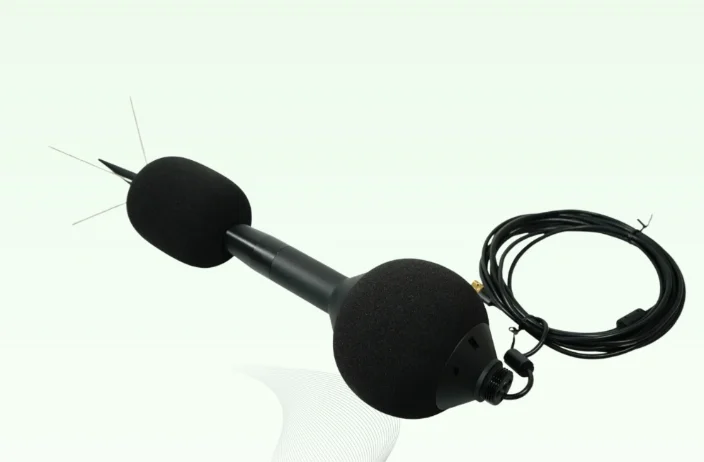
What is NL1
NL1 คืออะไรWhat is the NL1?
NL1 ติดตั้งใต้ไมโครโฟนวัดเสียงและต่อกับเครื่องวัดระดับเสียง XL3 เพื่อหาทิศทางที่เสียงหลักเข้ามา (Direction Of Arrival, DOA) — NL1 ไม่ใช่เครื่องวัดระดับเสียงเดี่ยว แต่เป็นเซนเซอร์เสริมของ XL3The NL1 is mounted below the measurement microphone and connected to an XL3 sound level meter to find the direction from which the dominant noise arrives (Direction Of Arrival, DOA). The NL1 is not a standalone sound level meter but an add-on sensor for the XL3.
Azimuth และ ElevationAzimuth and elevation
ทนลมแรงและสภาพอากาศHigh wind and weather resistance
ไฟและข้อมูลผ่าน USBPower and data over USB
ใช้พื้นที่น้อยSmall footprint
ความรู้พื้นฐานก่อนเลือกBackground first
Sound pressure, Sound intensity และ Sound power ต่างกันอย่างไรSound pressure, sound intensity and sound power: what is the difference?
NL1 ใช้หลัก Sound intensity เพื่อบอกทิศทาง ก่อนดูรายละเอียดสินค้า ควรแยกให้ออกว่าแต่ละปริมาณบอกอะไร และไม่ได้บอกอะไรThe NL1 uses sound intensity to find direction. Before the product details, it helps to separate what each quantity tells you, and what it does not.
Sound pressure (ระดับความดันเสียง)Sound pressure
สิ่งที่ไมโครโฟนและเครื่องวัดระดับเสียงวัด ณ จุดหนึ่ง เป็นค่าที่ไม่มีทิศทาง บอกว่าดังเท่าไร แต่ไม่บอกว่าเสียงมาจากทางไหน ค่าที่ใช้ประเมินเสียงรบกวน (เช่น LAeq) มาจากปริมาณนี้What a microphone and sound level meter measure at one point. It has no direction: it tells how loud, not where the sound comes from. Noise assessment values (e.g. LAeq) come from this quantity.
Sound intensity (ความเข้มเสียง)Sound intensity
การไหลของพลังงานเสียงผ่านพื้นที่หนึ่ง เป็นปริมาณเวกเตอร์ที่มีทิศทาง วัดด้วยไมโครโฟนคู่ที่อยู่ใกล้กัน (Intensity probe) NL1 ใช้ปริมาณนี้หาทิศทางที่เสียงหลักเข้ามาThe flow of sound energy through an area: a vector with a direction, measured with closely spaced microphone pairs (intensity probes). The NL1 uses it to find the direction the dominant sound arrives from.
Sound power (กำลังเสียง)Sound power
พลังงานเสียงรวมที่แหล่งกำเนิดปล่อยออก เป็นคุณสมบัติของแหล่งกำเนิด การหาค่า Sound power มีวิธีตามมาตรฐานของตัวเอง NL1 ไม่ได้วัด Sound powerThe total sound energy a source emits: a property of the source, determined with its own standardised methods. The NL1 does not measure sound power.
การหาทิศทาง vs ภาพแผนที่เสียงDirection finding vs sound maps
NL1 บอกทิศทาง (Azimuth และ Elevation) ของเสียงหลักที่มาถึงจุดติดตั้ง ในแต่ละช่วงเวลา ไม่ได้สร้างภาพแผนที่เสียงแบบ Acoustic camera / Beamforming และไม่ได้บอกระยะทางถึงแหล่งเสียงThe NL1 gives the direction (azimuth and elevation) of the dominant sound arriving at its position, per time interval. It does not produce acoustic-camera / beamforming sound maps and does not give the distance to the source.
เหมาะกับงานไหนIs it the right instrument?
เมื่อไร NL1 ใช่ และเมื่อไรควรใช้วิธีอื่นWhen the NL1 fits, and when another method is better
NL1 ตอบคำถามว่า "เสียงที่จุดวัดนี้มาจากทิศไหน" ในงานกลางแจ้งระยะยาว คำถามอื่น เช่น "จุดไหนบนเครื่องจักรที่ดัง" หรือ "เครื่องนี้ปล่อยเสียงเท่าไร" ต้องใช้วิธีวัดที่ต่างกันThe NL1 answers "which direction is the noise at this point coming from?" in long-term outdoor work. Other questions, such as "which spot on this machine is loud?" or "how much sound does this machine emit?", need different methods.
ใช่: สถานีเฝ้าระวังที่มีหลายแหล่งเสียงรอบตัวFits: monitoring stations surrounded by several sources
เช่น ชุมชนที่อยู่ระหว่างโรงงาน ถนน และไซต์ก่อสร้าง ที่ต้องแยกว่าช่วงที่เกินค่าเกิดจากแหล่งไหนE.g. a neighbourhood between a plant, a road and a construction site, where exceedances must be attributed to a source.
ใช่: เรื่องร้องเรียนที่แหล่งเสียงไม่ชัดFits: complaints with an unclear source
ข้อมูลทิศทางที่ซิงก์กับระดับเสียง ช่วยตัดช่วงเวลาที่เสียงมาจากทิศอื่นออกจากการประเมินDirection data in sync with the levels helps exclude periods when the noise came from another direction.
ไม่ใช่: หาจุดรั่วหรือจุดดังบนเครื่องจักรในระยะใกล้Not the tool: finding leaks or hot spots on a machine at close range
งานนี้ต้องการภาพแผนที่เสียงหรือการสแกนใกล้แหล่งกำเนิด NL1 บอกเพียงทิศทางของเสียงเด่นที่จุดติดตั้ง ดูบริการหาตำแหน่งแหล่งกำเนิดเสียงThis needs a sound map or close-range scanning; the NL1 only gives the dominant direction at its position. See our sound source localization service.
ไม่ใช่: วัดกำลังเสียงของเครื่องจักรNot the tool: machine sound power
Sound power หาได้ด้วยวิธีตามมาตรฐาน เช่น ชุด ISO 3740 (จากความดันเสียง) หรือ ISO 9614 (จาก Sound intensity ที่วัดบนพื้นผิวล้อมรอบเครื่อง) NL1 ไม่ได้วัดค่านี้Sound power is determined with standardised methods, such as the ISO 3740 series (from sound pressure) or ISO 9614 (from sound intensity measured on a surface enclosing the machine). The NL1 does not measure it.
ระวัง: พื้นที่ปิดหรือมีผิวสะท้อนมากCaution: enclosed or highly reflective areas
NTi แนะนำให้อยู่ห่างผิวสะท้อนอย่างน้อย 5 m ในลานแคบระหว่างอาคาร เสียงสะท้อนทำให้ ΔPI สูงขึ้นและผลทิศทางเชื่อถือได้น้อยลงNTi recommends at least 5 m from reflecting surfaces. In narrow yards between buildings, reflections raise ΔPI and make the direction less reliable.
หลักการทำงานHow it works
วัดทิศทางด้วยหลัก Sound intensityDirection from sound intensity
- ไมโครโฟน 8 ตัว เรียงแบบ 3 มิติ8 microphones in a 3D arrangement
- รวมเป็น Sound intensity probe 12 คู่ ระยะห่าง 2 cmCombined into 12 sound intensity probe pairs with 2 cm spacing
- ย่านออกเตฟ A-weighted 63 Hz – 4 kHzA-weighted octave bands 63 Hz – 4 kHz
- ประเมินเวกเตอร์ IntensityEvaluate the intensity vectors
- Azimuth (อ้างอิงทิศเหนือ) และ Elevation (อ้างอิงแนวราบ)Azimuth (referenced to North) and elevation (referenced to horizontal)
Sound intensity บอกทิศทางการไหลของพลังงานเสียง NTi Audio ระบุว่า NL1 ใช้หลัก Sound intensity ไม่ใช่ Beamforming หรือ Pressure arraySound intensity describes the direction of acoustic energy flow. NTi Audio states the NL1 is based on sound intensity rather than beamforming or pressure arrays.
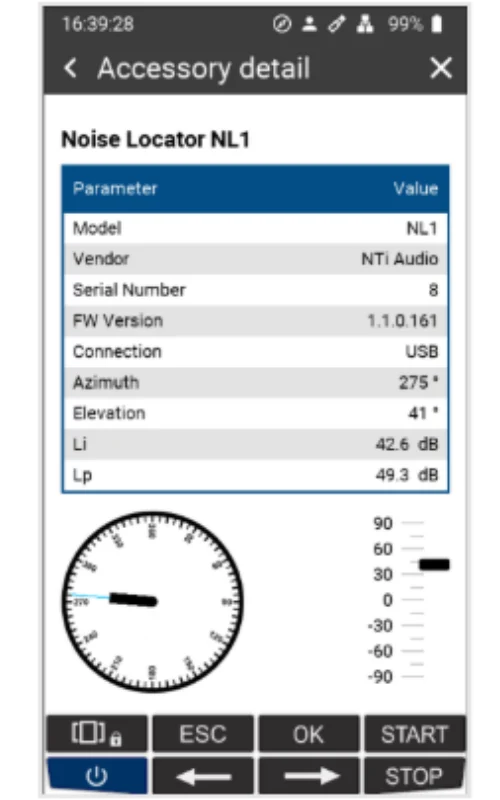
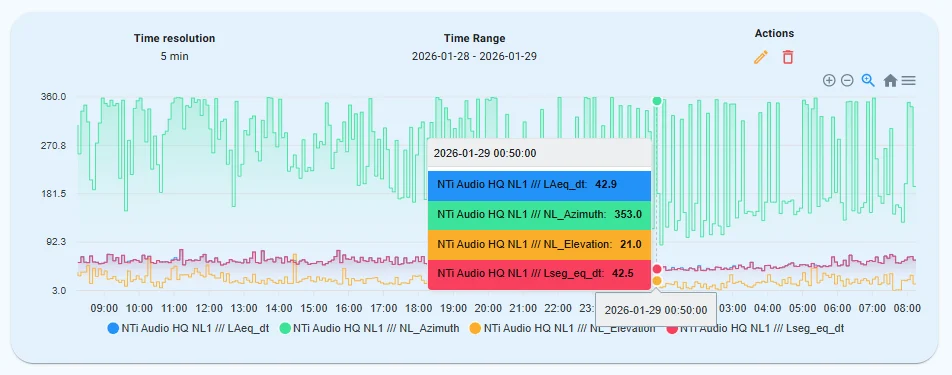
ผลทิศทางของแหล่งเสียงบนหน้าจอ XL3 และใน MeasurEye (ภาพหน้าจอ: NTi Audio)Noise direction results on the XL3 screen and in MeasurEye (screenshots: NTi Audio)
การเชื่อมต่อกับ XL3XL3 integration
ค่าทิศทางแบบสดบนหน้าจอ XL3Live direction values on the XL3 screen
สาย USB เส้นเดียวOne USB cable
NL1 ต่อกับ XL3 โดยตรงด้วยสาย USB เส้นเดียว จ่ายทั้งไฟและข้อมูล (ใช้ไฟ < 1 W)The NL1 connects directly to the XL3 via a single USB cable that carries both power and data (power consumption < 1 W).
ข้อมูลที่ซิงก์กันSynchronised data
ข้อมูลทิศทางบันทึกพร้อมกับข้อมูลระดับเสียง ความละเอียดเวลา 100 ms หรือ 1 sDirection data is logged in sync with the noise data, at 100 ms or 1 s time resolution.
XL3 Streaming API
ข้อมูลแบบเรียลไทม์ผ่าน XL3 Streaming APIReal-time data available via the XL3 Streaming API.
Why NL1
ทำไมต้อง NL1Why the NL1
- ได้ผลดีกับการวิเคราะห์ความถี่ต่ำEffective for low-frequency analysisNTi Audio ระบุว่า NL1 มีประสิทธิภาพเป็นพิเศษสำหรับการวิเคราะห์ความถี่ต่ำNTi Audio describes the NL1 as especially effective for low-frequency analysis
- ระดับเสียงและทิศทางในไฟล์เดียวกันSound levels and direction in the same fileบันทึกระดับเสียงและทิศทางแบบซิงก์กันSynchronised logging of sound levels and direction
ผลที่เชื่อถือได้Trustworthy results
ตัวบ่งชี้ความเชื่อมั่น ΔPIThe ΔPI confidence indicator
การวัดจริงมักมีเสียงสะท้อนและแหล่งเสียงหลายแห่ง ทุกผลการวัดของ NL1 จึงมีค่า Pressure-Intensity Indicator (ΔPI) ที่บอกว่าเสียงทางอ้อม (เสียงสะท้อน) มีผลต่อการวัดมากเพียงใดReal-world measurements are affected by reflections and multiple sources, so every NL1 result includes a Pressure-Intensity Indicator (ΔPI) showing how much indirect sound (reflections) influences it.
ΔPI ใกล้ศูนย์ΔPI close to zero
สนามเสียงชัดเจน ผลทิศทางเชื่อถือได้Clean, well-defined sound field: the direction result can be trusted
ΔPI สูงขึ้นΔPI rising
เสียงสะท้อนหรือแหล่งเสียงอื่นเพิ่มขึ้น ความเชื่อมั่นลดลงMore reflections or additional sources: reduced confidence
กรองผลอัตโนมัติAutomatic filtering
ใช้เฉพาะผลที่ผ่านเกณฑ์ ΔPI ในการวิเคราะห์ทิศทางOnly measurements meeting the ΔPI criterion are used for directional analysis
NTi Audio ใช้ชื่อตัวบ่งชี้นี้ว่า ΔPI บนหน้าเว็บ และ dP-I ในเอกสาร Technical DataNTi Audio names this indicator ΔPI on its web page and dP-I in the Technical Data.
ซอฟต์แวร์Software
ใช้ข้อมูลทิศทางต่ออย่างไรUsing the direction data
MeasurEye
ซอฟต์แวร์เฝ้าระวังออนไลน์: สะสมระดับเสียงตามช่วงทิศทางของแหล่งเสียงOnline monitoring software: segment-based accumulation of noise by source direction
Data Explorer
ซอฟต์แวร์รายงานบน PC: สร้าง Marker อัตโนมัติตามช่วงทิศทางPC reporting software: automatic marker generation based on directional segments
NL1 Lab
เครื่องมือวิเคราะห์เชิงทดลองที่แสดงความสามารถของ NL1Experimental analysis tool demonstrating NL1 capabilities
ระบบที่สมบูรณ์Complete system
สถานีวัดพร้อมข้อมูลทิศทาง ต้องมีอะไรบ้างWhat a station with direction data needs
NL1 เป็นเพียงหนึ่งส่วนของสถานี ระดับเสียงสำหรับการประเมินมาจาก XL3 และไมโครโฟน ส่วน NL1 เพิ่มทิศทาง รายการด้านล่างคือห่วงโซ่ทั้งหมดที่ต้องวางแผนThe NL1 is one part of a station: the assessment levels come from the XL3 and its microphone, and the NL1 adds the direction. Below is the whole chain to plan.
การวัดMeasurement
- เครื่องวัดระดับเสียง XL3XL3 sound level meter
- ไมโครโฟนกลางแจ้ง: ในการติดตั้งทั่วไปของ NTi คือ M2340 ใน WP40-90 พร้อม Bird spikeOutdoor microphone: NTi's typical set-up is the M2340 in a WP40-90 with bird spike
- NL1 ติดใต้ไมโครโฟน ต่อ XL3 ด้วย USB เส้นเดียวNL1 under the microphone, one USB cable to the XL3
- Sound calibrator สำหรับตรวจระดับของ XL3 และไมโครโฟนA sound calibrator to check the XL3 and microphone level
การติดตั้งInstallation
- เสาหรือขาตั้งที่สูงพอลดการสะท้อนจากพื้น ห่างผิวสะท้อน (NTi แนะนำ ≥ 5 m) และอยู่ระหว่างแหล่งเสียงที่เกี่ยวข้องเมื่อทำได้A mast or stand high enough to reduce ground reflections, away from reflecting surfaces (NTi recommends ≥ 5 m) and between the relevant sources where possible
- Azimuth อ้างอิงทิศเหนือ จึงต้องตั้งทิศของเซนเซอร์ให้ถูกและบันทึกไว้ตอนติดตั้ง (NTi ไม่ได้อธิบายวิธีตั้งทิศบนหน้า NL1 เรายืนยันกับ NTi ก่อนติดตั้ง)Azimuth is referenced to North, so the sensor orientation must be set correctly and recorded at installation (the NL1 page does not describe the alignment method; we confirm it with NTi before installation)
- กล่องกันสภาพอากาศสำหรับ XL3 และไฟเลี้ยงที่ต่อเนื่องA weather-protected case for the XL3 and a continuous power supply
ข้อมูลและซอฟต์แวร์Data and software
- ออนไลน์: MeasurEye (XL3 ต่อ LAN, Wi-Fi หรือ G160 4G/LTE Gateway)Online: MeasurEye (XL3 over LAN, Wi-Fi or the G160 4G/LTE Gateway)
- ประมวลผลและรายงาน: Data Explorer (Marker อัตโนมัติตามช่วงทิศทาง)Post-processing and reports: Data Explorer (automatic markers by direction segment)
- ระบบของตัวเอง: XL3 Streaming APIYour own system: the XL3 Streaming API
NTi Audio ไม่ได้เผยแพร่เงื่อนไขเฟิร์มแวร์หรือ Option ของ XL3 สำหรับ NL1 เราตรวจกับ NTi ก่อนเสนอราคาทุกครั้งNTi Audio publishes no XL3 firmware or option requirement for the NL1; we check with NTi before every quotation.
ขั้นตอนทั่วไปTypical workflow
จากคำถามเรื่องแหล่งเสียงสู่ผลที่อธิบายได้From a source question to an explainable result
- ระบุแหล่งเสียงที่สงสัยและทิศของแต่ละแหล่งจากจุดวัดList the suspected sources and their bearings from the measuring point
- เลือกจุดติดตั้ง: เปิดโล่ง สูง และห่างผิวสะท้อนChoose the position: open, elevated and away from reflecting surfaces
- ติดตั้ง XL3 + ไมโครโฟน + NL1 ตั้งทิศ และตรวจระดับด้วย Sound calibratorInstall the XL3 + microphone + NL1, set the orientation and check the level with a sound calibrator
- บันทึกระดับเสียงและทิศทางแบบซิงก์ (100 ms หรือ 1 s)Log levels and direction in sync (100 ms or 1 s)
- กรองผลด้วย ΔPI และแบ่งช่วงทิศทางของแต่ละแหล่งFilter by ΔPI and define a direction segment for each source
- สะสมหรือ Mark ระดับเสียงตามช่วงทิศทางใน MeasurEye หรือ Data ExplorerAccumulate or mark levels by direction segment in MeasurEye or Data Explorer
- ฟังเสียงยืนยัน แล้วสรุปว่าแหล่งใดมีผลต่อค่าประเมินConfirm by listening, then conclude which source drives the assessment value
ตัวอย่างสถานการณ์: บ้านพักอาศัยร้องเรียนเสียงหึ่งช่วงกลางคืน จุดวัดอยู่ระหว่างโรงงานทางทิศตะวันออกและทางหลวงทางทิศใต้ ข้อมูลทิศทางที่ผ่านเกณฑ์ ΔPI แสดงว่าช่วงที่เกินค่าส่วนใหญ่มาจากทิศโรงงานในย่านความถี่ต่ำ ขั้นต่อไปจึงเป็นการตรวจแหล่งเสียงในโรงงานในระยะใกล้ ซึ่งเป็นงานอีกประเภทหนึ่งExample scenario: residents complain about a night-time hum. The measuring point lies between a plant to the east and a highway to the south. Direction results that pass the ΔPI criterion show most exceedance periods arriving from the plant's direction in the low-frequency bands. The next step is a close-range investigation of the sources inside the plant, which is a different kind of task.
Applications
ใช้ในงานอะไรWhere it is used
เฝ้าระวังเสียงสิ่งแวดล้อมEnvironmental noise monitoring
เพิ่มข้อมูลทิศทางให้สถานีวัดเสียง XL3Adds direction to XL3 noise monitoring stations
ก่อสร้าง ถนน อากาศยาน และรถไฟConstruction, road, aircraft and rail
ตรวจสอบเสียงรบกวนจากการก่อสร้าง ถนน อากาศยาน และรถไฟConstruction, road, aircraft and rail noise investigations
โรงงานที่มีแหล่งเสียงหลายแห่งIndustry with multiple sources
เฝ้าระวังเสียงอุตสาหกรรมเมื่อมีหลายแหล่งกำเนิดIndustrial noise monitoring where there are multiple sources
ข้อควรรู้ก่อนเลือกBefore you choose
ข้อจำกัดและสิ่งที่ต้องใช้ร่วมLimitations and dependencies
ต้องใช้กับ XL3Requires an XL3
NL1 รับไฟและส่งข้อมูลผ่าน USB ของ XL3 ใช้เดี่ยวไม่ได้ ระดับเสียงสำหรับการประเมินวัดโดย XL3 กับไมโครโฟนวัดเสียง ให้เรายืนยันเฟิร์มแวร์ของ XL3 ก่อนสั่งซื้อThe NL1 is powered and read out over the XL3's USB; it does not work alone. Sound levels for assessment are measured by the XL3 with its measurement microphone. We confirm the XL3 firmware before ordering.
เสียงหลักหนึ่งทิศทางต่อช่วงเวลาOne dominant direction per interval
ผลคือทิศทางของเสียงที่เด่นที่สุดในแต่ละช่วงเวลาและย่านความถี่ เมื่อหลายแหล่งดังใกล้กัน ค่า ΔPI จะสูงขึ้นและผลเชื่อถือได้น้อยลงThe result is the direction of the most dominant sound per interval and band. When several sources are similarly loud, ΔPI rises and the result is less reliable.
Learn more
เรียนรู้เพิ่มเติมLearn more
บทความความรู้ มาตรฐาน และกรณีศึกษาที่อธิบายเรื่องนี้ตั้งแต่พื้นฐานKnowledge articles, standards and case studies that explain this from the basics
วิธีการตรวจวัด: โจทย์ ขั้นตอน เครื่องมือ และการอ่านผลApplication guide: task, workflow, equipment and interpretation
ความเข้มเสียงและการหาทิศทางของเสียงSound intensity and direction of arrivalความดันเสียงบอกว่าดังแค่ไหน ความเข้มเสียงบอกว่าพลังงานไหลมาทางไหน: หลักการของ NL1Pressure says how loud; intensity says which way the energy flows: the principle behind the NL1
กำลังเสียง (Sound power) ต่างจากความดันเสียงอย่างไรSound power vs sound pressureกำลังเสียงคือคุณสมบัติของแหล่งเสียง ความดันเสียงคือสิ่งที่ได้ยิน ณ จุดหนึ่ง: ต่างกันอย่างไรและวัดอย่างไรSound power belongs to the source; sound pressure is what you hear at one point: the difference and how it is measured
ISO 9614 — การหากำลังเสียงด้วยความเข้มเสียงISO 9614 — Determining sound power using sound intensityหากำลังเสียงจากความเข้มเสียง: วัดเป็นจุดหรือกวาดหัววัด เหมาะกับการวัดในสถานที่จริงSound power from sound intensity, by points or scanning; suited to in-situ measurement
การเฝ้าระวังเสียงอัตโนมัติและเรื่องร้องเรียนเสียงดังUnattended noise monitoring and noise complaintsสถานีวัดเสียงทำงานเองได้อย่างไร และทำไมค่าเฉลี่ยต่ำก็ยังมีคนร้องเรียนHow monitoring stations work, and why people complain even when the average is low
Engineering support
ต้องการวางระบบเฝ้าระวังเสียงพร้อมข้อมูลทิศทาง?Planning noise monitoring with direction data?
ทีมวิศวกร GET BEST SOUND ช่วยเลือกอุปกรณ์ จัดชุดระบบ และวางขั้นตอนการวัดให้ตรงกับงานของคุณGET BEST SOUND engineers help with product selection, system configuration and the measurement workflow for your work.
Technical data
ข้อมูลทางเทคนิคหลักKey technical data
| หลักการวัดPrinciple | Sound intensity (ไม่ใช่ Beamforming หรือ Pressure array)Sound intensity (not beamforming or pressure arrays) |
|---|---|
| ไมโครโฟน / ProbeMicrophones / probes | ไมโครโฟน 8 ตัว, Sound intensity probe 12 คู่, ระยะห่าง 2 cm8 microphones, 12 sound intensity probe pairs, 2 cm spacing |
| ย่านความถี่Frequency range | 63 Hz – 4 kHz (ย่านออกเตฟ, A-weighted)63 Hz – 4 kHz (octave bands, A-weighted) |
| ความแม่นยำของมุม (A-weighted)Direction accuracy (A-weighted) | ±10° (Azimuth ที่ Elevation –60° ถึง +60°; Elevation)±10° (azimuth at elevation –60° to +60°; elevation) |
| ผลลัพธ์Results | Azimuth (อ้างอิงทิศเหนือ), Elevation (อ้างอิงแนวราบ), ΔPIAzimuth (referenced to North), elevation (referenced to horizontal), ΔPI |
| ความละเอียดเวลาTime resolution | 100 ms หรือ 1 s100 ms or 1 s |
| พลังงานPower | < 1 W (จ่ายผ่าน USB)< 1 W (powered via USB) |
| การเชื่อมต่อConnection | XL3 ผ่านสาย USB เส้นเดียวXL3 via a single USB cable |
| Dynamic range | 40 dBA – 125 dBA (Technical Data 2026-05-06) |
| ความแม่นยำระดับเสียงของ NL1NL1 absolute level accuracy | 94 dB SPL @ 1 kHz ±1.5 dB |
| สภาพแวดล้อมEnvironment | –10 °C ถึง +50 °C; ความชื้น 25% – 90% (ไม่ควบแน่น); ทนลมได้ถึง 120 km/h โดยไม่เสียหาย–10 °C to +50 °C; humidity 25% – 90% (non-condensing); wind up to 120 km/h without damage |
ข้อมูลจากหน้า NL1 และเอกสาร NL1 Technical Data (เวอร์ชัน 2026-05-06) ของ NTi Audio หน้า NL1 ระบุ Dynamic range 25 dBA – 125 dBA ส่วนเอกสาร Technical Data ระบุ 40 dBA – 125 dBA เราแสดงค่าจากเอกสาร Technical DataData from NTi Audio's NL1 page and NL1 Technical Data (version 2026-05-06). The NL1 page states a dynamic range of 25 dBA – 125 dBA, the Technical Data 40 dBA – 125 dBA; we show the Technical Data value.
ความแม่นยำตามย่านความถี่Accuracy by band
ความคลาดเคลื่อนของมุมและเสียงรบกวนภายในAngle tolerance and residual noise
ความแม่นยำดีที่สุดในย่านกลาง และกว้างขึ้นที่ 63 Hz และ 4 kHz ตามเอกสาร NL1 Technical DataAccuracy is best in the mid bands and wider at 63 Hz and 4 kHz, per the NL1 Technical Data.
| ย่านออกเตฟOctave band | Azimuth สูงสุด (Typical) [°]Azimuth max. (typical) [°] | Elevation สูงสุด [°]Elevation max. [°] | Residual noise สูงสุด [dB SPL]Residual noise, upper [dB SPL] |
|---|---|---|---|
| 63 Hz | Azimuth สูงสุด (Typical) [°]Azimuth max. (typical) [°]±35 (±15) | Elevation สูงสุด [°]Elevation max. [°]±35 | Residual noise สูงสุด [dB SPL]Residual noise, upper [dB SPL]22 |
| 125 Hz | Azimuth สูงสุด (Typical) [°]Azimuth max. (typical) [°]±20 (±15) | Elevation สูงสุด [°]Elevation max. [°]±20 | Residual noise สูงสุด [dB SPL]Residual noise, upper [dB SPL]20 |
| 250 Hz | Azimuth สูงสุด (Typical) [°]Azimuth max. (typical) [°]±15 (±10) | Elevation สูงสุด [°]Elevation max. [°]±15 | Residual noise สูงสุด [dB SPL]Residual noise, upper [dB SPL]16 |
| 500 Hz | Azimuth สูงสุด (Typical) [°]Azimuth max. (typical) [°]±10 | Elevation สูงสุด [°]Elevation max. [°]±15 | Residual noise สูงสุด [dB SPL]Residual noise, upper [dB SPL]15 |
| 1 kHz | Azimuth สูงสุด (Typical) [°]Azimuth max. (typical) [°]±10 | Elevation สูงสุด [°]Elevation max. [°]±10 | Residual noise สูงสุด [dB SPL]Residual noise, upper [dB SPL]16 |
| 2 kHz | Azimuth สูงสุด (Typical) [°]Azimuth max. (typical) [°]±10 | Elevation สูงสุด [°]Elevation max. [°]±15 | Residual noise สูงสุด [dB SPL]Residual noise, upper [dB SPL]18 |
| 4 kHz | Azimuth สูงสุด (Typical) [°]Azimuth max. (typical) [°]±20 | Elevation สูงสุด [°]Elevation max. [°]±25 | Residual noise สูงสุด [dB SPL]Residual noise, upper [dB SPL]21 |
| A-weighted | Azimuth สูงสุด (Typical) [°]Azimuth max. (typical) [°]±10 | Elevation สูงสุด [°]Elevation max. [°]±10 | Residual noise สูงสุด [dB SPL]Residual noise, upper [dB SPL]27 |
Azimuth ที่ Elevation –60° ถึง +60°; Elevation ที่ Azimuth –180° ถึง +180°Azimuth at elevation –60° to +60°; elevation at azimuth –180° to +180°.
อ่านก่อนตัดสินใจLearn before you buy
ความรู้ที่เกี่ยวข้องกับ NL1Background for the NL1
ความเข้มเสียงและทิศทางของเสียงSound intensity and direction of arrival
หลักการที่ NL1 ใช้ อธิบายแบบเข้าใจง่ายThe principle the NL1 uses, explained
อ่านบทความ →Read the article →คู่มือ: หาตำแหน่งแหล่งกำเนิดเสียงGuide: locating noise sources
เลือกวิธีตามคำถาม: ทิศทาง แผนที่เสียง หรือการวัดใกล้แหล่งChoosing the method by the question: direction, sound maps or near-source measurement
อ่านคู่มือ →Read the guide →คู่มือ: เฝ้าระวังเสียงระยะยาวGuide: long-term monitoring
สถานีวัด เกณฑ์แจ้งเตือน และเรื่องร้องเรียนStations, alert criteria and complaints
อ่านคู่มือ →Read the guide →ISO 9614
การหากำลังเสียงจาก Sound intensity (งานที่ NL1 ไม่ได้ทำ)Sound power from sound intensity (a task the NL1 does not do)
อ่านเรื่องมาตรฐาน →Read about the standard →FAQ
คำถามที่พบบ่อยFrequently asked questions
NL1 ใช้กับ XL2 ได้ไหม?Does the NL1 work with the XL2?
NTi Audio ระบุการเชื่อมต่อ NL1 กับ XL3 ผ่าน USB เท่านั้น ไม่ได้ระบุ XL2NTi Audio specifies the NL1 connection to the XL3 over USB only; the XL2 is not listed.
NL1 บอกระยะทางถึงแหล่งเสียงได้ไหม?Can the NL1 tell how far away the source is?
ไม่ได้ NL1 ให้ทิศทาง (Azimuth และ Elevation) ของเสียงเด่นที่มาถึงจุดติดตั้ง ถ้าต้องการระบุตำแหน่งแหล่งเสียง ให้ใช้ทิศทางร่วมกับแผนผังพื้นที่และการตรวจหน้างานNo. The NL1 gives the direction (azimuth and elevation) of the dominant sound arriving at its position. To pinpoint a source, combine the direction with a site plan and on-site checks.
ถ้ามีสองแหล่งเสียงดังพอกัน จะเกิดอะไรขึ้น?What happens when two sources are equally loud?
ผลในแต่ละช่วงเวลาและย่านความถี่คือทิศของเสียงเด่นหนึ่งทิศ เมื่อหลายแหล่งดังใกล้กัน ค่า ΔPI จะสูงขึ้น ผลที่ไม่ผ่านเกณฑ์จะถูกกรองออก การดูผลแยกตามย่านออกเตฟมักช่วยแยกแหล่งที่มีความถี่ต่างกันได้Each interval and band gives one dominant direction. When several sources are similarly loud, ΔPI rises and results that fail the criterion are filtered out. Looking at individual octave bands often helps separate sources with different frequency content.
Dynamic range ของ NL1 คือเท่าไร?What is the NL1's dynamic range?
เอกสาร NL1 Technical Data (2026-05-06) ระบุ 40 dBA – 125 dBA ส่วนหน้าเว็บ NL1 ระบุ 25 dBA – 125 dBA เราใช้ค่าจาก Technical Data และแนะนำให้ประเมินงานที่ระดับเสียงต่ำกว่า 40 dBA กับเราก่อนThe NL1 Technical Data (2026-05-06) states 40 dBA – 125 dBA, while the NL1 web page states 25 dBA – 125 dBA. We use the Technical Data value and suggest reviewing any work below 40 dBA with us first.
ข้อมูลทิศทางใช้ในรายงานอย่างไร?How is direction data used in a report?
ใน Data Explorer ช่วงทิศทางสร้าง Marker อัตโนมัติ จึงแยกหรือตัดช่วงเวลาที่เสียงมาจากแหล่งอื่นก่อนคำนวณค่าประเมิน ใน MeasurEye ระดับเสียงถูกสะสมตามช่วงทิศทางแบบออนไลน์In Data Explorer, direction segments create markers automatically, so periods dominated by other sources can be separated or excluded before the assessment values are calculated. In MeasurEye, levels are accumulated by direction segment online.
Gallery
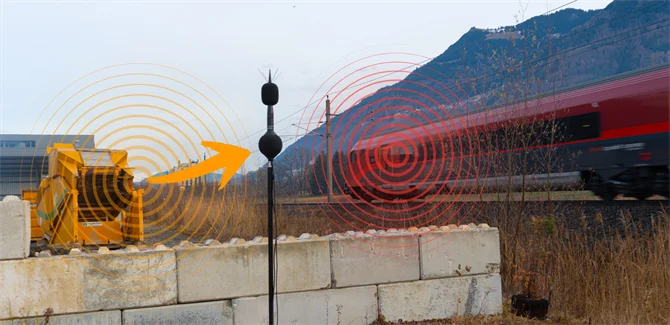
อยากรู้ว่าเสียงรบกวนมาจากทิศไหน?Want to know where the noise comes from?
ให้วิศวกร GET BEST SOUND ช่วยวางระบบ NL1 + XL3 และขั้นตอนวิเคราะห์ข้อมูลให้ตรงกับงานLet GET BEST SOUND engineers plan the NL1 + XL3 set-up and data workflow for your project.