ก่อนอ่านบทความนี้Before you read
บทความนี้อยู่ในระดับเจาะลึก ควรเข้าใจเรื่องเสียงคืออะไร เดซิเบลและระดับความดันเสียง ย่านออกเตฟ และความต่างระหว่างกำลังเสียงกับความดันเสียงก่อน ส่วนการใช้งานจริงจะเชื่อมกับการเฝ้าระวังเสียงสิ่งแวดล้อมและเรื่องร้องเรียนเสียงดัง (ลิงก์อยู่ท้ายหน้า)This is an advanced article. It helps to understand what sound is, decibels and sound pressure level, octave bands, and the difference between sound power and sound pressure first. In practice it connects to environmental noise monitoring and noise complaints (links at the end of the page).
ทำไมเรื่องนี้สำคัญWhy this matters
สมมุติสถานีเฝ้าระวังเสียงข้างหมู่บ้านบันทึกได้ว่าคืนนี้เสียงดังเกินเกณฑ์ คำถามถัดไปที่ทุกคนถามคือ “เสียงของใคร” รอบหมู่บ้านอาจมีทั้งไซต์ก่อสร้าง โรงงาน ถนนใหญ่ และสนามบิน ตัวเลขเดซิเบลเพียงอย่างเดียวตอบคำถามนี้ไม่ได้ ถ้าไม่มีหลักฐานว่าเสียงมาจากทางไหน การแก้ปัญหาหรือการเจรจากับเจ้าของแหล่งเสียงก็ทำได้ยากImagine a noise monitoring station beside a village records that tonight’s level exceeded the limit. The next question everyone asks is “whose noise was it?”. Around the village there may be a construction site, a factory, a main road and an airport. A decibel number alone cannot answer this. Without evidence of where the sound came from, fixing the problem or negotiating with the source owner is difficult.
การบันทึกเสียงจริง (Audio recording) ช่วยให้ฟังได้ว่าเป็นเสียงอะไร แต่ถ้าแหล่งเสียงคล้ายกัน เช่น เครื่องจักรสองโรงงาน การรู้ ทิศทางที่เสียงมาถึง (Direction of arrival) จะเป็นหลักฐานที่ชัดเจนกว่ามากAn audio recording helps us hear what the sound was, but when sources sound similar, such as machinery at two factories, knowing the direction of arrival is much stronger evidence.
แนวคิดพื้นฐาน: ปรอทวัดอุณหภูมิกับศรลมThe basic idea: a thermometer versus a wind vane
ความดันเสียง (Sound pressure) เหมือนตัวเลขบนปรอทวัดอุณหภูมิ บอกว่า “มากหรือน้อย” ณ จุดนั้น แต่ไม่มีทิศทาง ในทางฟิสิกส์เรียกปริมาณแบบนี้ว่าสเกลาร์ (Scalar) ไมโครโฟนวัดเสียงทั่วไปจึงตอบได้ว่าดังเท่าไร แต่ไม่รู้ว่าเสียงมาจากหน้าหรือหลังSound pressure is like the reading on a thermometer: it tells you “how much” at that point, but has no direction. Physicists call this kind of quantity a scalar. That is why an ordinary measurement microphone can say how loud it is, but not whether the sound comes from in front or behind.
ความเข้มเสียง (Sound intensity) เหมือนลมที่มีทั้งความแรงและทิศทาง มันคือปริมาณพลังงานเสียงที่ไหลผ่านพื้นที่หนึ่งตารางเมตรในหนึ่งวินาที (หน่วยวัตต์ต่อตารางเมตร, W/m²) และชี้ไปทางที่พลังงานไหล ปริมาณแบบนี้เรียกว่าเวกเตอร์ (Vector) ถ้าเรารู้ว่าพลังงานไหลมาจากทางไหน ก็ย้อนกลับไปหาแหล่งเสียงได้Sound intensity is like wind, which has both strength and direction. It is the amount of acoustic energy flowing through one square metre each second (in watts per square metre, W/m²), and it points in the direction the energy flows. This kind of quantity is called a vector. If we know which way the energy is flowing, we can trace it back towards the source.
ความเข้มเสียงยังเชื่อมกับกำลังเสียงได้โดยตรง ถ้าเรารวมความเข้มเสียงที่ไหลออกผ่านพื้นผิวที่ล้อมเครื่องจักรไว้ทั้งหมด ผลรวมคือกำลังเสียงของเครื่องนั้น นี่คือเหตุผลที่ความเข้มเสียงใช้หากำลังเสียงได้อีกทางหนึ่ง (วิธีนี้กำหนดไว้ใน ISO 9614) ระดับความเข้มเสียง (LI) บอกเป็น dB เทียบกับ 1 pW/m²Sound intensity also links directly to sound power: add up all the intensity flowing out through a surface that encloses a machine and the total is that machine’s sound power. This is why intensity offers another way of determining sound power (standardised in ISO 9614). The sound intensity level (LI) is given in dB relative to 1 pW/m².
วัดความเข้มเสียงอย่างไรHow sound intensity is measured
ไมโครโฟนตัวเดียววัดทิศทางไม่ได้ แต่ถ้าวางไมโครโฟนสองตัวใกล้กันมาก เสียงที่มาจากด้านหนึ่งจะถึงไมโครโฟนตัวใกล้ก่อนเล็กน้อย และความดันที่สองตัวรับได้จะต่างกันเล็กน้อย ความต่างของความดันในระยะสั้น ๆ นี้ใช้ประมาณ ความเร็วอนุภาค (particle velocity) คืออากาศเคลื่อนเร็วแค่ไหนและไปทางไหน ความเข้มเสียงคือค่าเฉลี่ยตามเวลาของผลคูณระหว่างความดันเสียงกับความเร็วอนุภาค จึงได้ความเข้มเสียงตามแนวของไมโครโฟนคู่นั้น ไมโครโฟนคู่แบบนี้เรียกว่า หัววัดความเข้มเสียง (Intensity probe)A single microphone cannot measure direction. But if two microphones are placed very close together, sound coming from one side reaches the nearer microphone slightly earlier, and the pressures they pick up differ slightly. The pressure difference over that small spacing is used to estimate the particle velocity: how fast, and which way, the air moves. Sound intensity is the time average of sound pressure multiplied by particle velocity, which gives the intensity along the line of that microphone pair. Such a pair is called an intensity probe.
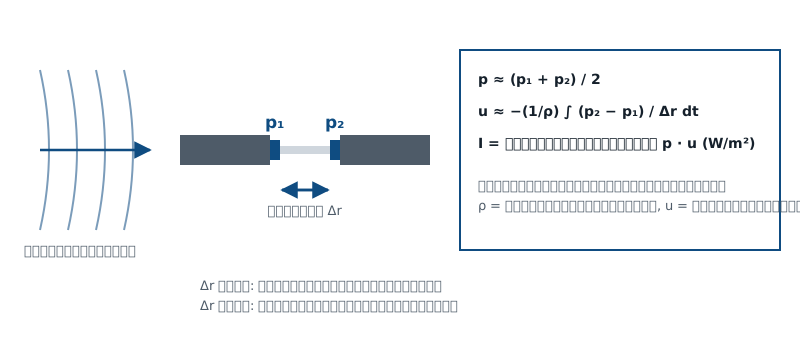
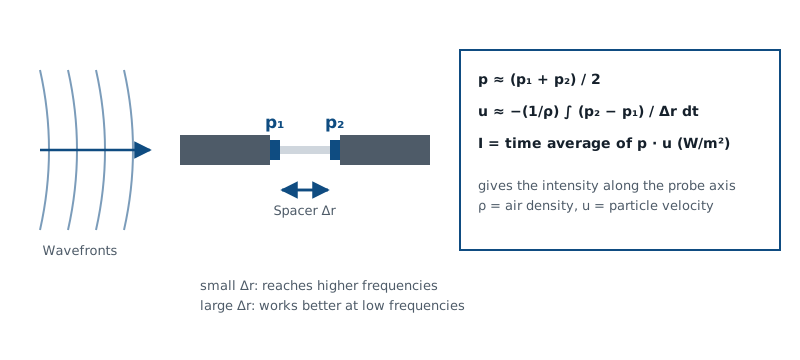
คู่ไมโครโฟนหนึ่งคู่บอกทิศได้แค่ตามแนวเดียว ถ้าต้องการรู้ทิศในสามมิติ ต้องมีหลายคู่ที่ชี้ไปหลายแนวOne pair only gives the direction along one line. To know the direction in three dimensions, several pairs pointing along different lines are needed.
ระยะคั่นระหว่างไมโครโฟนเป็นตัวกำหนดช่วงความถี่ที่ใช้ได้ ถ้าระยะเล็ก วัดความถี่สูงได้ดี แต่ที่ความถี่ต่ำ ความต่างของความดันระหว่างสองไมโครโฟนเล็กมาก จนความคลาดเคลื่อนทางเฟสเพียงเล็กน้อยของชุดวัดกลายเป็นข้อผิดพลาดใหญ่ ถ้าระยะใหญ่ วัดความถี่ต่ำได้ดีขึ้น แต่ความถี่สูงจะผิดเพราะระยะไม่เล็กพอเมื่อเทียบกับความยาวคลื่น หัววัดสำหรับงานวิเคราะห์จึงมักเปลี่ยนตัวคั่นได้ ส่วนข้อกำหนดของเครื่องมือวัดความเข้มเสียงแบบไมโครโฟนคู่อยู่ใน IEC 61043The microphone spacing sets the usable frequency range. With a small spacer, high frequencies are measured well, but at low frequencies the pressure difference between the microphones is tiny, so a small phase mismatch in the measuring chain becomes a large error. A larger spacer works better at low frequencies but gives errors at high frequencies, because the spacing is no longer small compared with the wavelength. Probes for analysis work therefore often have interchangeable spacers; the requirements for two-microphone sound intensity instruments are set out in IEC 61043.
NL1 หาทิศทางของเสียงอย่างไรHow the NL1 finds the direction of noise
Noise Locator NL1 ของ NTi Audio เป็นเซนเซอร์ที่ติดใต้ไมโครโฟนวัดเสียงของสถานีเฝ้าระวัง และต่อกับเครื่องวัดระดับเสียง XL3 ด้วยสาย USB เส้นเดียว หลักการคือความเข้มเสียง ไม่ใช่การรวมสัญญาณจากไมโครโฟนจำนวนมากแบบ BeamformingNTi Audio’s Noise Locator NL1 is a sensor mounted below the measurement microphone of a monitoring station and connected to the XL3 sound level meter with a single USB cable. It works on the sound intensity principle, not on beamforming with a large microphone array.
| หัวข้อItem | NL1 |
|---|---|
| ไมโครโฟนMicrophones | NL18 ตัว จัดเรียงแบบสามมิติขนาดกะทัดรัด8, in a compact three-dimensional arrangement |
| หัววัดความเข้มเสียงIntensity probes | NL112 คู่ ระยะห่างระหว่างไมโครโฟน 2 cm12 pairs, 2 cm microphone spacing |
| ย่านความถี่Frequency bands | NL1ย่านออกเตฟ 63 Hz ถึง 4 kHz (ถ่วงน้ำหนัก A)Octave bands 63 Hz to 4 kHz (A-weighted) |
| ผลที่ได้Output | NL1มุมราบ (Azimuth) เทียบกับทิศเหนือ และมุมเงย (Elevation) จากแนวราบAzimuth relative to North and elevation from the horizontal |
| ความละเอียดทางเวลาTime resolution | NL1100 ms หรือ 1 s100 ms or 1 s |
| ช่วงการวัดDynamic range | NL140 ถึง 125 dBA (ตามเอกสาร NL1 Technical Data ของ NTi Audio ส่วนหน้าเว็บ NL1 ระบุ 25 dBA)40 to 125 dBA (per NTi Audio's NL1 Technical Data; the NL1 web page states 25 dBA) |
เหตุผลที่แยกเป็นย่านออกเตฟ คือแหล่งเสียงต่างกันมักเด่นในความถี่ต่างกัน เช่น เสียงหึ่งทุ้มของพัดลมระบายอากาศกับเสียงแหลมของเลื่อยตัดเหล็ก ในเวลาเดียวกัน ย่านต่ำอาจชี้ไปทางหนึ่ง และย่านสูงอาจชี้ไปอีกทางหนึ่ง ผลที่ได้จึงบอกทั้งทิศทางและขนาดของเสียงในแต่ละย่าน และบันทึกไปพร้อมกับข้อมูลระดับเสียงของ XL3 เพื่อวิเคราะห์ต่อในซอฟต์แวร์ Data ExplorerThe reason for splitting into octave bands is that different sources usually dominate different frequencies, for example the low hum of a ventilation fan and the high whine of a metal saw. At the same moment, a low band may point one way and a high band another. The result therefore gives both direction and magnitude per band, logged together with the XL3’s sound level data for later analysis in the Data Explorer software.
ผลนี้เชื่อถือได้แค่ไหน: ตัวชี้วัด ΔPIHow far can you trust it? The ΔPI indicator
ทิศทางจะชัดเจนเมื่อมีแหล่งเสียงเด่นแหล่งเดียวส่งพลังงานมาทางเดียว แต่ในโลกจริง เสียงอาจสะท้อนจากอาคาร หรือมีหลายแหล่งดังพร้อมกันจากหลายทิศ เมื่อพลังงานไหลมาหลายทางจนหักล้างกัน ความเข้มเสียงสุทธิจะต่ำกว่าความดันเสียงมากThe direction is clear when one dominant source sends energy from one direction. In the real world, though, sound may reflect off buildings, or several sources may sound at once from different directions. When energy flows in from several directions and partly cancels, the net intensity becomes much lower than the sound pressure.
ตัวชี้วัดความดัน–ความเข้ม (Pressure–intensity indicator, ΔPI) คือความต่างระหว่างระดับความดันเสียงกับระดับความเข้มเสียง ถ้า ΔPI มีค่าน้อย แปลว่าพลังงานส่วนใหญ่ไหลมาทางเดียว ผลทิศทางน่าเชื่อถือ ถ้า ΔPI มีค่ามาก แปลว่ามีเสียงสะท้อนหรือหลายแหล่งปะปน ผลทิศทางน่าเชื่อถือน้อยลง ในการวิเคราะห์ภายหลังจึงใช้ ΔPI คัดช่วงเวลาที่ไม่น่าเชื่อถือออกได้The pressure–intensity indicator (ΔPI) is the difference between the sound pressure level and the sound intensity level. A small ΔPI means most of the energy flows from one direction, so the direction result is trustworthy. A large ΔPI means reflections or several sources are mixed in, so the direction result is less reliable. During later analysis, ΔPI can be used to filter out unreliable periods.
- ติดตั้งห่างจากพื้นผิวที่สะท้อนเสียง เช่น ผนังอาคาร อย่างน้อยประมาณ 5 m (คำแนะนำของ NTi Audio)Install at least about 5 m from reflecting surfaces such as building walls (NTi Audio's recommendation).
- ติดตั้งให้สูงพอ เพื่อลดเสียงสะท้อนจากพื้นMount high enough to reduce reflections from the ground.
- ถ้าทำได้ ให้วางเซนเซอร์ไว้ระหว่างแหล่งเสียงที่สงสัย เพื่อให้แต่ละแหล่งอยู่คนละทิศWhere possible, place the sensor between the suspected sources so that each lies in a different direction.
สามเครื่องมือที่มักสับสนกัน: หัววัดความเข้มเสียง กล้องเสียง และเซนเซอร์บอกทิศThree tools that are often confused: intensity probe, acoustic camera and DOA sensor
คำถาม "เสียงมาจากไหน" มีเครื่องมือตอบได้หลายแบบ แต่ละแบบให้ผลคนละลักษณะและเหมาะกับงานคนละอย่าง การเลือกผิดทำให้ได้ข้อมูลที่ตอบคำถามไม่ตรงSeveral tools answer the question "where does the sound come from?", but each gives a different kind of result and suits a different task. Choosing the wrong one produces data that does not answer the real question.
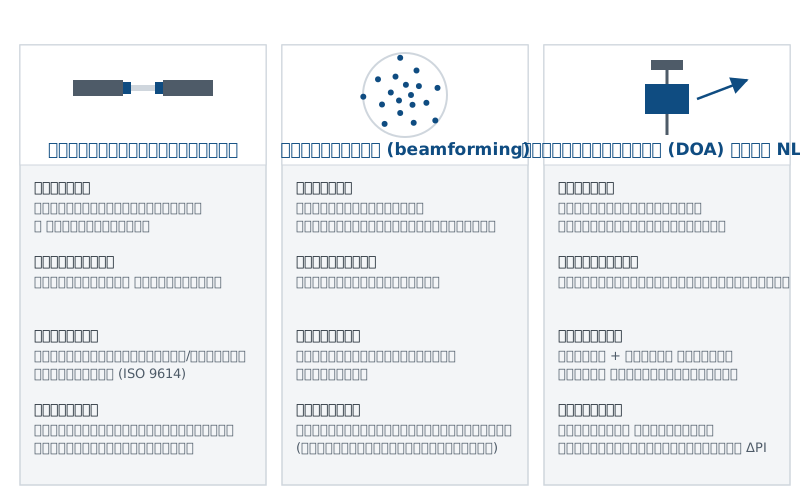
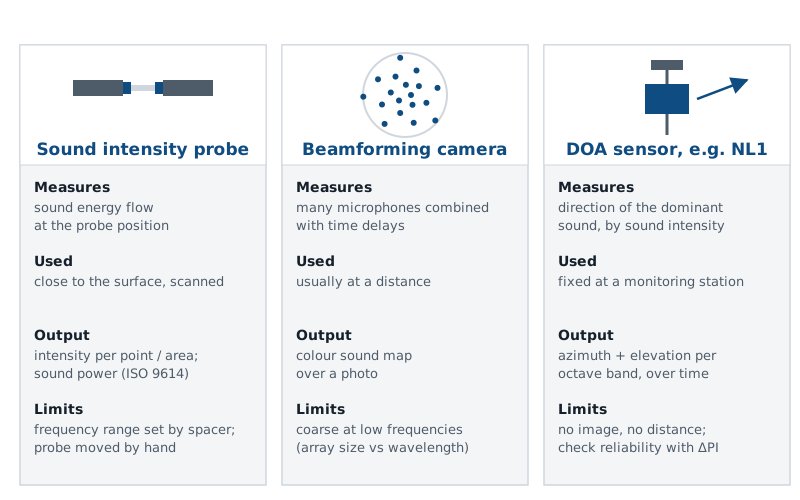
| หัวข้อAspect | หัววัดความเข้มเสียงSound intensity probe | กล้องเสียง (beamforming)Beamforming acoustic camera | เซนเซอร์บอกทิศ (DOA) เช่น NL1DOA sensor, e.g. NL1 |
|---|---|---|---|
| หลักการPrinciple | หัววัดความเข้มเสียงSound intensity probeไมโครโฟนคู่ระยะใกล้ วัดความดันและความเร็วอนุภาค ได้การไหลของพลังงานA closely spaced microphone pair gives pressure and particle velocity, hence energy flow | กล้องเสียง (beamforming)Beamforming acoustic cameraไมโครโฟนจำนวนมากบนแผง รวมสัญญาณด้วยการหน่วงเวลาให้ "เล็ง" ไปทีละจุดบนภาพMany microphones on an array, combined with time delays to "steer" to each point of an image | เซนเซอร์บอกทิศ (DOA) เช่น NL1DOA sensor, e.g. NL1ไมโครโฟนคู่หลายคู่ในรูปทรงสามมิติขนาดเล็ก หาทิศทางการไหลของพลังงานสุทธิSeveral microphone pairs in a small 3D arrangement find the direction of net energy flow |
| ระยะใช้งานWorking distance | หัววัดความเข้มเสียงSound intensity probeใกล้ผิววัตถุ สแกนด้วยมือหรือวัดเป็นจุดบนพื้นผิวที่กำหนดClose to the surface, scanned by hand or measured at points on a defined surface | กล้องเสียง (beamforming)Beamforming acoustic cameraมักวัดจากระยะห่าง ให้เห็นวัตถุทั้งชิ้นในภาพUsually from a distance, so the whole object is in view | เซนเซอร์บอกทิศ (DOA) เช่น NL1DOA sensor, e.g. NL1ติดตั้งประจำที่สถานีเฝ้าระวัง ห่างจากแหล่งเสียงมากFixed at a monitoring station, far from the sources |
| ผลที่ได้Output | หัววัดความเข้มเสียงSound intensity probeค่าความเข้มเสียงรายจุดหรือรายพื้นที่ และกำลังเสียงตาม ISO 9614Intensity per point or area, and sound power to ISO 9614 | กล้องเสียง (beamforming)Beamforming acoustic cameraภาพแผนที่เสียงสีซ้อนบนภาพถ่าย ณ ช่วงเวลาและย่านความถี่ที่เลือกA colour sound map over a photo, for the selected time and frequency range | เซนเซอร์บอกทิศ (DOA) เช่น NL1DOA sensor, e.g. NL1มุมราบและมุมเงยของเสียงหลักในแต่ละย่านออกเตฟ ต่อเนื่องตามเวลา คู่กับระดับเสียงAzimuth and elevation of the dominant sound per octave band, continuously, alongside the sound level |
| จุดเด่นStrength | หัววัดความเข้มเสียงSound intensity probeใช้ได้ในสนามเสียงระยะใกล้และในที่ที่มีเสียงพื้นหลังคงที่ เหมาะกับการหาจุดรั่วและกำลังเสียงในสนามWorks in the near field and with steady background noise; suits leak finding and in-situ sound power | กล้องเสียง (beamforming)Beamforming acoustic cameraเห็นภาพรวมเร็ว สื่อสารกับคนที่ไม่ใช่ผู้เชี่ยวชาญได้ง่ายA quick overview that is easy to communicate to non-specialists | เซนเซอร์บอกทิศ (DOA) เช่น NL1DOA sensor, e.g. NL1บันทึกทิศทางต่อเนื่องหลายวันหลายเดือน ใช้เป็นหลักฐานประกอบเรื่องร้องเรียนRecords direction continuously for days or months; supports complaint evidence |
| ข้อจำกัดLimits | หัววัดความเข้มเสียงSound intensity probeต้องเคลื่อนหัววัดทีละจุด ใช้เวลา ช่วงความถี่ขึ้นกับตัวคั่นThe probe must be moved point by point; takes time; frequency range set by the spacer | กล้องเสียง (beamforming)Beamforming acoustic cameraความละเอียดของตำแหน่งหยาบลงที่ความถี่ต่ำ เพราะขึ้นกับความยาวคลื่นเทียบกับขนาดแผงและระยะวัดPositional resolution coarsens at low frequencies, as it depends on wavelength relative to array size and distance | เซนเซอร์บอกทิศ (DOA) เช่น NL1DOA sensor, e.g. NL1ไม่ให้ภาพ ไม่บอกระยะถึงแหล่งเสียง ความน่าเชื่อถือต้องดูจาก ΔPINo image and no distance to the source; reliability must be checked with ΔPI |
NL1 เป็นเซนเซอร์บอกทิศทาง (DOA) ที่ทำงานด้วยหลักความเข้มเสียง ไม่ใช่กล้องเสียงแบบ beamforming ผลของ NL1 คือทิศทางของเสียงหลักที่มาถึงจุดติดตั้งในแต่ละช่วงเวลา ไม่ใช่ภาพแผนที่เสียง และไม่บอกระยะทางถึงแหล่งเสียงThe NL1 is a direction-of-arrival (DOA) sensor working on the sound intensity principle, not a beamforming acoustic camera. Its output is the direction of the dominant sound arriving at its position in each time interval, not a sound map, and it does not give the distance to the source.
ความละเอียดของกล้องเสียงแบบ beamforming โดยประมาณแปรตามความยาวคลื่นคูณระยะวัด หารด้วยขนาดของแผงไมโครโฟน ที่ 100 Hz ความยาวคลื่นราว 3.4 m แผงขนาดพกพาจึงแยกแหล่งเสียงสองจุดที่อยู่ใกล้กันได้ยาก ส่วนที่ 5 kHz ความยาวคลื่นเพียงราว 7 cm ภาพจึงคมกว่ามาก งานหาตำแหน่งเสียงความถี่ต่ำในระยะใกล้จึงมักใช้เทคนิคอื่น เช่น หัววัดความเข้มเสียง หรือวิธีโฮโลแกรมเสียงระยะใกล้ (near-field acoustic holography) ซึ่งใช้แผงไมโครโฟนวางชิดวัตถุThe resolution of a beamforming camera is roughly proportional to wavelength times measuring distance divided by the array size. At 100 Hz the wavelength is about 3.4 m, so a portable array has difficulty separating two nearby sources; at 5 kHz it is only about 7 cm and the image is much sharper. Locating low-frequency sources at close range therefore often uses other techniques, such as an intensity probe or near-field acoustic holography, which places a microphone array close to the object.
สนามเสียงระยะใกล้และระยะไกลNear field and far field
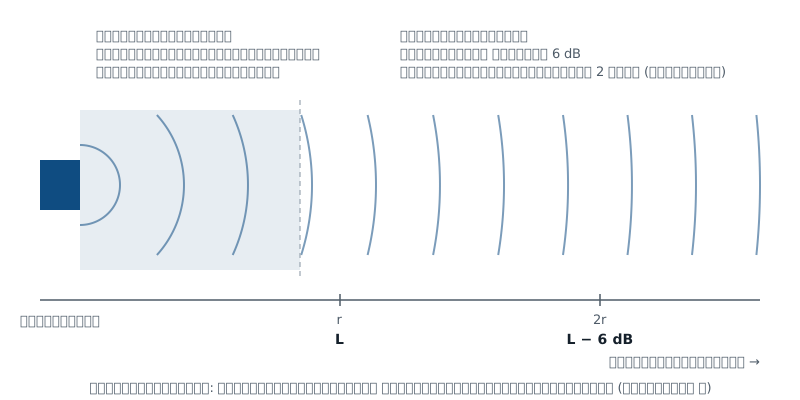
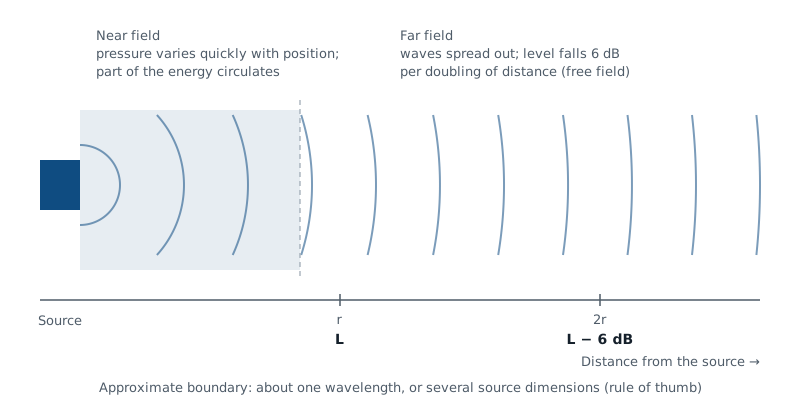
ใกล้แหล่งเสียงมาก ๆ พฤติกรรมของเสียงไม่ได้เรียบง่ายแบบที่ไกลออกไป ใน สนามเสียงระยะใกล้ (near field) ความดันเสียงเปลี่ยนเร็วตามตำแหน่ง ความดันกับความเร็วอนุภาคไม่ได้สัมพันธ์กันแบบตรงไปตรงมา และพลังงานบางส่วนไหลวนกลับไปมาใกล้ผิวแหล่งเสียงโดยไม่แผ่ออกไป ใน สนามเสียงระยะไกล (far field) คลื่นแผ่ออกอย่างสม่ำเสมอ ในสนามเสียงอิสระระดับลดลงราว 6 dB ทุกครั้งที่ระยะเพิ่มเป็นสองเท่าVery close to a source, sound does not behave as simply as further away. In the near field, pressure changes quickly with position, pressure and particle velocity are not simply related, and part of the energy circulates back and forth near the source surface without radiating away. In the far field, waves spread out regularly; in a free field the level falls by about 6 dB per doubling of distance.
- หัววัดความเข้มเสียง วัดการไหลของพลังงาน "สุทธิ" จึงแยกพลังงานที่ไหลวนกลับออกได้ และใช้ใกล้ผิวได้ แต่ค่า ΔPI จะสูงขึ้นในบริเวณที่พลังงานไหลวนมาก ต้องตรวจตัวชี้วัดเสมอAn intensity probe measures the net energy flow, so circulating energy largely cancels out and it can be used close to a surface; ΔPI rises where much energy circulates, so the indicators must always be checked.
- กล้องเสียงแบบ beamforming ทั่วไป ตั้งสมมติฐานเรื่องรูปแบบคลื่นจากระนาบที่โฟกัส การวัดใกล้เกินไปหรือไกลเกินไปจากช่วงที่ผู้ผลิตแนะนำทำให้ตำแหน่งในภาพคลาดได้A typical beamforming camera assumes a wave model from the focus plane; measuring much closer or further than the manufacturer's recommended range can shift positions in the map.
- เซนเซอร์บอกทิศที่สถานีเฝ้าระวัง อยู่ในสนามระยะไกลของแหล่งเสียงที่อยู่ห่างออกไป แต่สิ่งที่รบกวนคือเสียงสะท้อนจากอาคารและพื้น จึงต้องติดตั้งตามระยะที่แนะนำA DOA sensor at a monitoring station sits in the far field of distant sources; its disturbance is reflections from buildings and the ground, hence the recommended mounting distances.
- เครื่องวัดระดับเสียงทั่วไป วัดใกล้แหล่งเสียงเกินไปจะได้ค่าที่เปลี่ยนมากตามตำแหน่งเพียงเล็กน้อย ผลจึงไม่เหมาะใช้คำนวณระดับเสียงที่ระยะไกลAn ordinary sound level meter too close to a source gives readings that change greatly with small position changes, so they are a poor basis for predicting levels at a distance.
ตัวอย่างสถานการณ์: เลือกเครื่องมือให้ตรงคำถามExample scenario: choosing the tool that fits the question
โรงงานแห่งหนึ่งมีคำถามสามข้อในสัปดาห์เดียวกัน
1) ชุมชนร้องเรียนเสียงหึ่งตอนกลางคืน และมีทั้งโรงงานนี้ ถนน และโรงงานอื่นอยู่รอบ ๆ คำถามคือ "เสียงที่ทำให้เกินเกณฑ์มาจากทิศไหน" เป็นงานเฝ้าระวังระยะยาว เหมาะกับสถานีวัดเสียงที่มีเซนเซอร์บอกทิศ ร่วมกับการบันทึกเสียงเป็นหลักฐานประกอบ
2) ตู้ครอบเก็บเสียงของเครื่องอัดอากาศยังดังเกินคาด คำถามคือ "เสียงรั่วออกจากตรงไหนของตู้" กล้องเสียงให้ภาพรวมเร็วในความถี่กลางถึงสูง ส่วนการสแกนด้วยหัววัดความเข้มเสียงช่วยยืนยันจุดรั่วและจัดลำดับว่าแต่ละผนังของตู้ปล่อยพลังงานออกมาเท่าไร
3) ต้องการกำลังเสียงของปั๊มตัวหนึ่งในห้องเครื่องที่มีเครื่องอื่นทำงานอยู่ คำถามคือ "เครื่องนี้ปล่อยพลังงานเสียงเท่าไร" เมื่อปิดเครื่องอื่นไม่ได้ วิธีความเข้มเสียงตาม ISO 9614 เหมาะกว่าวิธีความดันเสียง
เครื่องมือทั้งสามไม่ได้ทดแทนกัน การเริ่มจากคำถามที่ต้องการตอบจะช่วยเลือกได้ถูกA factory faces three questions in the same week.
1) Neighbours complain of a night-time hum, and the factory, a road and other plants are all nearby. The question is "from which direction does the sound that exceeds the limit arrive?". This is long-term monitoring, suited to a noise monitoring station with a DOA sensor, together with audio recordings as supporting evidence.
2) A compressor enclosure is still louder than expected. The question is "where does sound leak from the enclosure?". An acoustic camera gives a quick overview at mid and high frequencies, while scanning with an intensity probe confirms the leaks and ranks how much energy each enclosure panel emits.
3) The sound power of one pump is needed in a plant room where other machines keep running. The question is "how much sound energy does this machine emit?". When the others cannot be switched off, the intensity method of ISO 9614 is better suited than the pressure method.
The three tools do not replace one another; starting from the question to be answered leads to the right choice.
ขั้นตอนการหาตำแหน่งแหล่งเสียงและจุดรั่ว และการใช้ข้อมูลทิศทางในงานเรื่องร้องเรียน อยู่ในวิธีการตรวจวัดที่เกี่ยวข้อง (ลิงก์ท้ายหน้า)The procedures for locating sources and leaks, and for using direction data in complaint work, are in the related application guides (links at the end of the page).
ตัวอย่างในชีวิตจริงEveryday example
ชาวบ้านร้องเรียนเสียงหึ่งตอนกลางคืน ทางทิศเหนือมีโรงงาน ทางทิศตะวันออกมีถนนใหญ่ สถานีเฝ้าระวังที่มี NL1 บันทึกได้ว่า ในช่วงที่ระดับเสียงสูง ย่านออกเตฟต่ำชี้มาทางทิศเหนืออย่างสม่ำเสมอ และค่า ΔPI ต่ำ ส่วนย่านสูงเปลี่ยนทิศไปมาตามรถที่วิ่งผ่านบนถนน ข้อมูลนี้ช่วยให้สรุปได้ว่าเสียงหึ่งที่เป็นปัญหามาจากทิศของโรงงาน แล้วจึงตรวจต่อที่ต้นเหตุ (สถานการณ์สมมุติเพื่ออธิบายหลักการ)Residents complain of a night-time hum. There is a factory to the north and a main road to the east. A monitoring station with an NL1 records that during the high-level periods the low octave bands point steadily north with a low ΔPI, while the high bands swing around as vehicles pass on the road. This supports the conclusion that the troublesome hum comes from the factory’s direction, and the investigation then moves to the source itself. (A hypothetical scenario to illustrate the principle.)
คำถามที่พบบ่อยFrequently asked questions
NL1 เป็นกล้องเสียง (acoustic camera) หรือไม่Is the NL1 an acoustic camera?
ไม่ใช่ NL1 เป็นเซนเซอร์บอกทิศทางที่ใช้หลักความเข้มเสียง ติดตั้งใต้ไมโครโฟนของสถานีวัดเสียงและต่อกับ XL3 ให้มุมราบและมุมเงยของเสียงหลักในแต่ละย่านออกเตฟ ไม่ได้สร้างภาพแผนที่เสียง และไม่บอกระยะถึงแหล่งเสียงNo. The NL1 is a direction sensor based on sound intensity, mounted below a monitoring station's microphone and connected to the XL3. It gives the azimuth and elevation of the dominant sound per octave band; it does not produce a sound map or the distance to the source.
ความเข้มเสียงวัดในห้องที่ก้องได้ไหมCan intensity be measured in a reverberant room?
ได้ในระดับหนึ่ง เพราะเสียงก้องที่ไหลเข้าออกจากทุกทิศหักล้างกันเป็นส่วนใหญ่ แต่เมื่อเสียงก้องมาก ค่า ΔPI จะสูง และความคลาดเคลื่อนทางเฟสของชุดวัดมีผลมากขึ้น มาตรฐาน ISO 9614 จึงกำหนดตัวชี้วัดของสนามเสียงเพื่อตัดสินว่าผลใช้ได้หรือไม่Up to a point, because reverberant energy flowing in and out from all directions largely cancels. With strong reverberation, however, ΔPI becomes high and the measuring chain's phase mismatch matters more, which is why ISO 9614 defines field indicators to decide whether a result is valid.
ทำไมกล้องเสียงหาตำแหน่งเสียงความถี่ต่ำได้ยากWhy do acoustic cameras struggle at low frequencies?
เพราะความละเอียดของภาพขึ้นกับความยาวคลื่นเทียบกับขนาดแผงไมโครโฟน เสียงความถี่ต่ำมีความยาวคลื่นยาวเป็นเมตร แผงขนาดพกพาจึงให้ "จุดสี" ที่กว้างมากจนแยกแหล่งเสียงที่อยู่ใกล้กันไม่ได้ งานความถี่ต่ำจึงมักต้องใช้แผงใหญ่ขึ้น วัดใกล้ขึ้นด้วยเทคนิคระยะใกล้ หรือใช้หัววัดความเข้มเสียงBecause image resolution depends on wavelength relative to array size. Low-frequency sound has wavelengths of metres, so a portable array produces a "spot" too wide to separate nearby sources. Low-frequency work therefore needs a larger array, a close-range technique, or an intensity probe.
รู้ทิศทางแล้วรู้ตัวการเลยไหมDoes knowing the direction identify the culprit?
ยังไม่เสมอไป ทิศทางเป็นหลักฐานสำคัญ แต่ถ้ามีแหล่งเสียงหลายแหล่งอยู่แนวเดียวกัน ต้องใช้หลักฐานอื่นประกอบ เช่น เสียงที่บันทึกไว้ ลักษณะสเปกตรัม เวลาเดินเครื่อง หรือการวัดเพิ่มใกล้แหล่งที่สงสัยNot always. Direction is strong evidence, but if several sources lie along the same line, other evidence is needed: audio recordings, the spectrum, operating times, or additional measurements close to the suspected source.
คำศัพท์สำคัญKey terms
- ความเข้มเสียง (Sound intensity)Sound intensity
- พลังงานเสียงที่ไหลผ่านพื้นที่หนึ่งหน่วยต่อวินาที มีทั้งขนาดและทิศทาง หน่วย W/m²Acoustic energy flowing through a unit area per second, with both size and direction, in W/m².
- สเกลาร์ / เวกเตอร์ (Scalar / Vector)Scalar / vector
- ปริมาณที่มีแค่ขนาด (เช่น ความดันเสียง) / ปริมาณที่มีทั้งขนาดและทิศทาง (เช่น ความเข้มเสียง)A quantity with size only (e.g. sound pressure) / a quantity with size and direction (e.g. sound intensity).
- หัววัดความเข้มเสียง (Intensity probe)Intensity probe
- ไมโครโฟนสองตัววางชิดกันในระยะที่รู้ค่า ใช้หาความเข้มเสียงตามแนวของคู่นั้นTwo microphones a known, small distance apart, used to find the intensity along their axis.
- ความเร็วอนุภาค (particle velocity)Particle velocity
- ความเร็วที่อนุภาคอากาศเคลื่อนไปมาขณะคลื่นเสียงผ่าน มีทิศทาง ใช้คู่กับความดันเสียงในการหาความเข้มเสียงThe speed at which air particles move back and forth as the sound wave passes; it has a direction and is combined with sound pressure to find intensity.
- มุมราบ / มุมเงย (Azimuth / Elevation)Azimuth / elevation
- ทิศทางในแนวนอนเทียบกับทิศเหนือ / มุมขึ้นลงเทียบกับแนวราบHorizontal direction relative to North / the angle up or down from the horizontal.
- ΔPI (Pressure–intensity indicator)ΔPI (pressure–intensity indicator)
- ความต่างระหว่างระดับความดันเสียงกับระดับความเข้มเสียง ค่าน้อยแปลว่าผลทิศทางน่าเชื่อถือThe difference between sound pressure level and intensity level; a small value means a trustworthy direction.
ความเข้าใจผิดที่พบบ่อยCommon misunderstandings
- “NL1 บอกได้ว่าเป็นเสียงของใคร” มันบอกทิศทาง ไม่ได้บอกชื่อแหล่งเสียง ถ้ามีสองแหล่งอยู่ทิศเดียวกัน ต้องใช้ข้อมูลอื่นประกอบ เช่น เสียงที่บันทึกไว้หรือสเปกตรัม“The NL1 tells you whose noise it is.” It gives a direction, not a name. If two sources lie in the same direction, other evidence such as audio recordings or spectra is needed.
- “ความดันเสียงสูงแปลว่าแหล่งเสียงอยู่ใกล้” ไม่เสมอไป เสียงสะท้อนหรือแหล่งเสียงไกลที่ดังมากก็ทำให้ความดันสูงได้“High pressure means the source is close.” Not always: reflections, or a very loud distant source, can also give high pressure.
- “ทุกค่าทิศทางเชื่อได้เท่ากัน” ต้องดู ΔPI ประกอบเสมอ ช่วงที่ ΔPI สูงควรตีความอย่างระมัดระวัง“Every direction reading is equally reliable.” Always check ΔPI; periods with a high ΔPI should be interpreted with care.
- “ติดตรงไหนก็ได้” การติดใกล้ผนังหรือพื้นทำให้เสียงสะท้อนรบกวนผล ควรทำตามระยะที่แนะนำ“It can go anywhere.” Mounting near walls or the ground lets reflections disturb the result; follow the recommended distances.
นำไปใช้ที่ไหนWhere it is used
- การเฝ้าระวังเสียงรอบไซต์ก่อสร้าง โรงงาน สนามบิน ฟาร์มกังหันลม และถนนNoise monitoring around construction sites, factories, airports, wind farms and roads
- การตรวจสอบเรื่องร้องเรียนเสียงดังในชุมชน เพื่อให้ได้ข้อมูลที่ใช้อ้างอิงได้Investigating community noise complaints with defensible data
- การแยกเสียงของแหล่งที่สนใจออกจากเสียงอื่นในผลการเฝ้าระวังระยะยาวSeparating the source of interest from other noise in long-term monitoring results
ถ้าต้องการ “ภาพ” ของตำแหน่งแหล่งเสียงบนเครื่องจักรหรือผนังในระยะใกล้ หรือหาจุดที่เสียงรั่ว จะใช้การวัดระยะใกล้แบบอื่น ซึ่งเป็นงานหาตำแหน่งแหล่งกำเนิดเสียง (Sound source localization) คนละแบบกับการบอกทิศทางของสถานีเฝ้าระวังIf you need a close-range “picture” of where sound comes from on a machine or a wall, or want to find a sound leak, other close-range measurements are used. That is sound source localization, a different task from the direction reporting of a monitoring station.