โจทย์The problem
ระบบเสียงประกาศในสนามบิน สถานี ห้างสรรพสินค้า หรือโรงงาน ต้องให้ทุกคนในพื้นที่ได้ยินข้อความชัดเจนพอ ๆ กัน สเปกของระบบจึงมักกำหนดสองเรื่อง:PA systems in airports, stations, shopping centres or factories must let everyone in the area hear announcements about equally well. Their specifications therefore usually cover two things:
- การตอบสนองความถี่ (frequency response): เสียงที่หูผู้ฟังต้องไม่ทุ้มหรือแหลมผิดปกติFrequency response: the sound at the listener's ear must not be unduly boomy or harsh.
- ความครอบคลุม (coverage): ระดับเสียงต้องใกล้เคียงกันทั่วพื้นที่ ไม่มีจุดที่ดังเกินหรือเบาจนฟังไม่ออกCoverage: the level must be similar throughout the area, with no spots that are far too loud or too quiet to follow.
ผู้ติดตั้งต้องพิสูจน์ได้ว่าระบบผ่านทั้งสองข้อ และควรทำได้เร็ว เพราะพื้นที่จริงมักกว้างและมีเวลาทดสอบจำกัดThe installer has to prove that the system meets both, and ideally do so quickly, since real areas are large and testing time is short.
ทำไมจึงยากWhy it was difficult
- สเปกกำหนดเป็นช่วงความคลาดเคลื่อนที่เปลี่ยนตามความถี่ การอ่านกราฟด้วยตาแล้วเทียบทีละย่านใช้เวลานานและพลาดได้ง่ายThe specification is a tolerance that changes with frequency; reading a graph by eye and comparing band by band is slow and error-prone.
- ความครอบคลุมต้องวัดหลายจุด แล้วหาว่าจุดดังที่สุดกับเบาที่สุดต่างกันเท่าไรในแต่ละย่านความถี่Coverage needs many positions and the spread between the loudest and quietest point in each frequency band.
- พื้นที่หนึ่งอาจแบ่งเป็นหลายส่วนที่มีเสียงต่างกัน (บทความเรียกว่า acoustically distinguishable space, ADS) แต่ละส่วนต้องตรวจแยกกันOne site may consist of several acoustically distinct zones (the article calls them acoustically distinguishable spaces, ADS), each of which must be checked separately.
วิธีวัดMeasurement approach
ตัวอย่างสเปกที่บทความใช้The example specification used in the article
| การตรวจCheck | เกณฑ์ตัวอย่างExample criterion |
|---|---|
| การตอบสนองความถี่Frequency response | เกณฑ์ตัวอย่างExample criterionอยู่ในช่วง ±2 dB จากเส้นแบน ตั้งแต่ 100 ถึง 2,000 Hz จากนั้นลดลง 3 dB ต่อออกเตฟจนถึง 10,000 HzWithin ±2 dB of flat from 100 to 2,000 Hz, then rolling off at 3 dB per octave up to 10,000 Hz |
| ความครอบคลุมCoverage | เกณฑ์ตัวอย่างExample criterionระดับสูงสุดและต่ำสุดในพื้นที่ฟังอยู่ในช่วง ±6 dB ตั้งแต่ 1,000 ถึง 4,000 HzMaximum and minimum levels across the listening area within ±6 dB from 1,000 to 4,000 Hz |
- วัดทางอะคูสติกที่ระดับความสูงหูของผู้ฟังทั่วไป เป็นย่าน 1/3 ออกเตฟMeasure acoustically at a typical listener's ear height, in 1/3-octave bands.
- สร้างหน้ากากสเปก (spectral mask) ผ่าน/ไม่ผ่านใน XL2 ด้วย Spectral Limits option ให้ตรงกับสเปกของโครงการCreate a pass/fail spectral mask in the XL2 with the Spectral Limits option to match the project specification.
- สำหรับความถี่ตอบสนอง ใช้ฟังก์ชันวัดการตอบสนองความถี่แบบเร็ว ค่าที่วัดนิ่งภายในประมาณ 1 วินาที จึงเดินสำรวจพื้นที่ได้รวดเร็วFor the frequency response, use the fast frequency response function; a running measurement settles within about 1 second, so the area can be surveyed quickly.
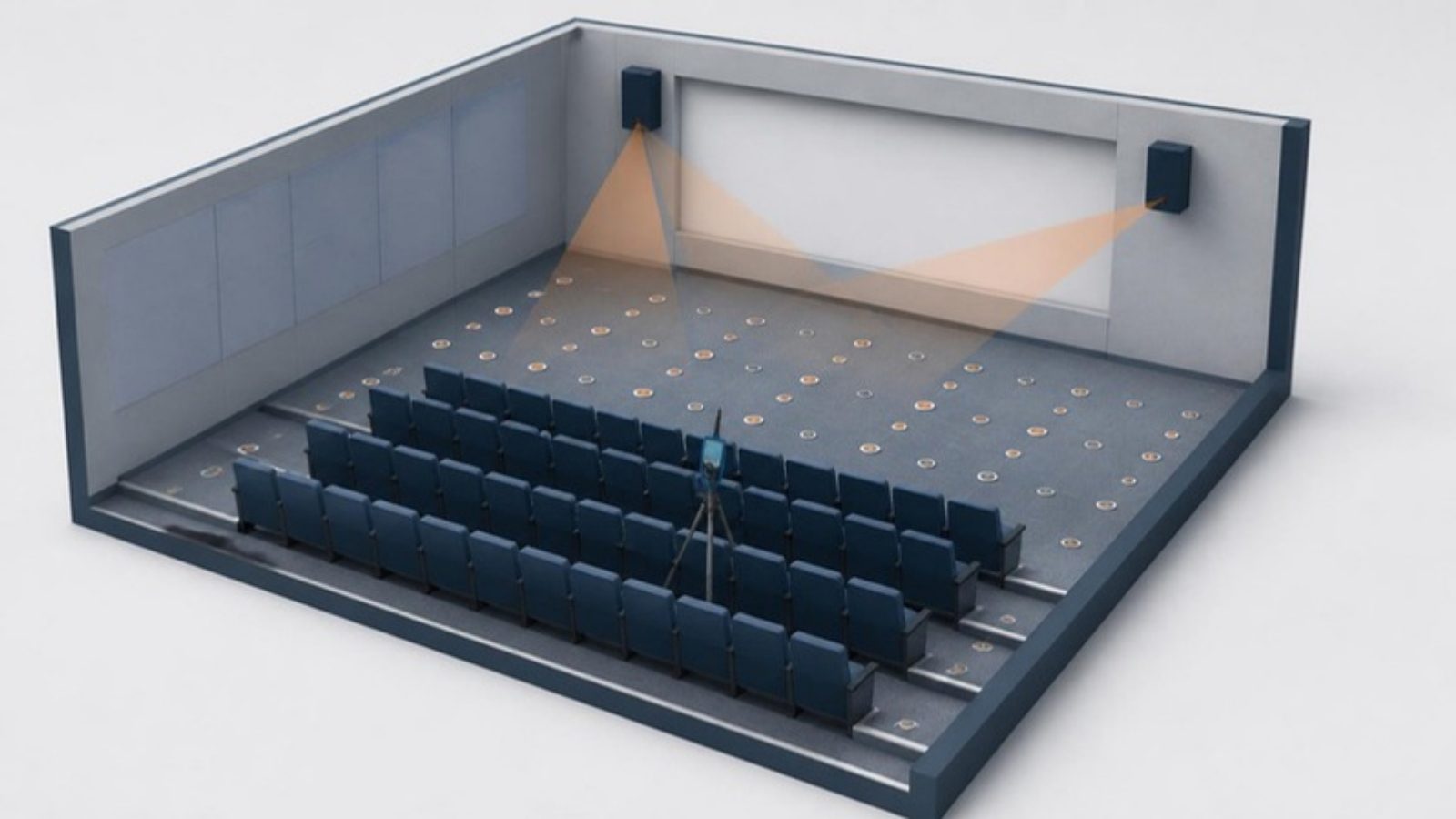
- สำหรับความครอบคลุม วัดหลายตำแหน่ง จะเป็นจุดคงที่แล้วหยุดวัดทีละจุด หรือเดินวัดต่อเนื่องทั่วแต่ละ ADS ก็ได้For coverage, measure at many positions: either fixed points, pausing at each, or a continuous walk through each ADS.
- เครื่องคำนวณสเปกตรัมสูงสุดสะสมลบด้วยสเปกตรัมต่ำสุดสะสม (running maximum minus running minimum) แล้วเทียบกับหน้ากากThe meter calculates the running maximum minus the running minimum spectrum and compares it with the mask.
บทความไม่ได้ระบุสัญญาณทดสอบที่ใช้ป้อนระบบ หรือวิธีตั้งค่าอ้างอิง ในการตรวจจริงควรตกลงเรื่องนี้ไว้ในแผนการทดสอบก่อนเริ่มวัดThe article does not state the test signal fed to the system or how a reference is set. In practice, agree on these in the test plan before measuring.
อุปกรณ์และซอฟต์แวร์ที่ใช้Equipment / software used
- XL2 Audio & Acoustic Analyzer วัดย่าน 1/3 ออกเตฟที่ตำแหน่งผู้ฟังXL2 Audio & Acoustic Analyzer measuring 1/3-octave bands at the listener's position.
- Spectral Limits option สร้างหน้ากากผ่าน/ไม่ผ่านและแสดงผลด้วยไฟ LEDSpectral Limits option to create pass/fail masks and show the result with LEDs.
- ฟังก์ชันวัดการตอบสนองความถี่แบบเร็ว สำหรับสำรวจพื้นที่อย่างรวดเร็วFast frequency response measurement for quick surveys of the area.
สิ่งที่วิเคราะห์What was analysed
- รูปร่างของการตอบสนองความถี่ เทียบกับหน้ากาก: ส่วนที่แบนในช่วง 100–2,000 Hz และส่วนที่ลาดลงถึง 10,000 HzThe shape of the frequency response against the mask: the flat part from 100 to 2,000 Hz and the sloping part up to 10,000 Hz.
- ความต่างระดับระหว่างจุดดังที่สุดกับเบาที่สุด ในแต่ละย่าน 1/3 ออกเตฟ ช่วง 1,000–4,000 HzThe spread between the loudest and quietest point in each 1/3-octave band from 1,000 to 4,000 Hz.
เพราะค่าต่ำสุดไม่มีทางมากกว่าค่าสูงสุด ผลต่าง "สูงสุดลบต่ำสุด" จึงไม่ติดลบเสมอ สเปก ±6 dB จึงแปลงเป็นหน้ากากช่วง 0 ถึง 12 dB สำหรับผลต่างนี้ เช่น ถ้าที่ 2,000 Hz จุดดังที่สุดสูงกว่าจุดเบาที่สุด 9 dB ย่านนั้นผ่าน แต่ถ้าต่างกัน 14 dB ย่านนั้นไม่ผ่านBecause the minimum can never exceed the maximum, the "maximum minus minimum" spread is never negative, so the ±6 dB specification becomes a mask of 0 to 12 dB for that spread. For instance, if the loudest point at 2,000 Hz is 9 dB above the quietest, that band passes; a 14 dB spread would fail.
ผลที่ได้Key findings
บทความเป็นตัวอย่างวิธีตรวจ จึงไม่มีผลการวัดของระบบจริง สิ่งที่บทความแสดงคือรูปแบบการแจ้งผล:The article is a method example, so it reports no results from a real system. What it shows is how the result is presented:
- ไฟ LED สีเขียว หมายถึงผ่านสเปกA green LED means the specification is met.
- ไฟ LED สีแดง หมายถึงไม่ผ่าน และหน้าจอแสดงแถบทึบเหนือสเปกตรัมที่ความถี่ที่ไม่ผ่านA red LED means it failed, and the display marks the failing frequencies with solid bars above the spectrum.
ตัวเลขในตาราง (±2 dB, ±6 dB และช่วงความถี่) เป็นสเปกตัวอย่างในบทความ ไม่ใช่เกณฑ์มาตรฐานที่ใช้ได้กับทุกโครงการ ส่วนตัวเลข 9 dB และ 14 dB ในกล่องตัวอย่างเป็นตัวเลขสมมติเพื่ออธิบายเท่านั้นThe figures in the table (±2 dB, ±6 dB and the frequency ranges) are the article's example specification, not a standard criterion for every project. The 9 dB and 14 dB values in the example box are illustrative only.
บทเรียนที่นำไปใช้ได้What we can learn
หัวข้อนี้เป็นความเห็นและข้อสังเกตทั่วไปของ GET BEST SOUND ไม่ใช่ข้อความหรือผลสรุปของ NTi AudioThis section is general commentary by GET BEST SOUND, not a statement or conclusion from NTi Audio.
- เขียนสเปกให้วัดได้ สเปกที่ระบุช่วงความคลาดเคลื่อน ช่วงความถี่ ความละเอียดย่าน (1/3 ออกเตฟ) และตำแหน่งวัด ทำให้ผู้ติดตั้งและผู้ตรวจรับเข้าใจตรงกันWrite specifications that can be measured. A spec that states the tolerance, frequency range, band resolution (1/3 octave) and measurement position lets installer and client read it the same way.
- แปลงสเปกเป็นหน้ากากผ่าน/ไม่ผ่าน ช่วยลดการตีความกราฟด้วยตา และทำให้ผลตรวจรับชัดเจน ใช้เป็นหลักฐานในรายงานส่งมอบได้Turn the spec into a pass/fail mask. It removes interpretation of graphs by eye and gives a clear acceptance result that can go into the handover report.
- ความครอบคลุมคือเรื่องของความต่าง ไม่ใช่ระดับเฉลี่ย ระบบที่ดังพอโดยเฉลี่ยอาจยังมีมุมอับที่ฟังไม่ออก การดูค่าสูงสุดลบต่ำสุดจึงสำคัญCoverage is about spread, not average level. A system that is loud enough on average may still leave dead spots, which is why maximum minus minimum matters.
- ตรวจแยกทีละพื้นที่ที่มีสภาพเสียงต่างกัน เช่น โถงสูงกับทางเดิน เพราะผลรวมทั้งอาคารอาจซ่อนปัญหาในบางส่วนCheck each acoustically distinct zone separately, such as a high hall and a corridor, because a whole-building result can hide problems in one part.
- การตอบสนองความถี่และความครอบคลุมเป็นพื้นฐาน แต่ระบบที่ต้องการให้ฟังข้อความออก เช่น ระบบประกาศฉุกเฉิน มักต้องตรวจความชัดเจนของเสียงพูด (STI) เพิ่มเติมด้วยFrequency response and coverage are the foundation, but systems that must deliver understandable messages, such as emergency voice alarms, usually also need a speech intelligibility (STI) check.