ทำไมเรื่องนี้สำคัญWhy this matters
ผู้เริ่มต้นมักคิดว่าไมโครโฟนวัดเสียงรับเสียงรอบทิศ จึงวางอย่างไรก็ได้ ความจริงคือที่ความถี่ต่ำ ทิศทางแทบไม่มีผล แต่ที่ความถี่สูง ค่าที่อ่านได้ขึ้นกับทั้ง ชนิดของไมโครโฟน และ ทิศทางที่เสียงเข้ามา ถ้าใช้ไมโครโฟนผิดแบบหรือหันผิดทาง ระดับเสียงในย่านหลาย kHz อาจคลาดไปได้โดยไม่มีใครสังเกต โดยเฉพาะในการวิเคราะห์ย่านความถี่ งานวัดเสียงเครื่องจักร และงานที่มาตรฐานกำหนดทิศทางไมโครโฟนไว้Beginners often assume that because a measurement microphone is omnidirectional, it can be placed any way. In fact, direction hardly matters at low frequencies, but at high frequencies the reading depends on both the type of microphone and the direction the sound comes from. With the wrong type, or the wrong orientation, levels in the kHz range can be off without anyone noticing, particularly in frequency-band analysis, machinery noise work and measurements where the standard prescribes the microphone orientation.
แนวคิดทั่วไป: สนามเสียงสามแบบThe general concept: three kinds of sound field
ส่วนนี้อธิบายหลักการทางอะคูสติกทั่วไป ซึ่งใช้ได้กับไมโครโฟนวัดเสียงทุกยี่ห้อThis part explains the general acoustic principle, which applies to measurement microphones of any brand.
| สนามเสียงSound field | เสียงมาถึงอย่างไรHow sound arrives | ตัวอย่างExamples |
|---|---|---|
| สนามเสียงอิสระ (free field)Free field | เสียงมาถึงอย่างไรHow sound arrivesจากทิศทางเดียว ไม่มีการสะท้อนFrom one direction, no reflections | ตัวอย่างExamplesกลางแจ้งห่างจากสิ่งสะท้อน ห้องไร้เสียงสะท้อน (anechoic room)Outdoors away from reflecting surfaces; an anechoic room |
| สนามเสียงกระจาย (diffuse field)Diffuse field | เสียงมาถึงอย่างไรHow sound arrivesจากทุกทิศ ด้วยพลังงานใกล้เคียงกันFrom all directions with similar energy | ตัวอย่างExamplesห้องก้อง (reverberation room) จุดที่ห่างจากลำโพงในห้องที่ก้องมากA reverberation room; points far from the loudspeaker in a very reverberant room |
| สนามความดัน (pressure field)Pressure field | เสียงมาถึงอย่างไรHow sound arrivesความดันเท่ากันทุกจุดในพื้นที่เล็กEqual pressure throughout a small space | ตัวอย่างExamplesช่องปิดของเครื่องสอบเทียบเสียง (coupler) ผิวผนังที่ไมโครโฟนติดเรียบเสมอผิวThe cavity (coupler) of a sound calibrator; a wall with the microphone mounted flush |
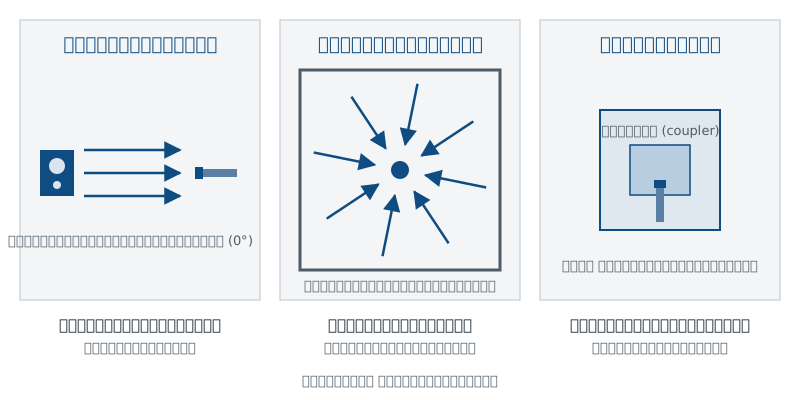
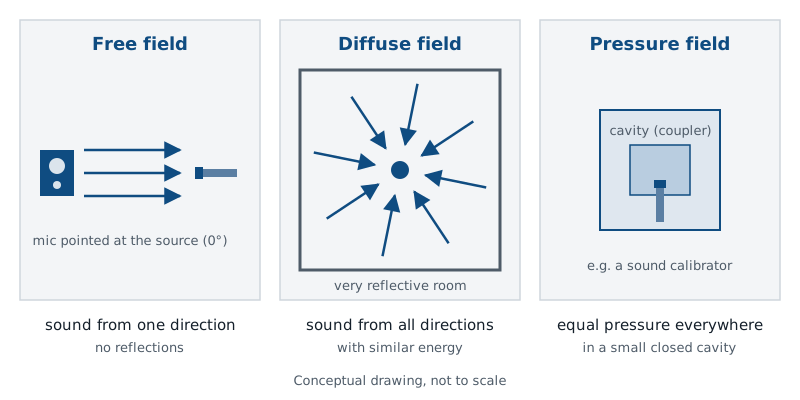
ในชีวิตจริง สนามเสียงส่วนใหญ่อยู่ ระหว่าง สองแบบแรก ใกล้แหล่งเสียง เสียงตรง (direct sound) มีอิทธิพลมาก จึงใกล้เคียงสนามเสียงอิสระ ห่างออกไปในห้องที่มีผิวแข็ง เสียงสะท้อน (reverberant sound) จากทุกทิศมีบทบาทมากขึ้นจนใกล้เคียงสนามเสียงกระจาย ระยะที่เสียงตรงกับเสียงสะท้อนมีพลังงานเท่ากันเรียกว่า ระยะวิกฤต (critical distance) ซึ่งสั้นลงเมื่อห้องก้องมากขึ้นIn real life most sound fields lie between the first two. Close to a source the direct sound dominates, so the field is close to free field. Further away in a room with hard surfaces, reverberant sound arriving from all directions takes over until the field approaches diffuse. The distance at which direct and reverberant sound carry equal energy is called the critical distance; it becomes shorter as the room becomes more reverberant.
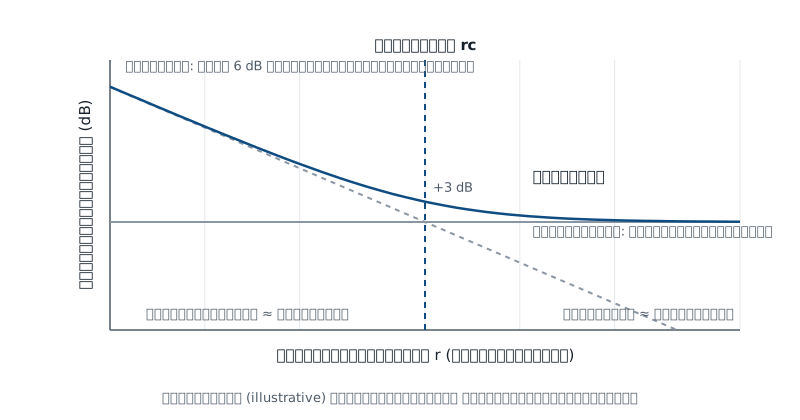
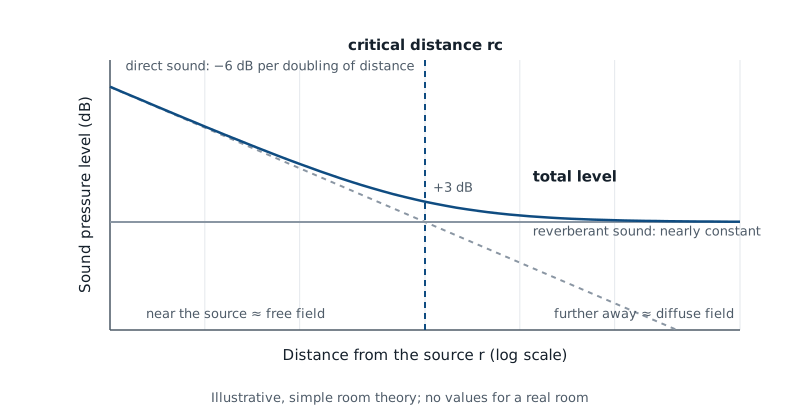
สำหรับวิศวกร ระยะวิกฤตประมาณได้จากทฤษฎีห้องอย่างง่าย rc ≈ 0.057 √(Q·V / T) เมตร เมื่อ V คือปริมาตรห้อง (m³) T คือเวลาเสียงก้อง (s) และ Q คือค่าทิศทางของแหล่งเสียง (Q = 1 สำหรับแหล่งเสียงรอบทิศ) ตัวอย่างเช่น ห้อง 200 m³ ที่ T = 1 s กับแหล่งเสียงรอบทิศ ได้ rc ประมาณ 0.8 m เท่านั้น แปลว่าในห้องก้องทั่วไป จุดวัดที่ห่างแหล่งเสียงเกินหนึ่งเมตรก็อาจถูกเสียงสะท้อนครอบงำแล้ว สูตรนี้ใช้ประมาณขนาดเท่านั้น ไม่ใช่ค่าที่ใช้ในรายงานFor engineers, the critical distance can be estimated from simple room theory as rc ≈ 0.057 √(Q·V / T) metres, where V is the room volume (m³), T the reverberation time (s) and Q the directivity factor of the source (Q = 1 for an omnidirectional source). For example, a 200 m³ room with T = 1 s and an omnidirectional source gives rc of only about 0.8 m, meaning that in an ordinary reverberant room a position more than a metre from the source may already be dominated by reverberant sound. The formula is for estimating orders of magnitude only, not for values in a report.
สนามเสียงอิสระ (free field) ไม่ใช่สิ่งเดียวกับ สนามไกล (far field) สนามเสียงอิสระพูดถึงการไม่มีการสะท้อน ส่วนสนามใกล้/สนามไกลพูดถึงระยะห่างจากแหล่งเสียงเทียบกับขนาดของแหล่งเสียงและความยาวคลื่น เราอาจอยู่ในสนามเสียงอิสระแต่ยังอยู่ในสนามใกล้ของเครื่องจักรขนาดใหญ่ก็ได้A free field is not the same thing as the far field. "Free" is about the absence of reflections; near field and far field are about distance from the source compared with the source size and the wavelength. You can be in a free field and still be in the near field of a large machine.
ทำไมไมโครโฟนจึงมีหลายแบบWhy there are different microphone types
ไมโครโฟนเป็นวัตถุจริงที่มีขนาด เมื่อความยาวคลื่นเสียงยาวกว่าไมโครโฟนมาก (ความถี่ต่ำ) เสียงอ้อมผ่านไปโดยแทบไม่รู้สึกถึงไมโครโฟน แต่เมื่อความยาวคลื่นสั้นลงจนใกล้เคียงขนาดไมโครโฟน (ความถี่สูง) เสียงที่มาจากด้านหน้าจะสะท้อนและเลี้ยวเบนรอบตัวไมโครโฟน ทำให้ ความดันที่ไดอะแฟรมสูงกว่าความดันที่ควรจะเป็นถ้าไม่มีไมโครโฟนอยู่ตรงนั้น ผลนี้ขึ้นกับทิศทางที่เสียงเข้ามา และเห็นชัดขึ้นในไมโครโฟนขนาดใหญ่ ผู้ผลิตจึงปรับผลตอบสนองความถี่ของไมโครโฟนให้ชดเชยผลนี้สำหรับสภาพการใช้งานแบบใดแบบหนึ่งA microphone is a real object with a size. When the wavelength is much longer than the microphone (low frequencies), sound passes around it almost as if it were not there. When the wavelength shrinks to around the microphone's size (high frequencies), sound arriving from the front reflects and diffracts around the body, so the pressure at the diaphragm is higher than the pressure that would exist without the microphone. The effect depends on the direction of arrival and is larger for bigger microphones. Manufacturers therefore tailor the frequency response to compensate for it under one particular kind of use.
- ไมโครโฟนแบบ free-field: ปรับให้ค่าที่อ่านได้เท่ากับระดับเสียงของสนามเสียงอิสระ ก่อน ที่ไมโครโฟนจะถูกวางลงไป เมื่อเสียงมาจากด้านหน้าตรง ๆ (มุมตกกระทบ 0°) จึงควรหันไมโครโฟนเข้าหาแหล่งเสียงFree-field microphone: tuned so that its reading equals the level of the free field before the microphone was put there, for sound arriving straight from the front (0° incidence). Point it at the source.
- ไมโครโฟนแบบ diffuse-field หรือ random-incidence: ปรับให้ถูกต้องเมื่อเสียงมาจากทุกทิศพร้อมกัน เหมาะกับห้องที่ก้องมาก หรือเมื่อไม่รู้ว่าเสียงจะมาจากทางไหนDiffuse-field (random-incidence) microphone: tuned to be correct when sound arrives from all directions at once. Suited to very reverberant rooms, or when the direction of arrival is unknown.
- ไมโครโฟนแบบ pressure: ปรับให้วัดความดันที่เกิดขึ้นจริงบนไดอะแฟรม เหมาะกับการติดเรียบเสมอผนังหรือพื้นผิว การวัดในช่องปิด (coupler) และการทดสอบบางแบบ เช่น ในท่อPressure microphone: tuned to measure the actual pressure on the diaphragm. Suited to flush mounting in a wall or surface, measurements in closed couplers, and some tests such as in ducts or tubes.
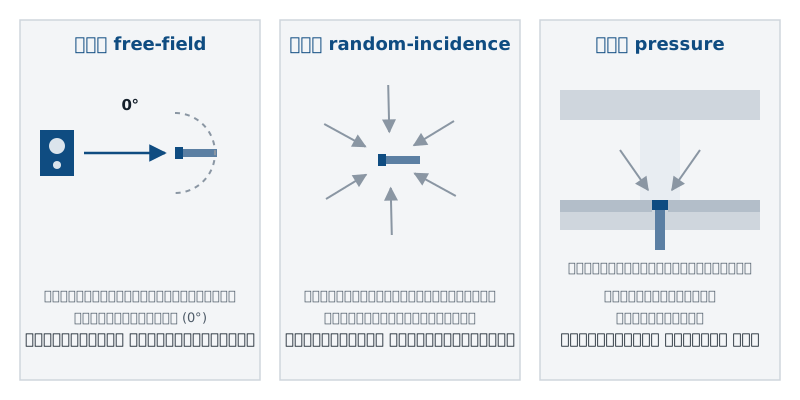
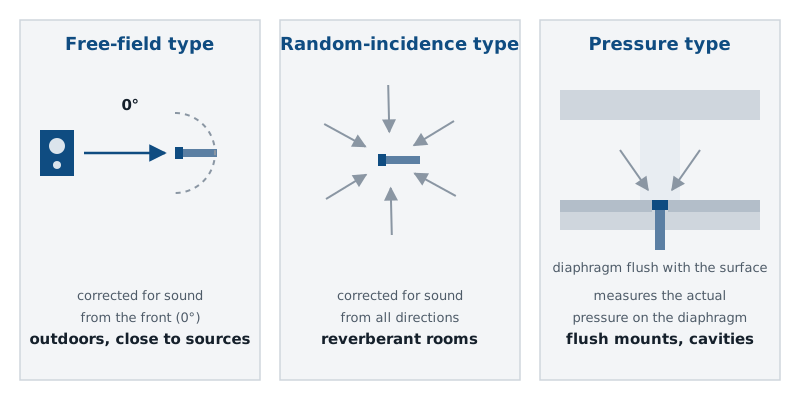
ความต่างของสามแบบนี้แทบไม่มีที่ความถี่ต่ำและกลาง แต่จะเพิ่มขึ้นในย่านความถี่สูง ไมโครโฟนขนาดเล็ก เช่น 1/4 นิ้ว มีความต่างน้อยกว่าไมโครโฟน 1/2 นิ้วในย่านความถี่เดียวกัน เพราะรบกวนสนามเสียงน้อยกว่า ตัวเลขความต่างที่แน่นอนขึ้นกับรุ่น ให้ดูจากเอกสารของผู้ผลิตThe three types barely differ at low and mid frequencies; the difference grows at high frequencies. A small microphone such as 1/4 inch differs less than a 1/2-inch one over the same range, because it disturbs the field less. The exact differences depend on the model; take them from the manufacturer's data.
มาตรฐานเครื่องวัดระดับเสียง IEC 61672-1 ยอมให้ผู้ผลิตระบุการตอบสนองความถี่ของเครื่องได้ทั้งแบบเสียงมาจากทิศทางหลักทิศเดียวในสนามเสียงอิสระ หรือแบบเสียงมาจากทิศทางสุ่ม คู่มือของเครื่องจึงต้องบอกว่าออกแบบไว้แบบใด และทิศทางอ้างอิงคือทางไหน มาตรฐานวิธีวัดบางฉบับหรือข้อกำหนดของบางประเทศอาจระบุแบบที่ต้องใช้ไว้ ควรตรวจสอบก่อนเลือกอุปกรณ์The sound level meter standard IEC 61672-1 allows a manufacturer to specify the meter's frequency response either for sound from one principal direction in a free field or for sound from random directions. The manual must therefore say which design applies and what the reference direction is. Some measurement standards or national requirements specify which type to use; check before choosing equipment.
สนามความดันกับการสอบเทียบThe pressure field and calibration
เครื่องสอบเทียบเสียงแบบพกพาสร้างเสียงในช่องปิดเล็ก ๆ ที่สวมครอบไมโครโฟน ในช่องนี้เป็น สนามความดัน ไม่ใช่สนามเสียงอิสระ สำหรับไมโครโฟนแบบ free-field ที่ความถี่ 1 kHz ซึ่งเป็นความถี่สอบเทียบทั่วไป ความต่างมักเล็กมาก แต่ไม่จำเป็นต้องเป็นศูนย์ ผู้ผลิตบางรายจึงให้ ค่าแก้ (correction) สำหรับการตั้งระดับอ้างอิงตอนสอบเทียบ ควรใช้ค่าตามคู่มือของชุดไมโครโฟนและเครื่องสอบเทียบที่ใช้จริงA handheld sound calibrator produces its tone in a small closed cavity fitted over the microphone. That cavity is a pressure field, not a free field. For a free-field microphone at 1 kHz, the usual calibration frequency, the difference is usually very small, but not necessarily zero, so some manufacturers give a correction for the reference level set during calibration. Use the value from the manual for the actual microphone and calibrator combination.
ตัดสินใจอย่างไรหน้างานDeciding on site
ส่วนนี้เป็นลำดับความคิดทางวิศวกรรมที่ใช้ได้กับเครื่องมือทุกยี่ห้อ เป้าหมายคือให้การตั้งไมโครโฟนตรงกับทั้งสนามเสียงจริงและข้อกำหนดของงาน และบันทึกไว้จนผู้อื่นทำซ้ำได้This is an engineering sequence that applies to any brand of equipment. The aim is to match the microphone set-up to both the real sound field and the job's requirements, and to record it so that someone else can repeat it.
- อ่านข้อกำหนดก่อน: มาตรฐานวิธีวัดหรือข้อกำหนดของงานระบุความสูง ระยะ หรือทิศทางไมโครโฟนไว้หรือไม่ ถ้าระบุ ให้ทำตามนั้นก่อนเหตุผลอื่นRead the requirements first: does the measurement standard or job specification prescribe microphone height, distance or orientation? If so, follow it before any other consideration.
- ดูคู่มือเครื่อง: เครื่องวัดถูกออกแบบแบบ free-field หรือ random-incidence และทิศทางอ้างอิงคือทางไหนCheck the instrument manual: is the meter designed for free-field or random incidence, and what is its reference direction?
- ประเมินสนามเสียงที่จุดวัด: แหล่งเสียงชัดเจนและอยู่ใกล้เมื่อเทียบกับระยะวิกฤต หรือห้องก้องมากจนเสียงมาจากทุกทิศAssess the field at the position: is there one clear source that is close compared with the critical distance, or is the room so reverberant that sound arrives from everywhere?
- ตั้งไมโครโฟนและอุปกรณ์เสริม: หันตามแบบที่ออกแบบไว้ ถ้าใส่ฟองกันลมหรือชุดกันสภาพอากาศ ให้ใช้ค่าแก้หรือการตั้งค่าที่ผู้ผลิตกำหนดสำหรับอุปกรณ์นั้นSet up the microphone and accessories: orient it as designed; if a windscreen or weather protection is fitted, apply the manufacturer's correction or setting for that accessory.
- บันทึก: ชนิดไมโครโฟน ทิศทาง อุปกรณ์ที่สวม และค่าแก้ที่ใช้ ลงในรายงานRecord: microphone type, orientation, accessories fitted and corrections used, in the report.
ตัวอย่างสถานการณ์: ต้องวัดเสียงเครื่องกำเนิดไฟฟ้าสำรองสองจุด จุดแรกกลางแจ้งห่างจากเครื่อง 7 เมตร มีแหล่งเสียงหลักชัดเจน จึงใช้ไมโครโฟนแบบ free-field ที่หันเข้าหาเครื่อง จุดที่สองอยู่ในห้องเครื่องที่ผนังเป็นคอนกรีตเปลือย ซึ่งจากสูตรประมาณ ระยะวิกฤตสั้นกว่าหนึ่งเมตร จุดวัดส่วนใหญ่ในห้องจึงเป็นสนามเสียงกระจายโดยประมาณ ผู้วัดตรวจว่ามาตรฐานที่ใช้กำหนดทิศทางไมโครโฟนในห้องอย่างไร ทำตามนั้น และบันทึกว่าใช้ไมโครโฟนแบบใดและตั้งทิศทางอย่างไร เพื่อให้คนที่วัดซ้ำในอนาคตได้ผลที่เทียบกันได้Example scenario: a standby generator must be measured at two positions. The first is outdoors, 7 m from the unit, with one clear dominant source, so a free-field microphone pointed at the generator is used. The second is inside the plant room with bare concrete walls, where the estimate gives a critical distance under one metre, so most positions in the room are roughly a diffuse field. The engineer checks what the applicable standard says about microphone orientation in the room, follows it, and records the microphone type and orientation so that a future repeat measurement gives comparable results.
ในเครื่องมือ NTi AudioHow NTi Audio equipment fits
ส่วนนี้เป็นข้อมูลเฉพาะของ NTi Audio ไม่ใช่นิยามทั่วไป NTi Audio ระบุว่าไมโครโฟนวัดเสียงสำหรับ XL2 และ XL3 เป็นแบบรับเสียงรอบทิศ และปรับให้มี ผลตอบสนองแบบ free-field ที่เรียบในช่วง 5 Hz ถึง 20 kHz (ตามที่ระบุในหน้าของแต่ละรุ่น) ในการใช้งานปกติจึงควรหันไมโครโฟนเข้าหาแหล่งเสียงThis part is NTi Audio-specific, not a general definition. NTi Audio states that its measurement microphones for the XL2 and XL3 are omnidirectional and optimised for a flat free-field response from 5 Hz to 20 kHz (as given on each model's page). In normal use, therefore, point the microphone at the source.
ข้อมูลทางเทคนิคของ XL3 อธิบายว่า เนื่องจากไมโครโฟนเป็นแบบ free-field แต่เครื่องสอบเทียบทำงานในสนามความดัน การใช้ค่าแก้ free-field ขณะสอบเทียบจะให้ความไวที่แม่นยำที่สุด เอกสารนั้นมีตารางค่าระดับที่ต้องตั้งบนเครื่องวัดตามรุ่นไมโครโฟนและรุ่นเครื่องสอบเทียบ สำหรับไมโครโฟน free-field ขนาด 1/2 นิ้ว ค่านี้ต่ำกว่าระดับระบุ 94.0 dB ของเครื่องสอบเทียบเล็กน้อย (ต่างกันอย่างมากเพียงไม่กี่ในสิบของ dB) และต่างกันไปตามรุ่นเครื่องสอบเทียบ ค่าเมื่อใส่ฟองกันลมหรือชุดกันสภาพอากาศก็อยู่ในเอกสารเดียวกัน ให้ใช้ค่าของชุดที่ใช้จริงจากเอกสารฉบับล่าสุดThe XL3 technical data explain that, because the microphones are free-field types while the calibrator works in a pressure field, applying a free-field correction during calibration gives the most accurate sensitivity. That document tabulates the level to enter on the meter for each microphone and calibrator model. For 1/2-inch free-field microphones it is slightly below the calibrator's nominal 94.0 dB (a few tenths of a dB at most) and differs between calibrator models; values with windscreens or weather protection fitted are in the same document. Use the value for your exact combination from the current edition.
สำหรับงานกลางแจ้ง NTi Audio ระบุว่าไมโครโฟนสำหรับเฝ้าระวังเสียงกลางแจ้งผ่านข้อกำหนด IEC 61672 ทั้งสำหรับเสียงที่มาจากแนวนอนและแนวตั้ง เพื่อรองรับทั้งแหล่งเสียงบนพื้นและเสียงจากด้านบน เช่น เครื่องบินFor outdoor work, NTi Audio states that its outdoor monitoring microphones are specified to IEC 61672 for both horizontal and vertical sound incidence, to cover sources at ground level as well as sound from above, such as aircraft.
ตัวอย่างงานวิศวกรรมPractical engineering example
วิศวกรวัดเสียงพัดลมระบายอากาศบนหลังคาในย่าน 1/3 ออกเตฟ เพื่อหาว่าเสียงแหลมมาจากใบพัดหรือไม่ จุดวัดอยู่กลางแจ้ง ห่างจากผนังพอสมควร เขาใช้ไมโครโฟนแบบ free-field และหันไมโครโฟนเข้าหาพัดลม ผลในย่าน 4 ถึง 8 kHz จึงเชื่อถือได้ ถ้าหันไมโครโฟนไปด้านข้างหรือชี้ขึ้นฟ้าแทน ผลในย่านความถี่สูงเหล่านี้อาจคลาดไปจากค่าจริงได้ แม้ย่านความถี่ต่ำจะแทบไม่เปลี่ยนAn engineer measures a rooftop exhaust fan in 1/3-octave bands to find out whether a whistling tone comes from the blades. The position is outdoors, reasonably far from walls. A free-field microphone pointed at the fan makes the 4–8 kHz results trustworthy. Pointed sideways or straight up instead, the microphone could read these high-frequency bands wrongly, even though the low bands would barely change.
ความเข้าใจผิดที่พบบ่อยCommon misunderstandings
- “ไมโครโฟนรอบทิศ จึงไม่ต้องสนใจทิศทาง” ที่ความถี่ต่ำใช่ แต่ที่ความถี่สูง ทิศทางมีผลต่อค่าที่อ่านได้“It's omnidirectional, so direction doesn't matter.” True at low frequencies; at high frequencies direction affects the reading.
- “free field หมายถึงกลางแจ้ง” ไม่เสมอไป กลางแจ้งยังมีพื้นและผนังที่สะท้อนเสียง ส่วนห้องไร้เสียงสะท้อนในอาคารก็ใกล้เคียงสนามเสียงอิสระได้“Free field means outdoors.” Not always: outdoors there are still reflections from the ground and walls, while an indoor anechoic room can come close to a free field.
- “ไมโครโฟนแบบ pressure ด้อยกว่า” ไม่ใช่ แต่ละแบบถูกต้องในสภาพที่ออกแบบไว้ แบบ pressure เหมาะกับการติดเรียบผิวหรือในช่องปิด“Pressure microphones are inferior.” No. Each type is correct in the conditions it was designed for; a pressure microphone suits flush mounting and closed cavities.
- “ค่าแก้ตอนสอบเทียบเป็นค่าเดียวกันทุกไมโครโฟน” ไม่ใช่ ค่าแก้ขึ้นกับรุ่นไมโครโฟน เครื่องสอบเทียบ และอุปกรณ์ที่สวมอยู่ ต้องใช้ค่าจากเอกสารของผู้ผลิต“The calibration correction is the same for every microphone.” No. It depends on the microphone model, the calibrator and any accessory fitted; use the manufacturer's value.
คำถามที่พบบ่อยFrequently asked questions
วัดในห้องทั่วไป ควรใช้ไมโครโฟนแบบ free-field หรือ random-incidenceIn an ordinary room, should I use a free-field or a random-incidence microphone?
ขึ้นกับว่ามาตรฐานหรือข้อกำหนดของงานระบุไว้อย่างไร และเครื่องวัดของคุณออกแบบไว้แบบใด ในย่านความถี่ต่ำและกลาง ความต่างมีน้อยมาก ความต่างจะมีผลในย่านความถี่สูง สิ่งที่สำคัญที่สุดคือใช้ตามที่เครื่องออกแบบไว้ หันตามทิศทางอ้างอิง และบันทึกไว้ในรายงานIt depends on what the standard or job specification says and on how your meter is designed. At low and mid frequencies the difference is very small; it matters at high frequencies. Most important is to use the microphone as designed, orient it to the reference direction, and record this in the report.
ถ้าแหล่งเสียงเคลื่อนที่ เช่น รถวิ่งผ่าน ควรหันไมโครโฟนอย่างไรIf the source moves, such as a passing vehicle, how should the microphone be oriented?
มาตรฐานวิธีวัดสำหรับงานประเภทนั้นมักกำหนดตำแหน่งและทิศทางไว้ ให้ทำตามนั้น ถ้าไม่มีข้อกำหนด ให้ตั้งตามที่คู่มือเครื่องแนะนำสำหรับเสียงที่มาจากหลายทิศ และระบุการตั้งค่าไว้ในรายงานThe measurement standard for that type of work usually prescribes the position and orientation; follow it. Without a requirement, set it up as the instrument manual recommends for sound from varying directions, and state the set-up in the report.
ฟองกันลมทำให้ผลเปลี่ยนไหมDoes a windscreen change the result?
ฟองกันลมเปลี่ยนผลตอบสนองในย่านความถี่สูงได้เล็กน้อย ผู้ผลิตบางรายจึงให้ค่าแก้หรือการตั้งค่าเฉพาะสำหรับฟองกันลมและชุดกันสภาพอากาศแต่ละแบบ ใช้ค่าจากเอกสารของชุดอุปกรณ์ที่ใช้จริงA windscreen can slightly change the high-frequency response, so some manufacturers give a correction or a specific setting for each windscreen and weather-protection type. Use the values from the documents for the actual combination you use.
ห้องไร้เสียงสะท้อนจำเป็นต้องมีสำหรับงานวัดทั่วไปไหมIs an anechoic room needed for ordinary measurements?
ไม่จำเป็น ห้องไร้เสียงสะท้อนใช้ในงานห้องปฏิบัติการ เช่น การทดสอบไมโครโฟนหรือการวัดกำลังเสียงบางวิธี งานภาคสนามส่วนใหญ่ทำในสภาพจริง แล้วใช้ตำแหน่งวัด ทิศทางไมโครโฟน และการแก้ค่าตามมาตรฐานวิธีวัดNo. Anechoic rooms are used for laboratory work, such as testing microphones or some sound power methods. Most field work is done in real conditions, using the positions, microphone orientation and corrections defined by the measurement standard.
คำศัพท์สำคัญKey terms
- สนามเสียงอิสระ (Free field)Free field
- สนามเสียงที่ไม่มีการสะท้อน เสียงมาจากทิศทางเดียวA sound field without reflections, with sound arriving from one direction.
- สนามเสียงกระจาย (Diffuse field)Diffuse field
- สนามเสียงที่พลังงานเสียงมาจากทุกทิศเท่า ๆ กันA sound field in which sound energy arrives equally from all directions.
- สนามความดัน (Pressure field)Pressure field
- พื้นที่เล็กที่ความดันเสียงเท่ากันทุกจุด เช่น ช่องปิดของเครื่องสอบเทียบA small space where the sound pressure is the same everywhere, such as a calibrator cavity.
- มุมตกกระทบ (Angle of incidence)Angle of incidence
- มุมระหว่างทิศทางที่เสียงเข้ามากับแกนของไมโครโฟน 0° คือเสียงเข้าทางด้านหน้าตรงThe angle between the direction of arrival and the microphone axis; 0° means straight from the front.
- ระยะวิกฤต (Critical distance)Critical distance
- ระยะจากแหล่งเสียงที่เสียงตรงและเสียงสะท้อนในห้องมีพลังงานเท่ากันThe distance from a source at which direct and reverberant sound in a room carry equal energy.
- ค่าแก้ free-field (Free-field correction)Free-field correction
- ค่าที่ใช้ปรับผลเมื่อสอบเทียบไมโครโฟนแบบ free-field ในสนามความดันของเครื่องสอบเทียบThe adjustment applied when a free-field microphone is calibrated in a calibrator's pressure field.