โจทย์การวัดThe measurement problem
ผู้ใช้ห้องมักบอกปัญหาเป็นความรู้สึก เช่น “ประชุมออนไลน์แล้วปลายทางบอกว่าเสียงเหมือนอยู่ในห้องน้ำ” หรือ “ครูต้องตะโกน” ความรู้สึกใช้ออกแบบหรือตรวจรับงานไม่ได้ สิ่งที่ต้องการคือตัวเลขที่วัดซ้ำได้ ว่าเสียงลดลงเร็วแค่ไหนหลังแหล่งเสียงหยุด ในแต่ละย่านความถี่ และเชื่อถือได้เพียงใด บทความ เวลาเสียงก้อง (RT60) คืออะไร อธิบายแนวคิดไว้แล้ว คู่มือนี้ตอบว่าเมื่อต้องวัดห้องจริง ต้องเตรียมอะไร วางอุปกรณ์ตรงไหน และจะรู้ได้อย่างไรว่าผลใช้ได้Room users usually describe the problem as a feeling: “people on the video call say we sound like we are in a bathroom”, or “the teacher has to shout”. Feelings cannot be used to design or accept work. What is needed is a repeatable number: how fast the sound decays after the source stops, in each frequency band, and how reliable that number is. The article What is reverberation time (RT60)? explains the concept; this guide covers measuring a real room: what to prepare, where to put the equipment and how to know the result is usable.
- เสียงในห้องไม่สม่ำเสมอ โหมดของห้อง (room modes) ทำให้ผลต่างกันมากในแต่ละจุด โดยเฉพาะความถี่ต่ำSound in a room is not uniform: room modes make results vary from point to point, especially at low frequencies.
- การลดลงของเสียงมีความสุ่ม จึงต้องเฉลี่ยหลายรอบและหลายตำแหน่งDecays are random, so several cycles and positions must be averaged.
- เสียงพื้นหลังจำกัดช่วงที่วัดได้ เช่น ระบบปรับอากาศหรือเสียงจากห้องข้าง ๆBackground noise limits the usable range, for example air-conditioning or neighbouring rooms.
- ห้องเปลี่ยนตามสภาพ เฟอร์นิเจอร์ ประตูที่เปิดอยู่ และจำนวนคน ทำให้ผลเปลี่ยน จึงต้องบันทึกสภาพห้องทุกครั้งThe room changes with its condition: furniture, open doors and people change the result, so the condition must always be recorded.
ควรวัดอะไรWhat should be measured
| ค่าQuantity | บอกอะไรWhat it tells you | ใช้เมื่อไรWhen to use it |
|---|---|---|
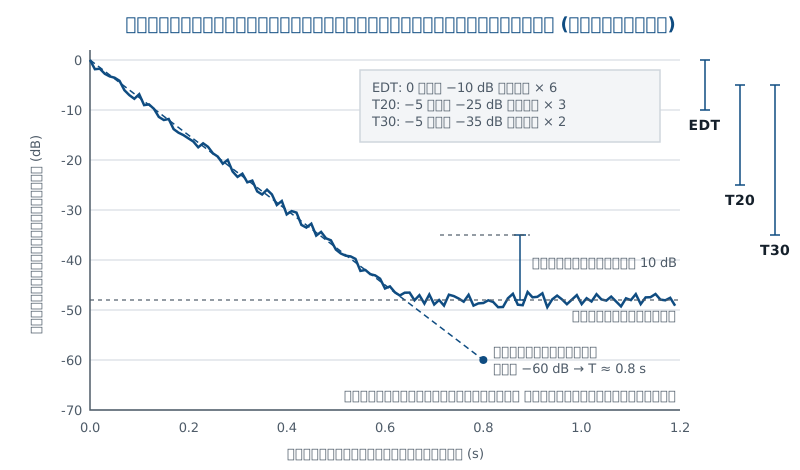
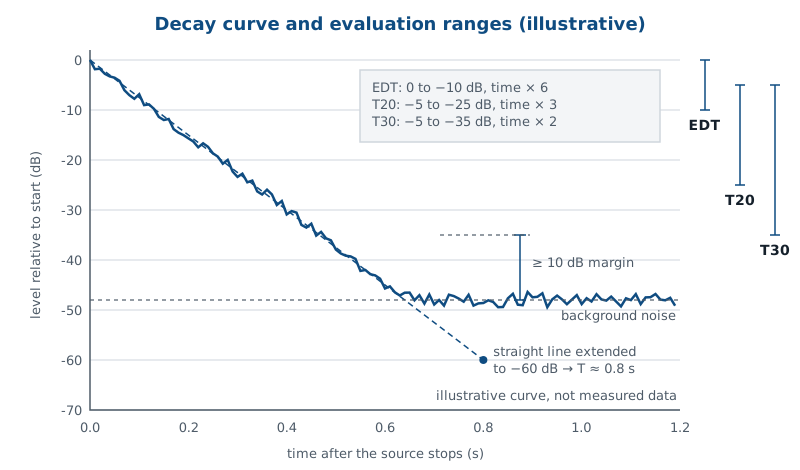
| T20 / T30T20 / T30 | บอกอะไรWhat it tells youอัตราการลดลง ประเมินจาก −5 ถึง −25 dB หรือ −5 ถึง −35 dB แล้วคำนวณเป็น 60 dBDecay rate, evaluated from −5 to −25 dB or −5 to −35 dB and extended to 60 dB | ใช้เมื่อไรWhen to use itทุกงาน เป็นค่าหลักในรายงานEvery job; the main reported value |
| EDTEDT | บอกอะไรWhat it tells youการลดลง 10 dB แรก สัมพันธ์กับความรู้สึกว่าห้องก้องThe first 10 dB of decay; linked to how reverberant the room sounds | ใช้เมื่อไรWhen to use itห้องแสดงและหอประชุมPerformance spaces and auditoria |
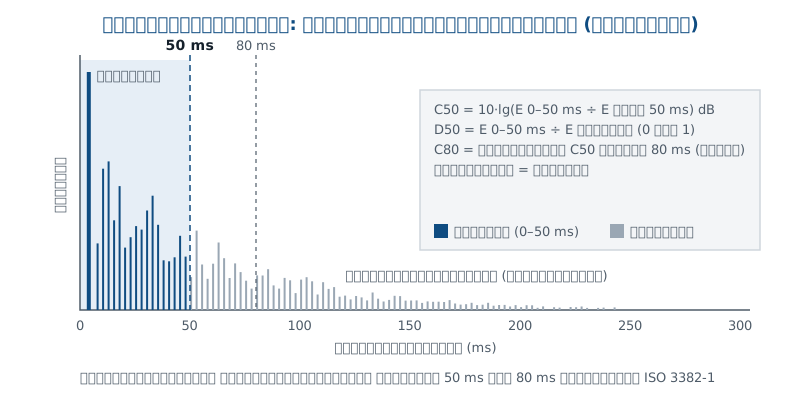
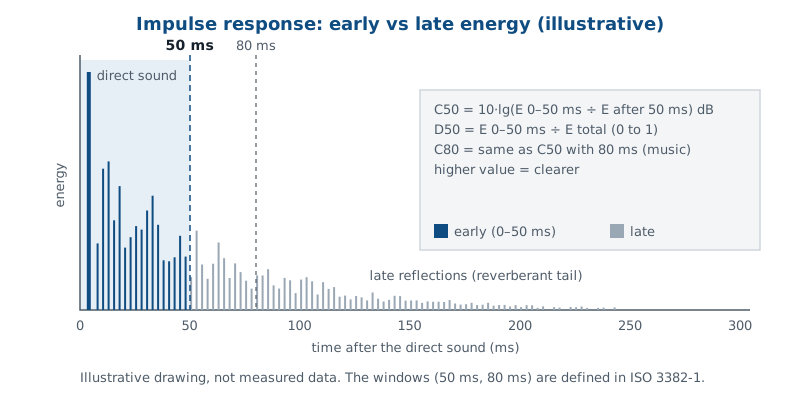
| C50 / D50C50 / D50 | บอกอะไรWhat it tells youพลังงานที่มาถึงใน 50 ms แรกเทียบกับที่มาช้า เกี่ยวกับความชัดของเสียงพูดEnergy in the first 50 ms versus later; related to speech clarity | ใช้เมื่อไรWhen to use itห้องเรียนและห้องประชุม ต้องใช้ผลตอบสนองอิมพัลส์Classrooms and meeting rooms; needs an impulse response |
| C80C80 | บอกอะไรWhat it tells youแนวคิดเดียวกันแต่ใช้ 80 ms เกี่ยวกับความชัดของดนตรีSame idea with 80 ms; related to musical clarity | ใช้เมื่อไรWhen to use itห้องดนตรี ต้องใช้ผลตอบสนองอิมพัลส์Music rooms; needs an impulse response |
| เสียงพื้นหลังBackground noise | บอกอะไรWhat it tells youระดับเสียงรบกวนในห้องเป็นรายย่านThe room's noise level per band | ใช้เมื่อไรWhen to use itตรวจว่าการวัดใช้ได้ และเทียบเส้นเกณฑ์ NC/NRTo validate the measurement and rate the room against NC/NR curves |
หลักการวัด: สองวิธีที่ใช้ได้Measurement principle: two accepted methods
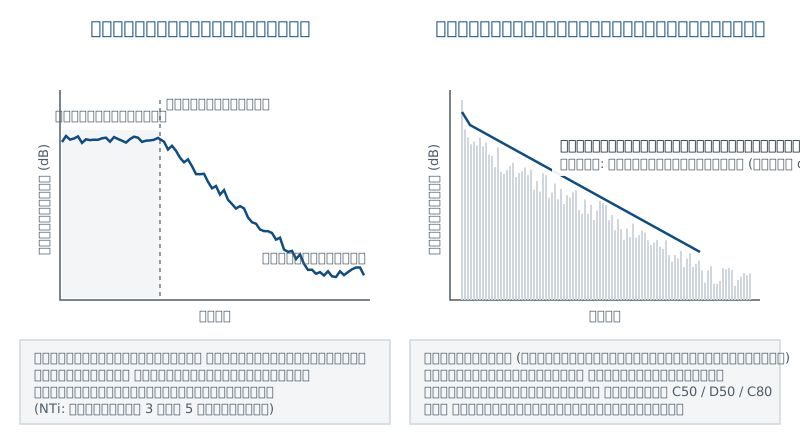
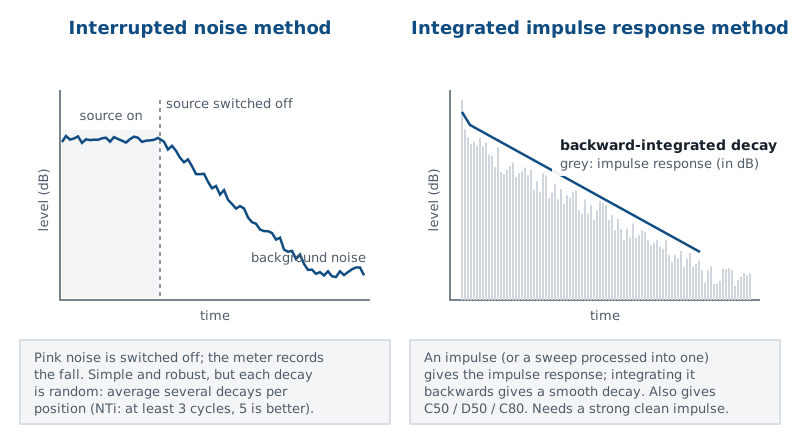
วิธีเสียงรบกวนแบบตัด (interrupted noise) เปิดพิงก์นอยส์จากลำโพงรอบทิศทางจนระดับเสียงคงที่ แล้วตัดทันที เครื่องบันทึกการลดลงในแต่ละย่าน สัญญาณเป็นเสียงสุ่ม เส้นการลดลงจึงแกว่ง ต้องทำซ้ำแล้วเฉลี่ย NTi Audio แนะนำอย่างน้อย 3 รอบต่อตำแหน่ง และ 5 รอบให้ความไม่แน่นอนต่ำกว่าInterrupted noise method. Pink noise from an omnidirectional loudspeaker fills the room until the level is steady, then is switched off abruptly, and the meter records the decay in each band. The signal is random, so decays wobble and must be repeated and averaged: NTi Audio recommends at least 3 cycles per position, with 5 giving lower uncertainty.
วิธีอินทิเกรตผลตอบสนองอิมพัลส์ (integrated impulse response) กระตุ้นห้องด้วยเสียงกระแทกที่ดังและสั้น หรือเล่นสัญญาณกวาดความถี่ (sweep) แล้วคำนวณกลับเป็นผลตอบสนองอิมพัลส์ จากนั้นอินทิเกรตพลังงานย้อนหลัง (วิธี Schroeder) ได้เส้นการลดลงที่เรียบ ผลตอบสนองอิมพัลส์ยังใช้คำนวณ C50, D50 และ C80 ได้Integrated impulse response method. The room is excited with a short, loud impulse, or with a swept sine processed back into an impulse response; the energy is then integrated backwards (the Schroeder method) to give a smooth decay. The impulse response also yields C50, D50 and C80.
| เสียงรบกวนแบบตัดInterrupted noise | ผลตอบสนองอิมพัลส์Impulse response | |
|---|---|---|
| จุดเด่นStrengths | เสียงรบกวนแบบตัดInterrupted noiseพลังงานสูงทุกย่าน ทำซ้ำได้ดีHigh energy in every band, repeatable | ผลตอบสนองอิมพัลส์Impulse responseเส้นการลดลงเรียบ ได้ C50/D50/C80 ด้วยSmooth decays, plus C50/D50/C80 |
| ข้อจำกัดLimitations | เสียงรบกวนแบบตัดInterrupted noiseต้องเฉลี่ยหลายรอบ ไม่ได้ค่าความชัดSeveral cycles needed; no clarity values | ผลตอบสนองอิมพัลส์Impulse responseเสียงกระแทกอาจมีพลังงานน้อยที่ความถี่ต่ำ และไม่เป็นไปตาม ASTM E2235Impulses may lack low-frequency energy and do not meet ASTM E2235 |
หลักสำคัญตาม ISO 3382 คือปลายล่างของช่วงประเมินต้องสูงกว่าเสียงพื้นหลังอย่างน้อย 10 dB ดังนั้น T20 ต้องการช่วงลดลงเหนือเสียงพื้นหลังราว 35 dB และ T30 ราว 45 dB ตัวอย่างจาก NTi Audio: แหล่งเสียงที่ให้ 100 dB วัด T30 ได้ในห้องที่มีเสียงพื้นหลังถึง 55 dBThe key rule in ISO 3382 is that the bottom of the evaluation range must be at least 10 dB above the background noise, so T20 needs about 35 dB of decay above the background and T30 about 45 dB. NTi Audio's example: a 100 dB source allows T30 in a room with background noise of up to 55 dB.
ระดับความแม่นยำ: สำรวจ วิศวกรรม และแม่นยำสูงAccuracy levels: survey, engineering and precision
ISO 3382-2 แบ่งการวัดในห้องทั่วไปเป็น 3 ระดับ ความต่างหลักคือ จำนวนตำแหน่งแหล่งเสียงและไมโครโฟน และจำนวนการลดลงที่เฉลี่ย ระดับ สำรวจ (survey) ใช้ตำแหน่งน้อยที่สุด เหมาะกับการประเมินก่อนปรับปรุง ระดับ วิศวกรรม (engineering) ใช้ตำแหน่งมากขึ้นและพบบ่อยในงานตรวจรับ ระดับ แม่นยำสูง (precision) ต้องใช้อย่างน้อย 2 ตำแหน่งแหล่งเสียง และอย่างน้อย 12 ชุดแหล่งเสียงกับไมโครโฟนที่เป็นอิสระต่อกัน โดยระบุความแม่นยำดีกว่า 2.5% ในย่านออกเตฟ และ 5% ในย่าน 1/3 ออกเตฟ ตกลงระดับกับผู้ว่าจ้างก่อนเริ่ม ตรวจรายละเอียดจากฉบับมาตรฐาน และระบุระดับในรายงานเสมอISO 3382-2 defines 3 levels for ordinary rooms. The main difference is the number of source and microphone positions and the number of decays averaged. The survey level uses the fewest positions and suits an assessment before treatment. The engineering level uses more and is common in acceptance work. The precision level requires at least 2 source positions and at least 12 independent source–microphone combinations, with a stated nominal accuracy better than 2.5% in octave bands and 5% in 1/3-octave bands. Agree the level with the client before starting, check the details in the standard itself, and always state the level in the report.
วางตำแหน่งแหล่งเสียงและไมโครโฟนPlacing the source and microphones
เป้าหมายคือค่าเฉลี่ยที่เป็นตัวแทนของทั้งห้อง แหล่งเสียงรอบทิศทางวางในตำแหน่งที่มีเหตุผลกับการใช้งาน เช่น ตำแหน่งผู้พูด ไมโครโฟนวางในพื้นที่ที่คนนั่งหรือยืนฟังจริง ที่ระดับหูผู้ฟังThe aim is an average that represents the whole room. The omnidirectional source goes where it makes sense for the room's use, such as the talker's position; microphones go where people actually sit or stand, at listener ear height.
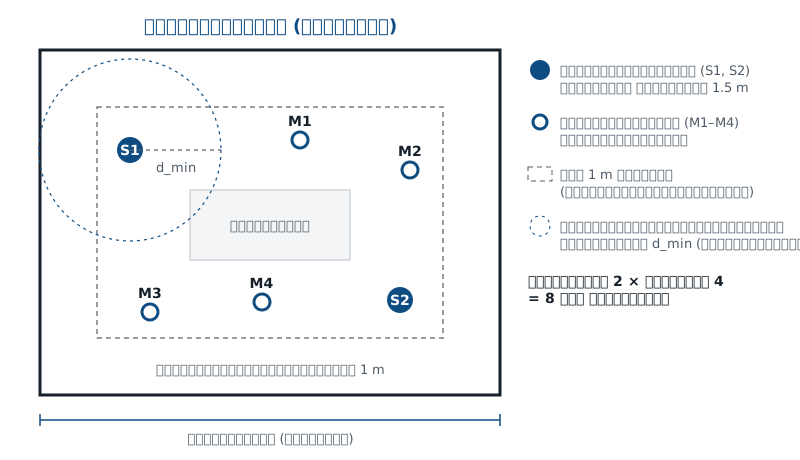
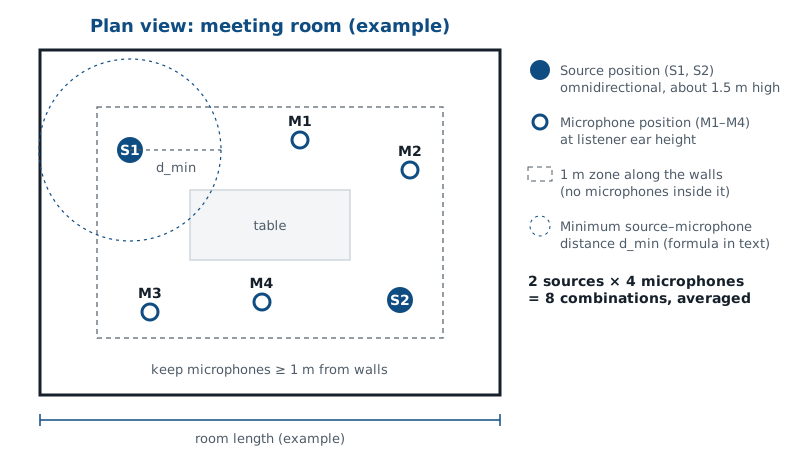
- ห่างพื้นผิวสะท้อน NTi Audio แนะนำให้ไมโครโฟนห่างพื้นผิวที่สะท้อนเสียงอย่างน้อย 1 mAway from reflecting surfaces: NTi Audio recommends at least 1 m between microphone and reflecting surfaces.
- ไม่ใกล้แหล่งเสียงเกินไป ระยะขั้นต่ำ d = 2 × √(V / (c × T)) ตามที่ NTi Audio อ้างจาก ISO 3382-2 (V ปริมาตรห้อง m³, c ความเร็วเสียง, T เวลาเสียงก้องที่คาดไว้)Not too close to the source: minimum distance d = 2 × √(V / (c × T)), as quoted by NTi Audio from ISO 3382-2 (V room volume in m³, c speed of sound, T expected reverberation time).
- กระจายตำแหน่ง ไม่วางไมโครโฟนใกล้กันหรือสมมาตรกับห้อง และใช้แหล่งเสียงอย่างน้อย 2 ตำแหน่ง สูงประมาณ 1.5 mSpread the positions: no microphones close together or symmetrical in the room, and at least 2 source positions about 1.5 m high.
- บันทึกทุกตำแหน่ง ด้วยผังหรือภาพถ่าย เพื่อวัดซ้ำหลังปรับปรุงที่จุดเดิมRecord every position with a plan or photos, so the room can be re-measured at the same points after treatment.
ขั้นตอนการวัดโดยทั่วไปTypical workflow
- ตกลงขอบเขต วัตถุประสงค์ ระดับความแม่นยำ ย่านความถี่ที่รายงาน และเกณฑ์ที่ใช้เทียบAgree the scope: purpose, accuracy level, bands to report and the criterion.
- บันทึกสภาพห้อง ขนาด วัสดุผิว เฟอร์นิเจอร์ ประตูหน้าต่าง จำนวนคน และระบบปรับอากาศเปิดหรือปิดRecord the room condition: size, finishes, furniture, doors and windows, people present, air-conditioning on or off.
- ตรวจเครื่องด้วยเครื่องสอบเทียบเสียง ก่อนเริ่มและหลังเสร็จCheck the instrument with a sound calibrator before and after.
- วัดเสียงพื้นหลังรายย่าน เพื่อรู้ว่าต้องใช้ระดับแหล่งเสียงเท่าไร และใช้ T20 หรือ T30 ได้Measure the background noise per band, to know the source level needed and whether T20 or T30 is achievable.
- วัดทุกชุดแหล่งเสียงกับไมโครโฟน หลายรอบต่อตำแหน่ง ผู้วัดอยู่นิ่งหรือออกนอกห้องMeasure every source–microphone combination, several cycles each, with the operator still or outside.
- ตรวจผลที่หน้างาน ดูเส้นการลดลงและตัวบ่งชี้ความเชื่อถือได้ วัดซ้ำจุดที่ผิดปกติCheck on site: look at the decays and reliability indicators, and repeat odd positions.
- เฉลี่ยและรายงาน รายย่าน พร้อมวิธี ช่วงประเมิน ตำแหน่ง สภาพห้อง และผลเทียบเกณฑ์Average and report per band, with method, evaluation range, positions, room condition and comparison with the criterion.
รายงานย่านความถี่ใด และมีคนหรือไม่มีคนWhich bands to report, occupied or unoccupied
รายงานเป็นรายย่านออกเตฟอย่างน้อยตั้งแต่ 125 Hz ถึง 4 kHz และขยายถึง 63 Hz หรือ 8 kHz เมื่อแหล่งเสียงให้พลังงานพอ ใช้ 1/3 ออกเตฟเมื่อต้องการรายละเอียดเพื่อออกแบบวัสดุ ถ้าต้องการค่าเดียว ISO 3382-1 ใช้ค่าเฉลี่ยของย่าน 500 Hz และ 1 kHz (Tmid) แต่ค่าเดียวไม่ควรแทนกราฟรายย่าน เพราะจะซ่อนปัญหาเสียงอื้อความถี่ต่ำReport per octave band, at least 125 Hz to 4 kHz, extended to 63 Hz or 8 kHz when the source provides enough energy; use 1/3 octaves when the detail is needed for designing treatment. Where a single value is needed, ISO 3382-1 uses the average of the 500 Hz and 1 kHz bands (Tmid), but it should not replace the band graph, because it hides low-frequency boom.
คนในห้องดูดซับเสียงและทำให้เวลาเสียงก้องสั้นลง ส่วนใหญ่วัดในสภาพ ไม่มีคน เพราะควบคุมและทำซ้ำได้ NTi Audio แนะนำให้บันทึกจำนวนคนที่อยู่ระหว่างวัดทุกครั้ง ถ้าเกณฑ์อ้างสภาพมีคน ให้จำลองการดูดซับของคนในซอฟต์แวร์ หรือวัดตอนมีคนจริงแล้วระบุในรายงานPeople absorb sound and shorten reverberation. Most measurements are made unoccupied, because that is controllable and repeatable; NTi Audio recommends always documenting how many people were present. If the criterion refers to the occupied state, simulate the absorption of people in software, or measure with people present and say so in the report.
อ่านเส้นการลดลงของเสียงอย่างไรHow to read a decay curve
ตัวเลข T เชื่อถือได้ก็ต่อเมื่อเส้นการลดลงสมเหตุสมผล ให้ดูกราฟและตัวบ่งชี้ความเชื่อถือได้ที่เครื่องหรือซอฟต์แวร์รายงาน เช่น ค่าความสัมพันธ์ของการลากเส้นตรง หรือค่าความไม่แน่นอนA T value is only trustworthy if the decay curve is sensible. Look at the curves and at the reliability indicators reported by the instrument or software, such as the correlation of the line fit or the uncertainty.
- เส้นตรง เสียงก้องกระจายสม่ำเสมอ T20 กับ T30 ใกล้กันStraight line: evenly diffuse reverberation; T20 and T30 are close.
- โค้งสองช่วง (double slope) ต้นลดเร็ว ท้ายลดช้า พบในห้องที่เปิดต่อกับพื้นที่ก้องกว่า หรือวัสดุดูดซับอยู่ด้านเดียว T30 จะยาวกว่า T20Double slope: fast early, slow late decay, typical of a room coupled to a more reverberant space or with absorption on one side; T30 exceeds T20.
- ปลายหางแบนเร็ว เสียงทดสอบจมในเสียงพื้นหลัง ต้องเพิ่มระดับแหล่งเสียงหรือใช้ T20Tail flattening early: the signal is buried in the background; raise the source level or use T20.
- แกว่งมากในย่านต่ำ มักเกิดจากโหมดห้อง ต้องเพิ่มตำแหน่งหรือรอบHeavy low-band wobble usually comes from room modes; add positions or cycles.
- จุดกระโดดผิดปกติ เช่น เสียงประตูหรือโทรศัพท์ ตัดผลนั้นแล้ววัดซ้ำSudden jumps such as a door or phone: discard and repeat.
C50 และ D50 อ่านจากผลตอบสนองอิมพัลส์ เสียงที่มาถึงภายใน 50 ms แรกหลังเสียงตรงช่วยให้ฟังชัด ส่วนเสียงที่มาช้ากว่าทำให้พยางค์ซ้อนกัน ห้องที่ C50 สูงจึงฟังเสียงพูดชัดกว่า ดนตรีใช้ C80 ในแนวคิดเดียวกันC50 and D50 are read from the impulse response. Sound arriving within 50 ms of the direct sound supports clarity; later sound smears syllables together, so a room with a higher C50 is clearer for speech. Music uses C80 in the same way.
แปลผลเทียบกับการใช้งานของห้องInterpreting results against the room's use
ค่าที่เหมาะสมขึ้นกับการใช้งานและขนาดห้อง ตารางนี้เป็น ค่าแนะนำโดยประมาณจาก NTi Audio ใช้ตั้งความคาดหวังเบื้องต้น เกณฑ์ตรวจรับจริงต้องมาจากข้อกำหนดของโครงการหรือแนวทางที่โครงการอ้างอิง ซึ่งอาจกำหนดทั้งเป้าหมายและช่วงยอมรับรายย่าน (เช่น แนวทางแบบ DIN 18041 ที่ Room Acoustics Reporter ใช้เทียบได้) สำหรับหอประชุมและห้องแสดง ผู้ออกแบบด้านอะคูสติกควรกำหนดเป้าหมายเป็นรายโครงการSuitable values depend on use and size. The table gives approximate recommendations from NTi Audio for first expectations; real acceptance criteria must come from the project specification or the guidance it refers to, which may set a target and a tolerance per band (for example DIN 18041-style guidance, which the Room Acoustics Reporter can compare against). For auditoria and performance spaces, the acoustic designer should set targets project by project.
| ประเภทห้อง (NTi Audio)Room type (NTi Audio) | ปริมาตรโดยประมาณApproximate volume | เวลาเสียงก้องที่แนะนำRecommended reverberation time |
|---|---|---|
| ห้องเรียนClassroom | ปริมาตรโดยประมาณApproximate volumeไม่เกิน 200 m³under 200 m³ | เวลาเสียงก้องที่แนะนำRecommended reverberation time0.4–0.6 วินาที0.4–0.6 s |
| สำนักงานOffice | ปริมาตรโดยประมาณApproximate volumeไม่เกิน 1,000 m³under 1,000 m³ | เวลาเสียงก้องที่แนะนำRecommended reverberation time0.5–1.1 วินาที0.5–1.1 s |
| ห้องบรรยายLecture hall | ปริมาตรโดยประมาณApproximate volumeไม่เกิน 5,000 m³under 5,000 m³ | เวลาเสียงก้องที่แนะนำRecommended reverberation time1.0–1.5 วินาที1.0–1.5 s |
ในห้องเรียนและห้องประชุม ให้อ่านเวลาเสียงก้องคู่กับเสียงพื้นหลัง เพราะทั้งสองลดความชัดของเสียงพูด ถ้าต้องการตัวเลขความชัดโดยตรง ให้วัด STI เพิ่มIn classrooms and meeting rooms, read reverberation together with background noise, because both reduce speech clarity; for a direct intelligibility figure, add an STI measurement.
อุปกรณ์ที่ใช้Equipment
ชุดวัดทั่วไป ได้แก่ แหล่งเสียงรอบทิศทางพร้อมเครื่องขยายและพิงก์นอยส์ (หรือแหล่งเสียงกระแทกที่ดังพอ) ไมโครโฟนวัดเสียงรอบทิศทาง เครื่องวิเคราะห์ที่แยกย่านออกเตฟหรือ 1/3 ออกเตฟและประเมินการลดลงได้ เครื่องสอบเทียบเสียง ขาตั้ง และซอฟต์แวร์เฉลี่ยผลและทำรายงาน ถ้าต้องการ C50, D50 หรือ C80 ต้องใช้ระบบที่วัดผลตอบสนองอิมพัลส์ได้A generic chain: an omnidirectional source with amplifier and pink noise (or a loud enough impulsive source), an omnidirectional measurement microphone, an analyzer with octave or 1/3-octave filtering that evaluates decays, a sound calibrator, stands, and software for averaging and reporting. For C50, D50 or C80, the system must measure impulse responses.
| ส่วนของระบบPart of the chain | ตัวเลือกจาก NTi Audio (ตามที่ NTi ระบุ)NTi Audio option (as stated by NTi) |
|---|---|
| เครื่องวิเคราะห์Analyzer | ตัวเลือกจาก NTi Audio (ตามที่ NTi ระบุ)NTi Audio option (as stated by NTi)XL3: T20/T30 ย่านออกเตฟ 63 Hz – 8 kHz ในตัว XL3 Extended Room Acoustics Option เพิ่ม 1/3 ออกเตฟ 50 Hz – 10 kHz, T15, EDT และค่าเฉลี่ยห้องสูงสุด 99 ตำแหน่ง · XL2: T20/T30 ย่านออกเตฟ ด้วยเสียงกระแทกหรือเสียงรบกวนแบบตัด ได้ 1/3 ออกเตฟเมื่อมี XL2 Extended Acoustic PackXL3: built-in T20/T30 in octaves 63 Hz – 8 kHz; the XL3 Extended Room Acoustics Option adds 1/3 octaves 50 Hz – 10 kHz, T15, EDT and room averages of up to 99 positions · XL2: T20/T30 in octaves with impulsive or interrupted-noise sources; 1/3 octaves with the XL2 Extended Acoustic Pack |
| แหล่งเสียงSource | ตัวเลือกจาก NTi Audio (ตามที่ NTi ระบุ)NTi Audio option (as stated by NTi)DS3 + PA3: ลำโพงรอบทิศทาง Sound power level typical 120.5 dB (re 1 pW) พิงก์นอยส์ปรับ EQ 100 Hz – 8 kHz มีรีโมตเปิดปิดจากนอกห้อง หรือระบบเสียงที่มีอยู่เล่นพิงก์นอยส์จาก MR-PRODS3 + PA3: omnidirectional, typical sound power level 120.5 dB (re 1 pW), equalized pink noise 100 Hz – 8 kHz, remote switching from outside the room; or an existing sound system playing pink noise from the MR-PRO |
| ไมโครโฟนและการสอบเทียบMicrophone and calibration | ตัวเลือกจาก NTi Audio (ตามที่ NTi ระบุ)NTi Audio option (as stated by NTi)ไมโครโฟนวัดเสียง เช่น M2230 และเครื่องสอบเทียบเสียงA measurement microphone such as the M2230, and a sound calibrator |
| ซอฟต์แวร์Software | ตัวเลือกจาก NTi Audio (ตามที่ NTi ระบุ)NTi Audio option (as stated by NTi)Room Acoustics Reporter: เฉลี่ยหลายตำแหน่ง คำนวณ Tmid ตาม ISO 3382-1 เทียบช่วงยอมรับ จำลองวัสดุดูดซับด้วย Sabine หรือ Eyring ต้องมี XL2 XL2 Extended Acoustic Pack หรือ XL3 Extended Room AcousticsRoom Acoustics Reporter: averages positions, calculates Tmid per ISO 3382-1, checks tolerances, predicts absorbers with Sabine or Eyring; needs the XL2 XL2 Extended Acoustic Pack or XL3 Extended Room Acoustics |
หน้าข้อมูลของ NTi Audio ที่ตรวจสอบแล้วไม่ได้ระบุว่า XL2 หรือ XL3 วัดด้วยสัญญาณกวาดความถี่ หรือคำนวณ C50, D50, C80 ถ้างานต้องการค่าเหล่านี้ ให้ปรึกษาวิศวกรก่อนเลือกอุปกรณ์The NTi Audio pages we checked do not state sweep excitation or C50, D50 and C80 for the XL2 or XL3. If a job needs these values, talk to an engineer before choosing equipment.
ข้อผิดพลาดที่พบบ่อยCommon mistakes
- วัดตำแหน่งเดียวแล้วสรุปทั้งห้องMeasuring one position and generalising to the whole room.
- ใช้ลำโพงธรรมดาที่มีทิศทาง ผลจะขึ้นกับการหันลำโพง ไม่ใช่ห้องเพียงอย่างเดียวUsing a directional loudspeaker: results depend on its aiming, not only on the room.
- ระดับแหล่งเสียงไม่พอในย่านต่ำ ทำให้ค่าที่ 125 Hz หรือต่ำกว่าไม่น่าเชื่อถือToo little source level in the low bands, making 125 Hz and below unreliable.
- ไมโครโฟนใกล้ผนังหรือลำโพงเกินไป หรือผู้วัดยืนใกล้ไมโครโฟนMicrophone too close to a wall or the loudspeaker, or the operator standing next to it.
- ไม่บันทึกสภาพห้อง จึงเทียบผลก่อนและหลังปรับปรุงไม่ได้Not recording the room condition, so before-and-after results cannot be compared.
- คิดว่าเวลาเสียงก้องบอกทุกอย่าง เสียงสะท้อนไปมาระหว่างผนังคู่ขนาน (flutter echo) อาจได้ยินชัดแม้ค่า T ดูปกติ ต้องฟังและดูผลตอบสนองอิมพัลส์ประกอบThinking reverberation time tells everything: flutter echo between parallel walls can be clearly audible even when T looks normal; listen and check the impulse response too.
ตัวอย่างสถานการณ์: ห้องประชุมที่เสียงก้องExample scenario: a meeting room with an echo
ห้องประชุมขนาด 8 × 6 × 3 m (ประมาณ 144 m³) ผนังกระจกหนึ่งด้าน ผนังฉาบเรียบสามด้าน พื้นกระเบื้อง ผู้ใช้บ่นว่าปลายทางประชุมออนไลน์ฟังไม่ชัด และตบมือแล้วได้ยินเสียงสะท้อนเป็นระลอก ทีมวัดวางแหล่งเสียง 2 ตำแหน่ง ไมโครโฟน 4 ตำแหน่งในพื้นที่ที่นั่ง วัดเสียงพื้นหลังทั้งตอนปิดและเปิดแอร์ แล้ววัด T20/T30 แบบเสียงรบกวนแบบตัด 5 รอบต่อตำแหน่ง
สมมติผลเฉลี่ยย่าน 500 Hz – 1 kHz ประมาณ 1.3 วินาที ยาวกว่านั้นที่ 125 Hz ขณะที่ผู้ออกแบบตั้งเป้าหมายไว้ประมาณ 0.6 วินาที นำผลเข้า Room Acoustics Reporter จำลองแผ่นดูดซับบนฝ้าและผนังตรงข้ามกระจกด้วยสูตร Sabine เพื่อประมาณพื้นที่วัสดุ หลังติดตั้งวัดซ้ำที่ตำแหน่งเดิมเพื่อยืนยันผล ตัวเลขทั้งหมดเป็นค่าสมมติA meeting room of 8 × 6 × 3 m (about 144 m³) has one glass wall, three smooth plastered walls and a tiled floor. Users say the far end of video calls cannot understand them, and a hand clap produces a rattling repeat. The team uses 2 source and 4 microphone positions in the seating area, measures the background noise with the air-conditioning off and on, then measures T20/T30 with interrupted noise, 5 cycles per position.
Assume the 500 Hz – 1 kHz average is about 1.3 s, longer at 125 Hz, against a designer's target of about 0.6 s. In the Room Acoustics Reporter, absorbers on the ceiling and the wall opposite the glass are simulated with the Sabine formula to estimate the material area. After installation the room is re-measured at the same positions to confirm the result. All numbers are assumed.
คำถามที่พบบ่อยFrequently asked questions
ควรรายงาน T20 หรือ T30Should I report T20 or T30?
ใช้ T30 เมื่อเสียงทดสอบสูงกว่าเสียงพื้นหลังพอ เพราะความไม่แน่นอนต่ำกว่า ถ้าไม่พอให้ใช้ T20 และระบุช่วงที่ใช้ในรายงานเสมอUse T30 when the signal is far enough above the background, as it has lower uncertainty; otherwise use T20, and always state the range used.
ตบมือหรือลูกโป่งใช้แทนลำโพงได้ไหมCan a hand clap or a balloon replace the loudspeaker?
ใช้ประเมินเบื้องต้นได้ แต่การตบมือมีพลังงานน้อยและไม่สม่ำเสมอในแต่ละย่าน แหล่งเสียงกระแทกที่ดังพอใช้กับวิธีผลตอบสนองอิมพัลส์ได้ แต่ไม่เป็นไปตาม ASTM E2235Fine for a first impression, but a clap is weak and uneven across bands. A loud enough impulsive source works with the impulse response method, but does not meet ASTM E2235.
ทำไม T20 กับ T30 ในห้องเดียวกันไม่เท่ากันWhy do T20 and T30 differ in the same room?
ถ้าเส้นการลดลงไม่เป็นเส้นตรง เช่น ห้องที่เปิดต่อกับพื้นที่อื่น สองค่าจะต่างกัน ซึ่งเป็นข้อมูลที่มีประโยชน์ แต่ถ้าต่างเพราะปลายหางจมในเสียงพื้นหลัง แปลว่าระดับแหล่งเสียงไม่พอIf the decay is not straight, for example in a room open to another space, they differ, which is useful information. If they differ because the tail is buried in the background noise, the source level is too low.
XL2 หรือ XL3 วัด RT60 ได้เลยหรือต้องซื้อออปชันDo the XL2 or XL3 measure RT60 as standard?
ตามข้อมูลของ NTi Audio ทั้งสองรุ่นวัด T20/T30 ย่านออกเตฟได้ในตัว ถ้าต้องการ 1/3 ออกเตฟ XL2 ต้องมี XL2 Extended Acoustic Pack และ XL3 ต้องมี XL3 Extended Room Acoustics Option ซึ่ง Room Acoustics Reporter ก็ต้องใช้ออปชันเหล่านี้According to NTi Audio, both measure T20/T30 in octaves as standard. For 1/3 octaves, the XL2 needs the XL2 Extended Acoustic Pack and the XL3 the XL3 Extended Room Acoustics Option, which the Room Acoustics Reporter also requires.
ติดแผ่นดูดซับแล้วเสียงจากห้องข้าง ๆ จะเบาลงไหมWill absorbing panels block noise from next door?
แทบไม่ช่วย วัสดุดูดซับลดเสียงก้องในห้อง แต่การกันเสียงผ่านผนังต้องใช้มวลและการแยกโครงสร้าง ซึ่งวัดด้วยการทดสอบการกันเสียงHardly. Absorbers reduce reverberation inside the room; blocking sound through a wall needs mass and separation, and is measured with a sound insulation test.