ทำไมเรื่องนี้สำคัญWhy this matters
เคยไหมที่ได้ยินประกาศในสถานีรถไฟหรือสนามบินชัดว่ามีเสียง แต่จับใจความไม่ได้ว่าพูดอะไร ปัญหานี้ไม่ได้อยู่ที่ความดังอย่างเดียว เสียงอาจดังพอ แต่ถูกเสียงก้อง เสียงคน หรือเสียงเครื่องจักร กลบรายละเอียดของคำพูด จนแยกคำไม่ออกHave you heard an announcement at a station or airport that was clearly audible yet impossible to understand? Loudness is not the only issue. The sound may be loud enough, but reverberation, crowd noise or machinery smear the detail of the words until they cannot be told apart.
ในห้องเรียน ห้องประชุม และโบสถ์ การฟังไม่รู้เรื่องทำให้เหนื่อยและเสียเวลา แต่ในระบบประกาศเหตุฉุกเฉิน การฟังไม่รู้เรื่องอาจทำให้คนอพยพผิดทาง เราจึงต้องการตัวเลขที่ วัดได้และเปรียบเทียบได้ แทนการถามว่า “ฟังชัดไหม” ซึ่งแต่ละคนตอบไม่เหมือนกัน ตัวเลขนั้นคือ STIIn classrooms, meeting rooms and places of worship, poor intelligibility is tiring and wastes time. In an emergency announcement system it can send people the wrong way. So we need a number that is measurable and comparable, instead of asking “is it clear?”, which everyone answers differently. That number is STI.
แนวคิดพื้นฐาน: เสียงพูดคือเสียงที่ขึ้นลงเป็นจังหวะThe basic idea: speech is sound that rises and falls
ถ้าเราดูระดับเสียงของคนพูด จะเห็นว่าไม่ได้ดังคงที่ แต่ขึ้นลงตลอดเวลาตามพยางค์และคำ การขึ้นลงนี้เรียกว่า การมอดูเลต (modulation) เสียงพูดของมนุษย์มีจังหวะขึ้นลงอยู่ในช่วงประมาณ 0.63 ถึง 12.5 ครั้งต่อวินาที (Hz) และมีเนื้อเสียงอยู่ในช่วงความถี่ประมาณ 100 Hz ถึง 10 kHzIf you watch the level of someone speaking, it is never steady: it rises and falls with every syllable and word. This rise and fall is called modulation. Human speech is modulated at roughly 0.63 to 12.5 times per second (Hz), and its sound content lies in a frequency range of about 100 Hz to 10 kHz.
สมองของเราแยกคำได้เพราะได้ยิน “จังหวะขึ้นลง” นี้ชัดเจน สิ่งที่ทำให้ฟังไม่รู้เรื่องคือสิ่งที่ ทำให้จังหวะนี้แบนลง เช่น เสียงก้องที่ค้างอยู่จนเติมช่องเงียบระหว่างพยางค์ หรือเสียงรบกวนที่ดังอยู่ตลอดจนช่วงเบาของคำพูดจมหายไปOur brain separates words because it hears this rise and fall clearly. What destroys intelligibility is anything that flattens the modulation: reverberation that lingers and fills the gaps between syllables, or steady noise that buries the quiet parts of speech.
STI วัดสิ่งนี้โดยตรง เครื่องจะส่งสัญญาณที่มีจังหวะขึ้นลงแบบเสียงพูด แล้วดูว่าเมื่อไปถึงตำแหน่งผู้ฟัง จังหวะนั้น เหลืออยู่เท่าไร เครื่องมือทางคณิตศาสตร์ที่ใช้เรียกว่า ฟังก์ชันถ่ายโอนการมอดูเลต (Modulation Transfer Function, MTF) ถ้าจังหวะยังครบ ค่า STI จะใกล้ 1 ถ้าจังหวะแบนเกือบหมด ค่า STI จะใกล้ 0STI measures exactly this. A signal with speech-like modulation is sent, and the meter checks how much of the modulation is left at the listener's position. The mathematical tool is the Modulation Transfer Function (MTF). If the modulation survives intact, STI is close to 1; if it has been almost flattened, STI is close to 0.
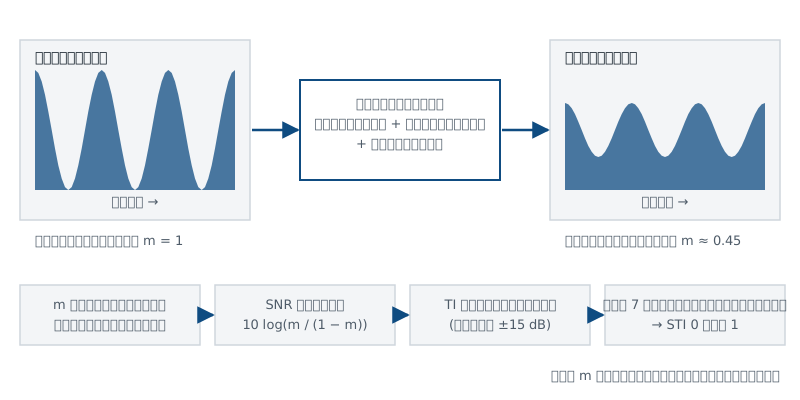
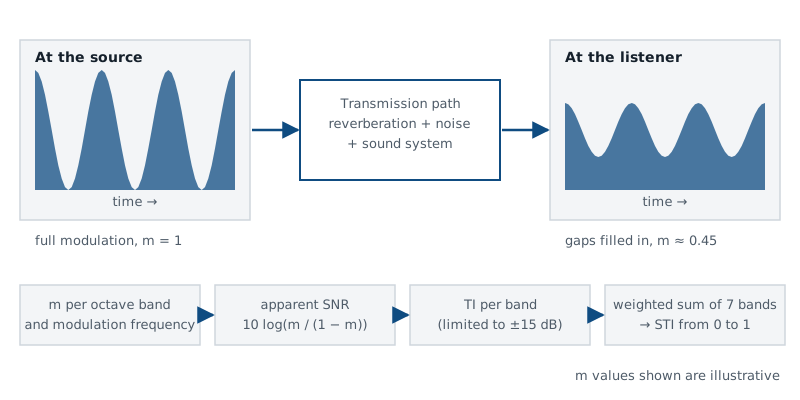
ลองนึกถึงการตะโกนเรียกเพื่อนในห้องน้ำสาธารณะที่ปูกระเบื้องทั้งหมด เสียงดังมาก แต่ทุกคำฟังเบลอเพราะเสียงก้องค้างซ้อนกัน ในทางกลับกัน การคุยกันเบา ๆ ในห้องนั่งเล่นที่มีโซฟาและผ้าม่าน ฟังชัดทุกคำ ทั้งที่เสียงเบากว่า นี่คือเหตุผลที่ STI สนใจ “จังหวะที่เหลืออยู่” มากกว่า “ความดัง”Imagine calling out to a friend in a fully tiled public washroom: very loud, yet every word blurs because the reverberation piles up. By contrast, a quiet conversation in a living room with a sofa and curtains is clear word for word, even though it is softer. That is why STI cares about the surviving modulation rather than loudness.
อ่านค่า STI: สเกล 0 ถึง 1Reading STI: the 0 to 1 scale
ผล STI เป็นตัวเลขเดียว สเกลห้าระดับแบบดั้งเดิมด้านล่าง (พบใน ISO 9921 ด้วย) เป็นแบบที่ NTi Audio ใช้อธิบายร่วมกับ IEC 60268-16 ส่วน IEC 60268-16 ฉบับปัจจุบันยังกำหนดกลุ่มระดับ (qualification bands) A+ ถึง U ไว้สำหรับกำหนดสเปกของระบบด้วยThe STI result is a single number. The traditional five-step scale below (also found in ISO 9921) is the one NTi Audio uses when explaining IEC 60268-16; current editions of IEC 60268-16 additionally define qualification bands A+ to U for specifying systems.
| ค่า STISTI value | ระดับRating | ความรู้สึกของผู้ฟังโดยประมาณRoughly what listeners experience |
|---|---|---|
| 0 – 0.300 – 0.30 | ระดับRatingแย่ (bad)Bad | ความรู้สึกของผู้ฟังโดยประมาณRoughly what listeners experienceแทบจับใจความไม่ได้Hardly any words can be understood |
| 0.30 – 0.450.30 – 0.45 | ระดับRatingไม่ดี (poor)Poor | ความรู้สึกของผู้ฟังโดยประมาณRoughly what listeners experienceต้องตั้งใจฟังมาก พลาดหลายคำGreat effort needed; many words missed |
| 0.45 – 0.600.45 – 0.60 | ระดับRatingพอใช้ (fair)Fair | ความรู้สึกของผู้ฟังโดยประมาณRoughly what listeners experienceเข้าใจได้ แต่บางคำยังไม่ชัดUnderstandable, but some words unclear |
| 0.60 – 0.750.60 – 0.75 | ระดับRatingดี (good)Good | ความรู้สึกของผู้ฟังโดยประมาณRoughly what listeners experienceฟังสบาย เข้าใจเกือบทุกคำComfortable; nearly every word understood |
| 0.75 – 1.000.75 – 1.00 | ระดับRatingดีมาก (excellent)Excellent | ความรู้สึกของผู้ฟังโดยประมาณRoughly what listeners experienceชัดเจนมากVery clear |
NTi Audio สรุปไว้ด้วยว่า ถ้าผลอยู่ระหว่าง 0.5 ถึง 1 ความชัดเจนถือว่าเพียงพอจนถึงดีมาก ถ้าต่ำกว่านั้นควรหาสาเหตุและแก้ไข ค่าขั้นต่ำที่ต้องผ่านจริงขึ้นกับมาตรฐานและข้อกำหนดของแต่ละโครงการ บางครั้งผลอาจแสดงในอีกรูปแบบหนึ่งเรียกว่า CIS (Common Intelligibility Scale) ซึ่งเป็นข้อมูลเดียวกันแต่ใช้สเกลต่างกันNTi Audio also notes that a result between 0.5 and 1 means intelligibility is sufficient to very good; below that, the causes should be found and fixed. The actual pass value depends on the applicable standard and project specification. Results are sometimes also shown on the CIS (Common Intelligibility Scale), which carries the same information on a different scale.
STI แบบเต็มกับ STIPA ต่างกันอย่างไรFull STI vs STIPA
การวัด STI แบบเต็มตรวจครบทุกกรณี คือ 7 ย่านออกเตฟ (125 Hz ถึง 8 kHz) คูณกับ 14 จังหวะการมอดูเลต รวม 98 ชุด ซึ่งละเอียดมากแต่ใช้เวลานาน STIPA (STI for Public Address systems) ย่อเหลือเพียง 14 ชุด (สองจังหวะต่อหนึ่งย่าน) โดยส่งทุกชุดพร้อมกันในสัญญาณเดียว จึงได้ผลภายในประมาณ 15 วินาที และทำได้ด้วยเครื่องวัดแบบมือถือ เมื่อสภาพแวดล้อมเหมาะสมA full STI measurement checks every combination: 7 octave bands (125 Hz to 8 kHz) times 14 modulation frequencies, 98 combinations in all. It is thorough but slow. STIPA (STI for Public Address systems) reduces this to 14 combinations (two per band) sent together in one signal, so a result is ready in about 15 seconds and can be measured with a handheld meter when conditions are suitable.
| STI แบบเต็มFull STI | STIPA | |
|---|---|---|
| จำนวนชุดที่ตรวจCombinations checked | STI แบบเต็มFull STI98 (7 ย่าน × 14 จังหวะ)98 (7 bands × 14 modulation frequencies) | STIPA14 (7 ย่าน × 2 จังหวะ)14 (7 bands × 2 modulation frequencies) |
| เวลาต่อการวัดหนึ่งครั้งTime per measurement | STI แบบเต็มFull STIนานกว่ามากMuch longer | STIPAประมาณ 15 วินาทีAbout 15 seconds |
| การใช้งานทั่วไปTypical use | STI แบบเต็มFull STIงานวิจัยและงานที่ต้องการรายละเอียดเต็มResearch and detailed analysis | STIPAตรวจระบบเสียงประกาศและระบบอพยพในพื้นที่จริงChecking PA and evacuation systems on site |
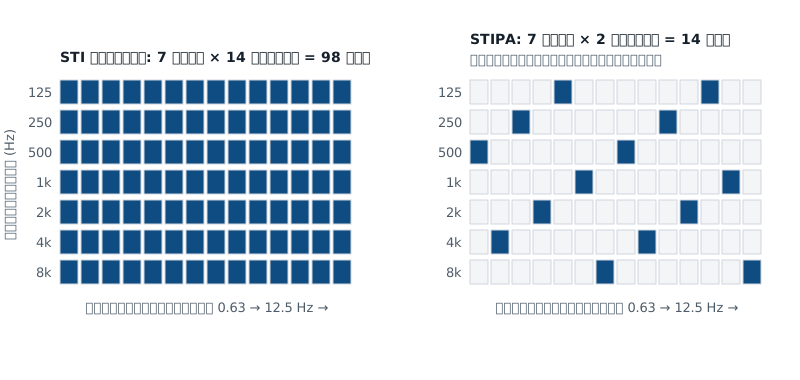
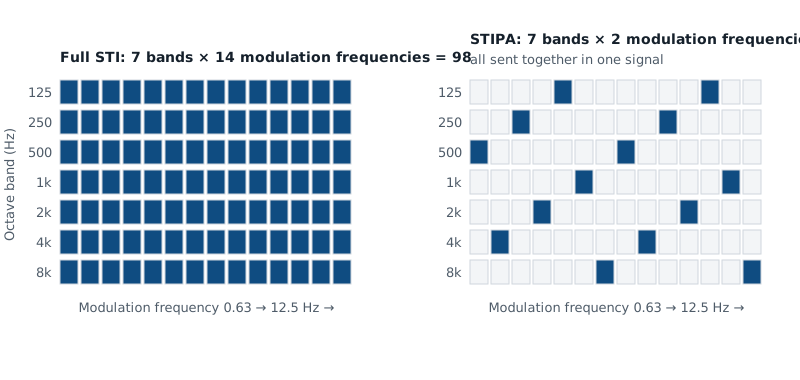
สัญญาณ STIPA ทำจาก เสียงสีชมพู (pink noise) ที่ถูกมอดูเลตในแต่ละย่านความถี่ ฟังแล้ว ไม่เหมือนเสียงคนพูดเลย แต่มีจังหวะขึ้นลงเลียนแบบลักษณะของเสียงพูดThe STIPA signal is pink noise modulated in each octave band. It sounds nothing like a human voice, yet it carries speech-like rises and falls.
STIPA เป็นวิธีแบบย่อ จึงตรวจจังหวะการมอดูเลตน้อยกว่า STI แบบเต็ม ในสภาพที่ผิดปกติ เช่น มีเสียงสะท้อนแยกเป็นช่วง (echo) ชัดเจน ผลอาจต่างจาก STI แบบเต็มได้ และวิธี STI โดยทั่วไปไม่เหมาะกับระบบที่แปลงสัญญาณเสียงพูดอย่างมาก เช่น vocoder หรือการเลื่อนความถี่ ควรตรวจข้อจำกัดใน IEC 60268-16 ก่อนใช้STIPA is a simplified method, so it checks fewer modulation frequencies than full STI. In unusual conditions, such as strong discrete echoes, its result can differ from full STI, and STI methods in general are not suitable for systems that heavily process speech, such as vocoders or frequency shifting. Check the limitations in IEC 60268-16 before relying on it.
อะไรทำให้ค่า STI ต่ำWhat pulls STI down
- คุณภาพของระบบเสียง ลำโพงหรือเครื่องขยายที่ออกแบบหรือตั้งค่าไม่ดีSound system quality: poorly designed or poorly set-up loudspeakers or amplifiers.
- ความดังไม่เหมาะ เสียงเบาเกินไปจะจมในเสียงรบกวน NTi Audio ระบุว่าความชัดเจนดีที่สุดเมื่อเสียงประกาศอยู่ราว 70–80 dB SPLUnsuitable level: too quiet and speech is buried. NTi Audio states that intelligibility is best with announcement levels around 70–80 dB SPL.
- เสียงรบกวนรอบข้าง เช่น ฝูงชน การจราจร หรือระบบปรับอากาศAmbient noise such as crowds, traffic or air-conditioning.
- เวลาเสียงก้อง (RT60) ที่นานเกินไป เสียงสะท้อนค้างเติมช่องว่างระหว่างพยางค์Too long a reverberation time (RT60): lingering reflections fill the gaps between syllables.
- การตอบสนองความถี่ เช่น เสียงเบสมากเกินไปทำให้คำพูดขุ่นFrequency response: for example, too much bass makes speech muddy.
- การกลบเสียง (masking) เสียงหนึ่งที่ดังในย่านความถี่ใกล้กันทำให้อีกเสียงฟังไม่ออกMasking: a louder sound in a nearby frequency range hides another.
ทางแก้โดยทั่วไป: ลดเสียงรบกวน (เช่น ปรับปรุงการกันเสียงของผนัง หน้าต่าง ประตู) เพิ่มเสียงตรงจากลำโพงถึงผู้ฟังด้วยการวางตำแหน่งและทิศทางลำโพง และลดเสียงก้องด้วยวัสดุดูดซับเสียง เช่น ผ้าม่าน เฟอร์นิเจอร์บุนวม พรม หรือแผ่นดูดซับ แล้ววัดซ้ำหลังแก้ไขเพื่อยืนยันผลTypical remedies: reduce the noise (for example better insulation of walls, windows and doors), increase the direct sound from loudspeaker to listener through loudspeaker placement and directivity, and reduce reverberation with absorbing materials such as curtains, upholstered furniture, carpet or panels. Measure again afterwards to confirm the improvement.
รายละเอียดเชิงวิศวกรรม: จากจังหวะขึ้นลงไปเป็นตัวเลข STIEngineering detail: from modulation to an STI number
สิ่งที่เครื่องวัดหาได้จริงคือ ดัชนีการมอดูเลชัน m ของแต่ละย่านออกเตฟและแต่ละความถี่มอดูเลชัน m = 1 แปลว่าจังหวะขึ้นลงผ่านมาครบ m = 0 แปลว่าแบนราบ ในกรณีอุดมคติที่ห้องมีการลดลงของเสียงแบบเอ็กซ์โพเนนเชียลและมีเสียงรบกวนคงที่ ค่าที่ลดลงคำนวณได้จากสองส่วนคูณกันWhat the meter actually determines is the modulation index m for each octave band and modulation frequency: m = 1 means the rise and fall arrived intact, m = 0 means it was flattened. In the idealised case of an exponential room decay and steady noise, the reduction is the product of two factors.
- ส่วนของเสียงก้อง: m = 1 / √(1 + (2π · F · T / 13.8)²) โดย F คือความถี่มอดูเลชัน (Hz) และ T คือเวลาเสียงก้อง (s) จังหวะเร็ว (F สูง) ถูกกลบง่ายกว่าจังหวะช้าReverberation factor: m = 1 / √(1 + (2π · F · T / 13.8)²), where F is the modulation frequency (Hz) and T the reverberation time (s). Fast modulations (high F) are smeared more easily than slow ones.
- ส่วนของเสียงรบกวน: m = 1 / (1 + 10^(−SNR/10)) โดย SNR คืออัตราส่วนสัญญาณต่อเสียงรบกวนในย่านนั้น (dB)Noise factor: m = 1 / (1 + 10^(−SNR/10)), where SNR is the signal-to-noise ratio in that band (dB).
จากนั้น m แต่ละค่าถูกแปลงเป็น SNR เสมือน = 10 log(m / (1 − m)) จำกัดไว้ระหว่าง −15 ถึง +15 dB แล้วแปลงเป็น ดัชนีการส่งผ่าน (TI) = (SNR เสมือน + 15) / 30 ซึ่งอยู่ระหว่าง 0 ถึง 1 ค่า TI ในแต่ละย่านเฉลี่ยเป็นดัชนีของย่าน (MTI) แล้วรวม 7 ย่านแบบถ่วงน้ำหนักตามความสำคัญต่อเสียงพูด พร้อมแก้ค่าความซ้ำซ้อนระหว่างย่านที่อยู่ติดกัน ฉบับปัจจุบันของ IEC 60268-16 ยังรวมผลของการบดบังทางการได้ยินและขีดจำกัดการได้ยินซึ่งขึ้นกับระดับเสียง ระดับของสัญญาณทดสอบจึงต้องตั้งให้ตรงกับระดับเสียงพูดจริงEach m is then converted into an apparent SNR = 10 log(m / (1 − m)), limited to −15 to +15 dB, and into a transmission index (TI) = (apparent SNR + 15) / 30, between 0 and 1. The TI values of each band are averaged into a band index (MTI), and the 7 bands are combined with weights reflecting their importance for speech, with corrections for redundancy between adjacent bands. Current editions of IEC 60268-16 also include level-dependent auditory masking and the hearing threshold, which is why the test signal must be set to the real speech level.
ในทางปฏิบัติ ประโยชน์ของรายละเอียดนี้คือการอ่าน ผลรายย่าน ถ้า MTI ต่ำเฉพาะย่านความถี่ต่ำ มักเป็นผลของเสียงก้องที่ความถี่ต่ำหรือเสียงรบกวนจากเครื่องจักร ถ้าต่ำเฉพาะย่านสูง อาจเป็นลำโพงที่ตอบสนองความถี่สูงไม่พอหรือทิศทางลำโพงไม่ถึงผู้ฟัง ผลรายย่านจึงชี้ทางแก้ได้ชัดกว่าตัวเลข STI ตัวเดียวIn practice, the value of this detail is in reading the band results. If the MTI is low only in the low bands, reverberation at low frequencies or machinery noise is the usual cause; if it is low only in the high bands, the loudspeaker may lack high-frequency output or may not be aimed at the listeners. Band results therefore point to a remedy more clearly than the single STI.
ตัวอย่างสถานการณ์: เสียงก้องกับเสียงรบกวนลด m ได้เท่าไรExample scenario: how much reverberation and noise reduce m
พิจารณาเพียงย่านเดียวและความถี่มอดูเลชันเดียว F = 2 Hz ในห้องโถงที่ T = 1.5 s
ส่วนของเสียงก้อง: 2π × 2 × 1.5 / 13.8 ≈ 1.37 ได้ m ≈ 1 / √(1 + 1.87) ≈ 0.59
SNR เสมือน = 10 log(0.59 / 0.41) ≈ 1.6 dB ได้ TI ≈ (1.6 + 15) / 30 ≈ 0.55
ถ้าลดเสียงก้องลงเหลือ T = 0.6 s: m ≈ 0.88 SNR เสมือน ≈ 8.6 dB ได้ TI ≈ 0.79
ถ้ายังเป็น T = 1.5 s แต่มีเสียงรบกวนที่ SNR = 10 dB: m ≈ 0.59 × 0.91 ≈ 0.54 ได้ TI ≈ 0.52
ตัวเลขนี้เป็นเพียงหนึ่งช่องจากทั้งหมด ไม่ใช่ค่า STI ของห้อง แต่แสดงให้เห็นว่าเสียงก้องที่ยาวลดความชัดได้มากกว่าการเพิ่มความดังแก้ได้Consider one band and one modulation frequency, F = 2 Hz, in a hall with T = 1.5 s.
Reverberation factor: 2π × 2 × 1.5 / 13.8 ≈ 1.37, so m ≈ 1 / √(1 + 1.87) ≈ 0.59.
Apparent SNR = 10 log(0.59 / 0.41) ≈ 1.6 dB, so TI ≈ (1.6 + 15) / 30 ≈ 0.55.
With reverberation reduced to T = 0.6 s: m ≈ 0.88, apparent SNR ≈ 8.6 dB, TI ≈ 0.79.
With T = 1.5 s and noise at SNR = 10 dB: m ≈ 0.59 × 0.91 ≈ 0.54, TI ≈ 0.52.
These figures are a single cell out of the whole matrix, not the room's STI, but they show how long reverberation costs more intelligibility than extra loudness can recover.
ขั้นตอนการตรวจระบบเสียงประกาศและระบบเสียงแจ้งเหตุในสนาม การวางตำแหน่งวัด และการตัดสินผล อยู่ในวิธีการตรวจวัด "วิธีตรวจความชัดเจนของเสียงประกาศด้วย STIPA" (ลิงก์ท้ายหน้า)The on-site procedure for PA and voice-alarm systems, positioning and judging the result are covered in the application guide "How to verify PA and voice-alarm intelligibility with STIPA" (link at the end of the page).
วัดอย่างไร: ขั้นตอนการวัด STIPAHow it is measured: the STIPA procedure
- วัดเสียงพื้นหลังในสภาพใช้งานจริง เช่น ตอนที่มีคนอยู่ วัดระดับเสียงเฉลี่ย (LAeq) และเก็บข้อมูลแยกย่านออกเตฟ (NTi Audio แนะนำอย่างน้อย 30 วินาที)Measure the background noise under real use, for example with people present: record the average level (LAeq), stored in octave bands (NTi Audio recommends at least 30 seconds).
- ป้อนสัญญาณ STIPA เข้าระบบ ถ้าเป็นระบบเสียงประกาศ ป้อนทางสายสัญญาณเข้าเครื่องขยาย (เช่น จากเครื่องกำเนิดสัญญาณ MR-PRO) ถ้าต้องการทดสอบตั้งแต่ไมโครโฟนของผู้ประกาศ หรือในห้องที่ไม่มีระบบเสียง ให้ใช้ลำโพงจำลองปากคน เช่น TalkBoxInject the STIPA signal. For a PA system, feed it electrically into the amplifier (for example from an MR-PRO generator). To test from the announcer's microphone onwards, or in a room without a sound system, use an artificial mouth such as the TalkBox.
- วัดที่ตำแหน่งผู้ฟัง วัดตรงจุดที่คนยืนหรือนั่งฟังจริง ในพื้นที่ใหญ่ให้วัดซ้ำเป็นตารางทุกระยะประมาณ 6 ถึง 12 เมตร ขึ้นกับขนาดพื้นที่Measure at listener positions, where people actually stand or sit. In large spaces repeat the measurement on a grid about every 6 to 12 metres, depending on the size of the space.
- วัดซ้ำตามที่วิธีที่ใช้กำหนด แนวทางของ IEC 60268-16 แนะนำให้วัดซ้ำ ในที่ที่มีเสียงพื้นหลัง แนวทางของ NTi Audio อธิบายการเฉลี่ยอย่างน้อยสามครั้งและตรวจความต่างระหว่างผลแต่ละครั้งRepeat measurements as required by the applicable procedure. IEC 60268-16 guidance recommends repeated measurements; where background noise is present, NTi Audio's guidance describes averaging at least three measurements and checking the spread between results.
- ตรวจความถูกต้องของผล ตัดผลที่มีอัตราการมอดูเลตผิดปกติ (ในเครื่องของ NTi Audio คือค่า mr มากกว่า 1.3) หรือช่วงที่ระดับเสียงแกว่งผิดปกติ ซึ่งมักเกิดจากเสียงรบกวนที่เกิดขึ้นชั่วคราวระหว่างวัดCheck validity. Discard results with invalid modulation ratios (in NTi Audio's meters, mr above 1.3) or with unstable levels, usually caused by a passing noise during the measurement.
- รวมผลกับเสียงพื้นหลัง ในพื้นที่ที่มีคนหนาแน่น ให้วัด STIPA ตอนพื้นที่ว่าง แล้วใช้โปรแกรมคำนวณผลของเสียงพื้นหลังที่วัดไว้ในขั้นแรก เพื่อได้ค่าที่สะท้อนสภาพใช้งานจริงCombine with the background noise. In crowded venues, measure STIPA in the empty space, then let the reporting software calculate the effect of the background noise recorded in step 1, so the result reflects real conditions.
TalkBox: จำลองคนพูดหน้าไมโครโฟนThe TalkBox: a talker in front of the microphone
ระบบเสียงประกาศจำนวนมากเริ่มจากคนพูดใส่ไมโครโฟน ถ้าเราป้อนสัญญาณเข้าทางสาย เราจะข้ามไมโครโฟนไป และไม่รู้ว่าไมโครโฟนหรือตำแหน่งการพูดทำให้ความชัดเจนลดลงหรือไม่ TalkBox ของ NTi Audio แก้ปัญหานี้ด้วยการเป็น “ปากจำลอง” ที่มีขนาดใกล้เคียงศีรษะคน เล่นสัญญาณ STIPA ออกมาทางลำโพงเข้าไมโครโฟน ทำให้ทดสอบได้ครบทั้งเส้นทาง ตั้งแต่ปากผู้พูดจนถึงหูผู้ฟังMany PA systems start with a person speaking into a microphone. Feeding the signal electrically bypasses that microphone, so we would not know whether the microphone or the talking position is costing intelligibility. NTi Audio's TalkBox solves this as an artificial mouth with roughly head-like dimensions: it plays the STIPA signal acoustically into the microphone, so the whole path is tested, from the talker's mouth to the listener's ear.
- ตั้งระดับไว้ที่ 60 dBA ที่ระยะ 1 เมตร ตาม IEC 60268-16 ซึ่งเป็นระดับของการพูดตามปกติCalibrated to 60 dBA at 1 metre according to IEC 60268-16, a normal speaking level.
- มีโหมด 70 dBA ที่ 1 เมตร สำหรับจำลองการพูดเสียงดังขึ้นในสถานการณ์ฉุกเฉิน (Lombard effect: คนมักพูดดังขึ้นเองเมื่ออยู่ในที่เสียงดัง)A 70 dBA at 1 metre setting simulates raised speech in emergencies (the Lombard effect: people naturally speak louder in noise).
- เล่นสัญญาณอื่นได้ด้วย เช่น ประโยคพูดอ้างอิง เสียงสีชมพู และสัญญาณสำหรับวัดเวลาหน่วงAlso plays other signals such as spoken reference sentences, pink noise and signals for delay measurement.
- ใช้ในห้องที่ไม่มีระบบเสียงได้ เช่น ทดสอบความชัดเจนของเสียงพูดตามธรรมชาติในห้องเรียนหรือห้องประชุมUsable in rooms with no sound system, for example to test unamplified speech in a classroom or meeting room.
คำถามที่พบบ่อยFrequently asked questions
ทำไมต้องตั้งระดับสัญญาณ STIPA ให้เท่าเสียงพูดจริงWhy must the STIPA signal be set to the real speech level?
เพราะการคำนวณ STI รวมผลของเสียงรบกวนและผลของการได้ยินที่ขึ้นกับระดับเสียง ถ้าเปิดสัญญาณดังกว่าที่ใช้งานจริง อัตราส่วนสัญญาณต่อเสียงรบกวนจะดีเกินจริง ถ้าเบากว่า ผลจะแย่เกินจริง ระดับที่ถูกต้องจึงเป็นส่วนหนึ่งของการวัด ไม่ใช่รายละเอียดเล็กน้อยBecause the STI calculation includes the effect of noise and level-dependent hearing effects. A signal louder than real use makes the signal-to-noise ratio look better than it is; a quieter one makes it look worse. The correct level is part of the measurement, not a detail.
ทำนายค่า STI ก่อนก่อสร้างได้ไหมCan STI be predicted before construction?
ได้ ซอฟต์แวร์จำลองอะคูสติกและการออกแบบระบบเสียงคำนวณ STI จากแบบห้องและข้อมูลลำโพงได้ แต่ผลจำลองขึ้นกับข้อมูลวัสดุและสมมติฐาน การวัดในสนามหลังติดตั้งจึงยังจำเป็นเพื่อยืนยันผลYes. Acoustic simulation and sound-system design software calculate STI from the room model and loudspeaker data, but the prediction depends on material data and assumptions, so an on-site measurement after installation is still needed to confirm it.
CIS คือการวัดอีกแบบหรือไม่Is CIS a different measurement?
ไม่ใช่ CIS (Common Intelligibility Scale) เป็นการแสดงผลเดียวกันบนสเกลอื่น ความสัมพันธ์คือ CIS = 1 + log(STI) เอกสารบางฉบับใช้ CIS แต่ข้อกำหนดส่วนใหญ่ในปัจจุบันเขียนเป็น STINo. The Common Intelligibility Scale presents the same result on another scale, with CIS = 1 + log(STI). Some documents use CIS, but most current requirements are written in STI.
ผลผ่านเกณฑ์เฉลี่ยแล้ว แต่บางจุดต่ำ ถือว่าผ่านไหมThe average passes but some positions are low: does it pass?
ขึ้นกับเกณฑ์ที่ใช้ ข้อกำหนดหลายฉบับตรวจทั้งค่าเฉลี่ยและค่าต่ำสุดของแต่ละพื้นที่ และบางฉบับนำความไม่แน่นอนของการวัดมาพิจารณาด้วย จุดที่ต่ำควรหาสาเหตุ เพราะคนที่ยืนตรงนั้นในเหตุฉุกเฉินก็ต้องฟังประกาศเข้าใจเช่นกันIt depends on the criterion. Many specifications check both the average and the lowest value in each area, and some take the measurement uncertainty into account. Low positions deserve investigation, because people standing there in an emergency also need to understand the announcement.
วัด STIPA ในพื้นที่ที่มีคนพลุกพล่านได้อย่างไรHow can STIPA be measured in a busy public space?
นิยมวัด STIPA ตอนพื้นที่ว่าง แล้วบันทึกเสียงพื้นหลังขณะใช้งานจริงแยกไว้ ให้ซอฟต์แวร์คำนวณผลรวมตามวิธีใน IEC 60268-16 วิธีนี้ได้ผลที่สะท้อนสภาพจริงโดยไม่ต้องรบกวนผู้คน และไม่มีเสียงแทรกทำให้ผลการวัดเสียSTIPA is usually measured with the space empty, while the background noise during normal operation is recorded separately; software then combines the two following IEC 60268-16. The result reflects real conditions without disturbing people and without intrusive noises spoiling the measurement.
คำศัพท์สำคัญKey terms
- STI (Speech Transmission Index)
- ดัชนีเชิงวัตถุ 0–1 ที่ทำนายความชัดเจนของเสียงพูดที่ส่งถึงผู้ฟัง (ไม่ใช่คะแนนคุณภาพเสียง)An objective 0–1 index that predicts how intelligible speech is at the listener (not a sound-quality score).
- STIPA
- วิธีวัด STI แบบย่อสำหรับระบบเสียงประกาศ ใช้ 14 ชุดสัญญาณ ประมาณ 15 วินาทีต่อครั้งA shortened STI method for PA systems, using 14 combinations, about 15 seconds per measurement.
- การมอดูเลต (modulation)Modulation
- การขึ้นลงของระดับเสียงตามจังหวะ เช่น จังหวะของพยางค์ในคำพูดThe rhythmic rise and fall of level, such as the syllable rhythm of speech.
- MTF (Modulation Transfer Function)
- ตัวบอกว่าการมอดูเลตเหลืออยู่เท่าไรหลังเดินทางผ่านระบบเสียงและห้องDescribes how much modulation is left after passing through the sound system and room.
- ตารางจุดวัด (measurement grid)Measurement grid
- ชุดตำแหน่งวัดที่กระจายทั่วพื้นที่ฟัง ห่างกันประมาณ 6–12 เมตรในพื้นที่ใหญ่Measurement positions spread over the listening area, about 6–12 metres apart in large spaces.
- IEC 60268-16
- มาตรฐานสากลที่กำหนดวิธีวัดและคำนวณ STI และ STIPA (ฉบับปี 2020 เป็นฉบับที่ 5)The international standard defining how STI and STIPA are measured and calculated (the 2020 edition is edition 5).
ความเข้าใจผิดที่พบบ่อยCommon misunderstandings
- เปิดดังขึ้นแล้วจะชัดขึ้น — ไม่เสมอไป ถ้าปัญหาคือเสียงก้อง การเพิ่มความดังจะเพิ่มเสียงก้องไปด้วย และ NTi Audio ระบุว่าเมื่อดังเกินราว 80 dB ความชัดเจนเริ่มลดลง (การคำนวณ STI รวมผลที่หูแยกรายละเอียดได้น้อยลงเมื่อเสียงดังมาก)Turning it up makes it clearer. Not always: if reverberation is the problem, more level means more reverberation too, and NTi Audio notes that above about 80 dB intelligibility starts to drop (the STI calculation includes the ear's reduced ability to resolve detail at high levels).
- สัญญาณทดสอบต้องฟังเหมือนเสียงคน — สัญญาณ STIPA ฟังเหมือนเสียงซ่า แต่มีจังหวะแบบเสียงพูด ซึ่งเป็นสิ่งที่เครื่องต้องใช้The test signal should sound like a voice. STIPA sounds like hiss, but carries speech-like modulation, which is what the meter needs.
- วัดจุดเดียวครั้งเดียวก็พอ — ความชัดเจนต่างกันไปในแต่ละตำแหน่ง ต้องวัดหลายจุดทั่วพื้นที่ และวัดซ้ำตามที่วิธีที่ใช้กำหนดOne reading at one spot is enough. Intelligibility varies across the space: measure many positions and repeat measurements as required by the applicable procedure.
- ต้องวัดตอนคนเต็มพื้นที่ — ในทางปฏิบัติวัด STIPA ตอนพื้นที่ว่าง แล้วนำเสียงพื้นหลังตอนมีคนที่วัดแยกไว้มาคำนวณรวม ได้ผลที่สะท้อนความจริงโดยไม่ต้องรบกวนผู้คนIt must be measured with the space full. In practice STIPA is measured in the empty space and combined with the separately recorded occupied background noise, which reflects reality without disturbing people.
- STI คือคะแนนคุณภาพเสียง — ไม่ใช่ STI ทำนายความชัดเจนของคำพูดเท่านั้น ระบบที่ได้ STI ดีอาจยังฟังไม่ไพเราะ และระบบที่เสียงดนตรีดีอาจได้ STI ต่ำในห้องที่ก้องมากSTI is a sound quality score. No: STI predicts speech intelligibility only. A system with a good STI may still not sound pleasant, and one that sounds great for music can score low in a very reverberant room.
นำไปใช้ที่ไหนWhere it is used
- ตรวจรับและตรวจสอบระบบเสียงประกาศเหตุฉุกเฉินและระบบอพยพCommissioning and inspecting emergency voice alarm and evacuation systems.
- สถานีขนส่ง สนามบิน ห้างสรรพสินค้า และสนามกีฬาTransport stations, airports, shopping centres and stadiums.
- ห้องเรียน ห้องบรรยาย ห้องประชุม และศาสนสถานClassrooms, lecture halls, meeting rooms and places of worship.
- ตรวจผลก่อนและหลังการปรับปรุงเสียงก้องหรือระบบเสียงBefore-and-after checks when reverberation or a sound system is improved.