ทำไมเรื่องนี้สำคัญWhy this matters
งานก่อสร้าง การระเบิด รถไฟ และการจราจร ส่งความสั่นสะเทือนผ่านพื้นดินไปถึงอาคารข้างเคียง ผลที่ตามมามีสามแบบ: รอยร้าวหรือความเสียหายของอาคาร ความรำคาญของคนในอาคาร และการทำงานผิดพลาดของอุปกรณ์ที่ไวต่อการสั่น ข้อมูลการวัดที่บันทึกไว้อย่างเป็นระบบช่วยในการขออนุญาต ลดเรื่องร้องเรียน และใช้ยุติข้อพิพาทเรื่องความเสียหายConstruction, blasting, rail and road traffic send vibration through the ground to neighbouring buildings. The consequences come in three kinds: cracks or damage to buildings, annoyance to people inside, and malfunction of vibration-sensitive equipment. Documented measurement data supports permits, reduces complaints and helps resolve damage claims.
ความผิดพลาดที่พบบ่อยคือใช้ค่าวัดผิดประเภทกับคำถาม เช่น นำเกณฑ์ความเสียหายของอาคารไปตอบเรื่องร้องเรียนของผู้อยู่อาศัย ซึ่งคนรู้สึกถึงความสั่นสะเทือนได้ที่ระดับต่ำกว่าระดับที่ทำให้อาคารเสียหายมากA common mistake is using the wrong metric for the question, for example answering a resident's complaint with a building-damage criterion, when people perceive vibration at levels far below those that damage a building.
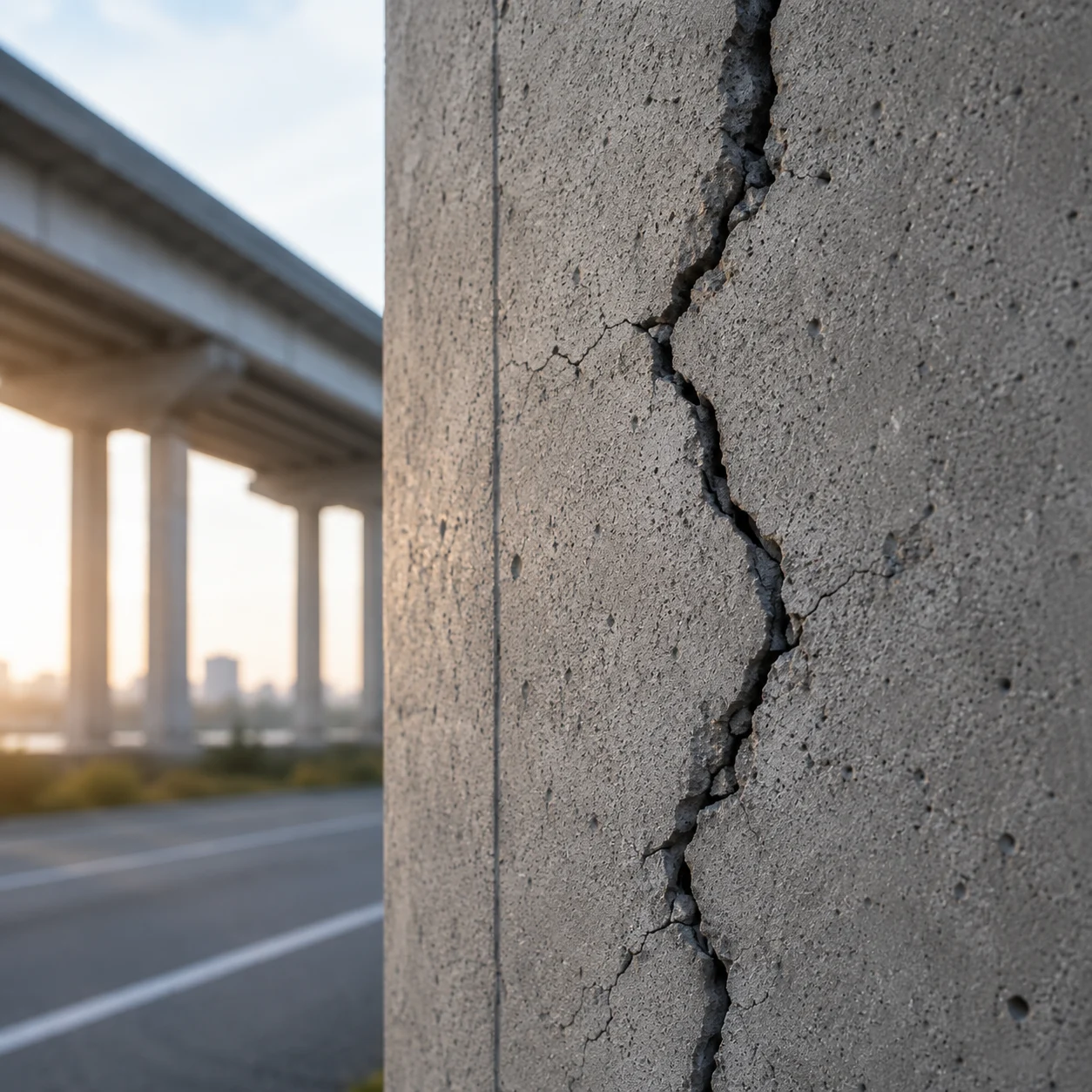
แนวคิดพื้นฐาน: สามเป้าหมาย สามชุดค่าวัดThe basic idea: three goals, three sets of metrics
| เป้าหมายGoal | สิ่งที่กังวลThe concern | ค่าที่ใช้ประเมินMetrics |
|---|---|---|
| โครงสร้างStructure | สิ่งที่กังวลThe concernความเสียหายระดับผิวหรือระดับโครงสร้างCosmetic or structural damage | ค่าที่ใช้ประเมินMetricsPPV และความถี่เด่น (DF)PPV and dominant frequency (DF) |
| ผู้อยู่อาศัยOccupants | สิ่งที่กังวลThe concernความสบายและความรู้สึกปลอดภัยPerceived comfort and safety | ค่าที่ใช้ประเมินMetricsKBF, AWt, VDVKBF, AWt, VDV |
| สิ่งของในอาคารContents | สิ่งที่กังวลThe concernอุปกรณ์ที่ไวต่อการสั่นSensitive equipment | ค่าที่ใช้ประเมินMetricsVC curveVC curves |
การวัดความสั่นสะเทือนทำในสามทิศทางที่ตั้งฉากกันเสมอ ปริมาณที่ใช้บ่อยที่สุดคือความเร็วอนุภาค (Particle velocity) หน่วย mm/sVibration is always measured in three perpendicular directions. The quantity used most is particle velocity, in mm/s.
เป้าหมายที่ 1: ปกป้องโครงสร้างGoal 1: protecting the structure
แหล่งความสั่นสะเทือนที่ต้องเฝ้าระวังเพื่อปกป้องโครงสร้าง ได้แก่:The vibration sources monitored to protect structures include:
- ไซต์ก่อสร้าง: งานขุด ตอกเสาเข็ม บดอัดแบบสั่น งานรื้อถอน และเครื่องจักรตีนตะขาบ แหล่งที่สั่นต่อเนื่องมีโอกาสสร้างความเสียหายมากกว่าเหตุการณ์สั้น ๆConstruction sites: excavation, pile driving, vibratory compaction, demolition and tracked equipment. Continuous sources carry more damage potential than short events.
- การระเบิด: งานเหมืองและเหมืองหินBlasting: mining and quarry operations.
- รถไฟและถนน: ติดตามความสั่นสะเทือนของอาคารและพื้นดินในช่วงที่การจราจรหนาแน่นRail and road: tracking building and ground vibration at peak traffic times.
- งานอุโมงค์: เฝ้าระวังฐานรากของอาคารที่อยู่เหนือแนวเครื่องเจาะอุโมงค์Tunnelling: monitoring foundations above tunnel-boring work.
- สะพาน: ติดตามเหตุการณ์รุนแรง น้ำหนักบรรทุกที่เพิ่มขึ้น และสภาพตามเวลา ความถี่ธรรมชาติที่เปลี่ยนไปอาจบ่งชี้ความล้าหรือการกัดกร่อนBridges: monitoring extreme events, rising loads and condition over time; a shift in natural frequency can signal fatigue or corrosion.
- PPV (Peak Particle Velocity)
- ค่าความเร็วอนุภาคสูงสุดแบบไม่ถ่วงน้ำหนัก ของแต่ละแกนThe maximum absolute unweighted velocity on each axis.
- PCPV
- ค่าที่มากที่สุดในสามค่า PPV ของสามแกนThe largest of the three axis PPVs.
- PVS (Peak Vector Sum)
- รากที่สองของผลรวมกำลังสองของ PPV ทั้งสามแกนThe square root of the sum of the squared axis PPVs.
- DF (Dominant Frequency)
- ความถี่หลักของการสั่น หาได้ด้วยวิธี Zero crossing หรือ FFT ความถี่ที่เปลี่ยนไปอาจบ่งชี้ว่าความแข็งของโครงสร้างเปลี่ยนThe main frequency of the vibration, found by zero crossing or FFT; a shift can indicate a change in stiffness.
ต้องระวังว่ามาตรฐานแต่ละฉบับใช้ค่าไม่เหมือนกัน มาตรฐานความสั่นสะเทือนเพื่อป้องกันผลกระทบต่ออาคารของไทย (ประกาศคณะกรรมการสิ่งแวดล้อมแห่งชาติ ฉบับที่ 37) ใช้ค่า PPV ของแกนเดี่ยวที่สูงที่สุด ไม่ใช่ผลรวมเวกเตอร์ ดูหน้าความสั่นสะเทือนของอาคารตามกฎหมายไทยNote that standards differ in the value they use. Thailand's building-vibration standard (NEB Notification No. 37) uses the PPV of the highest single axis, not the vector sum. See our page on building vibration under Thai law.
เป้าหมายที่ 2: ความสบายของผู้อยู่อาศัยGoal 2: occupant comfort
สถานที่ที่มักต้องประเมินด้านนี้ ได้แก่ บ้านใกล้งานก่อสร้างหรืองานตอกเสาเข็ม สำนักงานใกล้ระบบขนส่งหรือห้องเครื่อง โรงเรียนใกล้งานถนนหรือทางรถไฟ หอผู้ป่วยในโรงพยาบาล อาคารพักอาศัยสูงใกล้ทางรถไฟ ซึ่งชั้นบนอาจขยายการสั่นได้ และอาคารอนุรักษ์ที่เปิดให้เข้าชมPlaces where this is typically assessed include homes near construction or piling, offices near transit or plant rooms, schools near roadworks or rail, hospital wards, tall residential buildings near rail lines, where upper floors can amplify vibration, and heritage buildings open to visitors.

- KBF / KBFT (DIN 4150-2)
- ความเร็วที่ผ่านตัวกรองแถบความถี่แล้วประเมินเป็นค่า RMS แบบเคลื่อนที่ KBFmax คือค่าสูงสุด ส่วน KBFTm คือค่าเฉลี่ยตามเวลาBand-pass filtered velocity evaluated as a running RMS; KBFmax is the peak value and KBFTm the time-averaged value.
- AWt (ISO 2631)
- ความเร่ง RMS ถ่วงน้ำหนักตามความถี่ทั้งสามแกน สะท้อนความไวของมนุษย์Frequency-weighted RMS acceleration across all three axes, reflecting human sensitivity.
- VDV (BS 6472)
- ปริมาณสะสมที่รวมความเร่งถ่วงน้ำหนักตลอดช่วงเวลาที่ได้รับ เหตุการณ์ที่เกิดซ้ำจึงมีน้ำหนักมากกว่ายอดสูงสุดเพียงครั้งเดียวA cumulative dose that integrates frequency-weighted acceleration over the exposure period, so repeated events weigh more than a single peak.
- สเปกตรัม 1/3 ออกเตฟ1/3 octave spectrum
- พลังงานแยกตามย่านความถี่ ในหน่วยความเร็วหรือความเร่งEnergy by frequency band, in velocity or acceleration.
สำหรับประเทศไทย จากประกาศทางการที่เราตรวจสอบไว้ ยังไม่พบเกณฑ์ตัวเลขระดับชาติสำหรับผลของความสั่นสะเทือนต่อมนุษย์ ความรำคาญจากความสั่นสะเทือนยังเป็นเหตุรำคาญตามกฎหมายสาธารณสุขได้ งานประเมินจึงมักอ้างอิงมาตรฐานต่างประเทศข้างต้นตามที่โครงการหรือที่ปรึกษากำหนดFor Thailand, in the official notifications we have reviewed, no national numerical criterion for human response to vibration was found; vibration annoyance can still be a nuisance under public health law. Assessments therefore usually refer to the foreign standards above, as the project or consultant specifies.
เป้าหมายที่ 3: ปกป้องอุปกรณ์อ่อนไหวGoal 3: protecting sensitive equipment
อุปกรณ์บางชนิดได้รับผลจากความสั่นสะเทือนที่คนไม่รู้สึกเลย เช่น เครื่อง MRI และ CT ห้องผ่าตัดและระบบหุ่นยนต์ ศูนย์ข้อมูล (การสั่นกระทบชุดฮาร์ดดิสก์) โรงงานเซมิคอนดักเตอร์และห้องสะอาด ห้องปฏิบัติการวิจัย (กล้องจุลทรรศน์อิเล็กตรอน เครื่องชั่งความละเอียดสูง) การผลิตความแม่นยำสูง และพิพิธภัณฑ์หรือหอจดหมายเหตุSome equipment is affected by vibration people cannot feel at all: MRI and CT scanners, operating theatres and robotic systems, data centres (vibration affects hard drive arrays), semiconductor fabs and cleanrooms, research laboratories (electron microscopes, precision balances), precision manufacturing, and museums or archives.

เกณฑ์ที่ใช้คือ VC curve ซึ่งกำหนดค่าความเร็ว RMS สูงสุดในแต่ละย่าน 1/3 ออกเตฟ โดยทั่วไปในช่วง 8 – 80 Hz ตั้งแต่ VC-A (ประมาณ 50 µm/s) ถึง VC-E (ประมาณ 3 µm/s) ห้องปฏิบัติการทั่วไปอาจต้องการ VC-A หรือ VC-B ส่วนงานลิโธกราฟีและกล้องจุลทรรศน์อิเล็กตรอนอาจต้องการ VC-D หรือเข้มกว่าThe criterion is the VC curve, a maximum RMS velocity per 1/3 octave band, typically from 8 to 80 Hz, running from VC-A (about 50 µm/s) to VC-E (about 3 µm/s). General laboratories may need VC-A or VC-B; lithography and electron microscopy may need VC-D or stricter.
มาตรฐานที่ใช้อ้างอิงStandards referred to
| มาตรฐานStandard | ครอบคลุมเรื่องScope |
|---|---|
| DIN 4150-3DIN 4150-3 | ครอบคลุมเรื่องScopeเกณฑ์ความเสียหายของโครงสร้าง: อาคารพาณิชย์และอุตสาหกรรม 20 – 50 mm/s ลดลงถึง 3 – 10 mm/s สำหรับอาคารที่มีคุณค่าสูง ในช่วง 1 – 100 HzStructural damage thresholds: 20 – 50 mm/s for commercial and industrial buildings, down to 3 – 10 mm/s for buildings of great intrinsic value, across 1 – 100 Hz |
| DIN 4150-2DIN 4150-2 | ครอบคลุมเรื่องScopeผลต่อมนุษย์: เกณฑ์ KBF ตามประเภทพื้นที่Human exposure: KBF limits by area type |
| ISO 2631ISO 2631 | ครอบคลุมเรื่องScopeการตอบสนองของมนุษย์: AWtHuman response: AWt |
| BS 6472BS 6472 | ครอบคลุมเรื่องScopeความสบายของมนุษย์: ค่า VDV สำหรับกลางวัน กลางคืน ที่พักอาศัย และที่ทำงานHuman comfort: VDV action values for day, night, residential and workplace |
| AS 2187.2, USBM RI8507AS 2187.2, USBM RI8507 | ครอบคลุมเรื่องScopeความสั่นสะเทือนจากการระเบิดBlasting vibration |
| VC curveVC curves | ครอบคลุมเรื่องScopeการปกป้องอุปกรณ์Equipment protection |
ตัวเลขในตารางเป็นช่วงที่ NTi Audio สรุปไว้ เกณฑ์จริงขึ้นกับความถี่และชนิดของอาคาร ต้องอ่านจากมาตรฐานฉบับเต็มที่งานของคุณอ้างถึง ดูเพิ่มที่ DIN 4150 และ ISO 2631The figures in the table are the ranges NTi Audio summarises; the actual limit depends on frequency and building type and must be read from the full standard your work refers to. See also DIN 4150 and ISO 2631.
ขั้นตอนการเฝ้าระวัง 4 ขั้นThe four-step monitoring workflow
- วัดค่าพื้นฐาน (Baseline): บันทึกความสั่นสะเทือนเดิมของพื้นที่ก่อนเริ่มงาน เพื่อรู้ว่าอะไรมีอยู่ก่อนแล้วEstablish a baseline: record the background vibration before work starts, to know what was already there.
- วางเซนเซอร์: ที่ฐานราก องค์อาคารรับน้ำหนัก หรือตามเส้นทางที่การสั่นเดินทาง ให้ตรงกับเป้าหมายของการเฝ้าระวังPosition the sensors: at foundations, load-bearing elements or along the transmission path, matching the monitoring goal.
- เฝ้าระวังและแจ้งเตือน: วัดต่อเนื่อง และส่งการแจ้งเตือนทันทีเมื่อค่าเข้าใกล้หรือเกินเกณฑ์ เพื่อให้หน้างานปรับวิธีทำงานได้ทันMonitor and alert: sample continuously and send an immediate alert when a threshold is approached or exceeded, so the site can adjust in time.
- รายงานและแบ่งปัน: สร้างรายงานการปฏิบัติตามเกณฑ์อัตโนมัติ ส่งให้หน่วยงาน วิศวกร และเพื่อนบ้านReport and share: generate compliance reports automatically for regulators, engineers and neighbours.
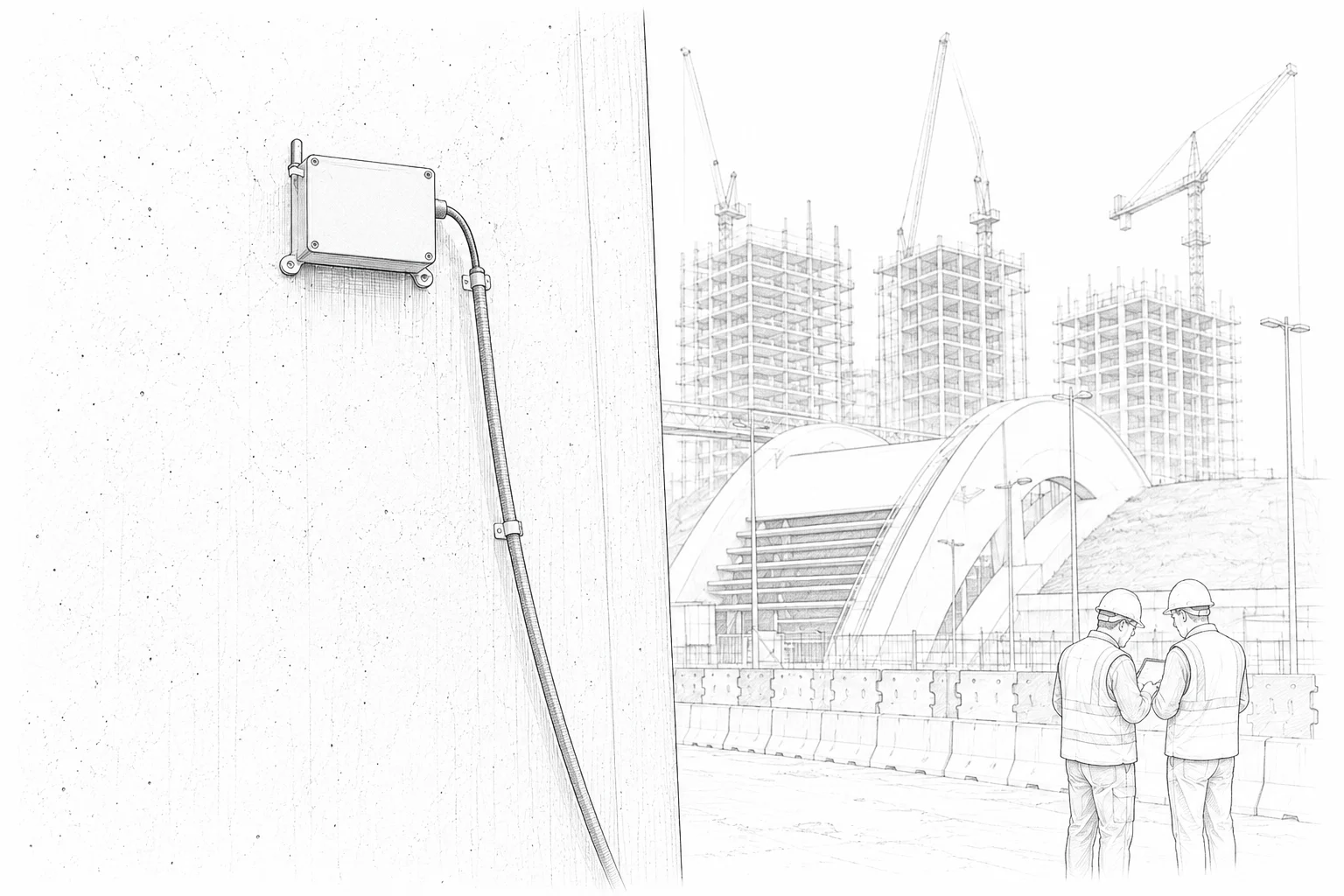
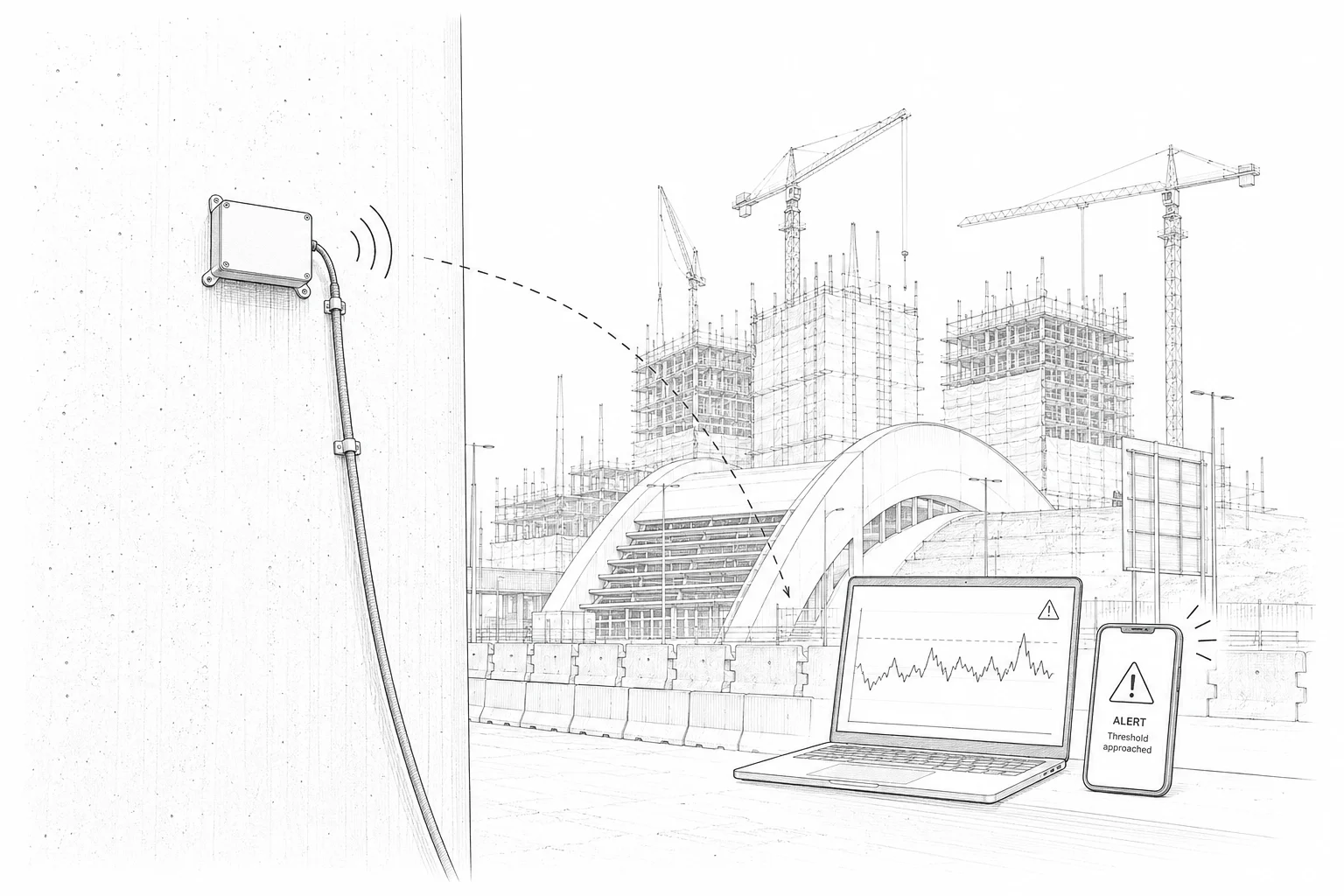
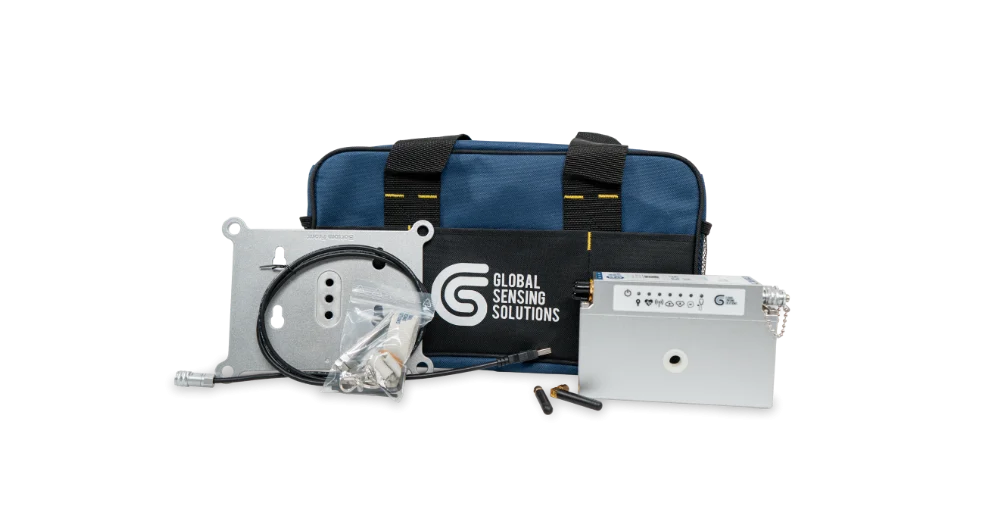
เครื่องมือของ NTi Audio สำหรับงานนี้NTi Audio equipment for this work
- GSS 5GV Vibration Monitor: เครื่องเฝ้าระวังความสั่นสะเทือนและความเอียงแบบ MEMS มี Gateway 4G ในตัว (Wi-Fi เป็นตัวเลือก) และฐานแบตเตอรี่แบบชาร์จได้ ติดตั้งเร็ว และจัดการจากระยะไกลได้ จึงลดจำนวนครั้งที่ต้องเข้าไซต์GSS 5GV Vibration Monitor: a MEMS vibration and tilt monitor with an integrated 4G gateway (Wi-Fi optional) and a rechargeable battery base; quick to install and managed remotely, which reduces site visits.
- MeasurEye: แพลตฟอร์มคลาวด์สำหรับเฝ้าระวัง NTi ประกาศโหมด Vibration สำหรับความเสียหายของโครงสร้างและความสบายของผู้อยู่อาศัย เมื่อวันที่ 24 กันยายน 2026MeasurEye: the cloud platform for monitoring. NTi announced its Vibration Mode, for structural damage and occupant comfort, on 24 September 2026.
- XL2 Vibration Meter: สำหรับการวัดความสั่นสะเทือนแบบพกพาและงานวิเคราะห์หน้างานXL2 Vibration Meter: for handheld vibration measurements and on-site analysis.
ความเข้าใจผิดที่พบบ่อยCommon misunderstandings
- "ไม่เกิน 5 mm/s แปลว่าปลอดภัย" ไม่ได้ เกณฑ์ขึ้นกับความถี่ ชนิดของอาคาร และตำแหน่งที่วัด ต้องระบุมาตรฐานที่ใช้เสมอ"Below 5 mm/s means safe." Not so: the limit depends on frequency, building type and measuring position; always state the standard used.
- "อาคารไม่ร้าว แปลว่าไม่มีปัญหา" คนรู้สึกและรำคาญได้ที่ระดับต่ำกว่าเกณฑ์ความเสียหายมาก ต้องประเมินด้วยค่าคนละชุด"No cracks means no problem." People perceive and are annoyed at levels far below damage thresholds; that needs a different set of metrics.
- "เริ่มวัดเมื่อมีคนร้องเรียนก็พอ" ถ้าไม่มีค่าพื้นฐานก่อนเริ่มงาน จะพิสูจน์ไม่ได้ว่ารอยร้าวหรือการสั่นมีอยู่ก่อนหรือไม่"Start measuring when someone complains." Without a baseline from before the work, you cannot show whether a crack or a vibration was there already.
- "PPV กับ PVS คือค่าเดียวกัน" ไม่ใช่ PVS เป็นผลรวมเวกเตอร์ของสามแกน จึงมากกว่าหรือเท่ากับ PPV ของแกนเดี่ยวเสมอ ใช้ค่าตามที่มาตรฐานกำหนด"PPV and PVS are the same." No: PVS is the vector sum of the three axes, so it is always greater than or equal to a single-axis PPV. Use the value the standard specifies.
คำถามที่พบบ่อยFrequently asked questions
ควรเริ่มเฝ้าระวังเมื่อไร?When should monitoring start?
ก่อนเริ่มงานที่ก่อให้เกิดความสั่นสะเทือน เพื่อเก็บค่าพื้นฐาน แล้วเฝ้าระวังต่อเนื่องตลอดช่วงงานที่เสี่ยง เช่น งานตอกเสาเข็ม งานขุด และงานรื้อถอนBefore the vibration-generating work begins, to capture the baseline, then continuously through the risky phases such as piling, excavation and demolition.
ควรติดเซนเซอร์ที่ไหน?Where should the sensor go?
ขึ้นกับเป้าหมาย: ปกป้องโครงสร้างติดที่ฐานรากหรือองค์อาคารรับน้ำหนัก ส่วนงานอื่นติดตามเส้นทางที่การสั่นเดินทางหรือที่จุดที่กังวล มาตรฐานแต่ละฉบับกำหนดตำแหน่งวัดของตัวเองIt depends on the goal: at foundations or load-bearing elements to protect the structure; otherwise along the transmission path or at the point of concern. Each standard defines its own measuring positions.
ความสั่นสะเทือนเท่าไรจึงทำให้อาคารเสียหาย?How much vibration damages a building?
ไม่มีตัวเลขเดียว DIN 4150-3 ให้เกณฑ์ตั้งแต่ 3 – 10 mm/s สำหรับอาคารที่มีคุณค่าสูง ถึง 20 – 50 mm/s สำหรับอาคารพาณิชย์และอุตสาหกรรม และค่าขึ้นกับความถี่ สำหรับประเทศไทยให้ใช้ประกาศฉบับที่ 37There is no single number. DIN 4150-3 runs from 3 – 10 mm/s for buildings of great intrinsic value to 20 – 50 mm/s for commercial and industrial buildings, depending on frequency. In Thailand, use Notification No. 37.