ทำไมเรื่องนี้สำคัญWhy this matters
เสียงกับแรงสั่นสะเทือนเป็นเรื่องเดียวกันในหลายแง่ เสียงเกิดจากสิ่งที่สั่น แล้วส่งการสั่นผ่านอากาศมาถึงหู แต่บางครั้งการสั่นเดินทางผ่านพื้นดิน โครงสร้าง หรือตัวเครื่องจักรโดยตรง เราจะรู้สึกได้ทางเท้า ทางเก้าอี้ หรือเห็นแก้วน้ำบนโต๊ะสั่นSound and vibration are closely related. Sound comes from something that vibrates and passes that motion through the air to our ears. Sometimes, though, the motion travels directly through the ground, a structure or a machine body. We then feel it through our feet or a chair, or see a glass of water tremble on the table.
การวัดแรงสั่นสะเทือนจึงตอบคำถามที่ต่างกันได้หลายแบบ เช่น งานตอกเสาเข็มข้างบ้านจะทำให้ผนังร้าวไหม ผู้อยู่อาศัยในคอนโดใกล้รถไฟจะรู้สึกรำคาญหรือไม่ กล้องจุลทรรศน์ในห้องแล็บจะใช้งานได้หรือเปล่า และเครื่องจักรในโรงงานเริ่มสึกหรอแล้วหรือยัง แต่ละคำถามใช้ค่าที่วัดและเกณฑ์ต่างกันVibration measurements therefore answer very different questions: will pile driving next door crack the walls, will residents of a condominium near a railway be disturbed, can the microscope in a laboratory still work, and is a factory machine starting to wear? Each question uses different quantities and different criteria.
แนวคิดพื้นฐาน: สามวิธีบอกขนาดของการสั่นThe basic idea: three ways to describe the size of a vibration
ลองนึกถึงชิงช้าที่แกว่งไปมา เราบอกได้ว่ามันแกว่งกว้างแค่ไหน แกว่งเร็วแค่ไหนตอนผ่านจุดต่ำสุด และตอนกลับตัวที่ปลายทาง ความเร็วเปลี่ยนทิศทางกะทันหันแค่ไหน สามมุมมองนี้คือสามปริมาณหลักของการสั่นThink of a swing moving back and forth. We can say how wide it swings, how fast it moves as it passes the lowest point, and how abruptly its speed changes direction as it turns around at each end. These three views are the three main vibration quantities.
| ปริมาณQuantity | ความหมายแบบง่ายIn plain words | หน่วยที่ใช้บ่อยCommon units |
|---|---|---|
| การกระจัด (Displacement)Displacement | ความหมายแบบง่ายIn plain wordsวัตถุขยับไปไกลจากตำแหน่งเดิมเท่าไรHow far the object moves from its resting position | หน่วยที่ใช้บ่อยCommon unitsมิลลิเมตร (mm) ไมโครเมตร (µm)millimetres (mm), micrometres (µm) |
| ความเร็ว (Velocity)Velocity | ความหมายแบบง่ายIn plain wordsวัตถุขยับเร็วเท่าไร คือการกระจัดที่เปลี่ยนไปต่อเวลาHow fast the object moves: change in displacement per unit time | หน่วยที่ใช้บ่อยCommon unitsมิลลิเมตรต่อวินาที (mm/s) นิ้วต่อวินาที (in/s)millimetres per second (mm/s), inches per second (in/s) |
| ความเร่ง (Acceleration)Acceleration | ความหมายแบบง่ายIn plain wordsความเร็วเปลี่ยนเร็วแค่ไหนHow quickly the velocity changes | หน่วยที่ใช้บ่อยCommon unitsเมตรต่อวินาทียกกำลังสอง (m/s²)metres per second squared (m/s²) |
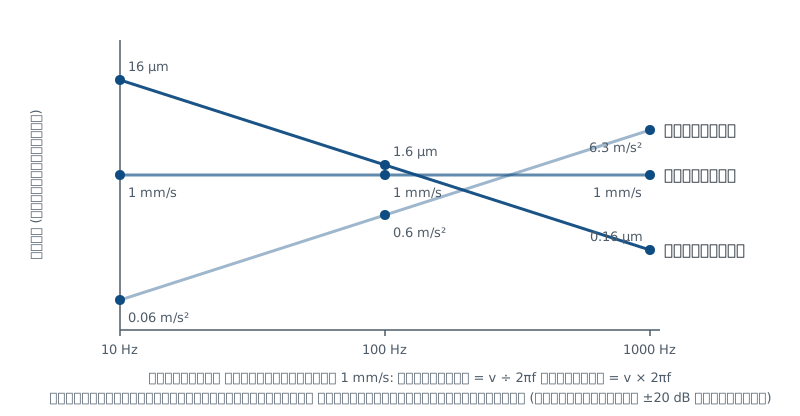
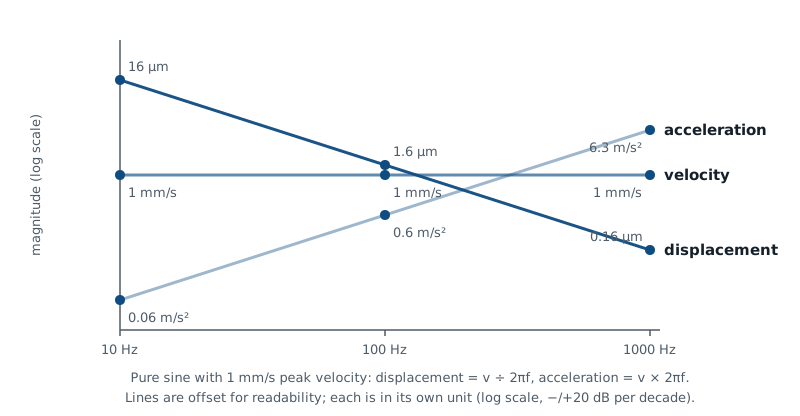
ทั้งสามค่าไม่ได้แยกจากกัน ความเร็วคืออัตราการเปลี่ยนของการกระจัด และความเร่งคืออัตราการเปลี่ยนของความเร็ว ตัวเชื่อมคือความถี่ (Frequency) ของการสั่น ถ้าความเร็วเท่ากัน การสั่นช้า ๆ ความถี่ต่ำจะมีการกระจัดมาก แต่ความเร่งน้อย ส่วนการสั่นเร็ว ๆ ความถี่สูงจะมีการกระจัดน้อยมาก แต่ความเร่งสูงThe three are not independent. Velocity is the rate of change of displacement, and acceleration is the rate of change of velocity. The link between them is the frequency of the vibration. At the same velocity, a slow, low-frequency vibration has a large displacement but little acceleration, while a fast, high-frequency vibration has a tiny displacement but high acceleration.
| ความถี่ของการสั่นVibration frequency | ความเร็ว (ค่ายอด)Velocity (peak) | การกระจัด (ค่ายอด) โดยประมาณDisplacement (peak), approx. | ความเร่ง (ค่ายอด) โดยประมาณAcceleration (peak), approx. |
|---|---|---|---|
| 10 Hz10 Hz | ความเร็ว (ค่ายอด)Velocity (peak)1 mm/s1 mm/s | การกระจัด (ค่ายอด) โดยประมาณDisplacement (peak), approx.16 µm16 µm | ความเร่ง (ค่ายอด) โดยประมาณAcceleration (peak), approx.0.06 m/s²0.06 m/s² |
| 100 Hz100 Hz | ความเร็ว (ค่ายอด)Velocity (peak)1 mm/s1 mm/s | การกระจัด (ค่ายอด) โดยประมาณDisplacement (peak), approx.1.6 µm1.6 µm | ความเร่ง (ค่ายอด) โดยประมาณAcceleration (peak), approx.0.6 m/s²0.6 m/s² |
| 1000 Hz1000 Hz | ความเร็ว (ค่ายอด)Velocity (peak)1 mm/s1 mm/s | การกระจัด (ค่ายอด) โดยประมาณDisplacement (peak), approx.0.16 µm0.16 µm | ความเร่ง (ค่ายอด) โดยประมาณAcceleration (peak), approx.6.3 m/s²6.3 m/s² |
ตัวเลขในตารางคำนวณสำหรับการสั่นแบบคลื่นไซน์บริสุทธิ์ที่ความถี่เดียว เพื่อให้เห็นแนวโน้มเท่านั้น (การกระจัด = ความเร็ว ÷ 2πf และความเร่ง = ความเร็ว × 2πf) การสั่นจริงมีหลายความถี่ปนกัน จึงต้องวัดและวิเคราะห์ความถี่ประกอบThe numbers in the table are calculated for a pure sine vibration at a single frequency, only to show the trend (displacement = velocity ÷ 2πf and acceleration = velocity × 2πf). Real vibration contains many frequencies at once, so it has to be measured and analysed by frequency.
เพราะเหตุนี้ งานแต่ละแบบจึงเลือกปริมาณที่ “เห็นปัญหา” ได้ดีที่สุด การสั่นช้า ๆ ของโครงสร้างอาคารดูด้วยความเร็วหรือการกระจัด ส่วนการสั่นความถี่สูงของตลับลูกปืนเครื่องจักรจะเด่นชัดในค่าความเร่งThat is why each type of work chooses the quantity that “shows the problem” best. Slow motion of a building structure is viewed as velocity or displacement, while high-frequency vibration from a machine bearing stands out clearly in acceleration.
ค่ายอด ค่า RMS และเดซิเบลPeak, RMS and decibels
ปริมาณแต่ละตัวยังรายงานได้หลายแบบ ค่ายอด (Peak) คือค่าสูงสุดที่เกิดขึ้น ค่ายอดถึงยอด (Peak-to-peak) คือระยะจากยอดบวกถึงยอดลบ และ ค่า RMS คือค่าเฉลี่ยเชิงพลังงานที่สะท้อนความรุนแรงโดยรวมในช่วงเวลาหนึ่ง เหมือนที่เราใช้ Leq กับเสียง ค่ายอดเหมาะกับเหตุการณ์กระแทกสั้น ๆ ส่วน RMS เหมาะกับการสั่นต่อเนื่อง สำหรับคลื่นไซน์บริสุทธิ์ ค่ายอด = √2 × RMS (ประมาณ 1.41 เท่า) และค่ายอดถึงยอด = 2 × ค่ายอด แต่การสั่นจริงอัตราส่วนนี้ต่างออกไป จึงต้องระบุเสมอว่ารายงานเป็นค่าแบบใดEach quantity can also be reported in several ways. The peak is the highest value that occurs, peak-to-peak is the span from the positive to the negative extreme, and RMS is an energy-based average that reflects the overall severity over a period, much as Leq does for sound. Peak suits short impacts; RMS suits continuous vibration. For a pure sine, peak = √2 × RMS (about 1.41 times) and peak-to-peak = 2 × peak, but real vibration has other ratios, so always state which value is reported.
เครื่องอย่าง XL2 Vibration Meter แสดงผลได้ทั้งหน่วยเมตริก หน่วยอิมพีเรียล หรือเป็นเดซิเบลเทียบกับค่าอ้างอิงที่ผู้ใช้ตั้งได้ ถ้าจะเทียบผลเป็น dB ข้ามรายงาน ต้องดูให้แน่ใจว่าใช้ค่าอ้างอิงเดียวกันAn instrument such as the XL2 Vibration Meter can show results in metric or imperial units, or as decibels relative to a reference value the user can set. When comparing dB results between reports, make sure the same reference was used.
วัดอย่างไร: Accelerometer และการวิเคราะห์ความถี่How it is measured: accelerometers and frequency analysis
เซนเซอร์ที่ใช้มากที่สุดคือ Accelerometer ซึ่งให้สัญญาณไฟฟ้าตามความเร่งของพื้นผิวที่ติดอยู่ เครื่องวัดจะนำสัญญาณนี้ไปคำนวณต่อเป็นความเร็วและการกระจัด XL2 Vibration Meter ใช้ Accelerometer แบบ IEPE (ICP) เช่น A4580 ที่มาในชุด และแสดงความเร่ง ความเร็ว และการกระจัดพร้อมกัน ส่วนเครื่องเฝ้าระวังแบบติดตั้งถาวรอย่าง GSS 5GV ใช้เซนเซอร์แบบ MEMS วัดสามแกนในตัวเครื่องThe most widely used sensor is the accelerometer, which produces an electrical signal proportional to the acceleration of the surface it is attached to. The instrument then calculates velocity and displacement from that signal. The XL2 Vibration Meter uses IEPE (ICP) accelerometers, such as the A4580 included in the kit, and shows acceleration, velocity and displacement at the same time. A permanently installed monitor such as the GSS 5GV uses a built-in three-axis MEMS sensor.
- ติดเซนเซอร์ให้แน่นกับพื้นผิวที่ต้องการวัด เพราะถ้าเซนเซอร์โยกเองจะวัดการโยกของตัวมันแทนFix the sensor firmly to the surface being measured; a loose sensor measures its own rocking instead.
- ในงานโครงสร้าง ติดที่ฐานราก หรือชิ้นส่วนรับน้ำหนัก และบนเส้นทางที่การสั่นเดินทางผ่านFor structures, mount on foundations or load-bearing elements, and along the path the vibration travels.
- การสั่นเกิดได้ทั้งสามทิศ งานประเมินอาคารจึงมักวัดสามแกน (x, y, z)Vibration happens in all three directions, so building assessments usually measure three axes (x, y, z).
เหมือนกับเสียง การรู้แค่ตัวเลขรวมยังไม่พอ ต้องรู้ด้วยว่าการสั่นอยู่ที่ความถี่ไหน XL2 Vibration Meter วิเคราะห์ได้ทั้งแบบ FFT (ความละเอียดคงที่เป็น Hz เหมาะกับการหาความถี่เด่นของเครื่องจักร) และแบบ CPB (constant percentage bandwidth คือการแบ่งย่านแบบออกเตฟที่ย่านกว้างขึ้นตามความถี่) แบบ 1/3 ออกเตฟในช่วง 0.8 Hz ถึง 2.5 kHz (1/1 ออกเตฟ 1 Hz ถึง 2 kHz) ส่วนการวัดแบบ Flat มีแบนด์วิดท์ (−3 dB) เริ่มราว 0.7 Hz (ค่าทั่วไป) ซึ่งสำคัญ เพราะการสั่นของอาคารและพื้นดินมักอยู่ที่ความถี่ต่ำ แต่ย่านต่ำสุดที่ใช้ได้จริงขึ้นกับเซนเซอร์ด้วย เช่น A4580 ในชุด Kit เริ่มที่ 3 HzAs with sound, a single overall number is not enough; we also need to know at which frequencies the vibration occurs. The XL2 Vibration Meter offers both FFT analysis (constant resolution in Hz, good for finding a machine’s dominant frequencies) and CPB analysis (constant percentage bandwidth: octave-type bands that widen as frequency rises) in 1/3 octaves from 0.8 Hz to 2.5 kHz (1/1 octaves from 1 Hz to 2 kHz), and the flat (unfiltered) measurement has a −3 dB bandwidth starting at about 0.7 Hz (typical). That matters because building and ground vibration is usually at low frequencies, but the usable low end also depends on the sensor: the kit's A4580, for example, starts at 3 Hz.
ความถี่เด่น (Dominant frequency) คือความถี่ที่มีการสั่นแรงที่สุด ใช้ประกอบการประเมินอาคาร เพราะเกณฑ์ความเสียหายขึ้นกับความถี่ และถ้าความถี่เด่นของโครงสร้าง เช่น สะพาน เปลี่ยนไปตามเวลา อาจเป็นสัญญาณว่าความแข็งแรงของโครงสร้างเปลี่ยนThe dominant frequency is the frequency with the strongest vibration. It is used in building assessments because damage criteria depend on frequency, and if the dominant frequency of a structure such as a bridge shifts over time, it may signal a change in the structure’s stiffness.
รายละเอียดเชิงวิศวกรรม: จากความเร่งไปเป็นความเร็วและการกระจัดEngineering detail: from acceleration to velocity and displacement
เมื่อเซนเซอร์วัดความเร่ง เครื่องหาความเร็วด้วยการ อินทิเกรต (integrate) หนึ่งครั้ง และหาการกระจัดด้วยการอินทิเกรตสองครั้ง สำหรับแต่ละความถี่ การอินทิเกรตหนึ่งครั้งเท่ากับการหารด้วย 2πf ผลคือส่วนที่ความถี่ต่ำมากถูก ขยายขึ้น มาก ทั้งสัญญาณจริงและสัญญาณรบกวนของเซนเซอร์ รวมถึงการเลื่อนของค่าศูนย์ (drift) ถ้าไม่จำกัดย่านความถี่ต่ำด้วยตัวกรองผ่านสูง (high-pass filter) ค่าความเร็วหรือการกระจัดที่คำนวณได้จะ “ลอย” ขึ้นโดยไม่ได้มาจากการสั่นจริง การอินทิเกรตสองครั้งไปเป็นการกระจัดจึงไวต่อปัญหานี้ยิ่งกว่าWhen the sensor measures acceleration, the instrument obtains velocity by integrating once and displacement by integrating twice. At each frequency, one integration is the same as dividing by 2πf, so content at very low frequencies is strongly amplified: the real signal, but also sensor noise and zero drift. Unless the low-frequency end is limited with a high-pass filter, the calculated velocity or displacement “wanders” without any real vibration behind it. Integrating twice to displacement is even more sensitive to this.
ในทางปฏิบัติ ตัวกรองนี้ต้องเลือกให้ต่ำพอที่จะไม่ตัดความถี่ที่สำคัญของงาน เช่น การสั่นของอาคารที่ความถี่ไม่กี่เฮิรตซ์ แต่สูงพอที่จะตัดการลอยของสัญญาณ มาตรฐานการประเมินหลายฉบับกำหนดย่านความถี่ที่ใช้ไว้แล้ว ให้ตั้งตามนั้นและระบุไว้ในรายงาน ในงานเฝ้าระวังอาคาร บางระบบใช้ geophone ซึ่งเป็นเซนเซอร์ที่ให้สัญญาณตามความเร็วโดยตรงIn practice the filter must be low enough not to remove frequencies that matter, such as building vibration at a few hertz, yet high enough to remove the wander. Many assessment standards already define the frequency range to use; set it accordingly and state it in the report. For building monitoring, some systems use geophones, sensors whose output follows velocity directly.
มอเตอร์สั่นที่ 50 Hz เครื่องวัดความเร็วค่ายอดได้ 4 mm/s ถ้าเป็นการสั่นแบบไซน์ที่ความถี่เดียว
การกระจัดค่ายอด = v ÷ 2πf = 4 ÷ (2π × 50) ≈ 0.0127 mm หรือประมาณ 12.7 µm
ความเร่งค่ายอด = v × 2πf = 0.004 × 314 ≈ 1.26 m/s²
ค่า RMS ของแต่ละปริมาณเท่ากับค่ายอด ÷ √2 เช่น ความเร็ว RMS ≈ 2.8 mm/s การสั่นจริงที่มีหลายความถี่ปนกันไม่สามารถแปลงด้วยสูตรนี้ได้ตรง ๆ ต้องให้เครื่องคำนวณจากสัญญาณจริง (ตัวเลขเป็นตัวอย่าง)A motor vibrates at 50 Hz and the meter shows a peak velocity of 4 mm/s. If it is a single-frequency sine:
Peak displacement = v ÷ 2πf = 4 ÷ (2π × 50) ≈ 0.0127 mm, about 12.7 µm.
Peak acceleration = v × 2πf = 0.004 × 314 ≈ 1.26 m/s².
The RMS of each quantity is the peak ÷ √2, e.g. RMS velocity ≈ 2.8 mm/s. Real vibration with many frequencies mixed cannot be converted with this formula directly; the instrument must calculate from the actual signal. (Illustrative numbers.)
เซนเซอร์ การติดตั้ง และแกนการวัดSensors, mounting and measurement axes
| ชนิดเซนเซอร์Sensor type | วัดอะไรMeasures | ข้อสังเกตNotes |
|---|---|---|
| Accelerometer แบบพีโซอิเล็กทริก (IEPE/ICP)Piezoelectric accelerometer (IEPE/ICP) | วัดอะไรMeasuresความเร่งAcceleration | ข้อสังเกตNotesช่วงความถี่กว้าง ใช้แพร่หลาย เครื่องวัดจ่ายกระแสคงที่ให้ผ่านสายสัญญาณ ไม่ตอบสนองต่อค่าคงที่ (0 Hz)Wide frequency range, widely used; the meter supplies a constant current over the signal cable; no response at 0 Hz |
| เซนเซอร์ MEMSMEMS sensor | วัดอะไรMeasuresความเร่งAcceleration | ข้อสังเกตNotesตอบสนองได้ถึง 0 Hz ขนาดเล็ก เหมาะกับเครื่องเฝ้าระวังแบบติดตั้งถาวรResponds down to 0 Hz, compact; suits permanently installed monitors |
| GeophoneGeophone | วัดอะไรMeasuresความเร็วVelocity | ข้อสังเกตNotesใช้มากในงานเฝ้าระวังการก่อสร้างและพื้นดินCommon in construction and ground-vibration monitoring |
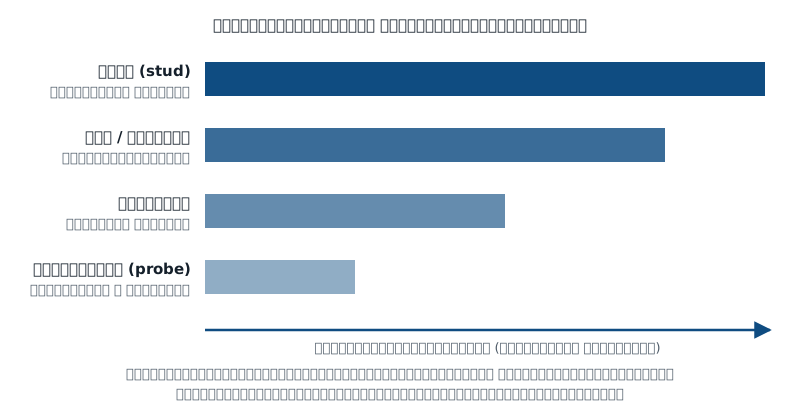
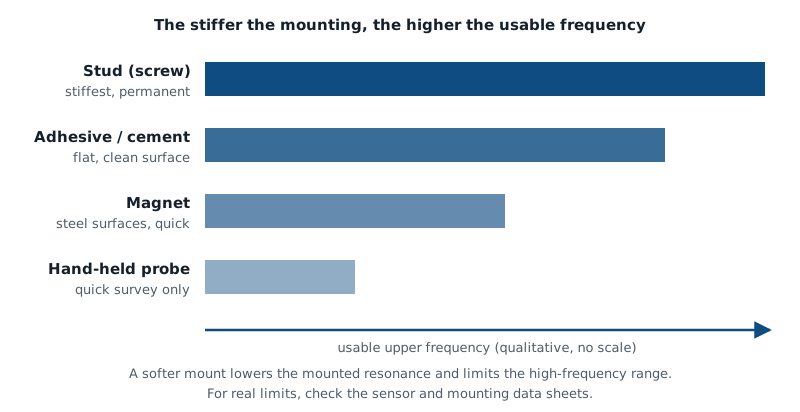
เซนเซอร์กับวิธียึดรวมกันเป็นระบบสปริงกับมวล ซึ่งมีความถี่เรโซแนนซ์ของตัวเอง ยิ่งยึดแข็งและเบา ความถี่เรโซแนนซ์ยิ่งสูง ช่วงที่วัดได้ถูกต้องก็กว้างขึ้น การยึดด้วยแม่เหล็กหรือการจับด้วยมือสะดวกกว่าแต่ลดช่วงความถี่สูงลง สำหรับงานอาคารที่สนใจความถี่ต่ำ ความแข็งของการยึดมักสำคัญน้อยกว่าการที่เซนเซอร์ ไม่โยกหรือเลื่อน และติดอยู่บนชิ้นส่วนโครงสร้างจริง ไม่ใช่บนกระเบื้องหรือวัสดุตกแต่งที่หลวมSensor and mounting together form a spring-mass system with its own resonance frequency. The stiffer and lighter the mount, the higher that resonance and the wider the range that is measured correctly. A magnet or a hand-held probe is more convenient but reduces the high-frequency range. For building work, where low frequencies matter, stiffness is often less important than making sure the sensor does not rock or slide and sits on the real structure, not on loose tiles or finishes.
- มวลของเซนเซอร์ ควรน้อยเมื่อเทียบกับชิ้นส่วนที่วัด บนแผ่นโลหะบางหรือชิ้นส่วนเบา เซนเซอร์หนักจะเปลี่ยนการสั่นที่ต้องการวัดSensor mass should be small compared with the part being measured; on thin sheet metal or light parts, a heavy sensor changes the vibration you want to measure.
- ยึดสายสัญญาณ ให้แนบกับพื้นผิวใกล้เซนเซอร์ สายที่แกว่งสร้างสัญญาณปลอมได้Secure the cable to the surface near the sensor; a swinging cable can create false signals.
- แกนการวัดของอาคาร โดยทั่วไป z เป็นแนวดิ่ง x และ y เป็นแนวนอน มักจัดให้ขนานกับผนังหลักของอาคาร บันทึกทิศทางไว้ในรายงานBuilding axes: usually z vertical and x, y horizontal, often aligned with the main walls; record the orientation in the report.
- แกนของร่างกายคน ตาม ISO 2631 x คือหลังไปหน้าอก y คือขวาไปซ้าย z คือเท้าไปศีรษะ การประเมินความสบายวัดที่ตำแหน่งที่คนสัมผัสการสั่น เช่น พื้นใต้เท้าหรือที่นั่งHuman body axes in ISO 2631: x back-to-chest, y right-to-left, z foot-to-head. Comfort assessments measure where people receive the vibration, such as the floor under their feet or the seat.
อาคาร คน และอุปกรณ์ไวต่อการสั่น: ใช้ค่าต่างกันBuildings, people and sensitive equipment use different measures
ข้อนี้เป็นจุดที่มือใหม่สับสนบ่อยที่สุด การสั่นระดับเดียวกันอาจ “ไม่เป็นอันตรายต่ออาคาร” แต่ “ทำให้คนรำคาญมาก” ได้ เพราะร่างกายคนรับรู้การสั่นได้ไวกว่าที่โครงสร้างจะเสียหายมาก แต่ละเป้าหมายจึงมีค่าที่วัดและมาตรฐานของตัวเองThis is where beginners most often get confused. The same vibration can be “harmless to the building” yet “very annoying to people”, because the human body notices vibration at levels far below those that damage a structure. Each purpose therefore has its own quantities and standards.
| เป้าหมายPurpose | ค่าที่ใช้Quantities used | มาตรฐานที่ NTi Audio อ้างถึงStandards named by NTi Audio |
|---|---|---|
| ความเสียหายของโครงสร้างStructural damage | ค่าที่ใช้Quantities usedPPV ต่อแกน, PCPV, PVS และความถี่เด่นPPV per axis, PCPV, PVS and dominant frequency | มาตรฐานที่ NTi Audio อ้างถึงStandards named by NTi AudioDIN 4150-3 (และในอุปกรณ์เฝ้าระวัง เช่น BS 7385)DIN 4150-3 (and, in monitoring equipment, e.g. BS 7385) |
| ความสบายของผู้อยู่อาศัยOccupant comfort | ค่าที่ใช้Quantities usedความเร่งถ่วงน้ำหนักความถี่ aw (NTi Audio แสดงเป็น AWt), VDV, ค่า KBFrequency-weighted acceleration aw (shown as AWt by NTi Audio), VDV, KB value | มาตรฐานที่ NTi Audio อ้างถึงStandards named by NTi AudioISO 2631, BS 6472, DIN 4150-2ISO 2631, BS 6472, DIN 4150-2 |
| อุปกรณ์ที่ไวต่อการสั่นSensitive equipment | ค่าที่ใช้Quantities usedความเร็ว RMS ในย่าน 1/3 ออกเตฟ 8–80 Hz เทียบกับเส้น VCRMS velocity in 1/3 octave bands 8–80 Hz against VC curves | มาตรฐานที่ NTi Audio อ้างถึงStandards named by NTi AudioVC curves (Vibration Criterion)VC curves (Vibration Criterion) |
| เครื่องจักรและการผลิตMachines and production | ค่าที่ใช้Quantities usedสเปกตรัม FFT/CPB เทียบกับสเปกตรัมอ้างอิงของชิ้นงานที่ดีFFT/CPB spectrum compared with a reference spectrum from a good unit | มาตรฐานที่ NTi Audio อ้างถึงStandards named by NTi Audioเกณฑ์ผ่าน/ไม่ผ่านที่กำหนดเองUser-defined pass/fail limits |
สำหรับความเสียหายของอาคาร PPV (Peak particle velocity) คือความเร็วสูงสุดของแต่ละแกนในช่วงที่สังเกต PCPV คือค่า PPV ที่มากที่สุดในสามแกน และ PVS (Peak vector sum) คือขนาดรวมของความเร็วทั้งสามแกน NTi Audio สรุปว่าค่าแนะนำของ DIN 4150-3 (มาตรฐานเยอรมัน ค่าแนะนำสำหรับการสั่นระยะสั้นที่วัดที่ฐานราก) อยู่ราว 3 ถึง 50 mm/s ในช่วงความถี่ 1–100 Hz โดยค่าที่ใช้จริงขึ้นกับประเภทอาคารและความถี่ของการสั่น ค่าเหล่านี้ไม่ใช่เกณฑ์ทางกฎหมายของประเทศไทยFor building damage, PPV (peak particle velocity) is the highest velocity on each axis during the observation period, PCPV is the largest of the three PPV values, and PVS (peak vector sum) is the combined magnitude of the three axes. NTi Audio summarises the DIN 4150-3 guide values (a German standard; guide values for short-term vibration measured at the foundation) as roughly 3 to 50 mm/s over 1–100 Hz, with the value that applies depending on the building type and the vibration frequency. They are not Thai legal limits.
สำหรับความสบายของคน ค่าที่ใช้เป็นความเร่งที่ ถ่วงน้ำหนักตามความถี่ (Frequency-weighted) ให้ใกล้กับความไวของร่างกาย คล้ายกับที่ dBA ถ่วงน้ำหนักเสียงตามความไวของหู ค่า VDV (Vibration dose value) ตาม BS 6472 สะสมการสั่นตลอดช่วงเวลาที่ประเมิน จึงสะท้อนทั้งความแรงและระยะเวลาFor human comfort, the quantity is acceleration frequency-weighted to reflect the body’s sensitivity, much as A-weighting is loosely based on the ear’s sensitivity. The VDV (vibration dose value) of BS 6472 accumulates the vibration over the whole assessment period, so it reflects both strength and duration.
สำหรับห้องแล็บ โรงพยาบาล หรือโรงงานผลิตชิ้นส่วนละเอียด ใช้ เส้น VC (Vibration Criterion) ซึ่งกำหนดความเร็ว RMS สูงสุดในแต่ละย่าน 1/3 ออกเตฟ ตั้งแต่ VC-A ประมาณ 50 µm/s ไปจนถึง VC-E ประมาณ 3 µm/s ยิ่งอุปกรณ์ละเอียด เช่น กล้องจุลทรรศน์อิเล็กตรอน ก็ยิ่งต้องใช้เส้นที่เข้มงวดขึ้นFor laboratories, hospitals and precision manufacturing, VC (Vibration Criterion) curves set the maximum RMS velocity in each 1/3 octave band, from VC-A at about 50 µm/s down to VC-E at about 3 µm/s. The more delicate the equipment, such as an electron microscope, the stricter the curve.
ยังมีงานสั่นสะเทือนอีกสองกลุ่มที่ใช้เกณฑ์ของตัวเอง: สภาพเครื่องจักร มักดูความเร็ว RMS แบบย่านกว้าง (โดยทั่วไป 10–1000 Hz) ตามมาตรฐานชุด ISO 20816 และใช้ความเร่งหรือสเปกตรัมเพื่อหาปัญหาตลับลูกปืน ส่วน การสัมผัสการสั่นของผู้ปฏิบัติงาน (มือ–แขน และทั้งตัว) ประเมินตาม ISO 5349 และ ISO 2631-1 ซึ่งเป็นเรื่องความปลอดภัยในการทำงาน แยกจากความสบายของผู้อยู่อาศัยTwo more kinds of vibration work use their own criteria: machine condition, usually judged by broadband RMS velocity (typically 10–1000 Hz) under the ISO 20816 series, with acceleration or spectra used to find bearing faults; and occupational exposure of workers (hand-arm and whole-body), assessed under ISO 5349 and ISO 2631-1 as a workplace safety matter, separate from occupant comfort.
ตัวอย่างในชีวิตจริงEveryday example
ไซต์ก่อสร้างจะตอกเสาเข็มข้างตึกแถวเก่า ก่อนเริ่มงาน ทีมวัดติดเครื่องเฝ้าระวังสามแกนที่ฐานรากของตึกแถว เพื่อบันทึกระดับการสั่นปกติ (Baseline) ไว้ก่อน เมื่อเริ่มตอก เครื่องบันทึก PPV และความถี่เด่นต่อเนื่อง และส่งแจ้งเตือนเมื่อเข้าใกล้ค่าที่ตั้งไว้ ในเวลาเดียวกัน ผู้อยู่อาศัยอาจบอกว่า “สั่นจนนอนไม่หลับ” ทั้งที่ค่ายังต่ำกว่าเกณฑ์ความเสียหายของอาคารมาก เรื่องนี้ต้องประเมินแยกด้วยค่าความสบาย เช่น VDVA construction site will drive piles next to an old row of shophouses. Before work starts, the team installs a three-axis monitor on the shophouses’ foundation to record the normal vibration level (the baseline). Once piling begins, the monitor logs PPV and dominant frequency continuously and sends an alert when a set level is approached. At the same time, residents may say “the shaking keeps us awake” even though the values are far below the building-damage criteria. That complaint has to be assessed separately with a comfort measure such as VDV.
- บันทึกระดับการสั่นปกติก่อนเริ่มงานRecord the normal vibration level before work starts.
- ติดเซนเซอร์ที่ฐานรากหรือชิ้นส่วนรับน้ำหนัก และบนเส้นทางการส่งผ่านMount sensors on foundations or load-bearing elements, and along the transmission path.
- บันทึกต่อเนื่อง พร้อมตั้งระดับแจ้งเตือนLog continuously with alarm thresholds.
- ทำรายงานเทียบกับเกณฑ์ และแบ่งปันผลกับผู้เกี่ยวข้องReport against the criteria and share the results with stakeholders.
คำถามที่พบบ่อยFrequently asked questions
ทำไมงานอาคารใช้ความเร็ว แต่งานเครื่องจักรมักดูความเร่งWhy do buildings use velocity while machines often use acceleration?
ความเร็วสัมพันธ์กับความเครียดในโครงสร้างได้ดีในช่วงความถี่ต่ำถึงกลางที่อาคารตอบสนอง เกณฑ์ความเสียหายจึงมักใช้ความเร็ว ส่วนปัญหาของเครื่องจักรบางแบบ เช่น ตลับลูกปืนเสีย สร้างการสั่นความถี่สูงที่มีการกระจัดน้อยมากแต่ความเร่งสูง จึงเห็นได้ชัดในค่าความเร่งVelocity relates well to strain in structures over the low-to-mid frequencies at which buildings respond, so damage criteria usually use velocity. Some machine faults, such as damaged bearings, create high-frequency vibration with tiny displacement but high acceleration, which shows up clearly in acceleration.
ใช้ฐานแม่เหล็กติดเซนเซอร์ได้หรือไม่Can I use a magnetic base?
ได้บนผิวเหล็กที่เรียบและสะอาด เหมาะกับงานสำรวจและงานความถี่ต่ำถึงกลาง แต่ช่วงความถี่สูงที่วัดได้จะลดลงเมื่อเทียบกับการยึดด้วยสกรูหรือกาว ตรวจช่วงที่ใช้ได้จากเอกสารของเซนเซอร์และฐานแม่เหล็กYes, on flat, clean steel surfaces; it suits surveys and low-to-mid frequencies, but the usable high-frequency range is lower than with a stud or adhesive. Check the usable range in the sensor and magnet data sheets.
ควรรายงานค่ายอดหรือค่า RMSShould I report peak or RMS?
ตามที่มาตรฐานหรือเกณฑ์กำหนด เกณฑ์ความเสียหายของอาคารมักใช้ค่ายอดของความเร็ว (PPV) เกณฑ์ความสบายและเกณฑ์ของอุปกรณ์ที่ไวต่อการสั่นมักใช้ค่า RMS หรือค่าที่ถ่วงน้ำหนักแล้ว ระบุชนิดของค่าไว้ทุกครั้งWhatever the standard or criterion specifies. Building damage criteria usually use peak velocity (PPV); comfort and sensitive-equipment criteria usually use RMS or weighted values. Always state which one you report.
ต้องวัดครบสามแกนหรือไม่Do I need all three axes?
งานประเมินอาคารและความสบายส่วนใหญ่ต้องการสามแกน เพราะแกนที่แรงที่สุดไม่ได้เป็นแนวดิ่งเสมอ งานวินิจฉัยเครื่องจักรอาจเริ่มจากแกนที่สำคัญแล้วเพิ่มตามความจำเป็นMost building and comfort assessments need three axes, because the strongest direction is not always vertical. Machine diagnostics may start with the key axis and add others as needed.
คนรู้สึกว่าสั่นมาก แต่ค่ายังต่ำกว่าเกณฑ์อาคาร แปลว่าวัดผิดหรือไม่People feel strong vibration but the values are below the building criteria. Is the measurement wrong?
ไม่จำเป็น ร่างกายรับรู้การสั่นได้ที่ระดับต่ำกว่าระดับที่ทำให้อาคารเสียหายมาก สองเรื่องนี้ต้องประเมินแยกกันด้วยค่าและมาตรฐานของแต่ละเรื่อง นอกจากนี้ เสียงที่เกิดจากการสั่นของโครงสร้าง เช่น เสียงหึ่งหรือเสียงสิ่งของกระทบกัน ก็ทำให้คนรู้สึกว่าสั่นแรงขึ้นได้Not necessarily. The body perceives vibration at levels far below those that damage buildings; the two must be assessed separately, each with its own quantities and standards. Noise radiated by the vibrating structure, such as rumble or rattling objects, can also make vibration feel stronger.
คำศัพท์สำคัญKey terms
- การกระจัด (Displacement)Displacement
- ระยะที่วัตถุขยับออกจากตำแหน่งเดิมThe distance an object moves from its resting position.
- ความเร็ว (Velocity)Velocity
- อัตราการเปลี่ยนของการกระจัด หน่วย mm/sThe rate of change of displacement, in mm/s.
- ความเร่ง (Acceleration)Acceleration
- อัตราการเปลี่ยนของความเร็ว หน่วย m/s²The rate of change of velocity, in m/s².
- Accelerometer
- เซนเซอร์ที่ให้สัญญาณตามความเร่ง ใช้วัดการสั่นA sensor whose signal follows acceleration, used to measure vibration.
- PPV / PCPV / PVS
- ความเร็วสูงสุดต่อแกน / ค่าที่สูงสุดในสามแกน / ผลรวมเชิงเวกเตอร์ของสามแกนPeak velocity per axis / the largest of the three / the vector sum of the three axes.
- VDV (Vibration dose value)VDV (vibration dose value)
- ค่าสะสมของการสั่นที่ถ่วงน้ำหนักตามความไวของร่างกาย ใช้ประเมินความสบายตาม BS 6472A cumulative, body-weighted vibration value used for comfort assessment under BS 6472.
- เส้น VC (Vibration Criterion)VC curves (Vibration Criterion)
- ชุดเกณฑ์ความเร็ว RMS รายย่าน 1/3 ออกเตฟ สำหรับอุปกรณ์ที่ไวต่อการสั่นA family of RMS velocity limits per 1/3 octave band for vibration-sensitive equipment.
ความเข้าใจผิดที่พบบ่อยCommon misunderstandings
- “ความเร่งสูงแปลว่าอันตรายต่ออาคาร” ไม่เสมอไป ความเร่งสูงที่ความถี่สูงอาจมีการกระจัดเพียงเล็กน้อย งานอาคารจึงดูความเร็วร่วมกับความถี่“High acceleration means danger to the building.” Not always: high acceleration at high frequency may involve tiny displacement, so building work looks at velocity together with frequency.
- “ไม่ถึงเกณฑ์อาคาร แปลว่าไม่มีปัญหา” คนรู้สึกได้ที่ระดับต่ำกว่านั้นมาก ต้องประเมินความสบายแยกต่างหาก“Below the building limit means no problem.” People feel vibration at much lower levels; comfort must be assessed separately.
- “วัดแกนเดียวก็พอ” การสั่นเกิดได้ทุกทิศ งานประเมินอาคารและความสบายจึงมักวัดสามแกน“One axis is enough.” Vibration happens in every direction, so building and comfort assessments usually measure three axes.
- “ตัวเลขเดียวบอกทุกอย่าง” ต้องดูความถี่ด้วย เพราะเกณฑ์หลายแบบเปลี่ยนตามความถี่“One number tells the whole story.” Frequency matters too, because many criteria change with frequency.
นำไปใช้ที่ไหนWhere it is used
- เฝ้าระวังงานก่อสร้าง ตอกเสาเข็ม ระเบิดหิน และอุโมงค์ใกล้อาคารMonitoring construction, piling, blasting and tunnelling near buildings
- ติดตามสภาพสะพานและโครงสร้างผ่านความถี่เด่นTracking bridges and structures through their dominant frequency
- ประเมินความสบายของผู้อยู่อาศัยใกล้ทางรถไฟ ถนน หรือเครื่องจักรAssessing occupant comfort near railways, roads or machinery
- ป้องกันอุปกรณ์ที่ไวต่อการสั่นในห้องแล็บ โรงพยาบาล และโรงงานผลิตชิ้นส่วนละเอียดProtecting vibration-sensitive equipment in laboratories, hospitals and precision manufacturing
- ตรวจสภาพเครื่องจักรและควบคุมคุณภาพในสายการผลิตMachine condition checks and production-line quality control