ทำไมเรื่องนี้สำคัญWhy this matters
สองเสียงที่ดังเท่ากันอาจให้ความรู้สึกต่างกันมาก เสียงหึ่งทุ้ม ๆ ของเครื่องจักรกับเสียงหวีดแหลมของเบรกรถ ดังเท่ากันก็จริง แต่หูรับรู้ต่างกัน ผนังกั้นได้ต่างกัน และวิธีแก้ก็ต่างกัน สิ่งที่ทำให้ต่างคือ ความถี่ การเข้าใจความถี่จึงเป็นกุญแจของเรื่องต่อ ๆ ไป ทั้งการถ่วงน้ำหนักความถี่ (dBA) การวิเคราะห์ย่านออกเตฟ การออกแบบห้อง และการกันเสียงTwo sounds at the same level can feel very different. The deep hum of a machine and the high squeal of a car's brakes may be equally loud, yet our ears perceive them differently, walls block them differently and the fixes are different. What sets them apart is frequency. Understanding frequency is the key to later topics: frequency weighting (dBA), octave-band analysis, room design and sound insulation.
แนวคิดพื้นฐาน: สั่นกี่ครั้งต่อวินาทีThe basic idea: vibrations per second
ในบทเสียงคืออะไร เราเห็นแล้วว่าเสียงเกิดจากการสั่น ความถี่ (frequency) คือการนับว่าการสั่นนั้นเกิดขึ้นครบรอบกี่ครั้งในหนึ่งวินาที หน่วยคือ เฮิรตซ์ (hertz, Hz) ตัวอย่างเช่น แผ่นลำโพงที่ขยับออกและถอยกลับครบ 100 รอบใน 1 วินาที จะให้เสียงความถี่ 100 HzIn the article on what sound is, we saw that sound comes from vibration. Frequency counts how many complete vibrations happen in one second. Its unit is the hertz (Hz). For example, a loudspeaker cone that moves out and back 100 complete times in one second produces a sound at 100 Hz.
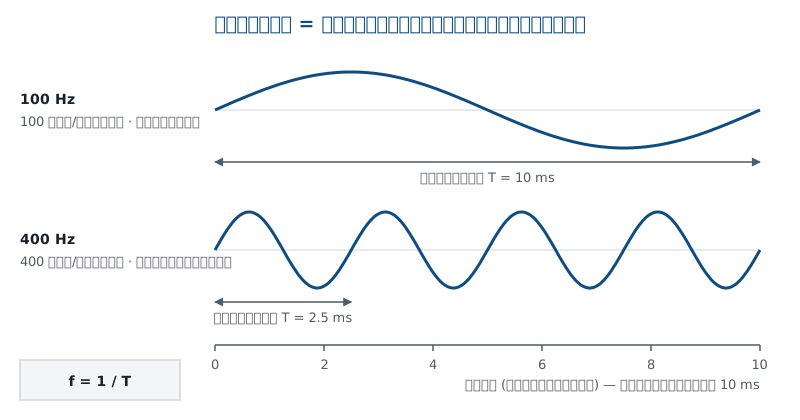
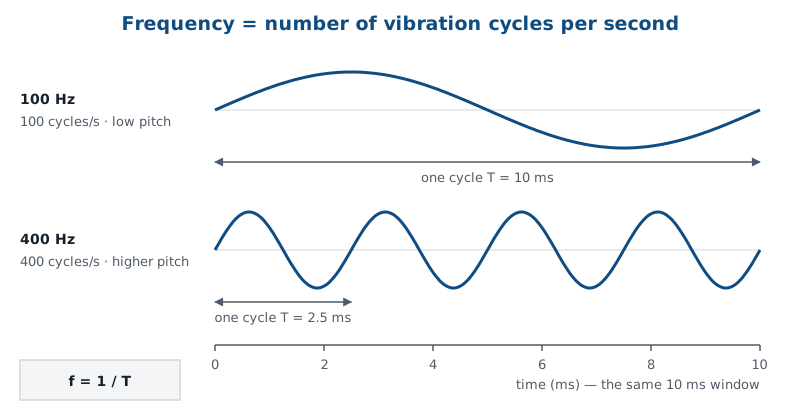
เมื่อตัวเลขใหญ่ขึ้น จะใช้ กิโลเฮิรตซ์ (kHz) ซึ่งเท่ากับ 1,000 Hz ดังนั้น 1 sc-camel-k-hz = 1,000 Hz และ 20 sc-camel-k-hz = 20,000 Hz ในงานวัดเสียง ความถี่ 1 kHz ถูกใช้เป็นจุดอ้างอิงบ่อยมาก เช่น เครื่องสอบเทียบเสียงมักปล่อยเสียงที่ 1 kHzFor larger numbers we use the kilohertz (kHz), equal to 1,000 Hz, so 1 sc-camel-k-hz = 1,000 Hz and 20 sc-camel-k-hz = 20,000 Hz. In sound measurement, 1 kHz is used as a reference point very often; for example, sound calibrators usually produce a tone at 1 kHz.
ดีดสายกีตาร์เส้นใหญ่ที่สุดกับเส้นเล็กที่สุด สายใหญ่สั่นช้ากว่า จึงให้เสียงทุ้ม สายเล็กสั่นเร็วกว่า จึงให้เสียงแหลม ถ้ากดสายให้สั้นลง สายจะสั่นเร็วขึ้นและเสียงสูงขึ้น นี่คือความสัมพันธ์ระหว่างความเร็วในการสั่นกับเสียงที่เราได้ยินในรูปแบบที่จับต้องได้Pluck the thickest and the thinnest strings of a guitar. The thick string vibrates more slowly, so it sounds deep; the thin string vibrates faster, so it sounds bright. Press a string down to shorten it and it vibrates faster and sounds higher. This is the link between how fast something vibrates and what we hear, in a form you can touch.
ความถี่กับระดับเสียงสูงต่ำ (pitch)Frequency and pitch
คำว่า ความถี่ เป็นปริมาณทางฟิสิกส์ที่วัดได้ ส่วนความรู้สึกว่าเสียง “สูง” หรือ “ต่ำ” เรียกว่า ระดับเสียงสูงต่ำ (pitch) ซึ่งเป็นการรับรู้ของหู โดยทั่วไป ความถี่ยิ่งสูง เรายิ่งได้ยินเป็นเสียงสูง แต่สองคำนี้ไม่ใช่สิ่งเดียวกัน ความถี่คือสิ่งที่เครื่องวัด ส่วน pitch คือสิ่งที่สมองรับรู้Frequency is a physical quantity that can be measured. The sensation that a sound is “high” or “low” is called pitch, and it is a perception. In general, the higher the frequency, the higher the pitch we hear, but the two are not the same thing: frequency is what the instrument measures; pitch is what the brain perceives.
ในภาษาไทย คำว่า “ระดับเสียง” มักใช้ปนกันทั้งความดัง (level) และความสูงต่ำ (pitch) ในศูนย์ความรู้นี้ “ระดับเสียง” หมายถึงความดังที่วัดเป็นเดซิเบล และใช้คำว่า “เสียงสูงต่ำ” หรือ pitch เมื่อพูดถึงความทุ้มแหลมIn everyday Thai, the word for “sound level” is often used for both loudness and pitch. In this Knowledge Center, “level” always means loudness measured in decibels, and we say “pitch” when we mean how high or low a sound is.
ความดังกับความถี่เป็นคนละเรื่องกัน เสียงทุ้มอาจเบาหรือดังก็ได้ เสียงแหลมก็เช่นกัน ความดังขึ้นกับขนาดของการแกว่งของความดัน ส่วนความถี่ขึ้นกับความเร็วของการแกว่งLoudness and frequency are separate things. A deep sound can be quiet or loud, and so can a high one. Loudness depends on how big the pressure swings are; frequency depends on how fast they happen.
หูคนได้ยินช่วงไหนWhat range can we hear?
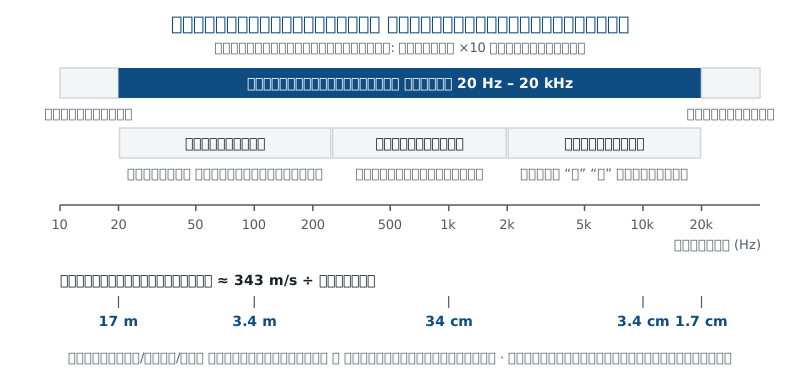
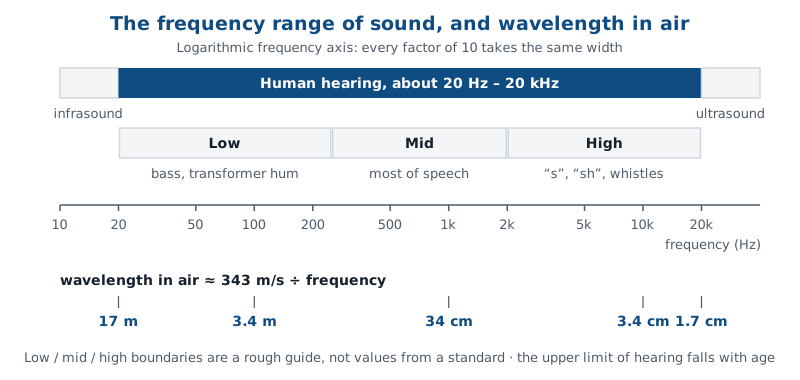
ช่วงความถี่ที่หูคนได้ยินโดยทั่วไปคือประมาณ 20 Hz ถึง 20,000 Hz (20 kHz) ช่วงนี้เรียกว่าช่วงเสียงที่ได้ยิน (audio frequency range) และเป็นช่วงที่เครื่องวัดระดับเสียงออกแบบมาให้ครอบคลุมเป็นหลักเมื่อรายงานค่าระดับเสียงรวมเป็นตัวเลขเดียว (ช่วงที่แน่นอนขึ้นกับการถ่วงน้ำหนักความถี่และสเปกของเครื่อง)Human hearing typically covers about 20 Hz to 20,000 Hz (20 kHz). This is called the audio frequency range, and it is broadly the range a sound level meter is designed to cover when it reports a single overall level (the exact range depends on the frequency weighting and the instrument's specification).
- ต่ำกว่าประมาณ 20 Hz เรียกว่า อินฟราซาวด์ (infrasound) หูแทบไม่ได้ยินเป็นเสียง แต่บางครั้งรู้สึกได้เป็นแรงสั่นหรือแรงกดในร่างกายBelow about 20 Hz is infrasound. We barely hear it as sound, but it can sometimes be felt as vibration or pressure in the body.
- สูงกว่าประมาณ 20 kHz เรียกว่า อัลตราซาวด์ (ultrasound) หูคนไม่ได้ยิน แต่สัตว์บางชนิด เช่น สุนัขและค้างคาว ได้ยินAbove about 20 kHz is ultrasound. People cannot hear it, but some animals, such as dogs and bats, can.
- ขอบบนของการได้ยินลดลงตามอายุ ผู้ใหญ่หลายคนได้ยินเสียงสูงได้ไม่ถึง 20 kHz และการสัมผัสเสียงดังเป็นเวลานานทำให้การได้ยินเสียงสูงเสื่อมเร็วขึ้นThe upper limit falls with age; many adults no longer hear up to 20 kHz, and long exposure to loud noise speeds up the loss of high-frequency hearing.
หูของเรา ไม่ได้ไวต่อทุกความถี่เท่ากัน เราได้ยินเสียงช่วงกลางถึงค่อนสูงได้ง่ายที่สุด ส่วนเสียงที่ต่ำมากหรือสูงมาก ต้องดังกว่ามากจึงจะรู้สึกว่าดังเท่ากัน และเมื่อเสียงดังขึ้น หูจะรับรู้เสียงทุ้มได้มากขึ้น นี่คือเหตุผลที่เครื่องวัดเสียงมีการถ่วงน้ำหนักความถี่ตามมาตรฐาน เช่น A-weighting ซึ่งออกแบบโดยอิงคร่าว ๆ กับความไวของหูที่ระดับเสียงปานกลาง (ไม่ได้เท่ากับการได้ยินของคนทุกกรณี) ซึ่งอธิบายในบท dBA dBC และ dBZOur ears are not equally sensitive at every frequency. We hear the middle to upper-middle range most easily; very low and very high sounds must be much stronger to seem equally loud. As sounds get louder, the ear picks up low frequencies more. This is why sound level meters apply standardised frequency weightings such as A-weighting, which is loosely modelled on the ear's sensitivity at moderate levels (it is not an exact copy of human hearing). This is explained in the article on dBA, dBC and dBZ.
เสียงทุ้ม เสียงกลาง เสียงแหลมLow, mid and high frequencies
ในการพูดคุยทั่วไป เรามักแบ่งช่วงความถี่คร่าว ๆ เป็นสามกลุ่ม ขอบเขตด้านล่างเป็นเพียงการแบ่งแบบหยาบเพื่อให้เห็นภาพ ไม่ใช่ค่าตามมาตรฐาน และแต่ละสาขางานอาจแบ่งต่างกันเล็กน้อยIn everyday conversation we often divide frequencies roughly into three groups. The boundaries below are only a rough guide to help you picture them; they are not values from a standard, and different fields may draw the lines slightly differently.
| กลุ่มGroup | ช่วงโดยประมาณRough range | ตัวอย่างเสียงที่เด่นในช่วงนี้Examples of sounds strong in this range | ลักษณะที่ควรรู้Worth knowing |
|---|---|---|---|
| เสียงทุ้ม / ความถี่ต่ำLow frequencies | ช่วงโดยประมาณRough rangeต่ำกว่าประมาณ 250 Hzbelow about 250 Hz | ตัวอย่างเสียงที่เด่นในช่วงนี้Examples of sounds strong in this rangeเบสจากเครื่องเสียง กลองใหญ่ เสียงหึ่งของหม้อแปลงและเครื่องจักรขนาดใหญ่ เครื่องยนต์รถบรรทุกBass from a music system, a bass drum, the hum of transformers and large machines, a truck engine | ลักษณะที่ควรรู้Worth knowingความยาวคลื่นยาว ลอดผ่านผนังและอ้อมสิ่งกีดขวางได้ง่าย ควบคุมยากLong wavelengths; passes through walls and around obstacles easily; hard to control |
| เสียงกลางMid frequencies | ช่วงโดยประมาณRough rangeประมาณ 250 Hz – 2,000 Hzabout 250 Hz – 2,000 Hz | ตัวอย่างเสียงที่เด่นในช่วงนี้Examples of sounds strong in this rangeเสียงพูดส่วนใหญ่ เครื่องดนตรีหลายชนิดMost of the human voice, many musical instruments | ลักษณะที่ควรรู้Worth knowingมีผลมากต่อความชัดของเสียงพูดVery important for speech clarity |
| เสียงแหลม / ความถี่สูงHigh frequencies | ช่วงโดยประมาณRough rangeสูงกว่าประมาณ 2,000 Hzabove about 2,000 Hz | ตัวอย่างเสียงที่เด่นในช่วงนี้Examples of sounds strong in this rangeเสียงพยัญชนะ เช่น ส ซ ฉ เสียงนกหวีด เสียงเบรกดังเอี๊ยด เสียงลมรั่วConsonants such as “s” and “sh”, whistles, squealing brakes, hissing air leaks | ลักษณะที่ควรรู้Worth knowingหูไว ได้ยินชัด แต่ถูกดูดซับและกั้นได้ง่ายกว่าเสียงทุ้มThe ear is sensitive to it, but it is absorbed and blocked more easily than low sound |
เวลาห้องข้าง ๆ เปิดเพลง สิ่งที่ลอดผ่านผนังมาถึงเรามักเป็นเสียง “ตึบ ตึบ” ของเบส ส่วนเสียงร้องและเสียงแหลมแทบหายไป เพราะผนังกั้นเสียงความถี่สูงได้ดีกว่าความถี่ต่ำมาก ปัญหาเสียงรบกวนจากเพื่อนบ้าน งานเลี้ยง หรือเครื่องจักรขนาดใหญ่ จึงมักเป็นปัญหาเสียงความถี่ต่ำWhen the room next door is playing music, what comes through the wall is usually the “thump thump” of the bass, while the voice and the high sounds almost disappear. Walls block high frequencies much better than low ones. That is why noise problems from neighbours, parties or large machines are so often low-frequency problems.
เสียงจริงมีหลายความถี่ปนกันReal sounds mix many frequencies
เสียงที่มีความถี่เดียวล้วน ๆ เรียกว่า โทนบริสุทธิ์ (pure tone) เช่น เสียง “ตี๊ด” จากเครื่องทดสอบการได้ยิน หรือเสียงจากเครื่องสอบเทียบเสียง แต่เสียงในชีวิตจริงเกือบทั้งหมด เช่น เสียงพูด เสียงดนตรี เสียงรถ เสียงแอร์ เป็นส่วนผสมของหลายความถี่พร้อมกันA sound containing just one frequency is called a pure tone, like the “beep” of a hearing test or the tone from a sound calibrator. Almost every real-life sound, such as speech, music, traffic or an air conditioner, is a mixture of many frequencies at once.
- เสียงดนตรีและเสียงพูด มีความถี่หลัก (ที่กำหนดโน้ตหรือเสียงสูงต่ำ) บวกกับความถี่อื่นที่เป็นทวีคูณของมัน เรียกว่า ฮาร์มอนิก (harmonics) ฮาร์มอนิกทำให้โน้ตเดียวกันจากเปียโนกับไวโอลินฟังต่างกันMusic and speech have a main frequency (which sets the note or pitch) plus other frequencies at whole-number multiples of it, called harmonics. Harmonics are why the same note sounds different on a piano and a violin.
- เสียงฟู่ เสียงลม เสียงน้ำตก มีพลังงานกระจายไปทั่วหลายความถี่ ไม่มีความถี่เด่น เรียกกว้าง ๆ ว่าเสียงแบบแถบกว้าง (broadband)Hiss, wind and waterfalls spread their energy across many frequencies with no single strong one; these are broadband sounds.
- เสียงเครื่องจักรหลายชนิด มีทั้งเสียงแถบกว้างและ เสียงโทนเด่น (tonal) ปนอยู่ เช่น เสียงหวีดของพัดลมหรือเสียงหึ่งของมอเตอร์ เสียงโทนเด่นมักน่ารำคาญกว่าเสียงแถบกว้างที่ดังเท่ากันMany machines produce broadband noise mixed with tonal components, such as a fan's whine or a motor's hum. Tonal sound is often more annoying than broadband sound at the same level.
การแยกเสียงออกเป็นความถี่ต่าง ๆ เพื่อดูว่าแต่ละความถี่แรงแค่ไหน เรียกว่าการดู สเปกตรัม (spectrum) ของเสียง เหมือนแยกแสงขาวผ่านปริซึมเป็นสีรุ้งSplitting a sound into its frequencies to see how strong each one is, is called looking at its spectrum, much like splitting white light into a rainbow with a prism.
ออกเตฟ: วิธีนับความถี่แบบที่หูได้ยินThe octave: counting frequency the way we hear it
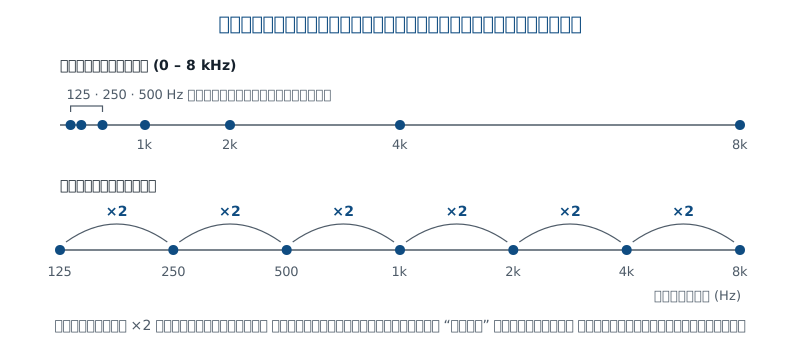
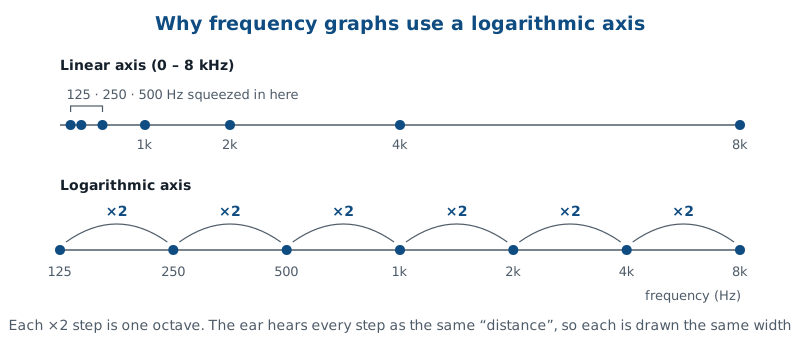
หูไม่ได้รับรู้ความถี่แบบบวกทีละเท่า ๆ กัน แต่รับรู้แบบ เป็นสัดส่วน จาก 100 Hz ไป 200 Hz ฟังแล้วเป็น “ระยะห่าง” เท่ากับจาก 1,000 Hz ไป 2,000 Hz ทั้งที่ตัวเลขต่างกัน 100 กับ 1,000 Hz การเพิ่มความถี่เป็นสองเท่านี้เรียกว่า หนึ่งออกเตฟ (octave)The ear does not hear frequency in equal added steps; it hears it in proportion. Going from 100 Hz to 200 Hz sounds like the same “distance” as going from 1,000 Hz to 2,000 Hz, even though one step is 100 Hz and the other 1,000 Hz. This doubling of frequency is called one octave.
บนเปียโน โน้ตโดตัวหนึ่งกับโดตัวถัดไปทางขวาห่างกันหนึ่งออกเตฟ คือความถี่เพิ่มเป็นสองเท่า ระหว่างนั้นมีคีย์ขาวและดำรวม 12 ขั้น (12 ครึ่งเสียง) ตัวอย่างที่นักดนตรีคุ้นเคย: โน้ตลา (A) ที่ใช้ตั้งเสียงคือ 440 Hz และลาตัวที่สูงขึ้นหนึ่งออกเตฟคือ 880 HzOn a piano, one C and the next C to the right are one octave apart: the frequency doubles. Between them there are 12 steps of white and black keys (12 semitones). A familiar example for musicians: the tuning note A is 440 Hz, and the A one octave higher is 880 Hz.
ด้วยเหตุนี้ เครื่องวัดเสียงจึงมักแบ่งช่วงความถี่ที่ได้ยินออกเป็น ย่านออกเตฟ (octave bands) หรือละเอียดขึ้นเป็น ย่าน 1/3 ออกเตฟ แล้วรายงานระดับเสียงของแต่ละย่าน กราฟความถี่ของเสียงจึงมักวาดแกนความถี่แบบสเกลลอการิทึม คือแต่ละช่วงสองเท่าได้ความกว้างบนกราฟเท่ากัน รายละเอียดอยู่ในบทย่านออกเตฟและ 1/3 ออกเตฟFor this reason, sound measuring instruments usually divide the audible range into octave bands, or finer 1/3-octave bands, and report a level for each band. Frequency graphs are usually drawn with a logarithmic frequency axis, where every doubling takes up the same width. The details are in the article on octave and 1/3-octave bands.
วัดความถี่อย่างไรHow frequency is measured
- ไมโครโฟนวัดเสียงรับความดันเสียงและแปลงเป็นสัญญาณไฟฟ้าA measurement microphone picks up the sound pressure and turns it into an electrical signal.
- เครื่องวิเคราะห์แยกสัญญาณออกเป็นช่วงความถี่ วิธีที่ใช้บ่อยคือ ตัวกรองย่านออกเตฟหรือ 1/3 ออกเตฟ (แสดงผลแบบเรียลไทม์ เรียกว่า RTA) และการแปลงฟูเรียร์แบบเร็ว (FFT) ซึ่งแยกได้ละเอียดมากThe analyser splits the signal into frequency ranges. Common methods are octave or 1/3-octave filters (shown live, known as an RTA) and the Fast Fourier Transform (FFT), which gives very fine detail.
- ผลลัพธ์แสดงเป็นกราฟสเปกตรัม แกนนอนคือความถี่ แกนตั้งคือระดับเสียงเป็นเดซิเบล ทำให้เห็นว่าเสียงรบกวนมีพลังงานมากที่ความถี่ไหนThe result is a spectrum graph: frequency across, level in decibels up the side, showing where the noise has most of its energy.
เครื่องวัดเสียงระดับมืออาชีพ เช่น NTi XL2 หรือ XL3 ทำได้ทั้งวัดระดับเสียงรวมและวิเคราะห์ความถี่ในเครื่องเดียว ข้อมูลความถี่ช่วยให้บอกได้ว่าควรแก้ปัญหาด้วยวิธีไหน เช่น เสียงทุ้มต้องใช้มวลและการตัดแรงสั่น ส่วนเสียงแหลมมักลดได้ด้วยการปิดช่องรั่วและวัสดุดูดซับProfessional instruments such as the NTi XL2 or XL3 can measure the overall level and analyse frequency in one device. Frequency data shows which fix is likely to work: low sounds call for mass and vibration isolation, while high sounds can often be reduced by sealing gaps and adding absorbing material.
คำศัพท์สำคัญKey terms
- ความถี่ (frequency)Frequency
- จำนวนรอบการสั่นต่อวินาทีThe number of vibrations per second.
- เฮิรตซ์ (Hz) / กิโลเฮิรตซ์ (kHz)Hertz (Hz) / kilohertz (kHz)
- หน่วยของความถี่ 1 Hz = หนึ่งรอบต่อวินาที, 1 sc-camel-k-hz = 1,000 HzUnits of frequency: 1 Hz = one cycle per second; 1 sc-camel-k-hz = 1,000 Hz.
- เสียงสูงต่ำ (pitch)Pitch
- การรับรู้ว่าเสียงสูงหรือต่ำ สัมพันธ์กับความถี่แต่เป็นความรู้สึกของผู้ฟังHow high or low a sound seems; linked to frequency but a perception of the listener.
- โทนบริสุทธิ์ (pure tone)Pure tone
- เสียงที่มีความถี่เดียวA sound with a single frequency.
- ฮาร์มอนิก (harmonics)Harmonics
- ความถี่ที่เป็นทวีคูณจำนวนเต็มของความถี่หลักFrequencies at whole-number multiples of the main frequency.
- สเปกตรัม (spectrum)Spectrum
- ภาพที่แสดงว่าเสียงมีพลังงานที่แต่ละความถี่มากน้อยเพียงใดA picture of how much energy a sound has at each frequency.
- ออกเตฟ (octave)Octave
- ช่วงความถี่ที่ความถี่ปลายบนเป็นสองเท่าของปลายล่างA frequency interval whose upper end is twice its lower end.
ความเข้าใจผิดที่พบบ่อยCommon misunderstandings
- “เสียงแหลมดังกว่าเสียงทุ้มเสมอ” ระดับเสียงกับความถี่เป็นคนละเรื่อง แต่หูไวต่อเสียงช่วงกลางถึงสูงมากกว่า จึงอาจรู้สึกว่าดังกว่าแม้ระดับจริงเท่ากัน“High sounds are always louder than low sounds.” Level and frequency are separate; the ear is simply more sensitive to mid and high frequencies, so they can seem louder at the same measured level.
- “ระดับเสียงรวมตัวเดียวบอกได้ทุกอย่าง” ตัวเลขรวมไม่บอกว่าเสียงเป็นทุ้มหรือแหลม ต้องดูสเปกตรัมเมื่อจะแก้ปัญหาหรือออกแบบ“One overall level tells you everything.” A single number does not say whether the sound is deep or shrill; you need the spectrum to solve a problem or design a fix.
- “ผนังที่กันเสียงพูดได้ ก็กันเสียงเบสได้” ผนังส่วนใหญ่กันความถี่ต่ำได้แย่กว่าความถี่สูงมาก“A wall that stops speech will stop bass too.” Most walls block low frequencies far less well than high ones.
- “คนทุกคนได้ยิน 20 Hz – 20 kHz” เป็นเพียงช่วงโดยประมาณ ขอบบนลดลงตามอายุและการสัมผัสเสียงดัง“Everyone hears 20 Hz – 20 kHz.” That is only an approximate range; the upper limit falls with age and noise exposure.
นำไปใช้ที่ไหนWhere it is used
- หาต้นเหตุของเสียงรบกวน เช่น เสียงหึ่งความถี่เดียวจากพัดลมหรือปั๊มTracing the cause of a noise, such as a single-frequency hum from a fan or pump.
- เลือกวิธีกันเสียงและวัสดุให้ตรงกับช่วงความถี่ของปัญหาChoosing insulation methods and materials that match the frequency range of the problem.
- ปรับจูนระบบเสียงให้สมดุลระหว่างเสียงทุ้ม กลาง แหลมTuning a sound system so that low, mid and high frequencies are balanced.
- การวัดตามมาตรฐานด้านอาคาร ซึ่งรายงานผลเป็นย่าน 1/3 ออกเตฟหรือออกเตฟ และงานประเมินเสียงสิ่งแวดล้อมที่ต้องดูสเปกตรัม เช่น ตรวจเสียงโทนเด่นหรือเสียงความถี่ต่ำMeasurements to building-acoustics standards, which report results in 1/3-octave or octave bands, and environmental assessments that need the spectrum, e.g. to check for tonal or low-frequency noise.