ทำไมต้องรู้ว่าเสียงมาจากไหนWhy the source position matters
เครื่องวัดระดับเสียงทั่วไปบอกได้ว่าเสียงดังเท่าไร แต่ไม่บอกว่ามาจากไหน เมื่อค่าที่วัดได้เกินเกณฑ์ คำถามถัดไปเสมอคือ "ใครหรืออะไรเป็นต้นเหตุ" ถ้าตอบไม่ได้ การแก้ไขก็เริ่มไม่ได้ หรือเริ่มผิดจุด NTi Audio สรุปปัญหานี้ไว้สั้น ๆ ว่าเสียงรบกวนในชีวิตจริง "ยุ่งเหยิง": เครื่องจักร การจราจร และลม ปนกันอยู่ที่จุดวัดเดียวAn ordinary sound level meter tells you how loud a sound is, not where it comes from. Once a measured value exceeds a limit, the next question is always "who or what is causing it?" Without an answer, remedial work cannot start, or starts in the wrong place. NTi Audio sums the problem up in one word: real-world noise is "messy", with machines, traffic and wind mixing together at a single measuring point.
- แก้ถูกจุด ไม่เสียเงินเปล่า: การติดตั้งกำแพงกันเสียงหรือหุ้มเครื่องจักรผิดตัว มีค่าใช้จ่ายสูงและไม่ลดเสียงที่ร้องเรียนFix the right thing: a noise barrier in the wrong place or an enclosure on the wrong machine costs a lot and does not reduce the noise being complained about.
- แยกแหล่งเสียงที่อยู่ปะปนกัน: ชุมชนที่อยู่ระหว่างโรงงาน ถนน และไซต์ก่อสร้าง ได้รับเสียงจากหลายทิศ ค่าที่เกินในแต่ละช่วงเวลาอาจมาจากคนละแหล่งSeparate mixed sources: a community between a plant, a road and a construction site receives noise from several directions; the exceedances in different periods may belong to different sources.
- มีหลักฐานที่คุยกันได้: ข้อมูลทิศทางที่บันทึกพร้อมระดับเสียงใช้อธิบายกับเพื่อนบ้าน เจ้าของโรงงาน หรือหน่วยงาน ได้ชัดกว่าคำว่า "น่าจะมาจากทางนั้น" NTi เรียกผลแบบนี้ว่าข้อมูลที่ "เชื่อถือได้และใช้ยืนยันได้" (reliable, defensible data)Evidence you can discuss: direction data logged together with the levels explains the situation to neighbours, plant owners or authorities far better than "it probably comes from over there". NTi calls this "reliable, defensible data".
- ตัดช่วงที่ไม่เกี่ยวออกได้: เมื่อรู้ว่าช่วงไหนเสียงมาจากทิศอื่น ก็แยกช่วงนั้นออกจากการประเมินแหล่งที่สงสัยได้อย่างมีเหตุผลExclude what is not relevant: when you know which periods the noise came from another direction, those periods can be separated from the assessment of the suspected source on solid grounds.
- ตอบได้ครบ 4 คำถาม: NTi สรุปว่าข้อมูลทิศทางช่วยตอบว่า *อะไร* ทำให้เกิดเสียง มาจาก*ทิศไหน* ที่*ความสูง*เท่าไร และ*เมื่อไร*All four questions answered: NTi sums up the value of direction data as knowing *what* is making the noise, from *which direction*, at *what height* and *when*.
วิธีที่ใช้กันทั่วไป และข้อจำกัดThe usual approaches and their limits
| วิธีMethod | บอกอะไรWhat it tells you | ข้อจำกัดLimit |
|---|---|---|
| ฟังและเดินสำรวจListening and walking the site | บอกอะไรWhat it tells youความรู้สึกคร่าว ๆ ว่ามาจากทางไหนA rough impression of the direction | ข้อจำกัดLimitหูถูกหลอกได้ง่ายจากเสียงสะท้อนและเสียงความถี่ต่ำ ไม่มีบันทึกใช้อ้างอิงEars are easily misled by reflections and low frequencies; nothing is recorded for reference |
| วัดระดับเสียงหลายจุดSound levels at several points | บอกอะไรWhat it tells youจุดไหนดังกว่าWhich point is louder | ข้อจำกัดLimitต้องใช้หลายเครื่องหรือหลายรอบ และยังไม่บอกทิศทางที่จุดร้องเรียนNeeds several meters or several rounds, and still gives no direction at the complaint point |
| บันทึกเสียงแล้วฟังย้อนหลังAudio recording and listening back | บอกอะไรWhat it tells youชนิดของเสียงในแต่ละเหตุการณ์The kind of sound in each event | ข้อจำกัดLimitบอกว่าเป็นเสียงอะไร แต่ไม่บอกทิศ และใช้เวลาฟังมากTells what the sound is, not where it is from, and takes long to review |
| กล้องถ่ายภาพเสียง (acoustic camera)Acoustic camera | บอกอะไรWhat it tells youภาพแผนที่เสียงบนตัวเครื่องจักรหรือผนังA sound map on a machine or a wall | ข้อจำกัดLimitเหมาะกับระยะใกล้และช่วงเวลาสั้น ไม่เหมาะติดตั้งเฝ้าระวังกลางแจ้งนาน ๆSuited to close range and short sessions, not to long outdoor monitoring |
| NL1 + XL3NL1 + XL3 | บอกอะไรWhat it tells youทิศทางของเสียงเด่นในแต่ละช่วงเวลาและย่านความถี่ บันทึกพร้อมระดับเสียงThe direction of the dominant sound per interval and band, logged with the levels | ข้อจำกัดLimitบอกทิศทาง ไม่บอกระยะทาง และให้หนึ่งทิศทางเด่นต่อช่วงเวลาและย่านความถี่Gives direction, not distance, and one dominant direction per interval and band |
แต่ละวิธีตอบคำถามคนละแบบ คู่มือหาตำแหน่งแหล่งกำเนิดเสียงและจุดรั่วอธิบายวิธีเลือกตามคำถาม หน้านี้เน้นคำถามแรกสุดของงานเสียงรบกวน: "ที่จุดนี้ เสียงมาจากทิศไหน"Each method answers a different question; our guide to locating noise sources and leaks explains how to choose by question. This page concentrates on the very first question in noise work: "at this point, which direction does the noise come from?"
Noise Locator NL1 คืออะไรWhat the Noise Locator NL1 is
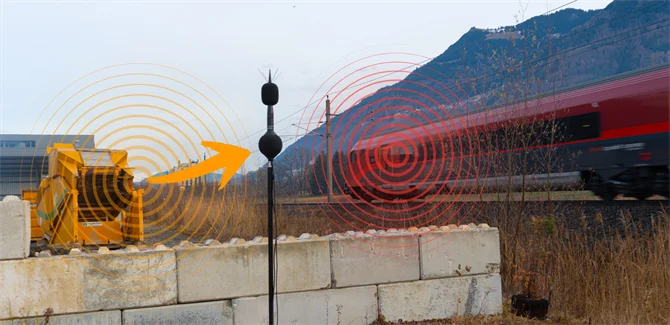
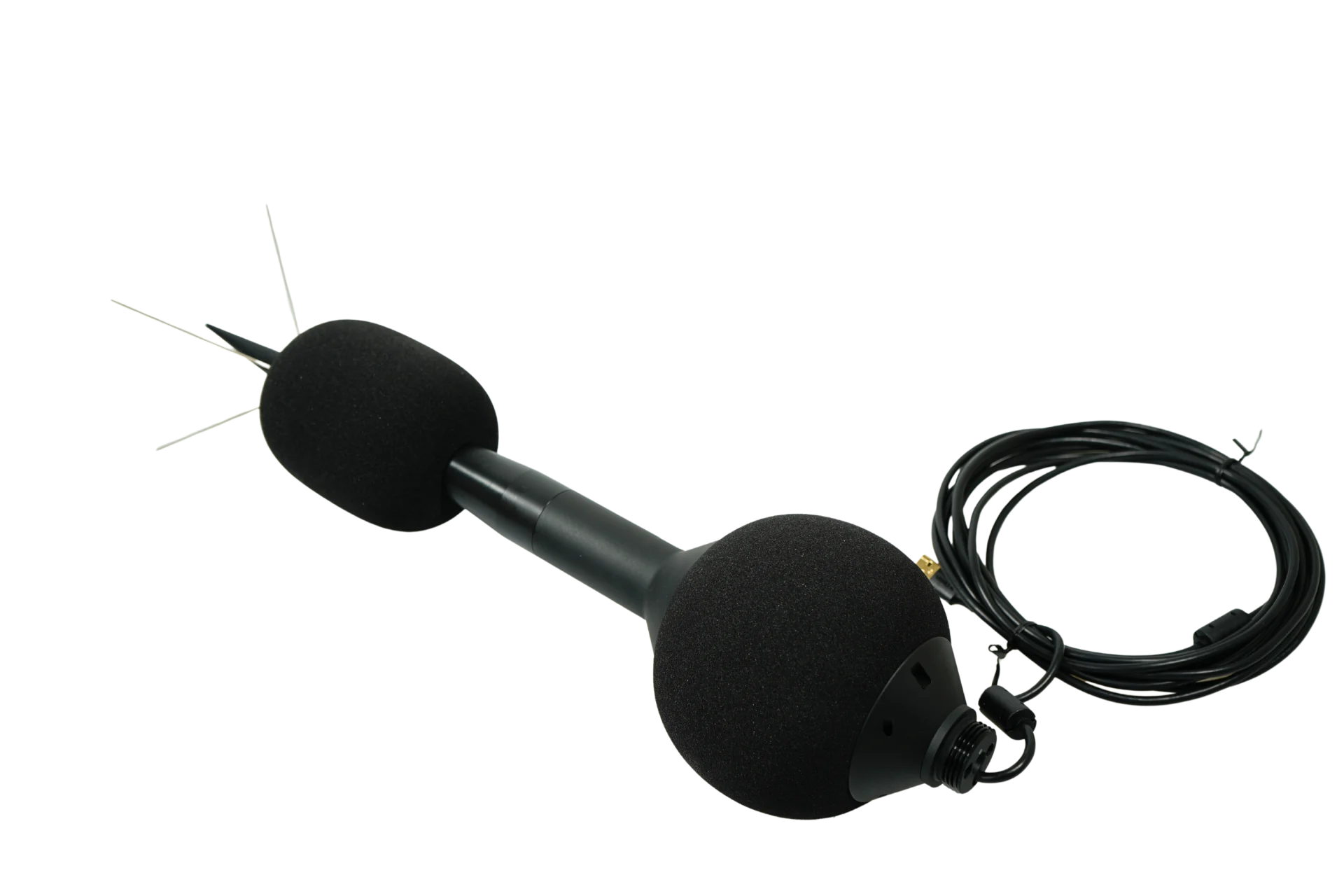
NTi Audio เรียก Noise Locator NL1 ว่า "เซนเซอร์ความเข้มเสียง 3 มิติสำหรับกลางแจ้ง ที่เพิ่มความฉลาดด้านทิศทาง" ให้การวัดเสียง สโลแกนของ NTi คือ "รู้ว่าเสียงมาจากไหน อย่างมั่นใจ" (Know where noise comes from, with confidence) หน้าที่ของมันคือระบุทิศทางที่เสียงเด่นเข้ามา (Direction Of Arrival, DOA) ที่จุดติดตั้งNTi Audio describes the Noise Locator NL1 as a "3D outdoor sound intensity sensor that adds directional intelligence" to sound measurements, under the tagline "Know where noise comes from, with confidence". Its job is to identify the Direction Of Arrival (DOA) of the dominant noise at the installation point.
- ไม่ใช่เครื่องวัดระดับเสียงเดี่ยว: NL1 เป็นอุปกรณ์เสริมของเครื่องวัดระดับเสียง XL3 ต่อด้วยสาย USB เส้นเดียวที่จ่ายไฟและรับข้อมูลพร้อมกัน (กินไฟน้อยกว่า 1 W) ระดับเสียงที่ใช้ประเมินยังคงมาจาก XL3 กับไมโครโฟนวัดเสียงNot a standalone meter: the NL1 is an add-on for the XL3 sound level meter, connected by a single USB cable that carries power and data (under 1 W). The assessment levels still come from the XL3 and its measurement microphone.
- ชุดติดตั้งทั่วไปของ NTi: ไมโครโฟน M2340 ในชุดกันสภาพอากาศ WP40-90 พร้อมหนามกันนก และ NL1 อยู่ใต้ไมโครโฟน ใช้พื้นที่น้อยNTi's typical set-up: an M2340 microphone in the WP40-90 weather protection with bird spike, and the NL1 below the microphone, with a small footprint.
- ออกแบบเพื่อกลางแจ้ง: ทนลมและสภาพอากาศสูง ใช้งานได้ที่ –10 °C ถึง +50 °C ความชื้น 25% – 90% (ไม่ควบแน่น) และทนลมได้ถึง 120 km/h โดยไม่เสียหาย (NL1 Technical Data)Built for outdoors: high wind and weather resistance, operating from –10 °C to +50 °C, 25% – 90% humidity (non-condensing), and withstanding wind up to 120 km/h without damage (NL1 Technical Data).
- ข้อมูลทิศทางและระดับเสียงในไฟล์เดียวกัน: บันทึกแบบซิงก์กันที่ความละเอียดเวลา 100 ms หรือ 1 s และมีข้อมูลเรียลไทม์ผ่าน XL3 Streaming APIDirection and levels in the same file: synchronised logging at 100 ms or 1 s resolution, with real-time data through the XL3 Streaming API.
- เปิดตัวเมื่อไร: NTi ประกาศ NL1 ในเดือนพฤศจิกายน 2025 เปิดรับสั่งจองล่วงหน้าเมื่อ 14 ธันวาคม 2025 โดยระบุว่าล็อตแรกมีจำนวนจำกัดและเริ่มส่งมอบปลายเดือนมกราคม 2026 เอกสาร Technical Data ฉบับปัจจุบันลงวันที่ 2026-05-06Launch: NTi announced the NL1 in November 2025 and opened pre-orders on 14 December 2025, noting a limited first batch and deliveries from the end of January 2026. The current Technical Data is dated 2026-05-06.
NL1 บอกทิศทางของเสียงได้อย่างไรHow the NL1 finds the direction of sound
หัวใจของ NL1 คือความเข้มเสียง (sound intensity) เครื่องวัดระดับเสียงทั่วไปวัด*ความดันเสียง* ซึ่งเป็นค่าที่ไม่มีทิศทาง แต่ความเข้มเสียงคือการไหลของพลังงานเสียงผ่านพื้นที่หนึ่ง เป็นปริมาณเวกเตอร์ที่มีทั้งขนาดและทิศทาง NTi ระบุชัดว่า NL1 ใช้หลักความเข้มเสียง ไม่ใช่ beamforming หรือ pressure arrayAt the heart of the NL1 is sound intensity. An ordinary sound level meter measures *sound pressure*, which has no direction; sound intensity is the flow of acoustic energy through an area, a vector with both magnitude and direction. NTi states clearly that the NL1 is based on sound intensity, not on beamforming or pressure arrays.
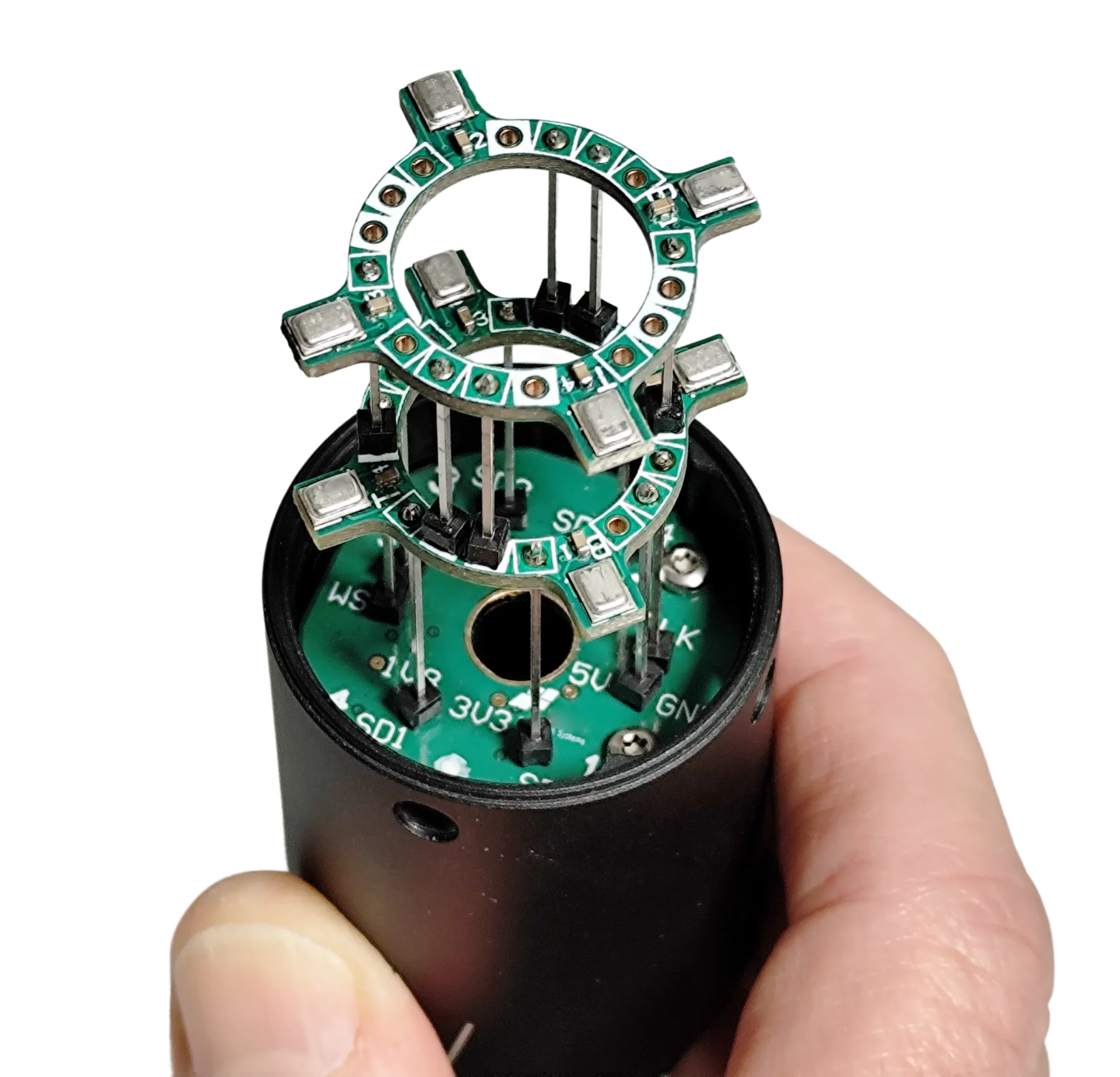
- ไมโครโฟน 8 ตัวที่เรียงแบบ 3 มิติ ทำงานเป็นคู่วัดความเข้มเสียง 12 คู่ ระยะห่าง 2 cm8 microphones in a 3D arrangement work as 12 sound intensity pairs with 2 cm spacing.
- NL1 ประเมินเวกเตอร์ความเข้มเสียงในย่านออกเตฟ 63 Hz – 4 kHz และค่ารวมแบบ A-weightedThe NL1 evaluates the intensity vectors in the octave bands 63 Hz – 4 kHz and as an A-weighted broadband value.
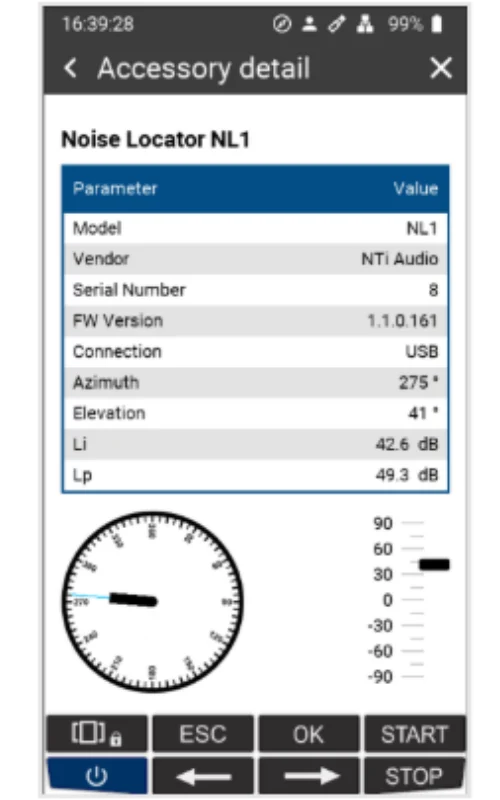
- ผลคือมุมราบ (azimuth อ้างอิงทิศเหนือ) และมุมเงย (elevation อ้างอิงแนวราบ) ของเสียงเด่นThe result is the azimuth (referenced to North) and elevation (referenced to horizontal) of the dominant sound.
- ทิศทางถูกบันทึกบน XL3 พร้อมระดับเสียง ที่ความละเอียดเวลา 100 ms หรือ 1 sThe direction is logged on the XL3 together with the sound levels, at 100 ms or 1 s resolution.
- ทุกผลมีตัวบ่งชี้ความเชื่อมั่น ΔPI (Pressure-Intensity Indicator): ใกล้ศูนย์ = สนามเสียงชัดเจน เชื่อถือได้; สูงขึ้น = เสียงสะท้อนหรือแหล่งเสียงอื่นมีผลมาก เฉพาะผลที่ผ่านเกณฑ์ ΔPI เท่านั้นที่ใช้วิเคราะห์ทิศทางEvery result carries the ΔPI (Pressure-Intensity Indicator): close to zero means a clean sound field and a trustworthy direction; higher values mean reflections or other sources are interfering. Only results meeting the ΔPI criterion are used for directional analysis.
| ย่านออกเตฟOctave band | มุมราบ สูงสุด (ค่าปกติ)Azimuth, max. (typical) | มุมเงย สูงสุดElevation, max. | เสียงรบกวนภายใน สูงสุดResidual noise, upper |
|---|---|---|---|
| 63 Hz63 Hz | มุมราบ สูงสุด (ค่าปกติ)Azimuth, max. (typical)±35° (±15°)±35° (±15°) | มุมเงย สูงสุดElevation, max.±35°±35° | เสียงรบกวนภายใน สูงสุดResidual noise, upper22 dB SPL22 dB SPL |
| 125 Hz125 Hz | มุมราบ สูงสุด (ค่าปกติ)Azimuth, max. (typical)±20° (±15°)±20° (±15°) | มุมเงย สูงสุดElevation, max.±20°±20° | เสียงรบกวนภายใน สูงสุดResidual noise, upper20 dB SPL20 dB SPL |
| 250 Hz250 Hz | มุมราบ สูงสุด (ค่าปกติ)Azimuth, max. (typical)±15° (±10°)±15° (±10°) | มุมเงย สูงสุดElevation, max.±15°±15° | เสียงรบกวนภายใน สูงสุดResidual noise, upper16 dB SPL16 dB SPL |
| 500 Hz500 Hz | มุมราบ สูงสุด (ค่าปกติ)Azimuth, max. (typical)±10°±10° | มุมเงย สูงสุดElevation, max.±15°±15° | เสียงรบกวนภายใน สูงสุดResidual noise, upper15 dB SPL15 dB SPL |
| 1 kHz1 kHz | มุมราบ สูงสุด (ค่าปกติ)Azimuth, max. (typical)±10°±10° | มุมเงย สูงสุดElevation, max.±10°±10° | เสียงรบกวนภายใน สูงสุดResidual noise, upper16 dB SPL16 dB SPL |
| 2 kHz2 kHz | มุมราบ สูงสุด (ค่าปกติ)Azimuth, max. (typical)±10°±10° | มุมเงย สูงสุดElevation, max.±15°±15° | เสียงรบกวนภายใน สูงสุดResidual noise, upper18 dB SPL18 dB SPL |
| 4 kHz4 kHz | มุมราบ สูงสุด (ค่าปกติ)Azimuth, max. (typical)±20°±20° | มุมเงย สูงสุดElevation, max.±25°±25° | เสียงรบกวนภายใน สูงสุดResidual noise, upper21 dB SPL21 dB SPL |
| A-weightedA-weighted | มุมราบ สูงสุด (ค่าปกติ)Azimuth, max. (typical)±10°±10° | มุมเงย สูงสุดElevation, max.±10°±10° | เสียงรบกวนภายใน สูงสุดResidual noise, upper27 dB SPL27 dB SPL |
ตารางความแม่นยำมาจากเอกสาร NL1 Technical Data ของ NTi Audio (เวอร์ชัน 2026-05-06): มุมราบวัดที่มุมเงย –60° ถึง +60° มุมเงยวัดที่มุมราบ –180° ถึง +180° ความแม่นยำดีที่สุดในย่านกลาง (500 Hz – 2 kHz) และกว้างขึ้นที่ 63 Hz และ 4 kHz NTi ระบุว่า NL1 "มีประสิทธิภาพเป็นพิเศษสำหรับการวิเคราะห์ความถี่ต่ำ" ซึ่งเป็นย่านที่หูคนแยกทิศทางได้ยากที่สุด เรื่อง dynamic range มีความต่างระหว่างแหล่งทางการ: หน้าเว็บ NL1 ระบุ 25 dBA – 125 dBA ส่วน Technical Data ระบุ 40 dBA – 125 dBA เราใช้ค่าจาก Technical Data อ่านหลักการเพิ่มเติมได้ในความเข้มเสียงและทิศทางของเสียงThe accuracy table comes from NTi Audio's NL1 Technical Data (version 2026-05-06): azimuth at elevations of –60° to +60°, elevation at azimuths of –180° to +180°. Accuracy is best in the mid bands (500 Hz – 2 kHz) and wider at 63 Hz and 4 kHz. NTi describes the NL1 as "especially effective for low-frequency analysis", the range where human ears find direction hardest. On dynamic range the official sources differ: the NL1 web page states 25 dBA – 125 dBA, the Technical Data 40 dBA – 125 dBA; we use the Technical Data value. The principle is explained further in sound intensity and direction of arrival.
NTi ออกแบบให้ใช้ในงานไหน และติดตั้งอย่างไรWhere NTi intends it to be used, and how to install it
NTi Audio ระบุงานที่ NL1 ออกแบบมาเพื่อใช้ไว้ตรงกัน ทั้งบนหน้าผลิตภัณฑ์ ข่าวเปิดตัว และหน้าสัมมนาออนไลน์:NTi Audio names the same intended uses on the product page, the launch news and the webinar page:
- การเฝ้าระวังเสียงสิ่งแวดล้อม และเรื่องร้องเรียนเสียงในชุมชนEnvironmental noise monitoring and neighbourhood noise complaints
- ไซต์ก่อสร้าง ถนนและเส้นทางคมนาคม อากาศยานและสนามบิน รถไฟConstruction sites, roads and transport corridors, aircraft and airports, rail
- โรงงานอุตสาหกรรมที่มีแหล่งเสียงหลายแห่ง และฟาร์มกังหันลมIndustrial facilities with several sources, and wind farms
- พื้นที่เมืองที่หลายแหล่งเสียงบดบังต้นเหตุที่แท้จริงUrban areas where several sources mask the true origin
คำแนะนำการติดตั้งจาก NTi มีสามข้อหลัก ซึ่งเราใช้เป็นเกณฑ์เลือกจุดวัดทุกครั้ง:NTi gives three main installation tips, which we use as our checklist for every measuring point:
- ห่างผิวสะท้อน: หลีกเลี่ยงผิวสะท้อนใกล้เซนเซอร์ NTi แนะนำอย่างน้อย 5 mAway from reflecting surfaces: avoid nearby reflective surfaces; NTi recommends at least 5 m.
- สูงพอ: ติดตั้งที่ความสูงเพียงพอเพื่อลดเสียงสะท้อนจากพื้นHigh enough: install at sufficient height to reduce ground reflections.
- อยู่ระหว่างแหล่งเสียง: เมื่อทำได้ วางเซนเซอร์ไว้ระหว่างแหล่งเสียงที่เกี่ยวข้อง เพื่อให้แต่ละแหล่งอยู่คนละทิศอย่างชัดเจนBetween the sources: where possible, position the sensor between the relevant sources so that each one lies in a clearly different direction.
- ตั้งทิศเหนือ: มุมราบอ้างอิงทิศเหนือ จึงต้องตั้งทิศของเซนเซอร์และบันทึกไว้ตอนติดตั้ง (หน้า NL1 ไม่ได้อธิบายวิธีตั้งทิศ เรายืนยันกับ NTi ก่อนติดตั้ง)Align to North: azimuth is referenced to North, so the sensor orientation must be set and recorded at installation (the NL1 page does not describe the alignment method; we confirm it with NTi before installing).
ซอฟต์แวร์ของ NTi สำหรับข้อมูลทิศทางNTi software for the direction data
NTi Audio มีซอฟต์แวร์สามตัวที่ทำงานกับข้อมูลทิศทางของ NL1 แต่ละตัวมีหน้าที่ต่างกัน:NTi Audio offers three programs that work with NL1 direction data, each with a different job:
- MeasurEye (เฝ้าระวังออนไลน์): สะสมระดับเสียงแยกตาม "ช่วงทิศทาง" ของแต่ละแหล่งเสียง (segment-based accumulation of noise by source direction) ดูได้แบบออนไลน์ผ่าน XL3 ที่ต่อ LAN, Wi-Fi หรือ Gateway 4G/LTEMeasurEye (online monitoring): segment-based accumulation of noise by source direction, viewed online from an XL3 connected over LAN, Wi-Fi or a 4G/LTE gateway.
- Data Explorer (รายงานบน PC): สร้าง Marker อัตโนมัติตามช่วงทิศทาง จึงแยกหรือตัดช่วงเวลาที่เสียงมาจากแหล่งอื่นออกก่อนคำนวณค่าประเมินData Explorer (PC reporting): automatic marker generation based on directional segments, so periods dominated by other sources can be separated or excluded before the assessment values are calculated.
- NL1 Lab (เครื่องมือวิเคราะห์เชิงทดลอง): NTi อธิบายว่าเป็นเครื่องมือที่แสดงความสามารถของ NL1 ในหน้าสัมมนาเรียกว่า NL1 NoiseLab และระบุว่าแสดงทิศทางแบบเรียลไทม์NL1 Lab (experimental analysis tool): NTi describes it as a tool demonstrating the NL1's capabilities; the webinar page calls it NL1 NoiseLab and says it provides a real-time directional display.
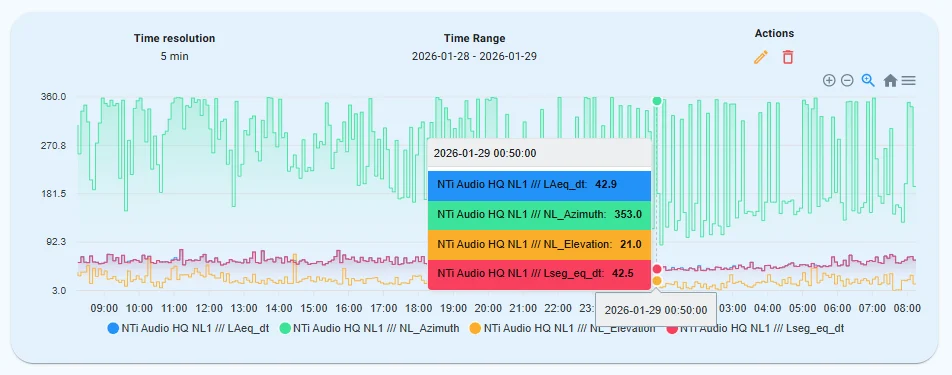
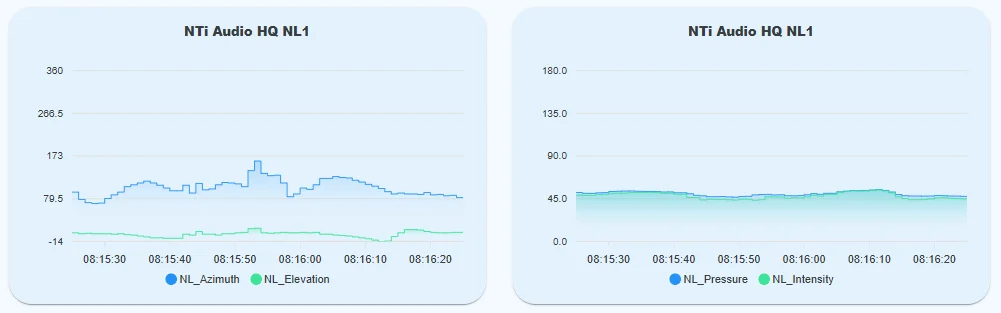
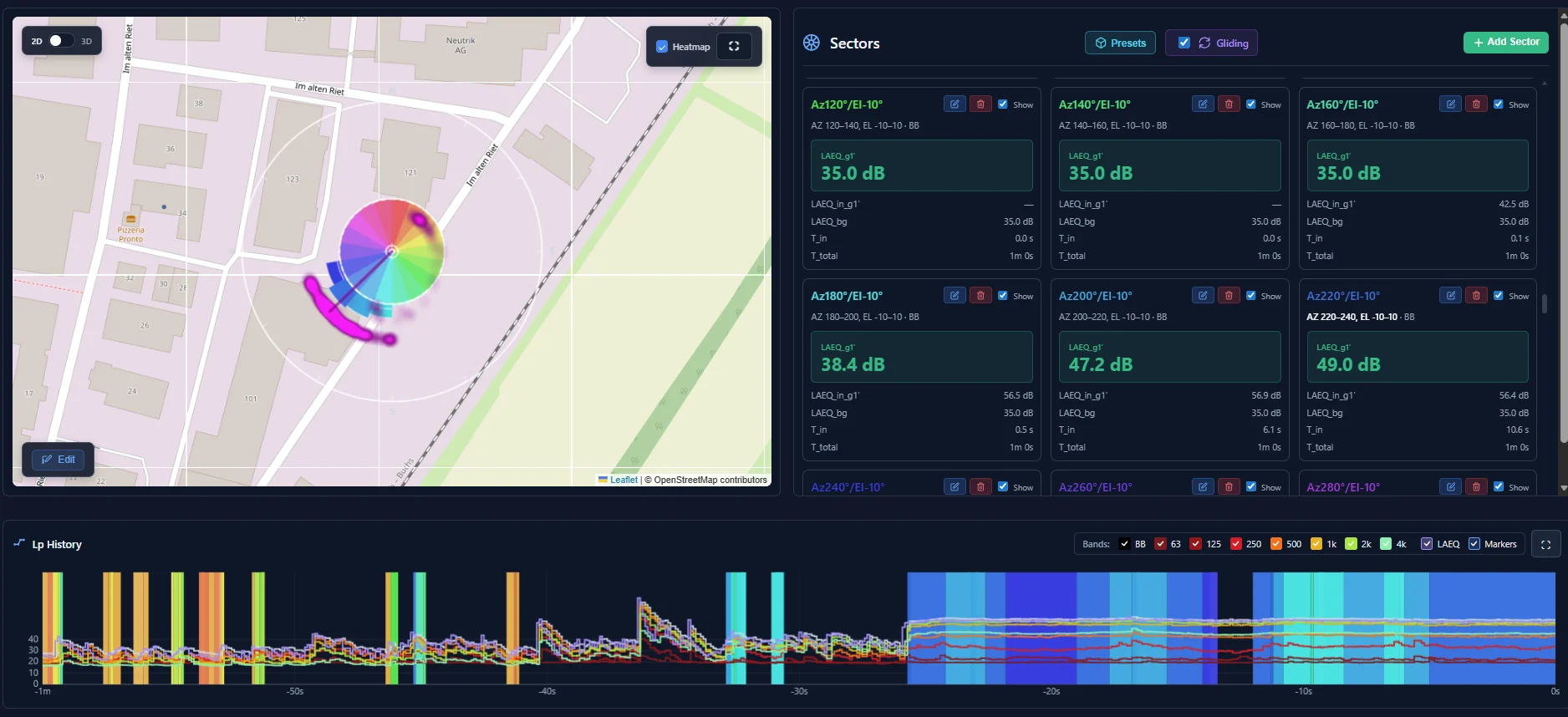
ซอฟต์แวร์ทั้งสามแสดงทิศทางเป็นตัวเลขมุม กราฟ หรือช่วงทิศทาง ซึ่งเหมาะกับวิศวกรที่รู้แผนผังพื้นที่อยู่แล้ว ช่องว่างที่ GET BEST SOUND พบในงานจริงคือ *คนที่ต้องตัดสินใจ* เช่น เจ้าของโรงงาน ผู้ร้องเรียน หรือเจ้าหน้าที่ มักไม่ได้อยู่หน้างานและนึกภาพจากตัวเลขมุมไม่ออก นี่คือที่มาของ GBS NL1 ExplorerAll three programs show the direction as angle values, graphs or direction segments, which suits engineers who already know the site layout. The gap GET BEST SOUND found in real projects is that the *people who have to decide*, such as plant owners, complainants or officials, are usually not on site and cannot picture an angle value. That is where GBS NL1 Explorer comes in.
GBS NL1 Explorer: เห็นทิศทางของเสียงบนภาพ 360°GBS NL1 Explorer: the direction of sound on a 360° image
ตัวเลขมุมราบและมุมเงย เช่น "ทิศ 135° เงย 10°" ถูกต้องแต่เข้าใจยากสำหรับคนที่ไม่ได้อยู่หน้างาน GET BEST SOUND จึงพัฒนาโปรแกรม GBS NL1 Explorer ขึ้นมาใช้ร่วมกับกล้อง 360°: ถ่ายภาพรอบทิศจากตำแหน่งที่ติดตั้ง NL1 แล้วให้โปรแกรมนำข้อมูลทิศทางจาก NL1 มาแสดงบนภาพนั้น ผลที่ได้คือภาพของพื้นที่จริงที่ชี้ว่าเสียงเด่นในแต่ละช่วงเวลามาจากตรงไหน เป็นอาคารไหน เครื่องจักรตัวไหน หรือถนนเส้นไหนAzimuth and elevation numbers such as "bearing 135°, elevation 10°" are correct but hard to grasp for anyone who was not on site. GET BEST SOUND therefore developed GBS NL1 Explorer for use with a 360° camera: a full panoramic photo is taken from the NL1 position, and the program places the NL1 direction data on that image. The result is a picture of the real scene showing where the dominant sound in each period came from: which building, which machine or which road.
หลักการง่ายมาก: ภาพ 360° ครอบคลุมมุมราบ 360° และมุมเงยจากพื้นถึงท้องฟ้า เมื่ออ้างอิงทิศเหนือของภาพให้ตรงกับทิศเหนือของ NL1 ทุกคู่ค่า (มุมราบ, มุมเงย) ที่ NL1 บันทึก จะตรงกับจุดหนึ่งบนภาพเสมอ โปรแกรมจึงวางจุดลงบนภาพได้โดยไม่ต้องเดาThe principle is simple: a 360° image covers all 360° of azimuth and the elevation from ground to sky. Once the image's North is aligned with the NL1's North, every (azimuth, elevation) pair the NL1 logged corresponds to exactly one point on the image, so the program can place each point without guessing.
- ติดตั้ง XL3 + ไมโครโฟน + NL1 ที่จุดวัดตามคำแนะนำของ NTi (เปิดโล่ง สูง ห่างผิวสะท้อน ≥ 5 m) ตั้งทิศของเซนเซอร์ และตรวจระดับด้วยเครื่องสอบเทียบเสียงInstall the XL3 + microphone + NL1 at the measuring point following NTi's advice (open, elevated, ≥ 5 m from reflecting surfaces), set the sensor orientation and check the level with a sound calibrator.
- ถ่ายภาพ 360° จากตำแหน่งเดียวกับ NL1 โดยอ้างอิงทิศเหนือเดียวกันTake a 360° photo from the NL1 position, referenced to the same North.
- บันทึกระดับเสียงและทิศทางต่อเนื่องตามช่วงเวลาที่ต้องการ เช่น ช่วงกลางคืนที่มีการร้องเรียนLog levels and direction continuously over the period of interest, for example the night hours of a complaint.
- นำข้อมูลเข้า GBS NL1 Explorer โปรแกรมกรองผลด้วย ΔPI และแสดงทิศทางของเสียงเด่นลงบนภาพ 360° เลือกดูตามช่วงเวลา ระดับเสียง และย่านความถี่ได้Load the data into GBS NL1 Explorer; the program filters by ΔPI and marks the dominant sound directions on the 360° image, selectable by period, level and frequency band.
- ยืนยันด้วยการฟังและการตรวจหน้างาน แล้วสรุปว่าแหล่งใดเป็นต้นเหตุของค่าที่เกิน พร้อมภาพประกอบรายงานที่ทุกฝ่ายอ่านเข้าใจConfirm by listening and on-site checks, then conclude which source causes the exceedances, with a report image everyone can read.
บ้านพักอาศัยร้องเรียนเสียงหึ่งตอนกลางคืน จุดวัดอยู่ระหว่างโรงงานทางทิศตะวันออกและทางหลวงทางทิศใต้ บนภาพ 360° ช่วงที่ค่าเกินส่วนใหญ่ชี้ไปที่ด้านหลังโรงงานในย่านความถี่ต่ำ (63 – 250 Hz) ส่วนช่วงที่ชี้ไปทางถนนเป็นช่วงสั้น ๆ ตอนรถบรรทุกผ่าน ขั้นต่อไปคือตรวจแหล่งเสียงในโรงงานในระยะใกล้ ซึ่งเป็นงานอีกประเภทหนึ่งResidents complain about a night-time hum. The measuring point lies between a plant to the east and a highway to the south. On the 360° image, most exceedance periods point at the back of the plant in the low-frequency bands (63 – 250 Hz), while the periods pointing at the road are short, when trucks pass. The next step is a close-range investigation inside the plant, which is a different kind of task.
GBS NL1 Explorer เป็นเครื่องมือของ GET BEST SOUND ที่ใช้ในงานบริการหาตำแหน่งแหล่งกำเนิดเสียงและตรวจวัดเสียงสิ่งแวดล้อม ไม่ใช่ซอฟต์แวร์ของ NTi Audio และไม่แทนที่ซอฟต์แวร์ของ NTi: MeasurEye ยังใช้เฝ้าระวังออนไลน์ และ Data Explorer ยังใช้ทำรายงานค่าประเมินตามกฎหมายGBS NL1 Explorer is a GET BEST SOUND tool used in our sound source localization and environmental noise measurement services. It is not NTi Audio software and does not replace NTi's programs: MeasurEye remains the online monitoring tool and Data Explorer the tool for legal assessment reports.
ข้อจำกัดที่ควรรู้Limits worth knowing
- บอกทิศทาง ไม่บอกระยะทาง: จุดบนภาพ 360° คือทิศที่เสียงมาถึงจุดวัด แหล่งเสียงอาจอยู่ใกล้หรือไกลในแนวนั้น ต้องใช้แผนผังพื้นที่และการตรวจหน้างานประกอบDirection, not distance: a mark on the 360° image is the direction the sound arrives from; the source may be near or far along that line, so a site plan and on-site checks are still needed.
- หนึ่งทิศทางเด่นต่อช่วงเวลาและย่านความถี่: เมื่อหลายแหล่งดังพอ ๆ กัน ค่า ΔPI จะสูงขึ้นและผลเชื่อถือได้น้อยลง การดูแยกย่านออกเตฟช่วยแยกแหล่งที่มีความถี่ต่างกันOne dominant direction per interval and band: when several sources are similarly loud, ΔPI rises and the result is less reliable. Looking at individual octave bands helps separate sources with different frequency content.
- เสียงสะท้อนทำให้ผลเพี้ยน: NTi แนะนำให้ติดตั้งห่างผิวสะท้อนอย่างน้อย 5 m ลานแคบระหว่างอาคารจึงเป็นจุดที่ต้องระวังReflections distort the result: NTi recommends at least 5 m from reflecting surfaces, so narrow yards between buildings need care.
- ความแม่นยำขึ้นกับความถี่: ที่ 63 Hz ความคลาดเคลื่อนของมุมราบสูงสุดถึง ±35° ขณะที่ย่าน 500 Hz – 2 kHz อยู่ที่ ±10° การแปลผลเสียงความถี่ต่ำมากจึงต้องเผื่อช่วงมุมที่กว้างขึ้นAccuracy depends on frequency: at 63 Hz the azimuth tolerance is up to ±35°, against ±10° in the 500 Hz – 2 kHz bands, so very low-frequency results must be read with a wider angular margin.
- ต้องใช้กับ XL3: NL1 รับไฟและส่งข้อมูลผ่าน USB ของ XL3 เท่านั้น NTi ไม่ได้ระบุการใช้กับ XL2 ระดับเสียงที่ใช้ประเมินตามกฎหมายยังคงวัดโดย XL3 กับไมโครโฟนวัดเสียงRequires an XL3: the NL1 is powered and read out only through the XL3's USB; NTi does not list the XL2. The levels used for legal assessment are still measured by the XL3 and its microphone.
- ชื่อตัวบ่งชี้ไม่เหมือนกันในเอกสาร NTi: หน้าเว็บเรียก ΔPI ข่าวสั่งจองเรียก Smart Quality Indicator (Q) และเอกสาร Technical Data เรียก dP-I ทั้งหมดหมายถึงตัวบ่งชี้ความเชื่อมั่นตัวเดียวกันThe indicator has several names in NTi's documents: the web page says ΔPI, the pre-order news Smart Quality Indicator (Q) and the Technical Data dP-I; all refer to the same confidence indicator.
คำถามที่พบบ่อยFrequently asked questions
ใช้ NL1 กับเรื่องร้องเรียนเสียงจากบ้านข้างเคียงได้ไหม?Can the NL1 be used for a complaint about noise from a neighbouring property?
ได้ NTi ระบุเรื่องร้องเรียนเสียงในชุมชนเป็นงานหนึ่งที่ NL1 ออกแบบมาเพื่อ ถ้าตั้งจุดวัดในที่เปิดโล่งและห่างผิวสะท้อนพอ ข้อมูลทิศทางที่ซิงก์กับระดับเสียงจะบอกว่าช่วงที่ดังมาจากทิศของบ้านนั้นหรือจากทิศอื่น ส่วนการสรุปทางกฎหมายยังต้องใช้ค่าระดับเสียงที่วัดตามวิธีที่กฎหมายกำหนดYes; NTi names neighbourhood noise complaints as one of the NL1's intended uses. Provided the measuring point is in the open and far enough from reflecting surfaces, the direction data synchronised with the levels shows whether the loud periods came from that property's direction or elsewhere; the legal conclusion still relies on levels measured by the method the law prescribes.
NL1 บอกระยะทางถึงแหล่งเสียงได้ไหม?Can the NL1 tell how far away the source is?
ไม่ได้ NL1 ให้ทิศทาง (มุมราบและมุมเงย) ของเสียงเด่นที่มาถึงจุดติดตั้ง ถ้าต้องการระบุตำแหน่งแหล่งเสียง ให้ใช้ทิศทางร่วมกับแผนผังพื้นที่และการตรวจหน้างาน หรือติดตั้งมากกว่าหนึ่งจุดแล้วดูว่าแนวทิศทางตัดกันที่ไหนNo. The NL1 gives the direction (azimuth and elevation) of the dominant sound arriving at its position. To pinpoint a source, combine the direction with a site plan and on-site checks, or install at more than one point and see where the direction lines cross.
ต้องใช้กล้อง 360° รุ่นไหน?Which 360° camera is needed?
ขอให้ติดต่อเรา เพราะกล้องและวิธีถ่ายต้องเข้ากับขั้นตอนของ GBS NL1 Explorer ในงานบริการ ทีมของเรานำกล้องและโปรแกรมไปเองPlease contact us: the camera and the way the photo is taken must fit the GBS NL1 Explorer workflow. In our services, the team brings its own camera and software.
NL1 แทนกล้องถ่ายภาพเสียงได้ไหม?Does the NL1 replace an acoustic camera?
ไม่ได้ ทั้งสองตอบคำถามคนละแบบ NL1 บอกทิศทางของเสียงเด่นที่จุดวัดในงานเฝ้าระวังระยะยาว ส่วนกล้องถ่ายภาพเสียงสร้างแผนที่เสียงบนตัวเครื่องจักรหรือผนังในระยะใกล้ งานหลายงานใช้ทั้งสองอย่างต่อกัน: NL1 บอกว่าควรไปดูที่ไหน แล้วค่อยใช้กล้องถ่ายภาพเสียงหาจุดบนเครื่องNo. They answer different questions. The NL1 gives the direction of the dominant sound at the measuring point in long-term monitoring; an acoustic camera builds a sound map on a machine or wall at close range. Many projects use both in sequence: the NL1 says where to look, then the acoustic camera finds the spot on the machine.
ต้องซื้ออะไรบ้างถึงจะใช้ NL1 ได้?What do I need to buy to use the NL1?
NL1 เป็นอุปกรณ์เสริม ต้องมีเครื่องวัดระดับเสียง XL3 ไมโครโฟนวัดเสียง (ชุดทั่วไปของ NTi คือ M2340) และชุดกันสภาพอากาศ WP40-90 สำหรับงานกลางแจ้ง NTi ไม่ได้เผยแพร่เงื่อนไขเฟิร์มแวร์ของ XL3 สำหรับ NL1 เราตรวจกับ NTi ก่อนเสนอราคาทุกครั้งThe NL1 is an accessory: you need an XL3 sound level meter, a measurement microphone (NTi's typical choice is the M2340) and the WP40-90 weather protection for outdoor work. NTi publishes no XL3 firmware requirement for the NL1; we check with NTi before every quotation.