ทำไมเรื่องนี้สำคัญWhy this matters
ไมโครโฟนคือ “หู” ของเครื่องวัดระดับเสียง ถ้าหูได้ยินผิด ต่อให้เครื่องประมวลผลดีแค่ไหนตัวเลขก็ผิดตาม ในทางปฏิบัติ ปัญหาผลการวัดจำนวนไม่น้อยมาจากไมโครโฟนและการติดตั้ง เช่น เลือกไมโครโฟนที่รับเสียงเบาไม่ได้ ใช้กับเสียงดังเกินขีดจำกัด หรือหันไมโครโฟนผิดทาง การเข้าใจสายการวัดจึงช่วยให้เลือกอุปกรณ์และตั้งค่าได้ถูกตั้งแต่ต้นThe microphone is the ear of a sound level meter. If the ear hears wrongly, the number is wrong however good the processing is. In practice many measurement problems start with the microphone and how it is set up: a microphone that cannot pick up quiet sounds, one pushed beyond its maximum level, or one pointed the wrong way. Understanding the chain helps you choose and set up the equipment correctly from the start.
ไมโครโฟนวัดเสียงต่างจากไมโครโฟนทั่วไปอย่างไรHow a measurement microphone differs from an ordinary one
ไมโครโฟนสำหรับร้องเพลงหรือบันทึกเสียงถูกออกแบบให้เสียงออกมาน่าฟัง หลายรุ่นเน้นบางย่านความถี่ให้เสียงร้องเด่น และรับเสียงด้านหน้ามากกว่าด้านข้างเพื่อลดเสียงรบกวน คุณสมบัติเหล่านี้ดีสำหรับเวที แต่ไม่ดีสำหรับการวัด เพราะเราต้องการตัวเลขที่ตรงกับเสียงจริง ไม่ใช่เสียงที่ถูกแต่งแล้วMicrophones for singing or recording are designed to sound pleasant. Many emphasise certain frequencies to make a voice stand out, and pick up more from the front than the sides to reject noise. That is good on stage but bad for measurement, where we want numbers that match the real sound, not a shaped version of it.
| คุณสมบัติProperty | ไมโครโฟนทั่วไปOrdinary microphone | ไมโครโฟนวัดเสียงMeasurement microphone |
|---|---|---|
| ทิศทางการรับเสียงDirectivity | ไมโครโฟนทั่วไปOrdinary microphoneมักรับด้านหน้าเป็นหลักOften mainly from the front | ไมโครโฟนวัดเสียงMeasurement microphoneรอบทิศ (omnidirectional)Omnidirectional |
| ผลตอบสนองความถี่Frequency response | ไมโครโฟนทั่วไปOrdinary microphoneปรับแต่งให้เสียงน่าฟังShaped to sound good | ไมโครโฟนวัดเสียงMeasurement microphoneเรียบ ไมโครโฟนของ NTi Audio ระบุช่วง 5 Hz ถึง 20 kHzFlat; NTi Audio microphones specify 5 Hz to 20 kHz |
| ความไว (sensitivity)Sensitivity | ไมโครโฟนทั่วไปOrdinary microphoneไม่จำเป็นต้องรู้ค่าแน่นอนNo need to know it exactly | ไมโครโฟนวัดเสียงMeasurement microphoneระบุเป็น mV/Pa และตรวจสอบได้ด้วยการสอบเทียบStated in mV/Pa and verifiable by calibration |
| ความเสถียรStability | ไมโครโฟนทั่วไปOrdinary microphoneไม่ใช่เป้าหมายหลักNot a main goal | ไมโครโฟนวัดเสียงMeasurement microphoneต้องคงที่ตามอุณหภูมิและเวลา ไดอะแฟรมมักเป็นโลหะMust stay stable with temperature and time; the diaphragm is often metal |
| มาตรฐานอ้างอิงReference standard | ไมโครโฟนทั่วไปOrdinary microphoneไม่มีNone | ไมโครโฟนวัดเสียงMeasurement microphoneออกแบบให้ใช้ในระบบเครื่องวัดระดับเสียง Class 1 หรือ Class 2 ตาม IEC 61672Designed for use in IEC 61672 Class 1 or Class 2 sound level meter systems |
ตาม IEC 61672 “Class” เป็นคุณสมบัติของเครื่องวัดระดับเสียง ทั้งชุด (ตัวเครื่อง ไมโครโฟน ปรีแอมป์ และอุปกรณ์ที่ระบุ) ไมโครโฟนที่ระบุว่ามี ผลตอบสนองความถี่ระดับ Class 1 หมายถึงผลตอบสนองความถี่ของไมโครโฟนอยู่ในเกณฑ์ Class 1 เท่านั้น ยังไม่ได้แปลว่าเมื่อต่อกับเครื่องใดก็ตามจะเป็นเครื่องวัด Class 1 ที่ผ่านการทดสอบหรือรับรองครบถ้วนUnder IEC 61672, “Class” is a property of the complete sound level meter (instrument, microphone, preamplifier and specified accessories). A microphone described as having a Class 1 frequency response only has a frequency response within the Class 1 limits; it does not mean that any instrument it is connected to becomes a fully tested or approved Class 1 sound level meter.
สายการวัด: เสียงเดินทางจากอากาศถึงตัวเลขอย่างไรThe measurement chain: from air to a number
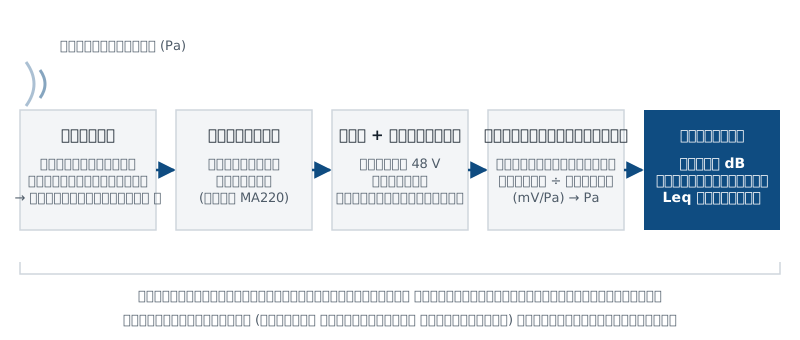
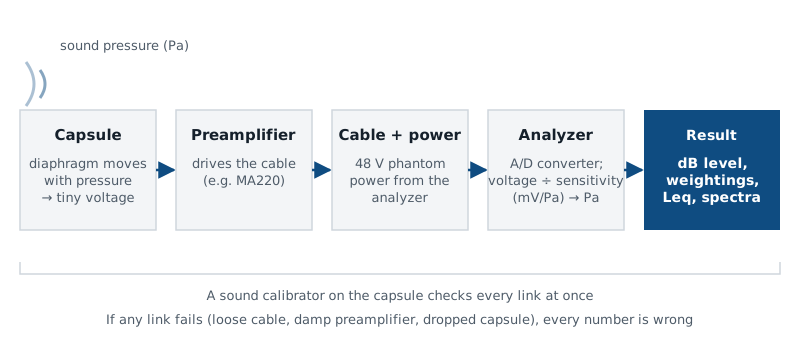
- แคปซูล (capsule): ส่วนหัวของไมโครโฟน มีไดอะแฟรมบางมากที่ขยับตามความดันเสียง แคปซูลวัดเสียงมีขนาดมาตรฐาน เช่น 1/2 นิ้ว และ 1/4 นิ้ว แคปซูลที่ใช้กันมากเป็นแบบ pre-polarized ซึ่งไม่ต้องใช้แรงดันโพลาไรซ์แยกจากเครื่องวัดCapsule: the head of the microphone, with a very thin diaphragm that moves with the sound pressure. Measurement capsules come in standard sizes such as 1/2 inch and 1/4 inch. Common capsules are pre-polarized, so they need no separate polarisation voltage from the meter.
- ปรีแอมป์ (preamplifier): สัญญาณจากแคปซูลเล็กมากและเปราะบาง ปรีแอมป์ที่ติดอยู่ใต้แคปซูลทำให้สัญญาณแข็งแรงพอส่งผ่านสายได้ ไมโครโฟนของ NTi Audio ใช้ปรีแอมป์ เช่น MA220 และรุ่น MA230 ที่มีระบบทดสอบตัวเองPreamplifier: the capsule's signal is tiny and fragile. A preamplifier directly behind the capsule makes it strong enough to travel down a cable. NTi Audio microphones use preamplifiers such as the MA220, and the MA230 with built-in self-test.
- สายสัญญาณและแฟนทอมเพาเวอร์ (phantom power): ปรีแอมป์ต้องการไฟเลี้ยง ซึ่งเครื่องวิเคราะห์ส่งมาทางสายสัญญาณเส้นเดียวกัน เรียกว่าแฟนทอมเพาเวอร์ ไมโครโฟนวัดเสียงของ NTi Audio สำหรับ XL2 / XL3 ใช้ 48 V (ยกเว้นรุ่นเสียงต่ำ M2914 ที่ใช้ไฟแบบ ICP ผ่าน ICP Adapter ASD)Cable and phantom power: the preamplifier needs power, which the analyzer sends down the same signal cable. This is called phantom power; NTi Audio measurement microphones for the XL2 / XL3 use 48 V (except the low-noise M2914, which is ICP-powered through the ICP Adapter ASD).
- เครื่องวิเคราะห์: แปลงสัญญาณเป็นดิจิทัล ใช้ค่าความไวของไมโครโฟนแปลงแรงดันไฟฟ้ากลับเป็นความดันเสียง แล้วคำนวณระดับเสียง การถ่วงน้ำหนัก และค่าสถิติต่าง ๆAnalyzer: digitises the signal, uses the microphone's sensitivity to convert voltage back into sound pressure, then calculates levels, weightings and statistics.
ถ้ามีชิ้นใดในสายนี้ผิดปกติ เช่น สายหลวม ปรีแอมป์ชื้น หรือแคปซูลเคยตก ตัวเลขทั้งหมดจะผิดไปด้วย นี่คือเหตุผลที่ต้องตรวจทั้งระบบด้วยเครื่องสอบเทียบเสียง ไม่ใช่ตรวจแค่ตัวเครื่องIf any link fails, such as a loose cable, a damp preamplifier or a capsule that has been dropped, every number goes wrong with it. That is why the whole system is checked with a sound calibrator, not just the meter.
ความไว: สะพานระหว่างเสียงกับไฟฟ้าSensitivity: the bridge between sound and voltage
ความไว (sensitivity) บอกว่าไมโครโฟนให้แรงดันไฟฟ้าเท่าไรต่อความดันเสียง 1 ปาสกาล (Pa) มีหน่วยเป็น mV/Pa และความดันเสียง 1 Pa เท่ากับระดับประมาณ 94 dB SPL (93.98 dB) ตัวอย่างเช่น ไมโครโฟน NTi Audio M2211 มีความไว 20 mV/Pa จึงให้สัญญาณประมาณ 20 mV เมื่อเสียงดัง 94 dB ถ้าเสียงดังขึ้น 20 dB เป็น 114 dB ความดันจะเพิ่มเป็น 10 เท่า สัญญาณจึงเป็นประมาณ 200 mVSensitivity tells you how much voltage the microphone gives per pascal (Pa) of sound pressure, in mV/Pa, and a sound pressure of 1 Pa is a level of about 94 dB SPL (93.98 dB). For example, the NTi Audio M2211 has a sensitivity of 20 mV/Pa, so it gives about 20 mV at 94 dB. If the sound rises by 20 dB to 114 dB, the pressure is ten times higher and the signal is about 200 mV.
สำหรับผู้ที่อยากเห็นสูตร NTi Audio ให้ความสัมพันธ์ไว้ว่า แรงดัน [mV] = ความไว [mV/Pa] × 10^((ระดับเสียง [dB SPL] − 94)/20) และกลับกัน ระดับเสียง [dB SPL] = 20 × log(แรงดัน [mV] ÷ ความไว [mV/Pa]) + 94 เครื่องวิเคราะห์ทำการคำนวณนี้ให้โดยอัตโนมัติ สิ่งสำคัญคือเครื่องต้องรู้ค่าความไวที่ถูกต้องFor readers who like formulas, NTi Audio gives the relationship as: voltage [mV] = sensitivity [mV/Pa] × 10^((level [dB SPL] − 94)/20), and the other way round, level [dB SPL] = 20 × log(voltage [mV] ÷ sensitivity [mV/Pa]) + 94. The analyzer does this automatically; what matters is that it knows the correct sensitivity.
รายละเอียดเชิงวิศวกรรม: แคปซูลแบบคอนเดนเซอร์ทำงานอย่างไรEngineering detail: how a condenser capsule works
ไมโครโฟนวัดเสียงเกือบทั้งหมดเป็นแบบ คอนเดนเซอร์ (condenser) ไดอะแฟรมโลหะบางมากขึงอยู่หน้าแผ่นหลัง (backplate) โดยมีช่องอากาศแคบ ๆ คั่นกลาง ทั้งสองแผ่นจึงทำหน้าที่เป็นตัวเก็บประจุ เมื่อมีประจุไฟฟ้าคงที่อยู่บนตัวเก็บประจุนี้ การที่ไดอะแฟรมขยับเข้าออกตามความดันเสียงทำให้ระยะห่างระหว่างสองแผ่นเปลี่ยน แรงดันไฟฟ้าระหว่างแผ่นจึงเปลี่ยนตามความดันเสียงไปด้วยAlmost all measurement microphones are condenser types. A very thin metal diaphragm is stretched in front of a backplate with a narrow air gap between them, so the two form a capacitor. With a fixed electrical charge on that capacitor, the diaphragm moving in and out with the sound pressure changes the gap, and the voltage between the plates changes with the sound pressure.
ประจุคงที่นี้ได้มาสองวิธี วิธีแรกคือ ใช้แรงดันโพลาไรซ์จากภายนอก (externally polarised) ซึ่งเครื่องวัดต้องจ่ายแรงดันกระแสตรงสูง โดยทั่วไป 200 V ให้แคปซูล วิธีที่สองคือแบบ pre-polarized ซึ่งมีชั้นวัสดุที่เก็บประจุไว้ถาวร (electret) อยู่ในแคปซูล จึงต้องการเพียงไฟเลี้ยงปรีแอมป์ เช่น แฟนทอมเพาเวอร์ ทำให้ระบบเรียบง่ายและเหมาะกับงานภาคสนาม สองแบบนี้ ใช้แทนกันไม่ได้ ถ้าจ่ายแรงดันโพลาไรซ์ให้แคปซูลแบบ pre-polarized หรือไม่จ่ายให้แคปซูลที่ต้องการ ค่าที่ได้จะผิดทั้งหมดThat fixed charge comes from one of two sources. An externally polarised capsule needs a high DC voltage, typically 200 V, supplied by the instrument. A pre-polarized capsule carries a permanently charged layer (an electret), so it needs only power for the preamplifier, such as phantom power, which keeps the system simple and suits field work. The two are not interchangeable: supplying polarisation voltage to a pre-polarized capsule, or failing to supply it to a capsule that needs it, makes every reading wrong.
ตัวเก็บประจุของแคปซูลมีค่าน้อยมาก อยู่ในระดับพิโคฟารัด จึงเป็นแหล่งสัญญาณที่มีอิมพีแดนซ์สูงมาก ถ้าต่อสายยาวออกจากแคปซูลโดยตรง ความจุของสายจะดึงสัญญาณไปเกือบหมด นี่คือเหตุผลที่ปรีแอมป์ต้องติดอยู่ใต้แคปซูลทันที หน้าที่หลักของปรีแอมป์จึงไม่ใช่การ “ขยายให้ดัง” แต่เป็นการแปลงอิมพีแดนซ์ให้สัญญาณเดินทางผ่านสายยาวได้โดยไม่สูญเสียThe capsule's capacitance is tiny, in the picofarad range, so it is a very high-impedance source. Connect a long cable straight to the capsule and the cable's own capacitance would swallow most of the signal. That is why the preamplifier sits directly behind the capsule: its main job is not to make the signal “louder” but to convert the impedance so the signal can travel down a long cable without loss.
ขนาดของแคปซูลเป็นการแลกเปลี่ยน แคปซูลเล็ก เช่น 1/4 นิ้ว รบกวนสนามเสียงน้อยกว่า จึงวัดความถี่สูงได้ไกลกว่าและรับระดับเสียงสูงได้มากกว่า แต่มีความไวต่ำกว่าและเสียงรบกวนในตัวสูงกว่า แคปซูลใหญ่ให้ผลตรงข้าม ตารางด้านล่างสะท้อนหลักนี้ ไมโครโฟน 1/4″ อย่าง M4262 มีเสียงรบกวนในตัว 32 dB(A) สูงกว่ารุ่น 1/2″Capsule size is a trade-off. A small capsule, such as 1/4 inch, disturbs the sound field less, so it reaches higher frequencies and higher levels, but it has lower sensitivity and higher self-noise. A larger capsule does the opposite. The table below reflects this: the 1/4″ M4262 has 32 dB(A) self-noise, higher than the 1/2″ models.
ในประเทศที่ร้อนชื้น ความชื้นเป็นศัตรูสำคัญของแคปซูลและปรีแอมป์ เมื่อนำไมโครโฟนจากห้องหรือรถที่เปิดแอร์ออกไปในอากาศร้อนชื้น ไอน้ำอาจควบแน่นบนชิ้นส่วนที่เย็นกว่า ทำให้เกิดสัญญาณรบกวนหรือค่าที่ผิดปกติ ควรปล่อยให้อุปกรณ์ปรับอุณหภูมิก่อน แล้วตรวจด้วยเครื่องสอบเทียบเสียงก่อนเริ่มวัด และเก็บไมโครโฟนในกล่องที่แห้งIn hot, humid countries, moisture is a major enemy of capsules and preamplifiers. When a microphone is taken from an air-conditioned room or car into warm, humid air, water can condense on the colder parts and cause noise or abnormal readings. Let the equipment reach the ambient temperature, check it with a sound calibrator before measuring, and store microphones in a dry case.
การจดจำเซนเซอร์อัตโนมัติ (ASD)Automatic sensor detection (ASD)
ถ้าต้องพิมพ์ค่าความไวเองทุกครั้งที่เปลี่ยนไมโครโฟน ก็มีโอกาสพิมพ์ผิดได้ง่าย ไมโครโฟนวัดเสียงของ NTi Audio จึงมี แผ่นข้อมูลอิเล็กทรอนิกส์ (electronic data sheet) อยู่ในตัว เมื่อเสียบเข้ากับเครื่องวิเคราะห์ ฟังก์ชัน Automated Sensor Detection (ASD) จะอ่านรุ่นของไมโครโฟน ค่าความไว และข้อมูลการสอบเทียบให้เองทันทีTyping in the sensitivity by hand every time you change microphones invites mistakes. NTi Audio measurement microphones therefore carry an electronic data sheet. When one is plugged into the analyzer, Automated Sensor Detection (ASD) reads the microphone model, its sensitivity and its calibration data automatically.
สำหรับระบบเฝ้าระวังเสียงที่ติดตั้งทิ้งไว้ภายนอกอาคาร ไมโครโฟนบางรุ่น เช่น M2340 มีระบบ ทดสอบตัวเอง (CIC self-test) ซึ่งตรวจการทำงานของระบบได้จากระยะไกลโดยไม่ต้องไปที่จุดวัดFor noise monitoring systems left outdoors, some microphones such as the M2340 have a CIC system self-test, which checks that the system is working remotely, without a visit to the site.
แนวคิดสนามเสียงอิสระ (free field)The free-field idea
สนามเสียงอิสระ (free field) คือสภาพที่เสียงเดินทางมาจากทิศทางเดียวโดยไม่มีการสะท้อน เช่น กลางแจ้งห่างจากผนังและพื้น ปัญหาคือตัวไมโครโฟนเองเป็นวัตถุที่ขวางทางเสียง ที่ความถี่สูงซึ่งความยาวคลื่นสั้นใกล้เคียงขนาดไมโครโฟน ตัวไมโครโฟนจะรบกวนสนามเสียงรอบตัวมัน ทำให้ความดันที่ไดอะแฟรมต่างจากความดันที่ควรจะเป็นถ้าไม่มีไมโครโฟนอยู่ตรงนั้นA free field is a situation where sound arrives from one direction with no reflections, for example outdoors, well away from walls and the ground. The problem is that the microphone itself is an object in the sound's path. At high frequencies, where the wavelength becomes comparable to the size of the microphone, the microphone disturbs the sound field around it, so the pressure at the diaphragm differs from what would be there if the microphone were absent.
ไมโครโฟนแบบ free-field ถูกปรับชดเชยผลนี้ไว้แล้ว เพื่อให้ค่าที่อ่านได้เท่ากับระดับเสียงที่ควรจะเป็นถ้าไม่มีไมโครโฟน ไมโครโฟนวัดเสียงของ NTi Audio เป็นแบบรอบทิศที่มีผลตอบสนองแบบ free-field ในการใช้งานทั่วไปจึงควร หันไมโครโฟนเข้าหาแหล่งเสียง นอกจากนี้ยังมีไมโครโฟนแบบ pressure และแบบ diffuse-field ซึ่งปรับชดเชยสำหรับสภาพสนามเสียงแบบอื่น ต้องเลือกให้ตรงกับงานและมาตรฐานA free-field microphone is equalised to compensate for this, so that its reading equals the level that would exist without the microphone. NTi Audio measurement microphones are omnidirectional with a free-field response, so in normal use you point the microphone at the source. There are also pressure and diffuse-field microphones, compensated for other kinds of sound field; the type must suit the job and the standard.
ไมโครโฟนกลางแจ้งสำหรับงานเฝ้าระวังเสียงของ NTi Audio ได้รับการระบุคุณสมบัติตาม IEC 61672 ทั้งสำหรับเสียงที่มาจากแนวนอนและแนวตั้ง จึงใช้ได้ทั้งเมื่อแหล่งเสียงอยู่ระดับพื้นและเมื่อเสียงมาจากด้านบน เช่น เครื่องบินNTi Audio's outdoor monitoring microphones are specified to IEC 61672 for both horizontal and vertical sound incidence, so they work both for sources at ground level and for sound from above, such as aircraft.
เลือกไมโครโฟนให้ตรงกับงานChoosing a microphone for the job
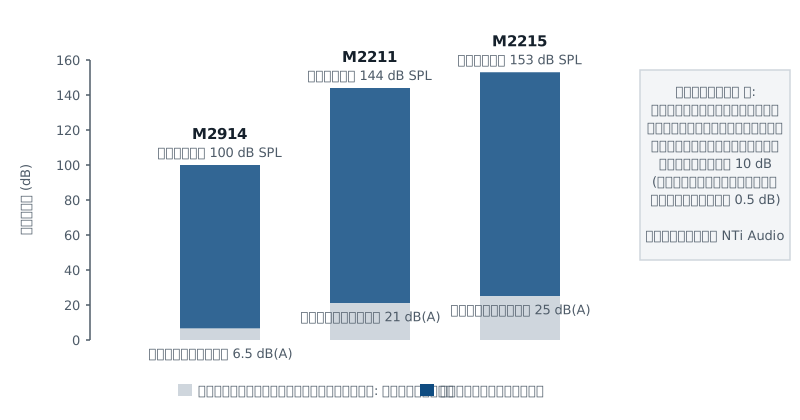
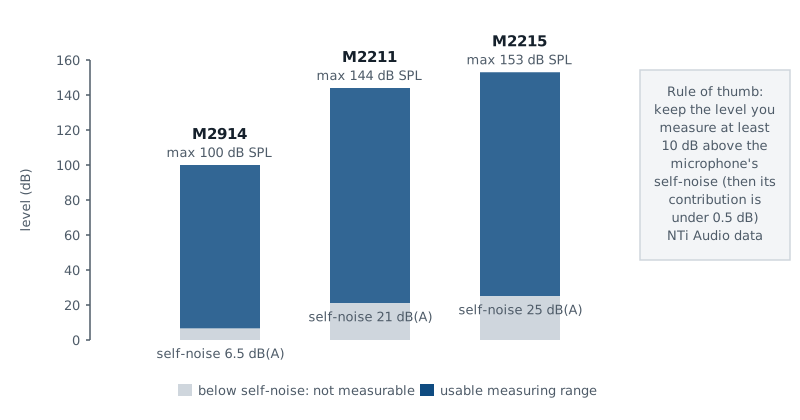
ไมโครโฟนแต่ละตัววัดได้ในช่วงจำกัด ขอบล่างคือ เสียงรบกวนในตัว (self-noise) ซึ่งเป็นระดับที่ต่ำกว่านั้นแล้วไมโครโฟนแยกเสียงจริงออกจากสัญญาณรบกวนของตัวเองไม่ได้ ขอบบนคือ ระดับเสียงสูงสุด (maximum SPL) ที่เกินกว่านั้นสัญญาณจะเพี้ยน ตัวอย่างจากไมโครโฟนของ NTi AudioEvery microphone measures within a limited range. The lower end is its self-noise, below which it cannot separate the real sound from its own noise. The upper end is its maximum SPL, above which the signal distorts. Examples from NTi Audio microphones:
| รุ่นModel | ประเภทType | เสียงรบกวนในตัว (ทั่วไป)Self-noise (typical) | ระดับสูงสุดMaximum level | งานที่เหมาะSuited to |
|---|---|---|---|---|
| M2230M2230 | ประเภทTypeClass 1 ผ่านการรับรอง (เป็นส่วนหนึ่งของชุดเครื่องมือที่ได้รับการรับรอง) แคปซูล 1/2″Class 1 certified (as part of an approved instrument set), 1/2″ capsule | เสียงรบกวนในตัว (ทั่วไป)Self-noise (typical)16 dB(A)16 dB(A) | ระดับสูงสุดMaximum level137 dB SPL137 dB SPL | งานที่เหมาะSuited toการวัดทางกฎหมาย งานกันเสียงในอาคารLegal measurements, building acoustics |
| M2211M2211 | ประเภทTypeผลตอบสนองความถี่ Class 1 แคปซูล 1/2″Class 1 frequency response, 1/2″ capsule | เสียงรบกวนในตัว (ทั่วไป)Self-noise (typical)21 dB(A)21 dB(A) | ระดับสูงสุดMaximum level144 dB SPL144 dB SPL | งานที่เหมาะSuited toงานวัดเสียงทั่วไป STIPA ระบบเสียงติดตั้งGeneral noise work, STIPA, installed sound |
| M2215M2215 | ประเภทTypeผลตอบสนองความถี่ Class 1 สำหรับเสียงดังมากClass 1 frequency response, high level | เสียงรบกวนในตัว (ทั่วไป)Self-noise (typical)25 dB(A)25 dB(A) | ระดับสูงสุดMaximum level153 dB SPL153 dB SPL | งานที่เหมาะSuited toเสียงดังมากVery loud sound |
| M2914M2914 | ประเภทTypeผลตอบสนองความถี่ Class 1 สำหรับเสียงเบามากClass 1 frequency response, low level | เสียงรบกวนในตัว (ทั่วไป)Self-noise (typical)6.5 dB(A)6.5 dB(A) | ระดับสูงสุดMaximum level100 dB RMS100 dB RMS | งานที่เหมาะSuited toห้องที่เงียบมากVery quiet rooms |
| M4262M4262 | ประเภทTypeClass 2 แคปซูล 1/4″Class 2, 1/4″ capsule | เสียงรบกวนในตัว (ทั่วไป)Self-noise (typical)32 dB(A)32 dB(A) | ระดับสูงสุดMaximum level140 dB SPL140 dB SPL | งานที่เหมาะSuited toงานวัดทั่วไป งานระบบเสียงGeneral measurements, sound systems |
แรงดันแฟนทอมเพาเวอร์ก็มีผลต่อขอบบน NTi Audio ระบุว่าไมโครโฟน M2230 M2211 และ M2215 ใช้งานที่แรงดันต่ำกว่า 48 V ได้ โดยคุณสมบัติอื่นไม่เปลี่ยน มีเพียงระดับเสียงสูงสุดที่ลดลง เช่น ที่ 24 V ระดับสูงสุดของ M2211 ลดจาก 144 เหลือ 135 dB SPL และของ M2215 ลดจาก 153 เหลือ 142 dB SPL ถ้าต่อไมโครโฟนกับอุปกรณ์อื่นที่จ่ายไฟต่ำกว่า จึงต้องคำนึงถึงข้อนี้The phantom-power voltage also affects the upper limit. NTi Audio states that the M2230, M2211 and M2215 can run at voltages below 48 V with every other specification unchanged; only the maximum level drops. At 24 V, for example, the M2211's maximum falls from 144 to 135 dB SPL and the M2215's from 153 to 142 dB SPL. Keep this in mind when connecting a microphone to other equipment that supplies a lower voltage.
ถ้าต้องวัดเสียงพื้นหลังในห้องบันทึกเสียงที่เงียบมาก ไมโครโฟนที่มีเสียงรบกวนในตัว 32 dB(A) อาจอ่านค่าได้เป็นเสียงของตัวเองมากกว่าเสียงในห้อง ส่วนถ้าต้องวัดเสียงปืนในสนามยิงปืน ไมโครโฟนที่รับได้สูงสุด 137 dB ก็ไม่พอ ต้องใช้รุ่นที่รับเสียงดังได้มากกว่าTo measure the background noise in a very quiet recording studio, a microphone with 32 dB(A) self-noise may end up reading mostly its own noise rather than the room. At the other extreme, a microphone that tops out at 137 dB is not enough for gunfire at a shooting range; a high-level model is needed.
ช่วงไดนามิกในทางปฏิบัติ: ห่างจากเสียงรบกวนในตัวเท่าไรจึงพอDynamic range in practice: how far above the self-noise is enough?
เสียงรบกวนในตัวของไมโครโฟนไม่ได้ทำให้ค่าที่อ่านได้ “หายไป” แต่ บวกเพิ่ม เข้าไปกับเสียงจริงแบบรวมพลังงาน ค่าที่เครื่องแสดงจึงสูงกว่าเสียงจริงเสมอเมื่อเสียงจริงเบาใกล้เสียงรบกวนในตัว ผลกระทบขึ้นกับว่าเสียงจริงอยู่สูงกว่าเสียงรบกวนในตัวกี่เดซิเบลA microphone's self-noise does not make the reading “disappear”; it adds to the real sound as energy. When the real sound is close to the self-noise, the displayed value is always higher than the truth. How much depends on how many decibels the real sound lies above the self-noise.
| เสียงจริงสูงกว่าเสียงรบกวนในตัวReal sound above self-noise | ค่าที่อ่านได้สูงเกินจริงประมาณReading too high by about |
|---|---|
| 0 dB (เท่ากัน)0 dB (equal) | ค่าที่อ่านได้สูงเกินจริงประมาณReading too high by about3.0 dB3.0 dB |
| 3 dB3 dB | ค่าที่อ่านได้สูงเกินจริงประมาณReading too high by about1.8 dB1.8 dB |
| 6 dB6 dB | ค่าที่อ่านได้สูงเกินจริงประมาณReading too high by about1.0 dB1.0 dB |
| 10 dB10 dB | ค่าที่อ่านได้สูงเกินจริงประมาณReading too high by about0.4 dB0.4 dB |
| 15 dB15 dB | ค่าที่อ่านได้สูงเกินจริงประมาณReading too high by about0.1 dB0.1 dB |
ตัวเลขในตารางคำนวณจากการรวมระดับแบบพลังงาน 10 × log10(10^(L1/10) + 10^(L2/10)) หลักง่าย ๆ ที่ใช้กันจึงเป็นการเลือกไมโครโฟนที่เสียงรบกวนในตัวต่ำกว่าเสียงที่เบาที่สุดที่ต้องวัดอย่างน้อยราว 10 dB ข้อควรระวังคือ เสียงรบกวนในตัวที่ระบุเป็น dB(A) เป็นค่ารวมทุกความถี่ ถ้าจะวิเคราะห์เป็นย่านความถี่ เช่น 1/3 ออกเตฟ ในห้องที่เงียบมาก ต้องดูเสียงรบกวนในตัวรายย่านด้วยThe table follows from adding levels as energy: 10 × log10(10^(L1/10) + 10^(L2/10)). The usual rule of thumb is therefore to choose a microphone whose self-noise is at least about 10 dB below the quietest sound you need to measure. One caution: self-noise stated in dB(A) is a single broadband figure. If you analyse very quiet rooms in bands such as 1/3 octaves, look at the self-noise per band as well.
ต้องวัดเสียงพื้นหลังในห้องนอนตอนกลางคืน ซึ่งคาดว่าเสียงจริงประมาณ 25 dB(A)
ถ้าใช้ไมโครโฟนที่มีเสียงรบกวนในตัว 32 dB(A) ค่าที่อ่านได้จะประมาณ 10 × log10(10^2.5 + 10^3.2) ≈ 32.8 dB(A) ตัวเลขนี้คือเสียงของไมโครโฟนเองเป็นหลัก ไม่ใช่เสียงของห้อง
ถ้าใช้ไมโครโฟนที่มีเสียงรบกวนในตัว 16 dB(A) ค่าที่อ่านได้จะประมาณ 25.5 dB(A) คลาดจากเสียงจริงเพียงราวครึ่งเดซิเบล
บทเรียน: ถ้าผลวัดในห้องเงียบ “ไม่ลดลงเลย” ไม่ว่าจะปิดเครื่องปรับอากาศหรือไม่ ให้สงสัยก่อนว่ากำลังวัดเสียงรบกวนในตัวของไมโครโฟน (ตัวเลขเป็นค่าประมาณแบบบรอดแบนด์ เพื่ออธิบายหลักการ)You need to measure the night-time background in a bedroom, where the real level is expected to be about 25 dB(A).
With a microphone of 32 dB(A) self-noise, the reading will be about 10 × log10(10^2.5 + 10^3.2) ≈ 32.8 dB(A). That number is mostly the microphone's own noise, not the room.
With a microphone of 16 dB(A) self-noise, the reading will be about 25.5 dB(A), only about half a decibel above the truth.
Lesson: if a quiet-room reading “does not drop at all” whether the air conditioning is on or off, first suspect that you are measuring the microphone's self-noise. (Broadband approximations, to show the principle.)
สนามเสียงแบบต่าง ๆ ในทางปฏิบัติSound-field types in practice
ไมโครโฟนวัดเสียงถูกชดเชยให้เหมาะกับสนามเสียงแบบใดแบบหนึ่ง แบบ free-field ชดเชยผลที่ตัวไมโครโฟนรบกวนสนามเสียงเมื่อเสียงมาจากด้านหน้า จึงหันเข้าหาแหล่งเสียง แบบ pressure วัดความดันที่ผิวไดอะแฟรมตามจริงโดยไม่ชดเชย เหมาะกับการวัดในช่องปิดขนาดเล็ก หรือเมื่อไมโครโฟนติดเรียบกับผนังหรือพื้นผิว แบบ random-incidence (diffuse-field) ชดเชยสำหรับเสียงที่มาจากทุกทิศเท่า ๆ กัน เช่น ในห้องที่ก้องมากMeasurement microphones are compensated for one type of sound field. A free-field microphone compensates for its own disturbance of the field when sound arrives from the front, so it is pointed at the source. A pressure microphone measures the actual pressure at its diaphragm without compensation; it suits small closed cavities, or a microphone mounted flush in a wall or surface. A random-incidence (diffuse-field) microphone is compensated for sound arriving equally from all directions, as in a very reverberant room.
ความต่างระหว่างแบบเหล่านี้เกิดขึ้นเฉพาะที่ความถี่สูง ซึ่งความยาวคลื่นใกล้เคียงขนาดของไมโครโฟน ที่ความถี่ต่ำและกลางแทบไม่ต่างกัน ในห้องที่ก้องมาก เสียงมาจากทุกทิศ การหันไมโครโฟน free-field จึงมีผลน้อยกว่าในที่โล่ง รายละเอียดของแต่ละสนามเสียงอยู่ในบทความเรื่องสนามเสียงอิสระ สนามเสียงแพร่ และสนามความดันThe differences between these types appear only at high frequencies, where the wavelength approaches the size of the microphone; at low and mid frequencies they are practically the same. In a very reverberant room, sound comes from every direction, so the orientation of a free-field microphone matters less than it does outdoors. Each sound field is explained in the article on free field, diffuse field and pressure field.
ฉากกันลมและชุดไมโครโฟนกลางแจ้งWindscreens and outdoor kits
เมื่อลมพัดผ่านไมโครโฟน อากาศที่ปั่นป่วนรอบตัวไมโครโฟนสร้างความดันที่ผันผวน ไดอะแฟรมแยกไม่ออกว่าความดันนั้นมาจากเสียงหรือจากลม ผลคือ เสียงลม (wind noise) ซึ่งส่วนใหญ่อยู่ที่ความถี่ต่ำ และทำให้ค่าที่อ่านได้สูงเกินจริง ฉากกันลมแบบโฟมช่วยย้ายความปั่นป่วนให้ห่างจากไดอะแฟรมและลดเสียงลมได้มาก แต่ไม่ได้ทำให้หายไป เมื่อลมแรงขึ้น เสียงลมก็ยังกลับมาปนในผล วิธีวัดกลางแจ้งหลายวิธีจึงกำหนดความเร็วลมสูงสุดที่ยอมรับได้When wind blows past a microphone, the turbulent air around it creates fluctuating pressure. The diaphragm cannot tell whether that pressure comes from sound or from wind, and the result is wind noise, mostly at low frequencies, which pushes the reading up. A foam windscreen moves the turbulence away from the diaphragm and reduces wind noise considerably, but it does not remove it; as the wind gets stronger, wind noise returns. That is why many outdoor methods set a maximum acceptable wind speed.
- ฉากกันลมเปลี่ยนผลตอบสนองเล็กน้อย โดยเฉพาะที่ความถี่สูง ผู้ผลิตจึงกำหนดค่าแก้ไขสำหรับอุปกรณ์เสริมแต่ละแบบ งานที่ต้องการความแม่นยำควรใช้ค่าแก้ไขตามคู่มือA windscreen slightly changes the response, especially at high frequencies, so manufacturers specify correction values for each accessory; high-accuracy work should apply them.
- ฉากกันลมยังช่วยป้องกัน ฝุ่น ละอองน้ำ และแรงกระแทกเบา ๆ ต่อไดอะแฟรม จึงมีประโยชน์แม้ในอาคารA windscreen also protects the diaphragm from dust, spray and light knocks, so it is useful indoors too.
- ชุดไมโครโฟนกลางแจ้ง สำหรับการเฝ้าระวังระยะยาว รวมฉากกันลม การกันฝน และการป้องกันความชื้นไว้ด้วยกัน บางรุ่นมีระบบทดสอบตัวเองจากระยะไกลOutdoor microphone kits for long-term monitoring combine a windscreen, rain protection and moisture protection; some models add a remote self-test.
- ฉากกันลมเก่าหรือเปียก ทำงานได้ไม่ดีเท่าเดิม ควรตรวจสภาพและเปลี่ยนตามความเหมาะสมAn old or wet windscreen no longer works as well; inspect it and replace it when needed.
การวางตำแหน่งไมโครโฟนPositioning the microphone
ไมโครโฟนที่ดีที่สุดก็ให้ผลผิดได้ถ้าวางผิดที่ ตำแหน่งที่วัดคือส่วนหนึ่งของผลการวัด จึงต้องเลือกให้ตรงกับคำถามและมาตรฐาน แล้วบันทึกไว้ในรายงานเสมอEven the best microphone gives wrong results in the wrong place. The measurement position is part of the result, so choose it to suit the question and the standard, and always record it in the report.
- ใช้ขาตั้ง แทนการถือด้วยมือเมื่อทำได้ ร่างกายของผู้วัดสะท้อนเสียงและบังเสียง โดยเฉพาะที่ความถี่สูง ถ้าต้องถือ ให้ยื่นแขนออกไปและยืนด้านข้างของแนวเสียงUse a tripod rather than holding the meter where possible. The operator's body reflects and shadows sound, especially at high frequencies. If you must hold it, extend your arm and stand to the side of the sound path.
- หันไมโครโฟน free-field เข้าหาแหล่งเสียง เมื่อมีแหล่งเสียงหลักชัดเจนPoint a free-field microphone at the source when there is one clear main source.
- ระวังพื้นผิวสะท้อน ผนัง รถ หรือพื้นแข็งที่อยู่ใกล้ไมโครโฟนทำให้ระดับสูงขึ้นได้ มาตรฐานแต่ละฉบับกำหนดระยะห่างหรือวิธีแก้ไขไว้ เช่น การวัดเสียงสิ่งแวดล้อมตาม ISO 1996-2 ใช้ความสูงอ้างอิงอย่าง 4 m หรือ 1.2–1.5 m และมีค่าแก้ไขสำหรับไมโครโฟนที่อยู่หน้าผนังอาคารWatch for reflecting surfaces. Walls, vehicles or hard ground close to the microphone can raise the level. Each standard sets distances or corrections; environmental measurements to ISO 1996-2, for example, use reference heights such as 4 m or 1.2–1.5 m and give corrections for microphones in front of a façade.
- ในห้อง หลีกเลี่ยงการวางชิดผนังหรือมุมห้อง ซึ่งเสียงความถี่ต่ำสะสมตัว และวัดหลายตำแหน่งถ้าต้องการค่าตัวแทนของห้องIn rooms, avoid positions close to walls or corners, where low frequencies build up, and measure at several positions if you need a value representative of the room.
- ยึดสายและขาตั้งให้มั่นคง สายที่แกว่งหรือขาตั้งที่สั่นตามเครื่องจักรอาจสร้างสัญญาณที่ไม่ใช่เสียงSecure the cable and tripod. A swinging cable or a tripod vibrating with a machine can produce signals that are not sound.
ความเข้าใจผิดที่พบบ่อยCommon misunderstandings
- “ไมโครโฟนราคาแพงสำหรับบันทึกเสียงก็ใช้วัดได้” ไม่ได้ ถ้าไม่รู้ความไวที่แน่นอนและผลตอบสนองไม่เรียบ ตัวเลขก็ไม่มีความหมายทางการวัด“An expensive recording microphone will measure fine.” No. Without a known sensitivity and a flat response, the numbers mean nothing as measurements.
- “ไมโครโฟนรอบทิศ หันไปทางไหนก็ได้” สำหรับเสียงความถี่ต่ำใช่ แต่ที่ความถี่สูง ไมโครโฟนแบบ free-field ต้องหันเข้าหาแหล่งเสียงจึงจะให้ผลถูกต้อง“It's omnidirectional, so direction doesn't matter.” True at low frequencies, but at high frequencies a free-field microphone must point at the source to read correctly.
- “ยิ่งรับเสียงได้กว้างยิ่งดี” ไมโครโฟนสำหรับเสียงดังมากมักมีเสียงรบกวนในตัวสูงกว่า ควรเลือกช่วงให้ตรงกับเสียงที่จะวัด“The widest range is always best.” High-level microphones usually have higher self-noise. Choose the range that fits the sound you will measure.
- “ตัวเครื่อง Class 1 แล้วก็พอ” ความแม่นยำขึ้นกับทั้งสาย ไมโครโฟน ปรีแอมป์ สาย และการตั้งค่า“A Class 1 meter is all you need.” Accuracy depends on the whole chain: microphone, preamplifier, cable and settings.
คำถามที่พบบ่อยFrequently asked questions
ต้องใช้ไมโครโฟน Class 1 เสมอหรือไม่Do I always need a Class 1 microphone?
ไม่เสมอไป Class เป็นคุณสมบัติของเครื่องวัดทั้งชุด ถ้างานต้องการเครื่องวัด Class 1 ไมโครโฟนก็ต้องเป็นส่วนหนึ่งของชุด Class 1 และถ้าต้องการการรับรองแบบ ต้องใช้ไมโครโฟนตามชุดที่ได้รับการรับรองเท่านั้น สำหรับงานสำรวจหรืองานระบบเสียง ไมโครโฟน Class 2 มักเพียงพอNot always. The class belongs to the complete instrument. If the job needs a Class 1 meter, the microphone must be part of a Class 1 system, and where type approval is required only the microphone of the approved set may be used. For surveys and sound-system work, a Class 2 microphone is often enough.
ใช้ไมโครโฟนสตูดิโอราคาแพงแทนไมโครโฟนวัดเสียงได้ไหมCan I use an expensive studio microphone instead?
ไม่ควร ไมโครโฟนสตูดิโอส่วนใหญ่มีทิศทางการรับเสียงและผลตอบสนองที่ถูกปรับแต่ง ความไวไม่ได้ถูกระบุและสอบเทียบแบบที่สอบกลับได้ และไม่ได้ออกแบบให้ใช้ในระบบเครื่องวัดตาม IEC 61672 ตัวเลขที่ได้จึงไม่มีความหมายทางการวัดIt is not advisable. Most studio microphones have a shaped directivity and response, their sensitivity is not specified and traceably calibrated, and they are not designed for use in an IEC 61672 instrument. The numbers would have no meaning as measurements.
ต้องใส่ฉากกันลมทุกครั้งไหมDo I always need a windscreen?
กลางแจ้งควรใส่เสมอ แม้ลมดูเบา ในอาคารก็ช่วยป้องกันไดอะแฟรม สำหรับงานที่ต้องการความแม่นยำสูง ให้ใช้ค่าแก้ไขของฉากกันลมตามคู่มือ และถอดออกก่อนสวมเครื่องสอบเทียบ ยกเว้นคู่มือระบุวิธีอื่นOutdoors, always, even when the wind seems light. Indoors it still protects the diaphragm. For high-accuracy work, apply the windscreen correction from the manual, and remove it before fitting the calibrator unless the manual says otherwise.
ใช้สายไมโครโฟนยาว ๆ ได้หรือไม่Can I use a long microphone cable?
ได้ในหลายกรณี เพราะปรีแอมป์ถูกออกแบบให้ขับสัญญาณผ่านสาย แต่ควรใช้สายและขั้วต่อคุณภาพดี ตรวจตามคำแนะนำของผู้ผลิตเรื่องความยาวสาย และตรวจทั้งระบบรวมสายด้วยเครื่องสอบเทียบเสียงก่อนวัดIn many cases, yes, because the preamplifier is designed to drive a cable. Use good-quality cables and connectors, follow the manufacturer's guidance on cable length, and check the whole system, cable included, with a sound calibrator before measuring.
ทำไมค่าที่อ่านได้แปลก ๆ หลังจากนำไมโครโฟนออกจากรถที่เปิดแอร์Why are readings strange after taking the microphone out of an air-conditioned car?
อาจเกิดไอน้ำควบแน่นบนแคปซูลหรือปรีแอมป์ที่ยังเย็นอยู่ ให้รอให้อุปกรณ์ปรับอุณหภูมิเข้ากับสถานที่ แล้วตรวจด้วยเครื่องสอบเทียบเสียงอีกครั้งก่อนเริ่มวัดMoisture may have condensed on the still-cold capsule or preamplifier. Let the equipment reach the site temperature, then check it again with a sound calibrator before measuring.
คำศัพท์สำคัญKey terms
- แคปซูล (Capsule)Capsule
- ส่วนหัวของไมโครโฟนที่มีไดอะแฟรมรับความดันเสียงThe head of the microphone, containing the diaphragm that responds to sound pressure.
- ปรีแอมป์ (Preamplifier)Preamplifier
- วงจรขยายที่อยู่ติดแคปซูล ทำให้สัญญาณแข็งแรงพอส่งผ่านสายThe amplifier right behind the capsule that makes the signal strong enough for the cable.
- แฟนทอมเพาเวอร์ (Phantom power)Phantom power
- ไฟเลี้ยงที่ส่งจากเครื่องวิเคราะห์ไปยังไมโครโฟนผ่านสายสัญญาณPower sent from the analyzer to the microphone over the signal cable.
- ความไว (Sensitivity)Sensitivity
- แรงดันไฟฟ้าที่ไมโครโฟนให้ต่อความดันเสียง 1 Pa (ประมาณ 94 dB SPL) หน่วย mV/PaThe voltage a microphone gives per 1 Pa of sound pressure (about 94 dB SPL), in mV/Pa.
- ASD (Automated Sensor Detection)
- ฟังก์ชันที่เครื่องวิเคราะห์อ่านรุ่น ความไว และข้อมูลการสอบเทียบจากแผ่นข้อมูลอิเล็กทรอนิกส์ในไมโครโฟนThe analyzer reading the model, sensitivity and calibration data from the microphone's electronic data sheet.
- สนามเสียงอิสระ (Free field)Free field
- สภาพที่เสียงมาจากทิศทางเดียวโดยไม่มีการสะท้อนA sound field where sound arrives from one direction with no reflections.
- เสียงรบกวนในตัว (Self-noise)Self-noise
- ระดับเสียงต่ำสุดที่ไมโครโฟนยังแยกออกจากสัญญาณรบกวนของตัวเองได้The lowest level a microphone can still separate from its own internal noise.