ทำไมเรื่องนี้สำคัญWhy this matters
ทุกวันนี้แอปในโทรศัพท์ก็แสดงตัวเลขเดซิเบลได้ แต่เมื่อผลการวัดจะถูกนำไปใช้ตัดสินเรื่องจริง เช่น เรื่องร้องเรียนเสียงดังจากโรงงาน การตรวจรับห้องประชุม หรือการประเมินเสียงดังในที่ทำงาน คำถามแรกที่จะถูกถามคือ “วัดด้วยเครื่องอะไร เชื่อถือได้แค่ไหน” เครื่องวัดระดับเสียงที่ผลิตและทดสอบตามมาตรฐานคือคำตอบของคำถามนี้Today even a phone app can show a decibel number. But when a result will be used to decide something real, such as a noise complaint against a factory, the handover of a meeting room, or an assessment of noise at work, the first question asked is “what was it measured with, and how reliable is it?” A sound level meter built and tested to a standard is the answer to that question.
แนวคิดพื้นฐาน: เครื่องวัดระดับเสียงทำอะไรThe basic idea: what a sound level meter does
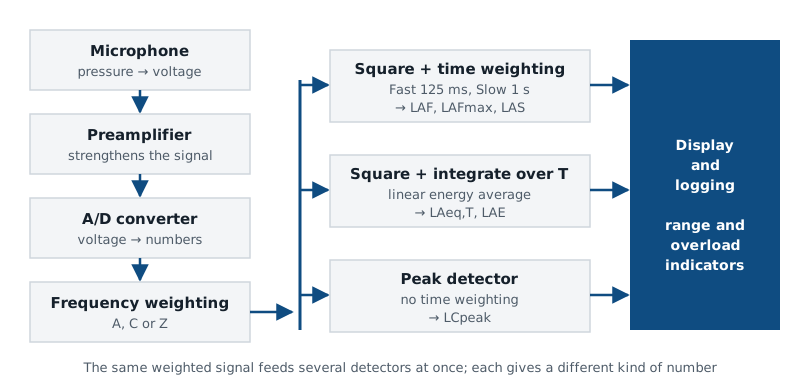
เสียงคือการที่ความดันอากาศเพิ่มขึ้นและลดลงสลับกันอย่างรวดเร็ว เครื่องวัดระดับเสียงวัดการเปลี่ยนแปลงความดันนี้ แล้วแสดงผลเป็น ระดับความดันเสียง (sound pressure level, SPL) ในหน่วยเดซิเบล (dB) ซึ่งเป็นสเกลลอการิทึม ภายในเครื่องมีขั้นตอนต่อกันเป็นสายSound is a rapid rise and fall of air pressure. A sound level meter measures this pressure change and shows it as a sound pressure level (SPL) in decibels (dB), which is a logarithmic scale. Inside the meter the signal passes through a chain of stages:
- ไมโครโฟน: แผ่นไดอะแฟรมบาง ๆ ขยับตามความดันเสียง แล้วแปลงเป็นสัญญาณไฟฟ้าMicrophone: a thin diaphragm moves with the sound pressure and turns it into an electrical signal.
- ปรีแอมป์ (preamplifier): ขยายสัญญาณที่ยังเล็กมากให้แรงพอส่งต่อPreamplifier: boosts the still very small signal so it can be passed on.
- ตัวแปลงสัญญาณแอนะล็อกเป็นดิจิทัล (A/D converter): เปลี่ยนสัญญาณไฟฟ้าเป็นตัวเลขA/D converter: turns the electrical signal into numbers.
- หน่วยประมวลผลสัญญาณ (DSP): ใส่การถ่วงน้ำหนักความถี่ (A, C, Z) และการถ่วงน้ำหนักเวลา (Fast, Slow) แล้วคำนวณค่าต่าง ๆ เช่น Leq และ LmaxSignal processor (DSP): applies frequency weighting (A, C, Z) and time weighting (Fast, Slow) and calculates values such as Leq and Lmax.
- จอแสดงผลและหน่วยความจำ: แสดงตัวเลขและบันทึกข้อมูลไว้ทำรายงานDisplay and memory: show the numbers and store the data for reporting.
ค่าพื้นฐานที่สุดคือ ระดับเสียงแบบบรอดแบนด์ (broadband level) ซึ่งรวมทุกความถี่ในช่วงที่หูได้ยิน ประมาณ 20 Hz ถึง 20 kHz ไว้เป็นตัวเลขเดียว เครื่องที่มีฟังก์ชันวิเคราะห์ยังแยกเสียงเป็นย่านความถี่ (ออกเตฟหรือ 1/3 ออกเตฟ) ได้ด้วยThe most basic reading is the broadband level, which combines every frequency in the audible range, about 20 Hz to 20 kHz, into one number. Meters with analysis functions can also split the sound into frequency bands (octave or 1/3 octave).
ในวงการนี้ คำว่า อะคูสติก (acoustic) หมายถึงเสียงที่เดินทางในอากาศและวัดด้วยไมโครโฟน ส่วน ออดิโอ (audio) หมายถึงสัญญาณเสียงที่วิ่งเป็นไฟฟ้าในสายและอุปกรณ์ เครื่องวัดระดับเสียงเป็นเครื่องมือวัดด้านอะคูสติกIn this field, acoustic means sound travelling through the air, measured with a microphone, while audio means the sound signal travelling electrically through cables and equipment. A sound level meter is an acoustic instrument.
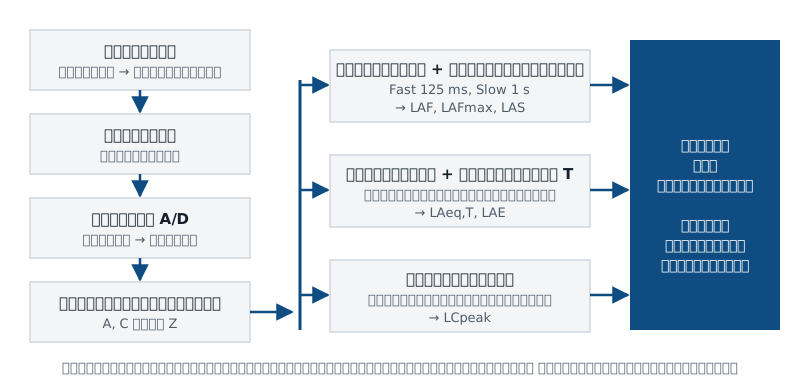
รายละเอียดเชิงวิศวกรรม: ถ่วงน้ำหนักเวลา รวมพลังงาน และค่าพีกEngineering detail: time weighting, integration and peak
หลังการถ่วงน้ำหนักความถี่ เครื่องยกกำลังสองของสัญญาณความดันเสียงเพื่อให้ได้ปริมาณที่สัมพันธ์กับพลังงาน แล้วประมวลผลต่อได้สามแบบ ซึ่งให้ตัวเลขคนละความหมายAfter frequency weighting, the meter squares the sound-pressure signal to obtain a quantity related to energy, then processes it in three different ways, each giving a number with a different meaning.
| แบบDetector | ทำงานอย่างไรHow it works | ค่าที่ได้Values |
|---|---|---|
| ถ่วงน้ำหนักเวลา (Fast / Slow)Time weighting (Fast / Slow) | ทำงานอย่างไรHow it worksค่าเฉลี่ยแบบเอ็กซ์โพเนนเชียลที่ “ลืม” เสียงเก่าไปเรื่อย ๆ ค่าคงที่เวลา Fast 125 ms, Slow 1 s เหมือนเข็มมิเตอร์ที่ตอบสนองเร็วหรือช้าAn exponential average that gradually “forgets” older sound; time constants Fast 125 ms, Slow 1 s, like a meter needle responding quickly or slowly | ค่าที่ได้ValuesLAF, LAS, LAFmax, LAFminLAF, LAS, LAFmax, LAFmin |
| รวมพลังงาน (integrating)Integrating | ทำงานอย่างไรHow it worksเฉลี่ยพลังงานแบบเชิงเส้นตลอดช่วงเวลา T ทุกขณะมีน้ำหนักเท่ากัน ไม่ขึ้นกับ Fast หรือ SlowA linear energy average over the period T; every moment counts equally, independent of Fast or Slow | ค่าที่ได้ValuesLAeq,T และ LAE (ระดับการรับเสียงสะสม อ้างอิง 1 วินาที)LAeq,T and LAE (sound exposure level, referenced to 1 second) |
| ตัวจับค่าพีกPeak detector | ทำงานอย่างไรHow it worksจับค่าความดันสูงสุดขณะใดขณะหนึ่งโดยไม่มีการถ่วงน้ำหนักเวลาCaptures the highest instantaneous pressure, with no time weighting | ค่าที่ได้ValuesLCpeak, LZpeakLCpeak, LZpeak |
ผลที่ตามมาในทางปฏิบัติ: สำหรับเสียงสั้น ๆ เช่น ประตูปิดแรง ค่า LAFmax จะสูงกว่า LASmax เพราะ Slow ตอบสนองไม่ทัน และ LCpeak จะสูงกว่าทั้งคู่ ส่วน LAeq ไม่ขึ้นกับการเลือก Fast หรือ Slow เลย ความสัมพันธ์ระหว่าง LAE กับ LAeq คือ LAE = LAeq,T + 10 × log10(T / 1 s) เช่น LAeq ของรถไฟที่ผ่านไป 20 วินาทีเท่ากับ 75 dB จะมี LAE ประมาณ 88 dB การถ่วงน้ำหนักแบบ Impulse ยังมีในเครื่องหลายรุ่นเพื่องานตามกฎเกณฑ์เดิมบางฉบับ แต่ไม่ได้เป็นข้อกำหนดของ IEC 61672-1 ฉบับปัจจุบันThe practical consequences: for a short event such as a slammed door, LAFmax is higher than LASmax because Slow cannot follow it, and LCpeak is higher than both, while LAeq does not depend on choosing Fast or Slow at all. LAE and LAeq are related by LAE = LAeq,T + 10 × log10(T / 1 s): a train pass-by with an LAeq of 75 dB over 20 seconds has an LAE of about 88 dB. Impulse time weighting is still offered on many meters for some older rules, but it is not a requirement of the current IEC 61672-1.
ช่วงการวัด โอเวอร์โหลด และอันเดอร์เรนจ์Measuring range, overload and under-range
เครื่องวัดทุกเครื่องมี ช่วงการทำงานเชิงเส้น (linear operating range) ซึ่งเป็นช่วงที่ค่าที่อ่านได้ถูกต้องตามเกณฑ์ ขอบล่างถูกจำกัดด้วยเสียงรบกวนในตัวของไมโครโฟนและวงจร ขอบบนถูกจำกัดด้วยระดับที่ไมโครโฟน ปรีแอมป์ หรือตัวแปลง A/D รับได้ IEC 61672-1 กำหนดให้เครื่องแสดงสัญญาณเตือนเมื่อสัญญาณเกินขอบบน (overload) และเมื่อต่ำกว่าขอบล่าง (under-range)Every meter has a linear operating range within which its readings meet the tolerances. The lower end is limited by the self-noise of microphone and electronics, the upper end by what the microphone, preamplifier or A/D converter can handle. IEC 61672-1 requires the meter to indicate when the signal goes above the upper end (overload) and below the lower end (under-range).
- โอเวอร์โหลดแม้เพียงชั่วขณะ ทำให้ค่าที่รวมพลังงาน เช่น Leq ของช่วงนั้นเชื่อถือไม่ได้ เครื่องจึงต้องจำไว้ว่าเกิดโอเวอร์โหลดในช่วงที่วัด ให้ตรวจสัญลักษณ์นี้ก่อนรายงานผลทุกครั้งEven a momentary overload makes integrated values such as the Leq of that period unreliable, so the meter must remember that an overload occurred during the measurement. Check this indicator before reporting any result.
- เสียงกระแทกมีค่า crest factor สูง คือค่าพีกสูงกว่าค่า RMS มาก ระดับเฉลี่ยจึงดูไม่สูงแต่พีกอาจชนขอบบนได้ งานที่มีเสียงกระแทกแรงต้องเลือกไมโครโฟนและช่วงการวัดให้รองรับพีกImpulsive sound has a high crest factor: the peak is far above the RMS value, so the average can look moderate while peaks hit the upper limit. Work with strong impulses needs a microphone and range that can handle the peaks.
- อันเดอร์เรนจ์ หมายความว่าค่าที่อ่านได้ใกล้เสียงรบกวนในตัวของระบบ ค่านั้นอาจสูงกว่าเสียงจริง ดูบทความเรื่องไมโครโฟนวัดเสียงสำหรับวิธีประเมินUnder-range means the reading is close to the system's own noise and may be higher than the real sound; see the measurement microphone article for how to judge it.
- เครื่องหลายช่วง (multi-range) ต้องเลือกช่วงให้ถูกก่อนวัด ส่วนเครื่องรุ่นใหม่จำนวนมากมีช่วงเดียวที่กว้างพอสำหรับงานส่วนใหญ่ ทำให้ความเสี่ยงเรื่องเลือกช่วงผิดน้อยลงMulti-range meters need the right range selected before measuring; many modern meters have a single range wide enough for most work, reducing the risk of a wrong range.
Class 1 และ Class 2 ต่างกันอย่างไรHow Class 1 and Class 2 differ
ไม่มีเครื่องวัดใดแม่นยำสมบูรณ์แบบ มาตรฐานสากล IEC 61672 จึงกำหนด เกณฑ์ความคลาดเคลื่อนที่ยอมรับได้ (tolerance limits) เป็นขอบบนและขอบล่าง สำหรับคุณสมบัติหลายด้านของเครื่อง เช่น การตอบสนองต่อความถี่ต่าง ๆ ความเป็นเส้นตรงของระดับ และการถ่วงน้ำหนักเวลา แล้วแบ่งเป็นสองระดับชั้นNo instrument is perfectly accurate, so the international standard IEC 61672 sets tolerance limits, upper and lower bounds, for many properties of a meter, such as its response at different frequencies, the linearity of its level reading and its time weighting. It defines two performance classes:
| หัวข้อTopic | Class 1 | Class 2 |
|---|---|---|
| เกณฑ์ความคลาดเคลื่อนTolerances | Class 1แคบกว่า ต้องใกล้ค่าจริงมากกว่าTighter: must stay closer to the true value | Class 2กว้างกว่าWider |
| ราคาCost | Class 1สูงกว่าHigher | Class 2ต่ำกว่าLower |
| งานที่เหมาะสมTypical use | Class 1งานที่กฎหมายหรือมาตรฐานกำหนด งานที่ผลต้องใช้เป็นหลักฐานWork where a law or standard requires it; results that must stand as evidence | Class 2งานสำรวจ งานตรวจสอบภายใน งานติดตั้งและดูแลระบบเสียง ซึ่งความแม่นยำระดับนี้เพียงพอSurveys, internal checks, installing and servicing sound systems, where this accuracy is enough |
| เครื่องสอบเทียบเสียงที่ใช้คู่กัน (IEC 60942 คือมาตรฐานของเครื่องสอบเทียบเสียง)Sound calibrator used with it (IEC 60942 is the standard for sound calibrators) | Class 1Class 1 ตาม IEC 60942Class 1 to IEC 60942 | Class 2Class 2 ตาม IEC 60942 (หรือ Class 1)Class 2 to IEC 60942 (or Class 1) |
ตามคำอธิบายของ NTi Audio ปกติแล้ว Class 1 จำเป็นเมื่อกฎหมายกำหนดไว้ ส่วน Class 2 แม่นยำน้อยกว่าเล็กน้อย ราคาย่อมเยากว่า และเพียงพออย่างยิ่งสำหรับงานจำนวนมาก ไม่ว่าจะเป็น Class ใด เครื่องต้องได้รับการสอบเทียบอย่างถูกต้องจึงจะให้ผลที่เชื่อถือได้As NTi Audio explains it, Class 1 is usually needed when the law prescribes it, while Class 2 is slightly less accurate, less expensive and more than sufficient for many jobs. Whichever class you use, the meter must be properly calibrated to give trustworthy results.
Class เป็นคุณสมบัติของ ทั้งระบบ คือตัวเครื่องรวมกับไมโครโฟนที่ใช้ ถ้าต่อไมโครโฟน Class 2 เข้ากับเครื่องที่รองรับ Class 1 ผลที่ได้ก็เป็นระดับ Class 2 และไมโครโฟนที่ระบุว่ามี การตอบสนองความถี่ระดับ Class 1 (Class 1 frequency response) ยังไม่เท่ากับชุดเครื่องมือ Class 1 ที่ผ่านการรับรองแบบThe class belongs to the whole system: the meter together with the microphone used on it. A Class 2 microphone on a Class 1-capable meter gives a Class 2 result. And a microphone described as having a Class 1 frequency response is not the same thing as a type-approved Class 1 instrument set.
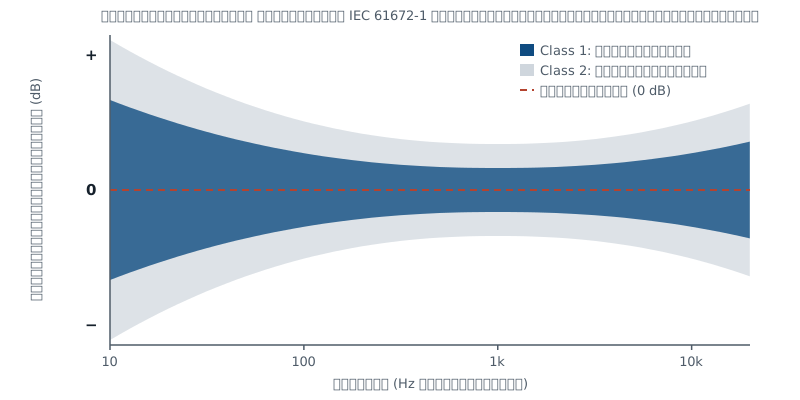
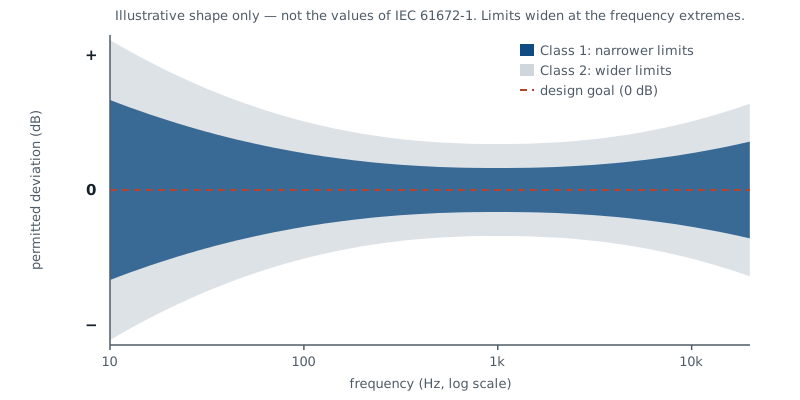
สิ่งที่ภาพนี้สื่อคือ ความต่างระหว่าง Class 1 กับ Class 2 ไม่เท่ากันทุกความถี่ ที่ช่วงความถี่กลางรอบ 1 kHz เกณฑ์ของทั้งสองใกล้กัน แต่ที่ความถี่ต่ำมากและสูงมาก Class 2 ยอมให้คลาดได้มากกว่ามาก เสียงที่มีพลังงานความถี่สูงมาก เช่น เสียงฟู่ของลมอัดหรือเสียงหวีดของเครื่องจักร จึงเป็นกรณีที่ผลจากเครื่องสองคลาสต่างกันได้มากที่สุด นอกจากความถี่แล้ว เกณฑ์ยังครอบคลุมความเป็นเส้นตรงของระดับ การตอบสนองต่อทิศทาง การถ่วงน้ำหนักเวลา และผลของอุณหภูมิและความชื้น ใน IEC 61672-1 ฉบับปัจจุบัน เกณฑ์เหล่านี้กำหนดเป็น ขีดจำกัดการยอมรับ (acceptance limits) ซึ่งรวมค่าความไม่แน่นอนสูงสุดที่ยอมให้ของห้องปฏิบัติการที่ทดสอบไว้ด้วยWhat this picture shows is that the difference between Class 1 and Class 2 is not the same at every frequency. Around 1 kHz the two sets of limits are close, but at very low and very high frequencies Class 2 allows much larger deviations. Sound with a lot of high-frequency energy, such as compressed-air hiss or a machine whine, is therefore where results from meters of the two classes can differ most. Beyond frequency, the limits also cover level linearity, directional response, time weighting and the effects of temperature and humidity. In the current IEC 61672-1 they are expressed as acceptance limits, which take into account a maximum permitted uncertainty of the testing laboratory.
การรับรองแบบ (type approval) และการวัดทางกฎหมายType approval and legally binding measurements
ผู้ผลิตสามารถทดสอบเครื่องของตัวเองและบอกว่าเป็นไปตาม Class 1 ได้ แต่ในบางประเทศ การวัดที่มีผลทางกฎหมายต้องใช้เครื่องที่ผ่าน การประเมินแบบ (pattern evaluation) หรือที่มักเรียกว่า การรับรองแบบ (type approval) คือหน่วยงานมาตรวิทยาแห่งชาติหรือหน่วยงานที่ได้รับการรับรอง นำรุ่นของเครื่องไปทดสอบอย่างละเอียดตาม IEC 61672-2 ตัวอย่างหน่วยงานเช่น PTB ของเยอรมนี LNE ของฝรั่งเศส METAS ของสวิตเซอร์แลนด์ และ CEM ของสเปนA manufacturer can test its own meter and state that it meets Class 1. In some countries, however, legally binding measurements require a meter that has passed pattern evaluation, often called type approval: a national metrology institute or an accredited body tests the model thoroughly according to IEC 61672-2. Examples of such bodies include PTB in Germany, LNE in France, METAS in Switzerland and CEM in Spain.
การทดสอบนี้ครอบคลุมมากกว่าความแม่นยำพื้นฐาน เช่น สมรรถนะทางไฟฟ้าอะคูสติก ผลของสภาพแวดล้อมอย่างอุณหภูมิและความชื้น ความทนต่อสัญญาณรบกวนทางแม่เหล็กไฟฟ้า และการตอบสนองต่อเสียงที่มาจากทิศทางต่าง ๆThis testing goes well beyond basic accuracy. It covers electroacoustic performance, the influence of the environment such as temperature and humidity, immunity to electromagnetic interference, and the response to sound arriving from different directions.
สิ่งสำคัญคือ การรับรองแบบครอบคลุมเฉพาะ ชุดอุปกรณ์ที่กำหนดไว้ เท่านั้น ตัวอย่างเช่น NTi Audio XL2 ที่ติดตั้ง XL2 Type Approval Option (XL2-TA) ได้รับการรับรองเมื่อใช้ร่วมกับไมโครโฟน M2230 หรือ M2340 อุปกรณ์ครอบไมโครโฟน (shroud) MXA01 เฟิร์มแวร์เวอร์ชันที่ระบุ และเครื่องสอบเทียบเสียง Class 1 ของ NTi Audio ถ้าเปลี่ยนชิ้นใดชิ้นหนึ่งเป็นอุปกรณ์อื่น ชุดนั้นก็ไม่ใช่ชุดที่ได้รับการรับรองอีกต่อไปImportantly, type approval covers only a defined configuration. For example, the NTi Audio XL2 fitted with the XL2 Type Approval Option (XL2-TA) is approved when used with an M2230 or M2340 microphone, the MXA01 shroud, a specified firmware version and the NTi Audio Class 1 sound calibrator. Swap any one of these for something else and the set is no longer the approved configuration.
ข้อกำหนดเรื่องการรับรองแบบแตกต่างกันในแต่ละประเทศ ก่อนเลือกเครื่องสำหรับงานที่มีผลทางกฎหมาย ควรตรวจว่ากฎหมาย หน่วยงานกำกับ หรือสัญญาของงานนั้นกำหนดอะไรไว้Type approval rules differ from country to country. Before choosing a meter for legally binding work, check what the law, the regulator or the contract for that job actually requires.
หลังซื้อแล้ว: การตรวจสอบเป็นระยะAfter purchase: periodic verification
เครื่องที่ผ่าน Class 1 ในวันผลิตไม่ได้คงสภาพนั้นตลอดไป อายุการใช้งาน สภาพแวดล้อม และแรงกระแทกทำให้คุณสมบัติเปลี่ยนได้ มาตรฐาน IEC 61672-3 จึงกำหนดวิธี ทดสอบเป็นระยะ (periodic testing) ในห้องปฏิบัติการ ซึ่ง NTi Audio แนะนำให้ทำทุกปี (ช่วงเวลาที่บังคับจริงขึ้นกับกฎหมาย ข้อกำหนดของงาน หรือระบบคุณภาพขององค์กร) การตรวจเช็กในภาคสนามไม่ได้ใช้แทนการทดสอบในห้องปฏิบัติการ และในการใช้งานแต่ละครั้งควรตรวจเช็กด้วยเครื่องสอบเทียบเสียงก่อนและหลังการวัด รายละเอียดอยู่ในบทความเรื่องการสอบเทียบA meter that met Class 1 on the day it was made does not stay that way forever: age, the environment and knocks can change its behaviour. IEC 61672-3 therefore defines periodic testing in a laboratory, which NTi Audio recommends yearly (the interval actually required depends on the law, the job's requirements or the organisation's quality system). A field check does not replace laboratory testing. In everyday use, the meter should also be checked with a sound calibrator before and after each measurement. The calibration article covers this in detail.
ตัวอย่างในชีวิตจริงEveryday examples
ผู้ดูแลอาคารต้องการรู้คร่าว ๆ ว่าเสียงเครื่องปั๊มน้ำในห้องเครื่องดังขึ้นหลังซ่อมหรือไม่ เพื่อใช้ตัดสินใจภายใน เครื่อง Class 2 ที่สอบเทียบแล้วก็เพียงพอ แต่ถ้าเป็นการวัดเพื่อยื่นต่อหน่วยงานราชการ หรือเพื่อใช้เป็นหลักฐานในข้อพิพาทกับเพื่อนบ้าน ควรใช้เครื่อง Class 1 และตรวจว่าข้อกำหนดของงานต้องการการรับรองแบบหรือไม่A building manager wants a rough idea of whether the water pump in the plant room got louder after a repair, to make an internal decision. A calibrated Class 2 meter is enough. But if the measurement is to be submitted to an authority, or used as evidence in a dispute with a neighbour, use a Class 1 meter and check whether the job's requirements call for type approval.
ความเข้าใจผิดที่พบบ่อยCommon misunderstandings
- “Class 1 คือเครื่องที่วัดได้ตรงเป๊ะ” ไม่ใช่ Class 1 หมายถึงความคลาดเคลื่อนอยู่ในเกณฑ์ที่แคบกว่า ไม่ได้แปลว่าไม่มีความคลาดเคลื่อนเลย“Class 1 means perfectly exact.” No. Class 1 means the errors stay within tighter limits, not that there are none.
- “เครื่อง Class 1 ใช้กับไมโครโฟนตัวไหนก็ได้ผล Class 1” ไม่ใช่ Class เป็นของทั้งระบบรวมไมโครโฟน“A Class 1 meter gives Class 1 results with any microphone.” No. The class applies to the whole system, microphone included.
- “Class 1 กับ type approved คือสิ่งเดียวกัน” ไม่ใช่ การรับรองแบบคือการทดสอบรุ่นโดยหน่วยงานภายนอกตาม IEC 61672-2 และครอบคลุมเฉพาะชุดอุปกรณ์ที่ระบุ“Class 1 and type approved are the same thing.” No. Type approval is an independent test of the model to IEC 61672-2 and covers only the specified configuration.
- “แอปในโทรศัพท์ใช้แทนได้” แอปอาจใช้ดูแนวโน้มคร่าว ๆ ได้ แต่ไม่ได้ถูกทดสอบตาม IEC 61672 จึงไม่ควรใช้เป็นผลการวัดอย่างเป็นทางการ“A phone app will do.” An app may show rough trends, but it is not tested to IEC 61672, so it should not be used as an official measurement.
ตัวอย่างสถานการณ์: เครื่องสองเครื่องอ่านได้ไม่เท่ากันExample scenario: two meters that disagree
ผู้รับเหมาและเจ้าของอาคารวางเครื่องวัดคนละเครื่องข้างกันหน้าห้องเครื่องอัดอากาศ ทั้งสองเครื่องตรวจด้วยเครื่องสอบเทียบแล้วอ่านได้ 94.0 dB เท่ากัน แต่เมื่อวัดเสียงจริง เครื่องหนึ่งอ่าน LAeq ได้ 82.6 dB อีกเครื่อง 83.4 dB
ใครผิด? อาจไม่มีใครผิด การตรวจด้วยเครื่องสอบเทียบยืนยันเพียงค่าที่ 1 kHz ส่วนเสียงจริงมีพลังงานความถี่สูงจากเสียงฟู่ของลมรั่ว ซึ่งเป็นย่านที่เกณฑ์ของเครื่องกว้างกว่า นอกจากนี้ ไมโครโฟนสองตัวที่ห่างกันเพียงครึ่งเมตรก็อยู่ในสนามเสียงที่ต่างกันได้ในห้องเครื่อง
วิธีที่ดีกว่าการเถียงกันคือ สลับตำแหน่งเครื่องแล้ววัดซ้ำ ดูสเปกตรัม 1/3 ออกเตฟของทั้งสองเครื่อง ตรวจใบรับรองการสอบเทียบว่ายังไม่หมดอายุ และตกลงกันล่วงหน้าว่าจะใช้เครื่องคลาสใดและวิธีวัดใดเป็นหลัก (ตัวเลขเป็นตัวอย่างสมมติ)A contractor and a building owner place their own meters side by side outside a compressor room. Both are checked with a calibrator and read 94.0 dB. On the real noise, one reads an LAeq of 82.6 dB and the other 83.4 dB.
Who is wrong? Possibly nobody. The calibrator check confirms only the value at 1 kHz, while the real noise has high-frequency energy from air-leak hiss, a range where the meters' tolerances are wider. And two microphones only half a metre apart can sit in different sound fields in a plant room.
Better than arguing: swap the meter positions and measure again, compare the 1/3 octave spectra of both meters, check that both calibration certificates are current, and agree in advance on which class and method will be the reference. (Hypothetical numbers.)
คำถามที่พบบ่อยFrequently asked questions
ต้องใช้ Class 1 หรือไม่Do I need Class 1?
ดูที่ข้อกำหนดของงานก่อน ถ้ากฎหมาย มาตรฐานที่ใช้ หรือสัญญากำหนด Class 1 ก็ต้องใช้ Class 1 และตรวจว่าต้องการการรับรองแบบด้วยหรือไม่ ถ้าเป็นงานสำรวจภายใน งานตรวจติดตาม หรืองานระบบเสียง Class 2 ที่สอบเทียบแล้วมักเพียงพอ ถ้าผลอาจถูกใช้เป็นหลักฐานในภายหลัง การเลือก Class 1 ตั้งแต่แรกช่วยลดข้อโต้แย้งStart from the job's requirements. If the law, the applicable standard or the contract requires Class 1, use Class 1 and check whether type approval is also required. For internal surveys, follow-up checks or sound-system work, a calibrated Class 2 meter is often enough. If the result might later be used as evidence, choosing Class 1 from the start avoids disputes.
ควรตั้ง Fast หรือ SlowShould I use Fast or Slow?
ใช้ตามที่มาตรฐานหรือกฎเกณฑ์กำหนด ถ้าค่าที่ต้องการคือ Leq การเลือก Fast หรือ Slow ไม่มีผลต่อ Leq แต่มีผลต่อ Lmax และ Lmin ซึ่งต้องระบุการถ่วงน้ำหนักเวลาเสมอเมื่อรายงาน เช่น LAFmaxUse whatever the standard or rules specify. If the value you need is Leq, Fast or Slow makes no difference to it, but it does change Lmax and Lmin, which must always be reported with their time weighting, e.g. LAFmax.
สัญลักษณ์โอเวอร์โหลดขึ้นระหว่างวัด ต้องทำอย่างไรThe overload indicator appeared during a measurement. What now?
ค่ารวมพลังงานของช่วงนั้นเชื่อถือไม่ได้ ให้หาว่าเกิดจากเสียงจริงที่ดังเกินช่วง แรงกระแทกที่ไมโครโฟน หรือลมแรง แล้ววัดใหม่ด้วยการตั้งค่า ไมโครโฟน หรือตำแหน่งที่เหมาะสม และบันทึกเหตุการณ์ไว้ในรายงานThe integrated values for that period cannot be trusted. Find out whether it came from real sound beyond the range, a knock on the microphone or strong wind, then measure again with a suitable setting, microphone or position, and note the event in the report.
ใช้ Class 2 วัดเสียงในที่ทำงานได้หรือไม่Can a Class 2 meter be used for workplace noise?
ISO 9612 (ฉบับ 2009) ยอมรับเครื่องมือที่เป็นไปตาม Class 1 หรือ Class 2 ของ IEC 61672-1 แต่กฎหมายหรือข้อกำหนดของแต่ละประเทศอาจเข้มกว่านั้น ต้องตรวจข้อกำหนดที่ใช้บังคับกับสถานประกอบการนั้นเสมอISO 9612 (2009 edition) accepts instruments meeting Class 1 or Class 2 of IEC 61672-1, but national law or requirements may be stricter; always check the rules that apply to the workplace.
เครื่องวัดระดับเสียงวิเคราะห์ความถี่ได้หรือไม่Can a sound level meter analyse frequency?
เครื่องพื้นฐานให้เพียงระดับรวมถ่วงน้ำหนัก A, C หรือ Z เครื่องที่มีตัวกรองย่านความถี่แยกเสียงเป็นย่านออกเตฟหรือ 1/3 ออกเตฟได้ ซึ่งจำเป็นสำหรับการหาเสียงโทน การเลือกวิธีลดเสียง และงานอะคูสติกอาคารA basic meter gives only the overall A-, C- or Z-weighted level. Meters with band filters split the sound into octave or 1/3 octave bands, which is needed to find tones, choose noise control and for building acoustics.
คำศัพท์สำคัญKey terms
- เครื่องวัดระดับเสียง (Sound level meter)Sound level meter
- เครื่องมือที่วัดการเปลี่ยนแปลงความดันอากาศจากเสียงผ่านไมโครโฟน และแสดงผลเป็นระดับเสียงหน่วยเดซิเบลAn instrument that measures the air-pressure changes of sound through a microphone and shows them as a level in decibels.
- IEC 61672
- มาตรฐานสากลสำหรับเครื่องวัดระดับเสียง กำหนด Class 1 และ Class 2 ส่วนที่ 2 ว่าด้วยการประเมินแบบ ส่วนที่ 3 ว่าด้วยการทดสอบเป็นระยะThe international standard for sound level meters. It defines Class 1 and Class 2; part 2 covers pattern evaluation and part 3 periodic testing.
- เกณฑ์ความคลาดเคลื่อน (Tolerance limits)Tolerance limits
- ขอบบนและขอบล่างที่ผลการวัดของเครื่องต้องอยู่ภายในThe upper and lower bounds within which the meter's readings must stay.
- การรับรองแบบ (Type approval / pattern approval)Type approval / pattern approval
- การที่หน่วยงานมาตรวิทยาทดสอบรุ่นของเครื่องและรับรองว่าใช้ในการวัดที่มีผลทางกฎหมายได้ เฉพาะชุดอุปกรณ์ที่ระบุTesting of an instrument model by a metrology body, approving it for legally binding measurements in a specified configuration.
- ระดับเสียงแบบบรอดแบนด์ (Broadband level)Broadband level
- ระดับเสียงตัวเดียวที่รวมทุกความถี่ในช่วงประมาณ 20 Hz ถึง 20 kHzOne level combining every frequency from about 20 Hz to 20 kHz.