NTi Audio · Vibration Sensors
NTi Vibration Sensors
Accelerometer สำหรับ XL2 Vibration MeterAccelerometers for the XL2 Vibration Meter
Accelerometer แบบ Piezoelectric แกนเดียว 3 รุ่นที่ NTi Audio มีให้เลือกสำหรับ XL2 ที่มี XL2 Vibration Option ต่อผ่าน ICP Adapter ASD เลือกรุ่นตามน้ำหนักชิ้นงาน ระดับการสั่น ความถี่ต่ำสุดที่ต้องวัด และวิธียึดติดThe three uniaxial piezoelectric accelerometers NTi Audio offers for the XL2 with the XL2 Vibration Option, connected through the ICP Adapter ASD. Choose by the object's mass, vibration level, lowest frequency of interest and mounting method.
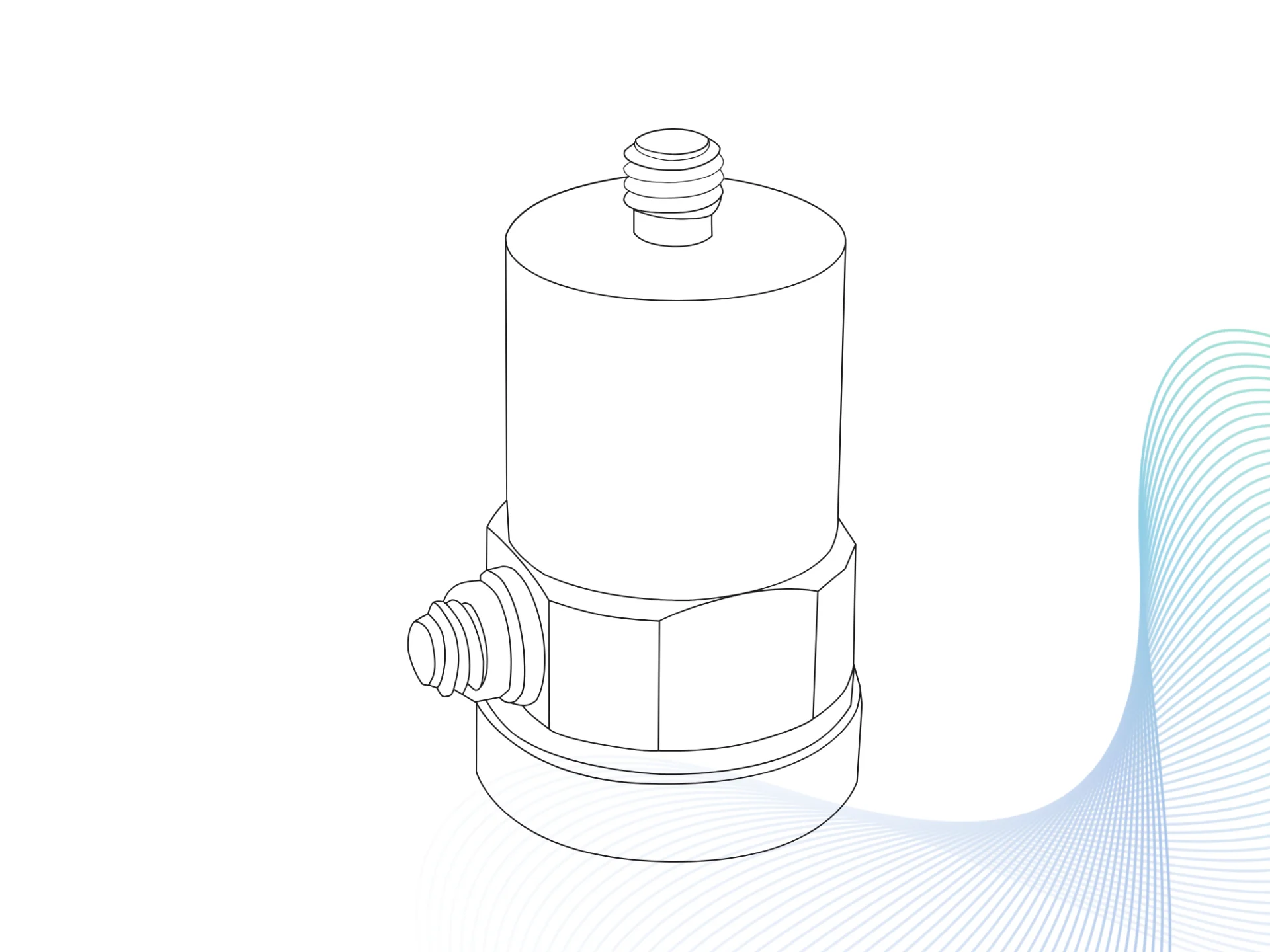
What an accelerometer measures
Accelerometer วัดอะไรWhat does an accelerometer measure?
Accelerometer เป็นเซนเซอร์ที่ติดกับวัตถุเพื่อวัดความเร่งของการสั่นสะเทือน เมื่อใช้กับ XL2 Vibration Meter เครื่องจะแสดงความเร่ง ความเร็ว และระยะขจัดพร้อมกันAn accelerometer is mounted on the object to sense vibration acceleration. With the XL2 Vibration Meter, acceleration, velocity and displacement are displayed simultaneously.
ความเร่งของการสั่นสะเทือนVibration acceleration
ความเร็วของการสั่นสะเทือนVibration velocity
ระยะขจัดของการสั่นสะเทือนVibration displacement
วัดในแกนเดียว เอาต์พุต ICPOne measuring axis, ICP output
ช่วงการใช้งานตามที่ NTi Audio ระบุThe range of use as described by NTi Audio
เกลียว M5 / M3 หรือแม่เหล็ก ตามรุ่นM5 / M3 thread or magnet, by model
หลักการทำงานHow it works
Accelerometer แบบ Piezoelectric ทำงานอย่างไร และอ่าน Data sheet อย่างไรHow a piezoelectric accelerometer works, and how to read its data sheet
ก่อนเปรียบเทียบตัวเลข ควรเข้าใจว่าแต่ละค่าใน Data sheet บอกอะไร เพราะเซนเซอร์ที่ดีที่สุดในตารางไม่จำเป็นต้องดีที่สุดสำหรับงานของคุณBefore comparing numbers, it helps to know what each data-sheet value means: the best-looking sensor in a table is not necessarily the best one for your job.
หลักการ PiezoelectricThe piezoelectric principle
ภายในเซนเซอร์มีมวลกดบนผลึก Piezoelectric เมื่อฐานเซนเซอร์สั่น มวลนี้สร้างแรงบนผลึกตามความเร่ง และผลึกให้ประจุไฟฟ้าตามแรงนั้น NTi ใช้ 2 แบบ: A4580 เป็นแบบ Compression ส่วน KS901MF และ A97100 เป็นแบบ ShearInside the sensor a mass rests on a piezoelectric element. When the base vibrates, the mass exerts a force on the element in proportion to the acceleration, and the element produces a matching charge. NTi uses two designs: compression (A4580) and shear (KS901MF and A97100).
ICP: วงจรขยายในตัวเซนเซอร์ICP: electronics inside the sensor
เซนเซอร์แบบ ICP แปลงประจุเป็นสัญญาณแรงดันที่อิมพีแดนซ์ต่ำภายในตัว และรับไฟเลี้ยงกระแสคงที่ผ่านสายสัญญาณเส้นเดียวกัน (NTi ระบุ 2 – 20 mA; ICP Adapter ASD จ่าย 4 mA) จึงไม่ต้องใช้ Charge amplifier แยกAn ICP sensor converts the charge into a low-impedance voltage signal internally and is powered by a constant current over the same signal cable (NTi states 2 – 20 mA; the ICP Adapter ASD supplies 4 mA), so no separate charge amplifier is needed.
ความไว (Sensitivity)Sensitivity
บอกว่าเซนเซอร์ให้แรงดันเท่าไรต่อความเร่ง 1 g หรือ 1 m/s² ความไวสูงให้สัญญาณแรงกว่าในงานที่การสั่นต่ำ แต่เครื่องวัดจะอิ่มตัวเร็วขึ้นเมื่อการสั่นสูง ค่าใน Data sheet เป็นค่า typical ±20% จึงต้องใช้ค่าของเซนเซอร์ตัวจริงHow much voltage the sensor delivers per 1 g or 1 m/s². Higher sensitivity gives a stronger signal for low vibration, but the input reaches its limit sooner at high vibration. Data-sheet values are typical, ±20%, so the individual sensor's value must be used.
ย่านความถี่และเกณฑ์ความคลาดเคลื่อนFrequency range and tolerance
ย่านความถี่มีความหมายเมื่อบอกเกณฑ์ด้วย NTi ให้ 3 เกณฑ์: 3 dB, 10% และ 5% ยิ่งเกณฑ์เข้มย่านยิ่งแคบ เช่น A4580 คือ 3 Hz – 15 kHz ที่ 3 dB แต่ 9 Hz – 7 kHz ที่ 5% งานที่ต้องการความแม่นยำของแอมพลิจูดควรใช้ย่านที่เกณฑ์ 5% หรือ 10%A frequency range means something only with its tolerance. NTi gives three: 3 dB, 10% and 5%. The tighter the tolerance, the narrower the range: the A4580 covers 3 Hz – 15 kHz at 3 dB but 9 Hz – 7 kHz at 5%. When amplitude accuracy matters, work within the 5% or 10% range.
ช่วงการวัดและ Residual noiseMeasurement range and residual noise
ช่วงการวัด (±75 g หรือ ±60 g pk) คือขีดบน ส่วน Residual noise (300 – 400 µg) คือขีดล่างของสิ่งที่เซนเซอร์แยกออกจากสัญญาณรบกวนได้ การสั่นที่ต้องวัดควรอยู่ระหว่างสองค่านี้โดยมีช่องว่างเพียงพอทั้งสองด้านThe measurement range (±75 g or ±60 g pk) is the upper limit; the residual noise (300 – 400 µg) is the lower limit of what the sensor can separate from its own noise. The vibration of interest should sit between the two with sufficient margin on both sides.
มวลของเซนเซอร์Sensor mass
หลักทั่วไปทางวิศวกรรม: เซนเซอร์ที่ติดบนชิ้นงานเพิ่มมวลให้ชิ้นงาน ถ้าชิ้นงานเบาหรือบาง มวลนี้เปลี่ยนการสั่นที่ต้องการวัดได้ (Mass loading) ส่วน NTi Audio ระบุ A97100 (3.2 g) สำหรับชิ้นงานน้ำหนักเบาและพื้นที่แคบGeneral engineering principle: a sensor mounted on an object adds mass to it. On light or thin objects this can change the very vibration you want to measure (mass loading). NTi Audio specifies the A97100 (3.2 g) for lightweight devices and small spaces.
เลือกเซนเซอร์Choosing a sensor
ต้องใช้เซนเซอร์รุ่นไหน?Which sensor do I need?
การเลือก Accelerometer ไม่ควรดูเฉพาะย่านความถี่ แต่ต้องดูร่วมกันทั้งมวลของเซนเซอร์เทียบกับชิ้นงาน ระดับการสั่นที่คาดว่าจะวัด วิธีติดตั้ง ลักษณะชิ้นงาน ย่านความถี่ที่สนใจ และวัตถุประสงค์ของการวัด ไม่มีรุ่นใดเหมาะกับทุกงาน แต่ละรุ่นมีข้อได้เปรียบทางวิศวกรรมต่างกันChoosing an accelerometer is not a matter of frequency range alone: consider the sensor mass relative to the test object, the expected vibration level, the mounting method, the object itself, the frequency range of interest and the measurement objective. No model suits every job; each offers a different engineering trade-off.
A4580: ตัวเลือกมาตรฐานสำหรับงานวัดการสั่นสะเทือนทั่วไปA4580: the standard choice for general vibration work
- NTi Audio ระบุ: สำหรับชิ้นงานที่มีมวลมาก (massive devices) ตั้งแต่การสั่นเล็กน้อยจนถึงแรงกระแทกสูงNTi Audio states: designed for massive devices, from slight excursions up to strong impacts
- 45 g, ช่วงการวัด ±75 g (pk) สูงสุดในสามรุ่น, ยึดด้วยเกลียว M5 หรือแม่เหล็กแบบถอดได้45 g; measurement range ±75 g (pk), the highest of the three; M5 thread or detachable magnet
- เป็น Accelerometer ที่ NTi Audio ใส่ไว้ในชุด XL2 Vibration Meter KitIt is the accelerometer NTi Audio includes in the XL2 Vibration Meter Kit
- GBS แนะนำ: เลือกเมื่อวัดการสั่นทั่วไปของเครื่องจักรหรือชิ้นงานที่มีมวลมาก และต้องรองรับการสั่นหรือแรงกระแทกได้สูงกว่าอีกสองรุ่นGBS recommendation: choose it for general vibration work on machines or other high-mass objects, where the sensor must handle higher vibration or impacts than the other two models
KS901MF: ติดตั้งสะดวก ย้ายจุดวัดได้เร็วKS901MF: convenient installation and quick repositioning
- NTi Audio ระบุ: สำหรับการสั่นเล็กน้อยถึงปานกลาง (slight to medium excursions)NTi Audio states: for slight to medium excursions
- 24 g, ช่วงการวัด ±60 g (pk), หัวแม่เหล็กติดถาวรในตัว (แรงยึด 45 N), สาย 3 m ติดกับตัว24 g; measurement range ±60 g (pk); permanently attached magnet head (45 N); attached 3 m cable
- GBS แนะนำ: เลือกเมื่อติดตั้งบนผิวเหล็กที่แม่เหล็กยึดได้ดี และต้องย้ายเซนเซอร์ระหว่างหลายจุดวัดบ่อย เช่น งานภาคสนามที่วัดหลายตำแหน่งGBS recommendation: choose it when mounting on a suitable ferromagnetic surface and the sensor has to move between many measuring points, as in field surveys
A97100: เซนเซอร์น้ำหนักเบา เมื่อ Mass loading สำคัญA97100: a lightweight sensor where mass loading matters
- NTi Audio ระบุ: สำหรับชิ้นงานน้ำหนักเบาและพื้นที่แคบNTi Audio states: for lightweight devices and small spaces
- 3.2 g ในตัวเรือน 9 × 9 × 9 mm, ช่วงการวัด ±60 g (pk), ย่านความถี่ 0.45 Hz – 6 kHz ที่เกณฑ์ 5% (0.15 Hz – 13 kHz ที่เกณฑ์ 3 dB)3.2 g in a 9 × 9 × 9 mm housing; measurement range ±60 g (pk); frequency range 0.45 Hz – 6 kHz at 5 % tolerance (0.15 Hz – 13 kHz at 3 dB)
- Mass loading: เซนเซอร์ที่หนักอาจเปลี่ยนพฤติกรรมการสั่นของชิ้นงานที่มีมวลต่ำ สำหรับชิ้นส่วนหรือโครงสร้างที่เบา เซนเซอร์ที่เบากว่าจึงอาจเหมาะกว่าMass loading: a heavier sensor can change how a low-mass object vibrates, so for light components or structures a lighter accelerometer may be the better choice
- GBS แนะนำ: เลือกเมื่อชิ้นงานมีมวลต่ำ หรือไม่ต้องการให้น้ำหนักของ Accelerometer เปลี่ยนการสั่นของชิ้นงานGBS recommendation: choose it when the object is light, or when the accelerometer's own mass must not change the object's vibration
อะไรเป็นตัวกำหนดว่าควรเลือกรุ่นไหน? (GBS Engineering Note)What decides which model to use? (GBS engineering note)
- มวลของชิ้นงานเทียบกับมวลเซนเซอร์ (45 / 24 / 3.2 g)Test-object mass versus sensor mass (45 / 24 / 3.2 g)
- ระดับการสั่นที่คาดว่าจะวัด เทียบกับช่วงการวัดและ Residual noise ของเซนเซอร์Expected vibration amplitude versus the sensor's measurement range and residual noise
- ย่านความถี่ที่สนใจ อ่านตามเกณฑ์ความคลาดเคลื่อนที่งานต้องการ (3 dB / 10% / 5%) และขีดจำกัดของ XL2Frequency range of interest, read at the tolerance the job needs (3 dB / 10 % / 5 %), plus the XL2's own limits
- วิธีติดตั้ง: สกรู แม่เหล็ก หรือยึดผ่านแผ่นเหล็ก การติดตั้งมีผลต่อ Bandwidth และคุณภาพของผลการวัดMounting method: screw, magnet or a bonded steel plate; mounting affects the usable bandwidth and the quality of the result
- ความสะดวกในการติดตั้งและย้ายจุดวัดInstallation convenience and how often the sensor must move
- วัตถุประสงค์ของการวัดและมาตรฐานที่ต้องอ้างอิงThe measurement objective and any standard that applies
ความถี่ต่ำ: อ่านย่านความถี่พร้อมเกณฑ์ความคลาดเคลื่อนLow frequencies: read the range with its tolerance
ขอบล่างของย่านความถี่ขึ้นกับเกณฑ์ที่ใช้: A4580 เริ่มที่ 3 Hz ที่เกณฑ์ 3 dB แต่ 9 Hz ที่เกณฑ์ 5% ส่วน KS901MF เริ่มที่ 0.2 Hz (3 dB) / 0.6 Hz (5%) และ A97100 เริ่มที่ 0.15 Hz (3 dB) / 0.45 Hz (5%) และ XL2 ในโหมด Vibration มี Bandwidth (–3 dB) เริ่มที่ 0.7 Hz จึงไม่ควรเลือกรุ่นจากขอบความถี่ต่ำเพียงอย่างเดียว ต้องพิจารณามวล ระดับการสั่น และการติดตั้งร่วมด้วยThe lower edge depends on the tolerance: the A4580 starts at 3 Hz at 3 dB but at 9 Hz at 5 %; the KS901MF at 0.2 Hz (3 dB) / 0.6 Hz (5 %); the A97100 at 0.15 Hz (3 dB) / 0.45 Hz (5 %). The XL2 in vibration mode has a –3 dB bandwidth starting at 0.7 Hz. The low-frequency limit alone should not decide the model: mass, vibration level and mounting matter as well.
การสั่นระดับต่ำLow vibration levels
KS901MF และ A97100 มีความไว 100 mV/g (A4580: 80 mV/g) ค่า Residual noise ของทั้งสามรุ่นอยู่ในระดับ 300 – 400 µg (0.5 Hz – 20 kHz) ให้วิศวกรตรวจว่าระดับการสั่นที่ต้องวัดสูงกว่า Noise ของระบบเพียงพอThe KS901MF and A97100 have 100 mV/g sensitivity (A4580: 80 mV/g). Residual noise of all three is in the 300 – 400 µg range (0.5 Hz – 20 kHz). Ask our engineers to check that your vibration level is sufficiently above the system noise.
วัดชั่วคราว ย้ายจุดบ่อยTemporary, frequently moved positions
KS901MF มีหัวแม่เหล็กในตัว (แรงยึด 45 N) และสายยาว 3 m ติดอยู่กับตัว A4580 และ A97100 มีแม่เหล็กแบบถอดได้มาให้ บนพื้นผิวเหล็ก การยึดด้วยแม่เหล็กทำให้ย้ายจุดวัดได้เร็วThe KS901MF has a built-in magnet head (45 N) and an attached 3 m cable; the A4580 and A97100 come with a detachable magnet. On steel surfaces, magnet mounting lets you move between points quickly.
ติดตั้งแบบยึดแน่นFixed mounting
A4580 (เกลียวใน M5) และ A97100 (เกลียวใน M3) ยึดด้วยสกรูกับชิ้นงานได้ เหมาะกับจุดวัดที่ต้องยึดแน่นหรือพื้นผิวที่ไม่ใช่เหล็กThe A4580 (M5 inner thread) and A97100 (M3 inner thread) can be screwed to the object, for positions that need a rigid fixing or on non-steel surfaces.
เฝ้าระวังโครงสร้างระยะยาว / DIN 4150Long-term structural monitoring / DIN 4150
Accelerometer + XL2 เป็นชุดวัดแบบพกพา งานเฝ้าระวังการสั่นสะเทือนของอาคารค้างหน้างานตาม DIN 4150-3, BS 7385 และมาตรฐานอื่น NTi Audio มี GSS 5GV Vibration Monitor แยกต่างหากAccelerometer + XL2 is a portable measuring set. For unattended building vibration monitoring against DIN 4150-3, BS 7385 and other standards, NTi Audio offers the separate GSS 5GV Vibration Monitor.
การสั่นสะเทือนต่อร่างกายมนุษย์Human vibration
NTi Audio ไม่ได้ระบุ Weighting สำหรับการสั่นสะเทือนต่อร่างกาย (Whole-body / Hand-arm) ใน XL2 Vibration Meter ค่าประเมินความสบายของผู้อยู่อาศัยในอาคาร (VDV, AWt, KB) NTi ระบุไว้สำหรับ GSS 5GVNTi Audio lists no whole-body or hand-arm vibration weighting for the XL2 Vibration Meter. Occupant-comfort values in buildings (VDV, AWt, KB) are listed by NTi for the GSS 5GV.
ข้อความที่ขึ้นต้นด้วย "NTi Audio ระบุ" มาจาก Product Data และหน้าเว็บของ NTi Audio ส่วน "GBS แนะนำ" และ GBS Engineering Note เป็นคำแนะนำเชิงวิศวกรรมของ GET BEST SOUND ไม่ใช่ข้อกำหนดของผู้ผลิต การเลือกเซนเซอร์สำหรับงานที่ต้องอ้างอิงมาตรฐาน ปรึกษาวิศวกร GET BEST SOUNDStatements beginning "NTi Audio states" come from NTi Audio's Product Data and web pages; "GBS recommendation" and the GBS engineering note are GET BEST SOUND's engineering advice, not manufacturer specifications. For work that must follow a standard, ask GET BEST SOUND engineers to confirm the sensor choice.
รุ่นเซนเซอร์Sensor models
Accelerometer ที่ NTi Audio ระบุAccelerometers listed by NTi Audio
ทั้งสามรุ่นเป็น Accelerometer แบบ Piezoelectric แกนเดียว เอาต์พุต ICP ใช้ไฟ ICP 2 – 20 mAAll three are uniaxial piezoelectric accelerometers with ICP output, powered by ICP at 2 – 20 mA.
| รายการItem | A4580 | KS901MF | A97100 |
|---|---|---|---|
| ข้อมูลหลักสำหรับเลือกรุ่นKey data for choosing | |||
| การใช้งานตามที่ NTi ระบุApplication (per NTi) | A4580ชิ้นงานที่มีมวลมาก การสั่นเล็กน้อยถึงแรงกระแทกสูงMassive devices, slight excursions up to strong impacts | KS901MFการสั่นเล็กน้อยถึงปานกลางSlight to medium excursions | A97100ชิ้นงานน้ำหนักเบา พื้นที่แคบLightweight devices, small spaces |
| ความไว @ 159 Hz (typ.)Sensitivity @ 159 Hz (typ.) | A458080 mV/g ±20% | KS901MF100 mV/g ±20% | A97100100 mV/g ±20% |
| ย่านความถี่ที่เกณฑ์ 3 dB (ดูเกณฑ์ 10% / 5% ด้านล่าง)Frequency range at 3 dB tolerance (10 % / 5 % below) | A45803 Hz – 15 kHz | KS901MF0.2 Hz – 10 kHz | A971000.15 Hz – 13 kHz |
| ช่วงการวัดMeasurement range | A4580±75 g (pk) | KS901MF±60 g (pk) | A97100±60 g (pk) |
| การยึดติดMounting | A4580เกลียวใน M5 หรือแม่เหล็กที่ให้มาM5 inner thread or included magnet | KS901MFหัวแม่เหล็กในตัว 45 NBuilt-in magnet head, 45 N | A97100เกลียวใน M3 หรือแม่เหล็กที่ให้มาM3 inner thread or included magnet |
| น้ำหนัก (เฉพาะเซนเซอร์)Weight (sensor only) | A458045 g | KS901MF24 g | A971003.2 g |
| หมายเหตุการเลือก (GBS)Selection note (GBS) | A4580งานทั่วไป ชิ้นงานมวลมาก รองรับการสั่น / แรงกระแทกสูงสุดในสามรุ่นGeneral work on high-mass objects; handles the highest vibration / impacts of the three | KS901MFติดตั้งด้วยแม่เหล็กในตัว ย้ายจุดวัดบ่อยบนผิวเหล็กBuilt-in magnet mounting; frequent repositioning on steel | A97100มวลเซนเซอร์ต่ำ เมื่อ Mass loading เป็นประเด็นสำคัญVery low sensor mass, where mass loading matters |
| ย่านความถี่ตามเกณฑ์ความคลาดเคลื่อนFrequency range by tolerance | |||
| 3 dB | A45803 Hz – 15 kHz | KS901MF0.2 Hz – 10 kHz | A971000.15 Hz – 13 kHz |
| 10% | A45806 Hz – 10 kHz | KS901MF0.4 Hz – 6 kHz | A971000.3 Hz – 7.5 kHz |
| 5% | A45809 Hz – 7 kHz | KS901MF0.6 Hz – 3 kHz | A971000.45 Hz – 6 kHz |
| ข้อมูลอื่นFurther data | |||
| ความไวในหน่วย SISensitivity in SI units | A45808.16 mV/(m/s²) | KS901MF10.19 mV/(m/s²) | A9710010.19 mV/(m/s²) |
| Residual noise (0.5 Hz – 20 kHz) | A4580< 300 µg | KS901MF400 µg | A97100< 400 µg |
| โครงสร้าง PiezoPiezo design | A4580Compression | KS901MFShear | A97100Shear |
| สายสัญญาณCable | A45802 m ถอดได้, UNF10-32 / BNC2 m detachable, UNF10-32 / BNC | KS901MF3 m ติดกับตัว, BNC3 m attached, BNC | A971002 m ถอดได้, UNF10-32 / BNC2 m detachable, UNF10-32 / BNC |
| ตัวเรือนCase | A4580Ø19 × 30 mm สแตนเลสØ19 × 30 mm stainless steel | KS901MFØ12 × 39 mm สแตนเลสØ12 × 39 mm stainless steel | A971009 × 9 × 9 mm อะลูมิเนียมชุบนิกเกิล9 × 9 × 9 mm nickel-plated aluminium |
| แม่เหล็กMagnet | A4580Ø20 × 5 mm เกลียว M5 (ถอดได้)Ø20 × 5 mm, M5 thread (detachable) | KS901MFติดถาวรPermanently attached | A97100Ø10 × 5 mm เกลียว M3 (ถอดได้)Ø10 × 5 mm, M3 thread (detachable) |
| อุณหภูมิใช้งานTemperature range | A4580–10 to +120 °C | KS901MF–20 to +100 °C | A97100–40 to +120 °C |
| NTi Audio # | A4580600 010 349 | KS901MF600 010 347 | A97100600 010 352 |
| อยู่ในชุด XL2 Vibration Meter KitIn the XL2 Vibration Meter kit | A4580✔ | KS901MF– | A97100– |
ที่มา: Accelerometer Product Data ของ NTi Audio (Dec 22) ย่านความถี่เดียวกันจะแคบลงเมื่อกำหนดความคลาดเคลื่อนเข้มขึ้น (3 dB → 10% → 5%) เวลาเปรียบเทียบเซนเซอร์จึงต้องดูค่าที่เกณฑ์เดียวกัน · ICP® เป็นเครื่องหมายการค้าจดทะเบียนของ PCB PiezotronicsSource: NTi Audio Accelerometer Product Data (Dec 22). The usable range narrows as the tolerance tightens (3 dB → 10% → 5%), so compare sensors at the same tolerance. · ICP® is a registered trademark of PCB Piezotronics.
การเชื่อมต่อConnection
ต่อ Accelerometer กับ XL2 ผ่าน ICP Adapter ASDConnecting the accelerometer to the XL2 via the ICP Adapter ASD
ICP Adapter ASD
เสียบที่ช่อง XLR ของ XL2 รับไฟ Phantom 48 V จากเครื่อง และจ่ายไฟ ICP 4 mA ให้ Accelerometer (ขั้วต่อ BNC / XLR, NTi Audio # 600 010 223)Plugs into the XL2's XLR input, takes 48 V phantom power from the instrument and supplies 4 mA ICP power to the accelerometer (BNC / XLR, NTi Audio # 600 010 223).
การจดจำเซนเซอร์ (ASD)Sensor recognition (ASD)
- Electronic data sheet ในอะแดปเตอร์เก็บค่าความไวและหมายเลขเครื่องของเซนเซอร์The adapter's electronic data sheet stores the sensor's sensitivity and serial number
- XL2 อ่านข้อมูลอัตโนมัติและบันทึกไว้ในรายงานการวัดThe XL2 reads it automatically and documents it in the measurement report
- NTi แนะนำให้ใช้อะแดปเตอร์แยกหนึ่งตัวต่อหนึ่งเซนเซอร์เมื่อใช้หลายเซนเซอร์With several sensors, NTi suggests one adapter per sensor
ขีดจำกัดของระบบ (XL2 โหมด Vibration)System limits (XL2 in vibration mode)
- Bandwidth @ –3 dB (typ.): 0.7 Hz – 23.6 kHz
- ระดับสัญญาณเข้าสูงสุด: 353 m/s², 36 g ที่ความไว 20 mV/(m/s²)Maximum input level: 353 m/s², 36 g at 20 mV/(m/s²)
- ย่านใช้งานจริงยังถูกจำกัดด้วยย่านความถี่และช่วงการวัดของเซนเซอร์The usable range is also limited by the sensor's frequency and measurement range
ใช้กับเครื่องไหนWhich instrument
- การวัดการสั่นสะเทือน: XL2 ที่มี XL2 Vibration Option เท่านั้นVibration measurement: XL2 with the XL2 Vibration Option only
- XL3: NTi ระบุ ICP Adapter ASD สำหรับงานวัดเสียง (Acoustic) ไม่ใช่การวัดการสั่นสะเทือนXL3: NTi lists the ICP Adapter ASD for acoustic measurements, not for vibration
เครื่องวัดที่ใช้ได้Compatible instrument
XL2 Vibration Option และชุด XL2 Vibration MeterXL2 Vibration Option and the XL2 Vibration Meter set
XL2 Vibration Option
Firmware option ที่เปลี่ยน XL2 Analyzer ให้เป็นเครื่องวัดการสั่นสะเทือน วัดแบบ Broadband และวิเคราะห์สเปกตรัม 1/3 หรือ 1/1 Octave (NTi Audio # 600 000 436 ต้องใช้ Firmware XL2 V4.04 ขึ้นไป)A firmware option that turns the XL2 Analyzer into a vibration meter with broadband measurements and 1/3 or octave spectral analysis (NTi Audio # 600 000 436, requires XL2 firmware V4.04 or higher).
- ความเร่ง ความเร็ว ระยะขจัด และ PPVAcceleration, velocity, displacement and PPV
- Broadband / 1/3 Octave 0.8 Hz – 2.5 kHzBroadband / 1/3 octave 0.8 Hz – 2.5 kHz
- FFT และ ScopeFFT and scope
ชุด XL2 Vibration Meter KitXL2 Vibration Meter kit
- XL2 Analyzer
- Vibration Meter Option
- ICP Adapter ASD
- Accelerometer A4580
- Exel System Case
ฟังก์ชันวิเคราะห์Analysis functions
- FFT 3 ย่าน: 1 – 105 Hz, 5 – 421 Hz, 23 – 1687 Hz (143 lines)FFT in three ranges: 1 – 105 Hz, 5 – 421 Hz, 23 – 1687 Hz (143 lines)
- CPB 1/1 Octave 1 Hz – 2 kHz หรือ 1/3 Octave 0.8 Hz – 2.5 kHzCPB 1/1 octave 1 Hz – 2 kHz or 1/3 octave 0.8 Hz – 2.5 kHz
- Scope แสดงรูปคลื่นสัญญาณเข้าScope for the input waveform
- Data logger: บันทึกข้อมูลและรูปคลื่นData logger: data and waveform logging
เพิ่ม XL2 Spectral Limits OptionWith the XL2 Spectral Limits Option
- Zoom FFT ถึง 20 kHzZoom FFT up to 20 kHz
- 1/12 Octave 0.73 Hz – 1.36 kHz1/12 octave 0.73 Hz – 1.36 kHz
- บันทึก Reference spectrum และตัดสิน Pass/Fail ตาม Tolerance สำหรับงาน QCReference spectrum recording with pass/fail tolerances for quality control
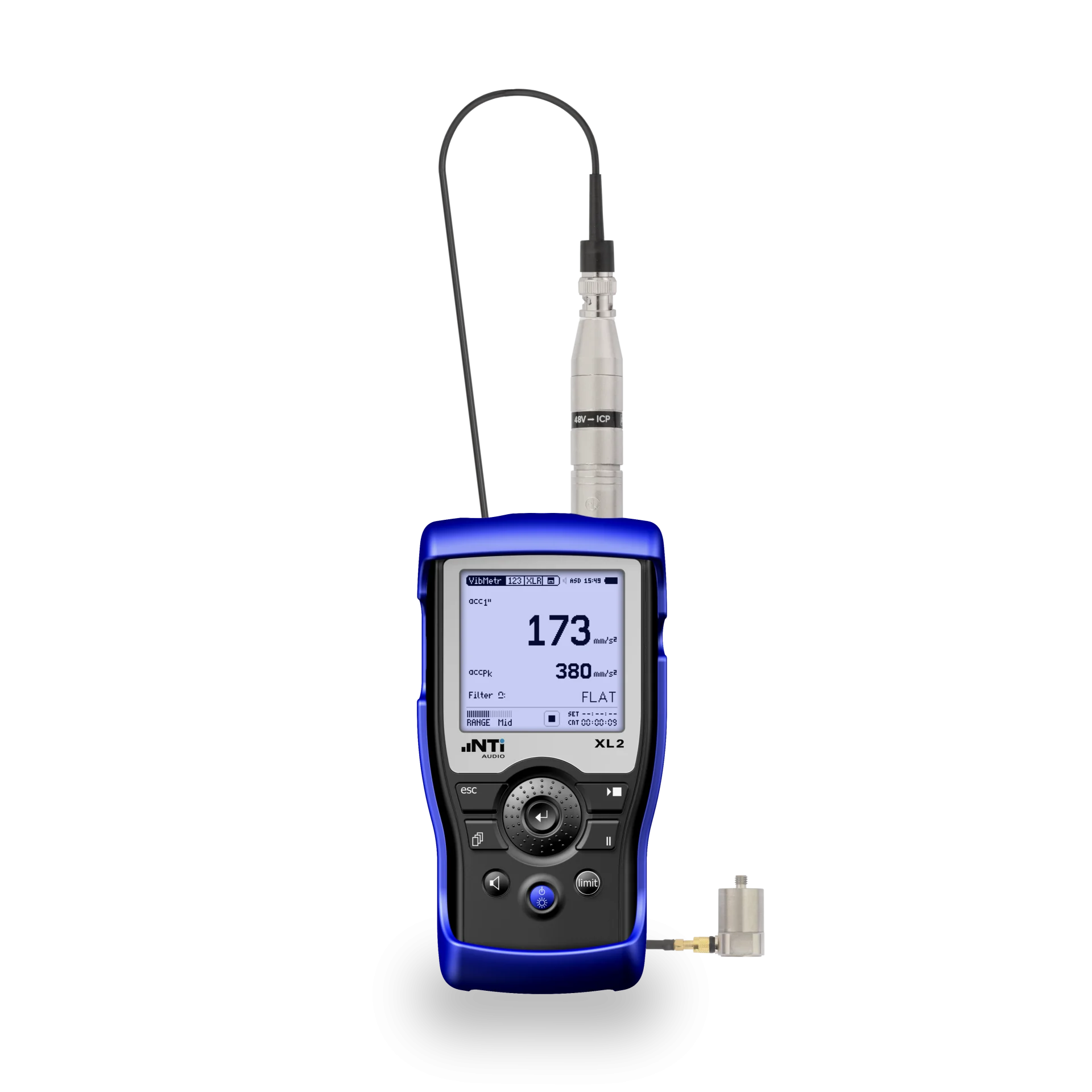
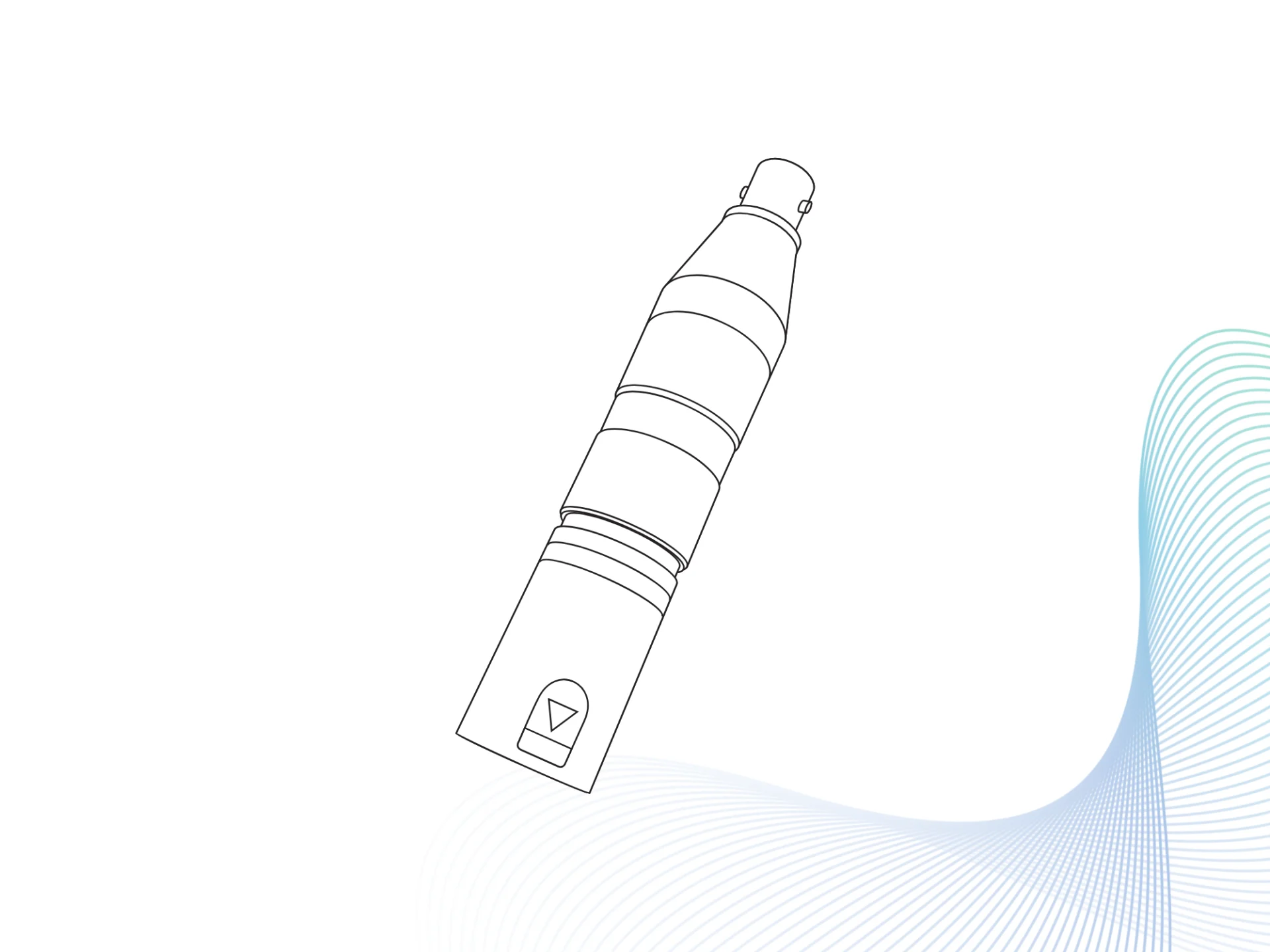
XL2 Vibration Meter ที่ต่อกับเซนเซอร์ และภาพลายเส้น ICP Adapter ASD (ภาพ: NTi Audio)The XL2 Vibration Meter with a connected sensor, and a line drawing of the ICP Adapter ASD (images: NTi Audio)
ขั้นตอนการวัดMeasurement workflow
ขั้นตอนการวัดการสั่นสะเทือนVibration measurement workflow
- ยึด Accelerometer กับชิ้นงาน (สกรูหรือแม่เหล็ก ตามรุ่น)Mount the accelerometer on the object (screw or magnet, by type)
- ต่อผ่าน ICP Adapter ASD (จ่ายไฟ ICP อ่านความไวของเซนเซอร์)Connect via the ICP Adapter ASD (ICP power, sensor sensitivity)
- XL2 + XL2 Vibration Option วัดความเร่ง ความเร็ว ระยะขจัดXL2 + XL2 Vibration Option measures acceleration, velocity, displacement
- วิเคราะห์ด้วย FFT / CPB / ScopeAnalyse with FFT / CPB / scope
- บันทึกลง SD card (ไฟล์ข้อความ, WAV)Log to the SD card (text files, WAV)
การยึดด้วยแม่เหล็ก: NTi แนะนำให้วางแม่เหล็กบนพื้นผิวก่อน แล้วจึงประกอบเซนเซอร์เข้ากับแม่เหล็ก เมื่อเก็บรักษาให้ถอดแม่เหล็กแบบถอดได้ออกจากเซนเซอร์และเก็บห่างกันเล็กน้อยMagnet mounting: NTi advises attaching the magnet to the surface first, then mounting the sensor on the magnet. For storage, unscrew the detachable magnet from the sensor and keep the two parts a few cm apart.
การติดตั้งเซนเซอร์Mounting practice
ติดตั้งเซนเซอร์ให้ได้ผลที่เชื่อถือได้Mounting for reliable results
การยึดเซนเซอร์เป็นสาเหตุความผิดพลาดที่พบบ่อยในงานวัดการสั่นสะเทือน ข้อแนะนำต่อไปนี้เป็นแนวปฏิบัติทั่วไปทางวิศวกรรม ร่วมกับข้อแนะนำของ NTi เรื่องแม่เหล็กSensor mounting is a common source of error in vibration measurement. The points below are general engineering practice, together with NTi's own advice on magnets.
ผิวสัมผัสContact surface
- ผิวเรียบ สะอาด ไม่มีสีหลุดร่อน สนิม หรือคราบน้ำมันหนาFlat and clean, without flaking paint, rust or thick oil films
- ฐานเซนเซอร์ต้องแนบสนิท ไม่โยกThe sensor base must sit fully flat without rocking
เลือกวิธียึดChoosing the fixing
- สกรู: แข็งแรงที่สุด เหมาะกับจุดวัดถาวรและความถี่สูง (A4580: M5, A97100: M3)Screw: the most rigid, for fixed positions and high frequencies (A4580: M5, A97100: M3)
- แม่เหล็ก: ย้ายจุดได้เร็วบนเหล็ก (KS901MF ในตัว 45 N; A4580 / A97100 แบบถอดได้)Magnet: fast moves between points on steel (KS901MF built-in, 45 N; detachable for the A4580 / A97100)
- แนวทางทั่วไป: ยิ่งการยึดแข็งน้อย ความถี่สูงสุดที่วัดได้อย่างเชื่อถือได้ยิ่งต่ำลงGeneral guidance: the less rigid the fixing, the lower the highest frequency that can be measured reliably
ทิศทางและตำแหน่งDirection and position
- แกนวัดของเซนเซอร์ต้องตรงกับทิศที่สนใจ และจดทิศไว้ทุกครั้งAlign the sensor's measuring axis with the direction of interest and always record it
- วัดซ้ำที่จุดเดิม ทิศเดิม เพื่อให้เปรียบเทียบข้ามช่วงเวลาได้Repeat measurements at the same point and direction so results can be compared over time
สายสัญญาณCable
- ยึดสายไว้กับชิ้นงานหรือโครงสร้างใกล้เซนเซอร์ ไม่ให้แกว่งหรือกระแทก เพราะการเคลื่อนที่ของสายสร้างสัญญาณปลอมได้Tie the cable to the object or structure near the sensor so it cannot swing or strike, as cable movement can create false signals
- NTi: เอาต์พุต ICP ช่วยให้ใช้สายยาวได้ในสภาพที่มีสัญญาณรบกวนทางไฟฟ้าสูงNTi: the ICP output makes long cables practical in harsh electromagnetic conditions
ตัวอย่างสถานการณ์: วัดพื้นห้องเครื่องที่สั่นความถี่ต่ำจากเครื่องสูบน้ำ พื้นเป็นคอนกรีตจึงใช้แม่เหล็กไม่ได้ วิศวกรตรวจก่อนว่าความถี่ที่สนใจอยู่ในย่านของเซนเซอร์ตามเกณฑ์ความคลาดเคลื่อนที่งานต้องการ (เช่น KS901MF: 0.6 Hz – 3 kHz ที่เกณฑ์ 5%) และในย่านของ XL2 จากนั้นยึดเซนเซอร์ผ่านแผ่นเหล็กที่ติดแน่นกับพื้น แล้วจดทิศแนวดิ่งไว้ในรายงานExample scenario: a plant-room floor vibrates at low frequency from a pump. The floor is concrete, so a magnet cannot be used directly. The engineer first checks that the frequencies of interest lie within the sensor's range at the tolerance the job needs (e.g. KS901MF: 0.6 Hz – 3 kHz at 5 %) and within the XL2's range, then fixes the sensor through a steel plate bonded firmly to the floor and records the vertical direction in the report.
การสอบเทียบCalibration
ค่าความไวและการสอบเทียบSensitivity and calibration
ใช้ค่าความไวของเซนเซอร์ตัวจริงUse the individual sensor's sensitivity
ความไวใน Data sheet เป็นค่าทั่วไป (typ.) ที่มีความคลาดเคลื่อน ±20% ค่าความไวของเซนเซอร์แต่ละตัวที่เก็บใน ICP Adapter ASD จึงเป็นค่าที่ XL2 ใช้คำนวณผลThe data-sheet sensitivity is a typical value with ±20% tolerance, so the individual sensor's sensitivity stored in the ICP Adapter ASD is what the XL2 uses.
ตั้งค่าใน XL2Setting it on the XL2
- ทำ User calibration หรือกรอกค่าความไวตามสเปกของเซนเซอร์ในเมนู CalibrateRun a user calibration or enter the sensitivity from the sensor specification in the Calibrate menu
- บันทึกหมายเลขเครื่องของเซนเซอร์ลงอะแดปเตอร์ด้วย XL2 Projector PRO (V1.50 ขึ้นไป)Write the sensor serial number to the adapter with XL2 Projector PRO (V1.50 or higher)
- ตั้งหมายเลขเครื่องก่อนเสมอ เพราะการตั้งหมายเลขเครื่องจะลบ User calibrationAlways set the serial number first: setting it deletes the user calibration
รอบการสอบเทียบCalibration interval
เอกสารของ NTi Audio ไม่ได้ระบุรอบการสอบเทียบ Accelerometer ปรึกษาวิศวกร GET BEST SOUND เรื่องการตรวจสอบเซนเซอร์ก่อนใช้งานNTi Audio's documents state no accelerometer calibration interval. Ask GET BEST SOUND engineers about checking the sensor before use.
อ่านก่อนตัดสินใจLearn before you buy
ความรู้ที่เกี่ยวข้องRelated background
วิธีเลือก AccelerometerHow to choose an accelerometer
บทความเต็มเรื่องการเลือกเซนเซอร์ตามงานThe full article on choosing a sensor for the task
อ่านบทความ →Read the article →พื้นฐานการสั่นสะเทือนVibration basics
ความเร่ง ความเร็ว การกระจัด และความถี่Acceleration, velocity, displacement and frequency
อ่านบทความ →Read the article →วัดการสั่นสะเทือนในอาคารและงานก่อสร้างBuilding and construction vibration
วิธีการตรวจวัดตั้งแต่วางแผนถึงรายงานApplication guide from planning to report
อ่านคู่มือ →Read the guide →ความไม่แน่นอนของการวัดMeasurement uncertainty
ทำไมค่าความไวและการติดตั้งจึงมีผลต่อผลWhy sensitivity and mounting affect the result
อ่านบทความ →Read the article →Learn more
เรียนรู้เพิ่มเติมLearn more
บทความความรู้ มาตรฐาน และกรณีศึกษาที่อธิบายเรื่องนี้ตั้งแต่พื้นฐานKnowledge articles, standards and case studies that explain this from the basics
วิธีการตรวจวัด: โจทย์ ขั้นตอน เครื่องมือ และการอ่านผลApplication guide: task, workflow, equipment and interpretation
วิธีเลือก Accelerometer สำหรับวัดการสั่นสะเทือนHow to choose an accelerometerความไว ช่วงความถี่ วิธียึด และปัจจัยอื่นในการเลือก accelerometerSensitivity, frequency range, mounting and the other factors in choosing an accelerometer
แรงสั่นสะเทือนเบื้องต้น: ความเร่ง ความเร็ว การกระจัดVibration basics: acceleration, velocity, displacementความเร่ง ความเร็ว การกระจัด Accelerometer และการประเมินอาคารกับความสบายของคนAcceleration, velocity, displacement, accelerometers, and assessing buildings versus human comfort
DIN 4150 — การสั่นสะเทือนในอาคารDIN 4150 — Vibrations in buildingsมาตรฐานเยอรมันเรื่องการสั่นสะเทือนในอาคาร: ผลต่อคน (ส่วนที่ 2) และโครงสร้าง (ส่วนที่ 3)German standard on building vibration: effects on people (Part 2) and structures (Part 3)
ISO 2631 — การประเมินการสั่นสะเทือนทั้งตัวที่มีผลต่อคนISO 2631 — Evaluation of human exposure to whole-body vibrationประเมินการสั่นสะเทือนทั้งตัวต่อสุขภาพและความสบาย ทั้งในยานพาหนะและในอาคารWhole-body vibration and its effect on health and comfort, in vehicles and buildings
Engineering support
ต้องการจัดชุดวัดการสั่นสะเทือนให้ตรงกับงาน?Need a vibration measurement set for your work?
ทีมวิศวกร GET BEST SOUND ช่วยเลือกอุปกรณ์ จัดชุดระบบ และวางขั้นตอนการวัดให้ตรงกับงานของคุณGET BEST SOUND engineers help with product selection, system configuration and the measurement workflow for your work.
FAQ
คำถามที่พบบ่อยFrequently asked questions
ต้องใช้อะไรบ้างในการวัดการสั่นสะเทือนด้วย XL2?What do I need to measure vibration with the XL2?
XL2 ที่มี XL2 Vibration Option, ICP Adapter ASD และ Accelerometer ชุด XL2 Vibration Meter Kit รวม XL2 Analyzer, Vibration Meter Option, ICP Adapter ASD, Accelerometer A4580 และ Exel System CaseAn XL2 with the XL2 Vibration Option, the ICP Adapter ASD and an accelerometer. The XL2 Vibration Meter kit includes the XL2 Analyzer, Vibration Meter Option, ICP Adapter ASD, Accelerometer A4580 and Exel System Case.
A4580 ในชุด Kit วัดความถี่ต่ำได้แค่ไหน?How low in frequency does the kit's A4580 go?
ตาม Product Data ของ NTi ย่านความถี่ของ A4580 คือ 3 Hz – 15 kHz ที่เกณฑ์ 3 dB, 6 Hz – 10 kHz ที่เกณฑ์ 10% และ 9 Hz – 7 kHz ที่เกณฑ์ 5% ส่วน XL2 ในโหมด Vibration มี Bandwidth (–3 dB) เริ่มที่ 0.7 Hz ย่านที่ใช้ได้จริงของระบบจึงถูกจำกัดทั้งโดยเซนเซอร์และเครื่องวัด หากความถี่ที่สนใจต่ำกว่าย่านของ A4580 ตามเกณฑ์ที่งานต้องการ KS901MF (0.6 Hz ที่เกณฑ์ 5%) และ A97100 (0.45 Hz ที่เกณฑ์ 5%) ลงได้ต่ำกว่า แต่ควรเลือกรุ่นโดยดูมวลเซนเซอร์ ระดับการสั่น และวิธีติดตั้งร่วมด้วยPer NTi's Product Data the A4580 covers 3 Hz – 15 kHz at 3 dB tolerance, 6 Hz – 10 kHz at 10 % and 9 Hz – 7 kHz at 5 %. The XL2 in vibration mode has a –3 dB bandwidth starting at 0.7 Hz, so the usable range is limited by both the sensor and the instrument. If the frequencies of interest lie below the A4580's range at the tolerance the job needs, the KS901MF (0.6 Hz at 5 %) and A97100 (0.45 Hz at 5 %) reach lower, but the choice should also weigh sensor mass, vibration level and mounting.
ใช้ XL3 วัดการสั่นสะเทือนได้ไหม?Can the XL3 measure vibration?
ไม่ได้ตามเอกสารของ NTi Audio: Data sheet ของ ICP Adapter ASD ระบุการวัดการสั่นสะเทือนสำหรับ XL2 เท่านั้น ส่วน XL3 ใช้อะแดปเตอร์นี้กับงานวัดเสียง สำหรับการเฝ้าระวังการสั่นสะเทือนระยะยาว NTi Audio มี GSS 5GV Vibration MonitorNot according to NTi Audio's documents: the ICP Adapter ASD data sheet lists vibration measurement for the XL2 only; with the XL3 the adapter is for acoustic measurements. For long-term vibration monitoring NTi Audio offers the GSS 5GV Vibration Monitor.
ใช้เซนเซอร์ของผู้ผลิตอื่นได้ไหม?Can I use sensors from other manufacturers?
NTi Audio ระบุว่า ICP Adapter ASD จ่ายไฟให้ Accelerometer หรือเซนเซอร์แบบ ICP อื่น และเก็บค่าความไวกับหมายเลขเครื่องของเซนเซอร์ที่ต่ออยู่ ปรึกษาวิศวกรเพื่อตรวจสอบความเข้ากันได้ของเซนเซอร์ที่คุณมีNTi Audio states that the ICP Adapter ASD powers an accelerometer or other ICP-type sensor and stores the connected sensor's sensitivity and serial number. Ask our engineers to check the compatibility of your sensor.
วัดหลายแกนพร้อมกันได้ไหม?Can I measure several axes at once?
XL2 Vibration Meter เป็นเครื่องช่องเดียว และ Accelerometer ของ NTi เป็นแบบแกนเดียว จึงวัดได้ทีละแกนต่อหนึ่งการวัด งานที่ต้องการ 3 แกนพร้อมกันแบบติดตั้งค้าง ดู GSS 5GVThe XL2 Vibration Meter is single-channel and NTi's accelerometers are uniaxial, so one measurement covers one axis. For simultaneous three-axis, unattended monitoring see the GSS 5GV.
ใช้แม่เหล็กยึดบนพื้นคอนกรีตหรืออะลูมิเนียมได้ไหม?Can a magnet be used on concrete or aluminium?
แม่เหล็กยึดได้เฉพาะผิวเหล็ก สำหรับผิวอื่นให้ยึดด้วยสกรู (A4580: M5, A97100: M3) หรือยึดผ่านแผ่นเหล็กที่ติดแน่นกับผิวชิ้นงาน ตามแนวปฏิบัติทั่วไปA magnet only holds on steel. On other surfaces, screw the sensor (A4580: M5, A97100: M3) or, as general practice, mount it through a steel plate firmly bonded to the surface.
ความไว 80 mV/g กับ 100 mV/g ต่างกันมากไหม?Is 80 mV/g versus 100 mV/g a big difference?
ต่างกันประมาณ 2 dB ในระดับสัญญาณ ซึ่งมีผลน้อยกว่าการเลือกย่านความถี่ ช่วงการวัด และวิธียึดให้ถูกกับงาน สิ่งสำคัญกว่าคือใช้ค่าความไวของเซนเซอร์ตัวจริงที่เก็บใน ICP Adapter ASDIt is about 2 dB of signal level, which matters less than choosing the right frequency range, measurement range and mounting for the task. More important is using the individual sensor's sensitivity stored in the ICP Adapter ASD.
ต้องการวัดการสั่นสะเทือนของเครื่องจักรหรือโครงสร้าง?Need to measure machine or structural vibration?
ให้วิศวกร GET BEST SOUND ช่วยเลือก Accelerometer จัดชุด XL2 Vibration Meter และวางขั้นตอนการวัดให้ตรงกับงานLet GET BEST SOUND engineers choose the accelerometer, configure the XL2 Vibration Meter and plan the measurement for your work.