โจทย์การวัดThe measurement problem
ผู้ผลิตต้องการประกาศค่าเสียงของเครื่องในเอกสารหรือฉลาก ผู้ซื้อต้องการเปรียบเทียบเครื่องจากผู้ขายหลายราย หรือวิศวกรต้องการข้อมูลตั้งต้นเพื่อคำนวณว่าเครื่องกำเนิดไฟฟ้า ปั๊มลม หรือพัดลม จะทำให้ห้องข้างเคียงหรือแนวรั้วโรงงานดังเท่าไร ทุกโจทย์ต้องการตัวเลขที่ไม่ขึ้นกับระยะและห้องที่วัด ตัวเลขนั้นคือกำลังเสียง ค่า “dB(A) ที่ 1 เมตร” ในเอกสารบางฉบับตอบโจทย์นี้ไม่ได้ เพราะเปลี่ยนตามห้อง พื้น และทิศที่วัดA manufacturer needs to declare a machine's noise in documents or on a label; a buyer wants to compare machines from several suppliers; an engineer needs input data to calculate how loud a generator, compressor or fan will make a neighbouring room or the factory fence. Each needs a number that does not depend on the distance or the room of the measurement: the sound power. A “dB(A) at 1 metre” figure in a data sheet cannot answer this, because it changes with the room, the floor and the direction measured.
ทำไมจึงยากWhy it is difficult
- สภาวะการเดินเครื่อง โหลด รอบ หรือโหมดต่างกัน เสียงก็ต่างกัน ต้องกำหนดและบันทึกให้ชัดOperating condition: different loads, speeds or modes give different noise, so the condition must be fixed and recorded.
- เสียงพื้นหลัง ในโรงงานหรือริมถนน เสียงอื่นอาจดังใกล้กับเครื่องที่ทดสอบBackground noise: in a factory or near a road, other sound may be close to the machine's level.
- เสียงสะท้อน ผนังและเพดานทำให้ความดันเสียงรอบเครื่องสูงกว่าในที่โล่งReflections: walls and ceilings raise the pressure around the machine compared with the open.
- ขนาดและทิศทางการแผ่เสียง เครื่องใหญ่หรือยาวแผ่เสียงไม่เท่ากันทุกด้าน ต้องมีตำแหน่งวัดมากพอSize and directivity: large or long machines radiate unevenly and need enough positions.
- เสียงที่เปลี่ยนตามเวลา เช่น ปั๊มลมที่ตัดต่อเป็นช่วง ต้องวัดให้ครอบคลุมรอบการทำงานTime-varying noise: e.g. a compressor that loads and unloads; the measurement must cover the cycle.
เลือกวิธี: สามแนวทางและระดับความแม่นยำChoosing a method: three families and grades of accuracy
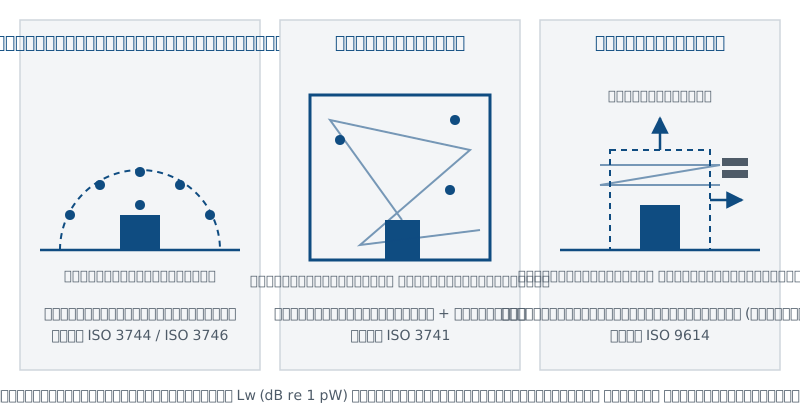
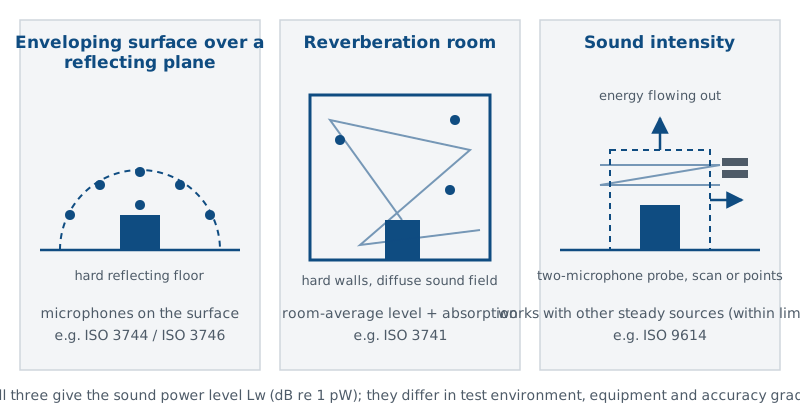
| แนวทางFamily | สภาพแวดล้อมEnvironment | เหมาะกับSuits | ตัวอย่างมาตรฐานExamples |
|---|---|---|---|
| พื้นผิวล้อมรอบ (ความดันเสียง)Enveloping surface (pressure) | สภาพแวดล้อมEnvironmentพื้นแข็งสะท้อนเสียง เสียงสะท้อนด้านอื่นน้อย: ห้องใหญ่ ห้องกึ่งไร้เสียงสะท้อน หรือกลางแจ้งHard reflecting floor, few other reflections: large room, hemi-anechoic room or outdoors | เหมาะกับSuitsเครื่องจักรส่วนใหญ่ งานในสนามMost machines; field work | ตัวอย่างมาตรฐานExamplesISO 3744 (วิศวกรรม), ISO 3746 (สำรวจ), ISO 3745 (แม่นยำสูง ในห้องไร้เสียงสะท้อนหรือกึ่งไร้เสียงสะท้อน)ISO 3744 (engineering), ISO 3746 (survey), ISO 3745 (precision, anechoic or hemi-anechoic room) |
| ห้องเสียงก้อง (ความดันเสียง)Reverberation room (pressure) | สภาพแวดล้อมEnvironmentห้องทดสอบผนังแข็ง สนามเสียงกระจายHard-walled test room, diffuse field | เหมาะกับSuitsผลิตภัณฑ์เล็กถึงกลางในห้องแล็บSmall to medium products in a laboratory | ตัวอย่างมาตรฐานExamplesISO 3741 (แม่นยำสูง), ISO 3743 (วิศวกรรม), ISO 3747 (ในสถานที่จริง เทียบกับต้นเสียงอ้างอิง)ISO 3741 (precision), ISO 3743 (engineering), ISO 3747 (in situ, compared with a reference sound source) |
| ความเข้มเสียงSound intensity | สภาพแวดล้อมEnvironmentสถานที่จริง แม้มีเครื่องอื่นเดินคงที่ ภายในขอบเขตของตัวชี้วัดคุณภาพIn situ, even with other steady machines, within the field-indicator limits | เหมาะกับSuitsเครื่องใหญ่ที่ย้ายไม่ได้Large machines that cannot be moved | ตัวอย่างมาตรฐานExamplesISO 9614-1, -2, -3ISO 9614-1, -2, -3 |
ระดับความแม่นยำ มีสามระดับ คือ แม่นยำสูง (precision) วิศวกรรม (engineering) และสำรวจ (survey) ยิ่งระดับสูง มาตรฐานยิ่งต้องการสภาพห้อง เสียงพื้นหลัง และจำนวนตำแหน่งที่เข้มงวดกว่า และความไม่แน่นอนของผลต่ำกว่า งานประกาศค่าเสียงหรือเทียบกับขีดจำกัดมักใช้ระดับวิศวกรรมขึ้นไป ส่วนระดับสำรวจเหมาะกับการคัดกรอง ถ้าผลิตภัณฑ์มี noise test code ให้ทำตาม test code ก่อน เพราะกำหนดทั้งมาตรฐานพื้นฐาน การติดตั้ง และสภาวะการเดินเครื่อง ถ้าไม่มี ใช้คู่มือ ISO 3740 ช่วยเลือกวิธีThere are three grades of accuracy: precision, engineering and survey. The higher the grade, the stricter the demands on the room, background noise and number of positions, and the lower the uncertainty. Declarations and comparisons against limits usually need engineering grade or better; survey grade suits screening. If the product has a noise test code, follow it first: it sets the basic standard, the mounting and the operating condition. If there is none, use the ISO 3740 guide to choose.
หลักการวัดและการคำนวณMeasurement principle and calculation
วิธีพื้นผิวล้อมรอบใช้มากที่สุดในงานภาคสนาม เราสมมุติพื้นผิวที่ล้อมเครื่องไว้ เช่น ครึ่งทรงกลม หรือกล่องที่ห่างเครื่องเป็นระยะหนึ่ง พลังงานเสียงทั้งหมดต้องผ่านพื้นผิวนี้ เมื่อวัดความดันเสียงหลายจุดบนพื้นผิว หาค่าเฉลี่ย และรู้พื้นที่ ก็คำนวณกำลังเสียงได้The enveloping-surface method is the most used in field work. We imagine a surface enclosing the machine, such as a hemisphere or a box at a set distance. All the acoustic energy must pass through it. Measuring sound pressure at many points on the surface, averaging and knowing the area gives the sound power.
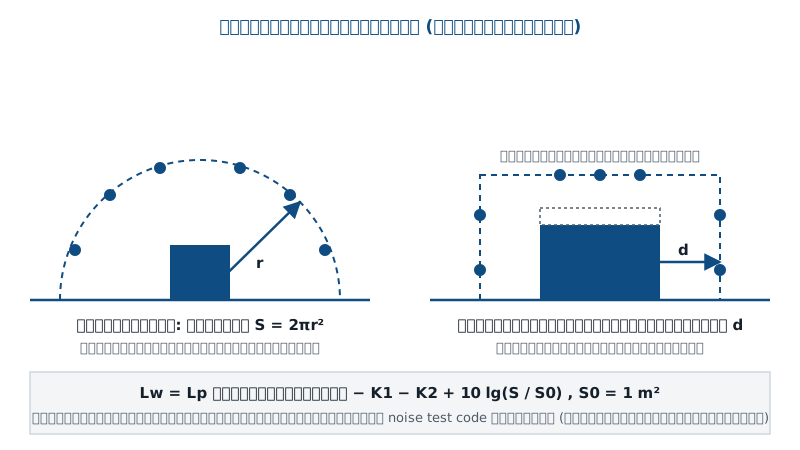
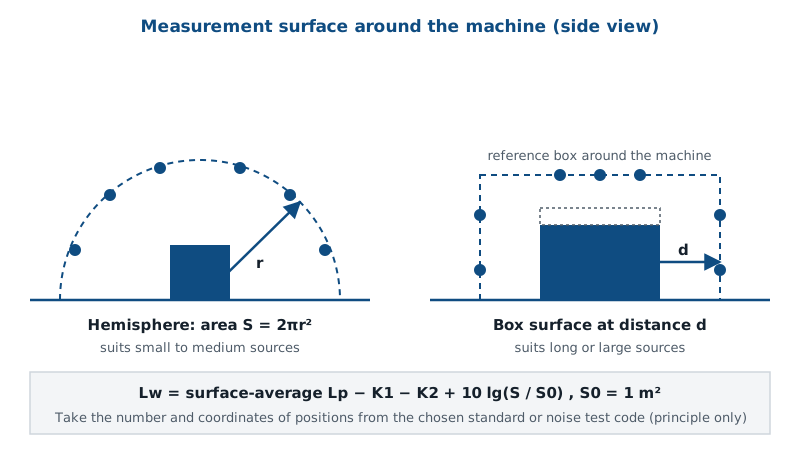
สำหรับวิธีพื้นผิวล้อมรอบ (ISO 3744, ISO 3746) สมการคือ Lw = Lp เฉลี่ยบนพื้นผิว − K1 − K2 + 10 lg(S/S0) โดย S คือพื้นที่พื้นผิววัด (m²) และ S0 = 1 m² ค่าเฉลี่ยของ Lp ต้องเป็น ค่าเฉลี่ยเชิงพลังงาน ไม่ใช่เฉลี่ยตัวเลขเดซิเบลตรง ๆ ผลมักรายงานเป็นค่ารวมถ่วงน้ำหนัก A (LWA) และค่ารายย่านออกเตฟหรือ 1/3 ออกเตฟ วิธีห้องเสียงก้องคำนวณจากระดับเฉลี่ยในห้องกับการดูดซับเสียงของห้อง (หรือเทียบกับต้นเสียงอ้างอิง) ส่วนวิธีความเข้มเสียงรวมความเข้มเสียงที่ตั้งฉากกับพื้นผิววัดคูณพื้นที่ย่อยแต่ละส่วน และใช้ตัวชี้วัดคุณภาพของสนามเสียงแทน K1/K2 ในรูปนี้For the enveloping-surface methods (ISO 3744, ISO 3746) the equation is Lw = surface-average Lp − K1 − K2 + 10 lg(S/S0), where S is the measurement surface area (m²) and S0 = 1 m². The average Lp must be an energy average, not an arithmetic average of decibel numbers. Results are usually reported as an overall A-weighted value (LWA) and per octave or 1/3-octave band. Reverberation-room methods work from the room-average level and the room absorption (or by comparison with a reference sound source); the intensity method sums the normal sound intensity times each partial area of the measurement surface and relies on field indicators rather than K1/K2 in this form.
- K1: ค่าแก้เสียงพื้นหลังK1: background noise correction
- วัดขณะเครื่องทำงาน แล้ววัดซ้ำขณะปิดเครื่อง K1 = −10 lg(1 − 10^(−0.1ΔL)) dB (การหักพลังงาน) ยิ่งผลต่าง ΔL น้อย K1 ยิ่งมาก มาตรฐานกำหนดผลต่างขั้นต่ำ ถ้าต่ำกว่านั้นผลอาจใช้ได้เพียงเป็นค่าขอบบนMeasure with the machine running, then with it off; K1 = −10 lg(1 − 10^(−0.1ΔL)) dB (energy subtraction). The smaller the difference ΔL, the larger K1. The standard sets a minimum difference; below it, the result may only be an upper limit.
- K2: ค่าแก้สภาพแวดล้อมK2: environmental correction
- หักผลของเสียงสะท้อน ประเมินจากการดูดซับเสียงของห้อง (เช่น จากเวลาเสียงก้องและปริมาตร) เทียบกับขนาดพื้นผิววัด หรือใช้ต้นเสียงอ้างอิง กลางแจ้งบนพื้นแข็งที่ห่างจากวัตถุสะท้อนอื่น K2 ใกล้ศูนย์ แต่ละวิธีกำหนด K2 สูงสุดที่ยอมรับได้Removes the effect of reflections, estimated from the room absorption (e.g. from reverberation time and volume) relative to the surface size, or with a reference source. Outdoors over a hard surface away from other reflecting objects, K2 is close to zero; each method sets the largest K2 it accepts.
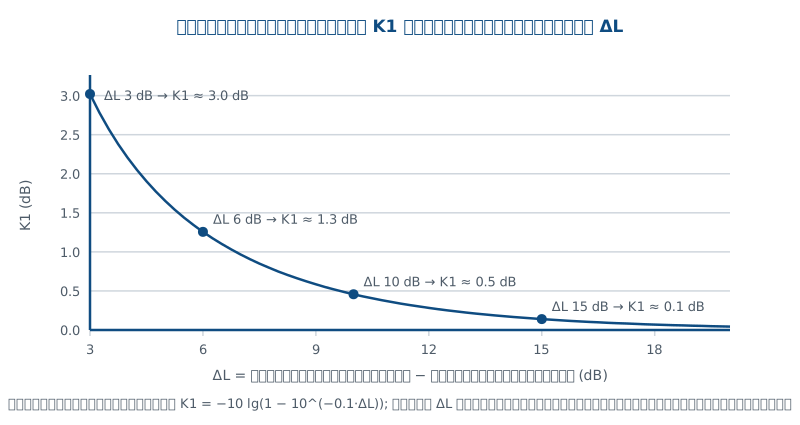
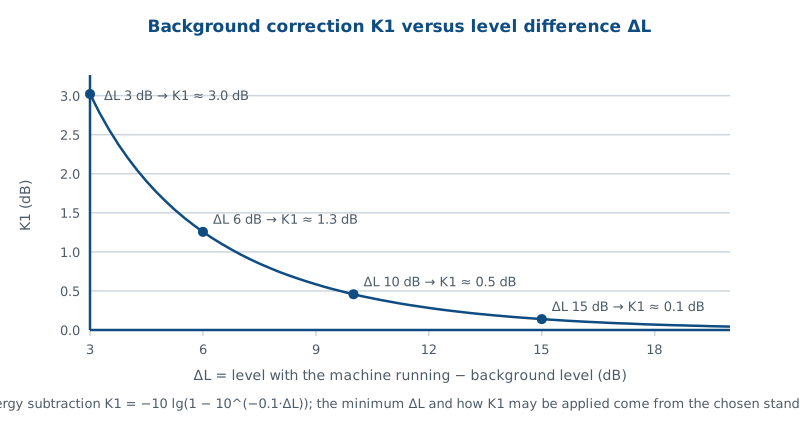
ไมโครโฟนบนครึ่งทรงกลมรัศมี 2 m: S = 2πr² ≈ 25.1 m² จึงได้ 10 lg(25.1) ≈ 14.0 dB สมมุติค่าเฉลี่ยเชิงพลังงานบนพื้นผิว 72 dB(A) เสียงพื้นหลังต่ำกว่า 10 dB ทำให้ K1 = −10 lg(1 − 0.1) ≈ 0.5 dB และวัดกลางแจ้ง K2 ≈ 0 ดังนั้น LWA ≈ 72 − 0.5 + 14.0 ≈ 85.5 dB (ตัวเลขใช้อธิบายการคำนวณเท่านั้น)Microphones on a hemisphere of radius 2 m: S = 2πr² ≈ 25.1 m², so 10 lg(25.1) ≈ 14.0 dB. Suppose the energy-average surface level is 72 dB(A) and the background is 10 dB lower, so K1 = −10 lg(1 − 0.1) ≈ 0.5 dB, and the test is outdoors, so K2 ≈ 0. Then LWA ≈ 72 − 0.5 + 14.0 ≈ 85.5 dB. (Numbers to explain the calculation only.)
ขั้นตอนการทำงานTypical workflow
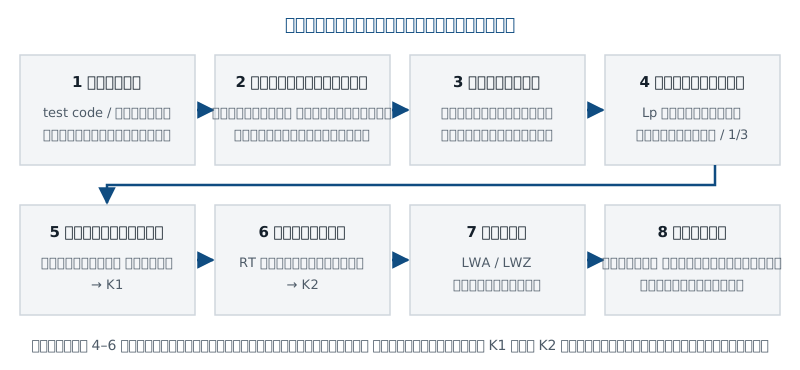
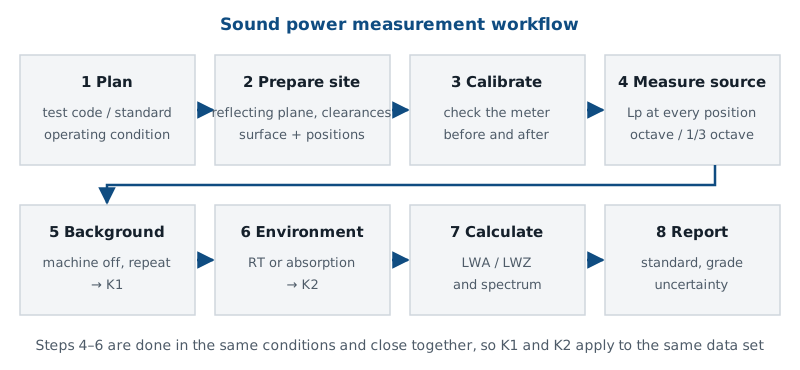
- วางแผน ใช้ผลทำอะไร test code หรือมาตรฐานใด ระดับความแม่นยำใด และสภาวะการเดินเครื่องใดPlan: what the result is for, which test code or standard, which grade and which operating condition.
- เตรียมพื้นที่ พื้นแข็งเรียบ ห่างผนังและวัตถุสะท้อน ตรวจเสียงพื้นหลังและลม (กลางแจ้งใช้ที่กันลม) กำหนดพื้นผิววัดและตำแหน่งตามมาตรฐานPrepare the site: flat hard floor away from walls and reflecting objects; check background and wind (windscreen outdoors); set out the surface and positions per the standard.
- สอบเทียบ เครื่องวัดด้วยเครื่องสอบเทียบเสียงก่อนวัด และตรวจซ้ำหลังวัดCalibrate the meter with a sound calibrator before measuring and check again afterwards.
- วัดเครื่อง เมื่อเครื่องเดินคงที่แล้ว วัด Leq รายย่านทุกตำแหน่ง นานพอให้ค่าคงที่หรือครอบคลุมรอบการทำงานMeasure the source once it runs steadily: band Leq at every position, long enough to be stable or to cover the duty cycle.
- วัดเสียงพื้นหลัง ที่ตำแหน่งเดิมขณะปิดเครื่อง ใกล้เวลากับการวัดเครื่องที่สุดMeasure the background at the same positions with the machine off, as close in time as possible.
- ประเมินสภาพแวดล้อม ในห้องวัดเวลาเสียงก้องหรือใช้ต้นเสียงอ้างอิงเพื่อหา K2Assess the environment: indoors, measure reverberation time or use a reference source for K2.
- คำนวณและตรวจเกณฑ์ ถ้า K1 หรือ K2 ไม่ผ่านเกณฑ์ ให้แก้การจัดวัดหรือประกาศระดับความแม่นยำที่ต่ำลงCalculate and check: if K1 or K2 fails the criteria, change the set-up or declare a lower grade.
- รายงาน ตามหัวข้อถัดไปReport as described next.
อุปกรณ์ที่ต้องใช้Equipment
ชุดวัดทั่วไป: เครื่องวัดระดับเสียงที่วิเคราะห์ย่านออกเตฟหรือ 1/3 ออกเตฟได้ (มาตรฐานพื้นฐานอ้าง IEC 61672-1 โดย Class ขึ้นกับระดับความแม่นยำ) ไมโครโฟนวัดเสียงพร้อมที่กันลม เครื่องสอบเทียบเสียงตาม IEC 60942 ขาตั้งและตลับเมตร ต้นเสียงสำหรับวัดเวลาเสียงก้องเมื่อวัดในห้อง และซอฟต์แวร์คำนวณและทำรายงาน ไมโครโฟนหลายตัวพร้อมกันช่วยลดเวลา แต่ถ้าเครื่องเดินคงที่ วัดทีละตำแหน่งด้วยไมโครโฟนตัวเดียวก็ได้General measurement chain: a sound level meter with octave or 1/3-octave analysis (the basic standards refer to IEC 61672-1, the class depending on the grade), a measurement microphone with windscreen, a sound calibrator to IEC 60942, stands and a tape measure, a sound source for reverberation time when measuring indoors, and software for calculation and reporting. Several microphones save time, but if the machine runs steadily one microphone moved between positions also works.
ระบบของ NTi Audio ตามที่ NTi ระบุ: ชุด XL2 Sound Power Measurement Kit ประกอบด้วย XL2 Audio and Acoustic Analyzer, XL2 Extended Acoustic Pack (เวลาเสียงก้องและกำลังเสียงความละเอียด 1/3 ออกเตฟ), ไลเซนส์ Sound Power Reporter 365 และไมโครโฟน M2230 พร้อมที่กันลมและสาย ASD XL2 วัดสเปกตรัมของเครื่อง เสียงพื้นหลัง และเวลาเสียงก้อง จากนั้นซอฟต์แวร์ Sound Power Reporter บน PC (Windows) แยกข้อมูลเครื่องกับเสียงพื้นหลัง คำนวณ K1 และ K2 และแสดง LWA หรือ LWZ แบบค่ารวม 1/1 และ 1/3 ออกเตฟ ช่วง 50 Hz ถึง 10 kHz NTi ระบุมาตรฐาน ISO 3741, ISO 3744, ISO 3746 และ ANSI-ASA S12.51, S12.54, S12.56 แต่ไม่ได้ระบุ ISO 9614 หรือ ISO 3745 เครื่องสอบเทียบเสียงและ XL2 Type Approval Option เป็นรายการเสริมตามความจำเป็นNTi Audio system, as stated by NTi: the XL2 Sound Power Measurement Kit contains the XL2 Audio and Acoustic Analyzer, the XL2 Extended Acoustic Pack (reverberation time and 1/3-octave sound power), a Sound Power Reporter 365 licence and an M2230 microphone with windscreen and ASD cable. The XL2 measures the machine spectrum, the background and the reverberation time; the Sound Power Reporter PC software (Windows) then sorts machine and background data, calculates K1 and K2, and shows LWA or LWZ as broadband, 1/1 and 1/3-octave values from 50 Hz to 10 kHz. NTi lists ISO 3741, ISO 3744, ISO 3746 and ANSI-ASA S12.51, S12.54, S12.56, but not ISO 9614 or ISO 3745. A sound calibrator and the XL2 Type Approval Option are optional as needed.
XL3: หน้า XL3 ของ NTi แสดงซอฟต์แวร์นี้ แต่หน้าซอฟต์แวร์และ Product Data ระบุเฉพาะ XL2 การใช้กับ XL3 จึง “ยังไม่ได้ยืนยัน” ควรสอบถามก่อนสั่งซื้อ ส่วน Noise Locator NL1 ใช้หลักความเข้มเสียงเพื่อบอกทิศทางเท่านั้น NTi ไม่ได้ระบุว่าใช้หากำลังเสียงXL3: NTi's XL3 page shows this software, but the software page and Product Data name only the XL2, so XL3 use is “not confirmed”; ask before ordering. The Noise Locator NL1 uses intensity only to find direction; NTi does not state that it determines sound power.
การวิเคราะห์ผล การรายงาน และการประกาศค่าเสียงAnalysis, reporting and noise declarations
- สเปกตรัม ย่านที่เด่นบอกว่าควรลดเสียงที่ส่วนใด และเป็นข้อมูลที่แบบจำลองเสียงต้องการSpectrum: the dominant bands show where noise control should act, and are what noise models need.
- ความต่างระหว่างตำแหน่ง ด้านที่ดังกว่ามากบอกทิศทางการแผ่เสียง ใช้วางเครื่องให้หันด้านเงียบเข้าหาเพื่อนบ้านSpread between positions: a much louder side shows directivity and helps orient the quiet side towards neighbours.
- ขนาดของ K1 และ K2 ค่าที่ใหญ่แสดงว่าผลพึ่งการแก้ค่ามาก ควรพิจารณาย้ายที่หรือเวลาวัดSize of K1 and K2: large values mean the result relies heavily on corrections; consider another place or time.
รายงานควรระบุ มาตรฐานและ test code ระดับความแม่นยำ เครื่องและสภาวะการเดินเครื่อง สภาพแวดล้อมและพื้นผิววัด ตำแหน่งไมโครโฟน เครื่องมือและการสอบเทียบ เสียงพื้นหลัง K1 K2 ผลรวมและสเปกตรัม และความไม่แน่นอนThe report should state the standard and test code, the grade, the machine and operating condition, the environment and measurement surface, microphone positions, instruments and calibration, background noise, K1 and K2, the overall result and spectrum, and the uncertainty.
การประกาศค่าเสียง: ISO 4871 อธิบายการประกาศและตรวจสอบค่าการปล่อยเสียงของเครื่องจักร เป็นค่าคู่ (ค่าที่วัดได้ L กับความไม่แน่นอน K) หรือค่าเดียว Ld = L + K ซึ่งเป็นค่าขอบบน ตัวอย่างจากสหภาพยุโรป: Directive 2000/14/EC สำหรับอุปกรณ์ที่ใช้กลางแจ้ง ครอบคลุมเครื่องกำเนิดไฟฟ้าและเครื่องอัดอากาศ และกำหนดให้ติดฉลากระดับกำลังเสียงที่รับประกัน ข้อกำหนดนี้ใช้กับอุปกรณ์ที่วางตลาดในสหภาพยุโรป (ตรวจฉบับที่มีผลปัจจุบันก่อนอ้างอิง) ไม่ใช่กฎหมายไทยNoise declaration: ISO 4871 covers declaring and verifying the noise emission of machinery, as a dual number (measured value L and uncertainty K) or a single number Ld = L + K, an upper limit. EU example: Directive 2000/14/EC on outdoor equipment covers power generators and compressors and requires a label with the guaranteed sound power level. It applies to equipment placed on the EU market (check the text currently in force before citing it); it is not Thai law.
มาตรฐานที่เกี่ยวข้อง: ISO 3740–3747 (จากความดันเสียง) ISO 9614 (จากความเข้มเสียง) ISO 4871 (การประกาศค่า) และ IEC 61672-1, IEC 61260-1, IEC 60942 (เครื่องมือ) ดูลิงก์ท้ายหน้าRelevant standards: ISO 3740–3747 (from sound pressure), ISO 9614 (from intensity), ISO 4871 (declaration) and IEC 61672-1, IEC 61260-1, IEC 60942 (instruments); see the links below.
ข้อผิดพลาดที่พบบ่อยCommon mistakes
- เฉลี่ยเดซิเบลแบบเลขคณิต ทำให้กำลังเสียงต่ำกว่าจริงเมื่อระดับระหว่างตำแหน่งต่างกันมากAveraging decibels arithmetically, which underestimates sound power when positions differ a lot.
- ไม่ควบคุมสภาวะการเดินเครื่อง แล้วนำผลไปเทียบกับค่าที่ผู้ผลิตประกาศNot controlling the operating condition, then comparing with the declared value.
- วัดเสียงพื้นหลังคนละช่วงเวลากับการวัดเครื่อง ทำให้ K1 ไม่ตรงกับสภาพจริงMeasuring the background at a different time from the machine, so K1 does not match.
- วางเครื่องชิดผนังหรือใต้หลังคา แต่คำนวณเหมือนอยู่ในที่โล่งPlacing the machine against a wall or under a roof but calculating as if in the open.
- นำตัวเลขกำลังเสียงไปเทียบกับเกณฑ์ระดับเสียงที่ผู้รับฟัง ซึ่งเป็นปริมาณคนละชนิดComparing sound power with a sound pressure limit at a receiver, a different quantity.
ตัวอย่างสถานการณ์: เครื่องกำเนิดไฟฟ้าดีเซลสำรองExample scenario: a standby diesel generator
โรงงานแห่งหนึ่งจะติดตั้งเครื่องกำเนิดไฟฟ้าดีเซลในตู้ครอบกันเสียงใกล้รั้วที่ติดหมู่บ้าน ผู้ขายให้เพียงค่า “dB(A) ที่ 7 m” โดยไม่ระบุสภาพการวัด ทีมวิศวกรจึงวัดกำลังเสียงของเครื่องจริงบนลานคอนกรีตกลางแจ้ง ใช้พื้นผิวแบบกล่องเพราะตู้มีลักษณะยาว เดินเครื่องที่โหลดคงที่ตามที่ตกลงกัน วัด Leq รายย่าน 1/3 ออกเตฟทุกตำแหน่ง แล้วปิดเครื่องวัดเสียงพื้นหลังจากถนนใกล้ ๆ ในช่วงเวลาเดียวกัน กลางแจ้งจึงถือ K2 ใกล้ศูนย์
ผลแสดงว่าด้านช่องลมระบายความร้อนและด้านท่อไอเสียดังกว่าด้านอื่นชัดเจน และพลังงานส่วนใหญ่อยู่ในย่านต่ำ ค่า LWA และสเปกตรัมถูกใช้ในแบบจำลองเสียงเพื่อประเมินระดับที่รั้ว จึงตัดสินใจหันช่องลมออกจากหมู่บ้านและเลือกท่อเก็บเสียงไอเสียที่ลดย่านต่ำได้ดี ถ้าเป็นปั๊มลมที่ตัดต่อเป็นช่วง ให้วัดครอบคลุมทั้งช่วงอัดและช่วงพัก หรือวัดแยกและรายงานทั้งสองค่า (สถานการณ์สมมุติเพื่ออธิบายวิธีการ ไม่ใช่โครงการจริงของ GET BEST SOUND)A factory will install a diesel generator in an acoustic enclosure near a fence bordering a village. The supplier only gives “dB(A) at 7 m” without conditions, so the engineering team measures the sound power of the actual unit on an outdoor concrete yard. A box-shaped surface is used because the enclosure is long; the unit runs at an agreed steady load; 1/3-octave Leq is measured at every position; then the unit is switched off and the background from a nearby road is measured in the same period. Being outdoors, K2 is taken as close to zero.
The cooling-air outlet side and the exhaust side are clearly louder than the others, and most energy is at low frequencies. The LWA and spectrum go into a noise model to estimate the level at the fence, which leads to turning the air outlet away from the village and choosing an exhaust silencer that performs well at low frequencies. For an air compressor that loads and unloads, cover both phases, or measure each separately and report both. (A hypothetical scenario to explain the method, not a real GET BEST SOUND project.)
คำถามที่พบบ่อยFrequently asked questions
วัดกำลังเสียงในโรงงานที่มีเครื่องอื่นเดินอยู่ได้หรือไม่Can sound power be measured in a factory with other machines running?
ได้ถ้าเครื่องที่วัดดังกว่าเสียงพื้นหลังพอตามเกณฑ์ของวิธีที่เลือก ถ้าไม่พอ วิธีความเข้มเสียง (ISO 9614) มักเหมาะกว่า แต่ก็มีข้อจำกัดเมื่อเสียงรบกวนดังมากหรือไม่คงที่Yes, if the machine is loud enough above the background for the chosen method. If not, the intensity method (ISO 9614) is often better, though it also has limits when extraneous noise is very loud or unsteady.
ใช้ห้องทั่วไปแทนห้องทดสอบได้หรือไม่Can an ordinary room replace a test room?
ได้ในหลายกรณี ถ้าวัดเวลาเสียงก้องเพื่อหา K2 และ K2 อยู่ในเกณฑ์ของวิธีที่เลือก ถ้าเกิน ผลอาจต้องลดเป็นระดับสำรวจหรือใช้ไม่ได้Often, yes, if the reverberation time is measured for K2 and K2 is within the method's limit. If not, the result may drop to survey grade or be invalid.
ค่ากำลังเสียงนำไปคำนวณระดับเสียงที่เพื่อนบ้านอย่างไรHow is sound power used to predict the level at a neighbour?
กำลังเสียงรายย่านเป็นข้อมูลเข้าของการคำนวณการแผ่กระจายของเสียง ซึ่งคิดระยะทาง การดูดซับของอากาศ พื้นดิน สิ่งกีดขวาง และทิศทางการแผ่เสียง ทำได้ด้วยซอฟต์แวร์จำลองเสียงBand sound power is the input to a propagation calculation that accounts for distance, air absorption, ground, barriers and directivity, done with noise modelling software.
ค่า “dB(A) ที่ 1 m” ในแคตตาล็อกใช้แทนกำลังเสียงได้ไหมCan a catalogue “dB(A) at 1 m” replace sound power?
ไม่ควรแปลงเอง เพราะไม่รู้ว่าวัดกี่ตำแหน่งในสภาพใด ควรขอค่า LWA และสเปกตรัมที่วัดตามมาตรฐานจากผู้ขายAvoid converting it yourself, because the positions and conditions are unknown; ask the supplier for LWA and a spectrum measured to a standard.