โจทย์การวัดThe measurement problem
ฝ่ายความปลอดภัยของโรงงานต้องรู้ว่าพนักงานคนใดได้รับเสียงมากเกินไป ต้องเข้าโครงการอนุรักษ์การได้ยินหรือไม่ ต้องสวมอุปกรณ์ป้องกันเสียงชนิดใด และควรลดเสียงที่เครื่องจักรใดก่อน พนักงานคนหนึ่งอาจเดินไปมาระหว่างเครื่องอัด งานเจียร และห้องพักในวันเดียว ตัวเลขที่อ่านได้ตอนเดินผ่านเครื่องจักรจึงไม่ใช่คำตอบA plant's safety team needs to know which workers receive too much noise, whether they must join a hearing conservation programme, what hearing protection they need, and which machines to quieten first. One worker may move between a press, grinding and the break room in a single day, so a reading taken while walking past a machine is not the answer.
การสัมผัสเสียงกับการปล่อยเสียงของเครื่องจักรExposure versus machine emission
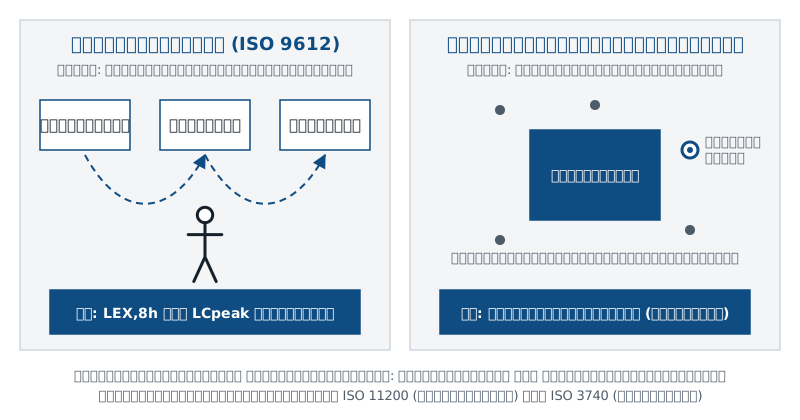
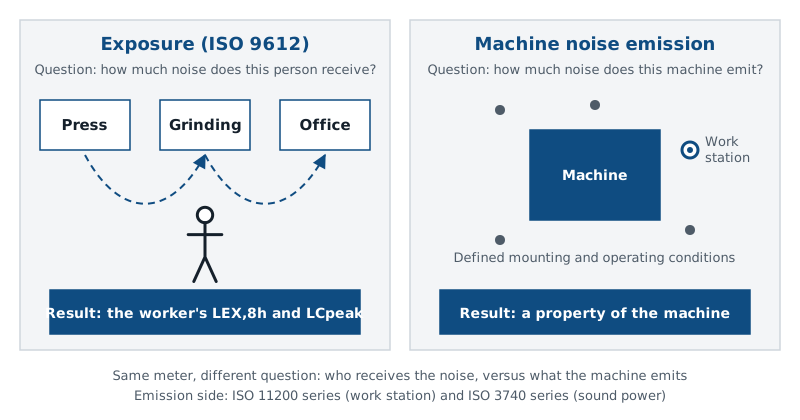
มีคำถามสองแบบที่มักถูกสับสน การสัมผัสเสียง (exposure) ถามว่า “คนคนนี้ได้รับเสียงเท่าไรทั้งวัน” ขึ้นกับทุกเสียงรอบตัว เวลาที่อยู่ในแต่ละจุด และเสียงสะท้อนในห้อง วัดตาม ISO 9612 ส่วน การปล่อยเสียง (emission) ถามว่า “เครื่องนี้ปล่อยเสียงเท่าไร” ภายใต้สภาพติดตั้งและการเดินเครื่องที่กำหนด เป็นคุณสมบัติของเครื่อง วัดตามมาตรฐานกลุ่ม ISO 11200 (ที่ตำแหน่งทำงาน) หรือกลุ่ม ISO 3740 (กำลังเสียง)Two questions are often confused. Exposure asks “how much noise does this person receive over the day?” It depends on every sound around them, the time spent at each place and room reflections, and is measured under ISO 9612. Emission asks “how much noise does this machine emit?” under defined mounting and operating conditions; it is a property of the machine, measured under the ISO 11200 series (at the work station) or the ISO 3740 series (sound power).
ค่าที่ต้องรู้: LEX,8h และ LCpeakKey quantities: LEX,8h and LCpeak
LEX,8h คือระดับเสียงที่ถ้าได้ยินต่อเนื่อง 8 ชั่วโมง จะให้พลังงานเสียงเท่ากับที่พนักงานได้รับจริงในวันนั้น คำนวณจาก LAeq ของช่วงที่ทำงาน (LAeq,Te) กับระยะเวลาทำงานจริง Te ด้วยสูตร LEX,8h = LAeq,Te + 10·lg(Te / 8 ชั่วโมง) ผลคือถ้าเวลาเพิ่มเป็นสองเท่า LEX,8h เพิ่ม 3 dB เช่น 88 dB(A) เป็นเวลา 4 ชั่วโมง ให้ LEX,8h ประมาณ 85 dB(A)LEX,8h is the level that, heard continuously for 8 hours, would give the same sound energy the worker actually received that day. It is calculated from the LAeq over the working time (LAeq,Te) and the actual duration Te: LEX,8h = LAeq,Te + 10·lg(Te / 8 h). Doubling the time adds 3 dB; for example, 88 dB(A) for 4 hours gives an LEX,8h of about 85 dB(A).
LCpeak คือระดับความดันเสียงสูงสุด (peak sound pressure level) แบบถ่วงน้ำหนัก C จากค่าความดันเสียงชั่วขณะที่สูงสุด ใช้ประเมินความเสี่ยงจากเสียงกระแทกแรง ๆ เช่น การตอก ปืนยิงตะปู หรือเครื่องปั๊มโลหะ ซึ่ง LEX,8h อาจไม่สะท้อนเพราะเกิดสั้นมาก จึงควรประเมินทั้งสองค่าคู่กันLCpeak is the C-weighted peak sound pressure level, taken from the highest instantaneous sound pressure. It is used for the risk from strong impulses such as hammering, nail guns or metal stamping, which LEX,8h may not reflect because they are so short, so assess the two values together.
ทำไมงานนี้จึงยากWhy it is difficult
- พนักงานเคลื่อนที่ และงานแต่ละวันไม่เหมือนกันWorkers move around, and no two days are identical.
- ต้องรู้ระยะเวลาของแต่ละงานให้แม่นพอ ๆ กับระดับเสียง ความคลาดเคลื่อนของเวลาก็เปลี่ยนผลได้Task durations matter as much as levels; errors in time change the result too.
- ไมโครโฟนต้องอยู่ใกล้หูของพนักงาน แต่ต้องไม่รบกวนการทำงานหรือโดนกระแทกThe microphone must be near the worker's ear without disturbing the work or getting knocked.
- เสียงกระแทกสั้นและแรงอาจเกินช่วงวัดของเครื่องมือที่ตั้งค่าไม่เหมาะShort, strong impulses can exceed the range of a poorly set-up instrument.
ขั้นแรก: วิเคราะห์งานFirst step: the work analysis
ก่อนวัด ต้องเข้าใจว่าพนักงานทำอะไร ที่ไหน นานเท่าไร ISO 9612 ให้ความสำคัญกับการวิเคราะห์งาน (work analysis) เป็นขั้นตอนแรก เพราะเป็นตัวกำหนดว่าจะวัดใคร วัดอะไร และใช้กลยุทธ์ใดBefore measuring, you must understand what workers do, where and for how long. ISO 9612 puts the work analysis first, because it decides whom to measure, what to measure and which approach to use.
- สัมภาษณ์หัวหน้างานและพนักงาน ดูตารางกะ รอบการผลิต และช่วงพักInterview supervisors and workers; review shift schedules, production cycles and breaks.
- แบ่งพนักงานเป็นกลุ่มที่ได้รับเสียงคล้ายกัน เช่น ทำงานตำแหน่งเดียวกันในสภาพเดียวกันGroup workers with similar exposure, such as the same job under the same conditions.
- ระบุงานย่อยที่มีเสียงดังและระยะเวลาของแต่ละงาน รวมถึงงานที่เกิดไม่บ่อยแต่ดังมากIdentify noisy tasks and their durations, including infrequent but very loud ones.
- เลือกวันที่เป็นตัวแทนของการทำงานปกติ หรือวันที่ได้รับเสียงมากที่สุด ตามวัตถุประสงค์Choose days that represent normal work, or the highest-exposure days, depending on the purpose.
กลยุทธ์การวัดสามแนวทางThree measurement approaches
ISO 9612:2025 (ฉบับปัจจุบัน แทน ISO 9612:2009) อธิบายแนวทางการวัดสามแบบ มักเรียกว่า การวัดตามงานย่อย (task-based) การวัดตามตำแหน่งงาน (job-based) และการวัดตลอดวัน (full-day) การเลือกขึ้นกับว่างานแบ่งเป็นช่วงชัดเจนหรือไม่ และพนักงานเคลื่อนที่มากเพียงใด รายละเอียดจำนวนตัวอย่างและระยะเวลาขั้นต่ำให้ดูจากตัวมาตรฐานISO 9612:2025 (the current edition, replacing ISO 9612:2009) describes three approaches, commonly called task-based, job-based and full-day measurement. The choice depends on whether the work splits into clear tasks and how much workers move. For the required number of samples and minimum durations, refer to the standard itself.
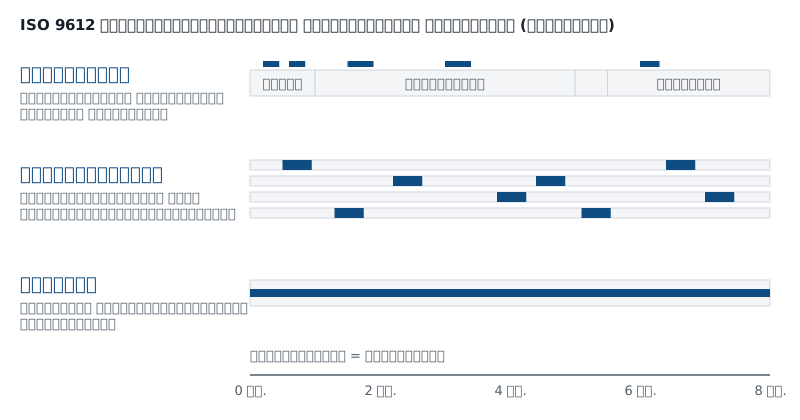
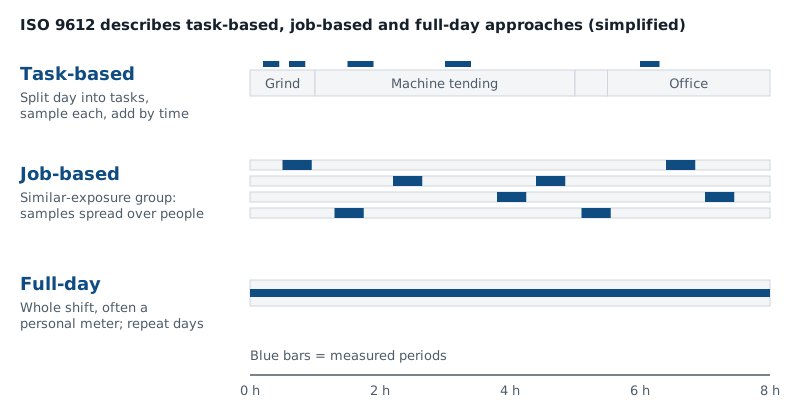
- ตามงานย่อย: เหมาะเมื่องานแบ่งเป็นช่วงชัดเจนและรู้ระยะเวลาแต่ละงาน ข้อดีคือบอกได้ว่างานใดทำให้ได้รับเสียงมาก ช่วยวางแผนลดเสียงTask-based: suits work with clear tasks of known duration; it shows which tasks drive the exposure, which helps plan noise control.
- ตามตำแหน่งงาน: เหมาะเมื่องานไม่แบ่งเป็นช่วงชัดเจน แต่มีกลุ่มพนักงานที่ทำงานคล้ายกัน สุ่มวัดกระจายทั้งคนและเวลาJob-based: suits work without clear tasks but with groups doing similar work; samples are spread across people and time.
- ตลอดวัน: เหมาะเมื่อพนักงานเคลื่อนที่มากหรืองานคาดเดาไม่ได้ มักใช้เครื่องวัดติดตัว และควรวัดหลายวันFull-day: suits highly mobile or unpredictable work; usually uses personal meters, over several days.
เครื่องวัดติดตัวหรือเครื่องวัดแบบมือถือPersonal meter or hand-held sound level meter
เครื่องวัดการสัมผัสเสียงแบบติดตัว (personal sound exposure meter หรือ dosimeter ตาม IEC 61252) ติดไมโครโฟนไว้บนไหล่ใกล้หูและเคลื่อนที่ไปกับพนักงาน เหมาะกับการวัดตลอดวัน ส่วน เครื่องวัดระดับเสียง (IEC 61672) ที่ผู้วัดถือไว้ใกล้ศีรษะพนักงาน ให้สเปกตรัม ไฟล์เสียง และค่าพีกที่ละเอียดกว่า เหมาะกับการวัดตามงานย่อยและการหาว่าเสียงมาจากไหน หลายงานใช้ทั้งสองแบบร่วมกันA personal sound exposure meter (dosimeter, IEC 61252) has its microphone on the shoulder near the ear and moves with the worker, which suits full-day measurement. A sound level meter (IEC 61672) held by the operator close to the worker's head gives spectra, audio and more detailed peak values, which suits task-based sampling and finding where the noise comes from. Many assessments combine both.
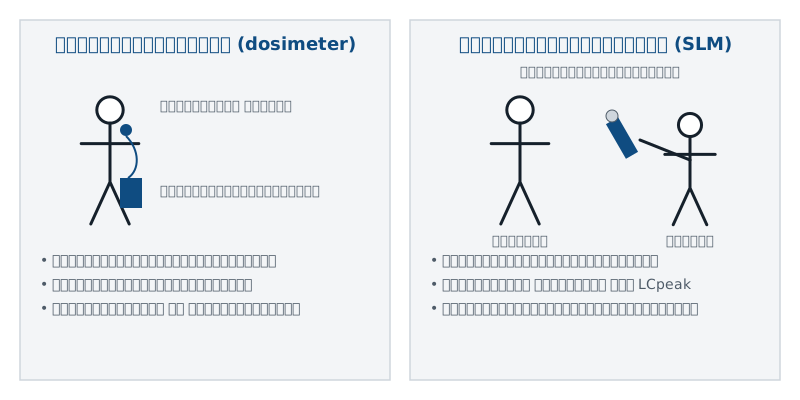
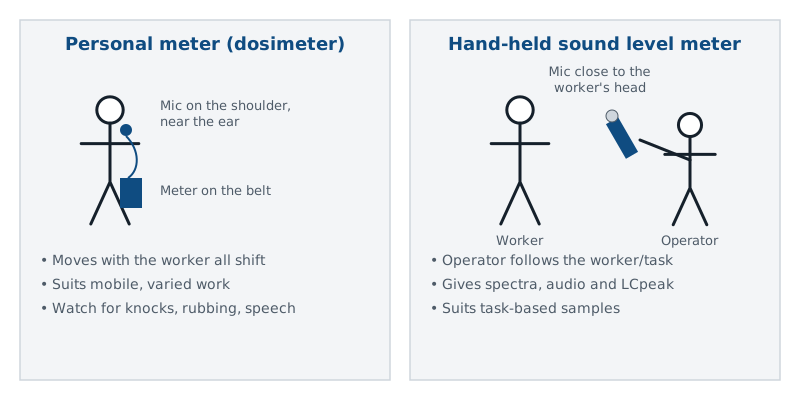
- ระวังการกระแทก การถูกับเสื้อผ้า หรือการพูดใส่ไมโครโฟนของเครื่องติดตัว ซึ่งทำให้ค่าพีกสูงผิดปกติWatch for knocks, clothing rubbing or talking into a personal meter's microphone, which can create false peaks.
- ตั้งช่วงวัดให้รองรับเสียงกระแทกที่คาดไว้ และตรวจว่าไม่มีการโอเวอร์โหลดSet the range for the expected impulses and check for overloads.
- ตรวจด้วยเครื่องสอบเทียบก่อนและหลังการวัดทุกครั้งCheck with the calibrator before and after every measurement.
ขั้นตอนการทำงานทั่วไปTypical workflow
- วิเคราะห์งาน: กลุ่มพนักงาน งานย่อย ระยะเวลา และวันที่เป็นตัวแทนWork analysis: worker groups, tasks, durations and representative days.
- เลือกกลยุทธ์และเครื่องมือ: ตามงานย่อย ตามตำแหน่งงาน หรือตลอดวัน และเลือกเครื่องวัดติดตัวหรือแบบมือถือChoose the approach and instruments: task-based, job-based or full-day, with personal or hand-held meters.
- เตรียมและตรวจเครื่อง: ใบรับรองการสอบเทียบ ตั้งค่า LAeq และ LCpeak และตรวจด้วยเครื่องสอบเทียบPrepare and check: calibration certificates, LAeq and LCpeak set-up, calibrator check.
- วัด: วางไมโครโฟนใกล้หูตามมาตรฐาน จดงานที่ทำ เวลา และเหตุการณ์ผิดปกติMeasure: microphone near the ear as the standard specifies; note tasks, times and unusual events.
- ตรวจหลังวัด: ตรวจด้วยเครื่องสอบเทียบ ตรวจค่าพีกผิดปกติและโอเวอร์โหลดCheck afterwards: calibrator check, look for false peaks and overloads.
- คำนวณและรายงาน: LEX,8h และ LCpeak ของแต่ละกลุ่ม พร้อมความไม่แน่นอน งานที่มีส่วนมากที่สุด และข้อเสนอแนะCalculate and report: LEX,8h and LCpeak per group with uncertainty, the biggest contributing tasks and recommendations.
การคำนวณ: ทำไมงานสั้น ๆ จึงสำคัญThe calculation: why short tasks matter
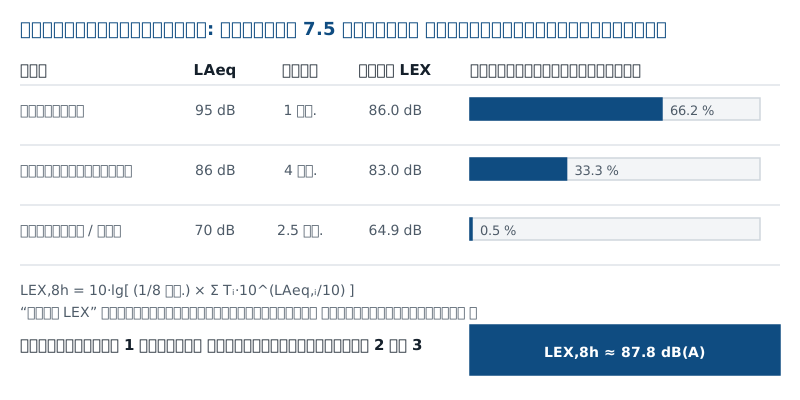
เมื่อใช้การวัดตามงานย่อย LEX,8h ได้จากการรวมพลังงานเสียงของทุกงานตามระยะเวลา เพราะเป็นการรวมแบบพลังงาน งานที่ดังมากแม้ทำไม่นานก็มักมีส่วนมากที่สุด ภาพด้านล่างเป็นตัวอย่างตัวเลขสมมติที่คำนวณจากสูตรจริงWith task-based measurement, LEX,8h is the energy sum of all tasks weighted by duration. Because it adds energy, a very loud task often dominates even when it is short. The figure below is an example with invented figures, calculated with the real formula.
ความไม่แน่นอนของผลUncertainty of the result
LEX,8h ไม่ใช่ตัวเลขที่แน่นอน ISO 9612 ให้วิธีประมาณความไม่แน่นอน ส่วนประกอบหลักที่พบบ่อย ได้แก่ ความผันผวนของระดับเสียงระหว่างตัวอย่างหรือวัน ความไม่แน่นอนของระยะเวลางาน เครื่องมือวัด และตำแหน่งไมโครโฟน ผลที่ใกล้เกณฑ์ต้องพิจารณาความไม่แน่นอนร่วมด้วย และการเพิ่มจำนวนตัวอย่างหรือวันวัดมักลดความไม่แน่นอนได้มากที่สุดLEX,8h is not an exact number. ISO 9612 provides methods for estimating its uncertainty. Typical contributions are the variation of levels between samples or days, uncertainty in task durations, the instrument and the microphone position. Results close to a criterion must be judged together with their uncertainty, and more samples or measurement days usually reduce it the most.
การเลือกอุปกรณ์ป้องกันเสียงHearing protection selection
ผลการประเมินใช้เลือกอุปกรณ์ป้องกันเสียงที่ลดเสียงได้พอ แต่ไม่มากเกินจนพนักงานได้ยินสัญญาณเตือนหรือคำพูดไม่ชัด ISO 4869-2:2018 ให้วิธีประมาณระดับเสียงที่เข้าหูเมื่อสวมอุปกรณ์สามวิธี คือ วิธีย่านออกเตฟ (octave-band) วิธี HML และวิธี SNR วิธีเหล่านี้ต้องการข้อมูลต่างกัน เช่น สเปกตรัมย่านออกเตฟ หรือทั้ง LCeq และ LAeq จึงควรบันทึกข้อมูลเหล่านี้ไว้ระหว่างการวัดThe assessment is used to choose hearing protectors that reduce enough, but not so much that workers cannot hear warning signals or speech. ISO 4869-2:2018 gives three methods to estimate the level at the ear when protectors are worn: the octave-band, HML and SNR methods. They need different input data, such as octave-band spectra or both LCeq and LAeq, so record these during the measurement.
การป้องกันจริงในที่ทำงานมักน้อยกว่าค่าที่ทดสอบในห้องปฏิบัติการ เพราะการสวมไม่แนบ การถอดออกระหว่างวัน หรือใช้ร่วมกับแว่นตา อุปกรณ์ป้องกันเสียงเป็นมาตรการสุดท้าย การลดเสียงที่แหล่งกำเนิดและการจัดการงานควรมาก่อนReal-world protection is usually lower than laboratory values because of poor fit, removing protectors during the day, or wearing them with glasses. Hearing protection is the last line of defence; noise control at the source and work organisation should come first.
ค่าระดับที่ต้องดำเนินการ: ตัวอย่างจากสหภาพยุโรปAction values: an EU example
| ระดับ (Directive 2003/10/EC)Tier (Directive 2003/10/EC) | LEX,8h | LCpeak |
|---|---|---|
| ระดับที่ต้องเริ่มดำเนินการ (ขั้นต่ำ)Lower exposure action value | LEX,8h80 dB(A)80 dB(A) | LCpeak135 dB(C)135 dB(C) |
| ระดับที่ต้องดำเนินการ (ขั้นสูง)Upper exposure action value | LEX,8h85 dB(A)85 dB(A) | LCpeak137 dB(C)137 dB(C) |
| ค่าจำกัดการสัมผัสเสียง (คิดผลของอุปกรณ์ป้องกันเสียงแล้ว)Exposure limit value (taking hearing protection into account) | LEX,8h87 dB(A)87 dB(A) | LCpeak140 dB(C)140 dB(C) |
ตารางนี้เป็นตัวอย่างของสหภาพยุโรปจาก Directive 2003/10/EC เท่านั้น ประเทศอื่นรวมถึงประเทศไทยมีกฎหมายและเกณฑ์ของตัวเอง บทความนี้ไม่ได้ให้ค่าเกณฑ์ตามกฎหมายไทย ให้ตรวจจากกฎหมายที่ใช้บังคับกับสถานประกอบการนั้นโดยตรงThis table is only the EU example from Directive 2003/10/EC. Other countries, including Thailand, have their own laws and criteria. This guide gives no Thai legal values; check the law that applies to the specific workplace.
เครื่องมือ: เริ่มจากสิ่งที่งานต้องการEquipment: start from what the task needs
งานประเมินการสัมผัสเสียงทั่วไปต้องการเครื่องวัดระดับเสียงตาม IEC 61672 ที่วัด LAeq และ LCpeak ได้ หรือเครื่องวัดติดตัวตาม IEC 61252 ชั้นความแม่นยำตามที่กฎเกณฑ์กำหนด เครื่องสอบเทียบเสียงตาม IEC 60942 และถ้าต้องเลือกอุปกรณ์ป้องกันเสียงหรือวางแผนลดเสียง ควรมีสเปกตรัมย่านออกเตฟหรือ 1/3 ออกเตฟExposure assessment generally needs an IEC 61672 sound level meter that measures LAeq and LCpeak, or an IEC 61252 personal sound exposure meter, of the class the rules require; an IEC 60942 sound calibrator; and, for hearing-protector selection or noise-control planning, octave or 1/3 octave spectra.
NTi Audio (ตามที่ NTi ระบุ): หน้าการใช้งาน Occupational Noise ของ NTi Audio อ้างถึง Directive 2003/10/EC และ ISO 9612 และแสดงการใช้ XL2 หรือ XL3 กับไมโครโฟน M2230 (Class 1) หรือ M4262 (Class 2) เพื่อหา LEX,8h, LCpeak, LAE และ LCeq – LAeq และระบุว่า XL2 ต่อกับไฟสัญญาณ Stack Light เพื่อเตือนพนักงานเมื่อเสียงเกินค่าที่ตั้งไว้ ตรวจเครื่องด้วย NTi Audio Sound Calibrator ชั้นที่เข้ากับไมโครโฟน NTi Audio ไม่ได้ระบุเครื่องวัดติดตัว (dosimeter) ในหน้านั้นNTi Audio (as stated by NTi): NTi Audio's Occupational Noise application page refers to Directive 2003/10/EC and ISO 9612 and shows the XL2 or XL3 with an M2230 (Class 1) or M4262 (Class 2) microphone determining LEX,8h, LCpeak, LAE and LCeq – LAeq, and notes that the XL2 can drive a Stack Light to warn workers when a set level is exceeded. Check the meter with an NTi Audio Sound Calibrator of the matching class. NTi Audio names no personal dosimeter on that page.
ข้อผิดพลาดที่พบบ่อยCommon mistakes
- ใช้ค่าที่อ่านตอนเดินผ่านเครื่องจักรเป็น LEX,8hUsing a reading taken while walking past a machine as the LEX,8h.
- รวมค่าเสียงที่ผู้ผลิตประกาศของเครื่องจักรแทนการวัดการสัมผัสเสียงAdding up machines' declared emission values instead of measuring exposure.
- ข้ามการวิเคราะห์งาน ทำให้ขาดงานที่ดังมากแต่ทำไม่บ่อยSkipping the work analysis and missing loud but infrequent tasks.
- ไม่ตรวจค่าพีกผิดปกติจากการกระแทกหรือถูไมโครโฟนของเครื่องติดตัวNot checking personal-meter data for false peaks from knocks or rubbing.
- รายงานตัวเลขเดียวโดยไม่มีความไม่แน่นอนReporting a single number without its uncertainty.
ตัวอย่างสถานการณ์Example scenario
โรงงานขึ้นรูปโลหะต้องการประเมินพนักงานกลุ่มคุมเครื่องจักร 12 คนที่ทำกะละ 7.5 ชั่วโมง จากการวิเคราะห์งาน พนักงานกลุ่มนี้คุมเครื่องราว 4 ชั่วโมง เจียรลบคมชิ้นงานราว 1 ชั่วโมง และอยู่ในสำนักงานหรือพักอีก 2.5 ชั่วโมง งานแบ่งเป็นช่วงชัดเจน จึงเลือกการวัดตามงานย่อย
ผู้วัดใช้เครื่องวัดแบบมือถือวัดตัวอย่างหลายครั้งในแต่ละงานกับพนักงานหลายคน ได้ LAeq ประมาณ 86, 95 และ 70 dB(A) ตามลำดับ เมื่อรวมพลังงานของกะ 7.5 ชั่วโมงแล้วปรับเป็น 8 ชั่วโมง ได้ LEX,8h ประมาณ 87.8 dB(A) และพบว่างานเจียรเพียง 1 ชั่วโมงให้พลังงานเสียงราว 2 ใน 3 ค่า LCpeak สูงสุดเกิดตอนชิ้นงานกระทบโต๊ะ
ข้อสรุปคือให้ความสำคัญกับการลดเสียงงานเจียรก่อน เช่น ปรับเครื่องมือหรือแยกพื้นที่ เลือกอุปกรณ์ป้องกันเสียงจากสเปกตรัมที่วัดได้ และวัดซ้ำหลังปรับปรุง ตัวเลขทั้งหมดเป็นตัวเลขสมมติA metal-forming plant wants to assess a group of 12 machine operators working 7.5-hour shifts. The work analysis shows about 4 hours of machine tending, about 1 hour of deburring with a grinder and 2.5 hours in the office or on breaks. The work splits into clear tasks, so a task-based approach is chosen.
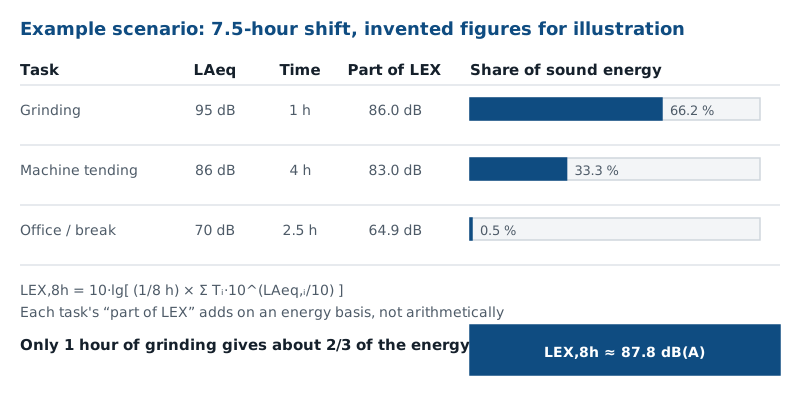
The assessor takes several hand-held samples of each task on several workers and obtains LAeq values of about 86, 95 and 70 dB(A) respectively. Summing the energy over the 7.5-hour shift and normalising to 8 hours gives an LEX,8h of about 87.8 dB(A), and the single hour of grinding contributes about two thirds of the sound energy. The highest LCpeak occurs when parts hit the bench.
The conclusion is to tackle the grinding noise first, for example with different tools or a separated area, to select hearing protectors from the measured spectra, and to re-measure after the changes. All figures are invented.
คำถามที่พบบ่อยFrequently asked questions
ใช้เครื่องวัดระดับเสียงทั่วไปแทนเครื่องวัดติดตัวได้ไหม?Can a sound level meter be used instead of a dosimeter?
ได้ในหลายกรณี โดยเฉพาะการวัดตามงานย่อยที่ผู้วัดตามพนักงานได้ แต่ถ้าพนักงานเคลื่อนที่มากหรือเข้าพื้นที่ที่ผู้วัดตามไม่ได้ เครื่องวัดติดตัวเหมาะกว่า ทั้งสองแบบต้องวัด LAeq และ LCpeak ได้ และผ่านการสอบเทียบIn many cases yes, especially for task-based sampling where the operator can follow the worker. When workers are very mobile or enter areas the operator cannot follow, a personal meter is better. Either way, it must measure LAeq and LCpeak and be calibrated.
ถ้ากะทำงานยาวกว่า 8 ชั่วโมง คิดอย่างไร?What if the shift is longer than 8 hours?
LEX,8h ใช้ระยะเวลาทำงานจริง แล้วปรับเป็น 8 ชั่วโมงด้วยสูตร ถ้าทำงาน 10 ชั่วโมงที่ LAeq คงที่ LEX,8h จะสูงกว่า LAeq ประมาณ 1 dBLEX,8h uses the actual working time and normalises it to 8 hours with the formula. For 10 hours at a constant LAeq, LEX,8h is about 1 dB higher than that LAeq.
ต้องวัดซ้ำบ่อยแค่ไหน?How often should the assessment be repeated?
ขึ้นกับกฎหมายที่ใช้บังคับ และควรวัดใหม่เมื่อมีการเปลี่ยนแปลงที่อาจเปลี่ยนการสัมผัสเสียง เช่น เครื่องจักรใหม่ การเปลี่ยนกระบวนการ หรือเวลาทำงาน และหลังติดตั้งมาตรการลดเสียงIt depends on the applicable law; also re-assess when something may change exposure, such as new machines, process or working-time changes, and after noise control is installed.
ผลการวัดนี้ใช้ออกแบบการลดเสียงได้ไหม?Can these results be used to design noise control?
ใช้เป็นจุดเริ่มต้นได้ดี โดยเฉพาะการวัดตามงานย่อยที่บอกว่างานใดมีส่วนมาก แต่การออกแบบมักต้องข้อมูลเพิ่ม เช่น สเปกตรัม การหาตำแหน่งแหล่งกำเนิดเสียง หรือกำลังเสียงของเครื่องจักรThey are a good starting point, especially task-based results that show which tasks contribute most, but design usually needs more data, such as spectra, source localization or the machines' sound power.