ก่อนอ่านบทความนี้Before you read
บทความนี้อยู่ในหมวดการวัด ควรเข้าใจเรื่องเดซิเบลและระดับความดันเสียง ค่า Leq และค่าเปอร์เซ็นไทล์ (เช่น L90) มาก่อน เนื้อหาแบ่งเป็นสองชั้น ช่วงแรกอธิบายหลักการสำหรับผู้เริ่มต้น ช่วงหลังเป็นรายละเอียดทางวิศวกรรมที่ใช้ตัดสินว่าผลวัดใช้ได้หรือไม่This article belongs to the measurement section. It helps to know decibels and sound pressure level, Leq and percentile levels (such as L90) first. The content has two layers: the first part explains the principle for beginners; the second is the engineering detail used to decide whether a result is valid.
ทำไมเรื่องนี้สำคัญWhy this matters
เครื่องวัดระดับเสียงไม่รู้ว่าเสียงไหนเป็นของใคร มันวัดความดันเสียงรวมที่ไมโครโฟน ถ้าเราวัดเสียงปั๊มน้ำข้างถนน ตัวเลขที่ได้คือเสียงปั๊ม + เสียงรถ + เสียงนก + เสียงลมที่ไมโครโฟน ทั้งหมดรวมกัน ถ้าเสียงอื่นดังพอ ๆ กับปั๊ม ผลวัดจะสูงเกินจริง และอาจทำให้สรุปผิดว่าปั๊มดังเกินเกณฑ์A sound level meter does not know whose sound is whose; it measures the total sound pressure at the microphone. Measure a water pump beside a road and the number is pump + traffic + birds + wind at the microphone, all together. If the other sounds are about as loud as the pump, the result is too high and may lead to the wrong conclusion that the pump exceeds a limit.
ในทางกลับกัน เครื่องวัดเองก็มีขีดจำกัด ถ้าเสียงเบามากจนใกล้ เสียงรบกวนของเครื่องเอง (Noise floor) ตัวเลขจะไม่ลดลงต่ำกว่านั้นอีก และถ้าเสียงดังเกินช่วงของเครื่อง สัญญาณจะถูกตัด (Overload) ผลที่ได้ใช้ไม่ได้ทั้งสองกรณี การเข้าใจเรื่องนี้จึงเป็นพื้นฐานของทุกงานวัด ตั้งแต่เสียงสิ่งแวดล้อม การกันเสียงของผนัง ไปจนถึงกำลังเสียงของเครื่องจักรThe instrument has limits too. If a sound is so quiet that it approaches the instrument’s own noise floor, the reading will not fall any further; and if a sound is louder than the instrument’s range, the signal clips (overload). In both cases the result is unusable. Understanding this is the foundation of every measurement task, from environmental noise to wall sound insulation and machine sound power.
เสียงที่ต้องการ กับเสียงที่ไม่ต้องการThe wanted sound and the unwanted sound
มาตรฐานแต่ละกลุ่มใช้คำต่างกันเล็กน้อย แต่แนวคิดเหมือนกัน งานเสียงสิ่งแวดล้อม (เช่น ISO 1996) เรียกเสียงของแหล่งที่สนใจว่า เสียงเฉพาะ (Specific sound) เรียกเสียงอื่นทั้งหมดที่เหลือเมื่อไม่มีเสียงนั้นว่า เสียงคงเหลือ (Residual sound) และเรียกผลรวมว่า เสียงรวม (Total sound) ส่วนงานกำลังเสียงและการกันเสียงในอาคารมักใช้คำว่า เสียงพื้นหลัง (Background noise) สำหรับเสียงที่ไม่ได้มาจากเครื่องหรือแหล่งทดสอบDifferent groups of standards use slightly different words, but the idea is the same. Environmental noise (e.g. ISO 1996) calls the sound of the source of interest the specific sound, everything left when that sound is absent the residual sound, and the combination the total sound. Sound power and building acoustics usually say background noise for sound that does not come from the machine or test source.
ในบทความนี้เราใช้คำว่า “เสียงพื้นหลัง” เป็นคำรวม ๆ แต่เมื่อเขียนรายงานจริง ควรใช้คำตามมาตรฐานที่ใช้ และต้องระวังว่า “เสียงพื้นหลัง” ในความหมายของการประเมินเสียงสิ่งแวดล้อมบางวิธี อาจหมายถึงค่าเปอร์เซ็นไทล์ เช่น L90 ซึ่งไม่ใช่สิ่งเดียวกับเสียงคงเหลือที่วัดตอนปิดแหล่งเสียงIn this article we use “background” as the general word, but a real report should use the terms of the standard applied. Be careful: in some environmental assessment methods “background” means a percentile level such as L90, which is not the same thing as the residual sound measured with the source switched off.
บวกเดซิเบลแบบพลังงานAdding decibels on an energy basis
เดซิเบลเป็นสเกลลอการิทึม จึงบวกกันตรง ๆ ไม่ได้ 60 dB + 60 dB ไม่ได้เท่ากับ 120 dB ต้องแปลงกลับเป็นพลังงาน (สัดส่วนกับความดันเสียงยกกำลังสอง) บวกกัน แล้วแปลงกลับเป็นเดซิเบล:
L รวม = 10 · log₁₀(10^(L₁/10) + 10^(L₂/10) + …)
กฎนี้ใช้ได้เมื่อเสียงแต่ละแหล่งไม่สัมพันธ์กัน (Incoherent) ซึ่งเป็นกรณีทั่วไปของเสียงรบกวนจากหลายแหล่งDecibels are a logarithmic scale, so they cannot simply be added: 60 dB + 60 dB is not 120 dB. Convert back to energy (proportional to the square of sound pressure), add, and convert back to decibels:
L total = 10 · log₁₀(10^(L₁/10) + 10^(L₂/10) + …)
This rule holds when the sources are unrelated (incoherent), which is the usual case for noise from several sources.
| สองระดับที่รวมกันTwo levels combined | ผลรวมTotal | ความหมายWhat it means |
|---|---|---|
| 60 dB + 60 dB60 dB + 60 dB | ผลรวมTotal63.0 dB63.0 dB | ความหมายWhat it meansสองแหล่งเท่ากัน ผลเพิ่ม 3 dB (พลังงานเป็นสองเท่า)Two equal sources add 3 dB (double the energy) |
| 60 dB + 57 dB60 dB + 57 dB | ผลรวมTotal61.8 dB61.8 dB | ความหมายWhat it meansต่างกัน 3 dB ผลเพิ่มจากค่าที่ดังกว่า 1.8 dB3 dB apart: the louder one rises by 1.8 dB |
| 60 dB + 54 dB60 dB + 54 dB | ผลรวมTotal61.0 dB61.0 dB | ความหมายWhat it meansต่างกัน 6 dB ผลเพิ่ม 1.0 dB6 dB apart: rises by 1.0 dB |
| 60 dB + 50 dB60 dB + 50 dB | ผลรวมTotal60.4 dB60.4 dB | ความหมายWhat it meansต่างกัน 10 dB แหล่งที่เบากว่าแทบไม่มีผล10 dB apart: the quieter source hardly matters |
| 10 แหล่ง แหล่งละ 60 dB10 sources of 60 dB each | ผลรวมTotal70.0 dB70.0 dB | ความหมายWhat it meansจำนวนแหล่งเพิ่ม 10 เท่า ระดับเพิ่ม 10 dBTen times the number of sources adds 10 dB |
ตัวเลขในตารางคำนวณจากสูตรข้างต้นและปัดเป็นทศนิยมหนึ่งตำแหน่ง ข้อสรุปที่ควรจำคือ ระดับรวมถูกกำหนดโดยแหล่งที่ดังที่สุดเป็นหลัก การลดแหล่งที่เบากว่าแทบไม่ช่วยลดเสียงรวมThe table values are calculated with the formula above and rounded to one decimal. The lesson to remember: the total is dominated by the loudest source, so quietening the weaker sources barely changes the total.
ลบเสียงพื้นหลังออก: การแก้ค่าRemoving the background: the correction
ถ้าเราวัดได้ทั้งระดับรวม (แหล่งเสียงทำงาน) และระดับเสียงพื้นหลัง (แหล่งเสียงหยุด) ก็หาระดับของแหล่งเสียงอย่างเดียวได้ด้วยการลบแบบพลังงาน:
L แหล่ง = 10 · log₁₀(10^(L รวม/10) − 10^(L พื้นหลัง/10))
หรือเขียนเป็นค่าที่ต้องหักออก K ซึ่งขึ้นกับส่วนต่าง ΔL = L รวม − L พื้นหลัง เท่านั้น: K = −10 · log₁₀(1 − 10^(−ΔL/10))If we can measure both the total level (source running) and the background level (source stopped), the level of the source alone follows from subtracting on an energy basis:
L source = 10 · log₁₀(10^(L total/10) − 10^(L background/10))
Or, written as an amount K to subtract, which depends only on the difference ΔL = L total − L background: K = −10 · log₁₀(1 − 10^(−ΔL/10))
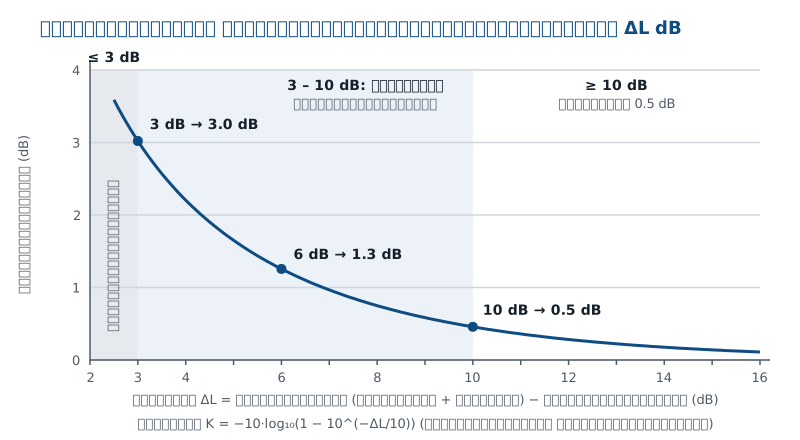
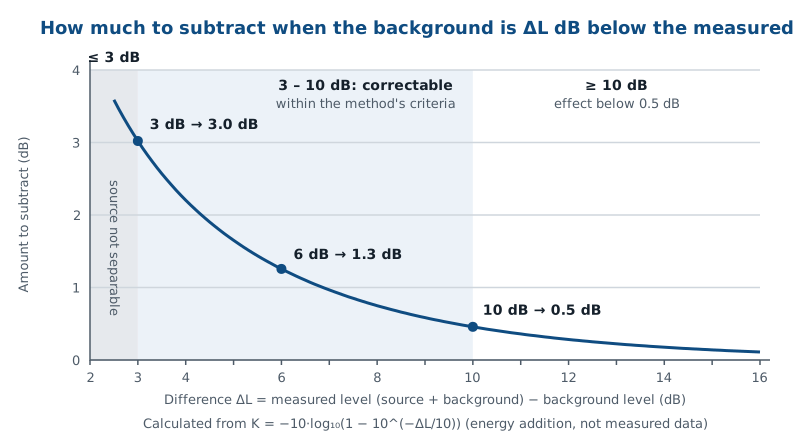
วัดเสียงพัดลมระบายอากาศได้ 62 dB(A) เมื่อปิดพัดลมแล้ววัดซ้ำที่จุดเดิม ได้เสียงพื้นหลัง 57 dB(A) ส่วนต่างคือ 5 dB ค่าที่ต้องหักคือประมาณ 1.7 dB ดังนั้นระดับของพัดลมอย่างเดียวประมาณ 60.3 dB(A) ถ้ารายงาน 62 dB(A) ไปตรง ๆ จะสูงเกินจริงเกือบ 2 dB (ตัวเลขสมมุติเพื่ออธิบายการคำนวณ)A ventilation fan measures 62 dB(A). With the fan off, a repeat measurement at the same point gives a background of 57 dB(A). The difference is 5 dB, the amount to subtract is about 1.7 dB, so the fan alone is about 60.3 dB(A). Reporting 62 dB(A) directly would overstate it by almost 2 dB. (Hypothetical numbers to illustrate the calculation.)
เกณฑ์ 3 dB และ 10 dB และมาตรฐานเขียนไว้อย่างไรThe 3 dB and 10 dB margins, and how standards phrase them
ทางคณิตศาสตร์ สูตรลบใช้ได้กับทุกส่วนต่างที่มากกว่า 0 dB แต่ในทางปฏิบัติ เสียงพื้นหลังไม่คงที่ และผลวัดทุกค่ามีความไม่แน่นอน เมื่อส่วนต่างเล็ก ความผิดพลาดเล็กน้อยของค่าพื้นหลังจะกลายเป็นความผิดพลาดใหญ่ของผลลัพธ์ เช่น ที่ส่วนต่าง 3 dB ถ้าเสียงพื้นหลังจริงสูงกว่าที่วัดได้เพียง 1 dB ผลที่แก้แล้วจะผิดไปราว 1.3 dB ซึ่งมากกว่าความผิดพลาดของค่าพื้นหลังเอง และยิ่งส่วนต่างเล็กลง ความผิดพลาดยิ่งขยายมากขึ้น มาตรฐานจึงกำหนด ส่วนต่างขั้นต่ำ และ ช่วงที่อนุญาตให้แก้ค่า ไว้Mathematically, the subtraction formula works for any difference above 0 dB. In practice, the background is not constant and every measured value is uncertain. When the difference is small, a small error in the background becomes a large error in the result: at a 3 dB difference, if the true background is just 1 dB higher than measured, the corrected result is wrong by about 1.3 dB, more than the error in the background itself, and the smaller the difference, the more the error is magnified. Standards therefore set a minimum difference and a range in which correction is allowed.
| มาตรฐาน (แนวคิด)Standard (concept) | งานTask | หลักการเรื่องส่วนต่างHow the difference is treated |
|---|---|---|
| ISO 1996-2ISO 1996-2 | งานTaskเสียงสิ่งแวดล้อมEnvironmental noise | หลักการเรื่องส่วนต่างHow the difference is treatedส่วนต่างระหว่างเสียงรวมกับเสียงคงเหลือ 10 dB ขึ้นไป ไม่ต้องแก้ค่า ระหว่าง 3 ถึง 10 dB แก้ค่าตามสูตร ถ้า 3 dB หรือน้อยกว่า แก้ค่าไม่ได้Total 10 dB or more above residual: no correction. Between 3 and 10 dB: correct with the formula. 3 dB or less: no correction is possible |
| ISO 16283-1ISO 16283-1 | งานTaskการกันเสียงผ่านอากาศในสนามField airborne sound insulation | หลักการเรื่องส่วนต่างHow the difference is treatedตรวจเป็นรายย่านความถี่ ส่วนต่างควรอย่างน้อย 6 dB และดีกว่าถ้าเกิน 10 dB: เกิน 10 dB ไม่ต้องแก้ค่า มากกว่า 6 dB แต่ไม่ถึง 10 dB แก้ค่าด้วยการลบแบบพลังงาน 6 dB หรือน้อยกว่า ใช้ค่าแก้ 1.3 dB (ค่าที่ส่วนต่าง 6 dB) และระบุในรายงานว่าเป็นค่าที่ถูกจำกัดด้วยการวัดChecked band by band: at least 6 dB and preferably more than 10 dB. More than 10 dB: no correction; more than 6 dB but less than 10 dB: correct by energy subtraction; 6 dB or less: apply the 1.3 dB correction for a 6 dB difference and mark the result in the report as a limit of measurement |
| ISO 3744 และมาตรฐานกำลังเสียงกลุ่ม ISO 3740ISO 3744 and the ISO 3740 sound power family | งานTaskกำลังเสียงของเครื่องจักรMachine sound power | หลักการเรื่องส่วนต่างHow the difference is treatedใช้ค่าแก้ K1 จากส่วนต่างระหว่างเสียงเครื่องกับเสียงพื้นหลัง แต่ละวิธีมีส่วนต่างขั้นต่ำของตัวเอง ถ้าไม่ถึง ผลอาจต้องลดระดับความแม่นยำหรือรายงานเป็นค่าสูงสุดUses the K1 correction from the machine-to-background difference; each method has its own minimum difference. If it is not met, the result may drop to a lower accuracy grade or be reported as an upper limit |
ตารางนี้สรุปแนวคิดเพื่อความเข้าใจ ไม่ใช่ข้อความของมาตรฐาน ตัวเลขและเงื่อนไขอาจต่างกันตามฉบับ (Edition) และตามระดับความแม่นยำของวิธี ก่อนใช้งานจริงต้องตรวจกับฉบับที่ใช้อ้างอิงในงานนั้นThis table summarises the concepts for understanding; it is not the text of the standards. Figures and conditions may differ between editions and between accuracy grades of a method. Before real use, check against the edition referenced for the job.
สังเกตว่าตัวเลข “1.3 dB ที่ส่วนต่าง 6 dB” ในกราฟ มาจากสูตรเดียวกัน วิธีวัดบางวิธีจึงใช้ค่านี้เป็นค่าแก้สูงสุดสำหรับย่านที่ส่วนต่างไม่ถึง 6 dB และให้ถือว่าผลในย่านนั้นเป็น ขีดจำกัดของการวัด ไม่ใช่ค่าจริง นี่คือตัวอย่างของหลักการสำคัญ: เมื่อข้อมูลไม่พอ มาตรฐานไม่ให้เราแก้ค่ามากเกินไปเพื่อให้ตัวเลขดูดีNotice that “1.3 dB at a 6 dB difference” on the curve comes from the same formula. Some methods therefore use this as the maximum correction for bands where the difference is below 6 dB, and treat the result in those bands as a limit of measurement, not a true value. This illustrates an important principle: when the data are not good enough, standards do not let us correct more heavily just to make the number look better.
ต้องดูเป็นรายย่านความถี่Check band by band
ค่ารวมถ่วงน้ำหนัก A อาจผ่านเกณฑ์ส่วนต่าง 10 dB แต่บางย่านความถี่ไม่ผ่าน ตัวอย่างที่พบบ่อยคือการวัดการกันเสียงของผนัง เสียงทดสอบในห้องต้นเสียงดังพอในย่านกลาง แต่ในย่านความถี่สูง ผนังกันเสียงได้ดีมาก ระดับในห้องรับเสียงจึงลงไปใกล้เสียงพื้นหลังหรือใกล้ Noise floor ของเครื่อง อีกตัวอย่างคือเสียงระบบปรับอากาศที่มีพลังงานมากในย่านความถี่ต่ำ ซึ่งอาจกลบเสียงความถี่ต่ำของแหล่งที่เราสนใจThe A-weighted total may pass a 10 dB criterion while some frequency bands do not. A common example is wall sound insulation: the test sound in the source room is loud enough in the mid bands, but at high frequencies the wall insulates so well that the receiving-room level drops close to the background or the instrument noise floor. Another is air-conditioning noise with a lot of low-frequency energy, which can mask the low-frequency sound of the source we care about.
ในงานที่รายงานผลเป็นย่านออกเตฟหรือ 1/3 ออกเตฟ ให้บันทึกเสียงพื้นหลังเป็นย่านเดียวกัน แก้ค่าทีละย่าน แล้วจึงคำนวณค่าตัวเลขเดียว การแก้ค่าเฉพาะค่ารวม dB(A) อาจซ่อนปัญหาที่ย่านสำคัญWhen results are reported in octave or 1/3 octave bands, record the background in the same bands, correct band by band, and only then calculate the single-number value. Correcting only the dB(A) total can hide a problem in an important band.
เสียงรบกวนของเครื่อง ช่วงไดนามิก และ OverloadInstrument noise floor, dynamic range and overload
แม้อยู่ในห้องที่เงียบสนิท เครื่องวัดก็ยังแสดงตัวเลขอยู่ค่าหนึ่ง นั่นคือ Noise floor ที่มาจากเสียงรบกวนทางความร้อนของไดอะแฟรมไมโครโฟน ปรีแอมป์ และวงจรวัด ขอบบนคือระดับที่สัญญาณเริ่มถูกตัด ช่วงระหว่างสองขอบนี้คือ ช่วงไดนามิก (Dynamic range) ตัวอย่างเช่น NTi Audio ระบุช่วงไดนามิกของชุดไมโครโฟนกลางแจ้ง M2230-WP ไว้ที่ 16–137 dB ตัวเลขแบบนี้ต้องอ่านคู่กับเงื่อนไขในเอกสารของผู้ผลิต เช่น การถ่วงน้ำหนักความถี่และเครื่องวัดที่ใช้Even in a completely silent room a meter still shows some reading: the noise floor, which comes from thermal noise in the microphone diaphragm, the preamplifier and the measuring electronics. The upper edge is the level where the signal starts to clip. The span between the two is the dynamic range. For example, NTi Audio lists a dynamic range of 16–137 dB for the M2230-WP outdoor microphone set; such figures must be read together with the conditions in the manufacturer’s documents, such as the frequency weighting and the meter used.
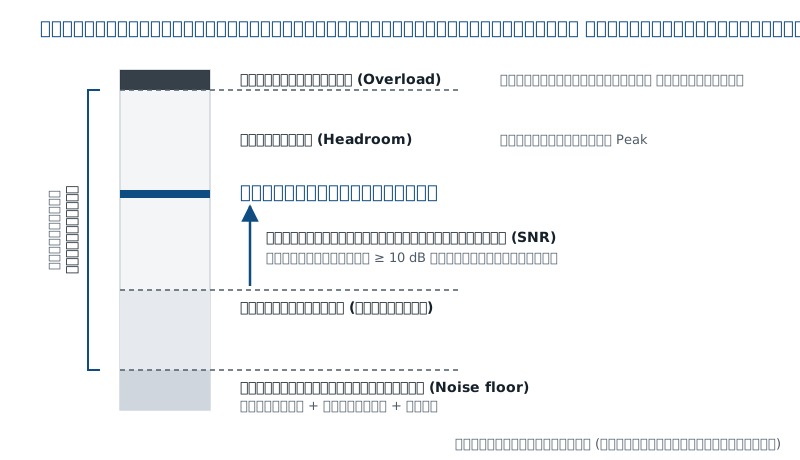
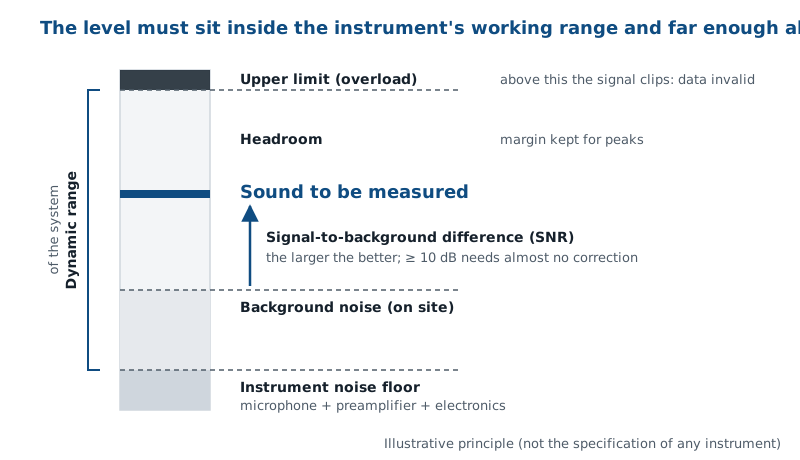
- Noise floor ต่อย่านต่ำกว่าค่ารวม: ย่าน 1/3 ออกเตฟแคบกว่าช่วงความถี่ทั้งหมด Noise floor ในแต่ละย่านจึงต่ำกว่าค่ารวม dB(A) ของเครื่อง การวัดห้องที่เงียบมากจึงควรตรวจ Noise floor เป็นรายย่านThe noise floor per band is lower than the total: a 1/3 octave band is narrower than the full range, so each band’s noise floor is below the instrument’s dB(A) total. For very quiet rooms, check the noise floor band by band.
- ตรวจ Noise floor ของระบบจริง: สาย ปรีแอมป์ แหล่งจ่ายไฟ และสัญญาณรบกวนทางไฟฟ้า (เช่น เสียงฮัมจากไฟบ้าน) เพิ่ม Noise floor ได้ ควรเทียบกับค่าที่ผู้ผลิตระบุCheck the real system’s noise floor: cables, preamplifiers, power supplies and electrical interference (such as mains hum) can raise it. Compare with the manufacturer’s figure.
- Overload: ค่า Peak ของเสียงกระแทก เสียงปืน หรือเสียงดนตรีสูงกว่าค่า Leq มาก ถ้าเกินขีดจำกัด เครื่องวัดจะแสดงสัญลักษณ์ Overload ช่วงเวลานั้นต้องถือว่าข้อมูลใช้ไม่ได้ แก้ไขด้วยการเลือกไมโครโฟนหรือช่วงการวัดที่รับระดับสูงได้Overload: the peaks of impacts, gunshots or music are far above the Leq. If they exceed the limit, the meter shows an overload indication and that period’s data must be treated as invalid. The fix is a microphone or measuring range that handles higher levels.
- ไม่มีไมโครโฟนตัวเดียวที่ดีทุกอย่าง: ไมโครโฟนที่รับเสียงดังมากได้มักมี Noise floor สูงกว่า เลือกให้ตรงกับเสียงที่จะวัดNo microphone is best at everything: microphones for very high levels usually have a higher noise floor. Match the choice to the sound being measured.
SNR ในการวัดที่ใช้สัญญาณทดสอบSNR in measurements with a test signal
ในงานที่เราสร้างเสียงเอง เช่น การวัดการกันเสียงหรือเวลาเสียงก้อง อัตราส่วนสัญญาณต่อเสียงรบกวน (Signal-to-noise ratio, SNR) คือส่วนต่างระหว่างระดับสัญญาณทดสอบกับเสียงพื้นหลัง ในงานนี้เราเพิ่ม SNR ได้เอง เช่น ใช้ลำโพงที่ดังขึ้น วางลำโพงให้เหมาะ ใช้สัญญาณทดสอบที่เน้นพลังงานในย่านที่ขาด หรือใช้วิธีที่มีการประมวลผล เช่น สัญญาณกวาดความถี่ (Sweep) ที่ช่วยแยกสัญญาณออกจากเสียงรบกวนได้ดีกว่าWhen we create the sound ourselves, as in sound insulation or reverberation time measurements, the signal-to-noise ratio (SNR) is the difference between the test-signal level and the background. Here we can raise the SNR ourselves: a louder loudspeaker, better loudspeaker placement, a test signal with more energy in the weak bands, or a processed method such as a swept sine that separates signal from noise more effectively.
ตัวอย่างที่ชัดคือเวลาเสียงก้อง การประเมิน T20 หรือ T30 ต้องการเส้นการลดลงของเสียงที่อยู่เหนือเสียงพื้นหลังตลอดช่วงที่ประเมิน ถ้า SNR ไม่พอ ปลายเส้นจะจมในเสียงพื้นหลัง และค่าเวลาเสียงก้องจะออกมายาวเกินจริง วิธีวัดจึงกำหนดให้ปลายช่วงประเมินอยู่สูงกว่าเสียงพื้นหลังพอสมควร ในทางปฏิบัติ T30 จึงต้องการ SNR มากกว่า T20Reverberation time is a clear example. Evaluating T20 or T30 needs a decay curve that stays above the background across the whole evaluation range. If the SNR is too low, the tail of the curve sinks into the background and the reverberation time comes out too long. Measurement methods therefore require the end of the evaluation range to be sufficiently above the background, which in practice means T30 needs more SNR than T20.
การเฉลี่ยนานขึ้นช่วยลดความผันผวนของผลวัด แต่ ไม่ได้ลดเสียงพื้นหลังที่คงที่ ค่า Leq ของเสียงพื้นหลังยังอยู่ในผลรวมเท่าเดิม การเฉลี่ยจะลดผลของเสียงรบกวนได้จริงเฉพาะในวิธีที่ใช้สัญญาณทดสอบที่รู้รูปแบบและเฉลี่ยแบบสอดคล้องกับสัญญาณ (Synchronous averaging)Averaging for longer reduces the scatter of the result, but it does not remove a steady background: the background’s Leq stays in the total. Averaging truly reduces the effect of noise only in methods that use a known test signal and average in step with it (synchronous averaging).
เมื่อเสียงพื้นหลังดังเกินไป: ทำอะไรได้ และอ้างอะไรได้When the background is too high: what you can do and what you can claim
- หาช่วงเวลาที่เงียบกว่า เช่น กลางคืน หรือช่วงที่ถนนและเครื่องจักรอื่นหยุด แต่แหล่งที่สนใจยังทำงานตามปกติFind a quieter time, such as night, or when roads and other machines are quiet but the source of interest runs normally.
- ปิดแหล่งเสียงอื่นที่ควบคุมได้ เช่น เครื่องปรับอากาศ ปั๊ม หรือพัดลมในห้องวัด และบันทึกไว้ในรายงานSwitch off other controllable sources, such as air conditioning, pumps or fans in the test space, and record this in the report.
- วัดใกล้แหล่งเสียงขึ้น ที่ตำแหน่งที่วิธีวัดยอมรับ แล้วคำนวณไปยังจุดที่ต้องการด้วยวิธีที่มีหลักฐานรองรับ (ต้องระวังเรื่องสนามใกล้)Measure closer to the source at a position the method accepts, then calculate to the point of interest by a documented method (beware of the near field).
- วัดเป็นรายย่านความถี่ และบันทึกเสียง เพื่อแยกว่าย่านไหนเป็นของแหล่งที่สนใจ และช่วงไหนมีเหตุการณ์รบกวนMeasure in frequency bands and record audio to see which bands belong to the source of interest and which periods contain disturbing events.
- พิจารณาวิธีอื่น เช่น วิธีความเข้มเสียงสำหรับกำลังเสียง ซึ่งทนต่อเสียงพื้นหลังที่คงที่ได้ดีกว่าวิธีความดันเสียงภายในเงื่อนไขของวิธีนั้นConsider another method, such as the sound intensity method for sound power, which tolerates a steady background better than pressure methods, within its own conditions.
ถ้าทำทุกอย่างแล้วส่วนต่างยังน้อยเกินไป สิ่งที่อ้างได้อย่างซื่อตรงคือ ระดับของแหล่งเสียงไม่สูงกว่าค่าที่วัดได้ เพราะเสียงรวมมีทั้งแหล่งเสียงและเสียงพื้นหลัง ข้อสรุปนี้มีประโยชน์จริง: ถ้าเสียงรวมยังต่ำกว่าเกณฑ์ แหล่งเสียงก็ต่ำกว่าเกณฑ์แน่นอน แต่ถ้าเสียงรวมสูงกว่าเกณฑ์ และเสียงพื้นหลังใกล้เคียงกัน เราสรุป ไม่ได้ ว่าแหล่งเสียงเป็นต้นเหตุของการเกินเกณฑ์If the difference is still too small after all this, the honest claim is that the source level is no higher than the measured value, because the total contains both the source and the background. That conclusion is genuinely useful: if the total is below a limit, the source is certainly below it too. But if the total is above the limit and the background is close to it, we cannot conclude that the source caused the exceedance.
ตัวอย่างสถานการณ์Example scenario
เครื่องทำน้ำเย็นบนหลังคาอาคารพาณิชย์ถูกร้องเรียนจากคอนโดข้างเคียง วิศวกรวัดที่ระเบียงห้องที่ร้องเรียนตอน 21:00 น. ได้ 52 dB(A) เมื่อขอให้ปิดเครื่องชั่วคราว วัดเสียงคงเหลือได้ 49 dB(A) ส่วนต่างเพียง 3 dB เพราะถนนด้านล่างยังมีรถมาก จึงแก้ค่าไม่ได้ และรายงานได้เพียงว่าเครื่องทำน้ำเย็นไม่เกิน 52 dB(A)
วิศวกรจึงนัดวัดใหม่ตอน 01:00 น. เมื่อถนนเงียบลง ได้เสียงรวม 50 dB(A) และเสียงคงเหลือ 44 dB(A) ส่วนต่าง 6 dB แก้ค่าได้ประมาณ 1.3 dB เครื่องทำน้ำเย็นจึงประมาณ 48.7 dB(A) ผลย่านออกเตฟยังแสดงว่าเสียงของเครื่องเด่นที่ย่าน 125–250 Hz ซึ่งช่วยวางแนวทางแก้ไข (ตัวเลขสมมุติ ไม่ใช่โครงการจริง)A rooftop chiller on a commercial building draws a complaint from a neighbouring condominium. At 21:00 the engineer measures 52 dB(A) on the complainant’s balcony. With the chiller briefly switched off, the residual is 49 dB(A). The difference is only 3 dB because the road below is still busy, so no correction is possible, and the report can only say that the chiller is no more than 52 dB(A).
The engineer returns at 01:00 when the road is quiet: total 50 dB(A), residual 44 dB(A). The 6 dB difference allows a correction of about 1.3 dB, so the chiller is about 48.7 dB(A). The octave-band results also show the chiller dominating the 125–250 Hz bands, which helps plan the treatment. (Hypothetical numbers, not a real project.)
ความผิดพลาดที่พบบ่อยCommon mistakes
- ไม่วัดเสียงพื้นหลังเลย หรือวัดคนละเวลา คนละตำแหน่งกับการวัดแหล่งเสียง ค่าพื้นหลังต้องวัดที่จุดเดียวกันและใกล้เวลาเดียวกันNot measuring the background at all, or measuring it at a different time or position from the source. The background must be taken at the same point and close in time.
- ลบเดซิเบลตรง ๆ เช่น 62 − 57 = 5 dB แล้วเรียกว่าเสียงของแหล่ง ต้องลบแบบพลังงานเสมอSubtracting decibels directly, e.g. 62 − 57 = 5 dB, and calling that the source level. Always subtract on an energy basis.
- แก้ค่าเมื่อส่วนต่างเล็กเกินไป จนได้ตัวเลขที่ดูแม่นยำแต่ไม่มีความหมายCorrecting when the difference is too small, producing a number that looks precise but means nothing.
- ใช้ L90 เป็นเสียงพื้นหลังโดยไม่คิด ถ้าแหล่งเสียงดังต่อเนื่อง L90 จะรวมเสียงของแหล่งนั้นด้วยUsing L90 as the background without thinking: if the source runs continuously, L90 includes that source.
- ดูแค่ค่ารวม dB(A) ทั้งที่บางย่านความถี่ไม่ผ่านเกณฑ์ส่วนต่างLooking only at the dB(A) total while some bands fail the difference criterion.
- ไม่สังเกตสัญลักษณ์ Overload หรือวัดห้องเงียบด้วยไมโครโฟนที่ Noise floor สูงเกินไปMissing the overload indication, or measuring a quiet room with a microphone whose noise floor is too high.
คำถามที่พบบ่อยFrequently asked questions
ถ้าส่วนต่างเกิน 10 dB ต้องแก้ค่าไหมIf the difference is more than 10 dB, do I still correct?
ส่วนใหญ่ไม่ต้อง เพราะผลน้อยกว่า 0.5 dB และหลายวิธีวัดระบุว่าไม่ต้องแก้ แต่ยังควรบันทึกระดับเสียงพื้นหลังไว้ในรายงาน เพื่อแสดงว่าตรวจแล้วUsually not: the effect is below 0.5 dB and many methods say no correction is needed. Still record the background level in the report to show it was checked.
ถ้าปิดแหล่งเสียงไม่ได้ จะรู้เสียงพื้นหลังได้อย่างไรIf the source cannot be switched off, how do I know the background?
วัดที่ตำแหน่งที่คล้ายกันแต่ไม่ได้รับเสียงจากแหล่งนั้น (เช่น อีกด้านของอาคาร) ใช้ช่วงเวลาที่แหล่งหยุดตามรอบการทำงาน หรือใช้ค่าเปอร์เซ็นไทล์อย่างระมัดระวัง แล้วระบุวิธีที่ใช้ในรายงานMeasure at a similar position that does not receive the source (e.g. the other side of a building), use periods when the source stops in its normal cycle, or use percentile levels with care, and state the approach in the report.
เสียงพื้นหลังสูงกว่าผลที่วัดได้ตอนแหล่งทำงาน เกิดขึ้นได้อย่างไรHow can the background be higher than the level with the source running?
เพราะเสียงพื้นหลังเปลี่ยนตลอดเวลา สองการวัดไม่ได้เกิดพร้อมกัน ผลแบบนี้บอกว่าแหล่งเสียงเบากว่าความผันผวนของเสียงพื้นหลัง ไม่ควรแก้ค่า ให้วัดซ้ำหลายครั้งหรือหาช่วงเวลาที่เสียงพื้นหลังคงที่กว่าBecause the background changes all the time and the two measurements are not simultaneous. Such a result means the source is quieter than the background’s fluctuations. Do not correct; repeat the measurements or find a period with a steadier background.
Noise floor ของเครื่องต่ำมากแล้ว ทำไมห้องเงียบยังวัดยากMy meter’s noise floor is very low, so why are quiet rooms still hard?
เพราะเสียงพื้นหลังในอาคาร เช่น ระบบปรับอากาศ ลิฟต์ หรือถนนภายนอก มักสูงกว่า Noise floor ของเครื่องมาก ปัญหาจึงมักอยู่ที่ส่วนต่างระหว่างสัญญาณกับเสียงพื้นหลัง ไม่ใช่ตัวเครื่องBecause building background noise, such as air conditioning, lifts or outside traffic, is usually far above the instrument noise floor. The problem is usually the signal-to-background difference, not the instrument.
คำศัพท์สำคัญKey terms
- เสียงเฉพาะ / เสียงคงเหลือ / เสียงรวมSpecific / residual / total sound
- เสียงของแหล่งที่สนใจ / เสียงที่เหลือเมื่อไม่มีเสียงนั้น / ผลรวมของทั้งสอง (คำในงานเสียงสิ่งแวดล้อม)The sound of the source of interest / what remains when it is absent / the combination of both (environmental noise terms).
- เสียงพื้นหลัง (Background noise)Background noise
- เสียงที่ไม่ได้มาจากแหล่งที่ทดสอบ ใช้มากในงานกำลังเสียงและการกันเสียงSound not coming from the source under test; common in sound power and sound insulation work.
- การแก้ค่าเสียงพื้นหลัง (Background correction)Background correction
- การหักผลของเสียงพื้นหลังออกด้วยการลบแบบพลังงาน ภายในขอบเขตที่วิธีวัดกำหนดRemoving the background contribution by energy subtraction, within the limits set by the method.
- SNR (Signal-to-noise ratio)SNR (signal-to-noise ratio)
- ส่วนต่างเป็น dB ระหว่างสัญญาณที่ต้องการกับเสียงรบกวนThe difference in dB between the wanted signal and the noise.
- Noise floor
- ระดับต่ำสุดที่ระบบวัดแสดงได้ เกิดจากเสียงรบกวนของไมโครโฟนและวงจรเองThe lowest level a measuring system can show, set by the noise of the microphone and electronics themselves.
- ช่วงไดนามิก (Dynamic range)Dynamic range
- ช่วงระหว่าง Noise floor กับระดับสูงสุดก่อน OverloadThe span between the noise floor and the maximum level before overload.
- Overload
- สภาวะที่สัญญาณเกินขีดจำกัดของเครื่องและถูกตัด ข้อมูลช่วงนั้นใช้ไม่ได้The condition where the signal exceeds the instrument’s limit and clips; data from that period are invalid.