ทำไมเรื่องนี้สำคัญWhy this matters
ผลการตรวจรับห้องเรียน ห้องประชุม หรือผนังกั้นห้องในคอนโด ถูกใช้ตัดสินว่างานก่อสร้างผ่านหรือไม่ ถ้าอุปกรณ์ขาดชิ้นใดชิ้นหนึ่ง เช่น แหล่งเสียงดังไม่พอจนเสียงในห้องรับเสียงจมอยู่ในเสียงพื้นหลัง หรือเครื่องวัดไม่มีย่าน 1/3 ออกเตฟที่ต้องการ ก็ต้องกลับไปวัดใหม่ ซึ่งมักทำได้ยากเมื่อผู้รับเหมาหรือผู้อยู่อาศัยเข้าพื้นที่แล้ว การรู้ว่าแต่ละชิ้นมีหน้าที่อะไรช่วยให้จัดชุดได้ครบตั้งแต่แรกAcceptance results for classrooms, meeting rooms or party walls in condominiums decide whether construction work passes. If one part of the kit is missing, for example a source too weak for the receiving-room level to rise clearly above background noise, or a meter without the required 1/3-octave bands, the measurement has to be repeated, which is often hard once contractors or residents have moved in. Knowing what each part does helps you assemble the full kit from the start.
แนวคิดทั่วไป: อุปกรณ์แต่ละชิ้นทำหน้าที่อะไรThe general concept: what each piece of equipment does
ส่วนนี้เป็นหลักทั่วไป ไม่ขึ้นกับยี่ห้อ รายละเอียดข้อกำหนดของอุปกรณ์แต่ละชิ้นให้ดูจากมาตรฐานวิธีวัดที่งานอ้างอิงThis part is general and brand-neutral. For the detailed equipment requirements, see the measurement standard the job refers to.
| อุปกรณ์Equipment | หน้าที่Role | ใช้ในงานUsed for |
|---|---|---|
| เครื่องวัดระดับเสียง / เครื่องวิเคราะห์Sound level meter / analyzer | หน้าที่Roleวัดระดับเสียงย่าน 1/3 ออกเตฟ และเส้นการลดลงของเสียงMeasures 1/3-octave levels and sound decays | ใช้ในงานUsed forห้อง และการกันเสียงRooms and insulation |
| ไมโครโฟนและเครื่องสอบเทียบMicrophone and calibrator | หน้าที่Roleรับเสียงอย่างถูกต้อง และตรวจความไวก่อน/หลังวัดPicks up sound correctly; sensitivity check before/after | ใช้ในงานUsed forทุกงานAll work |
| แหล่งเสียงรอบทิศ (ลำโพง dodecahedron)Omnidirectional source (dodecahedron loudspeaker) | หน้าที่Roleกระจายเสียงทดสอบเท่ากันทุกทิศ ดังพอRadiates the test signal evenly in all directions, loud enough | ใช้ในงานUsed forเวลาเสียงก้อง เสียงผ่านอากาศReverberation, airborne insulation |
| แหล่งเสียงแบบอิมพัลส์Impulsive source | หน้าที่Roleเช่น ลูกโป่งแตก หรือปืนสัญญาณ สร้างเสียงสั้นดังสำหรับเวลาเสียงก้องE.g. a bursting balloon or starter pistol; a short loud sound for reverberation | ใช้ในงานUsed forเวลาเสียงก้อง (บางกรณี)Reverberation (some cases) |
| เครื่องเคาะมาตรฐาน (tapping machine)Standard tapping machine | หน้าที่Roleค้อนเหล็กตกกระทบพื้นด้วยจังหวะและแรงคงที่Steel hammers striking the floor at a fixed rate and force | ใช้ในงานUsed forเสียงกระแทกImpact sound |
| ลูกบอลยางRubber ball | หน้าที่Roleแรงกระแทกหนักและนุ่ม เช่น เดินเท้าเปล่า เด็กกระโดดHeavy, soft impacts such as bare feet or children jumping | ใช้ในงานUsed forเสียงกระแทก (บางกรณี)Impact sound (some cases) |
| ซอฟต์แวร์รายงานReporting software | หน้าที่Roleรวมข้อมูล แก้ค่าตามมาตรฐาน คำนวณค่าตัวเลขเดียว ทำรายงานCombines data, applies corrections, calculates single numbers, reports | ใช้ในงานUsed forทุกงานAll work |
- งานอะคูสติกห้อง (ISO 3382): เวลาเสียงก้องวัดได้สองแนวทางหลัก คือปล่อยเสียงรบกวนแล้วหยุดทันที (interrupted noise) หรือใช้เสียงอิมพัลส์/สัญญาณที่คำนวณหาผลตอบสนองอิมพัลส์ได้ ต้องวัดหลายตำแหน่งแหล่งเสียงและไมโครโฟน แล้วเฉลี่ย และมักวัดเสียงพื้นหลังด้วยเพื่อเทียบกับเกณฑ์ เช่น NC หรือ NRRoom acoustics (ISO 3382): reverberation time is measured in two main ways: switching off a noise signal (interrupted noise), or using an impulse or a signal from which the impulse response can be calculated. Several source and microphone positions are measured and averaged, and background noise is often measured too, for comparison with criteria such as NC or NR.
- งานกันเสียงผ่านอากาศ (ISO 16283-1): ต้องการแหล่งเสียงรอบทิศที่ดังพอให้ระดับในห้องรับเสียงสูงกว่าเสียงพื้นหลังชัดเจนในทุกย่าน และมีสเปกตรัมที่ไม่ต่างกันมากระหว่างย่านใกล้เคียง ต้องวัดทั้งห้องส่งและห้องรับ เสียงพื้นหลัง และเวลาเสียงก้องของห้องรับAirborne insulation (ISO 16283-1): needs an omnidirectional source loud enough for the receiving-room level to be clearly above background in every band, with a spectrum that does not differ too much between neighbouring bands. Both the source and receiving rooms, the background noise and the receiving room's reverberation time are measured.
- งานเสียงกระแทก (ISO 16283-2): มาตรฐานนี้กล่าวถึงแหล่งเสียงสองแบบ คือเครื่องเคาะมาตรฐาน สำหรับแรงกระแทกเบาและแข็ง เช่น รองเท้าส้นแข็ง และลูกบอลยาง สำหรับแรงกระแทกหนักและนุ่มImpact sound (ISO 16283-2): the standard describes two sources: the tapping machine, for light, hard impacts such as hard-heeled shoes, and the rubber ball, for heavy, soft impacts.
- ย่านความถี่: งานกันเสียงภาคสนามตาม ISO 16283 วัดเป็นย่าน 1/3 ออกเตฟ ช่วงประเมินพื้นฐานคือ 100 Hz ถึง 3150 Hz และมาตรฐานเปิดให้ขยายช่วงลงไปถึง 50 Hz และขึ้นไปถึง 5000 Hz ได้ ข้อกำหนดของงานจะบอกว่าต้องรายงานช่วงใด เครื่องวัดจึงควรวิเคราะห์ได้ครบ 50 Hz ถึง 5 kHz ด้วยตัวกรองตาม IEC 61260Frequency range: field sound insulation to ISO 16283 is measured in 1/3-octave bands. The basic evaluation range is 100 Hz to 3150 Hz, and the standard allows the range to be extended down to 50 Hz and up to 5000 Hz. The job specification says which range must be reported, so the meter should analyse the full 50 Hz to 5 kHz with IEC 61260 filters.
- อุปกรณ์เสริมที่มักลืม: ขาตั้งไมโครโฟน สายหรือการควบคุมระยะไกลสำหรับวัดสองห้องพร้อมกัน วิทยุสั่งเปิด/ปิดเสียงจากนอกห้อง แหล่งไฟหน้างาน และเครื่องวัดระยะสำหรับปริมาตรห้องและพื้นที่ผนังOften forgotten: microphone stands, cables or remote control to measure two rooms at once, a radio remote to switch the signal from outside the room, site power, and a distance meter for room volume and partition area.
ภาพรวมการจัดวางอุปกรณ์ในแต่ละงานHow the equipment is set up for each job
สามภาพต่อไปนี้แสดงว่าอุปกรณ์แต่ละชิ้นอยู่ตรงไหนและวัดปริมาณอะไร ใช้เป็นภาพรวมเพื่อจัดชุดอุปกรณ์และวางแผนเวลาหน้างาน จำนวนตำแหน่ง ระยะห่าง และเงื่อนไขการแก้ค่าที่แน่นอนให้ดูจากมาตรฐานวิธีวัดThe three figures below show where each item sits and what it measures. Use them as an overview for assembling the kit and planning site time; the exact number of positions, distances and correction conditions are in the measurement standards.
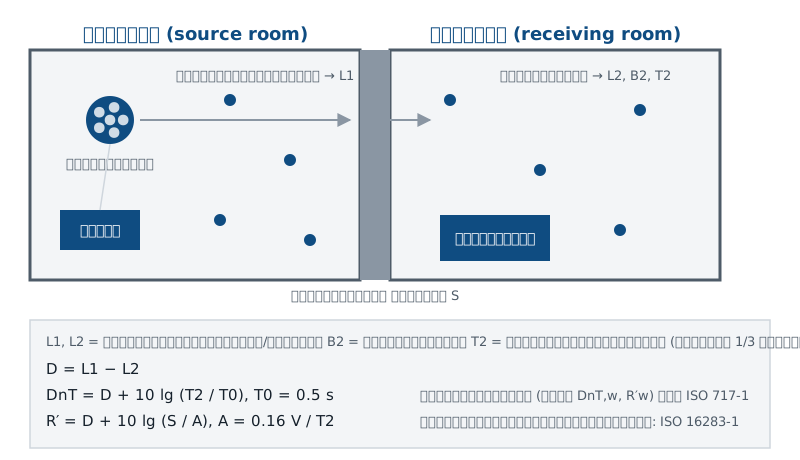
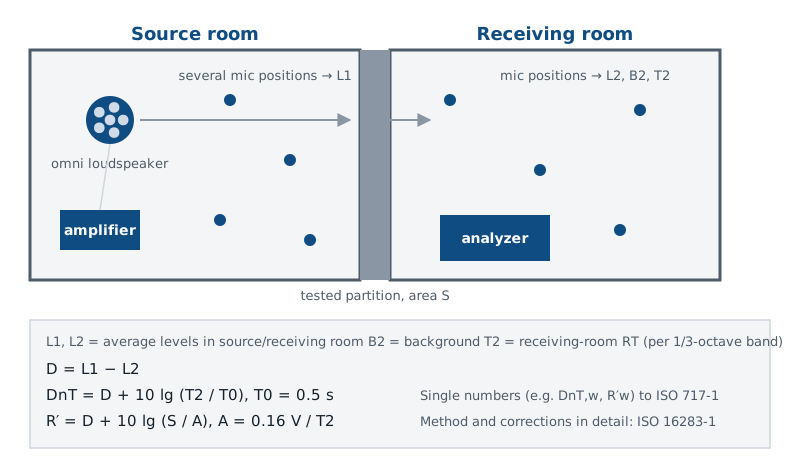
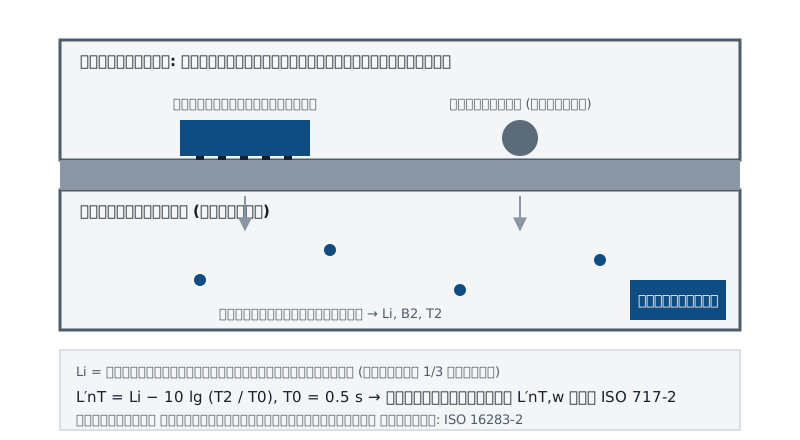
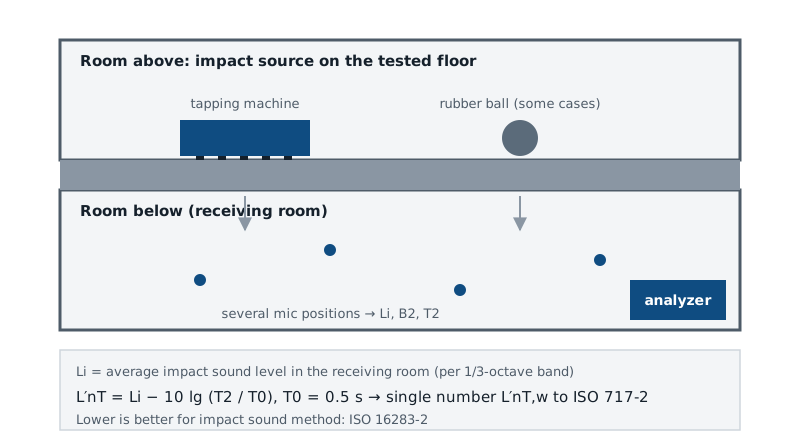
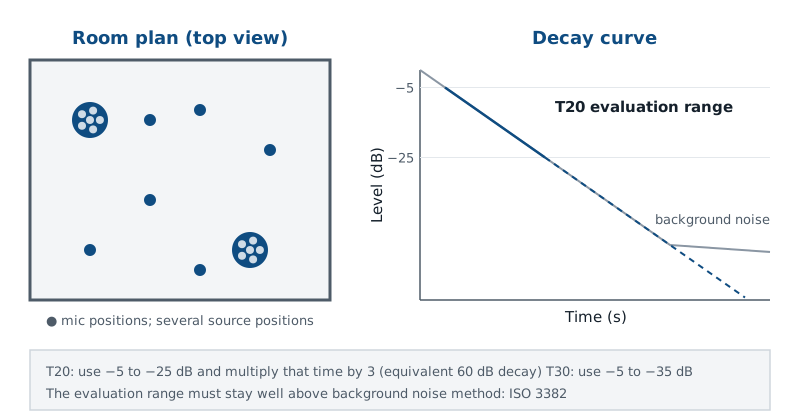
ตัวย่อในภาพ: T0 = 0.5 s คือเวลาเสียงก้องอ้างอิงสำหรับที่อยู่อาศัย S คือพื้นที่ผนังทดสอบ A คือพื้นที่ดูดซับเสียงเทียบเท่าของห้องรับ คำนวณจาก A = 0.16 V / T2 เมื่อ V คือปริมาตรห้องรับ ค่าแก้เสียงพื้นหลังใช้ได้เฉพาะเมื่อระดับที่วัดสูงกว่าเสียงพื้นหลังตามเงื่อนไขในมาตรฐาน ถ้าไม่ถึง ต้องรายงานเป็นค่าจำกัดของการวัดSymbols in the figures: T0 = 0.5 s is the reference reverberation time for dwellings; S is the area of the tested partition; A is the equivalent absorption area of the receiving room, A = 0.16 V / T2, where V is the receiving-room volume. The background correction may only be applied when the measured level exceeds the background by the margin the standard sets; otherwise the value is reported as a measurement limit.
คิดเป็นระบบ: ลำดับงานหน้างานSystem thinking: the sequence on site
- ก่อนออกหน้างาน: อ่านข้อกำหนดของงาน (ห้องไหน วัดค่าอะไร ช่วงความถี่ใด มาตรฐานใด) เตรียมผังห้อง ชาร์จแบตเตอรี่ และตรวจว่าเครื่องมืออยู่ในรอบการสอบเทียบBefore going to site: read the job specification (which rooms, which quantities, which frequency range, which standard), prepare room plans, charge batteries and check that the instruments are within their calibration interval.
- เริ่มงาน: ตรวจเครื่องวัดทุกเครื่องด้วยเครื่องสอบเทียบ วัดขนาดห้องและพื้นที่ผนัง บันทึกสภาพห้อง (ว่าง มีเฟอร์นิเจอร์ ประตูปิด)Start of work: check every meter with the calibrator, measure room dimensions and partition area, and record the room condition (empty, furnished, doors closed).
- วัด: ระดับเสียงห้องส่งและห้องรับ (หรือเสียงกระแทก) เสียงพื้นหลัง และเวลาเสียงก้องของห้องรับ ตามจำนวนตำแหน่งที่มาตรฐานกำหนดMeasure: source and receiving-room levels (or impact levels), background noise and receiving-room reverberation time, at the number of positions the standard requires.
- ตรวจผลก่อนออกจากพื้นที่: ดูว่าทุกย่านผ่านเงื่อนไขเสียงพื้นหลัง และไม่มีย่านที่ผิดปกติจนน่าสงสัยว่ามีรอยรั่วหรือเสียงรบกวนเข้ามาCheck before leaving: confirm that every band meets the background condition and that no band looks abnormal enough to suggest a leak or intrusive noise.
- จบงาน: ตรวจด้วยเครื่องสอบเทียบอีกครั้ง แล้วประมวลผลและทำรายงานด้วยซอฟต์แวร์ที่คำนวณตามมาตรฐานFinish: check with the calibrator again, then process and report with software that calculates to the standard.
ในเครื่องมือ NTi AudioHow NTi Audio equipment fits
ส่วนนี้เป็นข้อมูลเฉพาะของ NTi Audio ตามที่ NTi Audio ระบุ ชุดมาตรฐานสำหรับงานอะคูสติกอาคาร ประกอบด้วยลำโพง DS3 ขาตั้ง และเพาเวอร์แอมป์ PA3, เครื่องวิเคราะห์ XL3 กับไมโครโฟน M2230 และฟองกันลม 1/2 นิ้ว, เครื่องสอบเทียบ Class 1 และ XL3 Sound Insulation Bundle โดยเพิ่มเครื่องเคาะ TM EOS2, ลูกบอลกระแทก IB01 และเป้สำหรับ XL3 ตามลักษณะงาน สำหรับงานอะคูสติกห้อง NTi Audio ระบุชุดที่ประกอบด้วยลำโพง DS3 เครื่องวิเคราะห์ XL3 และซอฟต์แวร์ Room Acoustics ReporterThis part is NTi Audio-specific. As NTi Audio describes it, the standard building acoustics kit is the DS3 loudspeaker with stand and PA3 power amplifier; the XL3 analyzer with an M2230 microphone and 1/2-inch windscreen; the Class 1 sound calibrator; and the XL3 Sound Insulation Bundle, with the TM EOS2 tapping machine, IB01 impact ball and an XL3 backpack added depending on the application. For room acoustics, NTi Audio lists a kit of the DS3 loudspeaker, the XL3 analyzer and the Room Acoustics Reporter software.
- DS3 + PA3: ลำโพงรอบทิศ 12 ดอกลำโพง กำลังเสียงโดยทั่วไป 120.5 dB น้ำหนัก 7.5 kg PA3 จ่ายเสียงชมพูที่ปรับแต่งแล้ว และ NTi Audio ระบุว่าเป็นไปตามข้อกำหนดของ ISO 16283-1 เรื่องความต่างระหว่างย่าน 1/3 ออกเตฟที่อยู่ติดกัน มีรีโมตวิทยุสั่งเปิด/ปิดจากนอกห้องDS3 + PA3: an omnidirectional loudspeaker with 12 drivers, typical sound power 120.5 dB, weight 7.5 kg. The PA3 feeds equalised pink noise, and NTi Audio states it meets the ISO 16283-1 requirement on the difference between contiguous 1/3-octave bands. A radio remote switches it from outside the room.
- Minirator MR-PRO: NTi Audio ระบุว่าสร้างเสียงชมพูแบบ gated ที่มี crest factor ต่ำสำหรับการวัดเวลาเสียงก้องMinirator MR-PRO: NTi Audio states that it generates gated pink noise with a low crest factor for reverberation time measurements.
- ซอฟต์แวร์: Sound Insulation Reporter ควบคุมเครื่องวัดสองเครื่องขึ้นไปเพื่อวัดห้องส่งและห้องรับพร้อมกันได้ (ต้องมี XL2 Remote Measurement Option บนเครื่อง) และแสดงผลย่าน 50 Hz ถึง 5 kHz ส่วน Room Acoustics Reporter ทำรายงานเวลาเสียงก้องตาม ISO 3382 และ DIN 18041Software: the Sound Insulation Reporter can control two or more meters to measure the source and receiving rooms at the same time (the XL2 Remote Measurement Option is required on the instrument) and shows results from 50 Hz to 5 kHz. The Room Acoustics Reporter produces reverberation time reports to ISO 3382 and DIN 18041.
ตัวอย่างงานวิศวกรรมPractical engineering example
ทีมตรวจรับอาคารหอพักต้องวัดสามอย่างในวันเดียว คือการกันเสียงผ่านอากาศของผนังระหว่างห้อง เสียงกระแทกของพื้นระหว่างชั้น และเวลาเสียงก้องของห้องอ่านหนังสือรวม ก่อนออกหน้างาน ทีมทำรายการตามมาตรฐาน: เครื่องวิเคราะห์สองเครื่องพร้อมการควบคุมระยะไกลเพื่อวัดสองห้องพร้อมกัน ไมโครโฟน Class 1 และเครื่องสอบเทียบ ลำโพงรอบทิศพร้อมเพาเวอร์แอมป์ เครื่องเคาะมาตรฐาน ขาตั้ง เครื่องวัดระยะ และแหล่งไฟสำรองเพราะไฟในอาคารยังไม่เสถียร ที่หน้างานพบว่าเสียงเครื่องจักรก่อสร้างทำให้ย่าน 50 ถึง 80 Hz ใช้ไม่ได้ในช่วงกลางวัน ทีมจึงวัดเสียงพื้นหลังทุกครั้ง และนัดวัดซ้ำช่วงเย็นสำหรับห้องที่ผลย่านต่ำไม่ผ่านเงื่อนไขการแก้ค่าA team doing acceptance tests in a dormitory must measure three things in one day: airborne insulation of the walls between rooms, impact sound of the floors between storeys, and the reverberation time of a shared study room. Before going to site they build a checklist from the standards: two analyzers with remote control to measure two rooms at once, a Class 1 microphone and calibrator, an omnidirectional loudspeaker with amplifier, a tapping machine, stands, a distance meter and backup power because the building supply is not yet stable. On site, construction machinery makes the 50–80 Hz bands unusable during the day, so the team measures background noise every time and returns in the evening for rooms whose low bands failed the correction conditions.
ความเข้าใจผิดที่พบบ่อยCommon misunderstandings
- “ลำโพงบลูทูธตัวใหญ่ใช้แทนลำโพงรอบทิศได้” ลำโพงทั่วไปมีทิศทางชัดเจนและสเปกตรัมไม่เรียบ มาตรฐานกำหนดคุณสมบัติของแหล่งเสียงไว้“A big Bluetooth speaker can replace an omnidirectional source.” Ordinary loudspeakers are directional with an uneven spectrum; the standards set requirements for the source.
- “เดินกระทืบพื้นแทนเครื่องเคาะได้” แรงกระแทกของคนไม่คงที่และทำซ้ำไม่ได้ จึงต้องใช้แหล่งเสียงกระแทกมาตรฐาน“Stamping on the floor can replace a tapping machine.” Human impacts are not consistent or repeatable, so a standard impact source is needed.
- “วัดเฉพาะค่ารวม dBA ก็พอ” งานห้องและงานกันเสียงต้องการผลแยกย่าน 1/3 ออกเตฟ“An overall dBA value is enough.” Room and insulation work need results in 1/3-octave bands.
- “ไม่ต้องวัดเสียงพื้นหลังและเวลาเสียงก้องของห้องรับ” ทั้งสองจำเป็นสำหรับการแก้ค่าตามมาตรฐาน“Background noise and receiving-room reverberation can be skipped.” Both are needed for the corrections in the standard.
คำถามที่พบบ่อยFrequently asked questions
ใช้เครื่องวัดเครื่องเดียววัดการกันเสียงได้ไหมCan sound insulation be measured with one meter?
ได้ โดยวัดห้องส่งและห้องรับทีละห้องขณะแหล่งเสียงทำงานคงที่ แต่ใช้เวลานานกว่า การใช้เครื่องสองเครื่องที่ควบคุมพร้อมกันช่วยให้วัดสองห้องในเวลาเดียวกันและลดเวลาหน้างานYes, by measuring the source and receiving rooms one after the other while the source runs steadily, but it takes longer. Two meters controlled together measure both rooms at the same time and shorten site time.
แหล่งเสียงต้องดังแค่ไหนHow loud must the source be?
ต้องดังพอให้ระดับในห้องรับสูงกว่าเสียงพื้นหลังในทุกย่านที่ต้องรายงานตามเงื่อนไขของมาตรฐาน ผนังที่กันเสียงได้ดีมาก ห้องที่มีเสียงพื้นหลังสูง และย่านความถี่ต่ำ เป็นกรณีที่แหล่งเสียงมักไม่พอ ให้ตรวจกำลังเสียงของลำโพงและวางแผนวัดในช่วงเวลาที่เงียบLoud enough for the receiving-room level to exceed the background in every reported band by the margin the standard requires. Very good walls, noisy buildings and low frequencies are where sources most often fall short; check the loudspeaker's sound power and plan measurements for quiet periods.
เวลาเสียงก้องของห้องรับวัดด้วยอุปกรณ์ชุดเดียวกันได้ไหมCan the receiving-room reverberation time be measured with the same kit?
ได้ ใช้ลำโพงรอบทิศและเครื่องวัดที่มีฟังก์ชันวัดเวลาเสียงก้องในย่าน 1/3 ออกเตฟ ค่านี้ใช้แก้ผลการกันเสียง จึงต้องวัดในห้องรับเดียวกันและสภาพเดียวกันYes, with the omnidirectional loudspeaker and a meter that measures reverberation time in 1/3-octave bands. The value is used to correct the insulation result, so it must be measured in the same receiving room in the same condition.
เช่าอุปกรณ์หรือจ้างวัดดีกว่าซื้อไหมIs it better to rent or hire a service than to buy?
ถ้ามีงานน้อยครั้งต่อปี การจ้างผู้ให้บริการวัดที่มีอุปกรณ์ครบและมีประสบการณ์มักคุ้มกว่า ถ้ามีงานต่อเนื่อง การมีชุดเองพร้อมการฝึกอบรมและการสอบเทียบตามรอบช่วยให้ควบคุมเวลาและคุณภาพได้เองFor a few jobs a year, hiring an experienced measurement service with a complete kit is often more economical. With a steady workload, owning a kit, with training and calibration at intervals, gives control over time and quality.
คำศัพท์สำคัญKey terms
- ลำโพง DodecahedronDodecahedron loudspeaker
- ลำโพงทรงสิบสองหน้าที่กระจายเสียงใกล้เคียงกันทุกทิศA twelve-sided loudspeaker radiating nearly equally in all directions.
- เครื่องเคาะมาตรฐาน (Tapping machine)Tapping machine
- แหล่งเสียงกระแทกมาตรฐานที่ใช้ค้อนตกกระทบพื้นด้วยจังหวะและแรงคงที่A standard impact source whose hammers strike the floor at a fixed rate and force.
- เสียงชมพู (Pink noise)Pink noise
- สัญญาณรบกวนที่มีพลังงานเท่ากันในทุกย่านออกเตฟA noise signal with equal energy in every octave band.
- ห้องส่ง / ห้องรับ (Source / receiving room)Source / receiving room
- ห้องที่เปิดเสียงทดสอบ / ห้องอีกด้านที่วัดเสียงที่ผ่านมาThe room with the test sound / the room on the other side where transmitted sound is measured.
- ผลตอบสนองอิมพัลส์ (Impulse response)Impulse response
- การตอบสนองของห้องต่อเสียงสั้นมาก ใช้คำนวณเวลาเสียงก้องและพารามิเตอร์อื่นA room's response to a very short sound, used to calculate reverberation time and other parameters.