ทำไมเรื่องนี้สำคัญWhy this matters
ในโรงงาน โรงพิมพ์ งานก่อสร้าง หรือครัวขนาดใหญ่ พนักงานอาจอยู่กับเสียงดังทั้งวัน ผลระยะสั้นคือความเหนื่อยล้าและสมาธิที่ลดลง ผลระยะยาวที่สำคัญที่สุดคือการสูญเสียการได้ยิน ซึ่งเกิดขึ้นช้า ๆ โดยเจ้าตัวมักไม่รู้สึก และเมื่อเซลล์รับเสียงในหูชั้นในเสียหายแล้วจะไม่ฟื้นกลับมาIn factories, print shops, construction and large kitchens, workers may be surrounded by loud noise all day. The short-term effects are fatigue and reduced concentration; the most important long-term effect is hearing loss, which develops slowly, often unnoticed, and cannot be reversed once the sensory cells of the inner ear are damaged.
เพราะความเสียหายสะสมอย่างเงียบ ๆ นายจ้างจึงต้องประเมินล่วงหน้าว่าพนักงานได้รับเสียงมากแค่ไหน แล้วลดเสียงหรือจัดอุปกรณ์ป้องกันก่อนเกิดปัญหา การประเมินนี้ต้องใช้ค่าที่รวมทั้งความดังและระยะเวลาเข้าด้วยกันBecause the damage builds up quietly, employers have to assess in advance how much noise each worker receives, then reduce the noise or provide protection before harm occurs. That assessment needs a value that combines loudness and duration.
แนวคิดพื้นฐาน: ‘ปริมาณเสียง’ ที่หูได้รับThe basic idea: the ‘dose’ of sound the ear receives
ลองนึกถึงแดด ยืนกลางแดดจัดห้านาทีไม่เป็นไร แต่ยืนทั้งวันผิวไหม้ได้ เสียงก็คล้ายกัน สิ่งที่ทำร้ายหูคือ พลังงานเสียงทั้งหมดที่ได้รับตลอดวัน เสียงเบากว่าแต่ได้ยินนานอาจอันตรายพอ ๆ กับเสียงดังมากแต่ได้ยินสั้น ๆThink of sunshine: five minutes in strong sun is fine, a whole day can burn your skin. Sound works in a similar way. What harms the ear is the total sound energy received over the day: a quieter noise heard for a long time can be as harmful as a very loud one heard briefly.
ขั้นแรกจึงวัดระดับเสียงเฉลี่ยเทียบเท่าถ่วงน้ำหนัก A (LAeq) ซึ่งเป็นค่าเฉลี่ยพลังงานเสียงตลอดช่วงที่วัด การถ่วงน้ำหนัก A เป็นการถ่วงน้ำหนักมาตรฐานที่อิงคร่าว ๆ กับความไวของหูที่ระดับเสียงปานกลาง จากนั้นจึงแปลงค่าเฉลี่ยนี้ให้เป็น ‘วันทำงานมาตรฐาน 8 ชั่วโมง’ เพื่อเทียบกับเกณฑ์ได้The first step is to measure the A-weighted equivalent continuous level (LAeq), an energy average over the measurement period; A-weighting is a standardised weighting loosely based on the ear's sensitivity at moderate levels. This average is then converted to a ‘standard 8-hour working day’ so it can be compared with the criteria.
LEX,8h: ระดับการสัมผัสเสียงต่อวันทำงาน 8 ชั่วโมงLEX,8h: the daily exposure over an 8-hour day
ระดับการสัมผัสเสียงต่อวัน (daily noise exposure level, LEX,8h) คือระดับเสียงที่ถ้าได้ยินต่อเนื่อง 8 ชั่วโมงพอดี จะให้พลังงานเสียงเท่ากับที่พนักงานได้รับจริงในวันนั้น ถ้าพนักงานทำงานในเสียงดังนานกว่าหรือสั้นกว่า 8 ชั่วโมง ค่านี้จะถูกปรับตามเวลาจริงThe daily noise exposure level (LEX,8h) is the level that, heard continuously for exactly 8 hours, would deliver the same sound energy the worker actually received that day. If the worker spends more or less than 8 hours in the noise, the value is adjusted for the real time.
สูตรที่ใช้ เมื่อ T คือเวลาที่ได้รับเสียงจริง (ชั่วโมง):
LEX,8h = LAeq,T + 10 × log10(T / 8)The formula, where T is the actual exposure time in hours:
LEX,8h = LAeq,T + 10 × log10(T / 8)
| สถานการณ์Situation | LAeq ขณะทำงานLAeq while working | เวลาที่ได้รับเสียงExposure time | LEX,8h |
|---|---|---|---|
| ทำงานเต็มวันFull shift | LAeq ขณะทำงานLAeq while working85 dB(A)85 dB(A) | เวลาที่ได้รับเสียงExposure time8 ชั่วโมง8 hours | LEX,8h85 dB(A)85 dB(A) |
| อยู่ในพื้นที่เสียงดังครึ่งวันHalf the day in the noisy area | LAeq ขณะทำงานLAeq while working88 dB(A)88 dB(A) | เวลาที่ได้รับเสียงExposure time4 ชั่วโมง4 hours | LEX,8hประมาณ 85 dB(A) (88 − 3)about 85 dB(A) (88 − 3) |
| ทำงานล่วงเวลาOvertime | LAeq ขณะทำงานLAeq while working85 dB(A)85 dB(A) | เวลาที่ได้รับเสียงExposure time10 ชั่วโมง10 hours | LEX,8hประมาณ 86 dB(A) (85 + 1)about 86 dB(A) (85 + 1) |
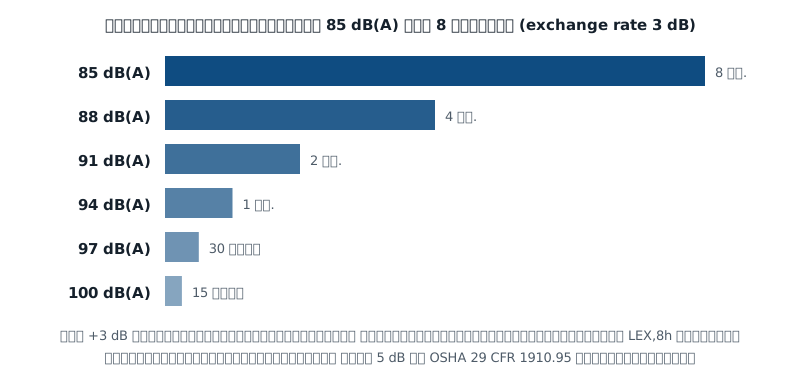
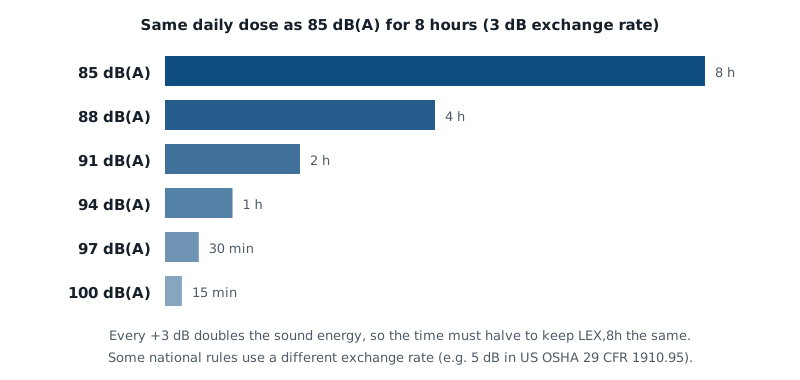
จากสูตรจะเห็นว่าเวลาที่ได้รับเสียงลดลงครึ่งหนึ่ง ทำให้ LEX,8h ลดลงประมาณ 3 dB กลับกัน ถ้าเสียงดังขึ้น 3 dB ต้องลดเวลาลงครึ่งหนึ่งจึงจะได้ปริมาณเสียงเท่าเดิม เสียงที่ดูต่างกันเพียงเล็กน้อยจึงมีผลต่อเวลาที่ทำงานได้อย่างปลอดภัยมากThe formula shows that halving the exposure time lowers LEX,8h by about 3 dB. Conversely, if the noise is 3 dB louder, the time must be halved to receive the same dose. A seemingly small difference in level therefore has a large effect on how long someone can safely work.
กฎ “ทุก 3 dB เวลาลดครึ่ง” นี้ (exchange rate 3 dB) มาจากหลักพลังงานเท่ากัน (equal-energy) ที่ ISO 9612 และ EU Directive ใช้ กฎเกณฑ์ของบางประเทศใช้หลักต่างออกไป เช่น ข้อบังคับ OSHA ของสหรัฐอเมริกา (29 CFR 1910.95) ใช้ 5 dB จึงต้องคำนวณตามวิธีของกฎเกณฑ์ที่ใช้บังคับเสมอThis “3 dB halves the time” rule (a 3 dB exchange rate) follows from the equal-energy principle used by ISO 9612 and the EU Directive. Some national rules work differently, for example the US OSHA regulation (29 CFR 1910.95) uses 5 dB, so always calculate with the method of the applicable rules.
รายละเอียดเชิงวิศวกรรม: รวมหลายงานเป็น LEX,8h และปริมาณเสียง (dose)Engineering detail: combining tasks into LEX,8h, and noise dose
พนักงานส่วนใหญ่ไม่ได้อยู่กับเสียงระดับเดียวทั้งวัน ถ้าแบ่งวันทำงานเป็นงานย่อย m งาน แต่ละงานมีระดับ LAeq,i และเวลา Ti (ชั่วโมง) LEX,8h คำนวณจากการรวมพลังงานของแต่ละงาน:
LEX,8h = 10 × log10[ Σ (Ti / 8) × 10^(LAeq,i / 10) ]
สูตรนี้คือการ “เฉลี่ยพลังงาน” ไม่ใช่การเฉลี่ยตัวเลขเดซิเบล งานที่ดังที่สุดจึงมักเป็นตัวกำหนดผลแม้ใช้เวลาไม่นานMost workers are not exposed to a single level all day. If the working day is split into m tasks, each with level LAeq,i and duration Ti (hours), LEX,8h is found by adding the energy of each task:
LEX,8h = 10 × log10[ Σ (Ti / 8) × 10^(LAeq,i / 10) ]
This is an energy average, not an average of decibel numbers, so the loudest task usually dominates the result even if it is short.
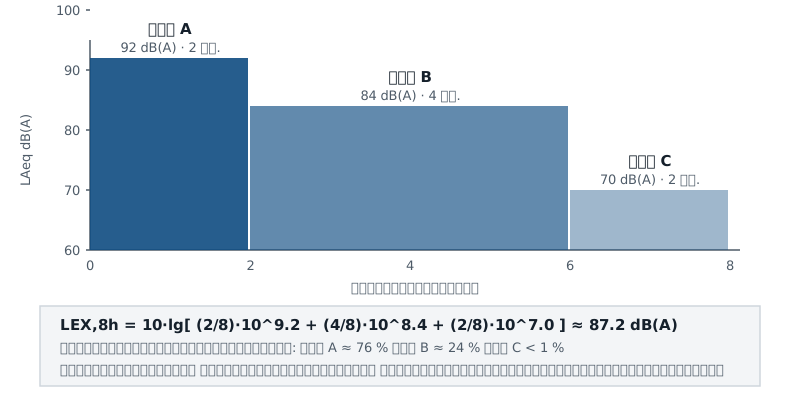
พนักงานซ่อมบำรุงในโรงงานมีวันทำงานสามช่วง งาน A เจียรชิ้นงานเหล็ก 2 ชั่วโมง LAeq 92 dB(A) งาน B เดินตรวจสายการผลิต 4 ชั่วโมง LAeq 84 dB(A) งาน C ทำเอกสารในห้องควบคุม 2 ชั่วโมง LAeq 70 dB(A)
LEX,8h = 10 × log10[(2/8)×10^9.2 + (4/8)×10^8.4 + (2/8)×10^7.0] ≈ 87.2 dB(A)
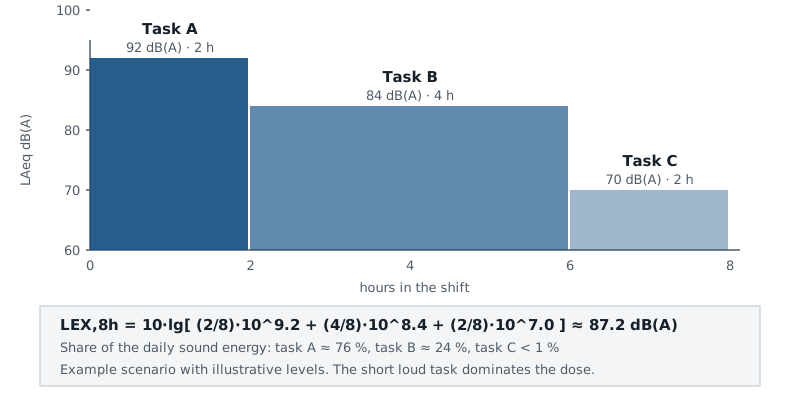
ถ้าดูแค่ค่า “เฉลี่ยเลขคณิต” ของสามงาน (82 dB(A)) จะประเมินต่ำไปมาก งาน A ที่ใช้เวลาเพียงหนึ่งในสี่ของวันให้พลังงานเสียงราว 76 % ของทั้งวัน มาตรการที่คุ้มค่าที่สุดจึงอยู่ที่งานเจียร เช่น ลดเวลาที่ต้องเจียร ใช้เครื่องมือที่เงียบกว่า หรือแยกพื้นที่ ถ้าลดเวลางาน A เหลือ 1 ชั่วโมงโดยย้ายไปทำงาน C แทน LEX,8h จะลดเหลือประมาณ 85.2 dB(A) (ระดับเสียงเป็นค่าสมมติ)A maintenance technician's day has three parts. Task A, grinding steel parts, 2 hours at LAeq 92 dB(A). Task B, walking the production line, 4 hours at 84 dB(A). Task C, paperwork in the control room, 2 hours at 70 dB(A).
LEX,8h = 10 × log10[(2/8)×10^9.2 + (4/8)×10^8.4 + (2/8)×10^7.0] ≈ 87.2 dB(A).
Taking the arithmetic mean of the three levels (82 dB(A)) would badly underestimate the exposure. Task A, only a quarter of the day, delivers about 76 % of the day's sound energy, so the most effective measures target the grinding: less grinding time, quieter tools or separating the area. Cutting task A to 1 hour and moving that hour to task C would lower LEX,8h to about 85.2 dB(A). (Hypothetical levels.)
ปริมาณเสียง (noise dose) เป็นอีกวิธีหนึ่งในการบอกผลเดียวกัน โดยเทียบกับเกณฑ์เป็นเปอร์เซ็นต์ 100 % หมายถึงได้รับเสียงเท่ากับระดับเกณฑ์นาน 8 ชั่วโมง สำหรับหลักพลังงานเท่ากัน (exchange rate 3 dB) คำนวณได้จาก dose = 100 % × 10^((LEX,8h − L เกณฑ์) / 10) เช่น ถ้าใช้ 85 dB(A) เป็นระดับเกณฑ์ LEX,8h 87.2 dB(A) เท่ากับประมาณ 166 % เครื่องวัดปริมาณเสียงส่วนบุคคลแสดงค่านี้ได้ทันที แต่ต้องตั้งระดับเกณฑ์ exchange rate และระดับ threshold ให้ตรงกับกฎเกณฑ์ที่ใช้ ไม่เช่นนั้นเปอร์เซ็นต์ที่แสดงจะไม่มีความหมายNoise dose expresses the same result as a percentage of a criterion: 100 % means receiving the criterion level for 8 hours. With the equal-energy principle (3 dB exchange rate), dose = 100 % × 10^((LEX,8h − L criterion) / 10); with an 85 dB(A) criterion, an LEX,8h of 87.2 dB(A) is about 166 %. A personal noise dosimeter shows this directly, but its criterion level, exchange rate and threshold must be set to the applicable rules, otherwise the percentage it displays is meaningless.
ตำแหน่งไมโครโฟนและเครื่องมือที่ใช้Microphone position and instruments
สิ่งที่ต้องการรู้คือเสียงที่ เข้าหูของพนักงาน ไม่ใช่เสียงที่ตำแหน่งใดก็ได้ในห้อง ISO 9612 จึงกำหนดให้วางไมโครโฟนใกล้หูของพนักงานในระยะสั้น ๆ ด้านที่ได้รับเสียงมากกว่า และให้ผู้วัดระวังไม่ให้ร่างกายของตนบังหรือสะท้อนเสียง ถ้าพนักงานไม่อยู่ที่ตำแหน่ง ให้วัดที่ตำแหน่งศีรษะของพนักงานเมื่อทำงานตามปกติWhat matters is the sound at the worker's ear, not somewhere in the room. ISO 9612 therefore places the microphone a short distance from the worker's ear, on the more exposed side, with the operator taking care not to shield or reflect sound with their own body. If the worker is not present, measure at the position the worker's head occupies during normal work.
| เครื่องมือInstrument | ข้อดีStrengths | ข้อควรระวังWatch out for |
|---|---|---|
| เครื่องวัดระดับเสียงแบบถือ (IEC 61672)Hand-held sound level meter (IEC 61672) | ข้อดีStrengthsผู้วัดเห็นและฟังสิ่งที่เกิดขึ้น เหมาะกับการวัดแบบแยกตามงาน วิเคราะห์ความถี่ได้เพื่อเลือกวิธีลดเสียงและอุปกรณ์ป้องกันThe operator sees and hears what happens; suits task-based measurement; frequency analysis helps choose noise control and hearing protection | ข้อควรระวังWatch out forต้องตามพนักงานไป ใช้ยากกับงานที่เคลื่อนที่มากThe operator has to follow the worker; awkward for highly mobile work |
| เครื่องวัดปริมาณเสียงส่วนบุคคล (IEC 61252)Personal sound exposure meter / dosimeter (IEC 61252) | ข้อดีStrengthsติดตัวพนักงาน ไมโครโฟนอยู่บนไหล่ใกล้หู เหมาะกับงานที่เคลื่อนที่และการวัดทั้งวันWorn by the worker with the microphone on the shoulder near the ear; suits mobile work and full-day measurement | ข้อควรระวังWatch out forการกระแทกหรือการพูดใกล้ไมโครโฟนทำให้เกิดค่าพีกปลอมได้ ควรมีบันทึกกิจกรรมประกอบKnocks or speaking close to the microphone can create false peaks; keep an activity log alongside |
- วัดหลายตัวอย่างต่องาน เพราะเสียงของงานเดียวกันก็แกว่งไปตามชิ้นงานและผู้ปฏิบัติ ISO 9612 ใช้จำนวนตัวอย่างและเวลาวัดในการคำนวณค่าความไม่แน่นอนด้วยTake several samples per task, because the same task varies with the workpiece and the person; ISO 9612 also uses the number and duration of samples to calculate the uncertainty.
- ตรวจด้วยเครื่องสอบเทียบก่อนและหลัง ISO 9612:2009 (ฉบับเก่าที่ถูกแทนที่แล้ว) กำหนดว่าถ้าผลการตรวจหลังวัดต่างจากก่อนวัดเกิน 0.5 dB ต้องทิ้งผลชุดนั้น (ตรวจเกณฑ์นี้กับฉบับปัจจุบัน ISO 9612:2025 ด้วย)Check with a calibrator before and after: ISO 9612:2009 (superseded) requires results to be discarded if the after-check differs from the before-check by more than 0.5 dB (confirm this criterion in the current edition, ISO 9612:2025).
- วัด LCpeak พร้อมกัน กับ LAeq เสมอในงานที่มีเสียงกระแทกMeasure LCpeak together with LAeq in any work with impacts.
LCpeak: เสียงกระแทกที่อันตรายได้ในครั้งเดียวLCpeak: impulses that can harm in a single event
ค่าเฉลี่ยทั้งวันไม่สะท้อนเสียงที่สั้นแต่แรงมาก เช่น เครื่องปั๊มโลหะ การตอกด้วยค้อน หรือเสียงปืน เสียงเหล่านี้กินเวลาเพียงเสี้ยววินาทีจึงแทบไม่เปลี่ยนค่าเฉลี่ย แต่ความดันเสียงขณะนั้นสูงพอจะทำร้ายหูได้ทันที จึงต้องวัดอีกค่าหนึ่งแยกต่างหาก คือ ค่าพีกถ่วงน้ำหนัก C (LCpeak) ซึ่งเป็นค่าความดันเสียงสูงสุดขณะใดขณะหนึ่ง โดยใช้การถ่วงน้ำหนัก C ที่เกือบเรียบตลอดย่านความถี่A full-day average does not reflect very short, very strong sounds such as metal presses, hammering or gunfire. They last a fraction of a second, so they hardly change the average, but the pressure at that instant can harm the ear immediately. A separate value is therefore measured: the C-weighted peak (LCpeak), the highest instantaneous sound pressure, using the C-weighting, which is almost flat across frequency.
ในการวัดของ NTi Audio ที่สนามยิงปืนในร่ม ค่า LCpeak ที่ระยะ 2.5 เมตรจากปืนพกสูงประมาณ 154 dB และเมื่อคำนวณไปที่ตำแหน่งหูของผู้ยิงสูงกว่า 165 dB ซึ่งสูงกว่าค่าพีกทุกค่าในตารางด้านล่างมาก แสดงให้เห็นว่าทำไมเสียงกระแทกต้องประเมินแยกจากค่าเฉลี่ยIn NTi Audio's measurements at an indoor shooting range, LCpeak at 2.5 m from a pistol was about 154 dB, and projected to the shooter's ear position it exceeded 165 dB, far above every peak value in the table below. This shows why impulses must be assessed separately from the average.
ค่าระดับที่ต้องดำเนินการ: ตัวอย่างจาก EU Directive 2003/10/ECAction values: the example of EU Directive 2003/10/EC
ในสหภาพยุโรป ข้อกำหนดขั้นต่ำเรื่องเสียงในที่ทำงานอยู่ใน Directive 2003/10/EC ซึ่งแบ่งเป็นสามระดับ แต่ละระดับมีทั้งค่าสำหรับ LEX,8h และ LCpeak ถ้าค่าใดค่าหนึ่งถึงเกณฑ์ ถือว่าถึงระดับนั้นIn the European Union, the minimum requirements for noise at work are set by Directive 2003/10/EC. It has three tiers, each with a value for LEX,8h and one for LCpeak; reaching either value means that tier applies.
| ระดับTier | LEX,8h | LCpeak | สิ่งที่ต้องทำ (สรุป)What follows (summary) |
|---|---|---|---|
| ระดับที่ต้องเริ่มดำเนินการ (ขั้นต่ำ)Lower action value | LEX,8h80 dB(A)80 dB(A) | LCpeak135 dB(C)135 dB(C) | สิ่งที่ต้องทำ (สรุป)What follows (summary)นายจ้างต้องจัดอุปกรณ์ป้องกันเสียงให้พร้อมใช้ และให้ข้อมูลและการฝึกอบรมแก่พนักงานThe employer must make hearing protectors available and inform and train workers |
| ระดับที่ต้องดำเนินการ (ขั้นสูง)Upper action value | LEX,8h85 dB(A)85 dB(A) | LCpeak137 dB(C)137 dB(C) | สิ่งที่ต้องทำ (สรุป)What follows (summary)ต้องสวมอุปกรณ์ป้องกันเสียง และนายจ้างต้องมีแผนมาตรการทางเทคนิคและการจัดการเพื่อลดการสัมผัสเสียงHearing protectors must be used, and the employer must implement a programme of technical and organisational measures to reduce exposure |
| ค่าจำกัดการสัมผัสเสียงExposure limit value | LEX,8h87 dB(A)87 dB(A) | LCpeak140 dB(C)140 dB(C) | สิ่งที่ต้องทำ (สรุป)What follows (summary)เสียงที่ถึงหูพนักงานซึ่งสวมอุปกรณ์ป้องกันแล้ว ต้องไม่เกินค่านี้เลยThe noise reaching the ear of a worker wearing protection must never exceed these values |
ตารางนี้เป็นค่าของสหภาพยุโรป ใช้เพื่ออธิบายหลักการ NTi Audio ยังอ้างถึงกฎหมายของสหราชอาณาจักร (Control of Noise at Work Regulations 2005) และมาตรฐาน ISO 1999 ที่เกี่ยวข้องกับผลของเสียงต่อการได้ยิน ประเทศไทยมีกฎหมายความปลอดภัยในการทำงานของตัวเอง ซึ่งอาจใช้ค่าและวิธีคิดต่างจากนี้ ก่อนประเมินจริงต้องตรวจสอบข้อกำหนดฉบับปัจจุบันที่ใช้บังคับกับสถานประกอบการนั้นThis table gives the European Union values and is used here to explain the principle. NTi Audio also refers to the UK Control of Noise at Work Regulations 2005 and to ISO 1999, which concerns the effect of noise on hearing. Thailand has its own occupational safety law, which may use different values and methods; before a real assessment, check the current requirements that apply to the workplace.
วัดอย่างไรHow it is measured
มาตรฐานสากลสำหรับการวัดเสียงในที่ทำงานคือ ISO 9612 ซึ่งมีกลยุทธ์การวัดสามแบบ คือ แบบแยกตามงาน (task-based) แบบตามตำแหน่งงาน (job-based) และแบบวัดทั้งวัน (full-day) หลักคิดง่าย ๆ คือเลือกวิธีตามลักษณะของเสียงในวันทำงานThe international standard for measuring noise at work is ISO 9612, which offers three strategies: task-based, job-based and full-day measurement. The simple idea is to choose the approach according to how the noise behaves during the working day.
| ลักษณะเสียงType of noise | วิธีวัดApproach |
|---|---|
| คงที่ ระดับเสียง LAS แกว่งเพียงเล็กน้อย (แนวทางทั่วไปคือไม่เกินราว 5 dB) เช่น เครื่องจักรที่เดินตลอดกะSteady: the LAS level varies only a little (a common guide is less than about 5 dB), e.g. a machine running all shift | วิธีวัดApproachวัด LAeq เพียงไม่กี่นาทีก็เป็นตัวแทนของทั้งกะได้A few minutes of LAeq represent the whole shift |
| เปลี่ยนเป็นขั้น มีหลายงานที่ระดับต่างกัน เช่น ช่วงเดินเครื่อง ช่วงตรวจงาน ช่วงพักChanges in steps: several tasks at different levels, e.g. machine operation, inspection, breaks | วิธีวัดApproachวัด LAeq ของแต่ละงานและจดเวลาที่ทำแต่ละงาน แล้วนำมารวมเป็น LEX,8h ภายหลังMeasure LAeq for each task, record how long each task lasts and combine them into LEX,8h afterwards |
| เปลี่ยนตลอดเวลา คาดเดาไม่ได้ เช่น งานก่อสร้างหรืองานซ่อมบำรุงConstantly varying: unpredictable, e.g. construction or maintenance work | วิธีวัดApproachวัด LAeq ตลอดวันทำงาน (กลยุทธ์ full-day) ถ้าได้รับเสียง 8 ชั่วโมงพอดี ค่าที่ได้คือ LEX,8h โดยตรง ถ้าไม่ใช่ให้ปรับด้วยสูตรข้างต้นMeasure LAeq over the whole working day (full-day strategy); if the exposure lasts exactly 8 hours the result is LEX,8h directly, otherwise apply the formula above |
- ใช้เครื่องวัดระดับเสียงที่เหมาะกับงาน เช่น XL2 หรือ XL3 ที่จัดเป็นชุด Class 1 (เช่น กับไมโครโฟน M2230) หรือ Class 2 (เช่น กับ M4262) โดยคลาสเป็นคุณสมบัติของชุดเครื่องวัดกับไมโครโฟนทั้งชุดUse a suitable sound level meter, such as an XL2 or XL3 configured as a Class 1 system (e.g. with the M2230 microphone) or a Class 2 system (e.g. with the M4262); the class applies to the complete meter-and-microphone system.
- ตรวจเช็กด้วยเครื่องสอบเทียบเสียงก่อนและหลังการวัดCheck the meter with a sound calibrator before and after measuring.
- วัดที่ตำแหน่งที่พนักงานทำงานจริง บันทึก LAeq และ LCpeak พร้อมกันMeasure where the worker actually works, logging LAeq and LCpeak together.
- สอบถามและจดเวลาของแต่ละงาน เพราะความผิดพลาดเรื่องเวลามีผลต่อ LEX,8h โดยตรงAsk about and record the duration of each task, because errors in time feed directly into LEX,8h.
- คำนวณ LEX,8h เทียบกับเกณฑ์ และสรุปมาตรการCalculate LEX,8h, compare it with the criteria and summarise the measures.
สำหรับการเตือนหน้างาน XL2 ใช้ร่วมกับไฟสัญญาณ Stack Light ได้ เมื่อระดับเสียงเกินค่าที่ตั้งไว้ ไฟจะเตือนให้พนักงานบริเวณนั้นรู้ทันทีFor on-the-spot warnings, the XL2 can drive a Stack Light: when the level exceeds a set value, the light alerts workers nearby straight away.
อุปกรณ์ป้องกันเสียงช่วยได้แค่ไหนHow much hearing protection helps
ที่อุดหูหรือครอบหูที่ดีลดเสียงที่ความถี่กลางและสูงได้ประมาณ 35–40 dB แต่ที่ความถี่ต่ำกว่า 500 Hz มักลดได้เพียง 15–20 dB (เป็นตัวเลขโดยประมาณจากการทดสอบ ในการใช้งานจริงมักได้น้อยกว่านี้เพราะการสวมและระยะเวลาที่สวม) ดังนั้นเสียงที่มีความถี่ต่ำมาก เช่น เสียงเครื่องยนต์ขนาดใหญ่หรือแรงอัดจากการระเบิด ยังผ่านไปถึงหูได้มากกว่าที่คาด การรู้สเปกตรัมความถี่ของเสียงจึงช่วยเลือกอุปกรณ์ป้องกันได้ถูกต้องGood earplugs or earmuffs reduce mid and high frequencies by about 35–40 dB, but below 500 Hz often by only 15–20 dB (approximate test figures; real-world protection is often lower because of fit and wearing time). Very low-frequency noise, such as large engines or blast pressure, therefore reaches the ear more than expected. Knowing the frequency spectrum of the noise helps choose the right protection.
อุปกรณ์ป้องกันควรเป็นด่านสุดท้าย สิ่งที่ได้ผลระยะยาวกว่าคือ ลดเสียงที่ต้นทาง เช่น เลือกเครื่องจักรที่เงียบกว่า ติดตั้งฐานรองลดแรงสั่นสะเทือน ทำครอบปิดเครื่อง หรือกั้นแยกพื้นที่ และลดเวลาที่พนักงานต้องอยู่ในพื้นที่เสียงดังProtection should be the last line of defence. More effective in the long run is reducing noise at the source: quieter machines, vibration-isolating mounts, enclosures or barriers, and less time spent by workers in noisy areas.
คำถามที่พบบ่อยFrequently asked questions
ควรใช้เครื่องวัดระดับเสียงหรือเครื่องวัดปริมาณเสียงส่วนบุคคลShould I use a sound level meter or a personal dosimeter?
ถ้างานแบ่งเป็นขั้นตอนชัดเจนและพนักงานอยู่ประจำที่ เครื่องวัดระดับเสียงแบบถือเหมาะกับการวัดแยกตามงาน และยังวิเคราะห์ความถี่ได้ ถ้าพนักงานเคลื่อนที่มากหรืองานคาดเดาไม่ได้ เครื่องวัดปริมาณเสียงที่ติดตัวตลอดกะเหมาะกว่า หลายโครงการใช้ทั้งสองอย่างร่วมกันIf the work divides into clear tasks and the worker stays in place, a hand-held meter suits task-based measurement and also gives frequency analysis. If the worker moves a lot or the work is unpredictable, a dosimeter worn for the whole shift is better. Many projects use both.
ต้องวัดแต่ละงานนานเท่าไรHow long should each task be measured?
นานพอให้ครอบคลุมรอบการทำงานที่เป็นตัวแทนของงานนั้น เช่น ครบหลายรอบของเครื่องจักรหรือการผลิตชิ้นงาน และทำซ้ำหลายตัวอย่าง ISO 9612 ให้รายละเอียดจำนวนและระยะเวลาขั้นต่ำตามกลยุทธ์ที่เลือกLong enough to cover representative cycles of the task, such as several machine or part cycles, repeated as several samples. ISO 9612 gives the minimum number and duration for each strategy.
ถ้าพนักงานใส่ที่อุดหู LEX,8h จะลดลงไหมIf the worker wears earplugs, does LEX,8h go down?
ไม่ LEX,8h คือเสียงที่หูเมื่อไม่มีอุปกรณ์ป้องกัน ใช้ตัดสินว่าต้องดำเนินการระดับใด ผลของอุปกรณ์ป้องกันพิจารณาแยกต่างหาก เช่น ใน EU Directive 2003/10/EC ค่าจำกัดการสัมผัสเสียงคิดผลของอุปกรณ์ป้องกันแล้ว แต่ระดับที่ต้องดำเนินการไม่ได้คิดNo. LEX,8h is the level at the unprotected ear and decides which actions are needed. Protection is considered separately; in EU Directive 2003/10/EC, for example, the exposure limit values take the protector into account but the action values do not.
ใช้เครื่อง Class 2 ได้ไหมIs a Class 2 instrument acceptable?
ISO 9612 (ฉบับ 2009) ยอมรับเครื่องมือ Class 1 หรือ Class 2 แต่เครื่อง Class 1 ให้ค่าความไม่แน่นอนต่ำกว่า และกฎหมายของบางประเทศอาจกำหนดเข้มกว่า ตรวจข้อกำหนดที่ใช้บังคับเสมอISO 9612 (2009 edition) accepts Class 1 or Class 2 instruments, but Class 1 gives a lower uncertainty, and some national laws are stricter; always check the applicable requirements.
ทำไมไม่ใช้ค่าที่อ่านได้บนจอ (Fast หรือ Slow) ตรง ๆWhy not just use the Fast or Slow reading on the display?
ค่าที่อ่านบนจอเป็นค่าชั่วขณะที่ขึ้นลงตลอดเวลา การประเมินการสัมผัสเสียงต้องใช้ LAeq ซึ่งรวมพลังงานตลอดช่วงที่วัด และ LCpeak สำหรับเสียงกระแทก ค่าชั่วขณะใช้ได้เพียงการสำรวจคร่าว ๆ ว่าพื้นที่ใดน่าจะมีปัญหาThe display shows a momentary value that rises and falls constantly. Exposure assessment needs LAeq, which integrates the energy over the measurement, and LCpeak for impulses. Momentary readings are only good for a rough walk-through to see which areas may be a problem.
คำศัพท์สำคัญKey terms
- LAeq
- ระดับเสียงเฉลี่ยเทียบเท่าถ่วงน้ำหนัก A ค่าเฉลี่ยพลังงานเสียงในช่วงที่วัดThe A-weighted equivalent continuous level: the energy average over the measurement period.
- LEX,8h
- ระดับการสัมผัสเสียงต่อวัน ปรับให้เทียบเท่าวันทำงาน 8 ชั่วโมงThe daily noise exposure level, normalised to an 8-hour working day.
- LCpeak
- ค่าพีกของความดันเสียงถ่วงน้ำหนัก C ใช้ประเมินเสียงกระแทกที่แรงมากThe C-weighted peak sound pressure level, used to assess very strong impulses.
- ระดับที่ต้องดำเนินการ (action value)Action value
- ระดับที่เมื่อถึงแล้วนายจ้างต้องเริ่มมาตรการตามกฎหมาย เช่น จัดหรือบังคับใช้อุปกรณ์ป้องกันเสียงA level at which the employer must take the measures required by law, such as providing or enforcing hearing protection.
- ค่าจำกัดการสัมผัสเสียง (exposure limit value)Exposure limit value
- ระดับที่ห้ามเกินเลย โดยคิดรวมผลของอุปกรณ์ป้องกันเสียงแล้วA level that must never be exceeded, taking account of the hearing protection worn.
ความเข้าใจผิดที่พบบ่อยCommon misunderstandings
- ‘วัดได้ 85 dB(A) ตอนเดินผ่าน แปลว่า LEX,8h เท่ากับ 85’ ค่าที่อ่านชั่วขณะไม่ใช่ปริมาณเสียงทั้งวัน ต้องรู้ LAeq และเวลาที่ได้รับเสียงจริง‘I read 85 dB(A) walking past, so LEX,8h is 85.’ A momentary reading is not the daily dose; you need the LAeq and the real exposure time.
- ‘Lmax กับ LCpeak คือค่าเดียวกัน’ Lmax เป็นค่าสูงสุดหลังผ่านการถ่วงน้ำหนักเวลา (เช่น Fast) ส่วน LCpeak คือค่าความดันสูงสุดจริงขณะหนึ่ง ซึ่งมักสูงกว่ามาก‘Lmax and LCpeak are the same.’ Lmax is the maximum after time weighting (such as Fast); LCpeak is the true instantaneous peak pressure, usually much higher.
- ‘แจกที่อุดหูแล้วจบ’ อุปกรณ์ป้องกันลดเสียงความถี่ต่ำได้น้อย และได้ผลเฉพาะเมื่อสวมถูกวิธีตลอดเวลา การลดเสียงที่ต้นทางยังจำเป็น‘Hand out earplugs and the job is done.’ Protection does little at low frequencies and works only if worn correctly all the time; reducing noise at the source is still needed.
- ‘ค่าของยุโรปใช้ได้ทุกประเทศ’ แต่ละประเทศมีกฎหมายของตัวเอง ต้องใช้ข้อกำหนดของประเทศที่สถานประกอบการตั้งอยู่‘The European values apply everywhere.’ Each country has its own law; use the requirements of the country where the workplace is.
นำไปใช้ที่ไหนWhere it is used
- โรงงานอุตสาหกรรม สายการผลิต และห้องเครื่องFactories, production lines and plant rooms.
- งานก่อสร้าง งานโลหะ และงานซ่อมบำรุงConstruction, metalworking and maintenance.
- สนามยิงปืน สถานบันเทิง และพื้นที่ที่มีเสียงกระแทกแรงShooting ranges, entertainment venues and places with strong impulses.
- การเฝ้าระวังต่อเนื่องที่สถานีทดสอบหรือเครื่องจักร พร้อมไฟเตือนเมื่อเกินค่าContinuous monitoring at test stations or machines, with warning lights when a value is exceeded.