ทำไมเรื่องนี้สำคัญWhy this matters
ความเข้าใจผิดที่พบบ่อยที่สุดในงานอะคูสติกคือการติดแผ่นซับเสียงเพื่อ “กันเสียง” ห้องคาราโอเกะ ห้องนอน หรือห้องประชุม แล้วพบว่าเพื่อนบ้านยังได้ยินเหมือนเดิม เงินถูกใช้ไปกับการแก้ปัญหาผิดเรื่อง การแยกให้ออกว่าปัญหาคือ ห้องก้อง หรือ เสียงทะลุ เป็นขั้นแรกของการเลือกวิธีแก้และวิธีวัดที่ถูกต้องThe most common misunderstanding in acoustics is fitting absorbent panels to "soundproof" a karaoke room, bedroom or meeting room, only to find that the neighbours hear just as much as before. The money went into solving the wrong problem. Telling apart a reverberant room from sound passing through is the first step to choosing the right fix and the right measurement.
แนวคิดทั่วไป: พลังงานเสียงแบ่งเป็นสามส่วนThe general concept: sound energy splits three ways
ลองนึกถึงเสียงเป็นพลังงาน 100 ส่วนที่วิ่งไปกระทบผนัง ผนังคอนกรีตเรียบแข็งสะท้อนกลับเกือบทั้งหมด ส่งผ่านไปอีกด้านเพียงส่วนน้อยมาก แผ่นใยแก้วหนาดูดซับพลังงานไว้มาก แต่เพราะเนื้อวัสดุเป็นรูพรุนและเบา เสียงที่เหลือจึงผ่านไปอีกด้านได้ค่อนข้างง่าย ถ้าไม่มีผนังหนักอยู่ด้านหลังThink of sound as 100 units of energy hitting a wall. A smooth, hard concrete wall reflects almost all of it and lets very little through. A thick glass-wool panel absorbs a lot, but because it is porous and light, what remains passes to the other side fairly easily unless there is a heavy wall behind it.
- การสะท้อน (reflection): พลังงานที่กลับเข้าห้องเดิม ทำให้เกิดเสียงก้องและเสียงสะท้อน (echo)Reflection: energy returned to the same room, producing reverberation and echoes.
- การดูดซับ (absorption / dissipation): พลังงานที่ถูกเปลี่ยนเป็นความร้อนในวัสดุ เช่น แรงเสียดทานของอากาศที่สั่นในรูพรุนของใยแก้วAbsorption (dissipation): energy converted into heat in the material, for example by friction of air moving in the pores of glass wool.
- การส่งผ่าน (transmission): พลังงานที่ทำให้ผนังสั่นและแผ่ออกเป็นเสียงในห้องอีกด้าน หรือเล็ดลอดผ่านรอยรั่วTransmission: energy that makes the wall vibrate and radiate sound into the room beyond, or leaks through gaps.
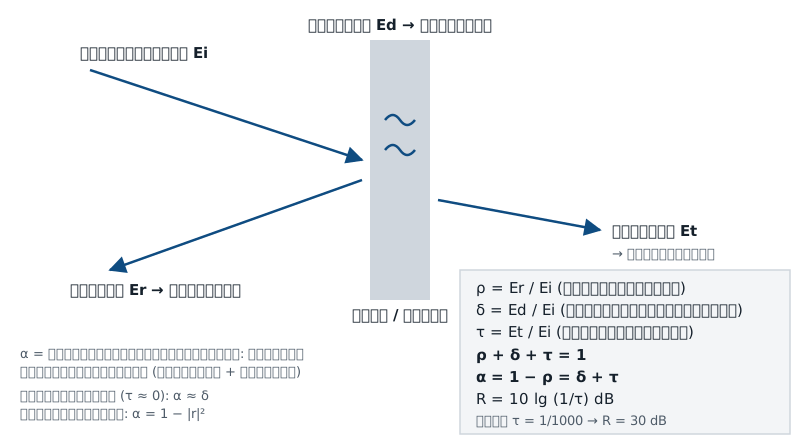
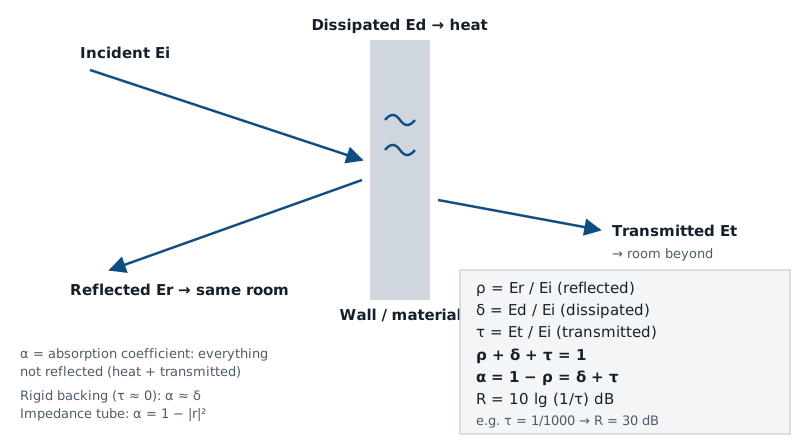
มีสองเรื่องที่ใช้คำคล้ายกัน 1) การนับพลังงานที่ผิวรอยต่อ: ให้ ρ = Er / Ei (สัดส่วนที่สะท้อน) δ = Ed / Ei (สัดส่วนที่สูญเสียเป็นความร้อนในวัสดุ) และ τ = Et / Ei (สัดส่วนที่ส่งผ่าน) จะได้ ρ + δ + τ = 1 และค่าการลดทอนเสียง R = 10 log10(1/τ) 2) ค่าสัมประสิทธิ์การดูดซับเสียง (α) ที่ใช้ในการวัดและในมาตรฐาน นิยามจากมุมมองของห้องเดิม คือสัดส่วนของพลังงานที่ ไม่สะท้อนกลับ α = 1 − ρ = δ + τ จึงรวมทั้งส่วนที่กลายเป็นความร้อนและส่วนที่ส่งผ่านไป ตัวอย่างคลาสสิกคือหน้าต่างที่เปิดอยู่ มี α ใกล้ 1 เพราะเสียงออกไปหมดโดยไม่สะท้อน แต่แน่นอนว่ามันไม่กันเสียงเลย ในท่ออิมพีแดนซ์ (ISO 10534-2, ASTM E1050) ได้ α = 1 − |r|² จากตัวประกอบการสะท้อนเชิงซ้อน r ที่วัดได้ในแนวตั้งฉาก ตัวอย่างวางชิดด้านหลังที่แข็ง จึงได้ τ ≈ 0 และ α ≈ δ ส่วนในห้องก้อง (ISO 354) ค่า αs คำนวณจากพื้นที่ดูดซับเทียบเท่าที่เพิ่มขึ้นหารด้วยพื้นที่ตัวอย่าง (สูตร Sabine) เป็นค่าสำหรับเสียงที่มาจากทุกทิศ และอาจได้มากกว่า 1 เพราะผลของขอบตัวอย่างและสนามเสียงที่ไม่แพร่กระจายสมบูรณ์Two different ideas use similar words. 1) Energy bookkeeping at a boundary: with ρ = Er / Ei (fraction reflected), δ = Ed / Ei (fraction dissipated, turned into heat inside the material) and τ = Et / Ei (fraction transmitted), ρ + δ + τ = 1, and the sound reduction index is R = 10 log10(1/τ). 2) The sound absorption coefficient (α) used in measurements and standards is defined from the point of view of the room: the fraction of energy not reflected, α = 1 − ρ = δ + τ, so it includes both the part turned into heat and the part transmitted. The classic example is an open window: its α is close to 1 because sound leaves without reflecting, yet it obviously provides no insulation at all. In the impedance tube (ISO 10534-2, ASTM E1050), α = 1 − |r|², from the complex pressure reflection factor r measured at normal incidence; the sample sits on a rigid backing, so τ ≈ 0 and α ≈ δ. In the reverberation room (ISO 354), αs is the added equivalent absorption area divided by the sample area (Sabine); it is a random-incidence value and can come out above 1 because of edge effects and a sound field that is not perfectly diffuse.
ตัวเลขสองชุด สำหรับสองคำถามTwo sets of numbers for two questions
| การดูดซับเสียงSound absorption | การกันเสียงSound insulation | |
|---|---|---|
| คำถามQuestion | การดูดซับเสียงSound absorptionห้องนี้ก้องแค่ไหนHow reverberant is this room? | การกันเสียงSound insulationเสียงผ่านไปห้องอื่นแค่ไหนHow much sound gets to another room? |
| ตัวเลขหลักMain numbers | การดูดซับเสียงSound absorptionα ต่อย่านความถี่ (ปกติ 0 ถึง 1 แต่ αs จากห้องก้องอาจเกิน 1) ค่าตัวเลขเดียว เช่น αw, NRCα per band (normally 0 to 1, although reverberation-room αs can exceed 1); single numbers such as αw, NRC | การกันเสียงSound insulationR, R', DnT (dB) ต่อย่านความถี่ ค่าตัวเลขเดียว เช่น Rw, DnT,wR, R', DnT (dB) per band; single numbers such as Rw, DnT,w |
| วัสดุที่ได้ผลWhat works | การดูดซับเสียงSound absorptionวัสดุรูพรุน แผ่นเรโซเนเตอร์ ผิวไม่เรียบPorous materials, resonant panels, irregular surfaces | การกันเสียงSound insulationมวล ความแน่นไม่มีรอยรั่ว การแยกโครงสร้าง ผนังสองชั้นที่มีช่องอากาศและฉนวนMass, airtightness, structural decoupling, double walls with a cavity and infill |
| ผลที่ได้ยินAudible effect | การดูดซับเสียงSound absorptionเสียงพูดชัดขึ้น ห้องเงียบลงเล็กน้อยClearer speech, a slightly quieter room | การกันเสียงSound insulationเสียงจากข้างห้องเบาลงLess sound from next door |
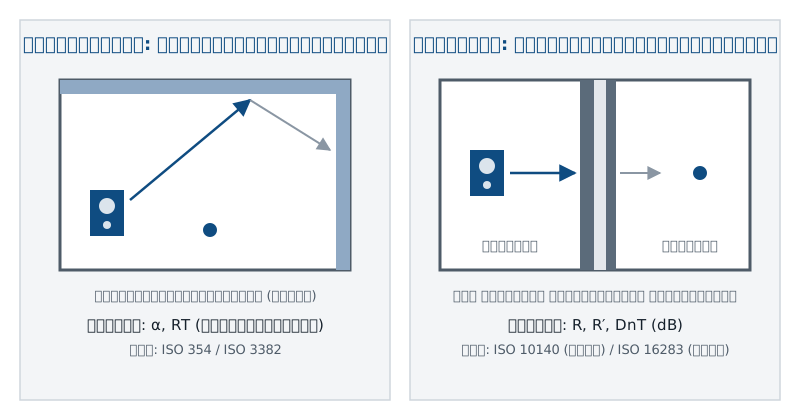
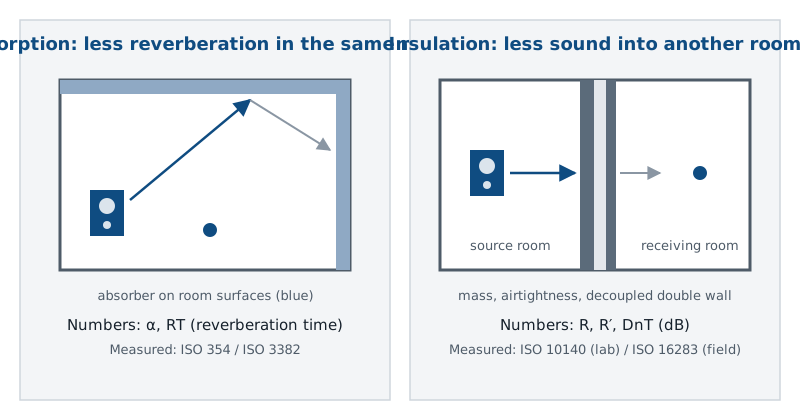
การดูดซับช่วยลดระดับเสียงในห้องได้บ้าง แต่จำกัด ตามทฤษฎีสนามเสียงกระจาย ถ้าเพิ่มพื้นที่ดูดซับเสียงรวมของห้องเป็นสองเท่า ระดับเสียงส่วนที่เป็นเสียงสะท้อนจะลดลงประมาณ 3 dB ส่วนเสียงตรงจากแหล่งเสียงไม่ลดลง ในทางกลับกัน ผนังกันเสียงที่ดีลดเสียงระหว่างห้องได้หลายสิบ dB ในย่านความถี่กลางAbsorption does lower the level in a room somewhat, but only so far. In diffuse-field theory, doubling a room's total absorption area lowers the reverberant part of the level by about 3 dB, while the direct sound from the source is unchanged. A good separating wall, by contrast, reduces sound between rooms by several tens of dB in the mid frequencies.
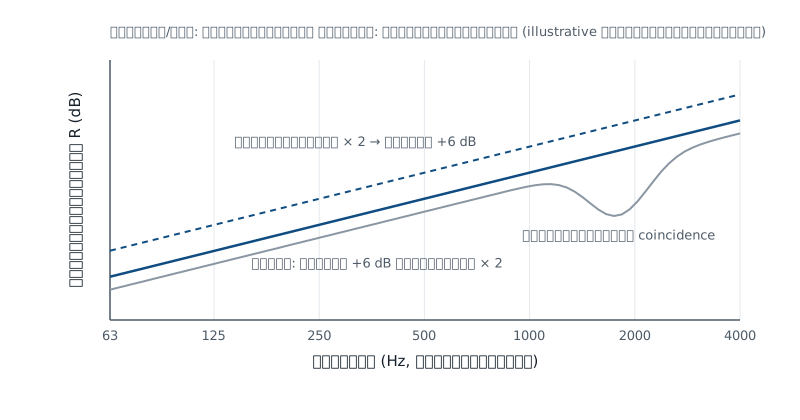
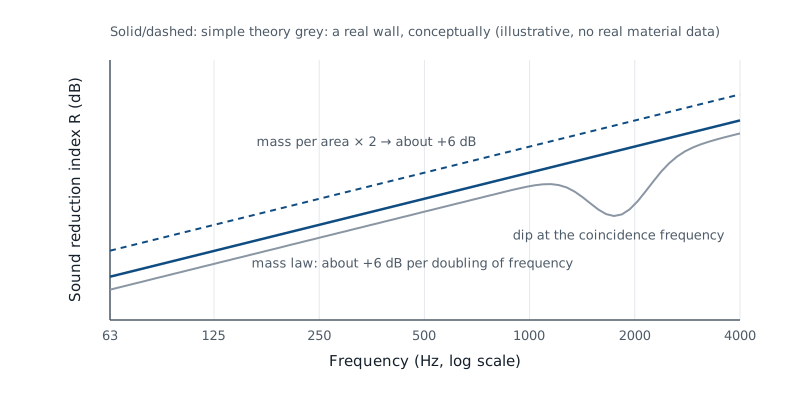
ค่าการลดทอนเสียง R (sound reduction index) คำนวณจากสัดส่วนพลังงานที่ส่งผ่าน (τ) ตามความสัมพันธ์ R = 10 log(1/τ) ถ้าผนังปล่อยพลังงานผ่านไปหนึ่งในพัน R จะเท่ากับ 30 dB ในทฤษฎีอย่างง่ายของผนังชั้นเดียว (mass law) R เพิ่มขึ้นประมาณ 6 dB เมื่อมวลต่อพื้นที่หรือความถี่เพิ่มเป็นสองเท่า ผนังจริงเบี่ยงเบนจากนี้ได้ เช่น ที่ความถี่ coincidence และรอยรั่วเล็ก ๆ ทำให้ค่าลดลงมากThe sound reduction index R comes from the fraction of energy transmitted (τ): R = 10 log(1/τ). A wall that lets one thousandth of the energy through has R = 30 dB. In the simple theory of a single wall (the mass law), R rises by about 6 dB for each doubling of mass per area or of frequency. Real walls deviate from this, for example around the coincidence frequency, and small leaks reduce the value sharply.
ชั้นวิศวกรรม: สองตัวอย่างการคำนวณEngineering layer: two worked calculations
ตัวเลขในส่วนนี้เป็นตัวอย่างสมมติเพื่อแสดงวิธีคิด ใช้สูตรทฤษฎีอย่างง่ายที่ใช้ได้ดีในห้องที่เสียงกระจายพอสมควร ผลจริงต้องยืนยันด้วยการวัดThe numbers here are hypothetical examples to show the reasoning, using simple theory that works reasonably in rooms with a fairly diffuse field. Real results must be confirmed by measurement.
- เวลาเสียงก้องกับการดูดซับ (สูตร Sabine): T ≈ 0.161 V / A เมื่อ V คือปริมาตร (m³) และ A คือพื้นที่ดูดซับเสียงเทียบเท่า (m²) ห้อง 100 m³ ที่มี A = 10 m² ได้ T ประมาณ 1.6 s ถ้าเพิ่มวัสดุดูดซับจน A = 20 m² ได้ T ประมาณ 0.8 s เวลาเสียงก้องลดครึ่งหนึ่ง แต่ระดับเสียงส่วนที่เป็นเสียงสะท้อนลดลงเพียงประมาณ 3 dB และเสียงที่ผ่านผนังไปห้องข้าง ๆ แทบไม่เปลี่ยนReverberation time and absorption (Sabine): T ≈ 0.161 V / A, where V is the volume (m³) and A the equivalent absorption area (m²). A 100 m³ room with A = 10 m² has T of about 1.6 s. Adding absorbers until A = 20 m² gives T of about 0.8 s: the reverberation time halves, but the reverberant level drops by only about 3 dB, and the sound passing through the wall to the next room hardly changes.
- รอยรั่วเล็ก ๆ ทำลายการกันเสียง: ผนังที่ R = 50 dB ปล่อยพลังงานผ่านหนึ่งในแสนส่วน ถ้ามีช่องเปิดเพียง 0.1 % ของพื้นที่ผนัง (ช่องเปิดปล่อยพลังงานผ่านเกือบทั้งหมด) สัดส่วนที่ผ่านรวมจะเป็นประมาณ 0.001 ทำให้ R ของผนังทั้งผืนลดเหลือประมาณ 30 dB การปิดรอยรั่วจึงมักได้ผลมากกว่าการเพิ่มความหนาของผนังSmall leaks destroy insulation: a wall with R = 50 dB lets one hundred-thousandth of the energy through. If an opening covers only 0.1 % of the wall area (an opening lets almost all the energy through), the combined transmitted fraction becomes about 0.001, so the R of the whole wall falls to about 30 dB. Sealing leaks therefore often achieves more than making the wall thicker.
วัดอย่างไรHow each is measured
- การดูดซับในห้องก้อง (ISO 354): วัดเวลาเสียงก้องของห้องก้องพิเศษก่อนและหลังวางตัวอย่างวัสดุ ได้ α สำหรับเสียงที่มาจากทุกทิศ (random incidence) ผลนี้ใช้จัดชั้นตาม ISO 11654 ได้Absorption in a reverberation room (ISO 354): measure the reverberation time of a special reverberation room with and without a material sample, giving α for sound from all directions (random incidence). The results can be classified to ISO 11654.
- การดูดซับในท่ออิมพีแดนซ์ (ISO 10534): ใช้ตัวอย่างขนาดเล็กในท่อ ได้ α สำหรับเสียงที่ตกกระทบตั้งฉาก (normal incidence) เหมาะกับการพัฒนาและเปรียบเทียบวัสดุ ค่านี้ เทียบตรง ๆ กับค่าจากห้องก้องไม่ได้Absorption in an impedance tube (ISO 10534): a small sample in a tube gives α for normal incidence, useful for developing and comparing materials. This value cannot be compared directly with the reverberation-room value.
- การกันเสียงในห้องปฏิบัติการ (ISO 10140): วัด R ของชิ้นส่วนอาคารโดยควบคุมเส้นทางอ้อม (flanking) ให้น้อยที่สุดLaboratory sound insulation (ISO 10140): measures R of a building element with flanking transmission kept to a minimum.
- การกันเสียงภาคสนาม (ISO 16283): วัดในอาคารจริง ได้ R' หรือ DnT ซึ่งรวมเส้นทางอ้อมและคุณภาพการก่อสร้าง แล้วสรุปเป็นค่าตัวเลขเดียวตาม ISO 717Field sound insulation (ISO 16283): measured in real buildings, giving R' or DnT, which include flanking paths and workmanship, then summarised as single numbers to ISO 717.
- ในห้องที่ใช้งานจริง: ผลรวมของการดูดซับในห้องดูได้จากเวลาเสียงก้อง (ISO 3382)In a room in use: the combined effect of the room's absorption shows up in its reverberation time (ISO 3382).
ในเครื่องมือ NTi AudioHow NTi Audio equipment fits
ส่วนนี้เป็นข้อมูลเฉพาะของ NTi Audio ซอฟต์แวร์ Room Acoustics Reporter ใช้ข้อมูลเวลาเสียงก้องจากเครื่อง XL2 / XL3 นำเข้าค่าสัมประสิทธิ์การดูดซับของวัสดุ แล้วคาดการณ์เวลาเสียงก้องใหม่ด้วยสูตร Sabine หรือ Eyring (สำหรับห้องที่ดูดซับเสียงมาก) และคำนวณค่าสัมประสิทธิ์การดูดซับตาม ISO 354, ISO 11654 และ ASTM C423 ได้ ส่วน Sound Insulation Reporter ใช้ทำรายงานการกันเสียงภาคสนามตาม ISO 16283 และ ISO 717 เป็นต้น ทั้งสองต้องมีออปชันที่เกี่ยวข้องบนเครื่องThis part is NTi Audio-specific. The Room Acoustics Reporter software takes reverberation-time data from the XL2 / XL3, imports absorption coefficients of materials, predicts the new reverberation time with the Sabine formula or Eyring (for highly absorptive rooms), and can calculate absorption coefficients per ISO 354, ISO 11654 and ASTM C423. The Sound Insulation Reporter produces field sound insulation reports to standards including ISO 16283 and ISO 717. Both require the relevant instrument options.
ตัวอย่างงานวิศวกรรมPractical engineering example
เจ้าของคอนโดร้องเรียนสองเรื่อง คือห้องนั่งเล่นของตัวเอง “เสียงก้อง คุยกันไม่รู้เรื่อง” และ “ได้ยินทีวีห้องข้าง ๆ” วิศวกรแยกเป็นสองปัญหา เรื่องแรกวัดเวลาเสียงก้องในห้อง พบว่าสูงเพราะพื้นกระเบื้อง ผนังเรียบ และกระจกบานใหญ่ จึงแนะนำวัสดุดูดซับ ผ้าม่าน และพรม แล้วใช้ค่าสัมประสิทธิ์การดูดซับคาดการณ์ผลก่อนติดตั้ง เรื่องที่สองวัดการกันเสียงระหว่างห้องตาม ISO 16283 พบว่าย่านความถี่กลางและสูงอ่อนผิดปกติ ตรวจแล้วพบรอยรั่วรอบปลั๊กไฟที่ติดหลังชนกัน การแก้คือปิดรอยรั่วและเพิ่มผนังชั้นที่สองแบบแยกโครงสร้าง ไม่ใช่ติดแผ่นซับเสียงA condominium owner has two complaints: the living room is "echoey, we can't follow conversation", and "we hear the neighbour's TV". The engineer treats them as two problems. For the first, the reverberation time is measured and found high because of tiled floors, smooth walls and a large glass window; absorbers, curtains and a rug are recommended, with absorption coefficients used to predict the result before installation. For the second, sound insulation between the flats is measured to ISO 16283 and the mid and high bands are unusually weak; inspection finds leaks around back-to-back power sockets. The fix is sealing the leaks and adding a decoupled second wall layer, not absorbent panels.
ความเข้าใจผิดที่พบบ่อยCommon misunderstandings
- “แผ่นซับเสียงช่วยกันเสียง” ช่วยลดเสียงก้องในห้องเดิม แต่แทบไม่ลดเสียงที่ทะลุไปห้องอื่น“Absorbent panels soundproof a room.” They reduce reverberation in the same room, but barely reduce sound passing to another room.
- “α สูงคือกันเสียงได้ดี” ไม่ใช่ α คือสัดส่วนที่ไม่สะท้อนกลับ ซึ่งรวมเสียงที่ผ่านไปอีกด้านด้วย หน้าต่างที่เปิดอยู่ก็มี α ใกล้ 1 การกันเสียงดูจากสัดส่วนที่ส่งผ่าน τ และ R = 10 log10(1/τ) วัสดุรูพรุนที่ α สูงยังปล่อยเสียงผ่านไปอีกด้านได้มาก“A high α means good insulation.” No. α is the fraction not reflected, which includes sound that passes through: an open window has α close to 1. Insulation is described by the transmitted fraction τ and R = 10 log10(1/τ). A porous material with a high α can still let a lot of sound through.
- “ค่า α จากท่ออิมพีแดนซ์ใช้แทนค่าจากห้องก้องได้” ไม่ได้ สภาพการตกกระทบของเสียงต่างกัน“Impedance-tube α can replace reverberation-room α.” No. The sound incidence conditions differ.
- “ผนังที่ R ในห้องปฏิบัติการสูง จะได้ค่าเดียวกันหน้างาน” หน้างานมีเส้นทางอ้อมและรอยรั่ว R' จึงมักต่ำกว่า“A wall with a high laboratory R performs the same on site.” On site there are flanking paths and leaks, so R' is usually lower.
คำถามที่พบบ่อยFrequently asked questions
ห้องคาราโอเกะหรือห้องซ้อมดนตรีควรเริ่มแก้จากอะไรWhere should a karaoke or rehearsal room start?
ถ้าปัญหาคือเสียงรบกวนคนข้างนอก ให้เริ่มจากการกันเสียง: ปิดรอยรั่วรอบประตู หน้าต่าง ท่อ และปลั๊ก ใช้ประตูที่หนักและปิดสนิท และพิจารณาผนังหรือฝ้าที่แยกโครงสร้าง วัสดุดูดซับใช้ปรับเสียงภายในห้องให้ฟังสบายขึ้นเป็นขั้นต่อไปIf the problem is disturbing people outside, start with insulation: seal leaks around doors, windows, pipes and sockets, use a heavy, well-sealed door, and consider decoupled walls or ceilings. Absorbers then improve the sound inside the room as a separate step.
ค่า NRC ใช้เลือกวัสดุได้ทุกงานไหมCan NRC be used to choose materials for every job?
NRC เป็นค่าเฉลี่ยตัวเดียวในย่านความถี่กลาง ไม่บอกว่าวัสดุดูดซับความถี่ต่ำได้ดีแค่ไหน งานที่มีปัญหาเสียงความถี่ต่ำ เช่น เสียงเบส หรือเสียงหึ่งจากเครื่องจักร ควรดูค่า α แยกตามย่านความถี่NRC is a single average over mid frequencies and does not show how well a material absorbs low frequencies. For low-frequency problems such as bass or machinery hum, look at α per frequency band.
ติดแผ่นซับเสียงแล้ว เพื่อนบ้านได้ยินเบาลงบ้างไหมWill absorbent panels make the neighbours hear less at all?
เบาลงได้เล็กน้อย เพราะเสียงสะท้อนในห้องต้นทางลดลง ตามทฤษฎีการเพิ่มพื้นที่ดูดซับเป็นสองเท่าลดระดับเสียงสะท้อนประมาณ 3 dB ซึ่งน้อยมากเมื่อเทียบกับผลของผนังกันเสียงที่ดีSlightly, because the reverberant sound in the source room drops. In theory, doubling the absorption lowers the reverberant level by about 3 dB, which is small compared with the effect of a good insulating wall.
ค่า R ในแคตตาล็อกใช้คาดการณ์ผลหน้างานได้ไหมCan a catalogue R value predict the result on site?
ใช้เป็นจุดเริ่มต้นได้ แต่ผลภาคสนามมักต่ำกว่า เพราะมีเส้นทางอ้อม รอยต่อ รอยรั่ว และคุณภาพการก่อสร้าง ถ้าผลหน้างานสำคัญ ให้ออกแบบเผื่อไว้ และวัดยืนยันด้วยการทดสอบภาคสนามตาม ISO 16283As a starting point, yes, but field results are usually lower because of flanking paths, junctions, leaks and workmanship. Where the site result matters, design with a margin and confirm with a field test to ISO 16283.
คำศัพท์สำคัญKey terms
- ค่าสัมประสิทธิ์การดูดซับเสียง (α)Sound absorption coefficient (α)
- สัดส่วนพลังงานเสียงตกกระทบที่ไม่สะท้อนกลับจากพื้นผิว α = 1 − ρ จึงรวมส่วนที่สูญเสียเป็นความร้อนและส่วนที่ส่งผ่าน (α = δ + τ) ต่อย่านความถี่ ในท่ออิมพีแดนซ์ (ISO 10534-2, ASTM E1050 เสียงตกกระทบตั้งฉาก) α = 1 − |r|² ในห้องก้อง (ISO 354 เสียงจากทุกทิศ) αs = พื้นที่ดูดซับเทียบเท่าของตัวอย่าง ÷ พื้นที่ตัวอย่าง ซึ่งอาจเกิน 1 ได้The fraction of incident sound energy not reflected by a surface, α = 1 − ρ, so it includes energy dissipated as heat and energy transmitted (α = δ + τ), per frequency band. Impedance tube (ISO 10534-2, ASTM E1050, normal incidence): α = 1 − |r|². Reverberation room (ISO 354, random incidence): αs = equivalent absorption area of the specimen ÷ its area, which can exceed 1.
- พื้นที่ดูดซับเสียงเทียบเท่า (A)Equivalent absorption area (A)
- ผลรวมของพื้นที่ผิวคูณ α ของทุกผิวในห้อง หน่วย m²The sum of surface area times α over all surfaces of a room, in m².
- ค่าการลดทอนเสียง (R)Sound reduction index (R)
- ความสามารถในการกันเสียงของชิ้นส่วนอาคาร หน่วย dB ต่อย่านความถี่The sound insulation of a building element, in dB per band.
- เส้นทางอ้อม (Flanking transmission)Flanking transmission
- เสียงที่ผ่านไปห้องอื่นทางโครงสร้างข้างเคียง ไม่ใช่ผ่านผนังกั้นโดยตรงSound reaching another room via adjoining structures rather than directly through the separating element.
- Mass law
- ทฤษฎีอย่างง่ายที่ว่า R ของผนังชั้นเดียวเพิ่มตามมวลต่อพื้นที่และความถี่The simple theory that R of a single wall rises with mass per area and frequency.