ก่อนอ่านบทความนี้Before you read
บทความนี้อยู่ในระดับเจาะลึก และต่อยอดจากเรื่องเดซิเบลและระดับความดันเสียง (SPL) ค่า Leq ย่านออกเตฟ และเวลาเสียงก้อง (RT60) ถ้ายังไม่คุ้นกับคำเหล่านี้ แนะนำให้อ่านบทความเหล่านั้นก่อน (ลิงก์อยู่ท้ายหน้า)This is an advanced article that builds on the decibel and sound pressure level (SPL), Leq, octave bands and reverberation time (RT60). If these terms are new to you, read those articles first (links at the end of the page).
ทำไมเรื่องนี้สำคัญWhy this matters
ถ้าผู้ผลิตเครื่องดูดฝุ่นสองรายบอกว่าเครื่องของตน “ดัง 70 dB” ทั้งคู่ เราเทียบกันไม่ได้เลย เพราะไม่รู้ว่าวัดห่างกี่เมตร วัดในห้องโล่งหรือห้องที่มีเสียงก้อง ระดับความดันเสียงเปลี่ยนไปได้มากตามเงื่อนไขเหล่านี้If two vacuum-cleaner makers both say their machine is “70 dB”, we cannot compare them at all: we do not know the distance, or whether the measurement was made in an open space or a reverberant room. Sound pressure level changes a lot with these conditions.
กำลังเสียงแก้ปัญหานี้ เพราะเป็นตัวเลขเดียวที่บอก “ความสามารถในการปล่อยเสียง” ของเครื่อง ไม่ว่าจะวัดที่ไหน จึงใช้ในฉลากสินค้า ข้อกำหนดของเครื่องจักร และกฎหมายบางฉบับ เช่น ข้อบังคับของสหภาพยุโรป (EU) หมายเลข 666/2013 ที่กำหนดให้เครื่องดูดฝุ่นมีกำลังเสียงไม่เกิน 80 dB(A) และวิศวกรยังใช้กำลังเสียงเป็นข้อมูลตั้งต้นในการคำนวณว่าเครื่องจักรจะทำให้ห้องหรือชุมชนรอบข้างดังเท่าไรSound power solves this, because it is a single number that describes a machine’s “ability to emit sound” wherever it is measured. It is therefore used on product labels, in machinery specifications and in some regulations, such as EU Regulation 666/2013, which limits vacuum cleaners to a sound power level of no more than 80 dB(A). Engineers also use sound power as the starting data to calculate how loud a machine will make a room or the surrounding community.
แนวคิดพื้นฐาน: หลอดไฟกับความสว่างบนโต๊ะThe basic idea: a light bulb and the brightness on your desk
ลองนึกถึงหลอดไฟ 10 วัตต์ ตัวเลข 10 วัตต์เป็นคุณสมบัติของหลอด ไม่ว่าจะติดในห้องไหนก็ยังเป็น 10 วัตต์ แต่ความสว่างที่ตกบนโต๊ะอ่านหนังสือของเรานั้นต่างออกไป ถ้าโต๊ะอยู่ใกล้หลอดก็สว่างมาก ถ้าอยู่ไกลก็สว่างน้อย ถ้าผนังห้องทาสีขาวสะท้อนแสงก็สว่างขึ้น ถ้าผนังสีดำก็มืดลงThink of a 10-watt light bulb. The 10 watts is a property of the bulb; it stays 10 watts whichever room it is fitted in. The brightness that falls on your reading desk is a different matter: close to the bulb it is bright, far away it is dim, white walls that reflect light make it brighter and black walls make it darker.
| แสงLight | เสียงSound | |
|---|---|---|
| สิ่งที่เป็นคุณสมบัติของแหล่งกำเนิดProperty of the source | แสงLightกำลังของหลอดไฟ (วัตต์)Bulb power (watts) | เสียงSoundกำลังเสียง LWSound power LW |
| สิ่งที่รับรู้ ณ จุดหนึ่งWhat is received at one point | แสงLightความสว่างบนโต๊ะBrightness on the desk | เสียงSoundระดับความดันเสียง LpSound pressure level Lp |
| ขึ้นกับระยะหรือไม่Depends on distance? | แสงLightกำลัง: ไม่ / ความสว่าง: ใช่Power: no / brightness: yes | เสียงSoundLW: ไม่ / Lp: ใช่LW: no / Lp: yes |
| ขึ้นกับห้องหรือไม่Depends on the room? | แสงLightกำลัง: ไม่ / ความสว่าง: ใช่ (สีผนัง)Power: no / brightness: yes (wall colour) | เสียงSoundLW: ไม่ / Lp: ใช่ (เสียงสะท้อน เสียงก้อง)LW: no / Lp: yes (reflections, reverberation) |
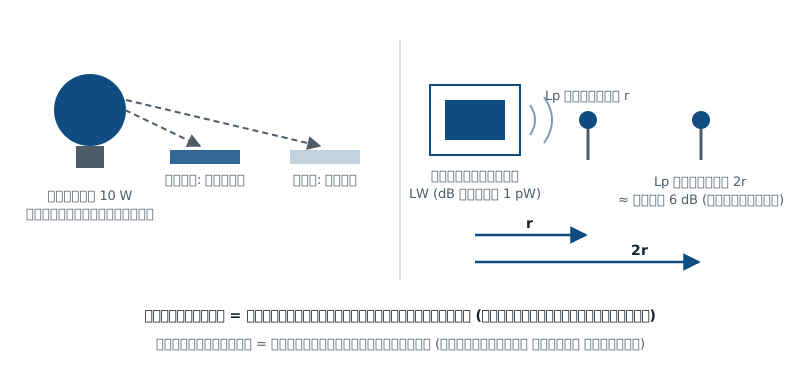
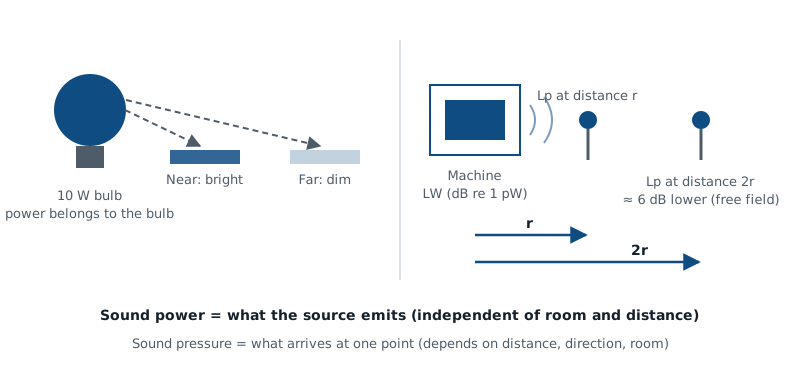
เสียงก็เป็นแบบเดียวกัน กำลังเสียง (Sound power) คือพลังงานเสียงทั้งหมดที่แหล่งเสียงปล่อยออกไปทุกทิศทางในหนึ่งวินาที ส่วน ระดับความดันเสียง (Sound pressure level) คือผลที่เกิดขึ้น ณ ตำแหน่งที่เราฟังหรือวางไมโครโฟน ซึ่งขึ้นกับระยะห่าง ทิศทาง และห้องSound works the same way. Sound power is the total acoustic energy a source sends out in all directions each second. Sound pressure level is the effect at the spot where we listen or place a microphone, and it depends on distance, direction and the room.
กำลังเสียงบอกเป็นเดซิเบลเช่นกัน แต่เทียบกับค่าอ้างอิง 1 พิโควัตต์ (1 pW) ใช้สัญลักษณ์ LW ขณะที่ระดับความดันเสียงเทียบกับ 20 ไมโครปาสกาล (µPa) ใช้สัญลักษณ์ Lp ทั้งคู่เป็น “dB” เหมือนกัน แต่เป็นปริมาณคนละชนิด จึงเอามาเทียบกันตรง ๆ ไม่ได้Sound power is also given in decibels, but relative to a reference of 1 picowatt (1 pW), with the symbol LW. Sound pressure level is relative to 20 micropascals (µPa), with the symbol Lp. Both are “dB”, but they are different kinds of quantity and cannot be compared directly.
เครื่องที่มีกำลังเสียง 80 dB ไม่ได้แปลว่าผู้ใช้จะวัดได้ 80 dB ที่หู ระดับที่หูมักต่ำกว่าตัวเลขกำลังเสียง และจะต่ำลงอีกเมื่อถอยห่างออกไปA machine with a sound power level of 80 dB does not mean the user measures 80 dB at the ear. The level at the ear is usually lower than the sound power figure, and falls further as you move away.
วัดอย่างไร: วิธีพื้นผิวล้อมรอบHow it is measured: the enveloping surface method
เราไม่มีเครื่องวัดกำลังเสียงโดยตรง สิ่งที่วัดได้คือความดันเสียงด้วยไมโครโฟน แนวคิดหลักคือ ถ้าเราล้อมแหล่งเสียงไว้ด้วยพื้นผิวสมมุติ เช่น ครึ่งทรงกลมรอบเครื่องที่วางบนพื้น พลังงานเสียงทั้งหมดที่เครื่องปล่อยออกมาจะต้องผ่านพื้นผิวนั้น ถ้าเราวัดความดันเสียงหลายจุดบนพื้นผิวแล้วหาค่าเฉลี่ย และรู้ว่าพื้นผิวใหญ่เท่าไร ก็คำนวณกลับเป็นกำลังเสียงได้There is no instrument that measures sound power directly; what we can measure is sound pressure with a microphone. The key idea: if we surround the source with an imaginary surface, such as a hemisphere around a machine standing on the floor, all the acoustic energy the machine emits must pass through that surface. By measuring sound pressure at many points on the surface, averaging it and knowing the surface area, we can calculate the sound power.
เขียนเป็นสมการอย่างง่ายได้ว่า LW ≈ Lp เฉลี่ยบนพื้นผิว − K1 − K2 + 10 log10(S / 1 m²) โดย S คือพื้นที่พื้นผิวที่ล้อมไว้ พจน์สุดท้ายบอกว่า ยิ่งพื้นผิวใหญ่ (ไมโครโฟนห่างเครื่องมาก) ความดันเสียงที่วัดได้ยิ่งต่ำ แต่พลังงานรวมยังเท่าเดิม ส่วน K1 และ K2 เป็นค่าแก้ ดังนี้As a simple equation: LW ≈ average Lp on the surface − K1 − K2 + 10 log10(S / 1 m²), where S is the area of the enclosing surface. The last term says that the larger the surface (the further the microphones from the machine), the lower the measured pressure, yet the total energy stays the same. K1 and K2 are corrections:
- K1: ค่าแก้เสียงพื้นหลัง (Background noise) วัดระดับเสียงพื้นหลังขณะเครื่องปิด แล้วหักส่วนที่ไม่ได้มาจากเครื่องออกK1: background noise correction. Measure the background level with the machine off and remove the part that does not come from the machine.
- K2: ค่าแก้ของห้อง (Room correction) ในห้องที่มีเสียงสะท้อน เสียงสะท้อนทำให้ความดันเสียงสูงกว่าที่ควร จึงต้องหักออก โดยคำนวณจากปริมาตรห้องและเวลาเสียงก้อง ถ้าวัดในสภาพสนามเสียงอิสระ (Free field) ไม่ต้องใช้ K2K2: room correction. In a room with reflections, the reflected sound makes the pressure higher than it should be, so it is removed, calculated from the room volume and reverberation time. In free-field conditions K2 is not applied.
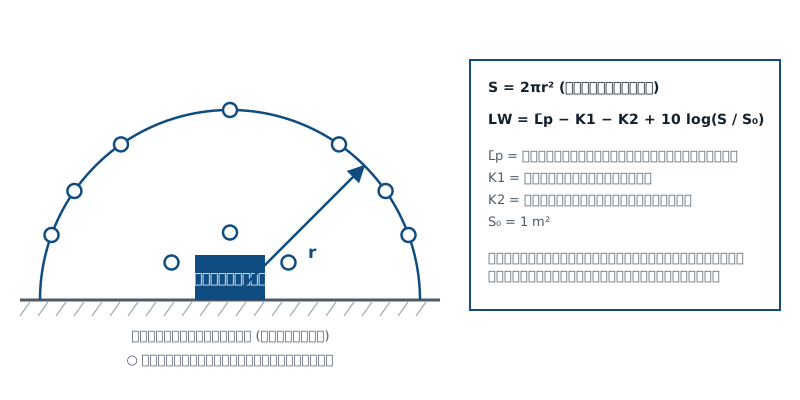
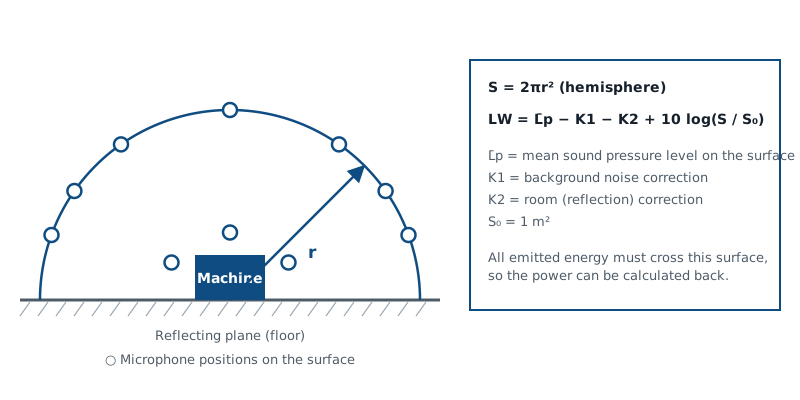
ถ้าไมโครโฟนอยู่บนครึ่งทรงกลมรัศมี 2 m พื้นที่ครึ่งทรงกลมคือ 2πr² ≈ 25 m² ค่า 10 log10(25) ≈ 14 dB สมมุติว่าวัดความดันเสียงเฉลี่ยได้ 66 dB(A) และค่าแก้ K1, K2 เล็กมาก กำลังเสียงจะประมาณ 66 + 14 = 80 dB(A) ตัวอย่างนี้แสดงให้เห็นว่าตัวเลขกำลังเสียงสูงกว่าความดันเสียงที่วัดได้รอบเครื่องอย่างชัดเจน (ตัวเลขนี้ใช้เพื่ออธิบายหลักการเท่านั้น)If the microphones lie on a hemisphere with a 2 m radius, the hemisphere area is 2πr² ≈ 25 m², and 10 log10(25) ≈ 14 dB. Suppose the average measured pressure is 66 dB(A) and the K1 and K2 corrections are very small: the sound power is then about 66 + 14 = 80 dB(A). The example shows how clearly the sound power figure exceeds the pressure measured around the machine. (Numbers for illustration of the principle only.)
ตัวอย่างการตั้งค่าจริง: เครื่องดูดฝุ่นA real set-up: the vacuum cleaner
NTi Audio อธิบายการวัดกำลังเสียงของเครื่องดูดฝุ่นตามข้อบังคับ EU 666/2013 ซึ่งอ้างวิธีตาม ISO 3744 และ IEC 60704-2-1 เป็นตัวอย่างที่ดีของวิธีพื้นผิวล้อมรอบ ประเด็นสำคัญสรุปได้ดังนี้NTi Audio describes measuring vacuum-cleaner sound power for EU Regulation 666/2013, which refers to the methods of ISO 3744 and IEC 60704-2-1. It is a good example of the enveloping surface method. The main points:
- ไมโครโฟน 10 ตำแหน่งจัดเป็นครึ่งทรงกลมรอบเครื่อง ห่างจากจุดกลางเครื่องควรเป็น 2 m และไม่น้อยกว่า 1.5 m10 microphone positions arranged on a hemisphere around the machine, preferably 2 m from its centre and no less than 1.5 m.
- วัดตำแหน่งละ 30 วินาที ค่าที่วัดคือ LAeq30 seconds per position; the measured quantity is LAeq.
- เครื่องวางบนพรมทดสอบขนาด 1 m × 1 m บนพื้นแข็ง ห่างผนังอย่างน้อย 1 mThe machine stands on a 1 m × 1 m test carpet on a hard floor, at least 1 m from the walls.
- อุณหภูมิ 15–30 °C เสียงพื้นหลังต่ำและคงที่ ห้องที่ดีที่สุดคือห้องกึ่งไร้เสียงสะท้อน (Hemi-anechoic)Temperature 15–30 °C, low and steady background noise; a hemi-anechoic room is ideal.
- ใช้ K1 แก้เสียงพื้นหลัง และ K2 แก้เสียงสะท้อนของห้องจากปริมาตรและเวลาเสียงก้องK1 corrects for background noise and K2 for room reflections, from the volume and reverberation time.
รายละเอียดเชิงวิศวกรรม: จากกำลังเสียงไปเป็นระดับเสียงที่จุดรับEngineering detail: from sound power to the level at a receiver
ประโยชน์หลักของกำลังเสียงคือใช้ คำนวณล่วงหน้า ว่าเครื่องจักรจะทำให้ที่ใดที่หนึ่งดังเท่าไร โดยไม่ต้องมีเครื่องจริงอยู่ในที่นั้น ความสัมพันธ์พื้นฐานมีสองกรณีThe main use of sound power is to predict how loud a machine will make a particular place, without the machine being there. There are two basic cases.
- กลางแจ้ง แหล่งเสียงตั้งบนพื้นแข็ง (สนามเสียงอิสระครึ่งทรงกลม): Lp ≈ LW − 10 log(2π r²) หรือเขียนง่าย ๆ ว่า Lp ≈ LW − 20 log r − 8 dB (r เป็นเมตร) ระดับจึงลดลงราว 6 dB ทุกครั้งที่ระยะเพิ่มเป็นสองเท่า ก่อนรวมผลของสิ่งกีดขวาง พื้นดิน และการดูดซับของอากาศOutdoors, source on a hard surface (hemispherical free field): Lp ≈ LW − 10 log(2π r²), or simply Lp ≈ LW − 20 log r − 8 dB (r in metres). The level therefore falls by about 6 dB per doubling of distance, before barriers, ground effects and air absorption are included.
- ในห้อง ห่างจากแหล่งเสียงมากพอ (สนามเสียงก้อง): Lp ≈ LW + 10 log(4 / A) โดย A คือพื้นที่ดูดซับเสียงเทียบเท่าของห้อง (m²) ระดับแทบไม่ลดตามระยะ แต่ลดลงเมื่อเพิ่มการดูดซับ การเพิ่ม A เป็นสองเท่าลดระดับในสนามเสียงก้องได้ราว 3 dBIndoors, far enough from the source (reverberant field): Lp ≈ LW + 10 log(4 / A), where A is the room's equivalent absorption area (m²). The level hardly falls with distance but drops when absorption is added: doubling A lowers the reverberant level by about 3 dB.
การรวมหลายแหล่ง กำลังเสียงรวมกันแบบพลังงาน ไม่ใช่บวกเลข dB ตรง ๆ แหล่งเสียงเท่ากันสองตัวดังขึ้น 3 dB สิบตัวดังขึ้น 10 dB และถ้าแหล่งหนึ่งเบากว่าอีกแหล่ง 10 dB ขึ้นไป ผลต่อค่ารวมแทบไม่มี การลดเสียงจึงต้องเริ่มที่แหล่งที่ดังที่สุดก่อนCombining sources. Sound powers add as energy, not as plain dB numbers: two equal sources are 3 dB louder, ten equal sources 10 dB louder, and a source 10 dB or more below another hardly changes the total. Noise control therefore starts with the loudest source.
การแก้ค่าในห้อง (K2) ใน ISO 3744 คำนวณจากพื้นที่ผิววัด S และพื้นที่ดูดซับเสียงของห้อง A เป็น K2 = 10 log(1 + 4 S / A) ห้องที่ก้องมากหรือพื้นผิววัดใหญ่เมื่อเทียบกับห้องจะได้ K2 สูง แต่ละมาตรฐานจำกัดค่า K1 และ K2 ที่ยอมรับได้สำหรับระดับความแม่นยำนั้น ถ้าเกิน ต้องปรับห้อง ลดขนาดพื้นผิว เปลี่ยนไปใช้มาตรฐานระดับสำรวจ หรือใช้วิธีความเข้มเสียง (ISO 9614)The room correction (K2) in ISO 3744 is calculated from the measurement surface area S and the room's absorption area A as K2 = 10 log(1 + 4 S / A). A reverberant room, or a surface large compared with the room, gives a high K2. Each standard limits the K1 and K2 values acceptable for its accuracy grade; beyond them, the room must be improved, the surface made smaller, a survey-grade standard used, or the intensity method (ISO 9614) applied instead.
เครื่องจักรที่เสียงเปลี่ยนตามรอบการทำงาน เช่น เครื่องซักผ้าหรือเครื่องอัดอากาศที่ตัดต่อ ต้องวัดครอบคลุมรอบการทำงานที่กำหนดไว้ในมาตรฐานหรือข้อกำหนดทดสอบเฉพาะผลิตภัณฑ์ (test code) ผลกำลังเสียงจึงต้องระบุสภาพการทำงานระหว่างวัดเสมอMachines whose noise changes over an operating cycle, such as washing machines or cycling compressors, must be measured over the cycle defined by the standard or the product-specific test code. A sound power result should therefore always state the operating condition during the measurement.
ตัวอย่างสถานการณ์: เครื่องกำเนิดไฟฟ้าบนดาดฟ้ากับบ้านข้างเคียงExample scenario: a rooftop generator and the neighbours
ผู้ผลิตระบุกำลังเสียงของเครื่องกำเนิดไฟฟ้าสำรองเป็น LWA = 100 dB อาคารข้างเคียงอยู่ห่าง 20 m และ 40 m ถ้าประมาณแบบง่ายว่าเป็นสนามเสียงอิสระครึ่งทรงกลม:
ที่ 20 m: Lp ≈ 100 − 10 log(2π × 20²) = 100 − 34 = 66 dB(A)
ที่ 40 m: Lp ≈ 100 − 40 = 60 dB(A) (ลดลง 6 dB เมื่อระยะเพิ่มเป็นสองเท่า)
ถ้าติดตั้งสองเครื่องเหมือนกันทำงานพร้อมกัน: ที่ 20 m ประมาณ 69 dB(A)
การคำนวณนี้ยังไม่ได้รวมผลของขอบดาดฟ้าที่บังเสียง การสะท้อนจากผนังอาคาร พื้นดิน และทิศทางการแผ่เสียงของเครื่อง การประเมินจริงใช้วิธีคำนวณการแผ่กระจายเสียงกลางแจ้ง (เช่น ISO 9613-2) และควรวัดยืนยันหลังติดตั้ง แต่ตัวเลขนี้ก็พอบอกได้ตั้งแต่ขั้นเลือกซื้อว่าต้องมีตู้ครอบเก็บเสียงหรือไม่A manufacturer states a standby generator's sound power as LWA = 100 dB. Neighbouring buildings are 20 m and 40 m away. As a simple hemispherical free-field estimate:
At 20 m: Lp ≈ 100 − 10 log(2π × 20²) = 100 − 34 = 66 dB(A)
At 40 m: Lp ≈ 100 − 40 = 60 dB(A) (6 dB less for double the distance)
With two identical generators running together: about 69 dB(A) at 20 m
This estimate ignores screening by the roof edge, reflections from building façades, ground effects and the machine's directivity. A real assessment uses an outdoor propagation method (for example ISO 9613-2) and should be confirmed by measurement after installation, but even this figure shows at the purchasing stage whether an acoustic enclosure will be needed.
ขั้นตอนการวัดกำลังเสียงในสนาม การเลือกมาตรฐาน และการจัดตำแหน่งไมโครโฟน อยู่ในวิธีการตรวจวัด "วิธีวัดกำลังเสียงของเครื่องจักรและอุปกรณ์" (ลิงก์ท้ายหน้า)The measurement procedure, choice of standard and microphone layout are covered in the application guide "How to measure the sound power of machines and equipment" (link at the end of the page).
มาตรฐานที่เกี่ยวข้องRelated standards
NTi Audio ระบุมาตรฐานการหากำลังเสียงที่ซอฟต์แวร์ Sound Power Reporter รองรับ ได้แก่ ISO 3741, ISO 3744, ISO 3746 และมาตรฐานอเมริกัน ANSI-ASA S12.51, S12.54, S12.56 และยังกล่าวถึงข้อกำหนดของ EU 2000/14/EC สำหรับเสียงจากอุปกรณ์ ความแตกต่างหลักของมาตรฐานกลุ่ม ISO คือสภาพห้องและระดับความแม่นยำNTi Audio lists the sound power standards supported by its Sound Power Reporter software: ISO 3741, ISO 3744, ISO 3746 and the American ANSI-ASA S12.51, S12.54 and S12.56, and also mentions EU directive 2000/14/EC for equipment noise. The main difference between the ISO standards is the room condition and the accuracy grade.
| มาตรฐานStandard | แนวคิดApproach | ระดับความแม่นยำAccuracy grade |
|---|---|---|
| ISO 3741ISO 3741 | แนวคิดApproachวัดในห้องเสียงก้อง (Reverberation room)Measurement in a reverberation room | ระดับความแม่นยำAccuracy gradeความแม่นยำสูง (Precision)Precision |
| ISO 3744ISO 3744 | แนวคิดApproachพื้นผิวล้อมรอบ เหนือพื้นสะท้อนเสียง ในสภาพใกล้สนามเสียงอิสระEnveloping surface over a reflecting plane, in essentially free-field conditions | ระดับความแม่นยำAccuracy gradeระดับวิศวกรรม (Engineering)Engineering |
| ISO 3746ISO 3746 | แนวคิดApproachพื้นผิวล้อมรอบ เหนือพื้นสะท้อนเสียง เงื่อนไขผ่อนปรนกว่าEnveloping surface over a reflecting plane, with relaxed conditions | ระดับความแม่นยำAccuracy gradeระดับสำรวจ (Survey)Survey |
ผลที่รายงานมักเป็นค่าตัวเลขเดียว LWA (ถ่วงน้ำหนัก A) หรือ LWZ พร้อมสเปกตรัมรายย่านออกเตฟหรือ 1/3 ออกเตฟ Sound Power Reporter ของ NTi Audio แสดงสเปกตรัมในช่วง 50 Hz ถึง 10 kHz และแยกข้อมูลเสียงเครื่องกับเสียงพื้นหลังให้อัตโนมัติResults are usually reported as a single-number LWA (A-weighted) or LWZ, together with an octave or 1/3 octave spectrum. NTi Audio’s Sound Power Reporter shows the spectrum from 50 Hz to 10 kHz and sorts machine and background measurements automatically.
นอกจากการวัดความดันเสียงแล้ว ยังหากำลังเสียงได้จากการวัด ความเข้มเสียง (Sound intensity) ตาม ISO 9614 ซึ่งบอกทั้งปริมาณและทิศทางการไหลของพลังงาน อ่านต่อได้ในบทความเรื่องความเข้มเสียงBesides pressure measurements, sound power can also be determined by measuring sound intensity (ISO 9614), which describes both the amount and the direction of energy flow. See the article on sound intensity.
คำถามที่พบบ่อยFrequently asked questions
ค่า "dB ที่ 1 m" ในแคตตาล็อกต่างจาก LWA อย่างไรHow does a catalogue "dB at 1 m" differ from LWA?
"dB ที่ 1 m" เป็นระดับความดันเสียงที่ตำแหน่งหนึ่ง ภายใต้เงื่อนไขที่ผู้ผลิตกำหนด ซึ่งมักไม่ได้บอกครบ ส่วน LWA เป็นกำลังเสียงที่ไม่ขึ้นกับระยะ ถ้าต้องเปรียบเทียบเครื่องหลายยี่ห้อ หรือใช้คำนวณระดับเสียงที่จุดอื่น ควรขอค่า LWA พร้อมมาตรฐานที่ใช้วัด"dB at 1 m" is a sound pressure level at one position, under conditions set by the manufacturer that are often not fully stated. LWA is a sound power that does not depend on distance. To compare products or calculate levels elsewhere, ask for LWA together with the standard used to measure it.
ใช้เครื่องวัดระดับเสียงธรรมดาหากำลังเสียงได้ไหมCan an ordinary sound level meter determine sound power?
ได้ ถ้าเครื่องวัดมีคุณภาพและสอบเทียบแล้ว และทำตามวิธีของมาตรฐาน คือวัดหลายตำแหน่งบนพื้นผิวที่กำหนด วัดเสียงพื้นหลัง และหาค่าแก้ของห้อง ซอฟต์แวร์เฉพาะช่วยจัดการตำแหน่งและคำนวณให้ แต่คุณภาพของผลขึ้นกับสภาพห้องและการจัดวางมากกว่าตัวเครื่องวัดYes, if the meter is of adequate class and calibrated, and the standard's method is followed: several positions on a defined surface, background measurement and a room correction. Dedicated software helps with positions and calculation, but the quality of the result depends more on the room and the layout than on the meter.
เมื่อไรควรใช้วิธีความเข้มเสียงแทนความดันเสียงWhen should the intensity method be used instead of pressure?
เมื่อเสียงพื้นหลังจากเครื่องจักรอื่นดังและแยกไม่ได้ เมื่อย้ายเครื่องไปห้องทดสอบไม่ได้ หรือต้องการกำลังเสียงของเพียงบางส่วนของเครื่อง วิธีความเข้มเสียง (ISO 9614) วัดการไหลของพลังงานผ่านพื้นผิว จึงแยกพลังงานที่ไหลออกจากเครื่องได้ดีกว่าในเงื่อนไขเหล่านี้ ภายในขอบเขตที่ตัวชี้วัดคุณภาพของสนามเสียงยอมรับWhen background noise from other machines is high and cannot be switched off, when the machine cannot be moved to a test room, or when the sound power of only part of a machine is needed. The intensity method (ISO 9614) measures the energy flow through a surface, so it separates the energy leaving the machine better in these conditions, within the limits set by its field indicators.
ห้องที่วัดทำให้กำลังเสียงของเครื่องเปลี่ยนไหมDoes the test room change the machine's sound power?
ในทางปฏิบัติแทบไม่เปลี่ยน สิ่งที่เปลี่ยนคือระดับความดันเสียงที่วัดได้ ซึ่งค่าแก้ K2 นำออกไป ผลกำลังเสียงจากห้องต่างกันจึงควรใกล้กันภายในความไม่แน่นอนของระดับความแม่นยำที่ใช้ ข้อยกเว้นคือการติดตั้งที่เปลี่ยนการทำงานของเครื่อง เช่น ฐานรองหรือท่อที่ต่อเข้าไปIn practice, hardly. What changes is the measured sound pressure level, which the K2 correction removes, so results from different rooms should agree within the uncertainty of the accuracy grade. Exceptions are installation details that change how the machine behaves, such as its mounting or connected ducts.
คำศัพท์สำคัญKey terms
- กำลังเสียง (Sound power, LW)Sound power (LW)
- พลังงานเสียงทั้งหมดที่แหล่งเสียงปล่อยออกทุกทิศทาง บอกเป็น dB เทียบกับ 1 pWThe total acoustic power a source emits in all directions, in dB relative to 1 pW.
- ระดับความดันเสียง (Sound pressure level, Lp)Sound pressure level (Lp)
- ระดับเสียง ณ ตำแหน่งหนึ่ง เทียบกับ 20 µPa ขึ้นกับระยะและห้องThe sound level at one position, relative to 20 µPa; depends on distance and room.
- พื้นผิวล้อมรอบ (Enveloping surface)Enveloping surface
- พื้นผิวสมมุติ เช่น ครึ่งทรงกลม ที่ล้อมแหล่งเสียงไว้ และวางไมโครโฟนบนพื้นผิวนั้นAn imaginary surface, such as a hemisphere, surrounding the source, on which the microphones are placed.
- K1 / K2
- ค่าแก้เสียงพื้นหลัง / ค่าแก้เสียงสะท้อนของห้องBackground noise correction / room reflection correction.
- ห้องกึ่งไร้เสียงสะท้อน (Hemi-anechoic room)Hemi-anechoic room
- ห้องที่ผนังและเพดานดูดซับเสียงเกือบทั้งหมด แต่พื้นแข็งสะท้อนเสียงA room whose walls and ceiling absorb almost all sound while the hard floor reflects.
ความเข้าใจผิดที่พบบ่อยCommon misunderstandings
- “ฉลากบอก 80 dB แปลว่าจะได้ยิน 80 dB” ไม่ใช่ ตัวเลขบนฉลากมักเป็นกำลังเสียง ระดับที่หูได้ยินขึ้นกับระยะและห้อง“The label says 80 dB, so I will hear 80 dB.” No: label values are often sound power; what you hear depends on distance and room.
- “วัดใกล้ ๆ จุดเดียวก็รู้กำลังเสียง” ไม่ได้ แหล่งเสียงส่วนใหญ่ปล่อยเสียงไม่เท่ากันทุกทิศ ต้องวัดหลายจุดรอบเครื่อง“One close measurement gives the sound power.” No: most sources radiate unevenly, so many positions around the source are needed.
- “ในห้องทั่วไปวัดกำลังเสียงไม่ได้” วัดได้ ถ้าวัดเสียงพื้นหลังและเวลาเสียงก้องเพื่อใช้ค่าแก้ K1 และ K2 แต่ความแม่นยำจะขึ้นกับสภาพห้อง“Sound power cannot be measured in an ordinary room.” It can, if background noise and reverberation time are measured for the K1 and K2 corrections, though accuracy depends on the room.
- “dB ของกำลังเสียงกับ dB ของความดันเสียงเทียบกันได้” ไม่ได้ ค่าอ้างอิงต่างกัน (1 pW กับ 20 µPa) และเป็นปริมาณคนละชนิด“Sound power dB and sound pressure dB are comparable.” No: the references differ (1 pW vs 20 µPa) and they are different quantities.
นำไปใช้ที่ไหนWhere it is used
- ฉลากเสียงและการตรวจตามกฎหมายของเครื่องใช้ไฟฟ้า เครื่องจักร และอุปกรณ์กลางแจ้งNoise labelling and regulatory checks for appliances, machinery and outdoor equipment
- ข้อมูลตั้งต้นสำหรับจำลองเสียงของโรงงาน อาคาร หรือชุมชนInput data for noise modelling of factories, buildings or communities
- เทียบเสียงของผลิตภัณฑ์รุ่นต่าง ๆ ในงานวิจัยและพัฒนาComparing product versions in research and development
- กำหนดสเปกเสียงของเครื่องจักรที่จะจัดซื้อSetting noise specifications for machinery to be purchased