โจทย์การวัดThe measurement problem
ผู้พัฒนาคอนโดต้องส่งมอบห้องที่ผนังกั้นระหว่างยูนิตได้ค่ากันเสียงตามสเปก ผู้ซื้อร้องเรียนว่าได้ยินเสียงทีวีจากห้องข้างๆ หรือโรงแรมริมถนนอยากรู้ว่าหน้าต่างใหม่ช่วยได้จริงไหม ทุกกรณีถามเหมือนกันว่า ผนัง พื้น หรือเปลือกอาคารที่สร้างเสร็จแล้วกันเสียงผ่านอากาศได้เท่าไร และผ่านเกณฑ์หรือไม่ คำตอบต้องมาจากการวัดในอาคารจริง ไม่ใช่เอกสารผู้ผลิต เพราะผลขึ้นกับทุกทางที่เสียงผ่านได้และฝีมือการก่อสร้าง (ความหมายพื้นฐานของแต่ละค่าอ่านได้ในบทความความรู้เรื่องการกันเสียงในอาคาร)A condominium developer must hand over units whose party walls meet a specified value; a buyer hears the neighbour's TV; a hotel on a main road wants to know whether new windows really help. Each asks the same question: how much airborne sound does the finished wall, floor or façade block, and does it meet the requirement? The answer must come from a measurement in the real building, not from a data sheet, because the result depends on every sound path and on workmanship. (The basic meaning of each quantity is explained in the knowledge article on sound insulation in buildings.)
ทำไมงานนี้จึงยากWhy it is difficult
- ระดับเสียงไม่เท่ากันทั่วห้อง โดยเฉพาะความถี่ต่ำในห้องเล็ก จึงต้องเฉลี่ยหลายตำแหน่งทั้งลำโพงและไมโครโฟนLevel varies across a room, especially at low frequencies in small rooms, so several loudspeaker and microphone positions are averaged.
- เสียงที่ผ่านมาเบามาก มักใกล้เสียงแอร์หรือเสียงจราจร ต้องใช้แหล่งเสียงที่ดังพอและตรวจเสียงพื้นหลังทุกย่านThe transmitted sound is quiet, often close to air-conditioning or traffic noise, so the source must be loud and the background checked in every band.
- เสียงไม่ได้ผ่านแค่ผนัง แต่อ้อมผ่านพื้น เพดาน ท่อ และรอยรั่ว ผลจึงเป็นของระบบทั้งหมดSound does not pass through the wall alone; it flanks through floors, ceilings, services and leaks, so the result describes the whole system.
- ตัวเลขชื่อคล้ายกันหลายชนิด DnT,w, R'w, Rw และ STC ไม่ใช่ค่าเดียวกันMany similar-looking numbers: DnT,w, R'w, Rw and STC are not the same quantity.
ต้องวัดอะไร และรายงานค่าไหนWhat to measure, and which number to report
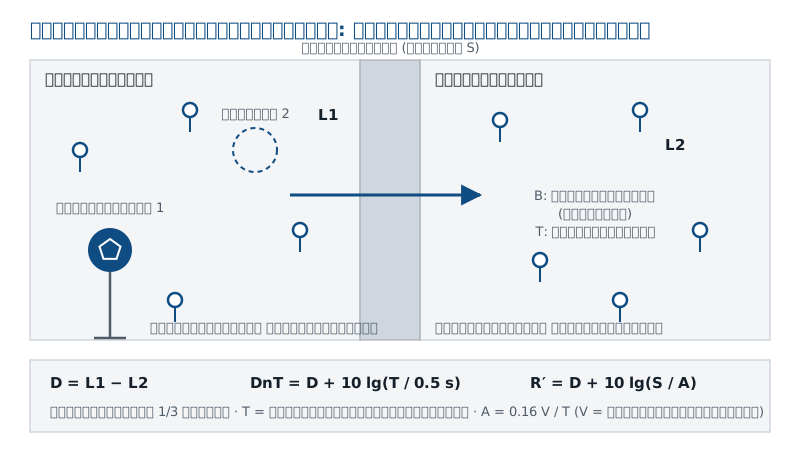
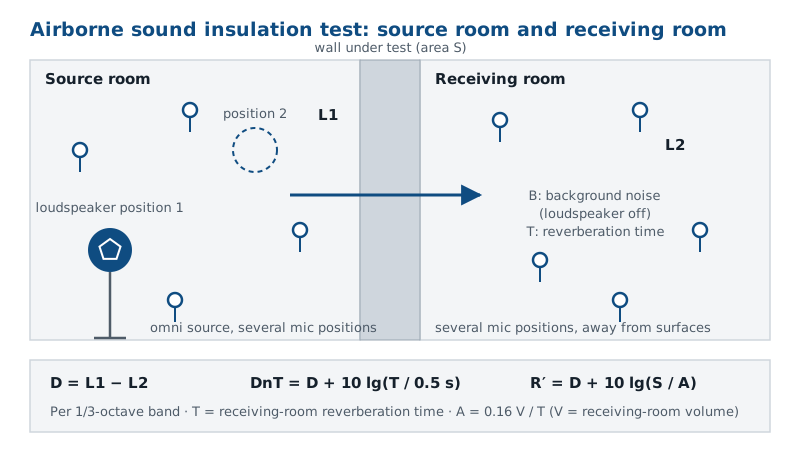
ในแต่ละย่าน 1/3 ออกเตฟ ต้องมี ระดับเฉลี่ยในห้องต้นเสียง (L1) ระดับเฉลี่ยในห้องรับเสียง (L2) เสียงพื้นหลังในห้องรับเสียงขณะปิดลำโพง (B) และเวลาเสียงก้องของห้องรับเสียง (T) รวมทั้งปริมาตรห้องรับเสียง (V) และพื้นที่ผนังหรือพื้นที่กั้นร่วมกัน (S)In every 1/3-octave band you need the average source-room level (L1), the average receiving-room level (L2), the receiving-room background with the loudspeaker off (B) and the receiving-room reverberation time (T), plus the receiving-room volume (V) and the common partition area (S).
| ข้อกำหนดเขียนว่าRequirement written as | ความหมายMeaning |
|---|---|
| DnT,w (อาจ + C หรือ + Ctr)DnT,w (possibly + C or + Ctr) | ความหมายMeaningสิ่งที่ผู้อยู่ในห้องได้รับจริง ปรับเป็นเวลาเสียงก้องอ้างอิง 0.5 sWhat occupants actually get, standardised to a reference reverberation time of 0.5 s |
| R'wR'w | ความหมายMeaningค่าลดเสียงปรากฏของผนังหรือพื้นในอาคาร รวมเสียงอ้อม ต้องใช้ SApparent sound reduction index of the partition in the building, flanking included; needs S |
| D2m,nT,wD2m,nT,w | ความหมายMeaningเปลือกอาคาร: ผลต่างระดับจาก 2 m นอกอาคารถึงในห้อง ปรับเป็นเวลาเสียงก้องอ้างอิง 0.5 sFaçade: level difference from 2 m outside to the room, standardised to a reference reverberation time of 0.5 s |
| RwRw | ความหมายMeaningค่าจากห้องแล็บ: วัด R ตาม ISO 10140 แล้วจัดอันดับตาม ISO 717-1 ไม่ใช่ค่าที่วัดในสนามLaboratory value: R measured to ISO 10140, rated to ISO 717-1; not a field quantity |
ถ้าข้อกำหนดไม่ระบุชนิดของค่า ให้ตกลงกับผู้ออกแบบ ก่อน ลงพื้นที่ เพราะข้อมูลที่ต้องจดในสนามต่างกันIf the requirement does not state the quantity, agree it with the designer before going to site, because the data you must record differ.
หลักการวัดและความสัมพันธ์ของค่าMeasurement principle and how the quantities relate
ทุกค่าเริ่มจาก D = L1 − L2 ในแต่ละย่าน แล้วปรับตามห้องรับเสียง: DnT = D + 10 lg(T / 0.5 s) และ R' = D + 10 lg(S / A) โดย A คือพื้นที่ดูดซับเสียงเทียบเท่า ประมาณจากสูตร Sabine ว่า A = 0.16 V / T เมื่อรวมสองสูตรจะได้ DnT = R' + 10 lg(0.32 V / S) คือห้องรับเสียงใหญ่หลังผนังเล็กจะได้ DnT สูงกว่า R' ของผนังเดียวกันEverything starts from D = L1 − L2 per band, then adjusts for the receiving room: DnT = D + 10 lg(T / 0.5 s) and R' = D + 10 lg(S / A), where A is the equivalent absorption area from Sabine's formula, A = 0.16 V / T. Combining them gives DnT = R' + 10 lg(0.32 V / S): a large receiving room behind a small partition gets a DnT higher than the R' of the same partition.
ทำไมใช้ลำโพงสิบสองหน้า มาตรฐานต้องการสนามเสียงที่กระจายสม่ำเสมอในห้องต้นเสียง ลำโพงรอบทิศทางแผ่เสียงเกือบเท่ากันทุกทิศ ผลจึงไม่ขึ้นกับการหันลำโพง และผนังที่ทดสอบไม่ถูกเสียงตรงยิงใส่ ลำโพงทั่วไปมีทิศทางชัดและสเปกตรัมไม่เรียบ สัญญาณที่ใช้คือ pink noise ที่ปรับสเปกตรัมให้เรียบพอWhy a dodecahedron? The standard wants an evenly diffuse field in the source room. An omnidirectional source radiates almost equally in all directions, so the result does not depend on aiming and the partition is not hit by a direct beam; ordinary loudspeakers are directional and uneven in spectrum. The signal is pink noise equalised to a smooth spectrum.
ขั้นตอนการทำงานในสนามTypical workflow on site
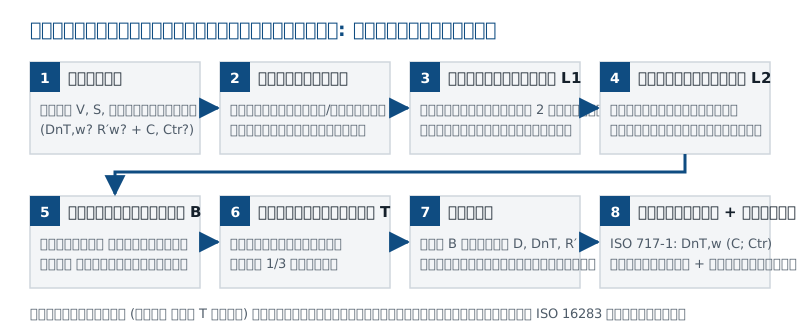
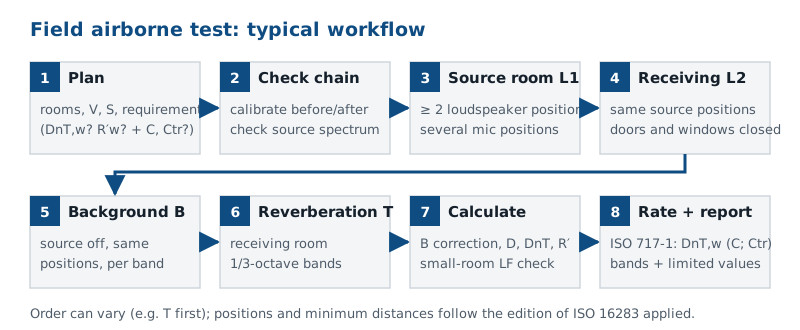
- วางแผน ระบุห้องต้นเสียงและห้องรับเสียง วัดขนาดหา V และ S ตกลงค่าที่ต้องรายงาน และนัดช่วงที่ไม่มีงานเจาะหรือเครื่องจักรทำงานใกล้ๆPlan. Choose the source and receiving rooms, measure V and S, agree the quantity to report and book a time without drilling or plant running nearby.
- เตรียมห้องและสอบเทียบ ปิดประตูหน้าต่างทุกบาน ปิดแอร์ในห้องรับเสียงถ้าทำได้ จดสภาพห้อง และตรวจเครื่องวัดด้วยเครื่องสอบเทียบเสียงPrepare and calibrate. Close all doors and windows, switch off receiving-room air-conditioning if possible, record the room condition and check the meter with a sound calibrator.
- วางลำโพงตำแหน่งแรก ห่างผิวห้องและผนังที่ทดสอบตามระยะในมาตรฐาน เปิด pink noise ให้ดังพอ และดูว่าสเปกตรัมในห้องต้นเสียงไม่มีย่านผิดปกติPlace the loudspeaker away from the room surfaces and the partition by the distances in the standard, switch on pink noise loud enough and check the source-room spectrum for odd bands.
- วัด L1 และ L2 หลายตำแหน่งไมโครโฟน (หรือไมโครโฟนเคลื่อนที่ตามที่มาตรฐานอนุญาต) ห่างผิวห้องและลำโพง ถ้ามีสองเครื่องวัดพร้อมกันได้ ถ้าห้องเล็กกว่าเกณฑ์ปริมาตรของมาตรฐาน ให้ทำขั้นตอนความถี่ต่ำเพิ่มสำหรับย่านต่ำสุด ซึ่งรวมการวัดใกล้มุมห้องMeasure L1 and L2 at several microphone positions (or with a moving microphone where allowed), away from surfaces and the loudspeaker; with two meters, both rooms at once. If a room is below the standard's volume limit, add the low-frequency procedure for the lowest bands, which includes measurements near the corners.
- ย้ายลำโพงแล้ววัดซ้ำ มาตรฐานกำหนดให้ใช้มากกว่าหนึ่งตำแหน่งลำโพงและกำหนดจำนวนตำแหน่งไมโครโฟนขั้นต่ำ ให้ยึดตามฉบับที่ใช้Move the loudspeaker and repeat. The standard requires more than one source position and minimum numbers of microphone positions; follow the edition applied.
- วัดเสียงพื้นหลัง ในห้องรับเสียงขณะปิดลำโพง ในสภาพเดียวกับตอนวัด L2Measure the background in the receiving room with the loudspeaker off, under the same conditions as L2.
- วัดเวลาเสียงก้อง T ของห้องรับเสียงเป็นย่าน 1/3 ออกเตฟ หลายตำแหน่งแหล่งเสียงและไมโครโฟนMeasure T of the receiving room in 1/3-octave bands, at several source and microphone positions.
- คำนวณและรายงาน แก้เสียงพื้นหลัง คำนวณ DnT หรือ R' ทีละย่าน จัดอันดับตาม ISO 717-1 และตรวจสอบเทียบอีกครั้งหลังวัดเสร็จCalculate and report. Correct for background, calculate DnT or R' per band, rate to ISO 717-1, and repeat the calibration check at the end.
การตรวจเสียงพื้นหลังและเวลาเสียงก้องBackground noise and reverberation checks
ในแต่ละย่าน เทียบระดับขณะเปิดลำโพงกับเสียงพื้นหลัง ถ้าห่างกันเกินประมาณ 10 dB แทบไม่ต้องแก้ ถ้าห่างน้อยกว่านั้นแต่เกิน 6 dB ให้หักพลังงานเสียงพื้นหลังออก ถ้าห่าง 6 dB หรือน้อยกว่า มาตรฐานใช้ค่าแก้แบบคงที่และต้องระบุว่าย่านนั้น เป็นค่าจำกัด คือผนังกันเสียงได้อย่างน้อยเท่านั้นIn each band, compare the level with the loudspeaker on against the background. More than about 10 dB apart: practically no correction. Less, but more than 6 dB: subtract the background energy. 6 dB or less: the standard applies a fixed correction and the band must be reported as a limit — the partition insulates at least that much.
ย่าน 125 Hz: ขณะเปิดลำโพงวัดได้ 52.0 dB เสียงพื้นหลัง 44.0 dB (ห่าง 8 dB) จึงแก้เป็น L2 = 10 lg(10^5.20 − 10^4.40) = 51.3 dB ถ้าไม่แก้ ผนังจะดูแย่กว่าจริงในย่านนั้น ส่วนห้องนอนเปล่าที่ผิวแข็งมักมี T ยาวกว่า 0.5 s การปรับ DnT จึงทำให้ผลเทียบกับห้องที่มีเฟอร์นิเจอร์ได้125 Hz band: 52.0 dB with the loudspeaker on, 44.0 dB background (8 dB apart), so L2 = 10 lg(10^5.20 − 10^4.40) = 51.3 dB; without the correction the wall looks worse than it is in that band. An empty bedroom with hard surfaces usually has T longer than 0.5 s, so standardising DnT makes it comparable with a furnished room.
การทดสอบเปลือกอาคาร (ISO 16283-3)Façade testing (ISO 16283-3)
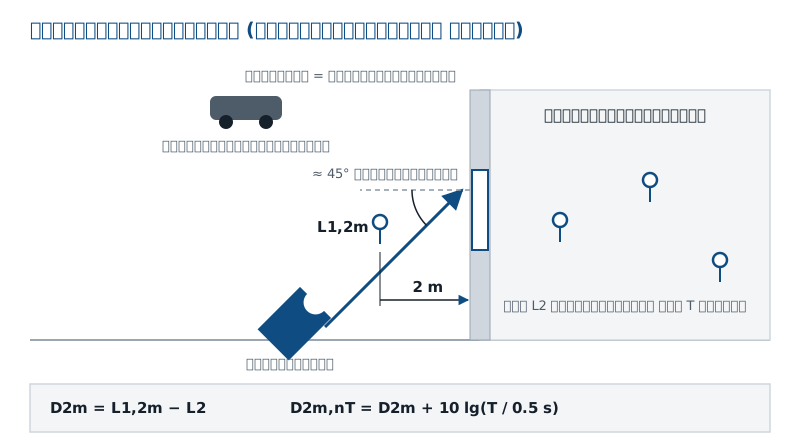
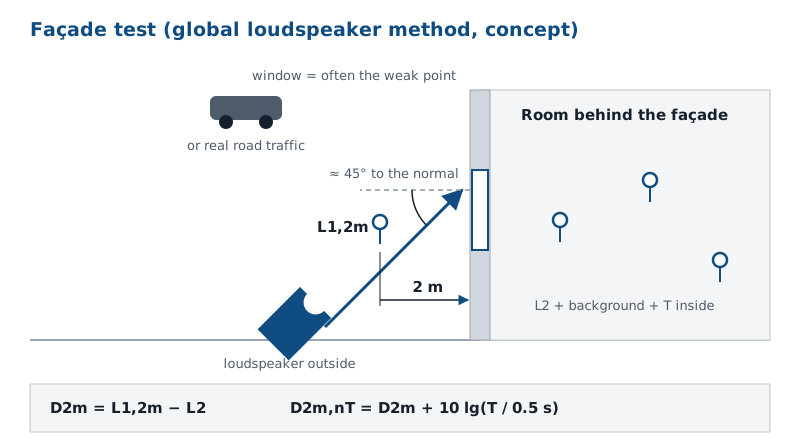
สำหรับผนังภายนอก หน้าต่าง และประตู ห้องต้นเสียงคือพื้นที่นอกอาคาร มาตรฐานมีวิธีทั้งผนัง (global) ที่ให้ผลต่างระดับของห้อง และวิธีรายชิ้นส่วน (element) สำหรับชิ้นเดียว เช่น หน้าต่าง แหล่งเสียงคือ ลำโพงภายนอก ที่ยิงเสียงเฉียงประมาณ 45° หรือ เสียงจราจรจริง เมื่อดังและสม่ำเสมอพอFor external walls, windows and doors, the source room is the outdoors. Global methods give a level difference for the room; element methods assess one element such as a window. The source is an outdoor loudspeaker aimed at about 45°, or real road traffic when it is loud and steady enough.
- วัดนอกอาคารที่ 2 m หน้าผนัง (L1,2m) และในห้องหลายตำแหน่ง (L2): D2m = L1,2m − L2 และ D2m,nT = D2m + 10 lg(T / 0.5 s) แล้วจัดอันดับเป็น D2m,nT,w กับ Ctr ตาม ISO 717-1Measure 2 m in front of the façade (L1,2m) and at several indoor positions (L2): D2m = L1,2m − L2 and D2m,nT = D2m + 10 lg(T / 0.5 s), rated as D2m,nT,w with Ctr to ISO 717-1.
- ถ้าใช้เสียงจราจร ต้องวัดภายนอกและภายในพร้อมกัน และจดสภาพหน้าต่างกับช่องระบายอากาศWith traffic as the source, measure outside and inside simultaneously, and record the window and vent condition.
จากค่ารายย่านเป็นตัวเลขเดียว (ISO 717-1)From band values to one number (ISO 717-1)
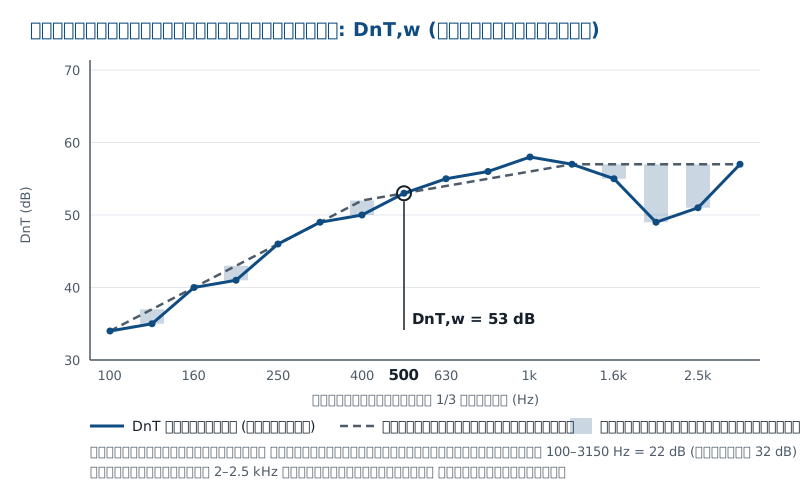
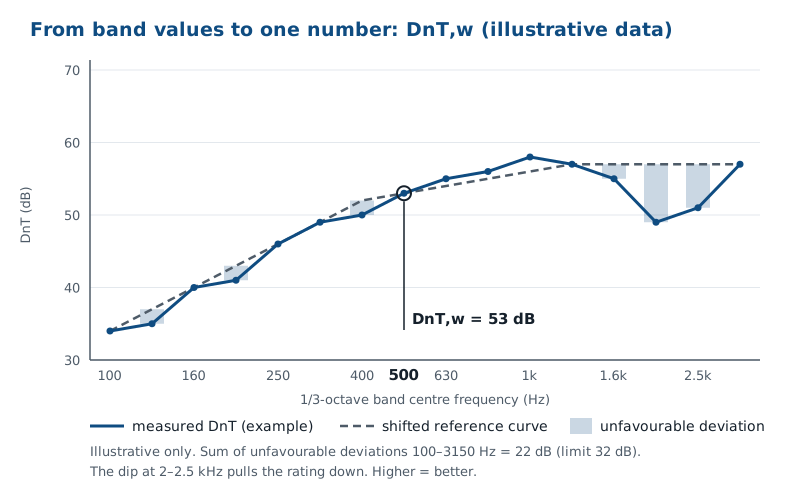
ISO 717-1 เลื่อนเส้นอ้างอิงที่มีรูปร่างคงที่ทีละ 1 dB เทียบกับผลวัดช่วง 100–3150 Hz จนผลรวมส่วนที่ผลวัดต่ำกว่าเส้น (unfavourable deviations) มากที่สุดแต่ไม่เกิน 32 dB แล้วอ่านค่าเส้นที่ 500 Hz ย่านที่อ่อนจึงดึงคะแนนลง ต่างจากการเฉลี่ยธรรมดา ค่า C ปรับให้สะท้อนเสียงทั่วไป เช่น เสียงพูด ส่วน Ctr สะท้อนเสียงความถี่ต่ำ เช่น จราจรหรือเบส เขียนผลเป็น เช่น DnT,w (C; Ctr) = 53 (−1; −5) dBISO 717-1 shifts a fixed-shape reference curve in 1 dB steps against the measured values from 100 to 3150 Hz until the sum of unfavourable deviations (bands below the curve) is as large as possible but not over 32 dB, then reads the curve at 500 Hz. Weak bands pull the rating down, unlike a simple average. C adapts it to everyday sound such as speech; Ctr to low-frequency sound such as traffic or bass. A result is written, e.g., DnT,w (C; Ctr) = 53 (−1; −5) dB.
ทำไมผลในสนามไม่เท่ากับผลจากห้องแล็บWhy field results differ from laboratory results
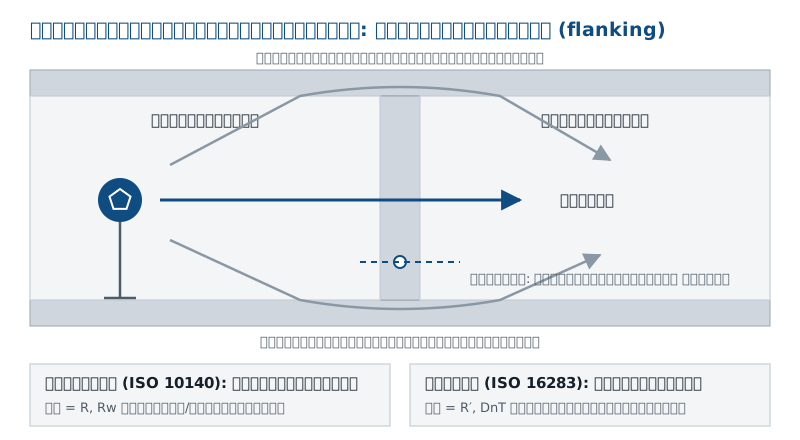
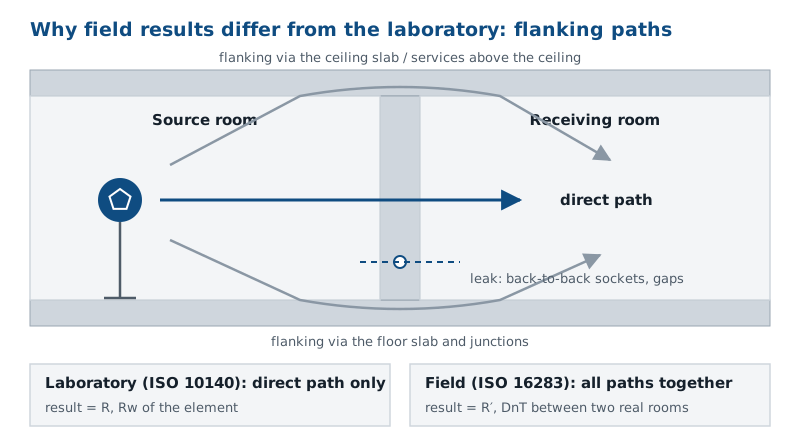
- เสียงอ้อม พื้นและเพดานที่ต่อเนื่องใต้และเหนือผนังพาการสั่นข้ามห้อง ผนังเบาที่ดีมากอาจถูกจำกัดด้วยทางนี้Flanking. Floors and ceilings running continuously past the wall carry vibration across; a very good lightweight wall can be limited by them.
- ฝีมือการก่อสร้าง หัวผนังใต้ท้องพื้นอุดไม่เต็ม ปลั๊กติดกันสองฝั่ง ท่อทะลุที่ไม่อุด มักเห็นชัดที่ความถี่สูงWorkmanship. An unsealed wall head, back-to-back sockets or unsealed penetrations, usually visible at high frequencies.
- ขนาดห้องและความไม่แน่นอน DnT ขึ้นกับ V และ S และผลที่ใกล้เกณฑ์มากต้องตีความอย่างระมัดระวังRoom size and uncertainty. DnT depends on V and S, and results very close to a limit need careful interpretation.
เวลาอ่านผล ให้ดูรูปร่างเส้นรายย่านด้วย ย่านที่ตกเฉพาะความถี่สูงมักบอกจุดรั่ว ย่านตกช่วงกลางถึงสูงของผนังเบาอาจเป็นผลของความถี่วิกฤต (coincidence) และถ้าห้องหนึ่งต่ำกว่าห้องแบบเดียวกันมาก มักเป็นปัญหาติดตั้งเฉพาะจุด ถ้าต้องหาจุดรั่วให้แน่ชัด ดูคู่มือการหาแหล่งกำเนิดเสียงและจุดรั่วRead the band curve too: a drop only at high frequencies often means leaks, a mid-to-high dip in a lightweight wall may be its coincidence effect, and one room far below identical rooms usually has a local defect. To pinpoint leaks, see the guide on locating noise sources and leaks.
อุปกรณ์ที่ต้องใช้Equipment
- เครื่องวัดระดับเสียงหรือเครื่องวิเคราะห์ที่วัดย่าน 1/3 ออกเตฟ (ตัวกรองตาม IEC 61260-1 เครื่องวัดตาม IEC 61672-1) และวัดเวลาเสียงก้องเป็นย่าน 1/3 ออกเตฟได้A sound level meter or analyser with 1/3-octave bands (filters to IEC 61260-1, meter to IEC 61672-1) that also measures reverberation time in 1/3 octaves.
- ไมโครโฟนวัดเสียงพร้อมที่กันลม และเครื่องสอบเทียบเสียงตาม IEC 60942A measurement microphone with windscreen, and a sound calibrator to IEC 60942.
- ลำโพงรอบทิศทางพร้อมเครื่องขยายเสียงและ pink noise ที่ดังพอ (งานเปลือกอาคารใช้ลำโพงที่ดังภายนอก)An omnidirectional loudspeaker with amplifier and pink noise, loud enough (façade tests use a loud outdoor source).
- ขาตั้ง รีโมต เครื่องวัดระยะ และซอฟต์แวร์คำนวณ ISO 16283 / ISO 717Tripods, remote control, a distance meter and ISO 16283 / ISO 717 calculation software.
| NTi Audio (ตรวจสอบจากเอกสารทางการ)NTi Audio (checked against official documents) | บทบาทและเงื่อนไขRole and requirements |
|---|---|
| XL3 Acoustic AnalyzerXL3 Acoustic Analyzer | บทบาทและเงื่อนไขRole and requirementsต้องมี XL3 Sound Insulation Option (เสียงผ่านอากาศ เสียงกระทบ เปลือกอาคาร) หรือ XL3 XL3 Sound Insulation Bundle #600 000 742 ที่รวม option กับไลเซนส์ซอฟต์แวร์Needs the XL3 Sound Insulation Option (airborne, impact, façade) or the XL3 XL3 Sound Insulation Bundle #600 000 742, option plus software licence |
| XL2 Audio and Acoustic AnalyzerXL2 Audio and Acoustic Analyzer | บทบาทและเงื่อนไขRole and requirementsใช้ไลเซนส์ Sound Insulation Reporter สำหรับ XL2 เครื่องนั้น ร่วมกับ XL2 Extended Acoustic Pack (เวลาเสียงก้อง 1/3 ออกเตฟ) และ XL2 Remote Measurement Option ถ้าต้องการควบคุมสองเครื่องจากซอฟต์แวร์Sound Insulation Reporter licence for that XL2, with the XL2 Extended Acoustic Pack (1/3-octave RT) and the XL2 Remote Measurement Option to control two meters from the software |
| M2230 + Class 1 Sound CalibratorM2230 + Class 1 Sound Calibrator | บทบาทและเงื่อนไขRole and requirementsไมโครโฟนและเครื่องสอบเทียบในชุดงานอะคูสติกอาคารที่ NTi แนะนำMicrophone and calibrator in NTi's recommended building acoustics kit |
| DS3 + PA3DS3 + PA3 | บทบาทและเงื่อนไขRole and requirementsลำโพงสิบสองหน้า กำลังเสียงทั่วไป 120.5 dB re 1 pW NTi ระบุว่าสเปกตรัมผ่านข้อกำหนด ISO 16283-1 (ต่างกันไม่เกิน 8 dB ระหว่างย่านที่ติดกัน)Dodecahedron, typical sound power 120.5 dB re 1 pW; NTi states it meets the ISO 16283-1 spectrum requirement (≤ 8 dB between adjacent bands) |
| Sound Insulation ReporterSound Insulation Reporter | บทบาทและเงื่อนไขRole and requirementsจัดข้อมูลตามห้องและตำแหน่งลำโพง แก้เสียงพื้นหลัง แสดงผล 50 Hz – 5 kHz และทำรายงาน รวมห้องเล็กกว่า 25 m³Assigns data to rooms and source positions, corrects background, shows 50 Hz – 5 kHz and reports, including rooms below 25 m³ |
มาตรฐานที่เกี่ยวข้องRelevant standards
- ISO 16283-1 (ระหว่างห้อง) และ ISO 16283-3 (เปลือกอาคาร) แทน ISO 140-4 และ 140-5 เดิมISO 16283-1 (between rooms) and ISO 16283-3 (façades), replacing ISO 140-4 and 140-5.
- ISO 717-1 ตัวเลขเดียวและค่า C, Ctr; ISO 3382-2 เวลาเสียงก้อง; ISO 10140 ค่าจากห้องแล็บISO 717-1 for single numbers and C, Ctr; ISO 3382-2 for reverberation time; ISO 10140 for laboratory values.
- เกณฑ์ผ่านหรือไม่ผ่านมาจากข้อกำหนดโครงการหรือกฎหมายของประเทศนั้น ไม่ใช่จากมาตรฐานวิธีวัดPass/fail limits come from the project specification or national regulations, not from the measurement standards.
ข้อผิดพลาดที่พบบ่อยCommon mistakes
- เทียบผลในสนามกับ Rw จากห้องแล็บ หรือรายงาน R'w ทั้งที่ข้อกำหนดเป็น DnT,wComparing a field result with a laboratory Rw, or reporting R'w when DnT,w is required.
- ใช้ลำโพงตำแหน่งเดียวหรือวางชิดผนังที่ทดสอบOne loudspeaker position, or the loudspeaker close to the partition.
- ไมโครโฟนใกล้ผนัง มุม หรือลำโพงเกินไปMicrophones too close to walls, corners or the loudspeaker.
- ไม่วัดเสียงพื้นหลัง หรือวัดในสภาพต่างจากตอนวัด L2No background measurement, or one made under different conditions from L2.
- ใช้ T ที่เดาหรือจากห้องอื่นแทนการวัดจริงUsing an assumed T or one from another room.
- ประตูหน้าต่างปิดไม่สนิท หรือไม่ระบุย่านที่เป็นค่าจำกัดในรายงานDoors or windows not fully closed, or limit bands not marked in the report.
ตัวอย่างสถานการณ์: ผนังกั้นห้องคอนโดExample scenario: a condominium party wall
ผนังกั้นห้องนอนระหว่างสองยูนิตยาว 4.0 m สูง 2.7 m (S = 10.8 m²) ห้องรับเสียง 3.5 × 4.0 × 2.7 m (V = 37.8 m³) ยังไม่มีเฟอร์นิเจอร์ ที่ 500 Hz วัดได้ L1 = 96.0 dB, L2 = 48.5 dB, เสียงพื้นหลัง 31.0 dB (ไม่ต้องแก้) และ T = 0.8 s
D = 96.0 − 48.5 = 47.5 dB
DnT = 47.5 + 10 lg(0.8 / 0.5) = 49.5 dB
A = 0.16 × 37.8 / 0.8 = 7.56 m² และ R' = 47.5 + 10 lg(10.8 / 7.56) = 49.0 dB
ตรวจ: 10 lg(0.32 × 37.8 / 10.8) = 0.5 dB ตรงกับ DnT − R'
เมื่อคำนวณครบทุกย่านแล้วพบเส้นตกที่ 2–2.5 kHz คล้ายภาพตัวอย่าง ทีมตรวจพบปลั๊กติดกันสองฝั่งและหัวผนังอุดไม่เต็ม หลังแก้ไขจึงวัดซ้ำเพื่อเทียบก่อนและหลังA bedroom party wall between two units is 4.0 m long and 2.7 m high (S = 10.8 m²); the receiving room is 3.5 × 4.0 × 2.7 m (V = 37.8 m³), unfurnished. At 500 Hz: L1 = 96.0 dB, L2 = 48.5 dB, background 31.0 dB (no correction) and T = 0.8 s.
D = 96.0 − 48.5 = 47.5 dB
DnT = 47.5 + 10 lg(0.8 / 0.5) = 49.5 dB
A = 0.16 × 37.8 / 0.8 = 7.56 m², and R' = 47.5 + 10 lg(10.8 / 7.56) = 49.0 dB
Check: 10 lg(0.32 × 37.8 / 10.8) = 0.5 dB, matching DnT − R'.
With all bands calculated, the curve dips at 2–2.5 kHz as in the illustration. The team finds back-to-back sockets and an unsealed wall head; after repair a repeat test gives a before/after comparison.
รายงานผลควรมีอะไรบ้างWhat the report contains
- อาคาร วันที่ ผู้วัด และมาตรฐานพร้อมฉบับที่ใช้Building, date, who measured, and the standards with editions.
- คำอธิบายผนังหรือพื้น ห้องทั้งสอง V, S และสภาพห้องDescription of the partition, both rooms, V, S and room condition.
- อุปกรณ์ ผลสอบเทียบ วิธีจัดตำแหน่งและจำนวนตำแหน่งEquipment, calibration checks, positioning method and number of positions.
- ตารางและกราฟรายย่านพร้อมเส้นอ้างอิง และเครื่องหมายย่านที่เป็นค่าจำกัดBand table and chart with the reference curve, marking limit bands.
- ตัวเลขเดียวพร้อม C และ Ctr การเทียบเกณฑ์ และข้อสังเกตที่พบSingle number with C and Ctr, comparison with the requirement, and observations.
คำถามที่พบบ่อยFAQ
Rw กับ DnT,w ต่างกันอย่างไรWhat is the difference between Rw and DnT,w?
Rw เป็นคุณสมบัติของผนังจากห้องแล็บ DnT,w คือสิ่งที่ห้องจริงได้รับ รวมเสียงอ้อมและขึ้นกับขนาดห้อง ให้ใช้ค่าที่ข้อกำหนดเขียนไว้ การตรวจรับงานในอาคารมักกำหนดเป็น DnT,w หรือ R'wRw is a laboratory property of the wall; DnT,w is what a real room gets, including flanking and depending on room size. Use the quantity in the requirement; building acceptance tests often specify DnT,w or R'w.
ทำไมผลวัดจริงต่ำกว่ารายงานห้องแล็บของผู้ผลิตWhy is my result lower than the manufacturer's laboratory report?
ห้องแล็บตัดเสียงอ้อมออกและติดตั้งชิ้นทดสอบอย่างประณีต ในอาคารจริงเสียงผ่านพื้น เพดาน ท่อ และรอยรั่วด้วย ผลในสนามจึงมักต่ำกว่า ถ้าต่ำผิดปกติให้ดูเส้นรายย่านเพื่อหาสาเหตุThe laboratory suppresses flanking and mounts the specimen carefully; in a building sound also passes through floors, ceilings, services and leaks, so field results are usually lower. If the gap is unusual, use the band curve to find the cause.
จำเป็นต้องใช้ลำโพงสิบสองหน้าไหมDo I really need a dodecahedron loudspeaker?
สำหรับการวัดระหว่างห้องตาม ISO 16283-1 มาตรฐานกำหนดคุณสมบัติด้านทิศทางและสเปกตรัมของแหล่งเสียง ลำโพงรอบทิศทางที่ออกแบบสำหรับงานนี้ผ่านได้ง่ายและให้ผลซ้ำได้ ลำโพงทั่วไปเสี่ยงไม่ผ่านFor room-to-room tests to ISO 16283-1 the standard sets directivity and spectrum requirements for the source. A purpose-built omnidirectional loudspeaker meets them easily and repeatably; ordinary loudspeakers may not.
วัดในห้องที่ยังไม่มีเฟอร์นิเจอร์ได้ไหมCan I test in unfurnished rooms?
ได้ และพบบ่อยในการตรวจรับงาน การปรับด้วย T ที่วัดจริงทำให้ผลเทียบกันได้ แต่ห้องเล็กมากควรใช้ขั้นตอนความถี่ต่ำตามมาตรฐานYes, and it is common in acceptance testing. Correcting with the measured T makes results comparable, but very small rooms need the standard's low-frequency procedure.
STC เท่ากับ Rw หรือไม่Is STC the same as Rw?
ไม่เท่า STC จัดอันดับตาม ASTM E413 จากผลวัดในห้องแล็บตาม ASTM E90 ซึ่งใช้เส้นอ้างอิงและกฎต่างจาก ISO 717-1 ค่าในสนามของ ASTM (เช่น ASTC ตาม ASTM E336) ก็ใช้แทน R'w หรือ DnT,w ไม่ได้เช่นกัน ให้รายงานตามระบบที่ข้อกำหนดใช้No. STC is rated to ASTM E413 from laboratory data measured to ASTM E90, with a different reference curve and rules from ISO 717-1. ASTM field ratings (such as ASTC to ASTM E336) are likewise not interchangeable with R'w or DnT,w; report in the system the requirement uses.
ใช้แอปในโทรศัพท์วัดได้ไหมCan a smartphone app measure sound insulation?
ดูแนวโน้มคร่าวๆ ได้ แต่ไม่ใช่การวัดตามมาตรฐาน เพราะไม่มีไมโครโฟนและตัวกรองที่ผ่านมาตรฐาน แหล่งเสียงที่ควบคุมได้ และการสอบเทียบ จึงใช้ตรวจรับงานไม่ได้It can show a rough trend, but it is not a standard measurement: no compliant microphone and filters, controlled source or calibration, so it cannot be used for acceptance.