ทำไมเรื่องนี้สำคัญWhy this matters
ในงานวัดเสียง ไมโครโฟนเพียงไม่กี่รุ่นก็ครอบคลุมงานส่วนใหญ่ได้ แต่ในงานวัดการสั่นสะเทือน ช่วงของงานกว้างมาก ตั้งแต่พื้นอาคารที่ไหวช้า ๆ ไม่กี่เฮิรตซ์ จนถึงลูกปืนที่สั่นหลายพันเฮิรตซ์ และตั้งแต่การสั่นที่แทบวัดไม่ได้จนถึงแรงกระแทกรุนแรง ไม่มี accelerometer ตัวเดียวที่ดีที่สุดสำหรับทุกงาน เซนเซอร์ที่เลือกผิดอาจให้ตัวเลขที่ดูสมเหตุสมผลแต่ผิด เช่น จมอยู่ในสัญญาณรบกวน อิ่มตัวเมื่อเจอแรงกระแทก หรือวัดเรโซแนนซ์ของตัวยึดแทนการสั่นของเครื่องIn sound measurement a few microphone models cover most jobs. In vibration the range of work is far wider: from a building floor swaying slowly at a few hertz to a bearing vibrating at thousands of hertz, and from barely measurable motion to severe shocks. No single accelerometer is best for everything. A wrongly chosen sensor can give numbers that look plausible but are wrong: buried in noise, saturated by a shock, or measuring the resonance of its mounting instead of the machine.
แนวคิดทั่วไป: ปัจจัยในการเลือกThe general concept: selection factors
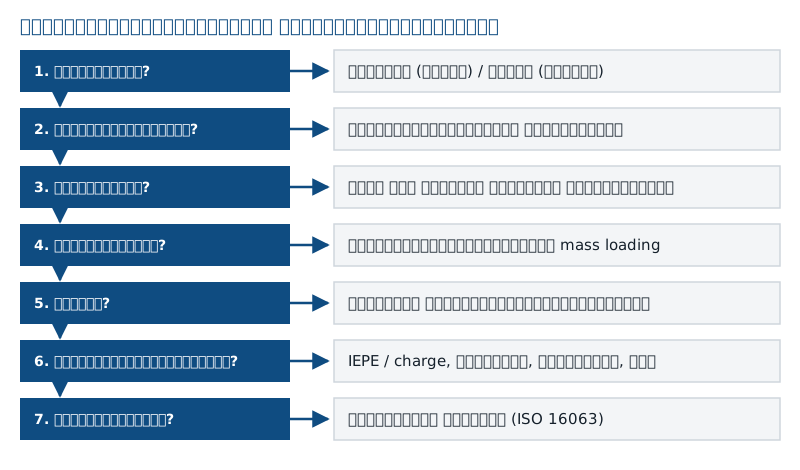
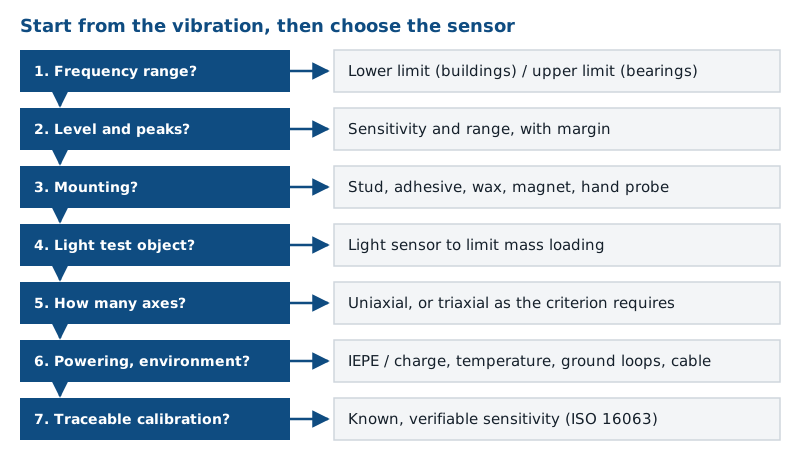
ส่วนนี้เป็นหลักทั่วไป ไม่ขึ้นกับยี่ห้อ ค่าตัวเลขของแต่ละรุ่นให้ดูจากเอกสารข้อมูลของผู้ผลิตThis part is general and brand-neutral. For each model's figures, see the manufacturer's data sheet.
- ความไว (sensitivity): แรงดันไฟฟ้าต่อหน่วยความเร่ง เช่น mV/(m/s²) หรือ mV/g เซนเซอร์ที่ไวสูงให้สัญญาณแรงเมื่อการสั่นเบา จึงเหมาะกับโครงสร้างหรือการสั่นระดับต่ำ แต่รับการสั่นแรงได้น้อยกว่าก่อนอิ่มตัว เซนเซอร์ที่ไวต่ำเหมาะกับการสั่นแรงและแรงกระแทกSensitivity: voltage per unit acceleration, such as mV/(m/s²) or mV/g. A high-sensitivity sensor gives a strong signal from weak vibration, suiting structures and low-level work, but saturates at lower levels. A low-sensitivity sensor suits strong vibration and shocks.
- ช่วงการวัดและสัญญาณรบกวน: ขอบล่างคือสัญญาณรบกวนของเซนเซอร์และเครื่องวัด ขอบบนคือความเร่งสูงสุดก่อนเพี้ยน ควรให้การสั่นที่คาดว่าจะเจอ รวมค่าพีค อยู่ในช่วงนี้อย่างมีระยะเผื่อMeasuring range and noise: the lower end is the noise of the sensor and meter, the upper end the maximum acceleration before distortion. The expected vibration, including peaks, should sit inside this range with a margin.
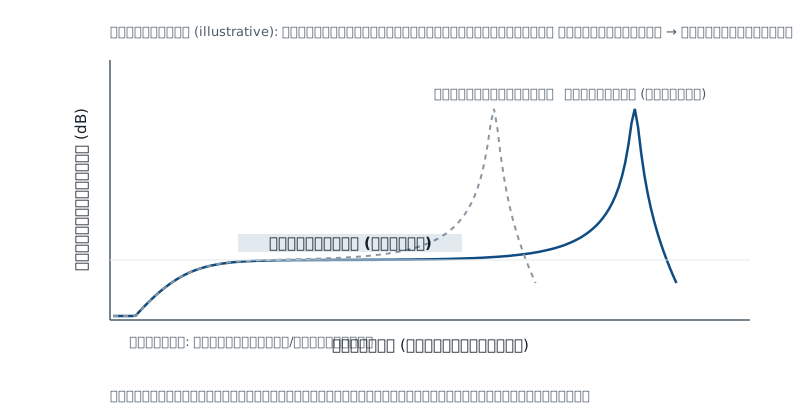
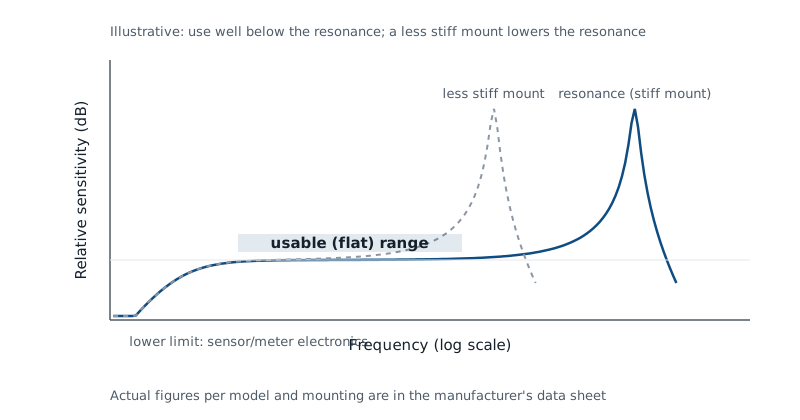
- ช่วงความถี่: ขอบบนถูกจำกัดโดยความถี่เรโซแนนซ์ของเซนเซอร์เมื่อติดตั้งแล้ว ขอบล่างถูกจำกัดโดยวงจรของเซนเซอร์และเครื่องวัด accelerometer แบบเพียโซอิเล็กทริกวัดความเร่งคงที่ (0 Hz) ไม่ได้ งานที่ความถี่ต่ำมาก เช่น การไหวของอาคารสูง อาจต้องใช้เซนเซอร์ชนิดอื่นFrequency range: the upper end is limited by the sensor's mounted resonance; the lower end by the sensor and meter electronics. Piezoelectric accelerometers cannot measure constant (0 Hz) acceleration, so very low-frequency work, such as tall-building sway, may need a different sensor type.
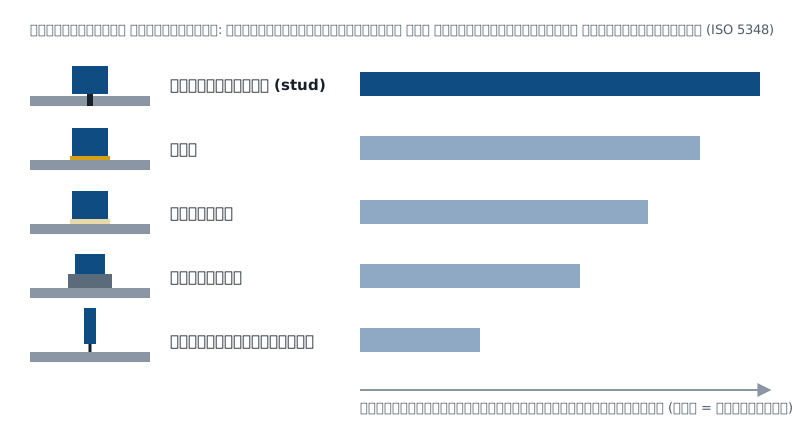
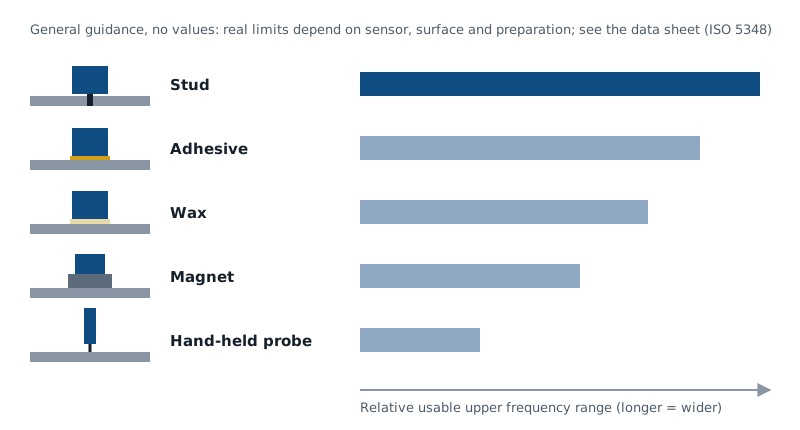
- วิธียึดติด: การยึดด้วยสกรู (stud) แข็งแรงที่สุดและรักษาช่วงความถี่สูงได้ดีที่สุด การติดกาว การใช้ขี้ผึ้ง การใช้แม่เหล็ก และการใช้หัววัดจับด้วยมือ ให้ช่วงความถี่ใช้งานแคบลงตามลำดับโดยทั่วไป ISO 5348 อธิบายคุณสมบัติของวิธียึดแบบต่าง ๆ ไว้Mounting: a stud mount is the stiffest and best preserves the high-frequency range. Adhesive, wax, magnet and hand-held probe mounting generally narrow the usable frequency range in roughly that order. ISO 5348 describes the characteristics of the different mounting methods.
- มวลของเซนเซอร์: เซนเซอร์ที่หนักเมื่อเทียบกับชิ้นงานจะเปลี่ยนการสั่นของชิ้นงานเอง (mass loading) ชิ้นงานบาง เบา หรือขนาดเล็กต้องใช้เซนเซอร์ที่เบาSensor mass: a sensor that is heavy relative to the test object changes the object's vibration (mass loading). Thin, light or small objects need a light sensor.
- จำนวนแกน: แบบแกนเดียว (uniaxial) วัดทิศทางเดียว แบบสามแกน (triaxial) วัด x, y, z พร้อมกัน งานประเมินอาคารและการสั่นที่มีผลต่อคนมักต้องวัดสามแกนNumber of axes: a uniaxial sensor measures one direction; a triaxial sensor measures x, y and z at once. Building and human-vibration assessments often need three axes.
- การจ่ายไฟและสัญญาณ: เซนเซอร์แบบ IEPE มีวงจรขยายในตัวและรับไฟกระแสคงที่ผ่านสายสัญญาณเส้นเดียวกัน ใช้งานง่ายกับเครื่องวัดที่รองรับ ส่วนแบบ charge output ไม่มีวงจรในตัว ทนอุณหภูมิสูงได้ดีกว่า แต่ต้องใช้เครื่องขยายประจุและสายที่มีสัญญาณรบกวนต่ำ ต้องตรวจว่าเครื่องวัดรองรับแบบใดPowering and signal: an IEPE sensor has built-in electronics and takes a constant-current supply over the same signal cable, which is simple with a compatible meter. A charge-output sensor has no built-in electronics and tolerates higher temperatures, but needs a charge amplifier and low-noise cable. Check which type the meter supports.
- สภาพแวดล้อม: อุณหภูมิ ความชื้น น้ำ น้ำมัน สนามแม่เหล็กไฟฟ้า และปัญหากราวด์ลูป (ground loop) บางงานต้องใช้ฐานแบบฉนวนหรือสายที่ทนสภาพหน้างานEnvironment: temperature, humidity, water, oil, electromagnetic fields and ground loops. Some jobs need an isolated base or cables that survive the site.
- การสอบเทียบ: ความไวของเซนเซอร์ต้องทราบและตรวจสอบได้ วิธีสอบเทียบเซนเซอร์การสั่นสะเทือนอยู่ในชุดมาตรฐาน ISO 16063Calibration: the sensor's sensitivity must be known and verifiable. Calibration methods for vibration transducers are in the ISO 16063 series.
ชั้นวิศวกรรม: วิธียึด เรโซแนนซ์ และปริมาณที่วัดEngineering layer: mounting, resonance and the measured quantity
accelerometer ที่ติดบนผิวชิ้นงานทำตัวเหมือนระบบมวล–สปริง โดยตัวยึดเป็นส่วนหนึ่งของสปริง ยิ่งยึดแข็ง ความถี่เรโซแนนซ์เมื่อติดตั้งยิ่งสูง ช่วงที่ผลตอบสนองแบนราบและใช้งานได้จึงกว้างขึ้น ผลตอบสนองเริ่มสูงขึ้นก่อนถึงเรโซแนนซ์ จึงใช้งานได้ในช่วงที่ต่ำกว่าเรโซแนนซ์มากเท่านั้น ขอบเขตที่ยอมรับได้ให้ดูจากเอกสารของผู้ผลิตสำหรับวิธียึดนั้นAn accelerometer on a surface behaves like a mass–spring system in which the mounting is part of the spring. The stiffer the mounting, the higher the mounted resonance and the wider the flat, usable part of the response. The response starts to rise before the resonance, so only the range well below it is usable; the acceptable limit for each mounting method is in the manufacturer's documents.
เรื่องปริมาณที่วัด: สำหรับการสั่นแบบไซน์ที่ความถี่ f ความเร็ว v = a / (2πf) และการกระจัด d = a / (2πf)² ตัวอย่างเช่น ความเร่ง 1 m/s² ที่ 10 Hz เท่ากับความเร็วประมาณ 15.9 mm/s แต่ที่ 1000 Hz เท่ากับเพียงประมาณ 0.16 mm/s ความเร่งจึงเน้นความถี่สูง ส่วนความเร็วและการกระจัดเน้นความถี่ต่ำ นี่คือเหตุผลที่เกณฑ์ด้านอาคารหลายฉบับใช้ความเร็ว และเกณฑ์ที่ใช้จริงจะกำหนดว่าต้องรายงานปริมาณใดOn the measured quantity: for sinusoidal vibration at frequency f, velocity v = a / (2πf) and displacement d = a / (2πf)². For example, an acceleration of 1 m/s² at 10 Hz corresponds to a velocity of about 15.9 mm/s, but at 1000 Hz to only about 0.16 mm/s. Acceleration therefore emphasises high frequencies, while velocity and displacement emphasise low frequencies. This is why many building criteria use velocity, and the criterion actually applied defines which quantity must be reported.
คิดเป็นระบบ นอกจากเซนเซอร์แล้วต้องมี: เครื่องวัดหรืออะแดปเตอร์ที่จ่ายไฟให้เซนเซอร์ได้ (เช่น IEPE) สายสัญญาณที่ยึดไม่ให้แกว่ง อุปกรณ์ยึด (สกรู ฐานกาว แม่เหล็ก ขี้ผึ้ง) บล็อกสำหรับวัดสามแกนถ้าใช้เซนเซอร์แกนเดียว เครื่องสอบเทียบการสั่นแบบพกพาสำหรับตรวจหน้างาน และซอฟต์แวร์วิเคราะห์หรือรายงานตามเกณฑ์ที่ใช้System thinking, besides the sensor you need: a meter or adapter that can power the sensor (such as IEPE), a signal cable secured so it cannot whip, mounting hardware (studs, adhesive pads, magnets, wax), a mounting block for three axes if you use uniaxial sensors, a handheld vibration calibrator for field checks, and software to analyse or report against the applicable criterion.
จับคู่งานกับเซนเซอร์Matching the job to the sensor
| งานJob | ลักษณะการสั่นVibration character | สิ่งที่ควรให้ความสำคัญWhat to prioritise |
|---|---|---|
| การสั่นของโครงสร้างและอาคารStructural and building vibration | ลักษณะการสั่นVibration characterความถี่ต่ำ ระดับต่ำLow frequency, low level | สิ่งที่ควรให้ความสำคัญWhat to prioritiseความไวสูง ขอบล่างความถี่ต่ำ สามแกนHigh sensitivity, low lower frequency limit, three axes |
| สภาพเครื่องจักรและลูกปืนMachine condition and bearings | ลักษณะการสั่นVibration characterความถี่กลางถึงสูงMid to high frequency | สิ่งที่ควรให้ความสำคัญWhat to prioritiseช่วงความถี่สูง การยึดแบบแข็งWide upper frequency range, stiff mounting |
| การทดสอบในสายการผลิตProduction-line testing | ลักษณะการสั่นVibration characterทำซ้ำจำนวนมากMany repeated tests | สิ่งที่ควรให้ความสำคัญWhat to prioritiseวิธียึดที่เร็วและทำซ้ำได้ เช่น แม่เหล็กหรือฟิกซ์เจอร์Fast, repeatable mounting such as a magnet or fixture |
| แรงกระแทกและการระเบิดShocks and blasting | ลักษณะการสั่นVibration characterค่าพีคสูงมากVery high peaks | สิ่งที่ควรให้ความสำคัญWhat to prioritiseความไวต่ำ ช่วงการวัดกว้างLow sensitivity, wide measuring range |
ตารางนี้เป็นแนวทางทั่วไป เกณฑ์ที่ใช้ประเมินผล เช่น DIN 4150 สำหรับอาคาร หรือ ISO 2631 สำหรับการสั่นที่มีผลต่อคน อาจกำหนดปริมาณ ช่วงความถี่ และจำนวนแกนที่ต้องวัดไว้ ให้เลือกเซนเซอร์ให้ครอบคลุมข้อกำหนดนั้นThis table is general guidance. The criteria used for assessment, such as DIN 4150 for buildings or ISO 2631 for human exposure, may specify the quantity, frequency range and number of axes to measure; choose a sensor that covers those requirements.
ในเครื่องมือ NTi AudioHow NTi Audio equipment fits
ส่วนนี้เป็นข้อมูลเฉพาะของ NTi Audio NTi Audio มี accelerometer แบบเพียโซอิเล็กทริกแกนเดียวสามรุ่น คือ A4580, KS901MF และ A97100 สำหรับใช้กับ XL2 ที่ติดตั้ง XL2 Vibration Option ผ่าน ICP Adapter ASD ซึ่งจ่ายไฟแบบ ICP ให้ accelerometer และเซนเซอร์อื่น และมีแผ่นข้อมูลอิเล็กทรอนิกส์เก็บความไวและหมายเลขเครื่องของเซนเซอร์ที่ต่ออยู่ NTi Audio ระบุว่ายึดด้วยสกรูหรือแม่เหล็กขึ้นกับรุ่น ชุด XL2 Vibration Meter มาพร้อม A4580This part is NTi Audio-specific. NTi Audio offers three uniaxial piezoelectric accelerometers, the A4580, KS901MF and A97100, for use with the XL2 fitted with the XL2 Vibration Option, through the ICP Adapter ASD. The adapter supplies ICP power to accelerometers and other sensors, and its electronic data sheet stores the sensitivity and serial number of the connected sensor. NTi Audio states that mounting is by screw or magnet depending on the model. The XL2 Vibration Meter kit includes the A4580.
XL2 Vibration Meter แสดงความเร่ง ความเร็ว และการกระจัดพร้อมกัน วิเคราะห์สเปกตรัม 1/3 ออกเตฟในช่วง 0.8 Hz ถึง 2.5 kHz (1/1 ออกเตฟ 1 Hz ถึง 2 kHz) และ FFT ได้ ค่าความไว ช่วงความถี่ และช่วงการวัดของแต่ละรุ่นอยู่ในเอกสารข้อมูล accelerometer ของ NTi Audio ไม่ได้อยู่บนหน้าเว็บ ก่อนเลือกรุ่นจึงควรตรวจค่าเหล่านี้เทียบกับงานThe XL2 Vibration Meter shows acceleration, velocity and displacement simultaneously, with 1/3-octave spectra from 0.8 Hz to 2.5 kHz (1/1 octaves from 1 Hz to 2 kHz) and FFT analysis. The sensitivity, frequency range and measuring range of each accelerometer are in NTi Audio's accelerometer data sheet, not on the web page, so check them against the job before choosing a model.
ตัวอย่างงานวิศวกรรมPractical engineering example
โรงงานต้องการสองงาน งานแรกคือตรวจเครื่องสูบน้ำที่มีเสียงผิดปกติ วิศวกรคาดว่าปัญหาอยู่ที่ลูกปืน ซึ่งแสดงอาการในความถี่สูง จึงยึดเซนเซอร์ด้วยสกรูบนตัวเรือนลูกปืนที่เตรียมผิวเรียบไว้ เพราะแม่เหล็กบนผิวโค้งที่มีสีเคลือบอาจทำให้ช่วงความถี่สูงเชื่อถือไม่ได้ งานที่สองคือตรวจการสั่นของพื้นห้องปฏิบัติการชั้นบนที่มีกล้องจุลทรรศน์ การสั่นเบามากและความถี่ต่ำ จึงต้องใช้เซนเซอร์ความไวสูงที่วัดความถี่ต่ำได้ และวัดสามแกน ก่อนวัดจริง ทีมบันทึกสัญญาณเมื่อไม่มีแหล่งการสั่น เพื่อยืนยันว่าสัญญาณรบกวนของระบบต่ำกว่าระดับที่ต้องการวัดพอสมควรA factory needs two jobs done. The first is a pump with an unusual noise; the engineer suspects the bearing, which shows up at high frequencies, so the sensor is stud-mounted on a prepared flat spot on the bearing housing, because a magnet on a curved, painted surface could make the high-frequency range unreliable. The second is floor vibration in an upper-floor laboratory with a microscope: the vibration is very small and low in frequency, so a high-sensitivity sensor with good low-frequency response is needed, measuring three axes. Before the real measurement the team records the signal with no vibration source running, to confirm that the system noise is well below the level to be measured.
ความเข้าใจผิดที่พบบ่อยCommon misunderstandings
- “ความไวยิ่งสูงยิ่งดี” ความไวสูงช่วยงานการสั่นเบา แต่เซนเซอร์จะอิ่มตัวเร็วเมื่อเจอการสั่นแรงหรือแรงกระแทก“Higher sensitivity is always better.” It helps with weak vibration, but the sensor saturates sooner under strong vibration or shocks.
- “แม่เหล็กสะดวกที่สุด ใช้ได้ทุกงาน” สะดวกจริง แต่ลดช่วงความถี่ใช้งาน และผิวต้องเรียบสะอาด“A magnet is the most convenient, so it suits every job.” Convenient, yes, but it reduces the usable frequency range and needs a clean, flat surface.
- “ช่วงความถี่ในเอกสารคือช่วงที่ได้หน้างาน” ช่วงในเอกสารมักอ้างถึงการยึดแบบที่ผู้ผลิตกำหนด วิธียึดที่แข็งน้อยกว่าทำให้ช่วงใช้งานจริงแคบลง“The data-sheet frequency range is what you get on site.” Data-sheet ranges usually assume the manufacturer's reference mounting; a less stiff mounting narrows the real range.
- “วัดแกนเดียวก็พอ” การสั่นเกิดได้ทุกทิศ งานประเมินอาคารและผลต่อคนมักต้องวัดสามแกน“One axis is enough.” Vibration occurs in every direction; building and human-exposure assessments often need three axes.
คำถามที่พบบ่อยFrequently asked questions
ใช้ accelerometer วัดการสั่นของอาคารจากงานก่อสร้างได้ไหมCan an accelerometer measure building vibration from construction work?
ได้ ถ้าเซนเซอร์มีความไวพอและวัดความถี่ต่ำได้ตามที่เกณฑ์ต้องการ เครื่องวัดจะคำนวณความเร็วจากความเร่ง งานเฝ้าระวังระยะยาวมักใช้เครื่องเฝ้าระวังการสั่นที่ออกแบบมาเฉพาะ ซึ่งบางรุ่นใช้เซนเซอร์ชนิดอื่น ให้ตรวจว่าเกณฑ์ที่ใช้กำหนดปริมาณ ช่วงความถี่ และจำนวนแกนอย่างไรYes, if the sensor is sensitive enough and covers the low frequencies the criterion requires; the meter derives velocity from acceleration. Long-term monitoring often uses dedicated vibration monitors, some with other sensor types. Check the quantity, frequency range and number of axes the applicable criterion sets.
ติดเซนเซอร์บนผิวที่ทาสีได้ไหมCan the sensor be mounted on a painted surface?
ได้แต่ต้องระวัง สีหนาหรือผิวไม่เรียบทำให้การยึดแข็งน้อยลงและลดช่วงความถี่สูง งานที่ต้องการความถี่สูงควรเตรียมจุดยึดให้เรียบสะอาด หรือติดแผ่นยึดถาวร และใช้วิธียึดเดิมทุกครั้งที่ต้องการเปรียบเทียบแนวโน้มYes, with care: thick paint or an uneven surface makes the mounting less stiff and reduces the high-frequency range. For high-frequency work, prepare a flat, clean spot or fit a permanent mounting pad, and use the same method every time trends are compared.
accelerometer ต้องสอบเทียบบ่อยแค่ไหนHow often should an accelerometer be calibrated?
รอบการสอบเทียบกำหนดโดยระบบคุณภาพ ข้อกำหนดของงาน หรือคำแนะนำของผู้ผลิต นอกจากการสอบเทียบในห้องปฏิบัติการแล้ว การตรวจด้วยเครื่องสอบเทียบการสั่นแบบพกพาก่อนวัดช่วยจับปัญหา เช่น เซนเซอร์ตกหรือสายเสียThe interval is set by the quality system, the job requirements or the manufacturer's recommendation. Besides laboratory calibration, a check with a handheld vibration calibrator before measuring catches problems such as a dropped sensor or a faulty cable.
เซนเซอร์สามแกนดีกว่าแกนเดียวสามตัวไหมIs a triaxial sensor better than three uniaxial sensors?
เซนเซอร์สามแกนติดตั้งง่ายกว่าและวัดสามทิศที่จุดเดียวพร้อมกัน ส่วนเซนเซอร์แกนเดียวสามตัวบนบล็อกยึดให้ความยืดหยุ่นในการเลือกความไวของแต่ละแกน สิ่งสำคัญคือเครื่องวัดต้องมีช่องสัญญาณพอและวัดพร้อมกันได้ถ้างานต้องการA triaxial sensor is easier to mount and measures three directions at one point simultaneously; three uniaxial sensors on a block allow a different sensitivity per axis. What matters is that the meter has enough channels and can measure them simultaneously if the job requires it.
คำศัพท์สำคัญKey terms
- ความไว (Sensitivity)Sensitivity
- สัญญาณไฟฟ้าที่เซนเซอร์ให้ต่อหน่วยความเร่ง เช่น mV/(m/s²)The electrical output per unit acceleration, such as mV/(m/s²).
- IEPE
- เซนเซอร์ที่มีวงจรขยายในตัว รับไฟกระแสคงที่ผ่านสายสัญญาณ ICP เป็นชื่อทางการค้าที่มักใช้เรียกแบบเดียวกันA sensor with built-in electronics powered by constant current over the signal cable; ICP is a trade name often used for the same idea.
- เรโซแนนซ์เมื่อติดตั้ง (Mounted resonance)Mounted resonance
- ความถี่ที่เซนเซอร์กับตัวยึดสั่นพ้อง จำกัดขอบบนของช่วงความถี่ใช้งานThe frequency at which the sensor and its mounting resonate, limiting the upper usable frequency.
- Mass loading
- ผลที่มวลของเซนเซอร์เปลี่ยนการสั่นของชิ้นงานที่ถูกวัดThe effect of the sensor's mass changing the vibration of the object measured.
- Uniaxial / Triaxial
- เซนเซอร์วัดหนึ่งแกน / สามแกนพร้อมกันA sensor measuring one axis / three axes at once.